
Soulnote D-2 DAC Review
Before delving into the D-2 DAC, it’s essential to understand the background of the Soulnote brand.
Soulnote is the proprietary brand of CSR Co., Ltd. of Japan. CSR is a technology company with design capabilities spanning radio equipment, audio equipment, video transmission equipment, and more. Their business model encompasses two main areas: first, OEM or ODM product research and design leveraging their existing technologies; and second, establishing their own brands to develop products independently. Soulnote is CSR’s brand dedicated to high-end audio equipment.
Founded in 2006, Soulnote’s inaugural product was a DAC. They have since expanded their lineup to include digital amplifiers, professional monitoring amplifiers, CD players, phono stages, and more. With products covering both digital and analog domains, Soulnote is a brand with comprehensive design capabilities and proprietary technology.
Radar-Grade DDS Synthesizer
Given their formidable technological foundation, it’s less surprising that Soulnote designs equipment with such complexity and substantial architecture.
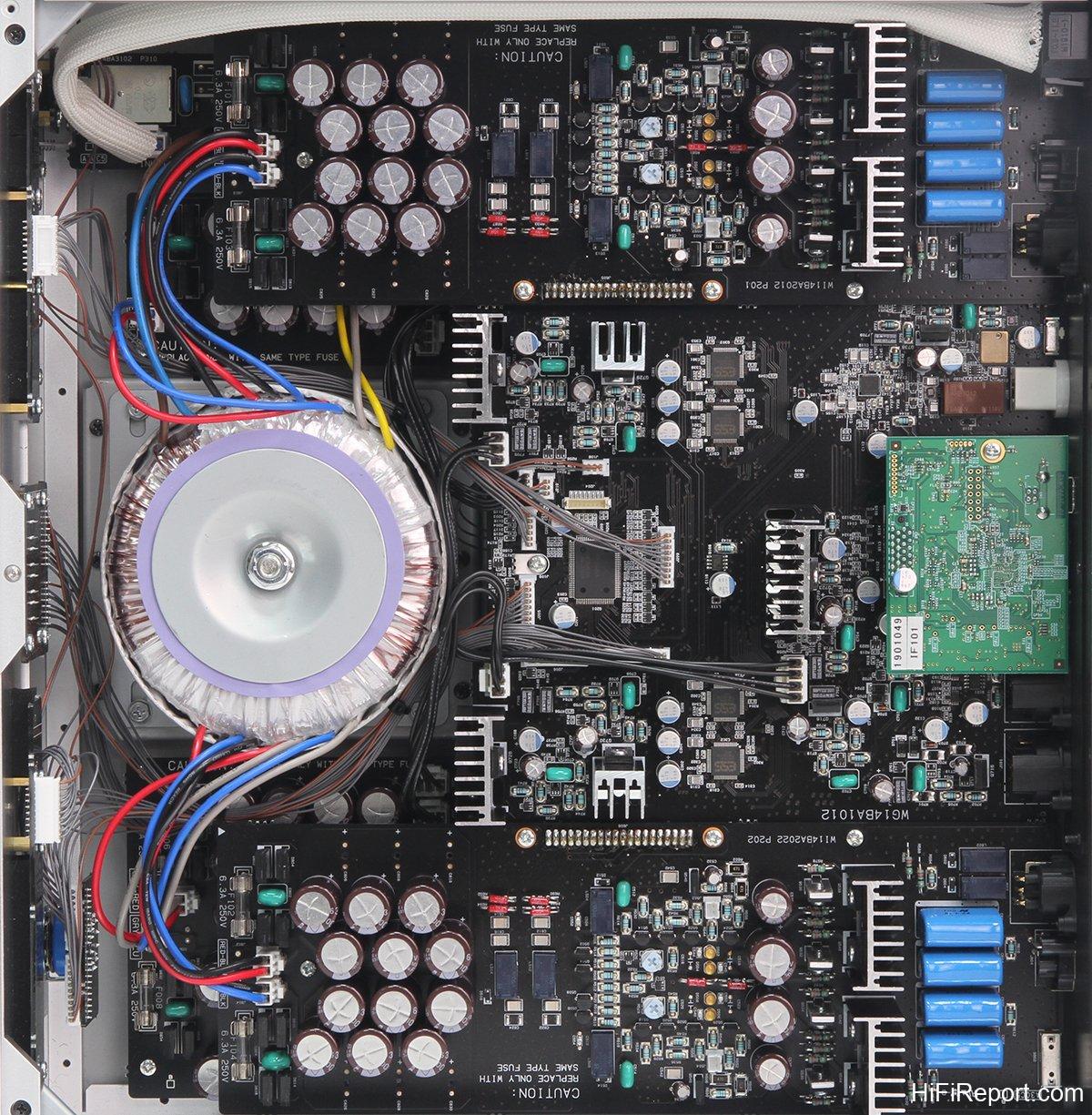
Opening the top cover of the D-2 DAC reveals a large toroidal transformer, dual-mono architecture with channels separated on each side, a fully balanced circuit, and a dense array of components and filter capacitors—hallmarks of Hi-End audio design principles are evident throughout.

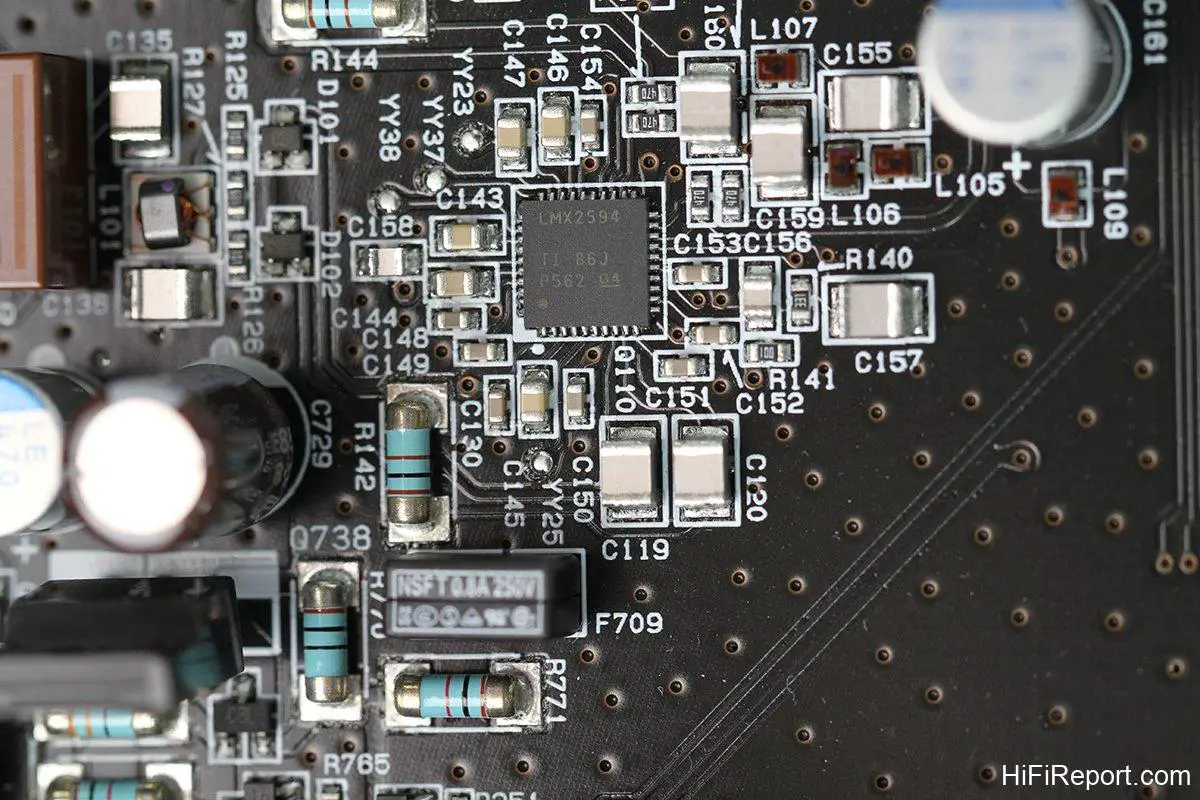
The most distinctive feature of the D-2 is its utilization of Texas Instruments’ LMX2594 synthesizer to generate the necessary clock signals.
The LMX2594 is a DDS (Direct Digital Synthesizer), primarily employed in equipment such as mobile communications, radar, and electronic instruments. Its function is to generate or synthesize any desired clock frequency based on a reference clock. The LMX2594 boasts exceptional performance, with an extremely low time-base error of 45fs. It can generate frequencies across a broad range, from 10MHz to 15GHz, with remarkable precision, low time-base error, and low phase noise. Soulnote’s application of this technology in the D-2 is a groundbreaking move in the audio industry.
The D-2 itself incorporates a high-performance 10MHz TCXO internally. With the LMX2594, the D-2 already achieves highly accurate time-base performance. However, for those seeking even greater precision, the D-2 accommodates an external 10MHz clock source of even higher accuracy.
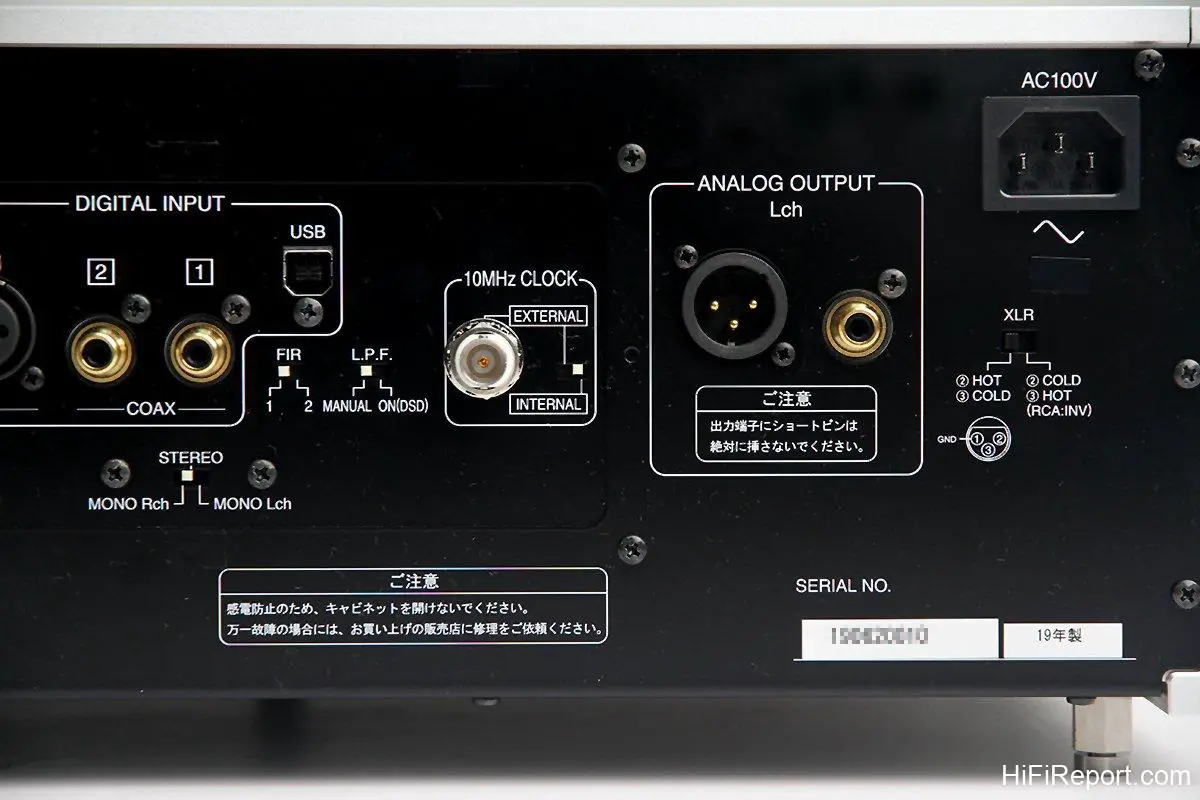
On its rear panel, a BNC connector is provided for connecting an external clock generator. Adjacent to the BNC connector is a small toggle switch that uses purely mechanical relays to switch between the internal and external clocks. This avoids using IC switching, which can introduce time-base errors. When switched to the external clock, the internal clock is automatically disabled to reduce interference.

The square chip in the image is the Texas Instruments LMX2594 synthesizer. Its role is to generate or synthesize any required clock frequency based on a reference clock, serving as the D-2’s master clock.
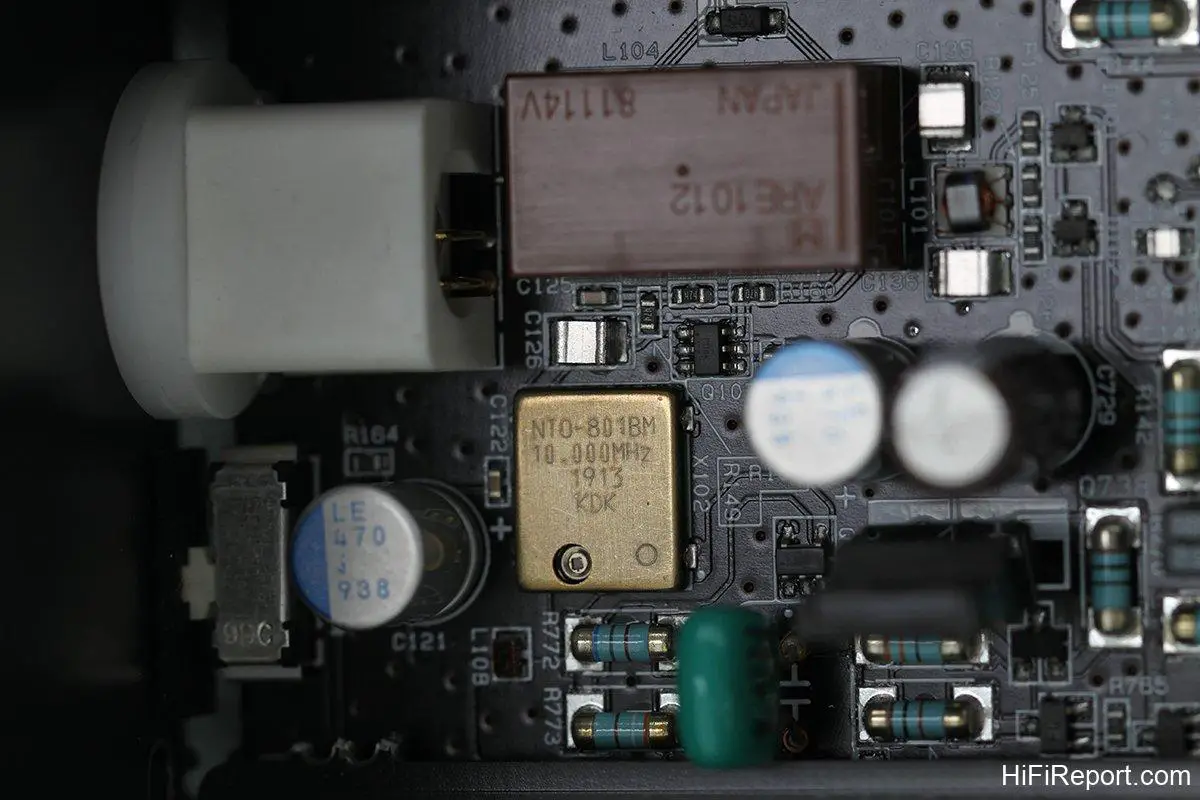
While the TI LMX2594 synthesizes the clock frequency, the D-2 still requires an oscillator to generate the reference clock. It uses the high-quality 10 MHz TCXO pictured.
The D-2’s chassis is packed with components, necessitating a two-layer circuit board to accommodate them all.
Filter Modes and Configuration
In the DAC section, the D-2 is equipped with four ES9038 PRO chips, two per channel, to construct a fully balanced circuit with complete left-right channel independence. This also enables the D-2 to deliver a robust 120mA current output per channel, enhancing the natural dynamics and vibrancy of the music.
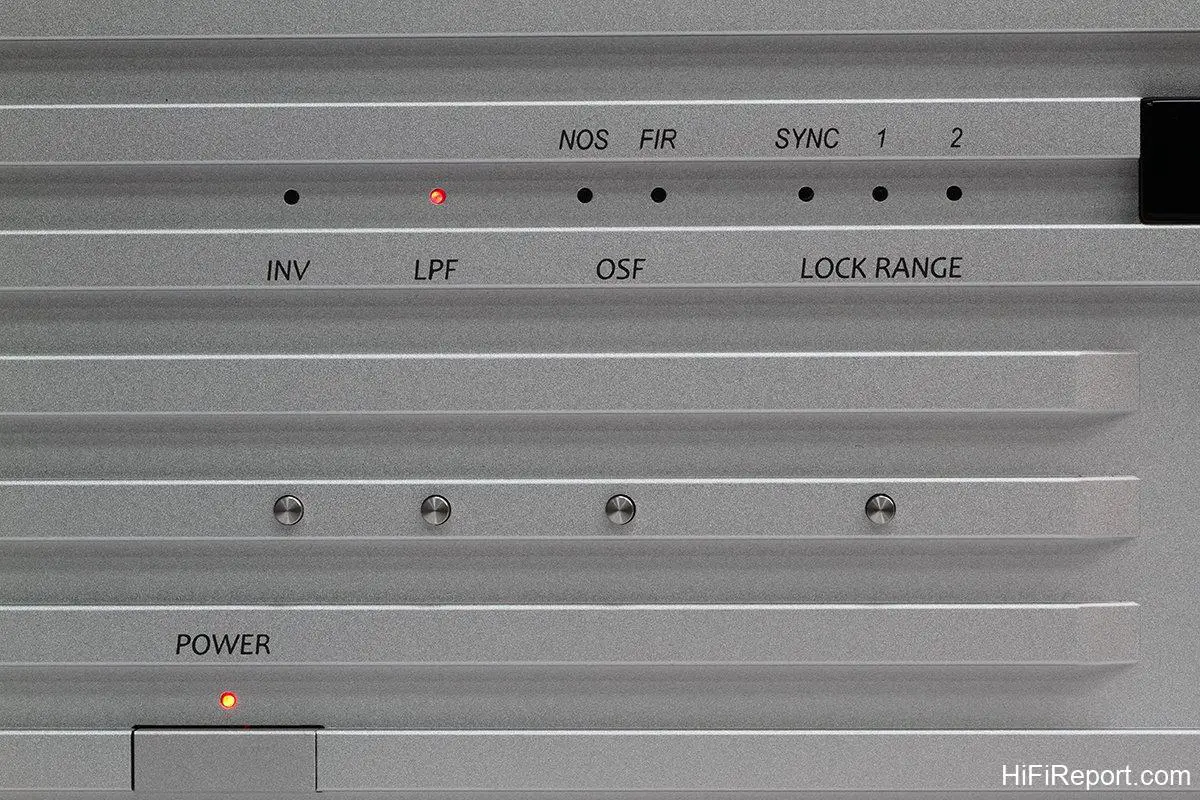
For digital filtering, beyond the common FIR mode, the D-2 offers NOS (non-oversampling) mode, providing users with greater flexibility.
The FIR mode includes two options: FIR1 (Fast Roll-Off Linear Phase Filter) and FIR2 (Fast Roll-Off Minimum Phase Filter), selectable via a switch on the rear panel.
FIR and NOS modes present distinct sonic characteristics. FIR tends to be smoother and more fluid, while NOS is more direct, authentic, and faster in transient response. Users can choose based on personal preference. However, NOS mode is not engaged when playing DSD files.
The selection between FIR and NOS modes is controlled by the OSF button on the front panel.

The D-2 incorporates four ES9038 PRO chips, two per channel, creating a fully independent, balanced circuit for each channel and enabling a powerful 120mA current output per channel.
Additionally, the D-2 allows users to toggle the LPF (Low Pass Filter) on or off. Its function is to attenuate frequencies by 8dB at 100 kHz.
How is it used? The D-2’s rear panel features an L.P.F switch that can be set to MANUAL or ON(DSD). In MANUAL mode, the LPF function can be manually toggled on or off using the LPF button on the front panel with a single press.
When set to ON(DSD), the LPF is disabled and will only automatically engage when playing DSD content.
Uniquely, the D-2 can even function as a monaural DAC! A MONO Rch / STEREO / MONO Lch switch on the rear panel allows selection. In STEREO mode, it operates as a standard stereo DAC. Switching to MONO Rch or MONO Lch designates it for right or left channel use respectively, achieving ultimate channel separation. Naturally, this requires two D-2 units.
Furthermore, the D-2’s XLR output pin configuration is switchable between pin 2 positive/pin 3 negative and pin 2 negative/pin 3 positive, accommodating various amplifiers—truly audiophile-grade flexibility!
Bulk Pet USB Technology
In its amplification circuitry, the D-2 employs a non-negative feedback differential amplifier. The left and right channels are completely independent from power supply and DAC stage all the way to the analog output. Moreover, the circuit layout is not only symmetrical left-to-right but also symmetrical in positive and negative phases—a testament to meticulous design.
The D-2 also prioritizes power supply, featuring a substantial 400VA toroidal transformer to ensure ample power delivery.

This toroidal transformer has eight secondary windings, each dedicated to different sections of the circuitry. Each stage’s power supply also has its own independent rectification circuit, effectively preventing interference.
To mitigate transformer vibration, the D-2 employs a three-point grounding system, with one point strategically placed directly beneath the transformer to conduct vibration away.
The D-2 achieves complete left-right channel independence from power supply and DAC stage to analog output, with circuit layouts that are symmetrical both horizontally and vertically.
The rectangular circuit board in the upper part of the image is the D-2’s right-channel analog amplification circuit, showcasing a fully balanced and symmetrically laid out circuit design.
The D-2 utilizes a three-point grounding system and includes both pointed and flat feet for user preference.
Note in the left image the placement of one foot directly beneath the center of the toroidal transformer, designed to channel away transformer vibrations.
For USB audio transmission from computers, the D-2 incorporates “Bulk Pet” technology to enhance USB data flow.
Bulk Pet is a technology developed by Interface Co., Ltd. of Japan specifically for USB audio transmission. How does it differ from conventional USB audio transmission? Standard USB audio transmission sends fixed amounts of data at maximum speed intermittently, followed by pauses. Even with continuous music playback, USB audio transmission operates in bursts, causing fluctuating workloads for both the computer and DAC. Interface believes this intermittent transmission negatively impacts sound quality.

Bulk Pet, on the other hand, controls the data volume and transmission cycle of USB, reducing the data volume per unit of time and extending the cycle. This minimizes the instantaneous workload on both the computer and DAC, improving sound quality.
Bulk Pet is compatible with both PC and Mac.
On PCs, a USB driver is required to connect to the D-2, and this driver includes the Bulk Pet function.
Macs can connect to the D-2 without installing a USB driver. However, to utilize Bulk Pet, the Mac USB driver must be installed.
Drivers for both platforms are available for download from the Soulnote website.
How is Bulk Pet used? On a PC, for example, open the “Control Panel” (on Windows 10, type “Control Panel” in the taskbar search box). Then, select “Hardware and Sound” in the left column. The Soulnote logo will appear on the right side. Click it to access the D-2’s USB Audio control panel.
Bulk Pet is disabled by default. The computer will use standard USB transmission. Bulk Pet provides four transmission modes, from Mode 1 to Mode 4, each with subtle sonic nuances. Users can experiment and choose their preferred mode.
Sound Quality and Performance
Regarding input interfaces, the D-2 offers 1 USB, 2 coaxial, and 2 AES/EBU inputs, totaling 5 inputs. Optical input is absent for reasons unknown. However, the input selector knob on the front panel includes an “EXT” position beyond the aforementioned 5 inputs, possibly indicating future modular input expansion capabilities.
Among the 5 inputs, USB supports the highest sampling rates, up to 768 kHz PCM and 22.6 MHz DSD, representing very high specifications.
Listening tests were conducted at my home, using an EC 4.8 preamplifier, NuPrime Evolution One power amplifier, and Aurum Cantus Grand Harmony speakers. The reference DAC was the Audiobyte Black Dragon. A Windows PC served as the source, connected to the D-2 via USB.
First, listening to Arthur Rubinstein’s Chopin Waltzes, an album that previously sounded somewhat “light” in all aspects—light touch, light note weight, light piano scale, even a light, watery tone without rich flavor—revealed a transformation through the D-2. The tone didn’t seem as transparent, but rather more richly woody, with distinct texture and clarity. Notably, the resonance became remarkably rich, with excellent body.
The D-2 also enhanced the piano’s note definition, improved density, and made each note more palpable. The weight of the key strikes increased, lending a more grounded force without sacrificing necessary lightness.

Next, playing Leonard Cohen’s “Ten New Songs” album, the D-2 impressed with exceptional image solidity.
Cohen’s voice was focused and remarkably three-dimensional, with clearly defined outlines. The sonic weight was substantial, the density superb—far from a light, airy sound, yet without any heaviness or sluggishness, possessing a very distinct sense of form.
I had never heard this album rendered with such presence before.
I also perceived palpable chest resonance in Cohen’s vocals, adding emotional intensity and fervor, completely deviating from what I typically associate with “Japanese sound.”

Furthermore, the bass lines were clearly delineated without being excessively truncated. The soundstage coalesced toward the center, making the sound fuller and more engaging, but never overly so.
The D-2 seemed to enhance all the desirable sonic elements, and to just the right degree.
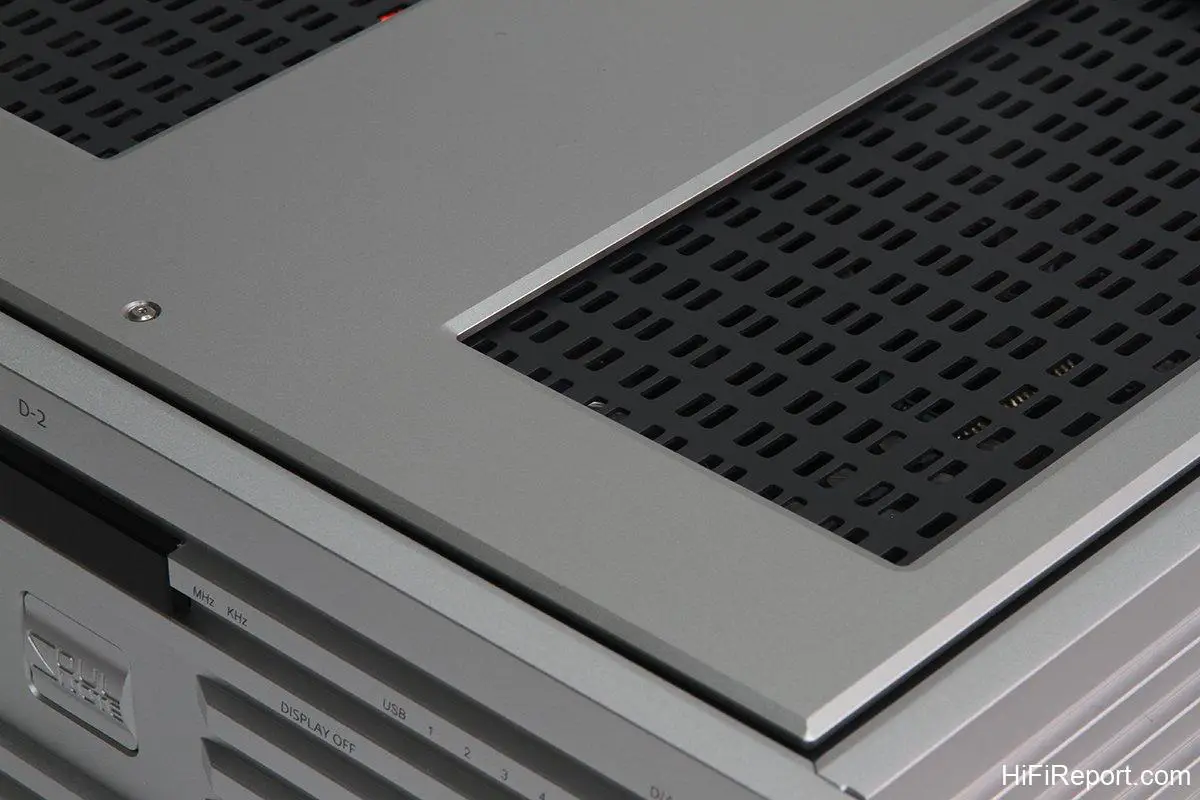
The D-2’s top cover features a floating design and is not fixed.
The silver cover in the image is purely decorative. The main top cover is a black mesh panel that slides into grooves in the side panels from the rear, completely unfixed. This is considered a tuning method to enhance sonic liveliness.
Sonic Strengths and Musicality
The D-2’s captivating thickness shone even more brilliantly with Chen Jiannian’s “Ocean” album. Track 2, “Ocean,” featuring acoustic guitar, presented notes with remarkable substance and moisture, along with a captivating crystalline quality. The guitar playing had both crispness and appropriate brightness—simply delightful! In comparison, the Black Dragon sounded thinner and less engaging.
Moving on to Erich Kunzel conducting the Cincinnati Pops Orchestra in “Mancini’s Greatest Hits,” particularly the well-known Pink Panther theme, the D-2 effortlessly revealed details emerging from a jet-black background. Detail retrieval was excellent across the entire frequency range and presented naturally, with a very liquid tone.
In contrast, the Black Dragon’s soundstage was more open, but the D-2 offered greater focus and depth. The layering in the soundstage was outstanding, with excellent instrument placement and separation.
This album also revealed the D-2’s refined and somewhat luxurious tonal texture, yet remaining authentic. The texture was rich and detailed, far from artificially beautified or meticulously polished into a simplistic sound.
I believe the D-2’s ability to faithfully reproduce information and restore the original timbre of recordings stems from its precise detail retrieval, undoubtedly attributable to the ultra-low jitter achieved by the LMX2594 DDS synthesizer. This advantage of extremely low jitter—rich detail and precise imaging—was also evident in the Marten speaker test disc “Supreme Sessions 2.”
All tracks on this disc are small-ensemble live recordings captured with only two microphones. Through the D-2, the form, placement, layering, and separation of each instrument and voice were astonishingly good! Bass imaging was superb, each note possessing elasticity and impact. The soundstage scale and shape were also rendered with remarkable clarity. I believe this is the hallmark of a highly precise digital source. Furthermore, the timbres of various instruments featured on this test disc—piano, strings, winds, percussion, bass, marimba, etc.—were not only rich in texture and clearly distinguishable through the D-2, but also imbued with liquidity and body, making listening incredibly enjoyable.
Nuance and Linearity
Continuing with the soundtrack from the film “Dust of Time,” composed by renowned film score maestro Eleni Karaindrou, primarily featuring string orchestra with added accordion and piano, the D-2’s sonic character remained both beautiful and realistic. It conveyed a sense of nobility through the inherent beauty of instrument timbres.
The texture of bow-on-string friction was rendered clearly and realistically. String lines were powerfully and deeply etched, neither soft nor overly polished. The accordion carried its characteristic metallic tang, conveying coolness and detachment.
Beyond timbre, I also noted the distinct relative positions, placement, layering, form, and dynamic contrasts between different instruments—all exceptionally vivid. This was further evidence of the D-2’s precision.
Next, I played the symphonic blockbuster “Tutti!”. However, my focus was not on the D-2’s power, but its finesse.
For example, track 5, the finale of Stravinsky’s “Firebird,” is dominated by sustained quiet passages for over a minute in the beginning. Track 6, the Andante movement from Mozart’s Piano Concerto No. 21, also features a serene melody throughout. Through the D-2, the music never sounded monotonous. Musical lines were taut, allowing contours to remain prominent. Though the bass was subtle, it was deep, stable, and layered, with no sense of looseness in the lower registers. Most importantly, the musical ebb and flow remained vivid, the melodic lines fluid and not stiff or dull.
In comparison, the Black Dragon rendered these two pieces in a more simplistic manner.
I attribute this performance to the dual ES9038 PRO chips per channel in a non-negative feedback differential balanced circuit, combined with meticulous circuit layout design and a clean, ample power supply. These factors enable the D-2 to maintain excellent linearity across all output levels.
Final Thoughts
My time with the D-2 was not extensive, but it was sufficient to recognize Soulnote as a brand worthy of attention. They not only possess profound technology but also embody the meticulousness and diligence characteristic of Japanese craftsmanship—relentlessly refining products to perfection.
Do not prejudge the D-2’s sonic character based on its substantial, even somewhat bulky, physique and its internal components reminiscent of electronic instruments. In reality, the D-2’s sound is far from heavy or ponderous. It’s not about raw power or grandeur, but rather a synthesis of precision, refinement, cleanliness, crystalline clarity, realism, and a touch of nobility. It offers exceptional image solidity, soundstage rendering, detail retrieval, and sonic weight, making its presence immediately undeniable.
If you’re seeking a DAC with Hi-End performance but without a Hi-End budget, the D-2 should be high on your list. It will undoubtedly be an eye-opening experience.
Specifications
* Type: DAC
* Inputs: USB, Coaxial, AES/EBU
* Max. Sampling Rate (USB): 768 kHz PCM, 22.6 MHz DSD
* External Clock Input: 10 MHz
* Analog Output Level: 5.6 Vrms (XLR), 2.8 Vrms (RCA)
* Frequency Response: 2 Hz to 120 kHz (+0/-1 dB)
* S/N Ratio: 110 dB
* Total Harmonic Distortion: 0.008%
* Dimensions: 430 x 160 x 405 mm (W x H x D)
* Weight: 17 kg