
Soundaware MR1 V2 Review
Hailing from Nanjing, China, Soundaware has been steadily building its reputation not only within the domestic audio market but also garnering significant buzz among desktop headphone enthusiasts overseas. This growing recognition is largely attributed to Soundaware’s distinctive prowess in digital audio processing, power supply design, and operating system architecture.
Their technical acumen has even earned them the prestigious title of “China’s Top Ten HiFi Headphone and Digital Audio Brands” as awarded by the Headphone Branch of the China Electronic Audio Industry Association. In recent years, in addition to their desktop streamers and DAC/amp products, Soundaware has dedicated considerable effort to the development of portable listening devices like DAPs.
Among these, the MR1 portable player, first released in 2016, quickly became a point of interest. According to Soundaware, the MR1 incorporated their core technologies, including cutting-edge FPGA clocking, which offered timing precision surpassing even their former flagship desktop streamer, the D100 Pro.
Beyond its significantly enhanced digital audio processing capabilities, the MR1, when paired with the manufacturer’s specially designed cables, could output both analog and digital signals to two-channel audio systems, effectively serving as a portable digital source. This made it a noteworthy device for both headphone aficionados and traditional audio enthusiasts alike.
Through continuous refinement and improvement, Soundaware officially introduced the second-generation V2 version of the MR1, featuring notable upgrades in both functionality and sonic performance. Owners of the first-generation MR-1 needn’t feel left out, as Soundaware also offers a paid upgrade service, allowing existing users to effortlessly benefit from Soundaware’s latest technological advancements.
design & connectivity
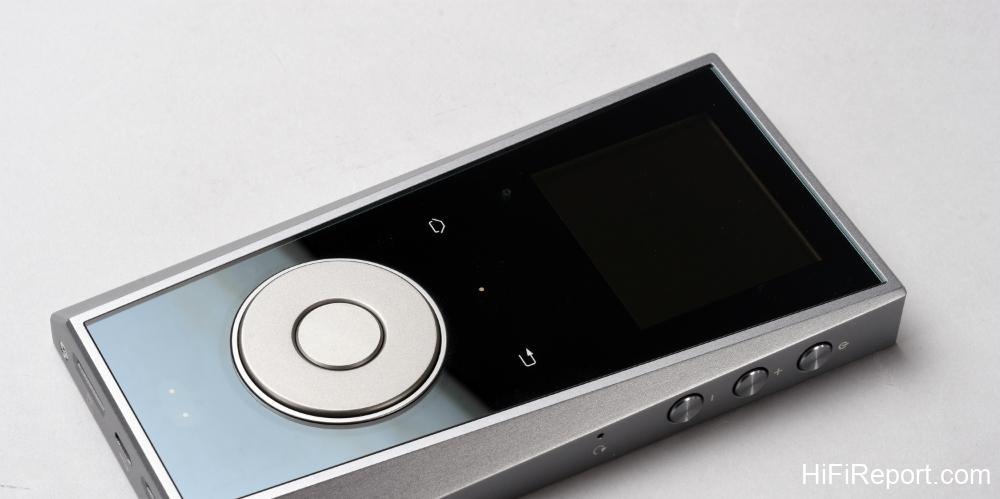
Visually, the MR1 V2 retains the exact same form factor as its predecessor. For a DAP, the chassis is quite substantial, roughly the size of a smartphone but considerably thicker. Despite its size, it doesn’t feel overly heavy in the hand, offering a surprisingly comfortable grip. The outer frame is crafted from CNC-machined aluminum alloy, complemented by glass panels on both the front and back. One minor drawback is the relatively small screen size, which also lacks touch functionality.
All operations are managed via the circular button array on the front panel. This array also incorporates two touch-sensitive areas for “Home” and “Back” functions. Volume buttons and the power switch are located on the right side of the unit, presenting a clear and intuitive layout that makes operation smooth and easily accessible even for new users.
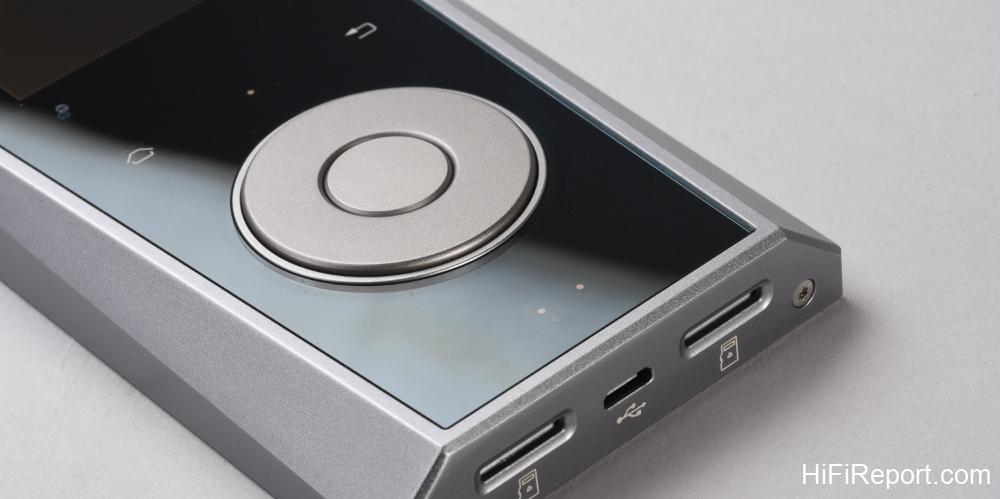
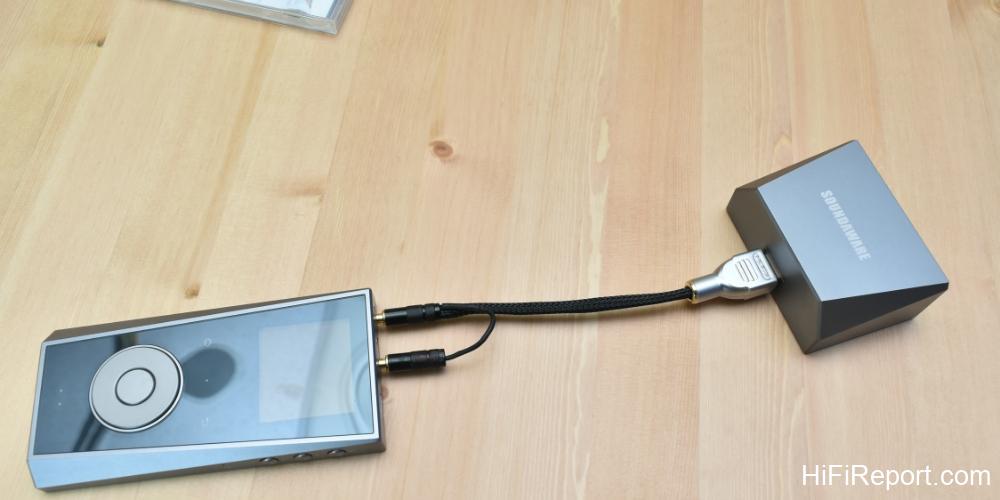
The connectivity suite on the MR1 V2 is quite unique. Located on the top panel are three 3.5mm jacks: one for single-ended headphone output, one for balanced headphone output, and a third multipurpose jack offering Coax & Line Out functions. Additionally, there’s a proprietary Saw Link terminal, providing a wealth of potential uses. A detailed explanation of how these versatile connections can be leveraged will follow later in this review.
internal engineering
Delving into the internal design, the MR1 V2 shares the same Ingenic JZ4775 main control chip as the original MR1. Digital audio files from memory cards or the network are first processed by a DSP before being sent to the FPGA chip. This FPGA chip is a signature element of Soundaware’s design philosophy, found in many of their desktop headphone amplifiers. The MR1 V2 utilizes an even higher-grade module, primarily responsible for achieving ultra-precise clock correction.
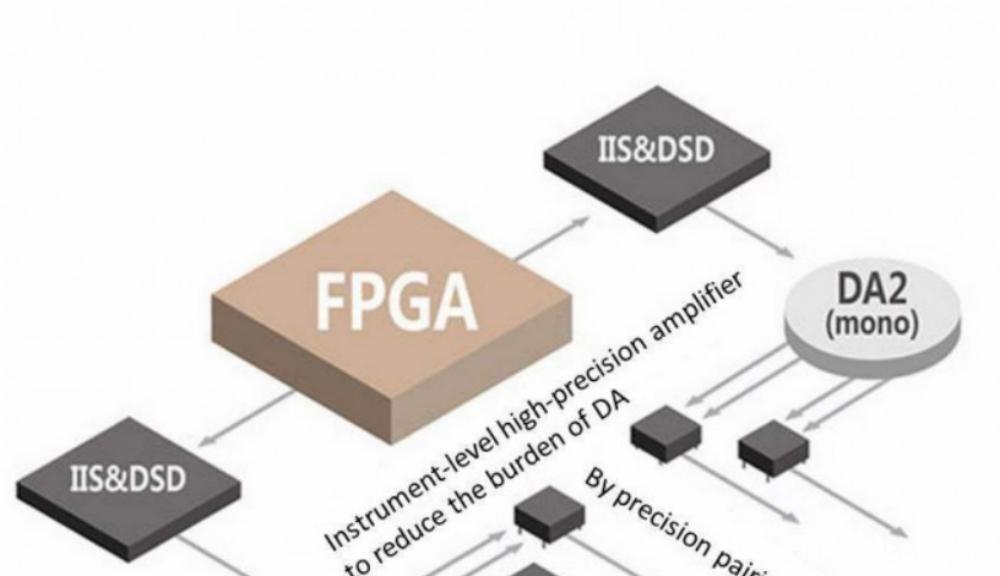
Its accuracy is claimed to surpass even the lauded D100 Pro DAC, reducing clock jitter by over 90%. As any digital audio enthusiast knows, clock accuracy plays a pivotal role in the fidelity of digital sound. Limited by the FPGA’s algorithmic capabilities, Soundaware states that the new FPGA chip employs entirely new algorithms to significantly mitigate distortion caused by jitter.
After undergoing this highly precise clock correction, the digital files are then decoded by two Cirrus Logic CS4398 DAC chips, realizing a true fully balanced architecture. The MR1 V2’s decoding specifications not only match its predecessor’s support for PCM up to 32bit/192kHz but also elevate native DSD playback to DSD128. This ensures compatibility with virtually all widely available high-resolution music file formats.

Soundaware confidently asserts that the MR1 V2 offers sound quality capable of replacing a desktop setup.
Furthermore, it’s well-known that DAPs, powered by batteries, theoretically provide a quieter musical background compared to desktop DACs connected to mains power. However, the compact chassis of a DAP presents greater challenges in component placement and circuit design. Soundaware notes that the MR1 V2 employs higher-grade components throughout its circuitry.
Notably, the power supply section features 15mΩ audiophile-grade Nichicon capacitors coupled with a completely redesigned full-DC circuit. The internal impedance of the power supply for each channel has been reduced to just 1/10th of the original, enhancing the smoothness of internal audio transmission and improving the signal-to-noise ratio. This reduction in impedance minimizes the chance of signal loss while also increasing power efficiency.
According to official details, the analog power supply is ±5.5V in non-high-performance mode and boosted to ±8V in high-performance mode. Consequently, the MR1 V2 builds upon the MR1’s neutral sound signature by enhancing dynamic performance, presenting a more transparent soundstage, and delivering more impactful mid-bass frequencies.
headphone amp & beyond
For headphone amplification, the MR1 V2 retains its predecessor’s high, medium, and low gain EQ adjustment options, as well as the high-performance mode. Headphone output is available via both 3.5mm single-ended and 3.5mm balanced jacks. To cater to the needs of many audiophiles, the unit includes a 3.5mm balanced to 4-pin XLR adapter cable, allowing direct connection to flagship headphones like the Sennheiser HD800.
Engaging the “High-Performance Mode” significantly boosts headphone output power, making it perfectly capable of driving high-impedance full-size headphones, though this will naturally consume more battery power.
Soundaware’s repeated emphasis that the MR1 V2 can replace a desktop system extends beyond just decoding. Starting with the original MR1, Soundaware integrated Wi-Fi functionality into their DAPs. This means the MR1 V2 can connect to your local network, accessing music files stored on a NAS or PC, effectively functioning as a streaming player. Furthermore, its streaming capabilities are not limited to headphone use.
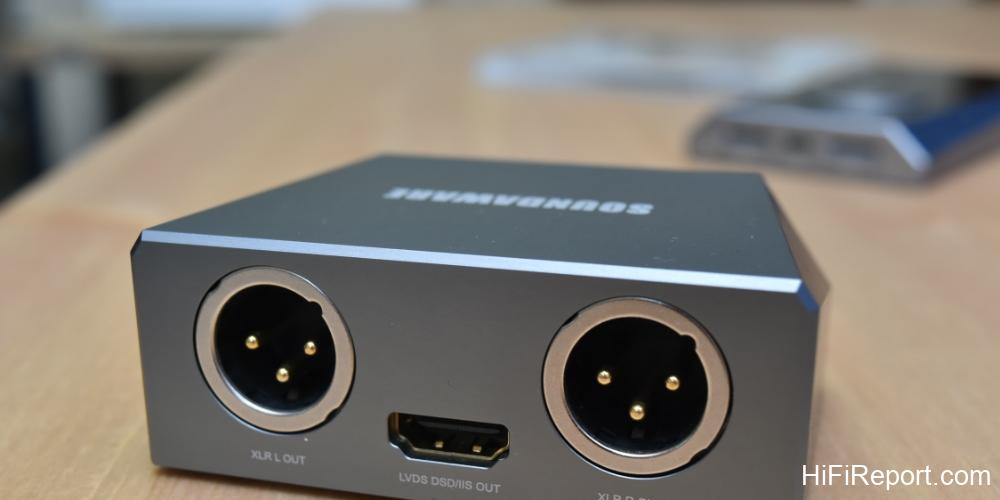
Beyond its basic DAP functions, it offers three distinct output modes: “Pure Analog,” “Pure Line,” and “Pure Transport.” These correspond to headphone amplification, analog output, and digital output, respectively. For analog output, a special 3.5mm cable from Soundaware terminating in an HDMI male connector allows for balanced analog output via XLR, which can be connected to an “amplifier + passive speakers” setup or directly to “active speakers,” forming a complete audio system.
For digital output, you can use a 3.5mm to RCA coaxial adapter cable or utilize the SAW Link transfer method. These options allow the MR1 V2 to output a digital signal to other DACs or devices, using the MR1 V2 purely as a digital transport to leverage its precise clocking capabilities. Additionally, the MR1 V2 features a micro USB input terminal.
For audio storage, it’s equipped with two Micro SD card slots (referred to as TF card slots in the original specifications), each supporting up to 256GB of music capacity, allowing users to easily expand storage as needed. For users with limited space or those who prefer portable listening, this design takes up virtually no physical space and is highly practical for carrying anywhere.
listening experience
In practical use, I paired the MR1 V2 with Sennheiser IE40 Pro in-ear monitors. I tested music files stored on the SD card and also streamed via Wi-Fi from a NAS. The MR1 V2 exhibits a notably neutral sound signature. Its most appealing quality lies in its relaxed and natural texture. While the mid-bass isn’t exceptionally fast, it presents popular music with a soft, full vocal character. Drum and bass notes have clear definition and appropriate weight, never sounding overly exaggerated.
Listening to large-scale classical pieces reveals a commendable sense of scale, with a quite open soundstage. String textures are finely rendered, and details from each instrumental section are fully presented. The MR1 V2 handles various music genres without noticeable coloration, allowing the quality of the music file itself to shine through clearly. Higher sampling rate files sound smoother and more stable.
The overall sound quality is very easy to listen to, drawing you in and making you want to keep listening. Although the display screen isn’t large, operation felt stable and smooth during prolonged use, with no noticeable lag in track selection or settings adjustments. This stability underscores its solid hardware specifications, suggesting it indeed possesses the capability to replace a desktop headphone system.
specifications
* Type: Portable Player
* Display: 2.4 inches
* Filter Modes: Fast Roll-off, Slow Roll-off
* Signal-to-Noise Ratio (XLR Line Out): 113dB
* Digital Output: SAW Link (Supports Native DSD Digital Output)
* Headphone Output: 3.5mm Single-Ended, 3.5mm Balanced
* Micro SD Card Slots: Two
* Wireless Features: Bluetooth apt-X, Supports AirPlay and DLNA Wireless Transmissio