
Spendor A4 Floorstanding Speaker Review
British sound, you ask? Does that still conjure images of something warm, mellow, and perhaps a little too polite? That perception, while rooted in history, is a relic of the past century. Early BBC monitor speakers were designed primarily for broadcast applications, prioritizing vocal intelligibility and midrange clarity. This emphasis led to the stereotype of British sound focusing solely on the mid frequencies, sometimes at the expense of high-frequency detail and low-end extension. The result was often described as musically pleasing, but lacking dynamic impact.
However, the audio industry has evolved significantly over the decades, converging on a broader understanding of sonic excellence. While a rich midrange remains crucial, modern high-fidelity demands comprehensive performance, encompassing extended frequency response and nuanced detail retrieval across the entire spectrum. Spendor, particularly with its advanced D-Line series, has embraced this evolution, pursuing a sonic signature that is both richly textured in the midrange and transparently open, moving beyond the traditionally midrange-centric British sound. The A4, the subject of this review, exemplifies this modern approach.
British Brand History
The name “Spendor” is a portmanteau of the founders’ names, Spencer and Dorothy Hughes, a husband-and-wife team.
Prior to establishing Spendor, Spencer Hughes was a full-time employee at the BBC, designing loudspeakers in his spare time. John Bartlett, owner of the Audio T hi-fi store on London’s Oxford Street, was impressed by Spencer’s designs and recognized their commercial potential. He invested in Spencer, encouraging him to produce his speakers commercially.
Consequently, Spencer left the BBC to embark on his entrepreneurial journey. In 1969, Spendor launched its first loudspeaker, the BC-1. This was followed by the successful BC-2 and BC-3 models in 1973, solidifying Spendor’s position in the market. The product portfolio expanded to include models like the SP1 and SP2. Notably, in 1982, Spendor began producing the BBC-licensed LS 3/5a, which remains highly sought after in the second-hand market. Well-maintained pairs at reasonable prices are typically sold almost instantly.
However, Spencer Hughes is no longer at the helm of Spendor. The current steward is Philip Swift, who took over the company in the early 2000s.
Philip was a frequent visitor to Audio T during his student days and became acquainted with Spencer during that time. Philip Swift later ventured into the audio industry himself, co-founding Audiolab with Derek Scotland. Audiolab became a prominent audio brand in the 1990s. In 1997, Philip sold Audiolab to TAG McLaren Audio, temporarily stepping away from the audio business.
Subsequently, an old friend and distributor approached Philip, inquiring if he would be interested in acquiring Spendor. After considering the proposition, Philip recognized his long-standing connection with Spendor and decided to purchase the company, which he continues to operate today.
A-Line Design & Home Placement
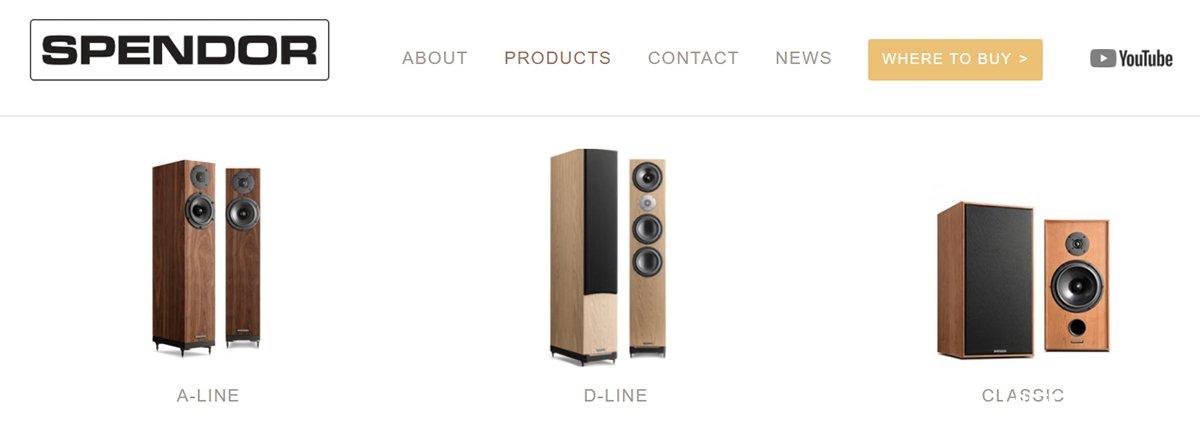
Spendor’s current product offerings are categorized into three main series: A-Line, D-Line, and Classic. The Classic series speakers retain the aesthetic of the classic BBC monitors, albeit with updated drivers, crossovers, and cabinet construction utilizing contemporary materials. The A-Line and D-Line, in contrast, adopt a more modern loudspeaker design with narrow front baffles, slender, taller cabinets, and smaller footprints, making them more accommodating for contemporary homes and easier to integrate visually into modern living spaces.
(Image from Spendor official website) I believe Spendor’s customer base can be broadly divided into two categories. The first group comprises seasoned audiophiles familiar with Spendor’s heritage, who are likely drawn to the Classic series for its authentic BBC monitor lineage. The second category consists of those who may be less familiar with Spendor’s history but are seeking aesthetically pleasing and sonically refined speakers for their homes. For this group, the A-Line and D-Line offer compelling options.
Spendor’s strategic development of these three distinct product lines caters to diverse market preferences. Enthusiasts of the classic Spendor sound can find their desired models in the Classic series, while the A-Line and D-Line, with their contemporary designs, appeal to a new generation of audio enthusiasts who value both sonic performance and visual aesthetics.
EP77 Polymer Cone Technology
The A-Line series encompasses four models. The A1 is a stand-mount speaker, while the A2, A4, and A7 are floorstanding designs. All four models are 2-way configurations, employing only two drivers – a tweeter and a mid-bass driver each. This design approach distinguishes them from the previous generation A-Line floorstanders, which utilized dual mid-bass drivers in a 2.5-way configuration. The new A-Line generation embraces a simpler 2-way point source design philosophy across the board.
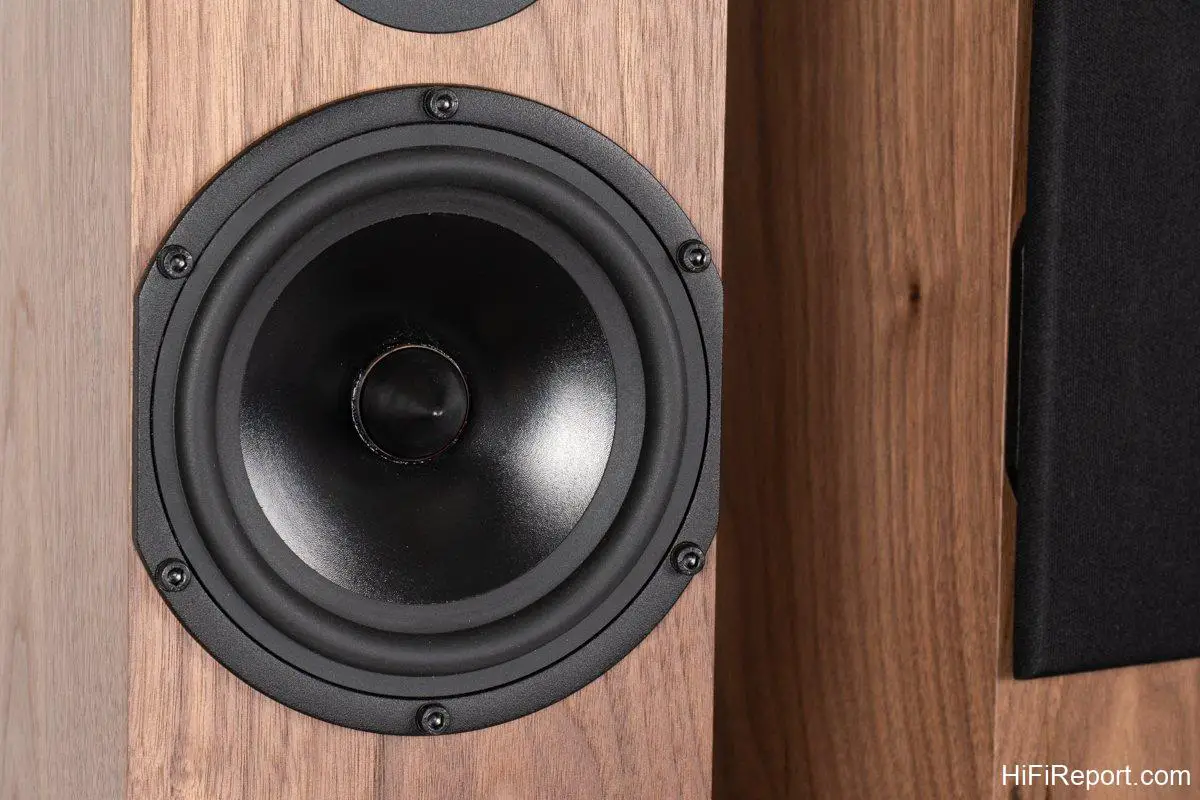
Why the reduction in driver count and the shift from 2.5-way to 2-way designs? I believe this is intrinsically linked to the new mid-bass driver technology. The A4 features a 180mm mid-bass driver incorporating an EP77 Polymer cone. This innovative material was initially introduced in the updated Classic series and has now been extended to the A-Line.
Spendor is arguably a pioneer in utilizing plastic diaphragms for speaker cones. The original BBC monitor series famously adopted Bextrene plastic cones, a revolutionary application in an era dominated by paper cone technology. Since then, Spendor has consistently employed plastic diaphragms, with the EP77 Polymer representing the latest advancement in their material science research.
British Design & Craftsmanship
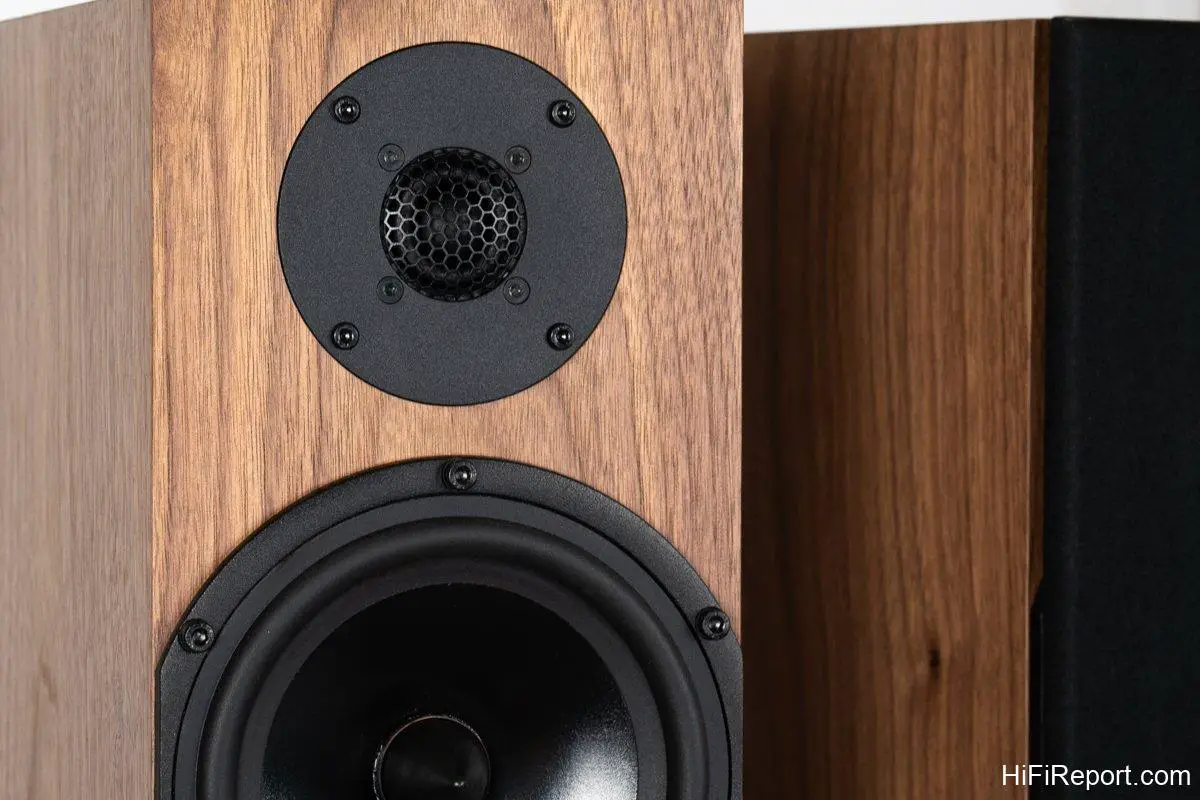
The A4 retains Spendor’s signature silk dome tweeter, further protected by a fine metal mesh grille. This grille is not merely an aesthetic element; it serves two practical purposes. Firstly, it shields the delicate silk dome from accidental damage during handling or from inquisitive fingers. Secondly, it optimizes the high-frequency sound wave dispersion characteristics. This design element is a common feature in British loudspeaker design and a long-standing tradition for Spendor.
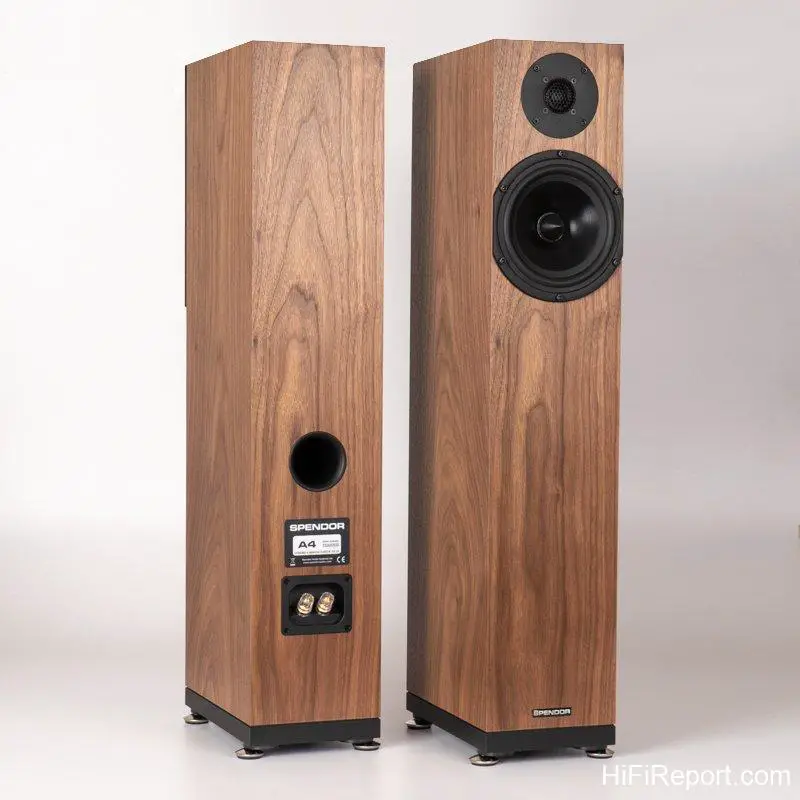
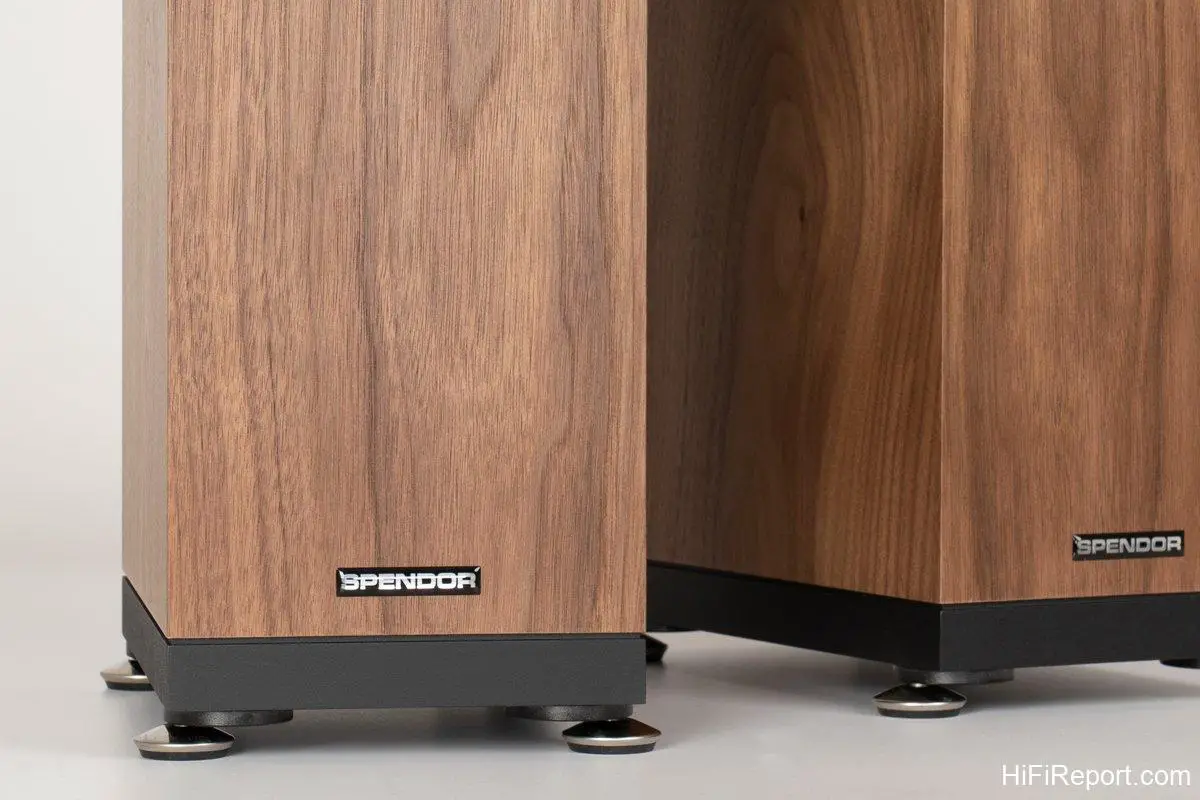
If you have the opportunity to audition the A4 loudspeakers, I encourage you to take a moment to appreciate Spendor’s craftsmanship. Despite its traditional styling and understated design as a compact floorstanding speaker, the A4 exhibits exceptional build quality. The meticulously applied real wood veneer finish exudes a sense of care and dedication from the craftspeople.
Handcrafting loudspeakers is a traditional art form, often with profit margins that are less substantial than commonly perceived. Spendor’s unwavering commitment to British design and manufacturing, sustained for over half a century, is a remarkable achievement. This dedication to traditional craftsmanship and heritage is palpable in the A4’s cabinet execution.
Speaker Placement
During the auditioning process, I instinctively set up the A4s in an equilateral triangle configuration. The distance between the left and right speakers was approximately 1.7 meters, and my listening position was also roughly 1.7 meters from the speakers, adopting a near-field listening arrangement.
The A4’s high-frequency dispersion is commendable, and toe-in may not be strictly necessary to achieve a spacious soundstage. However, for more precise soundstage imaging and focus, a moderate degree of toe-in can be beneficial.
However, the A4’s height is a modest 86.1 cm. From a seated listening position, the speakers appear somewhat diminutive. When seated on a typical sofa, the height is just barely adequate, and the tweeter position still feels marginally low, potentially impacting the perceived soundstage height. Therefore, utilizing the original Spendor speaker spikes is crucial to optimize the listening experience.
How can you determine if the A4’s placement height is optimal? When seated in your listening position, the tweeter should be positioned at or slightly above your ear level. If you find yourself looking down at the tweeter, the speaker’s vertical placement is too low.
System Matching
For the A4 audition, I selected an all-EAR amplifier system, comprising the EAR 868 preamplifier and 509 II power amplifier. Digital sources included the YBA CDT 100 CD transport and Merging NADAC DAC. I also incorporated a Linn LP12 Klimax turntable into the listening sessions, creating a decidedly British-flavored audio chain.
Spendor specifies the A4’s sensitivity at 86 dB. For a floorstanding loudspeaker, this is considered moderate rather than high efficiency. However, the 100 watts per channel from the EAR 509 II power amplifier drove the A4s with effortless ease.
The A4s provided to HiFiReport were brand new, straight out of the box. Despite being un-broken in, their sonic performance was already remarkably impressive. After allowing the A4s to play for a day or two, the sound became even more refined and full-bodied. I was quickly able to settle in and appreciate the A4’s inherent sonic virtues.
Spendor’s fundamental sonic character remains distinctly British. The midrange is characterized by a rich, full-bodied density. The high frequencies exhibit delicate extension, and the overall sonic presentation possesses a pleasing sense of brightness without becoming strident or fatiguing at higher listening levels. However, the most captivating attribute of the A4 is its lively and dynamically engaging mid-bass. It’s both solid and remarkably agile, imbuing music with a delightful rhythmic drive.
Soundstage & Imaging
To evaluate soundstage and imaging, I turned to “Neck and Neck,” the collaborative album by Chet Atkins and Mark Knopfler. The opening track, “Poor Boy Blues,” with its upbeat country blues rhythm, was rendered with infectious energy and joy on the A4s. The recording’s spatial arrangement of instruments created a generously open and expansive soundstage. Chet Atkins and Mark Knopfler, both guitar legends, are clearly positioned on the left and right channels, respectively. This stereo separation is even more pronounced on “There’ll Be Some Changes Made,” where Chet Atkins is distinctly located on the right and Mark Knopfler on the left, engaging in a playful musical dialogue through their guitars and vocals.
The A4s presented soundstage imaging with a captivating “visual” clarity, and individual notes possessed a substantial fullness. The timbral differences between the two guitars were readily discernible. Mark Knopfler’s guitar tone was crisper and more articulate, while Chet Atkins’ had a richer, warmer character. Electric guitars offer a wide array of tonal palettes through pickup selection, allowing for nuanced brightness adjustments. Subtle tonal variations during each guitar solo exchange were clearly rendered by the A4s, enhancing the sense of musical realism and engagement.
Mid-bass Performance
As a compact floorstanding loudspeaker, the A4’s low-frequency extension is naturally limited by its cabinet dimensions. A direct comparison to the editor’s reference Wilson Audio Alexia 2 would be unrealistic. However, within modestly sized listening rooms, the A4’s bass response is surprisingly adequate. Furthermore, the A4’s mid-bass performance is characterized by its tautness, agility, and dynamic punch.
For instance, listening to Dave’s True Story’s cover of “Fever,” the track opens with prominent jazz drums and a driving electric bass line. The A4s reproduced the bass notes with satisfying weight and definition. The interplay between the plucked electric bass and the rhythmic jazz drumming established a compelling sense of swing and groove. Despite the A4’s relatively small stature, its mid-bass impact was impressive. Combined with lead vocalist Kelly Flint’s sweet and alluring voice, it was easy to become completely immersed in the music.
The A4’s nimble and energetic mid-bass makes it particularly well-suited for jazz. Listening to the classic “Ella and Louis” album, specifically “Can’t We Be Friends,” the opening piano chords were full-bodied and appropriately bright. The analog-era piano recording exhibited a subtle richness and warmth. The light, delicate jazz drumming created a relaxed and inviting jazz ambiance. Ella Fitzgerald’s vocals, as reproduced by the A4s, exhibited a slight softening at the very top end, which, in this context, enhanced the inherent sweetness of her voice.
Some might perceive this vocal characteristic as a form of coloration. However, it’s undeniably a pleasing and musically engaging coloration. At least, I found it thoroughly enjoyable. Subsequently, Louis Armstrong’s distinctive, gravelly vocals entered, complete with his signature vibrato at the end of phrases. The A4s faithfully captured these nuances without omission. Louis Armstrong’s trumpet solo was rendered with both richness and vibrancy. The slightly darker-toned brightness added a touch of lushness and smoothness to the trumpet’s timbre. If this is a manifestation of the “British sound” coloration, then it’s a coloration that enhances listening pleasure.
Engaging Mid-high Frequencies
In the mid-high frequency range, the A4 exhibits a slightly darker tonal balance, yet retains ample brightness and clarity. For example, listening to Lakatos’ “La Boheme” album, a superb recording of Gypsy violin music, Brahms’ “Hungarian Dance No. 5,” in Lakatos’ own arrangement, revealed a rich and colorful violin solo on the A4s.
The slightly darker tonality evoked the ambiance of a concert hall with subtly dimmed lighting. However, the violin’s sonic image became more focused, solid, and precisely defined. The texture of the bow rosin on the strings gained a more pronounced “rosin-like fragrance.” The Gypsy orchestra arrangement includes a cimbalom in addition to the piano, and on the A4s, the cimbalom sounded even more substantial and resonant. I believe that the A4’s slightly darker mid-high frequency character contributes to its overall listenability, allowing for extended listening sessions without fatigue.
Soundstage Spaciousness
In terms of soundstage imaging and spaciousness, the A4 presents a naturally relaxed and effortless quality, easily achieved with proper setup. To illustrate this, I listened to “Bach Trio,” a collaboration between Yo-Yo Ma, Chris Thile, and Edgar Meyer. This album was recorded in a converted barn studio in a rural setting, resulting in a naturally open and spacious acoustic environment. The cohesiveness of the three instruments is exceptional. With the A4s positioned in an equilateral triangle, the speakers effectively disappeared within the soundstage. The three instruments were clearly focused in the center, with realistic image sizes and appropriate delineation. The sonic lines of the double bass and cello remained distinct, indicating good mid-bass resolution in the A4s. In contrast, the mandolin was bright and crisp. The subtle richness in the midrange imparted a vivid and fluid quality to the plucked notes.
Concerto Performance
To assess the A4’s performance with larger-scale orchestral music, I listened to Wang Jian’s “The Baroque Album” with Camerata Salzburg, specifically Boccherini’s Cello Concerto G482. The first movement opens with a delicate orchestral ensemble passage. The A4 loudspeakers naturally vanished into the listening space, creating a wide and immersive soundstage in the center, with clear layering between the string section in the foreground and the brass section positioned further back.
Following the orchestral tutti, Wang Jian’s cello solo entered, playing a graceful and captivating melody. The inherent beauty of Wang Jian’s cello playing lies in his subtle dynamic variations, particularly the nuanced expressions in his soft, delicate passages. This aspect also tests the speaker’s ability to accurately reproduce musical subtleties. If the speaker lacks sufficient detail retrieval, the delicate dynamic shifts in the cello solo would be diminished, reducing the listener’s emotional engagement. However, with the A4s, the contrast between light, agile fingerwork and emphasized notes was clearly rendered. Even the subtle details of Wang Jian’s breathing during his solo were faithfully reproduced, drawing the listener closer to the recorded performance.
Next, I listened to Rubinstein’s rendition of Chopin’s Piano Concerto No. 1, focusing on the slow second movement. The opening string introduction was rendered with lushness and beauty by the A4s. The concluding brass flourishes in the introduction were rich yet transparently bright, leading seamlessly into the romantic piano solo. The A4s conveyed the piano notes with fullness and appropriate brilliance. The subtle dynamic variations in Rubinstein’s fingerwork were clear and fluid. Behind the lyrical piano phrases, the woodwind and brass sections provided subtle counterpoint, and the A4s accurately presented the relative positions of the orchestral sections within the soundstage. As the piano solo reached its emotional peak and subsequently receded, becoming even more impassioned in the subsequent solo sections, I was struck by the realization that experiencing Chopin in such nuanced detail through the A4s was a truly enriching and blissful experience.
Conclusion
With a history spanning over half a century, Spendor remains a quintessential British loudspeaker brand. My encounter with the A4 has affirmed its position as an exceptional value proposition in the realm of British loudspeakers. The A4’s slightly darker mid-high frequency balance is easy on the ears, making them ideal for extended listening sessions. Their smooth and richly textured sonic character allows listeners to appreciate the subtle nuances within music, while the tight and dynamically agile mid-bass ensures engaging playback of jazz and popular music. Of course, in terms of sheer sonic scale and grandeur, the A4 cannot compete with larger floorstanding loudspeakers. However, within its price category, the A4 is an exceptionally competitive compact floorstanding speaker, and a highly recommended choice for those with budgets under $3097 USD.
Specifications
* Type: 2-way 2-driver bass reflex floorstanding speaker
* Drivers: 22 mm tweeter × 1, 180 mm woofer × 1
* Recommended amplifier power: 25-150 watts
* Sensitivity: 86 dB
* Crossover frequency: 3.7 kHz
* Frequency response: 34 Hz – 25 kHz
* Impedance: 8 Ω
* Dimensions: 861 × 165 × 284 mm (H×W×D)
* Weight: 16 kg