
Status Between 3ANC Onyx Review
Most true wireless earbuds pack a single dynamic driver into each bud and call it done. Even the step up to dual-driver designs splits work between a bass/mid unit and a treble transducer, leaving frequency separation to DSP and acoustic tuning. The Status Between 3ANC Onyx breaks that pattern with three physical drivers per earbud: one dynamic unit and two balanced armatures, each dedicated to its own band. The question buyers walk into this product with is straightforward. Does a triple-driver TWS earbud actually separate lows, mids, and highs in a way you can hear on a commute or at a desk, without requiring a rack of reference gear? The answer, drawn from owner feedback and the hardware spec sheet, is that the architecture delivers on its core promise, while the surrounding experience (case durability, ANC depth, app usability) carries real trade-offs worth weighing before you commit.
What Makes It Different
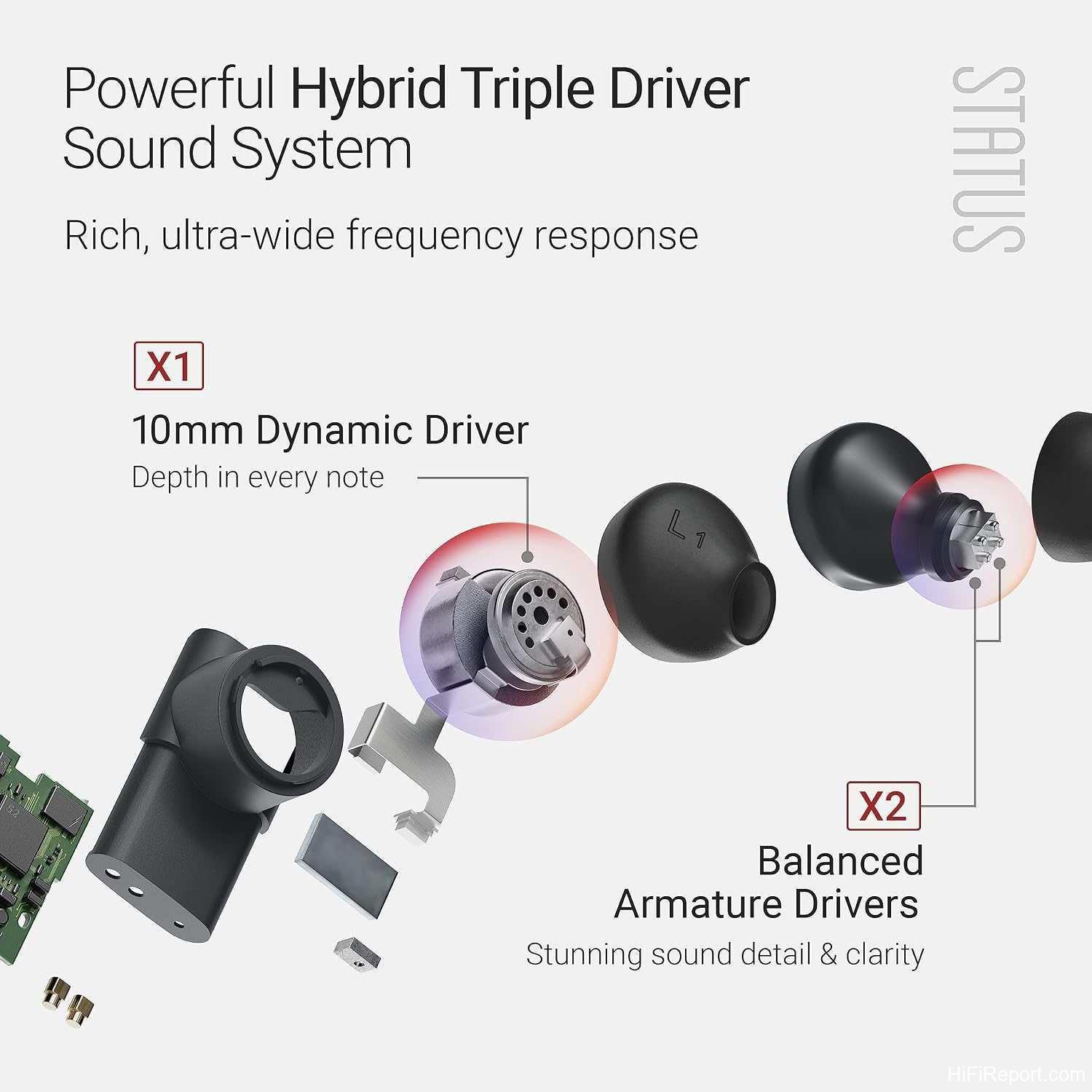
The single standout claim is the triple driver system. The product listing describes it as one dynamic driver and two balanced armature drivers, a configuration Status Audio built into a body it also markets as lightweight and IPX5-rated. Most competitors at this tier run one or two drivers per bud. The OnePlus Buds Pro 2, a common comparison point in owner reviews, uses a dual-driver layout. The Between 3ANC adds a third transducer dedicated to a separate frequency band.
Why that matters to a buyer: in a single-driver earbud, the same diaphragm must move for a 40 Hz kick drum and a 10 kHz cymbal wash, and the result is a compromise in extension and detail. With three drivers, each transducer works within a narrower range, so bass from the dynamic driver does not muddy the mids, and the two balanced armatures split the upper register between themselves. The practical effect, as owners report, is a soundstage where the three bands sit distinctly and do not bleed into one another.
The architecture also enables the companion app’s eight-band equalizer (31 Hz through 14 kHz), which lets you pull up or down specific regions without the masking a single-driver EQ tends to introduce. You are adjusting the crossover behavior between three separate transducers rather than taming one driver’s frequency curve.
Triple-Driver System Under the Hood
The dynamic driver in the Between 3ANC handles the low end while the two balanced armature units take the mids and the highs. This is the same hybrid logic Bragi used in its now-discontinued Dash Pro wireless earbuds, which a reviewer with over 20 years in live-performance sound called the first TWS product to combine balanced armature drivers with sound transparency in a compact form. The Between 3ANC brings that approach to a current, shipping product.
In practice, owners describe the result as powerful, full bass that is “not muddy or incessant,” with mids that make their presence known without overstepping the highs. One reviewer who has cycled through AirPods Pro 2, OnePlus Buds Pro 2, Galaxy Buds FE, and Pixel Buds A-Series called the triple-driver output “like both of them put together” (referring to the AirPods and the OnePlus). Another, a self-described metal listener, reported hearing the detailed sounds of separate instruments and vocals come through clearly on a single album playthrough.
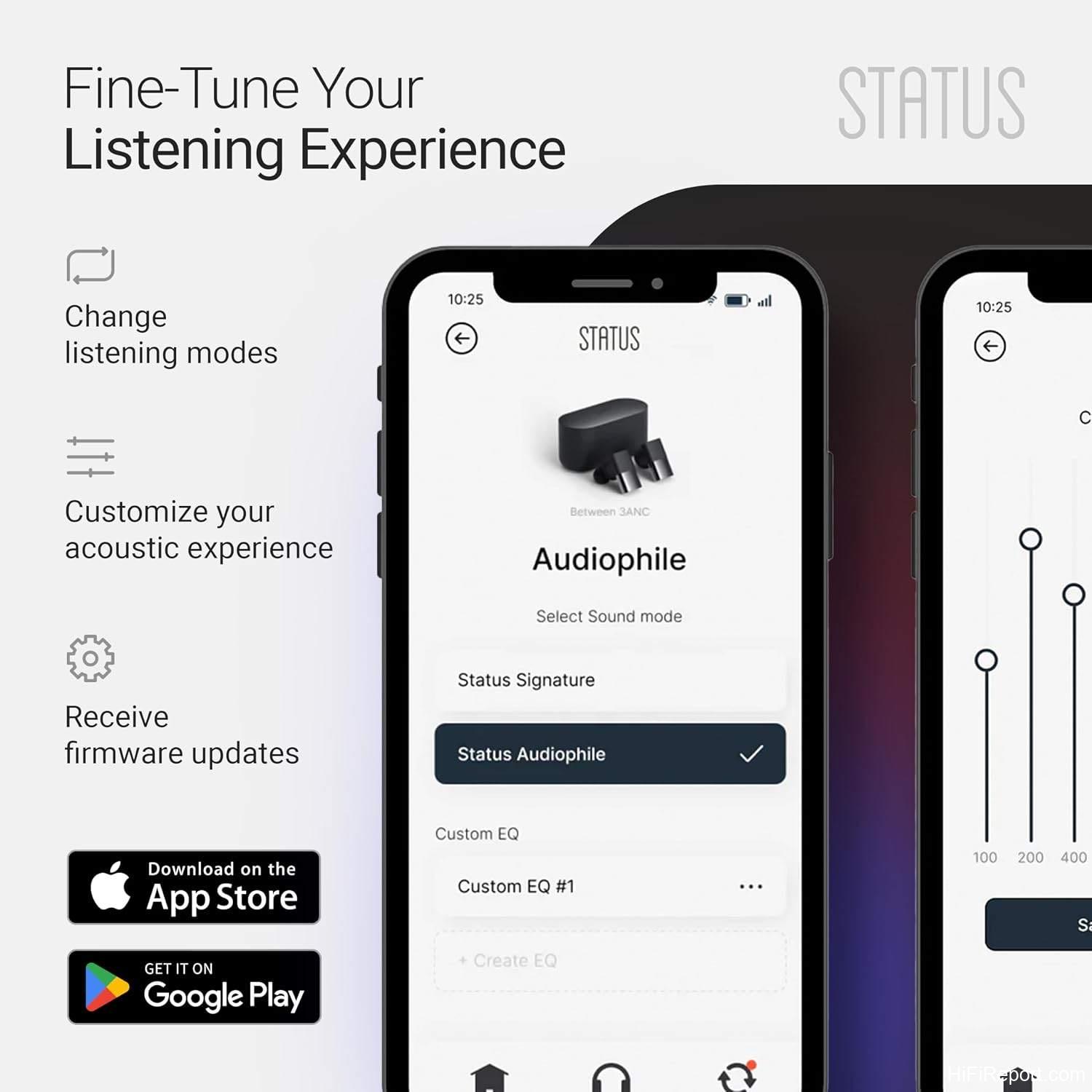
The app layers the eight-band EQ on top of the hardware. The available bands are 31 Hz, 73 Hz, 176 Hz, 423 Hz, 1 kHz, 2.4 kHz, 5.8 kHz, and 14 kHz. Preset sound modes include Status Signature (clearer highs and lows, less weight), Status Audiophile (the factory default, generally flat), and an Original Between Pro mode that mimics the older model’s tuning. One owner who switched from a Between Pro noted the Audiophile mode felt weaker out of the box, so he built a custom M-shaped curve in the app for his own preference.

One limitation worth knowing: the app requires both earbuds to be connected before you can change EQ settings or switch saved presets. A reviewer who uses only one bud at a time found that he had to reconnect the idle bud usually he wanted to retune for a new genre, which he called inconvenient.
Sound Check
The Status Between 3ANC Onyx produces a wide, dynamic sound with real separation between bass, mids, and treble, and owners who prioritize three-band clarity over a single neutral tuning will notice it within the first track. The triple-driver architecture is the reason, though the out-of-box signature leans bright; several reviewers flag the highs as tiring on long sessions and reach for the app’s 14 kHz band to dial them back.
Bass is the most consistent compliment across the review base. Owners describe it as deep and full without turning to mud, and the dedicated dynamic driver gives it a physical presence a balanced armature alone would not achieve. A reviewer with two decades in sound and lighting for live shows called the hybrid output “excellent” and said it rivals Bose and Sennheiser products at roughly half the cost. Another owner who had cycled through Technics, Realme, OnePlus, and Soundpets called the 3ANC the most impressive audio in that lineup, singling out the lows.
Originally released on hifireport.com. Do not copy or republish without permission.
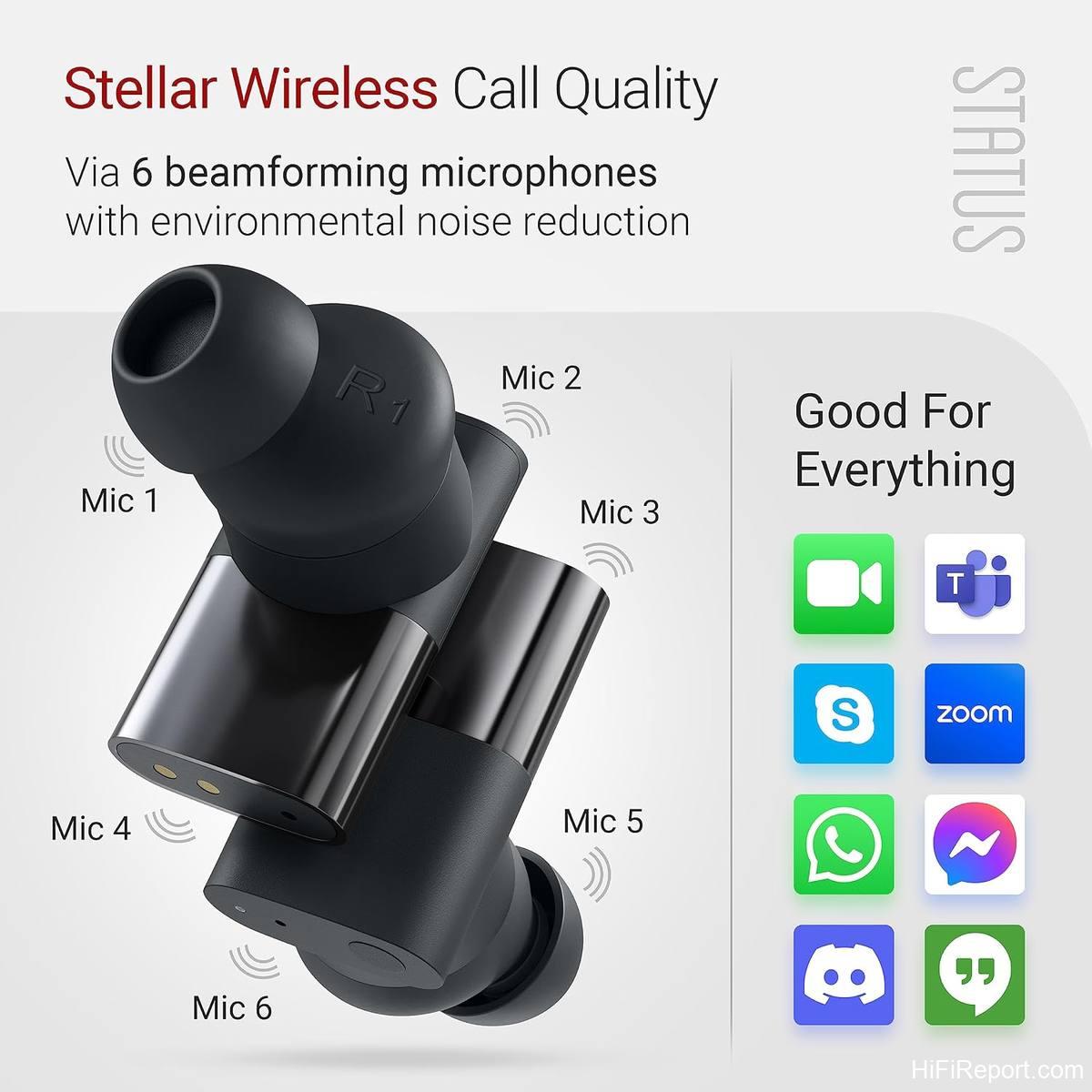
Call quality drew mixed feedback. A three-star reviewer tested call audio against several other wireless earbuds and found the recordings “muffled and somewhat quiet,” noting that a competitor at a fraction of the cost sounded clearer on the transmit side. A separate owner said background noise on the receiving end was effectively blocked, which suggests the six-microphone array handles ambient cancellation well for the listener but that the transmit path still lags behind what the marketing claims.
The Rest of the Package
The Between 3ANC lands as a comfortable, secure-fitting earbud that hides a large internal stack in a body several owners compare to a compact vape pod. Multiple ear-tip sizes and optional wingtips keep it seated through long sessions. One reviewer with ears that reject most TWS designs said the small tips fit well and the buds felt “almost impossible to detect” after a few minutes. The IPX5 rating covers sweat and light rain; one owner who rotated a single bud on and off from 8 a.m. to 5 p.m. through sweaty workouts and summer heat reported no moisture-related failures.
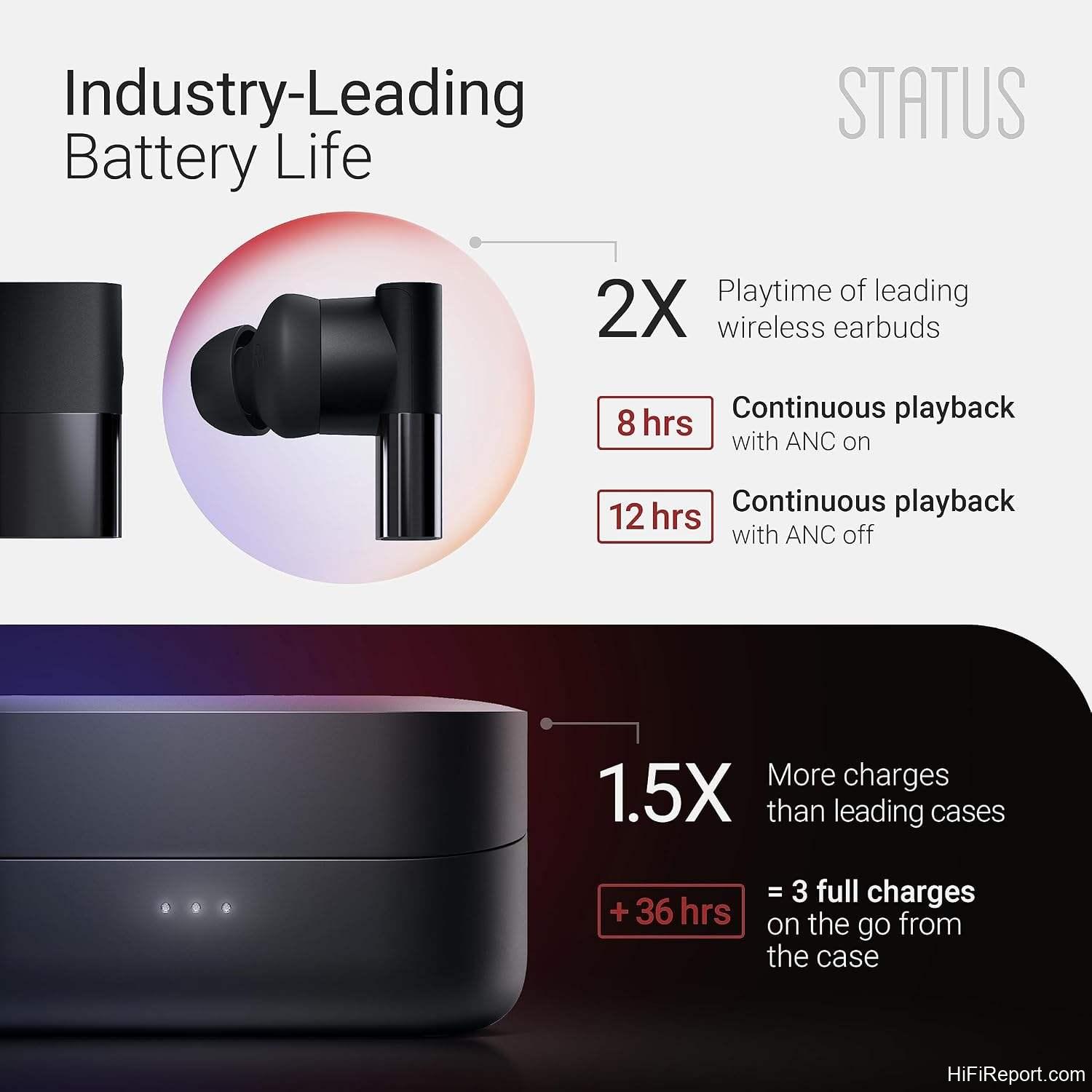
Battery life is a genuine strength. The spec sheet lists 8 hours with ANC on and 12 hours with it off, plus 24 additional hours from the USB-C case, and a 15-minute top-up yields roughly 2 hours of playback. An owner who tracked usage confirmed the 12-hour figure holds with ANC and ambient both disabled. The charging case, however, is where the design story wobbles. The hinge is matte plastic, and one reviewer worried that two concrete drops would “make short work” of it. Another four-star owner reported the internal battery pack separating from the housing after repeated impacts, and the case shell is held together with small plastic clips and adhesive.
The companion app works on both iOS and Android and gives you the EQ, ANC mode toggles, and sound presets. It is functional but barebones: no control remapping, no granular ANC depth slider, and the both-buds-required rule limits single-bud workflows. Bluetooth 5.2 handles multi-point pairing for phone-plus-laptop use. One owner noted that when both paired devices play audio simultaneously the stream chops because there is no priority order; the fix is to disable Bluetooth on the inactive device.
Real-World Use
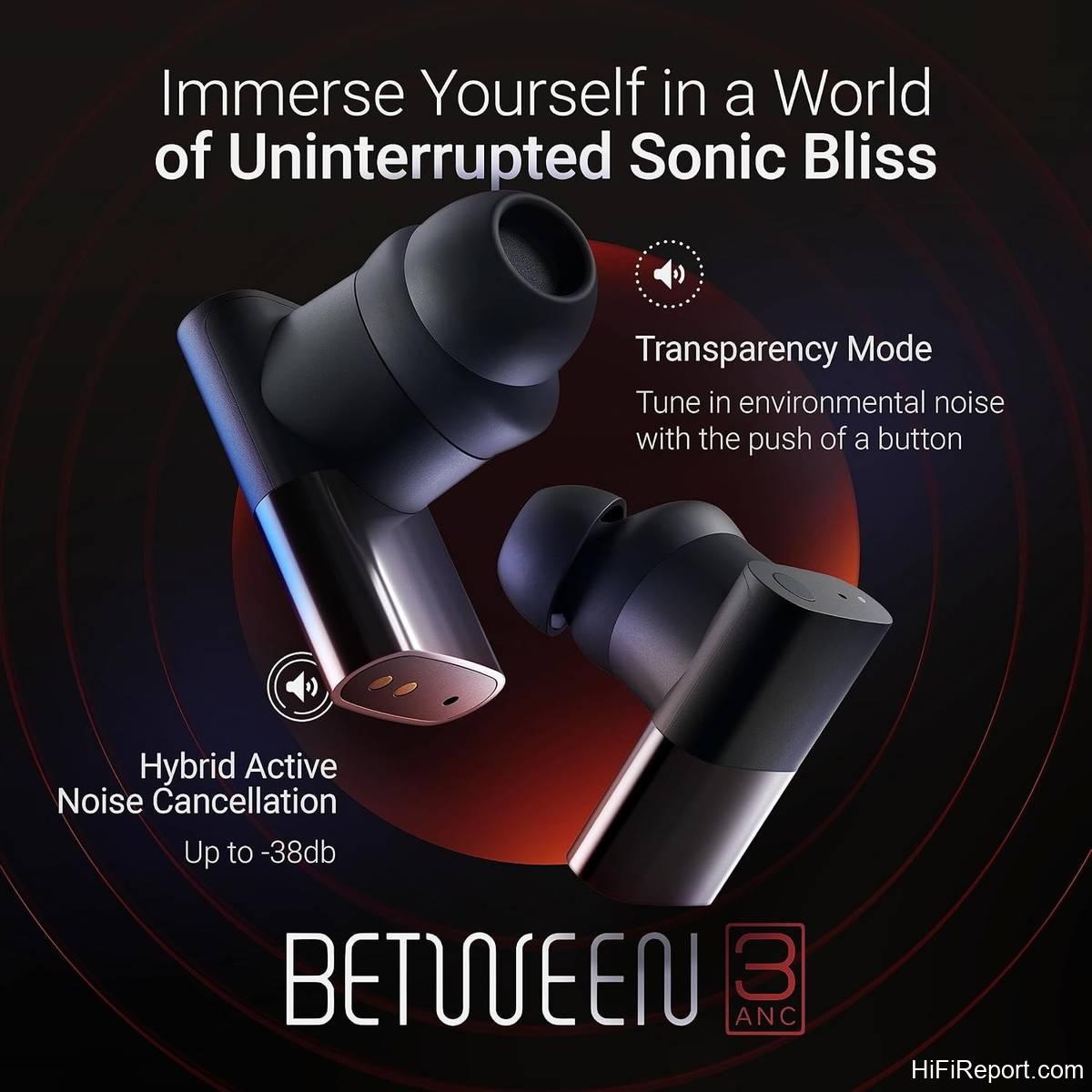
A commuter running these on a train will get usable ANC that quiets low-frequency rumble but will still hear high-pitched squeaks and a faint hiss, as one daily train rider reported. The transparency mode lets you keep music playing while talking at a counter, according to one owner, though in very quiet rooms it introduces a layer of white noise that several reviewers found distracting.
For a desk worker or gym-goer, the IPX5 rating and secure fit with wingtips cover the basics. One owner who worked out regularly through “sweaty workouts” and summer heat with a single-bud rotation for 8 to 5 hours a day said the buds “lasted through everything.” The 12-hour no-ANC runtime means a full workday plus evening listening on one charge, and the case’s 24-hour reserve covers roughly two full workweeks before you need the USB-C cable.
What Owners Say
The 4.1-out-of-5 rating across 1,680 reviews skews positive, and the praise clusters around sound quality and battery life. Owners who compared the 3ANC against AirPods Pro 2, Sony WF-1000XM5, Bose SoundSport, and various Soundcore models repeatedly called the three-band separation and bass depth the standout. Several said the out-of-box sound beats products they paid more for, and the triple-driver setup is the most-cited reason. Battery figures holding up in the field (12 hours confirmed, 8 hours with ANC) earned separate mentions.
Complaints focus on three areas. First, the charging case: the matte-plastic hinge and clip-and-adhesive assembly drew repeated concern about drop survival, and at least one owner reported the internal battery pack separating after impacts. Second, ANC depth: owners with AirPods Pro 2 in the same rotation consistently say the AirPods win on pure noise silencing and transparency realism, though the 3ANC still “gets the job done.” Third, the app and controls: the eight-band EQ is well liked, but the barebones feature set, the both-buds-required rule, and finicky touch zones that trigger volume jumps when you cup your hand around the bud irk a fair number of users. A few also flagged connection quirks: buds staying paired after returning to the case, intermittent charging when contact points get dirty, and a brief desync between the two buds during playback.
Warranty handling got a specific positive note. One owner who went through three sets in 24 months (driver-screen adhesive failure, then a wiped-apart earpiece) said Status replaced the full set and later sent a redesigned Gen 2 earbud with a reinforced screen, calling the support experience “top notch.”
Pros and Cons
Pros:
- Triple-driver architecture (one dynamic, two balanced armature) delivers clear three-band separation
- 12-hour battery life with ANC off; 24-hour case reserve
- Comfortable fit with multiple ear-tip sizes and wingtips; IPX5 rated
- Eight-band EQ in the companion app with preset sound modes
- Multi-point Bluetooth 5.2 for phone-plus-laptop use
Cons:
- ANC and transparency trail AirPods Pro 2 on depth and realism
- Charging case uses a matte-plastic hinge and clip-and-adhesive construction
- App is barebones: no control remapping, both buds required for settings changes
- Touch controls can misfire (volume jumps, ghost inputs)
- Call transmit quality lags behind the marketing claim on at least one owner’s test
Bottom Line
The Status Between 3ANC Onyx is built for the buyer who values three-way driver separation and long battery life over a top-tier ANC experience. If your priority is a TWS earbud that keeps bass, mids, and highs in their own lanes without a single diaphragm fighting all three, and you want 12 hours of playback without touching a cable, the triple-driver architecture and the confirmed battery numbers make this one of the more compelling packages in its tier. The companion app’s eight-band EQ adds a level of tuning control most competitors at this level do not provide.
Originally released on hifireport.com. Do not copy or republish without permission.
Best for: listeners who care about driver-level frequency separation, multi-day battery endurance, and a secure fit for commutes and long desk sessions; look elsewhere if: your top priority is the deepest ANC or the most natural transparency mode available, or you need a rugged charging case that will survive being tossed in a backpack with keys and tools.
Spec Sheet
- Drivers: 1 dynamic + 2 balanced armature per earbud
- ANC modes: Noise Cancellation, Transparency, Ambient
- Battery (earbuds): 8 hours ANC on, 12 hours ANC off
- Battery (case): +24 hours additional; 15-minute charge yields ~2 hours
- Bluetooth: 5.2, range up to 33 feet (10 meters)
- Water resistance: IPX5
- Microphones: 6 built-in
- Charging: USB-C
- Companion app: iOS and Android, 8-band EQ, preset sound modes
- Fit options: Multiple silicone ear-tip sizes, wingtips
Buyer Questions
Can the triple-driver setup really be heard differently from a dual-driver pair?
Yes, owners who have compared the 3ANC against dual-driver buds (OnePlus Buds Pro 2, Soundcore models) consistently describe a wider soundstage with less bleed between the low, mid, and high bands. The dedicated balanced armatures for mids and highs mean the dynamic driver is not forced to stretch into the upper register, which is where most single- and dual-driver designs lose clarity.
Does the ANC match what flagship competitors like AirPods Pro 2 deliver?
No, and owners say so directly. The Between 3ANC handles low-frequency noise well and is “more than sufficient” for a noisy commute, but reviewers with AirPods Pro 2 in the same rotation call the AirPods superior in both depth of quiet and realism of transparency. The 3ANC’s ANC works, but it will not beat the current flagships on raw cancellation.
Will the charging case survive being dropped or tossed in a bag?
Originally released on hifireport.com. Do not copy or republish without permission.
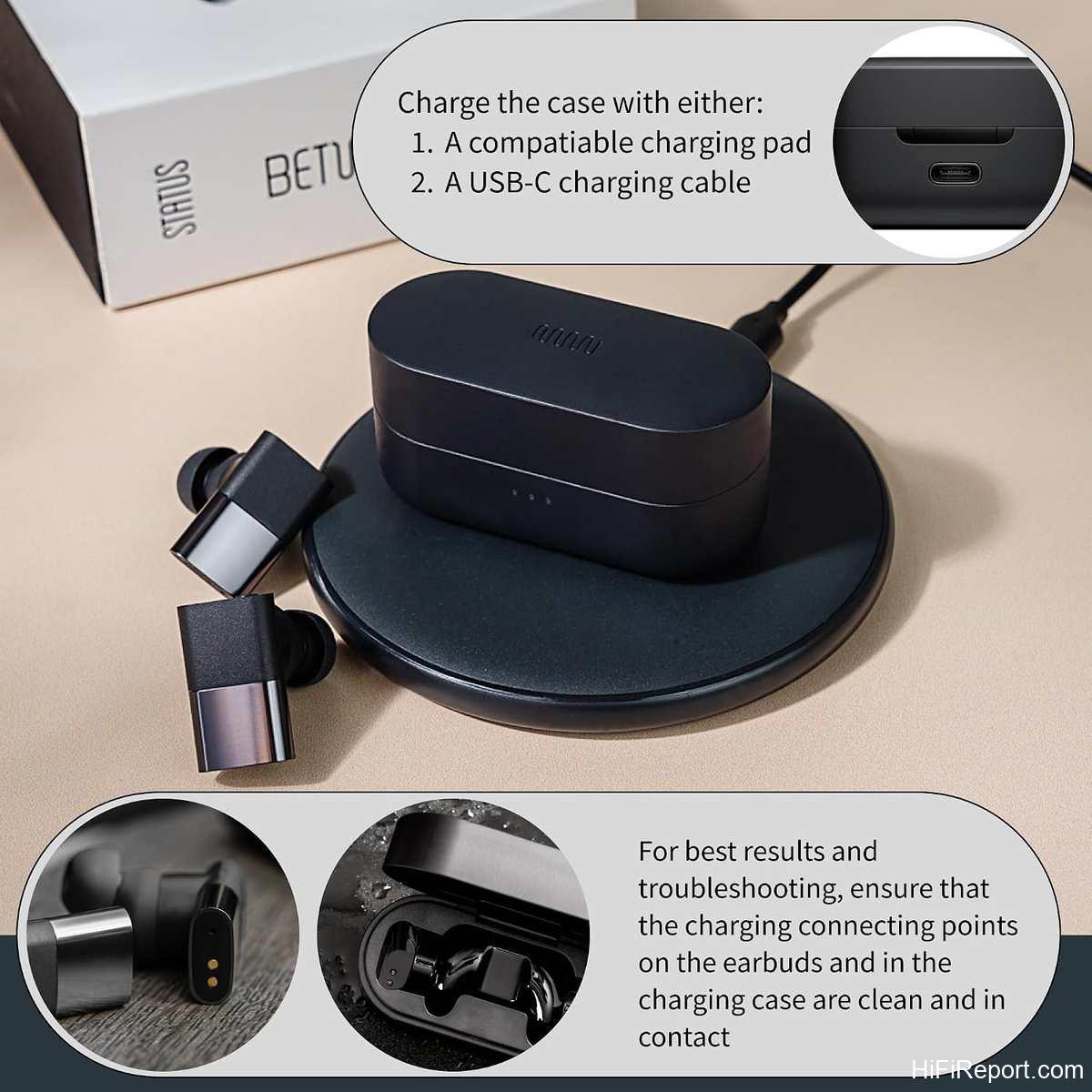
Owner feedback is cautious. The case is matte plastic with a hinge one reviewer expects will not hold up after two concrete drops. A separate owner reported the internal battery separating after repeated impacts. The clip-and-adhesive assembly means the case is the least drop-tolerant part of the package, and users should keep it in a protective pouch.
Do I need both earbuds connected to change my EQ or sound preset?
Yes. The app requires both buds to be paired before it will let you adjust the eight-band EQ, switch sound modes, or save a custom setting. If you work with a single bud (one in your ear, one in the case), you will need to reconnect the idle one usually you want to change the tuning, which one owner found impractical for genre-hopping at a desk.

- Advanced Triple Driver Technology: The Status Audio Between 3ANC earbuds are equipped with a sophisticated triple driver system, featuring one dynamic driver and two balanced armature drivers, delivering a powerful and immersive audio experience. This unique configuration ensures crisp highs, detailed mids, and deep bass, providing an unparalleled sound quality that will captivate any audiophile
- Cutting-Edge Active Noise Cancellation: These wireless earbuds boast an advanced ANC technology with three adjustable modes: Transparency, Noise Cancellation, and Ambient. This allows users to customize their listening experience according to their environment, whether they're in a bustling city or a quiet room. The Between 3ANC efficiently blocks out unwanted noise, ensuring an immersive and distraction-free audio experience
- Comfortable and Secure Fit: Designed with ergonomics in mind, the Status Audio Between 3ANC earbuds come with multiple ear tip sizes and wingtips, ensuring a secure and comfortable fit for extended listening sessions. The lightweight design and IPX5 water resistance rating make them ideal for workouts, daily commutes, and outdoor adventures