
Stenheim Alumine 2 Bookshelf Speaker Review
How much can you imagine from a bookshelf speaker? I’m not here to talk about products that represent the sound aesthetics of the last century. Forget those bookshelf speakers that are only suitable for light music and simple vocals. Forget those bookshelf speakers that can’t play loudly and lack dynamics.
Today’s bookshelf speakers, the truly exceptional ones, are everywhere.
If you want elegance, they have elegance; if you want power, they have power too.
The Stenheim Alumine 2, which I listened to this time, is precisely such a representative.
Not Entry-Level, but a Founding Classic
For an introduction to Stenheim, the Swiss speaker company, please refer to my previous review, “Such Sound and Rhythm, Enough to Win Your Heart – Stenheim Alumine Five Listening Notes.” I won’t repeat it here.
As the smallest and most entry-level speaker from the manufacturer, the Alumine 2 is actually Stenheim’s most classic product. Their very first product was the Alumine bookshelf speaker, the predecessor to the Alumine 2.
So, don’t underestimate the Alumine 2 just because it’s small and Stenheim’s entry-level model.
No.
Stenheim’s achievements today began with the Alumine 2.
Aluminum Alloy Cabinet, Not a Single Screw Visible
As a classic model, the Alumine 2, like all Stenheim speakers, uses an all-aluminum alloy cabinet. Thick aluminum panels, each 1cm thick, are locked and joined to form the enclosure.
This speaker is manufactured and assembled in the Swiss factory. Its exquisite design hides all assembly parts and screws inside, leaving not a single screw visible on the surface.
Wooden cabinets are glued, making it easier to hide screws on the surface. Aluminum alloy, however, must be bolted. Stenheim ingeniously conceals all joints internally, significantly increasing production costs, not to mention the materials.
Silk Dome Tweeter with Corrugated Surround Paper Cone Woofer
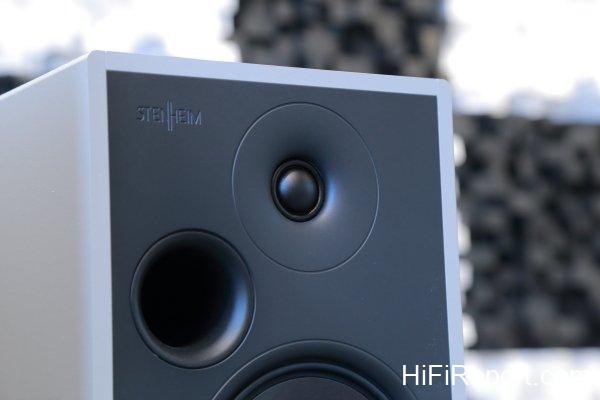
The tweeter is a 1-inch silk soft dome unit, coupled with a shallow horn-shaped waveguide made entirely of machined aluminum. This is designed to improve the efficiency of the tweeter and control its dispersion angle.
Stenheim has always favored silk soft dome tweeters. They use them across their entire speaker range, only adding aluminum ribbon super tweeters to the Reference series to extend the upward frequency response.
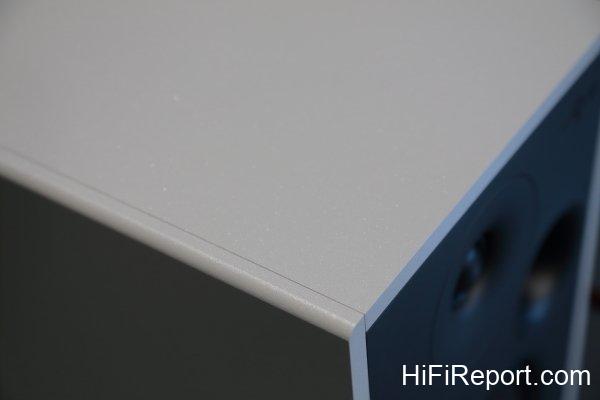
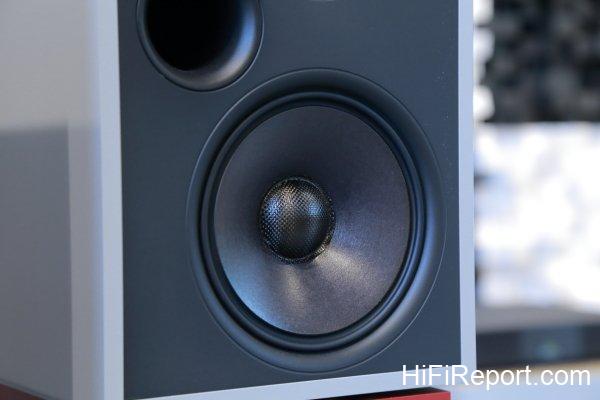
For the mid-bass driver, the Alumine 2 is equipped with a 6.5-inch cellulose fiber diaphragm. This fiber material uses natural fiber sources and alters only the physical structure without changing the fiber’s chemical properties, creating a lightweight, high-rigidity diaphragm.
To optimize the diaphragm’s damping characteristics, the manufacturer applies special resin coatings to both the front and rear surfaces.
We often simply refer to diaphragms made of this type of fiber material as paper cones, a favorite of many speaker manufacturers who adhere to traditional craftsmanship.
Furthermore, Stenheim prefers to use short-stroke, corrugated surrounds, allowing the speaker driver to move more quickly and nimbly.
This approach is also seen in traditional horn speakers.
The distinctive clarity, transparency, and fast transient response of Stenheim speakers are undoubtedly related to this corrugated surround paper cone driver.
The Person Who Understands Stenheim Speakers Best – Mr. Yang of Boyun Audio
The listening session took place at Boyun Audio.
Boyun Audio has recently relocated to a new location in Tianmu. The new store is much larger than the previous listening room in Dazhi.
Honestly, when visiting Boyun’s new Tianmu location, I was more eager to listen to the Alumine 5.
I mentioned this to Mr. Yang on the opening day of Boyun.
However, because a customer specifically requested to hear it, the latest Alumine 5 SE was recently sent south to Kaohsiung. This is why, on this visit to Boyun Audio, I received a “shock education” from the Alumine 2, witnessing Stenheim’s prowess in making small speakers and leaving a deep impression of this classic Stenheim model.
This small speaker truly has profound capabilities.
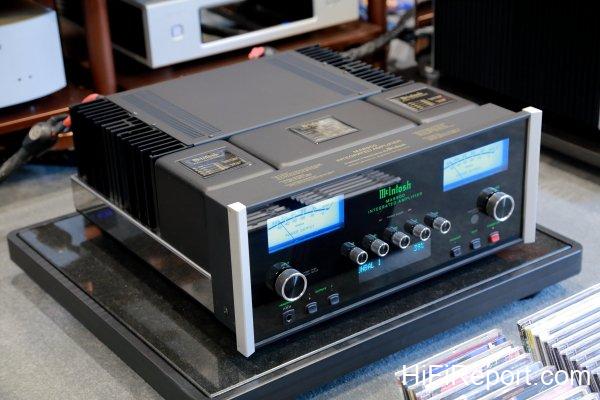
Mr. Yang paired it with a McIntosh MA8900 integrated amplifier. I’ve reviewed this model before. Given McIntosh’s build quality, machine durability, classic appearance, solid 200W output power, and rich features, the MA8900 is indeed a very practical and excellent choice for HiFiReport reviewers.
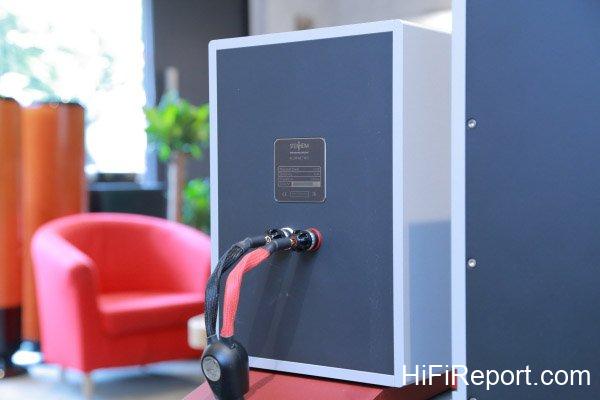
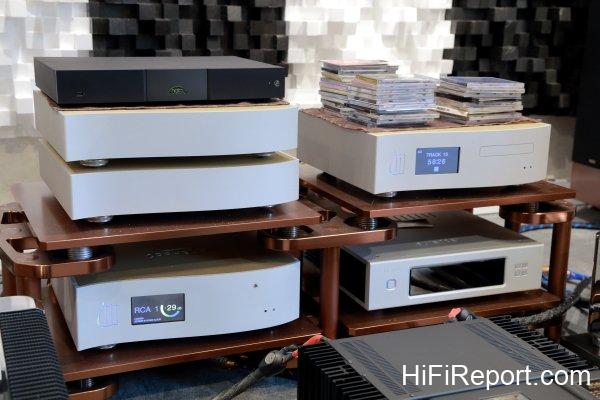
The source was the Orpheus Absolute CD player, also from Switzerland and with equally exquisite metalwork.
Mr. Yang has been selling Stenheim for many years, from dealership to distribution. He is the best at selling Stenheim speakers and the most familiar with them. Listening to his recommended pairings is always a safe bet.
Small Size, Wide Soundstage, Argerich’s Piano Sound is Powerful and Dynamic
Straight off the bat, we started with a heavy dose.
We put on Martha Argerich’s 2006 live recording from the Lugano Festival, playing Shostakovich’s Piano Concerto No. 1.
The instrumentation of this piece is not large, a string orchestra accompanied by a piano and a trumpet, but the recording dynamics are astonishing. Argerich is a “live musician,” and her live performances often produce amazing results; I like to use this disc to test audio systems.
Not long into the music, I pressed pause.
What’s wrong? No matter how I listened, I felt the sound was stuck near the two speakers, and it created a buzzing, nasal effect.
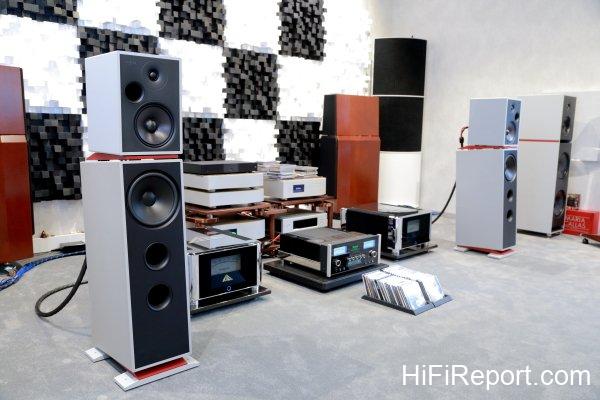
I looked at the setup and deduced it was caused by the Alumine 5 speakers placed too close to the Alumine 2s.
This wasn’t Mr. Yang being lazy, but because before my arrival, a customer wanted to compare the Alumine 5 and Alumine 3 Way, so the two pairs of speakers were placed together.
At low volumes, this arrangement might not reveal any problems, but at higher volumes, the devil is in the details.
I immediately asked Mr. Yang to move the Alumine 5s away from the Alumine 2s. My judgment was that the two pairs of speakers were too close, causing resonance in the channel between them, creating the nasal sound.
Sure enough, problem solved.
After moving the speakers apart, everything became clear and open.
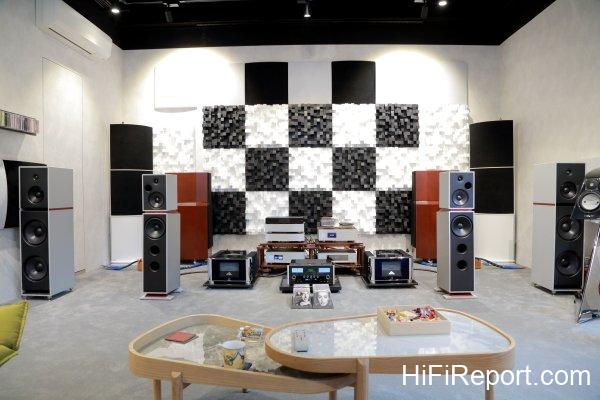
Although the Alumine 2 is a bookshelf speaker, its sound is grand and expansive, with a wide soundstage.
Many speaker manufacturers these days are adept at making small speakers sound big, but the Alumine 2’s scale is still remarkable, definitely top-tier.
Listening to the deep bass produced by Argerich’s left hand roaming in the lowest octave, the rich harmonies of the chords, and the subterranean lows, it was truly shocking.
This experience was different from my previous listening session with the Alumine 5 in the Dazhi store.
Back then, I felt the small space was limiting the Alumine 5. Here, I felt that even in a large space, the Alumine 2 could thrive.
These Stenheim speakers are truly extraordinary.
After a burst of excitement, Shostakovich guides the music into contemplation and tranquility, with a meditative quality permeating the air.
The strings are dense and seamless. I knew the corrugated surround mid-bass driver was clear and transparent, but I didn’t expect the sound to have such depth.
The low strings weave a thick web, like long-sealed memories, waiting for the piano to dispel them with its notes.
The music moves into the fourth movement, a brilliant Allegro. The music becomes increasingly urgent, almost relentlessly rushing forward. The strings frantically declare themselves as if possessed, with the low strings weaving in and out, the trumpet assertive and flamboyant, and the piano alternating between tremolos, arpeggios, and broken chords.
The Alumine 2 truly masterfully conveyed Shostakovich’s (capriciousness).
Listening to this, I was already thinking: if there’s time later, I want to hear how the Alumine 5 performs in this new space.
It seems like the Alumine 2 is just the upper half of the Alumine 5, but in reality, the upper cabinet volume of the Alumine 5 is much larger, and the drivers used are also different, so they can’t be directly compared.
Dynamics and Scale Are Sustained, Natural Bass Roll-Off is Clean
Next, we listened to Tchaikovsky’s Symphony No. 6, “Pathétique,” conducted by Gergiev with the Kirov Orchestra. The opening bassoon’s lament had the full flavor of a reed instrument.
The introduction revealed a tragic atmosphere, and in the exposition, the theme emerged, with the music gradually becoming more passionate. The soaring brass brought the musical emotion to a climax.
Then, the music returned to calm, dominated by lyrical and expressive strings, with the French horn gently supporting, and the woodwinds taking turns singing the same theme.
This is Tchaikovsky’s forte, using a beautiful and peaceful atmosphere to lure you into the music, and then deliver a fatal blow.
Taking you to heaven, and then plunging you into hell – that is the most terrifying nightmare in the human world.
The Alumine 2 delivered a clean, transparent, direct, and honest soundstage and image, open and deep, a scale that exceeded what a small speaker “should” have.
Listening to the strings quietly evoke those layers of romantic thoughts, it was truly beautiful. Listening to the woodwinds sing purely, but all of this was in anticipation of that moment to come.
The bassoon, at an extremely soft volume, led the music towards the deepest depths of sorrow, and then the orchestra exploded with energy. The Alumine 2 sustained the scale, but this also showed that Stenheim did not intentionally push the Alumine 2 to produce oversaturated sonic energy.
Some small speakers, in order to squeeze out massive sound pressure and bass, exhibit a booming phenomenon, a kind of hollow cabinet resonance.
Unsuspecting listeners might think, “Wow, these speakers are amazing, like floor-standing speakers!” but in reality, it’s unnatural.
The Alumine 2 doesn’t have this problem. When it’s time to roll off, it just stops there. It doesn’t force downward extension, but strives for naturalness.
Stenheim wants a clearer and more transparent picture. Listen to the timpani roll that follows, and then the recapitulation led by the low strings.
Listen, the picture is crystal clear, the low strings are clean, and the timpani sounds crisp and solid.
The Alumine 2 can be placed on a bass extension module, in which configuration Stenheim calls it the Alumine 3 Way.
With this bass extension module, the bass would be even richer.
But, listening to the pizzicato at the end of the first movement, and the woodwinds gently playing the music into silence in the air, I almost felt that this Alumine 2 had already allowed me to appreciate the full picture of Tchaikovsky’s Pathétique.
Glorious Treble, but Not Harsh, Bright, but Not Ear-Piercing
Listening to Ashkenazy conducting Sibelius’s Finlandia, the energy squeezed out by the brass is a test for any tweeter.
What’s the test? Will it sound harsh when played loudly? If it’s not harsh, will it be too dull? Will the metallic texture of the brass come through? I’ve always felt that to truly capture the brilliance of brass, you need metal tweeters. However, some metal tweeters can be ear-piercing at high volumes, a real dilemma.
The silk soft dome tweeter in the Alumine 2 reproduced the golden brilliance of the brass to my satisfaction. Reaching the peaks, it still produced a rounded texture, glorious but not harsh, bright but not ear-piercing, truly excellent.
Listening to the strings creating a cloud-like atmosphere with tremolos, allowing the woodwinds and brass to successively play the hope of dawn emerging. When the rising sun appeared and the music burst forth from the Alumine 2, it was truly magnificent, the sound of the Finnish people celebrating their successful revolution.
The timpani rolling in from afar set the tone for this victory, and also set the tone for the Alumine 2’s sonic quality.
Why am I constantly listening to orchestral music on bookshelf speakers? Although the Alumine 2 is a bookshelf speaker, and a small one at that, its sound is grand enough, the soundstage is open enough, and listening to large-scale, dynamic orchestral music is still very enjoyable.
Don’t think that bookshelf speakers are only good for singing softly and being refined. Modern bookshelf speakers are not just one-dimensional.
Chamber Music Reveals Its Refinement and Delicacy
Switching to chamber music, the Alumine 2 revealed its refined and delicate side.
Listening to the Mozart Piano Trio performed by Dumay, Pires, and Wang Jian, the instrumental sounds were exquisite and radiant, not heavy, but full of vitality. The music was free and intoxicatingly delightful.
The Alumine 2 presented the piano with a particularly transparent and brilliant quality. The piano tone was focused and solid. Listening to the reverberation, it was truly captivating, floating upwards.
This kind of charm really doesn’t sound like it’s coming from a silk soft dome tweeter.
The violin’s sheen was excellent. The recording itself didn’t particularly emphasize the details between bow and string, but its texture was vivid and lifelike.
The cello had a rich but not overly nasal tone. The musical picture was clear, and the texture was lifelike and delicate.
This was consistent with the Stenheim sound I had heard before. In fact, I think if you listen to chamber music more than orchestral music, buying the Alumine 2 is actually enough. Less bass at the very bottom end makes it even more nimble and elegant, and the refined aspects of chamber music can be better showcased.
Hearing Fast, Lively, and Powerful Percussion
For such small speakers, they also performed excellently with percussion music.
Don’t think that just because they’re small, they lack impact.
The most exciting part of percussion is not how massive and shocking the drum sound is, but rather the display of speed and force, and the test of liveliness and three-dimensionality.
Listening to a recording led by Joel Grare and a group of musicians.
The pieces on this album blend Eastern and Western elements, presenting a culturally fused atmosphere.
Listening to the first two tracks, which incorporate the erhu, the Alumine 2’s rendition of the erhu had a slightly viscous, slightly thick quality, yet it still retained a sense of vibrancy.
Of course, the highlight was still the rich percussion in the background. Those percussion instruments, many of which I couldn’t name, were scattered in a colorful array, creating a lively scene.
In the latter part of the second track, the drum in the center, with deep frequencies but short sustain, still sounded powerful when struck.
The Alumine 2’s 6.5-inch woofer, paired with a small cabinet, seems so unassuming, yet it doesn’t prevent it from displaying the power of drum strikes.
Listening to the tenth track of percussion music, the drum sounds that unfold after a series of tubular bell chimes are quite impactful.
The tubular bells here test whether the speaker’s timbre is rich enough, while the drums that follow test whether the speaker can produce solid and weighty sounds. Don’t ask me if it passed or failed. I’ve noted this section, and you can probably guess whether I was satisfied or dissatisfied with the Alumine 2.
In the eleventh track, I’m not sure of the instrument’s name, something similar to a steelpan with resonance tubes attached. Listening to the sound of the mallet hitting the metal resonating plate, there’s detail.
As the music progresses, other percussion instruments join in, and the rich resonance of the tuned pipes intensifies with the dynamics. The Alumine 2’s presentation of these sonic colors is direct and forthright.
Tracks twelve and thirteen progress from soft to loud, with a large range of dynamic variation. I turned up the volume to hear the Alumine 2 sustain the dynamic peaks of the music. Congratulations, not only did the sound not break up, but when the energy erupted, it seemed to retain a sense of ease. I didn’t feel any pressure, only shock.
Returning to the double bass in the third track, the pizzicato texture was crisp and clear, perfectly matching my previous impression of Stenheim speakers playing bass when listening to the Alumine 5.
However, the Alumine 5 is a floor-standing speaker with two 10-inch woofers, while the Alumine 2 is a bookshelf speaker with only one 6.5-inch mid-bass driver. How can it produce such rich bass? In the previous listening sessions, I clearly never felt it was a boom box. How can this bass response be so rich? It’s not muddy. I know the Alumine 2 knows what bass frequencies it’s playing.
This isn’t just idle chatter; I truly believe it knows.
Lively, Direct, but Not Noisy; Two Harsh Tests Passed
Even though the Alumine 2 remained composed under my continuous high-volume operation, even when faced with Finlandia, I still wanted to test if it would become noisy.
Aluminum alloy cabinets, known for their clear and direct sound, might become harsh with recordings that are a bit brighter or more aggressive. Would it become noisy? I used two albums to test.
One was Holly Cole Trio’s “Don’t Smoke in Bed” album. On this album, Holly Cole’s vocals are recorded close to the microphone, and sibilance and plosives are prominent. When she sings at higher pitches, the slightly noticeable “ssss” air sounds and lip noises might make it unbearable to listen at high volumes.
The Alumine 2 played it, walking a tightrope, seemingly edgy yet still listenable.
However, the bass in the background was truly enjoyable – clean, clear, elastic, and also showing a certain degree of depth and body.
First test, Pass! The second test was even harder – Celine Dion’s concert in Paris.
This recording has a very live feel. In the past, I often played this CD on systems with a thick sonic foundation, so the drums would sound solid and full, and the overall album would sound more stable.
Stenheim, of course, is not this kind of sound, and the overall tonal character is in the opposite direction. Would it work? At this point, it was on the tightrope again, and this time, it was riding a unicycle, with a partner on its head, holding him up with both hands.
What does that mean? Even more precarious! The first track, “J’Attendais,” showcased her power ballad prowess. The drums were solid and powerful, and the audience’s cheers created a wide stage. French pronunciation has many lip sounds, and Celine Dion’s singing also has a lot of nasal resonance. When she hits a high note, it’s full of force, like an arrow shot straight at you. However, it seems this flying arrow weakened before reaching me. Even if it hit me, it wouldn’t hurt.
Do you understand what I mean? It’s like: a bit sharp, but not truly sharp.
But in this way, the Alumine 2 hyped up the atmosphere of this live concert even more intensely.
The second track was even harder to deal with. I almost wanted to turn down the volume, but it seemed like it could still pass the test. I allowed this unrestrained musical energy to flow, giving the Alumine 2 a chance to reproduce the excitement of this piece.
The third track was “The Power of Love.” The Alumine 2 gave a Celine Dion who was substantial but not heavy, solid and vivid. The drums in the background sounded full and powerful, but this fullness was a bit different from what I had heard on other systems.
The drums had a more concise decay, and each drum beat that landed was defined and substantial but not muddy and heavy – this is the characteristic of a fast-responding corrugated surround woofer.
Go and Listen, Then You’ll Understand What I’m Praising
The Stenheim Alumine 2 is not an ordinary bookshelf speaker. It’s small in size, but not small in sound, and it can handle many types of music.
Its sound is direct, transparent, clean, detail-rich, layered, and fast in response. Do you like this kind of sound? However, I still sincerely recommend that you take a trip to Boyun Audio for a listening session.
Because, after looking back and forth and repeatedly considering this article several times, I still feel there’s something unsaid.
If you really want to understand the capabilities of modern small speakers and the aesthetics of Swiss-engineered speakers, listening and seeing for yourself is the most accurate way!
Specifications
* Type: 2-driver, 2-way bass-reflex bookshelf speaker
* Drivers: 1-inch silk soft dome tweeter x1; 6.5-inch woofer x1
* Frequency Response: 45Hz – 30kHz
* Maximum Power Handling: 100W IEC, 200 W (peak)
* Recommended Amplifier Power: 10W-200W
* Sensitivity: 93 dB SPL/2.83V/1m
* Maximum SPL: 109 dB
* Impedance: 8 Ohms (minimum 6 Ohms)
* Dimensions: H 330mm x W 230mm x D 275mm
* Weight: 17 Kg each