
Stenheim Reference Ultime Two Review
I often collaborate with audio shops to host classical music appreciation sessions. I frequently tell attendees that what truly moves us isn’t just the sound produced by the audio system, but the music it faithfully recreates.
As a writer who reviews audio equipment, I find joy in sharing the profound experiences of listening to music through these systems. While writing conveys information, it relies on the reader’s imagination. Music appreciation sessions offer a more tangible experience. The real value of an audio system emerges when the music it plays touches our hearts.
Modern audio engineering emphasizes fidelity. What is fidelity? What is high fidelity? How do we define “how real the sound is”? Stenheim’s slogan, simple yet powerful, points directly to the purpose of high-fidelity audio: making music reproduction feel as alive as a live performance. This isn’t just a slogan; every time I listen to Stenheim speakers, I feel precisely this – the music sounds so alive!
My first encounter with Stenheim speakers was at HiFiReport Audio’s former location in Dazhi, where I auditioned the Alumine Five. A few months later, to accommodate the arrival of Stenheim’s flagship Reference series, HiFiReport moved to a new, much more spacious store in Tianmu, with plenty of height. The first pair of speakers I listened to at the new store was Stenheim’s foundational classic, the Alumine Two.
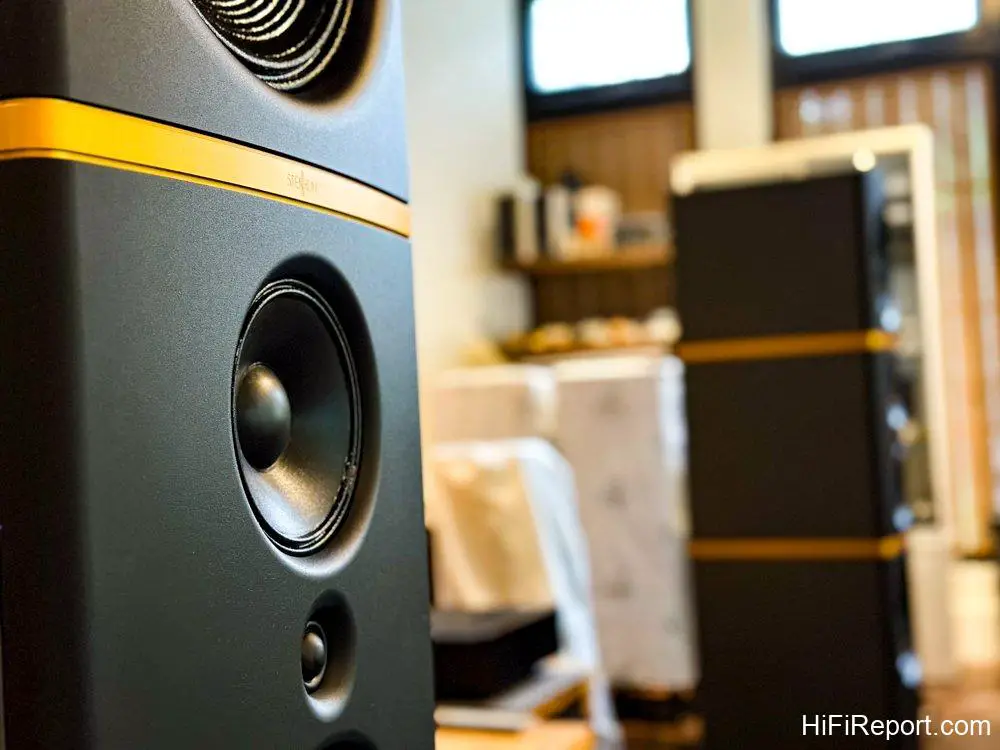
These two encounters left a deep impression on me regarding Stenheim’s open and vibrant sound. Recently, HiFiReport Audio brought a pair of Stenheim Reference Ultime Two speakers to their showroom and featured them in the “Music Comes Alive For You” music appreciation seminar I co-hosted at HiFiReport.
Before the event, Mr. Zhang from HiFiReport informed me that the Reference Ultime Two would be used, assuring me that I could select any music without worrying about the system’s dynamic range or bandwidth. The Reference Ultime Two is the “smallest” pair in Stenheim’s Reference series, yet its dynamic range and bandwidth performance are more than capable of competing with any top-tier loudspeaker.
Aluminum Cabinet Construction
Stenheim speakers feature cabinets crafted entirely from solid aluminum plates, meticulously CNC-machined and assembled piece by piece. The cabinet design is incredibly sophisticated, with no visible screws on the exterior and perfectly flush seams. Internally, an aluminum support frame enhances overall rigidity.
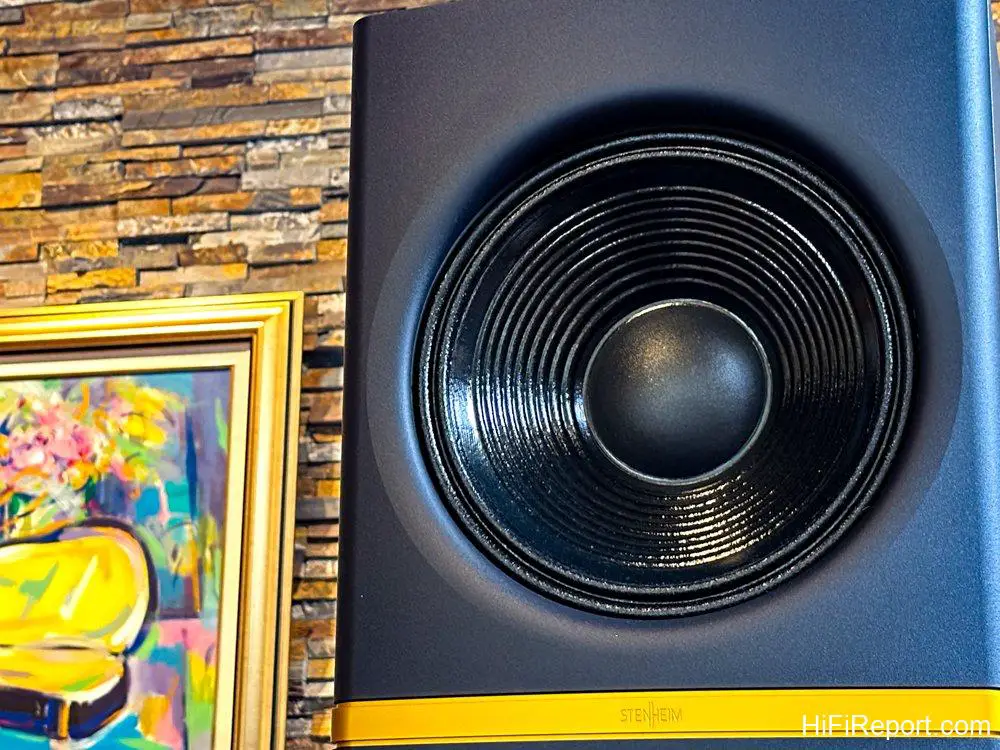
Traditional speaker cabinets are commonly made from wood, most often MDF due to its uniform density and ease of processing. However, even high-pressure bonded MDF has a degree of elasticity and resilience. When a speaker is producing sound, the energy of the sound waves causes vibrations; you can feel this by simply touching the cabinet during playback. Aluminum, with its higher hardness and lower elasticity, is far less prone to vibration, significantly reducing the interference of “cabinet sound.”
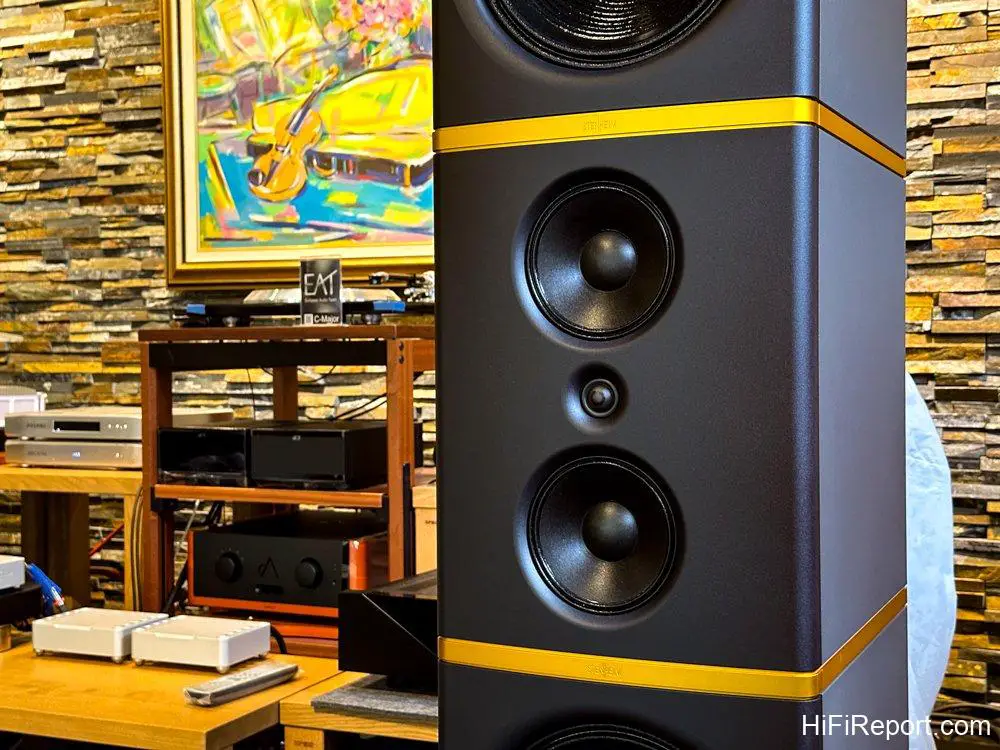
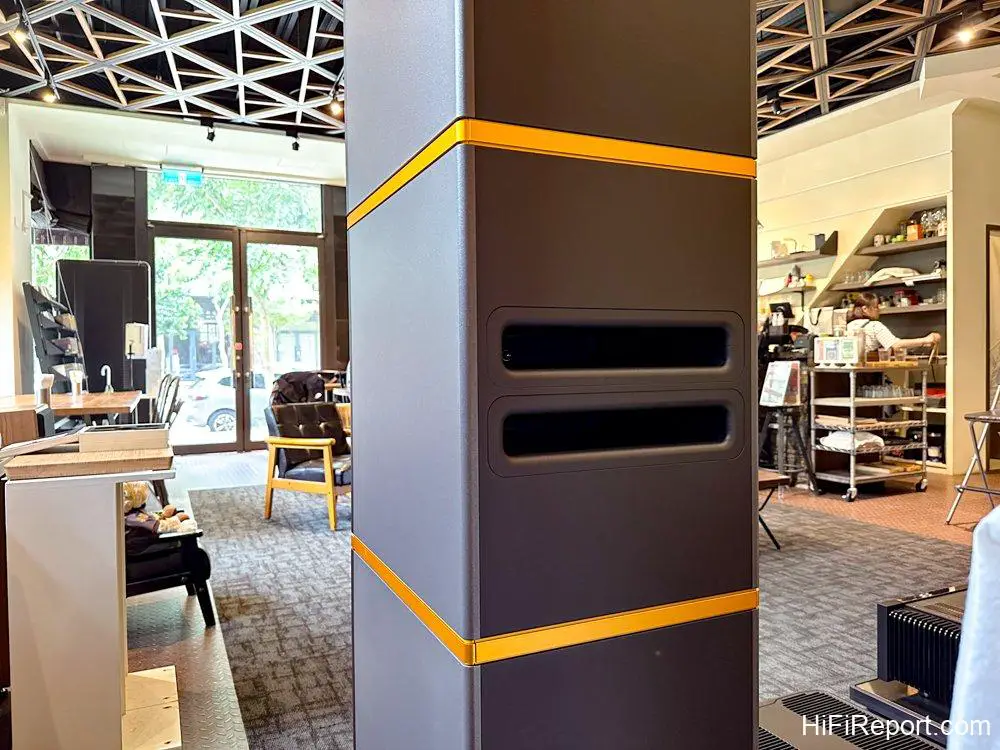
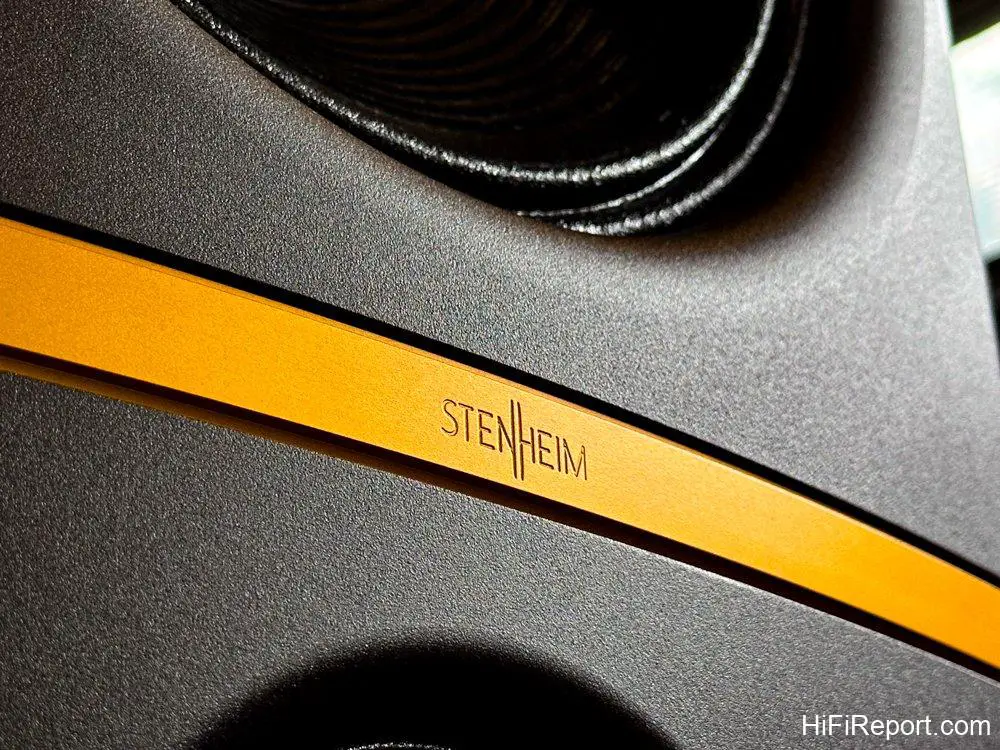
Each driver resides in its own isolated chamber, minimizing interference from the back waves of other drivers. The Reference Ultime Two cabinet is divided into three sections. The horizontal “belt” encircling the cabinet is actually decorative, concealing the joints between the upper and lower sections. All three sections are built like structures using CNC-cut aluminum components, incredibly solid. Drivers, baffles, and side panels are then bolted on, and the three sections are assembled.
While the Reference Ultime Two appears massive, its construction involves assembling multiple distinct parts, a process of considerable complexity. The cabinets come in two standard colors, light grey and dark grey, with mocha, ivory, and all-black available as custom options. The decorative “belt” is also available in multiple colors, allowing users to match their interior decor.
d’Appolito Driver Array
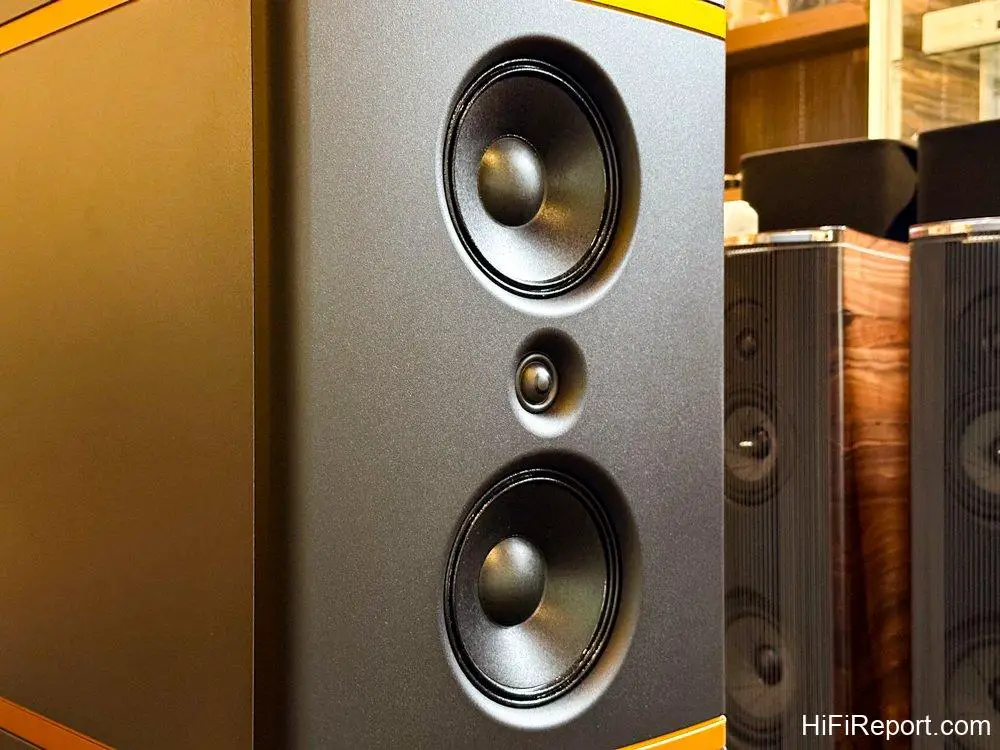
Like other speakers in the Reference series, the Stenheim Reference Ultime Two utilizes a d’Appolito driver configuration, with the tweeter centrally located between two mid-range drivers and two woofers, totaling five drivers.
The Reference Ultime Two employs a single 26mm soft dome tweeter, surrounded by a shallow horn waveguide. This design is mirrored in the 6.5-inch mid-range drivers, which feature W-shaped surrounds and are also mounted within shallow horn waveguides. The two woofers are substantial 12-inch units, also with W-shaped surrounds and concentric circular ripples on their cones. These ripples help enhance the rigidity of the driver diaphragm, suppressing cone breakup and extending almost to the edge, reflecting Stenheim’s commitment to low distortion.
These drivers are custom-made for Stenheim, engineered to meet the specific requirements and characteristics of the Reference Ultime Two design.

Slotted Bass Ports
The Reference Ultime Two is a bass-reflex loudspeaker with slotted ports on the rear. This design avoids the air turbulence noise often associated with conventional round ports and improves the speed and clarity of the bass response.
The crossover network is a high-order design, although the exact slope in dB per octave is not specified. The advantage of a high-order crossover is a steeper roll-off slope, leading to smoother transitions between drivers and less frequency overlap compared to first-order designs. However, high-order crossovers introduce greater phase shift and are more challenging to design correctly. Stenheim states they use high-order crossovers with meticulous time-phase compensation and high-quality audio-grade components.
For a loudspeaker to perform well, every element – drivers, cabinet, and crossover – is crucial.
Adjustable Driver Levels
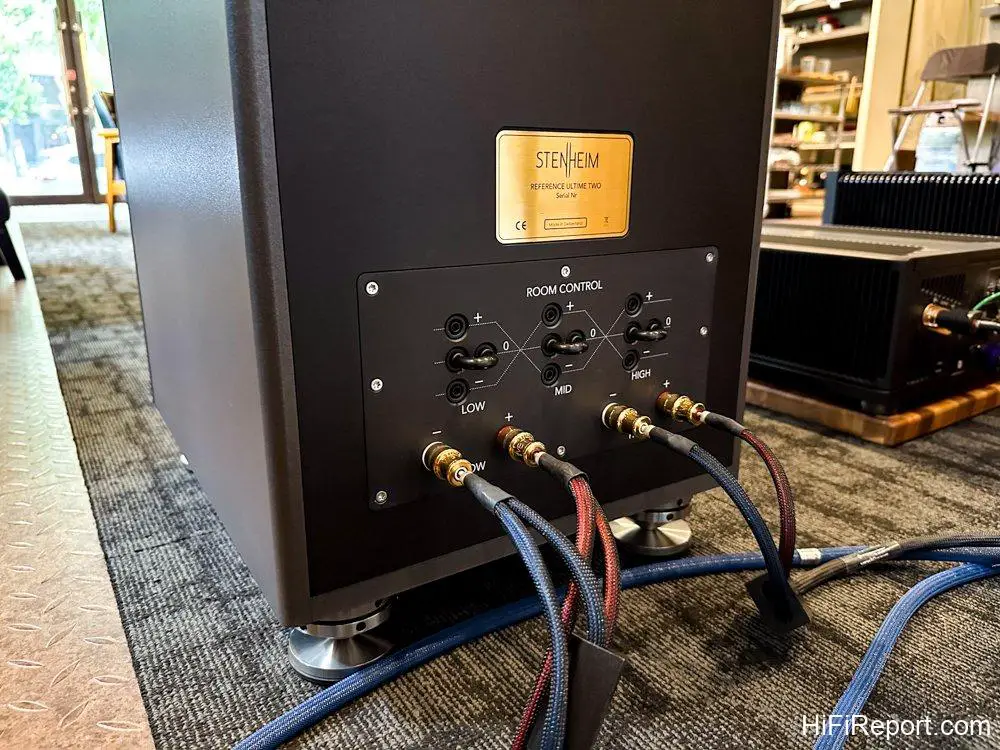
The Reference Ultime Two features separate binding posts for the mid/high frequency and bass sections, allowing for bi-wiring or bi-amping. Furthermore, acknowledging that every listening environment has unique acoustic properties, terminals above the binding posts provide adjustments for the levels of the high, mid, and low frequencies. This adjustment is easily made by simply repositioning jumper cables.
Optional Dedicated Base
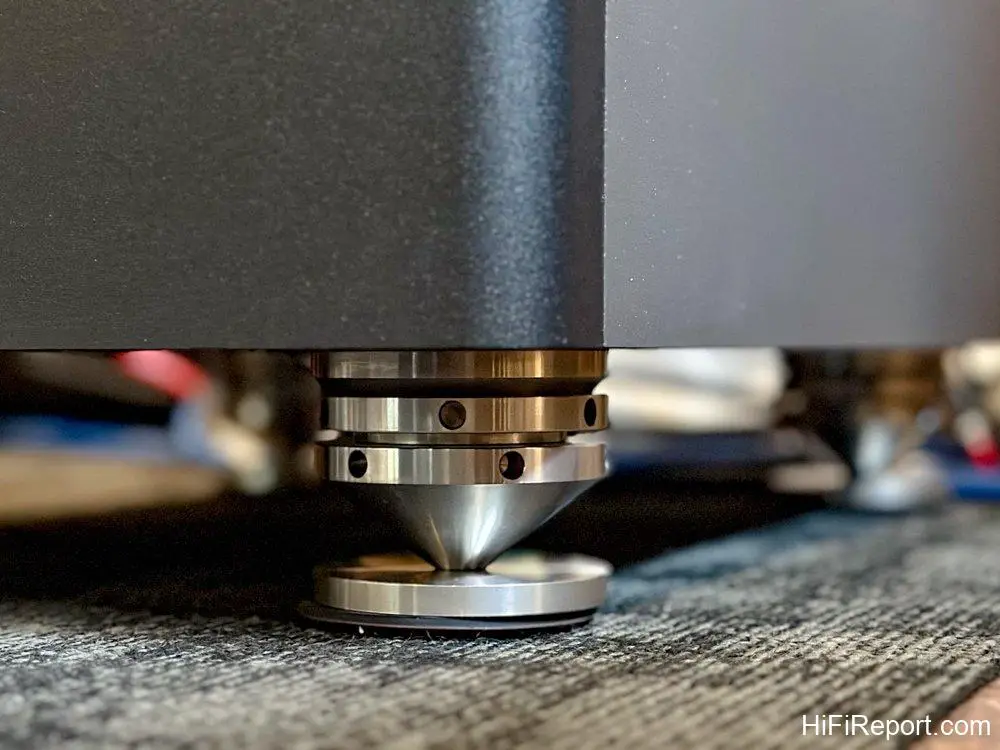
The included standard spikes are high quality and allow for height adjustment to ensure the speakers are level. In addition, Stenheim offers an optional, higher-grade Reference Platform base designed specifically for the Reference Ultime Two and Ultime Three. This base integrates spikes with wheels, making placement fine-tuning or repositioning effortless. Given that the Reference Ultime Two weighs a substantial 230 kg (507 lbs) per speaker, compared to typical speakers weighing 30-40 kg, accessories like this are invaluable, allowing users to make adjustments in their own homes until satisfied.
Driving with MSB M205 Monoblocks
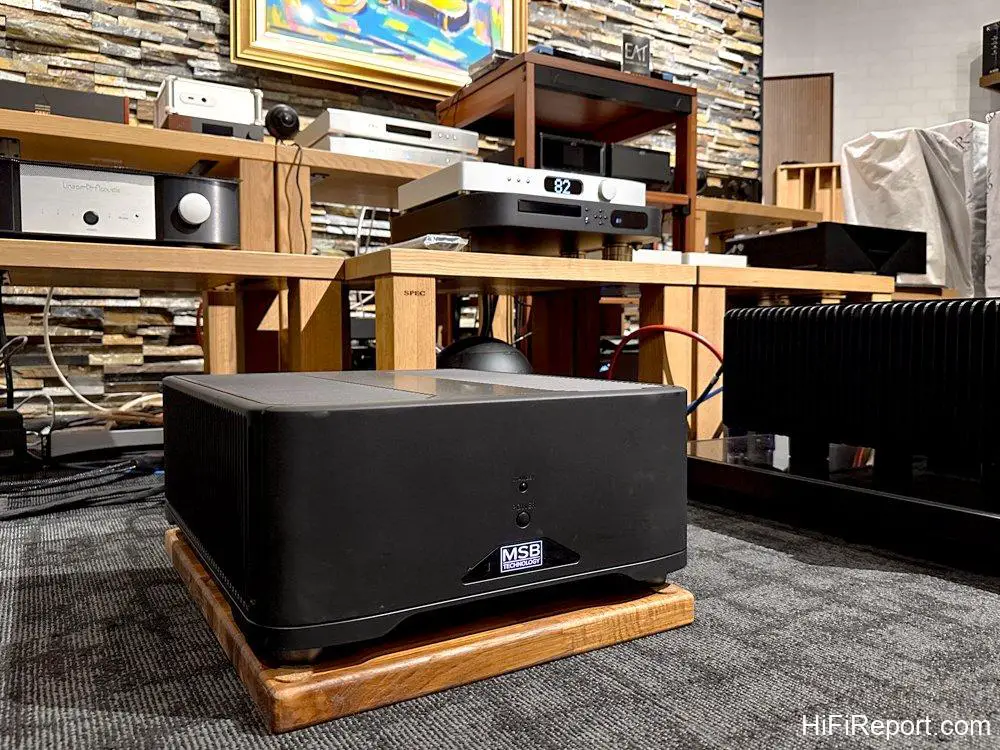
Mr. Zhang at HiFiReport paired the Reference Ultime Two with MSB M205 monoblock power amplifiers. An MSB The Discrete DAC was connected directly to the power amps, handling decoding and volume control. The M205 monoblocks have two sets of speaker outputs, enabling bi-amping. On the day of the audition, Mr. Zhang used two pairs of speaker cables to bi-amp the Reference Ultime Two. The source was a Rockna Wavelight Server, functioning as both a music server and a Roon Server.

The sound of the Reference Ultime Two was precisely as I’ve come to expect from Stenheim: pure, clear, transparent, with beautiful high-frequency texture, outstanding mid-range resolution, and deep, rich bass. The sound was open, full of energy, with a wide soundstage and massive imaging. Even Mr. Zhang himself remarked that the Reference Ultime Two was the largest and heaviest speaker ever displayed at HiFiReport.
Expansive Soundstage
Using Paavo Järvi conducting the Cincinnati Symphony Orchestra’s performance of “Jupiter” from Holst’s The Planets as an example: the rapid string passages build tension, followed by the bright brass theme emerging from the rear. After development, the solemn second theme is introduced through the interplay of brass, strings, and woodwinds. The approach to the second theme mirrors the first, led by French horns introducing the theme, then joined by strings and woodwinds, increasing the tempo to add variation and layering to the simple melody.
Holst brings different sections forward in turn, and the Reference Ultime Two clearly renders the texture of each instrument. Furthermore, the soundstage it creates is not only wide but also deep, with clear and precise positioning of each section. When the brass sounds from the back, it pushes the soundstage depth forward dramatically. Sitting in Mr. Zhang’s usual tuning spot felt like being on the podium listening to the orchestra perform.
A playful response from the woodwinds, a light tap of the timpani in the back, and the warm French horns reappear, introducing the new theme, “I Vow to Thee, My Country.” Overlapping strings with the brass, Holst develops the theme upwards, akin to a hymn celebrating vast, beautiful landscapes. After a repetition of earlier themes, the tuba drives the music forward, leading to a triumphant and glorious finale.
While the themes themselves are simple and the piece relatively straightforward, Holst masterfully uses orchestration to create different atmospheres. The addition of percussion and the use of pizzicato bring liveliness to the music. “Jupiter” is the bringer of jollity, and the piece is filled with joy and serenity. For many speakers, capturing the lively, colorful, grand, and majestic “Jupiter” well is a challenge. But for the Reference Ultime Two, it’s effortless, requiring no strain whatsoever. Moreover, the musical texture it presents and the structural layers it reveals are crystal clear, utterly transparent. Paavo’s conducting is always clear and fluid, and the Reference Ultime Two’s reproduction is equally so.
If You Demand More from Listening
Brahms’s “Academic Festival Overture” is even grander than “Jupiter.” Brahms used four popular student songs of the time, plus a new student theme, to build the entire piece. Brahms’s harmony is typically richer, and his works often carry a hint of melancholy. However, in this piece, the themes are clearly presented, with occasional counterpoint and smoothly connected phrases, showcasing Brahms’s more cheerful side. The piece concludes magnificently and brilliantly, driven by the build-up of the song “Gaudeamus igitur” (Let us rejoice).
Riccardo Chailly leads the orchestra at a faster tempo, resulting in tighter transitions between sections and less pause between phrases, creating a more powerful momentum that truly excites the listener. My previous description focused on the musical performance aspect. As I emphasized, this version is fast, and the conductor must drive the orchestra forward while also paying attention to details, avoiding a mere headlong rush. Chailly’s and the orchestra’s efforts are all audible on the Reference Ultime Two.
With significant musical dynamics, audio systems can struggle, making loud passages sound harsh and quiet ones inaudible. Playing music through the Stenheim Reference Ultime Two at HiFiReport completely eliminated this concern. The skillfully arranged percussion, the counterpoint melodies hidden within the full orchestra, and the delicate solos and pulsating soft passages used as transitions between sections were all clearly discernible.
If you’re only listening for the general flow, the development of the main melody, the rise and fall of dynamics, or a particular section’s prominent performance, then you don’t need the Reference Ultime Two, or even Stenheim; many speakers can meet those needs. But if you demand more, to hear the intricate organization within the music, to assess the balance achieved by the orchestra, to penetrate the texture of each section within the full ensemble, then far fewer speakers can deliver.
But the Reference Ultime Two can. And it does so exceptionally well.
Fearless of Volume
The most challenging test for a system is Tchaikovsky’s “1812 Overture.” The version I chose was Vladimir Ashkenazy conducting the St. Petersburg Philharmonic in a 1998 recording, one of the rare performances including a choir. The addition of the choir adds a special flavor to the opening section’s hymn. The unaccompanied chanting, with layers of choir voices building and progressing, praying, “O Lord, save thy people,” creates a profound sense of depth on the soundstage. The Stenheim speakers, excellent at creating expansive spatial impressions, make this hymn sound particularly solemn and majestic.
As the emotion builds, the timpani strikes forcefully, entering the section depicting the French advance. The percussion joins with fervor, and as the battle tension mounts, the Marseillaise rings out, declaring the powerful French army’s relentless approach. The layers of brass build, especially the piercing trumpets, with incredible penetration. Stenheim’s Reference Ultime Three and Statement models feature both a soft dome tweeter and a ribbon tweeter, extending the high-frequency response up to 100kHz, which can add a beautiful sheen and harmonics. However, the Reference Ultime Two, without the ribbon tweeter, did not feel lacking in its performance of this passage. It handled the brilliant brass colors alongside the subsequent Russian folk melodies played by the strings – one spicy and dazzling, the other like silk and satin – with perfect balance.
The percussionists in the “1812 Overture” are actually quite busy and must be extremely focused to maintain accurate timing. Listening to the percussion on the Reference Ultime Two, the sounds had not only weight but also impact. The powerful blows of the bass drum and timpani were incredibly forceful and compelling. In the final section, as Russia celebrates victory, the melody of “God Save the Tsar” rings out. The cannons mixed into this passage pose a brutal challenge to any audio system, especially the speakers.
The Reference Ultime Two’s dual 12-inch woofers are incredibly potent, and the MSB M205 monoblocks are equally capable. Before the seminar began, Mr. Zhang and I sat in a slightly rearward central position and played this section first. The test volume was pushed almost to the maximum the room could handle. We exchanged glances and smiled knowingly – we had just witnessed the true power of the Reference Ultime Two.
Music Unfazed, Even Better Than the Concert Hall
I’ve described three pieces played during the seminar, all complex orchestral works with intricate orchestration and structure. I deeply appreciate how the Reference Ultime Two handled these pieces. It not only conveyed the grand scale but did so with effortless control, always composed whether expanding or contracting dynamically. What’s more remarkable is its ability to process every aspect of the music systematically. Even with complex harmonies, counterpoint, and dense orchestration, it remained unflustered.
The Reference Ultime Two possesses an uncanny ability to unravel complexity, simultaneously presenting the macroscopic view and the microscopic details. It’s like looking at a lush forest initially, then upon closer inspection, seeing the leaves rustling in the wind.
Music recordings often contain more information than what can be heard in a live performance. When we listen to these pieces in a concert hall, the dynamics might be more complete, and the sound perhaps more direct, but we don’t necessarily hear as many details, or hear them as clearly. In front of such a High End system, listening to these grand concert pieces brings a sense of satisfaction and ease that surpasses the live experience.
Deep Organ Bass
Switching to music with a smaller ensemble reduces the immediate information load, allowing us to better appreciate the Reference Ultime Two’s ability to articulate details and understand what makes Stenheim’s sound so uniquely alive. Take the St. Olaf Choir’s performance of the hymn “Climb to the Top of the Highest Mountain.” In the church acoustic, the choir voices exhibit not only sectional layering but also added reverberation, making the sound softer and richer. Furthermore, the organ’s gentle accompaniment, with its deep bass plumbing the depths, feels natural and effortless, completely unimpeded.
The air volume moved by the Reference Ultime Two’s dual 12-inch woofers may not equal that of the Ultime Three with its larger and more numerous bass drivers, but its reproduction of the organ here—in terms of scale, depth, and ease—remains utterly convincing.
Clear Tone and Texture
Staying with the organ, “Antiphone Blues” features a dialogue between saxophone and organ, presenting a different character. This album, also recorded in a church, benefits from rich natural reverb, making the already warm and full saxophone sound even more substantial, rounded, and imbued with moisture. This is an older recording from 1975, yet it retains excellent liveliness.
Listening to the title track “Antiphone Blues,” the saxophone plays bluesy, syncopated figures, conversing with the organ. The sound quality of the saxophone is clear, and the portrayal of the performance is vivid and dynamic. Although the organ appears only briefly with short two-chord flashes, it serves as an echoing response, supporting the saxophone. This organ recording doesn’t emphasize extreme low-frequency extension but instead showcases the tonal texture created by the organ pipes and a warm, metallic quality.
Meticulous Vocal Reproduction
The Reference Ultime Two’s vocal performance is also outstanding. The d’Appolito driver arrangement creates an effect similar to a coaxial driver, resulting in a clear and well-defined musical image, while reproducing vocals with a sense of grandeur. Listening to Chie Ayado’s live performance of “Tennessee Waltz,” the introductory passage is quite long, almost covering the entire song’s progression. Here, the piano notes are solid, the attack is full, the impact is strong, and the tone is dazzling.
The Reference Ultime Two reproduces the speed and power of the piano with an effortless ease. Despite its size, this speaker is incredibly fast, reproducing musical details with ease. For instance, the syncopation in the improvised piano introduction, the nuanced control and pauses, and the subsequent arpeggios – all the delightful intricacies of the performance are audible.
The same applies to Chie Ayado’s voice. As the volume increases, the vocal image immediately becomes substantial. This doesn’t mean the sound becomes thick or bloated, not at all. It’s like not only upgrading to a larger screen but also simultaneously using a higher-resolution projector. This reveals all of Chie Ayado’s vocal characteristics and the subtle nuances of her phrasing. Do you yearn for such meticulous vocal reproduction? The price is significant!
The Bridge to the Performance
Several years ago, Chief Editor Kuo visited HiFiReport Audio and experienced the magic of the Stenheim Reference Ultime Two. He described its brilliance as the ability to “use unobtrusive audio quality to showcase the natural and rich expression of music.” I wholeheartedly agree with this assessment.
This time at HiFiReport, including the seminar time, I spent an entire afternoon with the Reference Ultime Two, over six hours in total. I saw expressions of satisfaction on the faces of the seminar attendees. While listening to music is inherently enjoyable, having someone guide you towards deeper listening can unlock even greater emotional connection. The same applies to audio equipment. Every piece has its value and significance, but when a system can reveal more richness and present music more completely, these components, acting as bridges, can lead us closer to the original performance, experience the vividness of being there, and repeatedly relive the profound connection to music. The Stenheim Reference Ultime Two is such a bridge, which is why they say: “Your Music, Live.”
Specifications
* Type: 3-way, 5-driver, bass-reflex floorstanding loudspeaker
* Drivers: 1 x 26mm soft dome tweeter; 2 x 6.5-inch mid-range; 2 x 12-inch woofers (arranged in d’Appolito configuration)
* Frequency Response: 25 Hz – 35 kHz
* Sensitivity: 95 dB
* Impedance: 4 Ohms
* Maximum Power Handling: 400 W (continuous); 800 W (peak)
* Recommended Amplifier Power: > 30 W
* Dimensions: 1535 x 368 x 505 mm (H x W x D)
* Weight: 231 kg (507 lbs)