
Swisscables Reference Plus XLR Signal Cable Review
Switzerland, a small country nestled in the Alps, is renowned not only for its precision manufacturing but also for its commitment to sustainable environmental policies, which have preserved its stunning natural landscapes and rich forest resources.
Swisscables, a Swiss cable brand, prides itself on handcrafting its cables domestically, using natural materials as much as possible. The connectors are encased in local wood, showcasing Swiss craftsmanship and exuding a forest-like aroma, reminiscent of the picturesque lakes and mountains of the Alps.
This time, we received Swisscables’ top-of-the-line XLR signal cable—Reference Plus XLR, to experience the harmonious blend of Swiss manufacturing and nature’s beauty.
Swiss Craftsmanship at Its Finest
Visitors to the Swisscables website might be disappointed by the lack of historical information about the company’s founding. Fortunately, Swisscables’ export manager, Barbara Suter, attended the TAA Audio Show this August to introduce the brand’s background.
Barbara explained that Swisscables, established in 2012, evolved from a professional audio cable manufacturing factory. To expand into the Hi-End market, the company’s CEO, and Barbara’s husband, Anton, decided to create Swisscables.
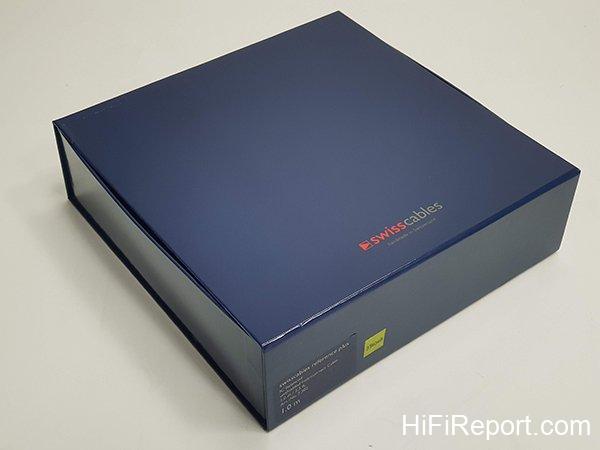
Perhaps due to its roots in professional audio cable manufacturing, Swisscables maintains a pragmatic approach, avoiding the astronomical prices typical of Swiss luxury goods. They insist on Swiss manufacturing, streamlining labor to reduce costs, offering reasonably priced cables.
Barbara mentioned at the audio show that Swisscables’ cable series, from lowest to highest price, includes the Evolution series, Reference series, Reference Plus series, and Diamond series. However, the Diamond series currently only offers power cables, making the Reference Plus XLR balanced signal cable the top-tier signal cable from Swisscables.
Locally Sourced Wooden Connector Casings
Before delving into Swisscables’ cable-making philosophy, one can already sense the distinctiveness of their signal cables from their appearance and feel.
Firstly, the connection between the connector and the cable body uses a solid wood casing. While some cables use wood as a tuning element, this design is not common.
Additionally, despite the Reference Plus XLR’s thick cable body, it is surprisingly lightweight and flexible, with a slight elasticity when pressed, suggesting an air-filled interior.
These visual and tactile features inspire curiosity about the sound quality of this balanced signal cable.

Swisscables’ cables are all handcrafted in Switzerland, with sound quality as the primary focus.
For Swisscables, theories that do not affect sound quality are ineffective. Therefore, all design and material choices prioritize sound quality. The conductor geometry is designed by Hartmut Roemer, the designer from the renowned speaker brand Lumen White. Even within the same cable model, the internal twisting method varies with length, so Swisscables only offers finished cables.
UPOCC Single-Core Conductors with Extended Processing
Although Swisscables offers different price series, they all adhere to the same design principles, without skimping on technology for lower-priced series. The main differences between price series lie in the materials used for connectors and conductor processing.
Of course, the Reference Plus XLR incorporates Swisscables’ unique technologies.
Firstly, Swisscables exclusively uses single-core conductors made from UPOCC.
The pure copper conductors used by Swisscables are cast using the “Ohno Continuous Casting” method, employing specially designed metallurgical molds for continuous casting at ultra-high temperatures, resulting in elongated crystals.
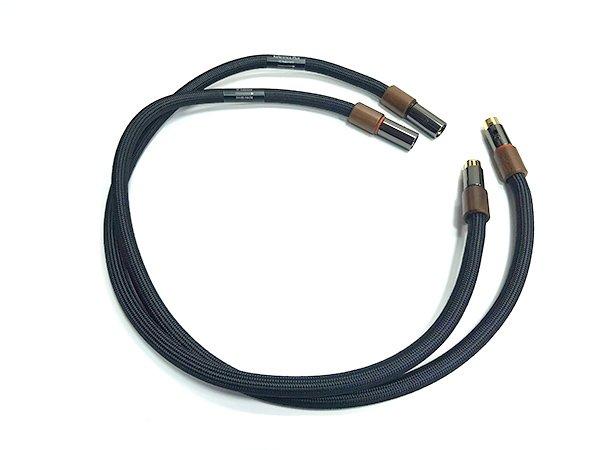
However, the UPOCC conductors used in the Reference Plus series undergo extended processing for further maturation.
Air Dielectric Reduces Distortion
Furthermore, Swisscables uses air as the dielectric material.
The aforementioned UPOCC pure copper conductors are insulated and placed inside hollow tubes filled with air, preventing contact between conductors.
Why does Swisscables use air? Because when signals travel through cables, a phenomenon called “Micro Discharge Interface (MDI)” occurs, generating high-energy noise spikes that cause signal distortion. Traditional insulating materials like Teflon and foam increase MDI, but air’s dielectric properties eliminate this interference.
This also explains why the Reference Plus XLR is so lightweight.
Therefore, while the Reference Plus XLR has a flexible cable body, it should not be excessively bent during use, as conductor contact would reduce its design effectiveness.

Swisscables insists on using natural materials for cable manufacturing, with wooden blocks as connector casings, and the Reference Plus XLR is no exception.
Barbara Suter explained at the TAA Audio Show that except for the RCA connector tips in the Evolution series, the heat shrink tubing in the Reference series speaker cables, and the external isolation mesh of all cables made from synthetic polymers, all other parts use natural materials. Even the insulation layer outside the conductors is wrapped in natural fibers.
As for the wooden connector casings, they not only give Swisscables a distinctive appearance but also provide resonance effects that positively influence sound quality.
Comfortably Conveying Musical Emotion
Initially, I used the company’s reference balanced cable to play Omara Portuondo’s “Hermosa Habana” from the album “Flor De Amor.”
Upon listening, I could clearly sense that this reference signal cable leans towards the treble in energy distribution, with an overall tone that has a glossy feel. The violin instruments in the prelude, for instance, exude a silky sheen.
However, once I switched to the Reference Plus XLR signal cable, I immediately felt a more stable and mellow listening experience.

The most noticeable difference between the Reference Plus XLR and the reference balanced cable is in the drum rhythm presented by the Reference Plus, which becomes more voluptuous, and the violin performance gains a richer rosin aroma.
Omara Portuondo’s voice, under the Reference Plus XLR’s enhancement, feels as if the singer drank a glass of water before singing, instantly sweeping away any tense or dry texture, making the voice more tender and affectionate.
However, this doesn’t mean that Swiss Cable merely increases the mid-low frequency volume at the expense of resolution. On the contrary, the sound of Omara Portuondo’s mouth opening and closing, and the airflow from her lips and teeth at the start of breathy sounds, are depicted clearly yet softly.
Switching back to the reference cable, the music suddenly feels like it has a strong desire to perform, lacking the calm and relaxed quality, and instead feeling tense and restless.
Next, I listened to Song Dongye’s “Anhe Bridge” from the album “Anhe Bridge North” using the Reference Plus XLR cable.
The drum sound at the beginning of the track, interpreted through the Reference Plus XLR cable, has a loose and comfortable texture, with a moderate tension on the drumhead, conveying a sense of stability and comfort. Song Dongye’s voice, like Omara Portuondo’s earlier performance, is more emotionally rich and deeply expressive, with clearer and more natural breath control.
More importantly, when listening with the company’s reference signal cable, the guitar’s left-hand string noise in the track sounds stiff and restless. However, with the Swiss Cable, the guitar’s string noise reveals the nuances of the left hand’s movement on the guitar fretboard.

Balancing Delicacy and Grandeur
I then played French cellist Orphélie Gaillard’s performance from the album “Alvorado.”
I felt that the Reference Plus XLR gave me the most distinct impression that every performer seemed to have undergone a deep massage before playing, resulting in a relaxed and gentle sound quality. Yet, within the warm violin tone, one can hear the intricate texture of the bow moving across the strings.
Additionally, I could clearly sense that after using the Reference Plus XLR, the subtle vibrato and delicate dynamic changes in the cello performance became more pronounced, making the music sound more passionate and expanding the soundstage.
Finally, I played the “March to the Scaffold” from Berlioz’s “Symphonie Fantastique,” conducted by Muti with the Chicago Symphony Orchestra. The Reference Plus XLR presented a broad and open musical scene.
The drum’s deep bass capability and the bouncing sensation from the double bass plucking were significantly enhanced, as if these instruments had a pulse, making the music more than just a physical vibration but something with vitality. The final cymbal crash was like golden dust scattering beyond the width of the speakers, adding grandeur to the piece.
However, switching back to the original reference-grade cable, this sense of ease and grandeur instantly disappeared, with a tense listening experience at high volumes and muddled sound at low volumes.

Naturally Superior
After the listening session, I couldn’t help but wonder about the environment where Swisscables is located, so I Googled it.
I discovered that Swisscables is situated in the small town of Entlebuch in Lucerne, Switzerland.
The town has a population of less than four thousand and is home to the Entlebuch Biosphere Reserve, a UNESCO World Heritage site.
I believe that Swisscables, perhaps nestled in such a natural environment, has nurtured a unique cable-making philosophy.
The Reference Plus XLR’s relaxed and natural texture, along with its clear yet unpretentious detail reproduction, makes me feel as if I’m surrounded by the fresh air and scenic beauty of the Alps.
Swisscables, hailing from Switzerland, born from nature, and restoring nature, allows your audio system to capture the vibrant forest scenery of the Alps.
Specifications
- Swisscables Reference Plus XLR Signal Cable
- Reference Price: $2,500 USD / 1 meter / pair