
T+A MP 2500R Review Review
The “MP” in T+A MP 2500R stands for Multi Source Player, and the sheer breadth of its sources is remarkable. Beyond the aforementioned SACD/CD transport, network streamer, and USB-DAC functions, it incorporates Bluetooth, an FM analog tuner, and a DAB digital tuner. When it comes to streaming capabilities, the MP 2500R supports services like Tidal, Deezer, Qobuz, and Roon. It’s also UPnP compatible, allowing playback of music files shared from PCs, NAS drives, music servers, or portable devices.
Supported file types include MP3, WMA, AAC, OGG Vorbis, FLAC, WAV, AIFF, and ALAC, up to a maximum resolution of 192kHz/24bit. Track selection and playback are easily managed via the T+A MusicNavigator App on a smartphone.
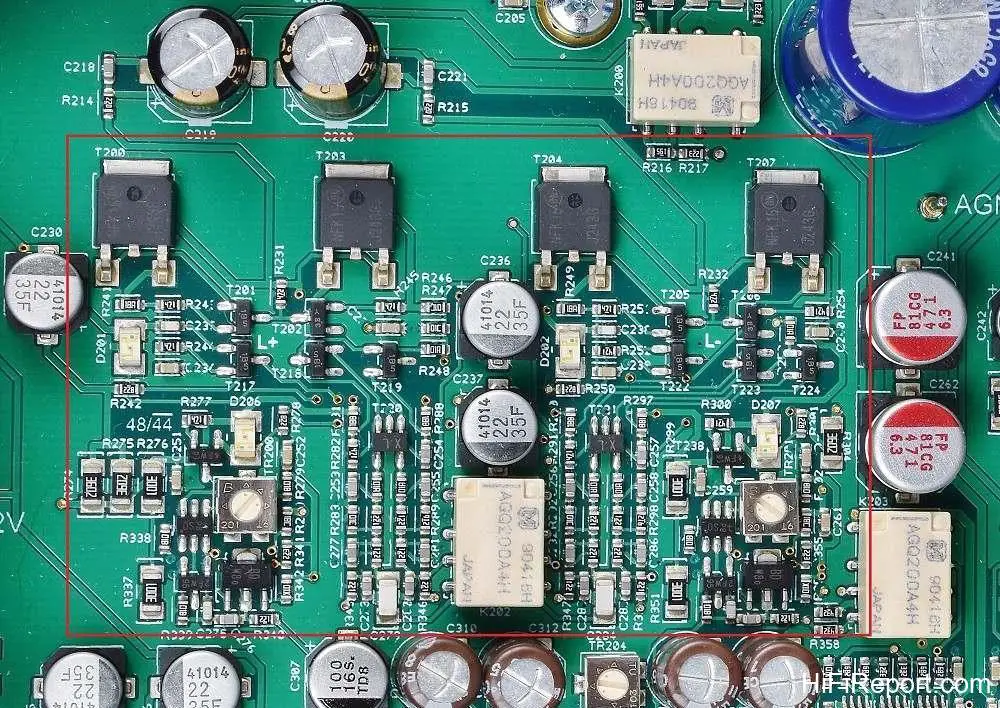
For audiophiles who prefer physical media or simpler methods, the MP 2500R can directly play music files stored on USB devices (including flash drives or hard drives) by inserting them into the unit’s USB terminal. Playback is controlled via the included remote. I suspect this feature was designed by T+A for users without a network environment, which is likely why it can only be operated with the remote and not the T+A MusicNavigator App.
Digital Inputs and High-Resolution Support
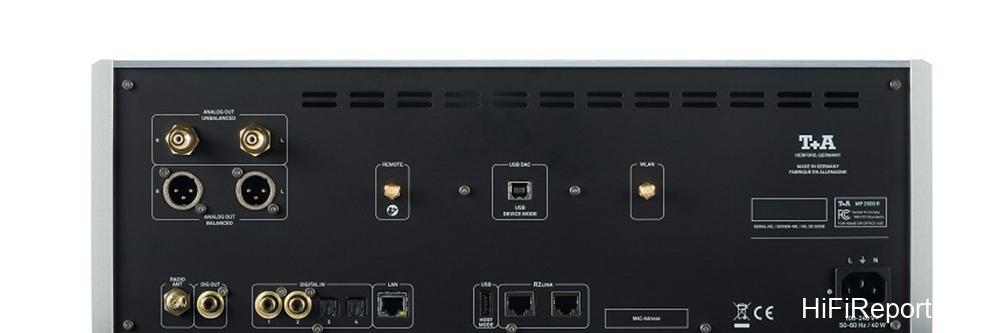
On the rear panel of the MP 2500R, you’ll find USB-DAC, optical, and coaxial digital input terminals. The optical and coaxial inputs allow integration of other digital sources and smart TVs into the system. The USB-DAC input supports higher resolutions than the streaming function. While network streaming handles multi-bit file types, if you wish to listen to DSD files, you can connect an external computer or music server capable of playing music files via the USB-DAC input.
In this mode, the MP 2500R can handle DSD up to DSD 512 (22MHz) and PCM up to 384kHz/32bit.
Gathering so many functions into one unit naturally raises questions among some seasoned audiophiles about potential compromises in sound quality. Let me offer an analogy. If you owned both a CD player and a network streamer as separate digital sources, there would inevitably be differences in their sound quality.
While streamers offer Hi-Res playback, high file resolution alone isn’t enough to guarantee superiority; the critical factor is the quality of the digital-to-analog conversion circuitry. With an “all-in-one” design like the T+A MP 2500R, the various source functions can share a single, high-performance digital conversion circuit, potentially allowing each to achieve optimal sound quality. Let’s delve into the internal structure to see how T+A achieves this.
Advanced Digital Processing
Most modern digital-to-analog conversion circuits perform oversampling using digital filters *within* the DAC chip after the digital receiving chip, followed by D/A conversion. T+A’s flagship digital sources, such as the MP 3100HV and PDT 3100HV, take a significantly different approach. They eschew the digital filters inside the DAC chip.
To T+A, relying on off-the-shelf digital filters within a DAC chip is akin to using generic image processing circuitry in a high-end television – true excellence requires custom design.
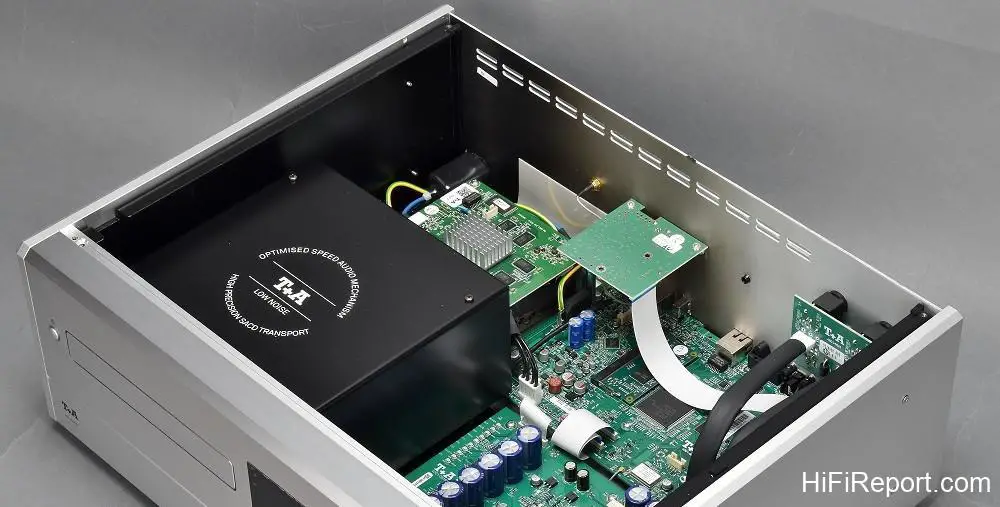
Since 1989, T+A has developed its own digital filter circuits, enabling their high-end digital sources to employ unique algorithms distinct from typical digital filters. A DSP chip performs high-precision (56 bit) oversampling calculations before converting the data into a format compatible with the DAC chip, which is then fed directly into the D/A conversion section of the DAC chip.
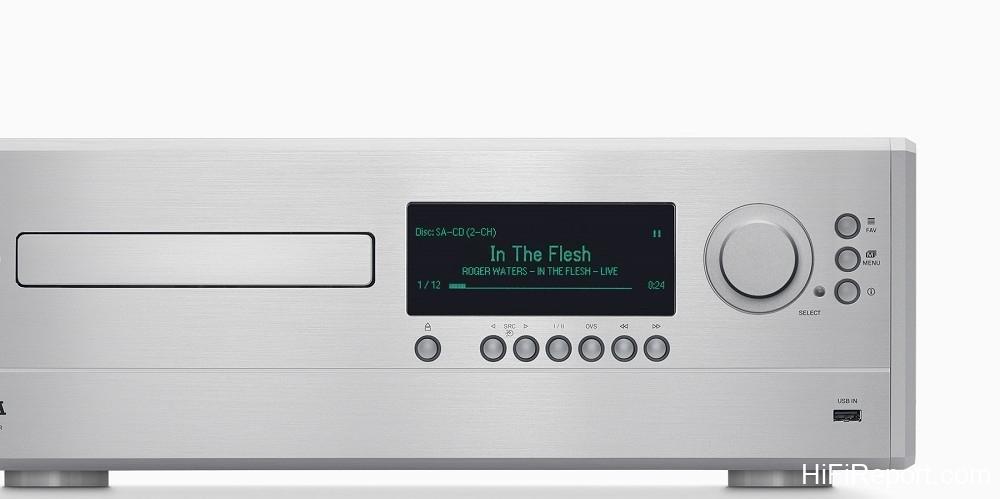
Although the MP 2500R belongs to the R series, positioned below the flagship HV series, it adopts the flagship approach of using its *own* digital filter circuitry. Furthermore, T+A’s flagship models feature another unique characteristic: a clear separation between PCM (multi-bit) and DSD (1-bit) conversion. This allows PCM to retain its inherent dynamic range advantages, while DSD can fully leverage its high sampling rate and linearity.
To put it simply, the digital-to-analog conversion circuits for PCM and DSD are independent, each using its own path.
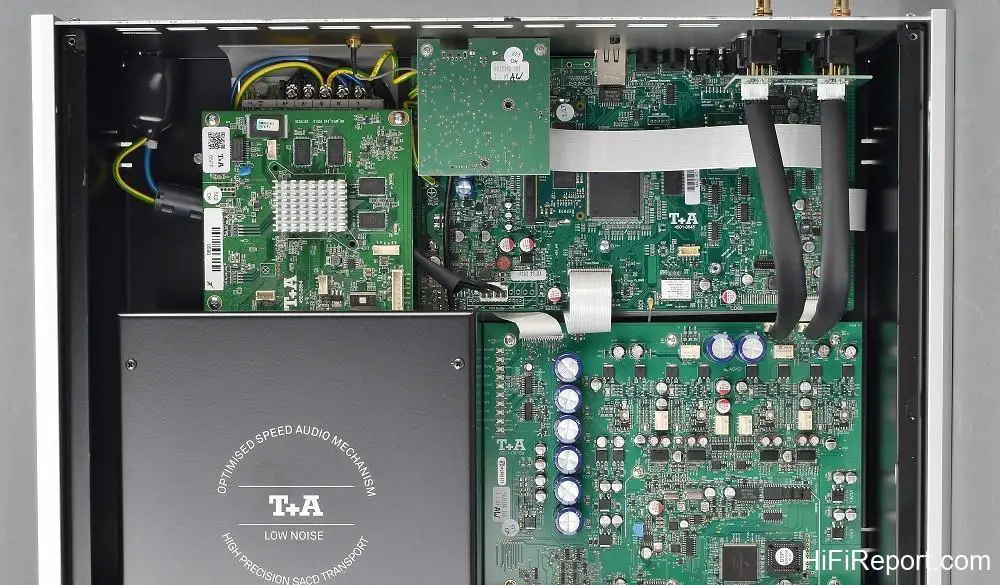
Separate PCM and DSD DACs
This design means the T+A MP 2500R effectively employs two independent DAC circuits: one for “pure DSD” and one for “pure PCM.” Both DSD and PCM conversion inherently require their own digital filtering and analog circuitry following the DAC. I’ve already discussed the digital filtering. As for the I/V conversion and low-pass filter circuits immediately following the DAC chip, these are “normally” composed of op-amps and passive components.
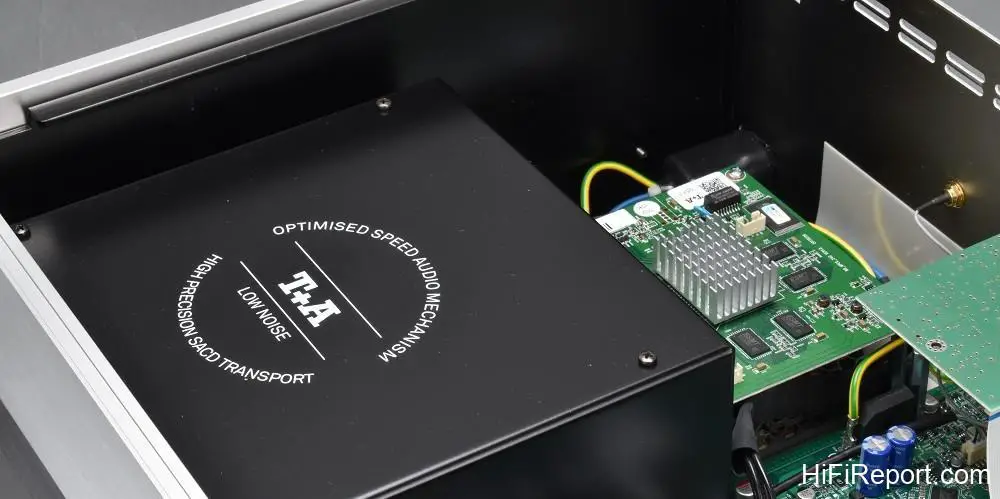
Given that T+A avoids using digital filters within the DAC chip itself, it’s logical they wouldn’t rely on “ready-made amplifier circuits” using op-amps either.
Analyzing the circuitry, my impression is that the MP 2500R possesses significant “DNA from T+A’s flagship models.” While the MP 3100HV, being the flagship, features meticulous internal partitioning, the MP 2500R appears to be akin to an “unpartitioned version” of the MP 3100HV, particularly in its digital-to-analog conversion implementation. This includes the type and quantity of DSP and DAC chips, which are identical to those found in the flagship unit.
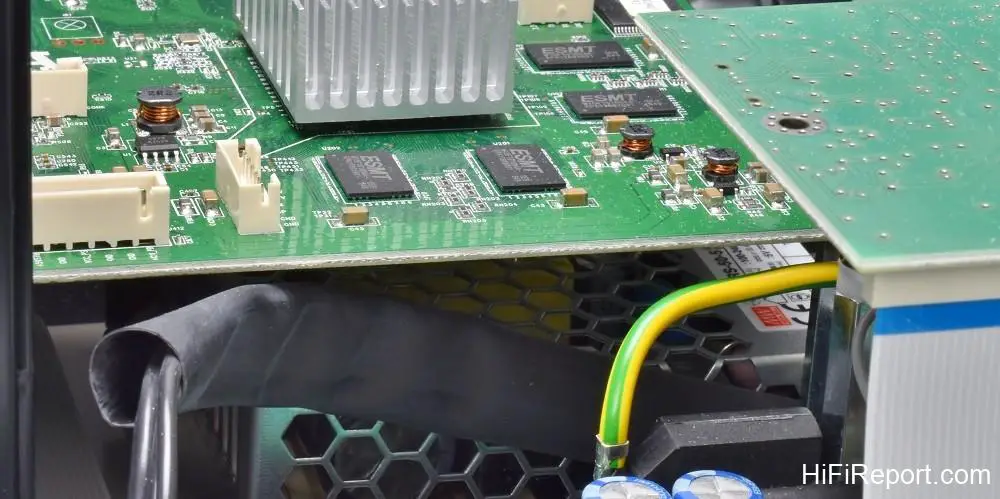
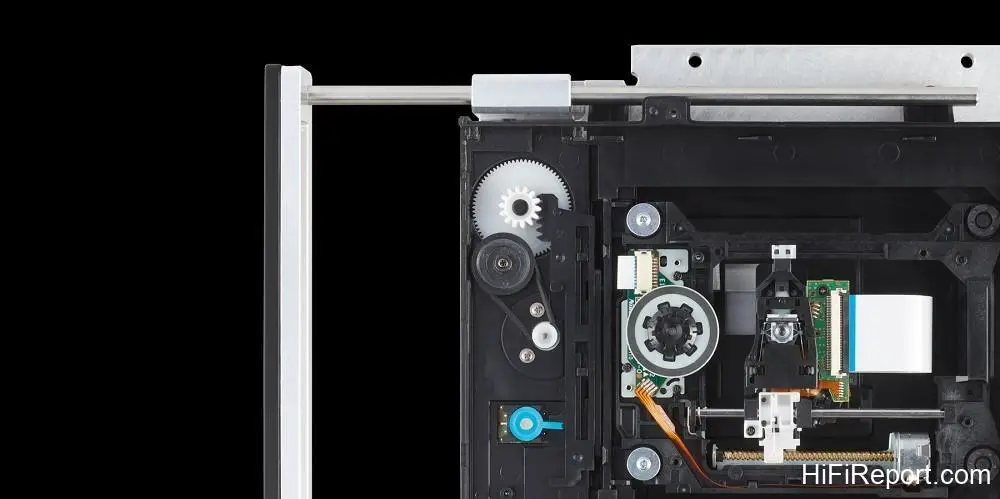
From a circuit complexity perspective, T+A’s custom-designed analog circuits are significantly simpler than op-amp based circuits (which contain numerous components within the chip). Based purely on this circuit observation, I anticipated that the MP 2500R would sound fast, pure, and direct. I will now use actual listening tests to validate this prediction. During my auditioning, I utilized streaming, played local music files, connected a laptop (as a USB-DAC), and played both SACDs and CDs.
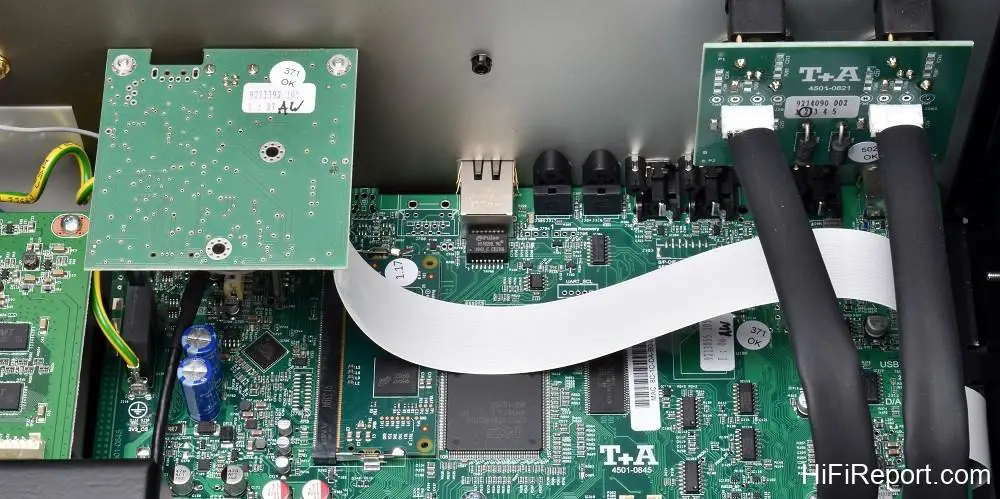
Given that the MP 2500R features independent PCM and DSD D/A circuits, I will describe my listening impressions for multi-bit and DSD formats separately.
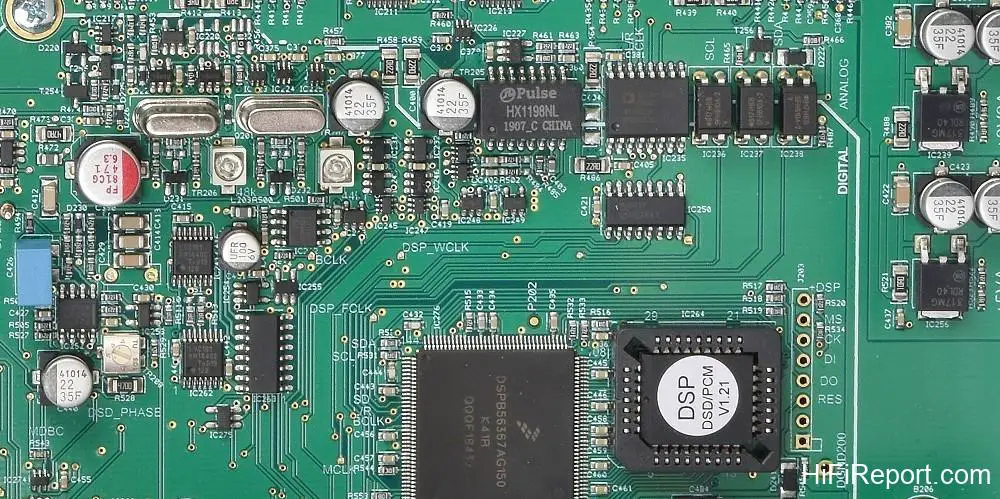
Listening Impressions PCM
When playing multi-bit music files, CDs, and through the PCM input, the MP 2500R allows switching between four digital filter modes: FIR long, FIR short, Bezier/IIR, and Bezier. The first two are more typical digital filters. When I switched to Bezier/IIR and Bezier, I immediately noticed a significant improvement in the tone of the flute, the texture of the violin bow strokes, and the subtlety of vocal nuances compared to the first two modes.
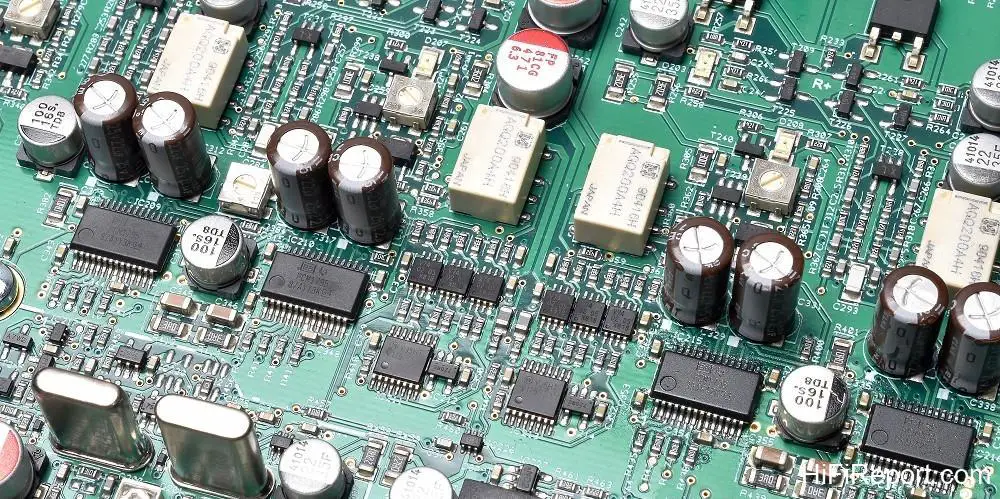
I could feel that this was precisely why T+A insists on designing its own digital filter circuitry.
Of course, T+A could have simply retained only the best-sounding Bezier/IIR and Bezier filter modes. However, I believe they keep the two FIR filters not just to offer users more tuning options, but also to serve as a reference point, allowing listeners to compare and experience just how vast the difference is between “T+A’s digital filters” and “ordinary digital filters.”
How does one choose between the Bezier/IIR and Bezier modes? My advice is not to overthink the choice, but rather to consider what you want to experience in the moment while listening to the music. Each mode has its own charm. I feel the Bezier mode pushes the sound towards maximum resolution, strongest focus, and lowest coloration. It’s incredibly realistic, like being in the same room as the performers, virtually “seeing” them right in front of you.
Bezier/IIR, on the other hand, is slightly more relaxed, warmer, and smoother than the Bezier mode. I find the Bezier mode ideal for highly focused, analytical listening, while Bezier/IIR allows the listener to comfortably appreciate the beauty of the music.
The Bezier/IIR and Bezier modes remind me of the “super-resolution” processing found in high-end televisions. They can make CD-quality (44.1kHz or 48kHz/16 bit) music files sound remarkably similar to Hi-Res audio. Without seeing the file format, I suspect most listeners “at first listen” would find it difficult to distinguish between standard and Hi-Res formats played by the MP 2500R based solely on sound.
However, upon closer, more careful listening and comparing various file resolutions played by the unit, you’ll notice that as the music file’s sample rate increases, while details become richer and textures more refined, the sound becomes more dense and gentle.
This fully illustrates that the primary value of Hi-Res audio is absolutely not, as some mistakenly believe, “more high frequencies.” Rather, it’s the significantly higher amount of sonic information compared to CD, which brings the recording closer to the natural sound of real instruments and voices in a live performance setting.
Furthermore, the “black” background of the MP 2500R is easily perceptible, allowing listeners to easily hear subtle sounds, textures, and dynamics even at normal or low listening levels. You don’t need to push the volume; listening at a comfortable level allows you to fully appreciate the clear and deep soundstage.
Listening Impressions DSD
When playing various multi-bit content through the T+A MP 2500R, its extremely neutral and pure character is like listening to a master tape in a recording studio. What’s fascinating is that when it plays SACDs and DSD music files, it transforms into a completely different component with a distinct personality. It doesn’t sound like a “digital” source at all, but instead comes very close to the state of a reel-to-reel tape machine or a high-end turntable playing a record in pristine condition.
To simplify, it’s like listening to a vinyl record without any noise, but with superior dynamic range, channel separation, and bass performance compared to vinyl. This is the true nature of DSD. DSD was originally a 1-bit encoding technology derived from PDM (Pulse Density Modulation). “Pure DSD” decoding is the process of restoring the DSD signal to an audio signal via a low-pass filter.
To “old-school” technical minds like mine, the process from DSD modulation to restoration resembles analog modulation. Therefore, it’s not surprising at all that the T+A MP 2500R, by employing “orthodox” pure DSD decoding, makes SACDs and DSD music files sound like an analog source – flexible, relaxed, mature, rich, and high-density. This is the “pure natural” state of DSD, something truly worth auditioning for high-end audiophiles.
Value Proposition
Is the T+A MP 2500R worth its price of approximately $16,300? If I were to discount all the functions this unit possesses and only consider it as an SACD/CD transport and network streamer, I believe the chances of finding two separate single-function units (an SACD player and a streamer) that match the MP 2500R’s sonic performance for a total price not exceeding $16,300 are extremely slim.
Applying a more stringent evaluation, I think high-end enthusiasts would agree that a digital source in the $6,500-$10,000 range is already quite good. Sometimes, auditioning digital sources two or three times that price at audio shows doesn’t necessarily reveal them to be “better,” just that they have a “different flavor.”
I believe the T+A MP 2500R allows discerning listeners to immediately distinguish a clear “quality level” difference between it and digital sources in the $6,500-$10,000 range. Even disregarding its multifunctional capabilities and focusing solely on sound quality, the T+A MP 2500R offers excellent value for money.