
Taiko Extreme Music Server Review
The music server, while profoundly crucial in networked digital streaming, often goes overlooked. Its functional resemblance to a common computer belies the fact that meticulous design makes an astronomical difference in the final sonic outcome. Many audio manufacturers, including Taiko Audio, have acutely recognized this. Since 2015, Taiko Audio has dedicated itself to this pursuit, and the Extreme Music Server, launched in 2022, represents the culmination of their efforts.
From its foundational hardware and software architecture to its deep dive into every minute detail, it is a masterwork, meticulously sculpted to be the ultimate music server.
IT Pedigree
At the heart of Taiko Audio is its founder, Emile Bok, with the company headquarters located in Oldenzaal, Netherlands. Emile is a computer science graduate from the University of Twente, one of the Netherlands’ leading academic universities, renowned for its formidable IT research background – indeed, the team behind Booking.com hails from this very institution.
After graduation, Emile spent 19 years at the University of Trento in Italy, specializing in the design, maintenance, and optimization of operating systems for server farms. This university’s server rankings have consistently placed within the global top 20 for the past two decades.
In essence, Emile has immersed himself in the world’s leading IT academic institutions for over 20 years, from his studies through his professional career, forging invaluable expertise and connections indispensable for designing high-end music servers.
Emile has also been an audiophile since childhood. At the tender age of 12, he worked at a speaker factory in the Netherlands, surrounded by a myriad of components, crossovers, and more. This environment allowed him to discern the sonic characteristics of different components. Emile possesses exceptional hearing, capable of perceiving high frequencies beyond the range of most people, which has been immensely beneficial in his product development.
He began designing and producing audio equipment in 2008. His acquaintance with Edward stemmed from their product discussions, where they quickly realized their synergy in identifying and refining product issues. Naturally, Edward joined the Taiko Audio team, leading to the launch of the SGM (Sound Galleries Music Server) in 2015. Edward subsequently left his university position to fully dedicate himself to Taiko Audio.

Ultimate Audio & User Experience
The Taiko Audio Extreme Music Server is purpose-built for networked digital streaming playback, prioritizing sound quality, user experience, and ease of use. Since 2015, the team has considered Roon the premier software for browsing and managing music libraries, thus designing the server with Roon as its core operational focus. The Extreme Music Server employs a dual-CPU architecture: one dedicated to Roon’s complex computations, and the other solely for audio processing.
This ensures that Roon’s computational workload within the Extreme Music Server does not interfere with audio quality or generate noise. Furthermore, this design generates less heat, making it more durable than single-CPU counterparts.
Engineering Every Detail
Through their extensive research, Taiko Audio discovered that even internal SSD storage profoundly impacts sound quality. While typically connected via the motherboard’s DMI interface, the Extreme Music Server utilizes a PCIe module connection, bypassing DMI to link directly to the CPU. This provides speeds more than four times faster than conventional designs, significantly reducing latency and, more importantly, substantially lowering noise.

The result is an inky black backdrop and a vast, transparent soundstage. Moreover, Intel’s VMD technology allows for greater bandwidth on the PCIe interface. The Extreme Music Server can house SSDs ranging from 2TB to a substantial 64TB, eliminating the need for external NAS drives. If external music storage is required, the manufacturer recommends connecting a portable hard drive via USB to the Extreme Music Server, as they believe the RAID architecture of NAS is detrimental to sound quality.
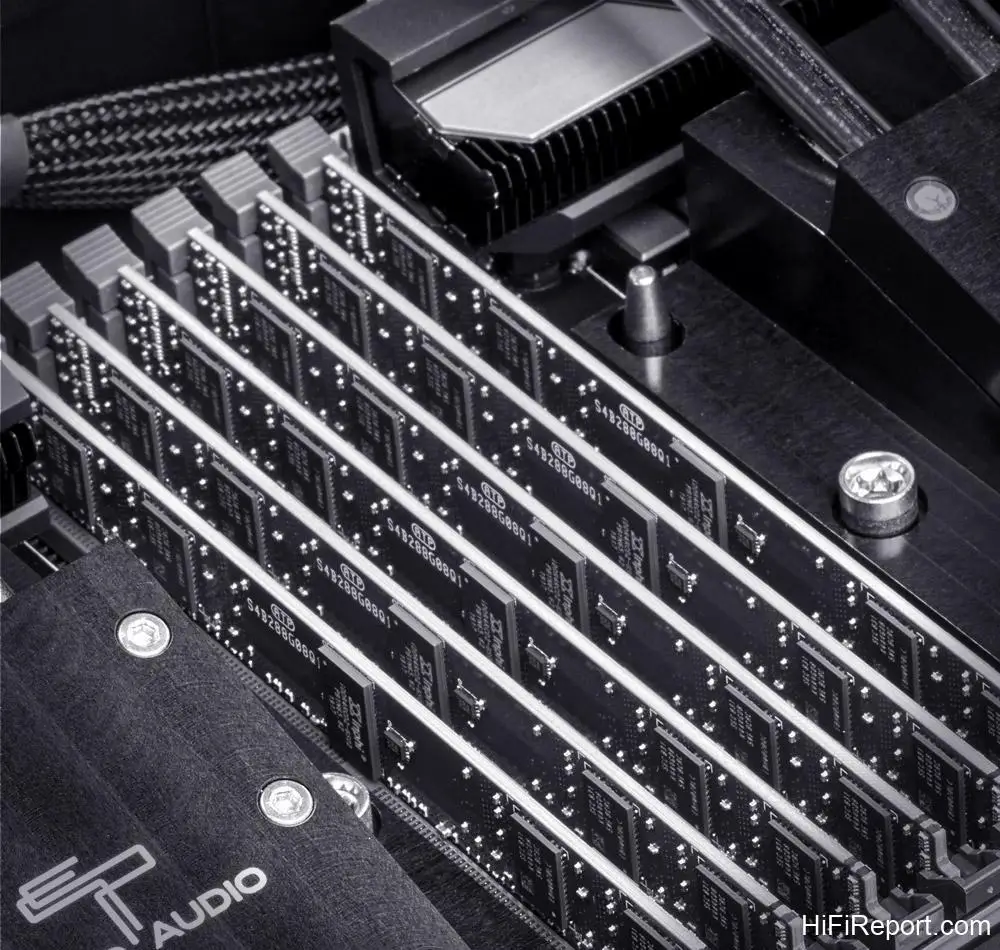
RAM refresh rates are another critical factor affecting sound quality. To prevent data loss, RAM actively refreshes at a certain frequency, but frequent refreshing can degrade audio. Taiko Audio selects internally screened Class A DIMMs (integrated modules comprising multiple memory chips). The chips, capacitors, and resistors within these modules are matched with a precision of less than 1%, reducing current consumption.
The burst current required for refresh is cut by 50%, and operating temperatures are significantly lowered, allowing for less frequent refreshes. The 12 DIMMs used in the Extreme Music Server achieve extremely high bandwidth with remarkably low refresh noise.
The Extreme Music Server’s digital output is bit-perfect, eliminating the need for any additional upsampling of music files. In such a scenario, managing system latency becomes paramount. The manufacturer ensures that the Extreme Music Server maintains extremely rapid processing times for every instruction, explaining its seemingly overpowered computational capabilities, which are, in fact, integral to preserving sound quality.
Potent processing handles workloads swiftly and effortlessly, maintaining constant current consumption and lower EMI/RFI pollution. The operating system has also been meticulously pared down to only the core functionalities essential for music playback.
Durability Through Thermal Control
The Extreme Music Server is specially engineered with a 400-watt power supply capacity, utilizing only the finest Mundorf and Duelund capacitors, and Lundahl inductors. Anti-vibration design permeates every aspect of the chassis, allowing for controlled flexibility. Crucially, Panzerholz (a composite artificial wood formed by layering special woods with adhesive) is employed at key points to channel vibrations to appropriate areas.
The overarching goal is to achieve low temperatures, exceptional durability, and superior sound quality. Heat is the nemesis of all electronic equipment, impacting component performance and lifespan.
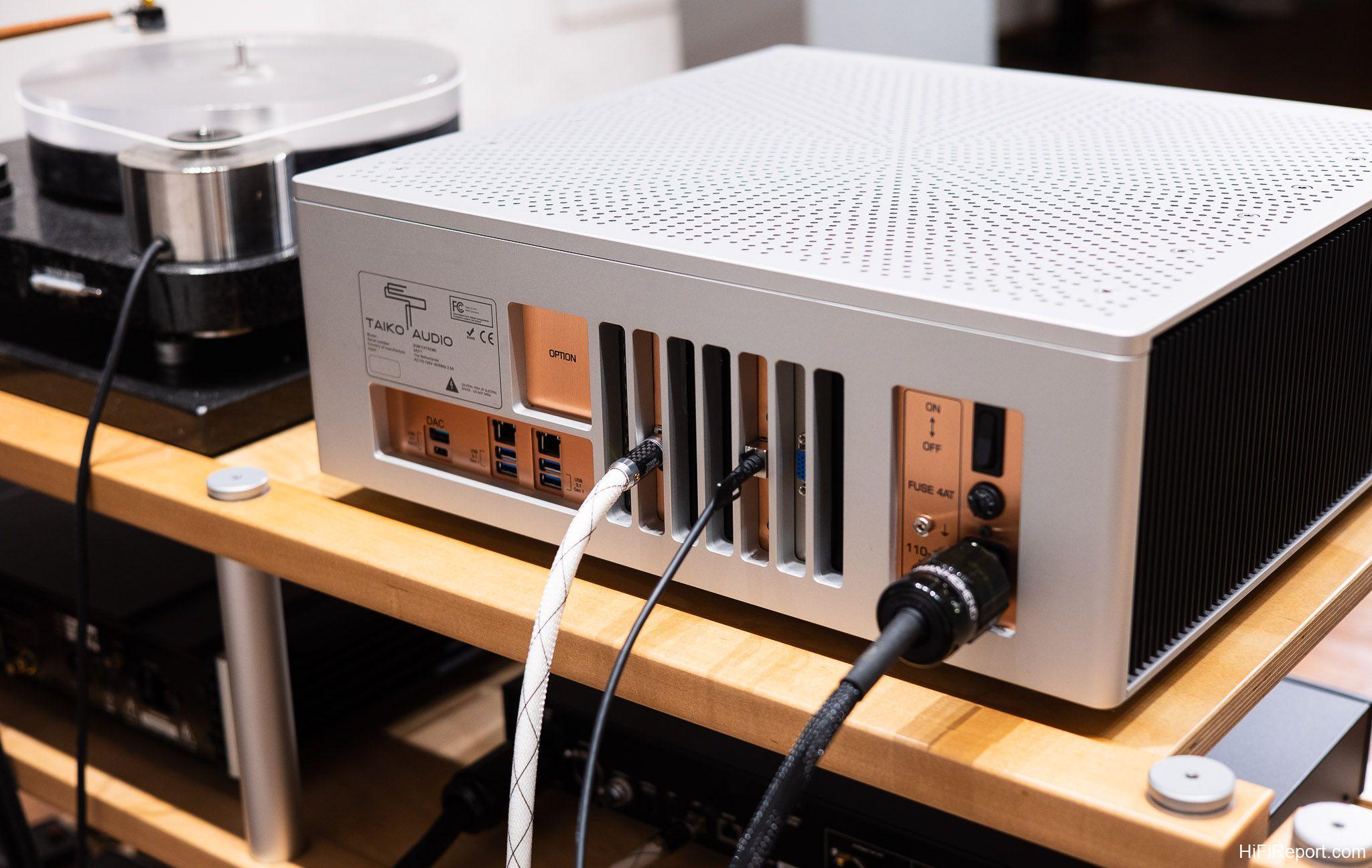
The Extreme Music Server’s cooling system is a bespoke, passive 240-watt design, completely devoid of active parts, fans, and, most importantly, noise. The CPU interface is machined to an astonishing 5-micron (0.005mm) precision, and solid copper is used for thermal conduction, offering twice the heat dissipation efficiency of conventional aluminum. This ensures the Extreme Music Server’s performance is exceptionally stable, and its operational lifespan is dramatically extended.
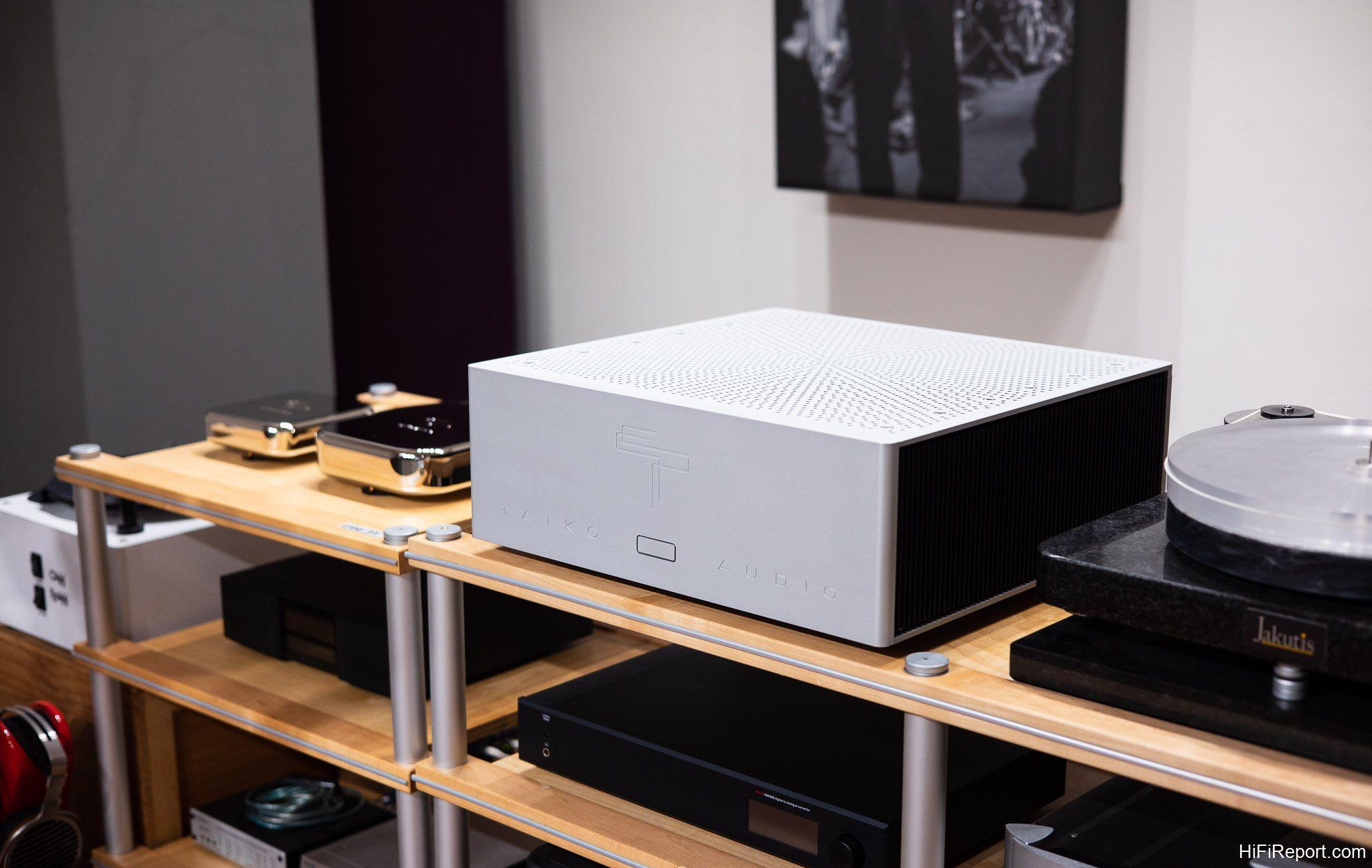
The chassis of the Extreme Music Server is crafted from aerospace-grade aluminum, effectively shielding against external interference. Its top panel features highly unique mechanical perforations, acting like waveguides to attenuate noise by 81dB. Internally, various designs enhance vibration control, with copper and Panzerholz proving to be ideal materials, providing excellent mechanical impedance.
Limitless Upgrade Potential
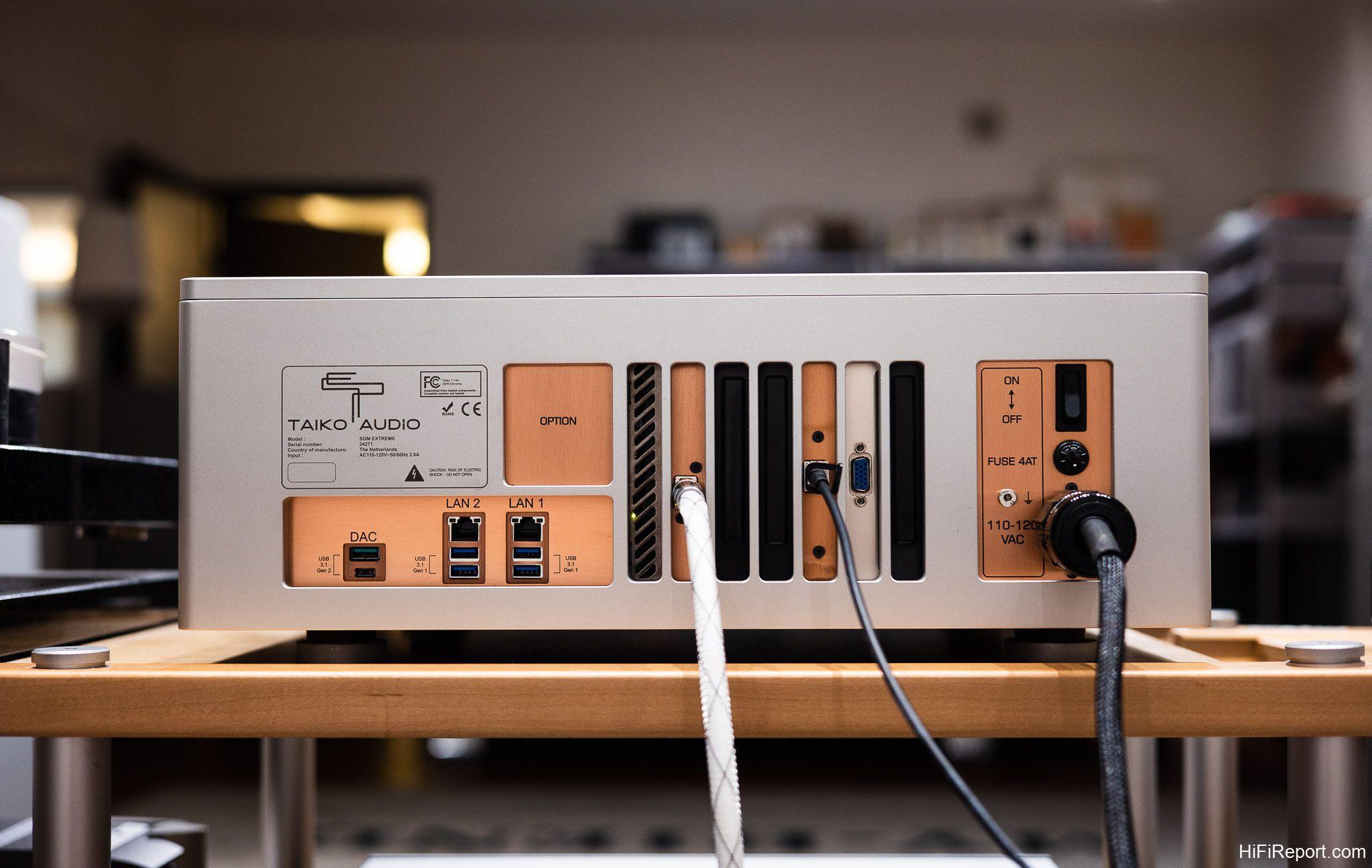
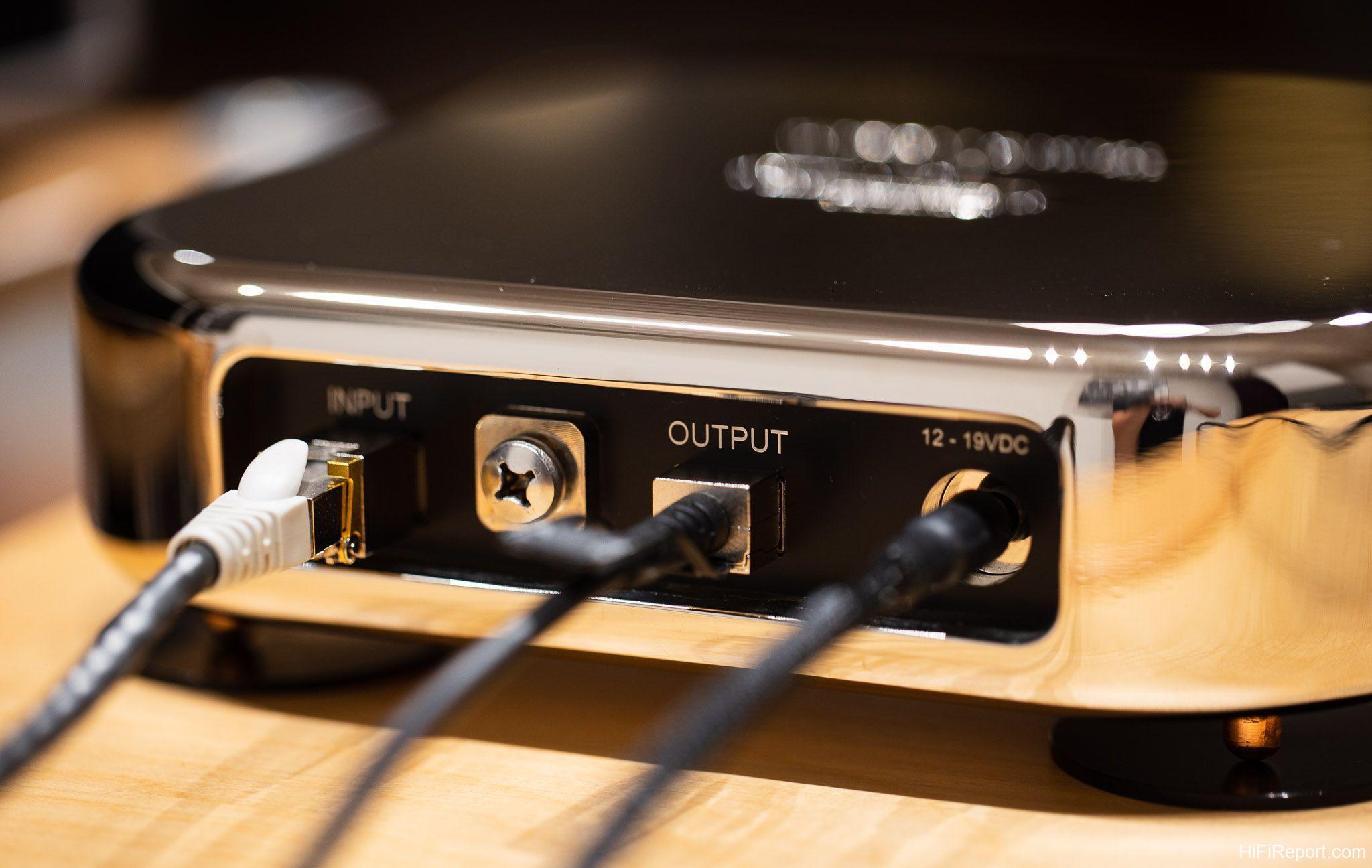
The Taiko Extreme Music Server offers the following connection options, as depicted below. The bottom left of the rear panel features standard network input, USB input, and USB output; however, during our listening tests, we did not connect via these ports. Observe the multiple modular expansion slots in the center. Currently, the manufacturer offers an improved USB output expansion card and an SFP+ network input card, with the potential for even more functional expansion cards in the future.
As digital technology continues its relentless advancement, providing substantial upgrade headroom for the Extreme Music Server is naturally of paramount importance and a testament to responsible design.
The manufacturer supplies SFP+ connectors, allowing users to order either fiber optic or RJ45 connectors based on their specific needs.
Isolation with Premium Switch
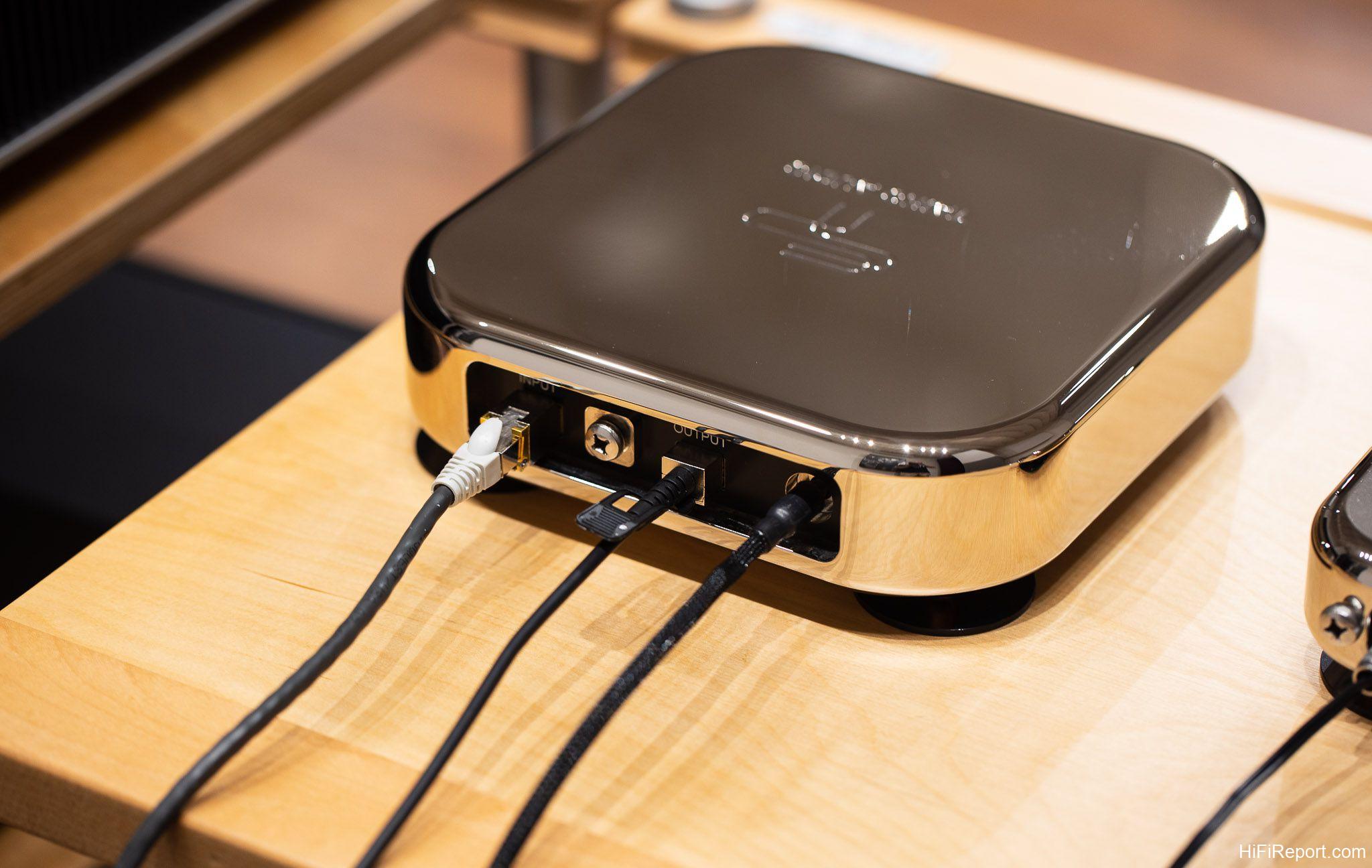
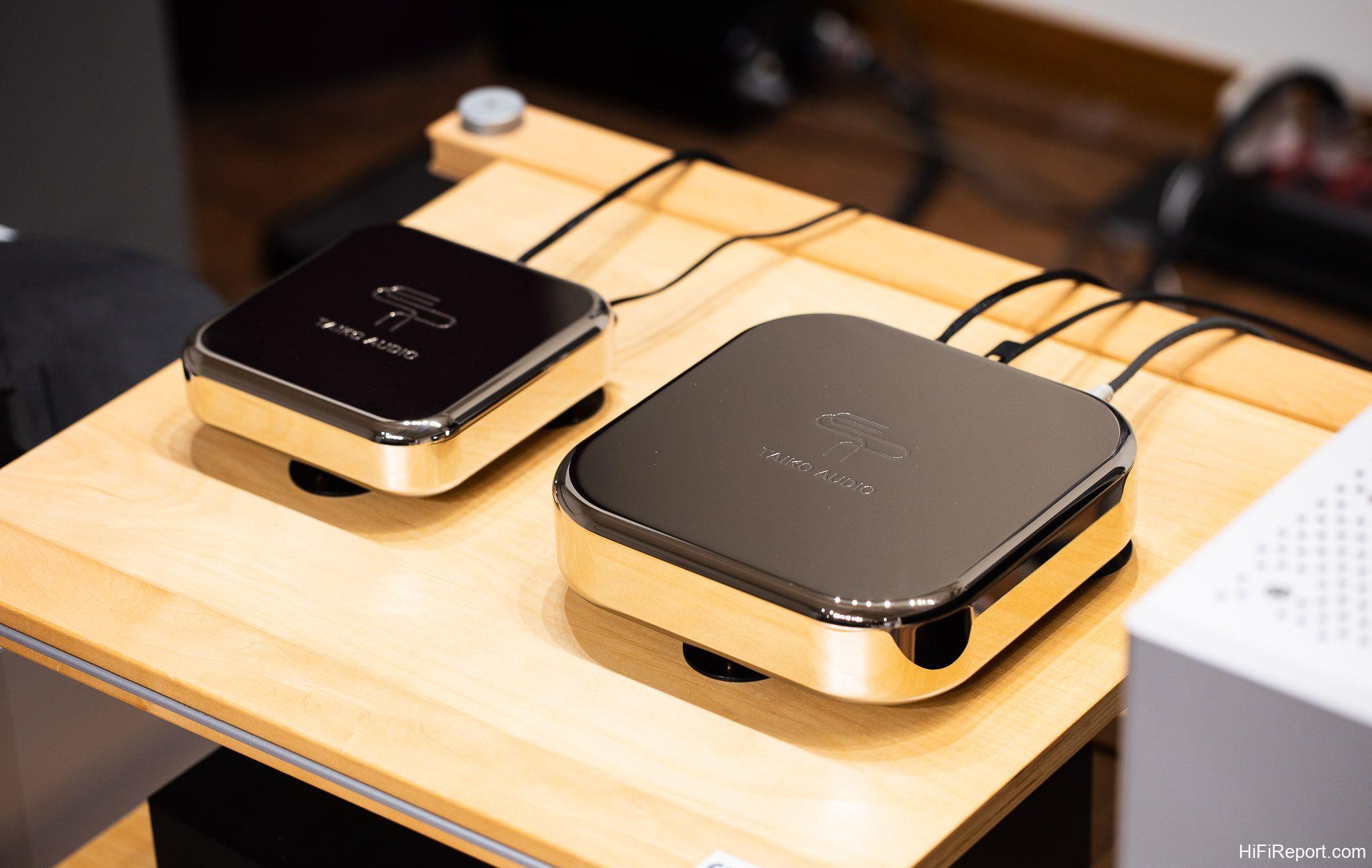
For this review, we also paired the Taiko Extreme Music Server with the Taiko Extreme Switch network switch, an audiophile-grade design specifically engineered to supersede conventional network switches. It features single-in, single-out SFP+ slots, which can be equipped with either RJ45 or optical fiber modules to connect corresponding cable types. It is crucial to note that this switch is exclusively compatible with Gigabit / 1000Mbps transmission standards.
Should either the upstream or downstream device operate at 100Mbps, the switch will not function. For instance, if you insert a 100Mbps switch before or after the Extreme Switch, it will not work. This is a vital consideration for enthusiasts who enjoy stacking switches.
The Taiko Extreme Switch network switch is further accompanied by a dedicated Extreme DC Power Distributor power supply. This power supply incorporates internal filtering and can connect multiple devices. Its three distinct filter settings yield audible differences, allowing users to select based on their preference and the paired equipment. It is compatible with any device requiring current between 10A and 25A.
During their research into switches, the manufacturer discovered that power supply noise causes more interference than routers and switches themselves, thus leading to the development of the latest Extreme DC Power Distributor. It delivers over 80dB of noise filtration, with its filter utilizing 64 meticulously chosen components, each influencing the resulting sound quality. The different output settings of the Extreme DC Power Distributor power supply provide varying filtration effects.
Roon Core: The Streaming Heart
Beyond its function as a music file transport, a crucial role of the Taiko Audio Extreme Music Server is to execute Roon Core computations. This is undoubtedly the most overlooked aspect. Roon users should pay absolute attention to the location of their Roon Core. I have repeatedly experimented with different devices for running Roon Core, including a dedicated NAS, an audiophile-grade music server, and a work laptop.
Each change yielded differences no less significant than swapping out an entire audio component. If you are a Roon user, you must be aware of this. The simplest way to confirm this is to install Roon Core on different computers you own and directly compare them; you might be astonished by the profound disparity. As Roon’s functionalities continue to expand, its resource consumption has indeed grown.
The Taiko Audio Extreme Music Server, however, was conceived from its very inception to serve as the Roon Core executor, thus its design is naturally more rigorous and professional. Our test results in this review fully corroborate this.
Clean, Transparent, High-Density Sound
Listening to Brandi Carlile’s “By the Way, I Forgive You” with the Taiko Audio Extreme Music Server, several characteristics stood out prominently. Firstly, the overall background quietness reached an exceptional level, allowing for an incredibly transparent and clean soundstage. Simultaneously, imaging exhibited remarkable density and focus.
Yet, the music never felt sluggish or heavy; the soundstage remained light while maintaining high density, effortlessly projecting the music into the listening space without strain. The Taiko Audio Extreme Music Server doesn’t demand high volumes to evoke passion; at a comfortable, listenable level, it clearly conveys the music’s agility and its naturally vivid dynamic contrasts.
The Taiko Audio Extreme Music Server has, quite simply, utterly transformed our network digital streaming capabilities, delivering a performance unlike anything I have ever experienced before.
Clear Response to File Types
Referencing Michel Jonasz’s “La Fabuleuse Histoire De Mr Swing,” playback of music files (WAV 44.1/16) stored on the Taiko Audio Extreme Music Server’s internal SSD hard drive exhibited slightly superior playback quality compared to network streaming (Qobuz FLAC 44.1/16). There was a subtle improvement in resolution and detail.
This might be due to inherent differences in file formats, or perhaps related to network transmission, but it underscores the server’s sensitivity in revealing such distinctions. The Taiko Audio Extreme Music Server rendered the music’s tonal balance with remarkable appropriateness; from high frequencies down to the lows, the sound was exceptionally transparent and free of any sluggishness. In live recordings like this, it particularly excelled at conveying vibrancy and naturalness.
For instance, in the track “Poussy,” the majestic sweep of the HiFiReport (likely a typo, perhaps “percussion”) and the profound emotional nuances in the vocalist’s delivery were deeply impactful.
Vocal Detail, Richness in Simplicity
Our review began with Carolin No’s “Time After Time” as a reference, utilizing the Taiko Extreme Music Server and Extreme Switch. The immediate impression was one of profound background quietness, with instruments in the foreground exhibiting stable focus and solidity. The piano strings felt incredibly comfortable and pleasing, their timbre clean and beautiful. Just a few notes were enough to leave a deep impression.
The dynamic expression when the strings were plucked was outstanding, the sound lively and vibrant, gracefully flowing with the artist’s hand movements. The inherent texture of the instruments was remarkably vivid and distinct, with notes resonating with a lovely sheen at their decay. This balance of excellent dynamics and a radiant, shimmering quality captivated the listener instantly.
The vocals conveyed a tangible sense of weight and solidity. Despite a singing style that seemed light and airy, the voice consistently felt focused and full, preventing the gentle timbre from sounding ethereal or undefined. Instead, it projected an unwavering emotional atmosphere that persisted until the song’s conclusion. Furthermore, the vocal lines displayed immense richness and variation, at times powerful and direct, presenting the lyrics and melody without reservation.
At other moments, the delivery was winding and subtly alluring, allowing every vocal nuance to be appreciated. This allowed for an effortless enjoyment of the intricate layers within the singing, presenting a rich and colorful work in the simplest manner, even within an uncomplicated song.
Layered Sound, Unreserved Excellence
Next, we turned to Bailey Rushlow’s “More Hearts Than Mine.” With the Extreme Music Server system, the piano sound felt exceptionally beautiful and prominent. The timbre was clean and bright, with each note rendered distinctly and with full body. The discernible feel of the key presses made the sound even more three-dimensional. Although the piano notes were high and delicate, they retained a powerful and focused intensity, leaving a remarkably clear impression in the mind.
Even when the listening position suggested a slightly elevated perspective, the piano’s full presentation remained grounded and stable. A few particularly forceful strikes added significant undulation and dramatic tension to the track, enhancing the song’s dynamics and further beautifying the piano’s resonance.
The strings in the background were comparatively softer, yet their presence was far from negligible. They unfurled in the backdrop as elastic yet resilient lines, at times soaring with high notes, at others deep and rich. The transitions and variations within were exceptionally smooth and fluid, undoubtedly augmenting the track. This created a rich, undulating sense of depth, moving from far to near, and from front to back.
The background slowly and gracefully unfolded, paving the way for the vocals to truly shine, presenting the voice in its entirety and without reservation. It was clear that the interplay between instruments and vocals wasn’t a simple addition but a multiplication, layering excellence upon excellence.
Profoundly Quiet Background, Whispering Emotion
Finally, we listened to Damien Rice’s “9 Crimes.” Again, the instrumental sound was superb, with the piano particularly prominent. The deep resonant notes at the song’s opening allowed us to hear the low frequencies gently ripple outward as the keys were pressed. The sound was thick and spread without interference, slowly and calmly permeating the surroundings, laying a weighty, inky-black, and profound backdrop in the space.
The piano notes were like whispers in the dark, standing out against the tranquil canvas without being jarring. They exhibited clear dynamics, moving from left to right, high to low, creating an immersive sense of being enveloped by the piano sound.
As the strings entered, the background felt as though it was being pulled open. While still inky black and deep, it became even wider and more expansive, with a stronger presence. The music before us instantly transformed into a vortex, drawing the listener headfirst into the sonic landscape. With the background fully unveiled, the male voice’s deep timbre maintained excellent separation from the backdrop, preventing any blurring or interference.
The female voice, however, exhibited a lighter touch in the low frequencies, with a subtle shimmer at its edges. Despite remaining highly focused and full-bodied, it was rendered with such delicacy that it felt almost ethereal, perfectly capturing the song’s hushed, breathless atmosphere and subtly compelling one to slow their own breathing, delicately absorbing every nuance of the track.
Extreme Music Server: Seven Core Design Principles
* **Dual-CPU Design:** Through a custom-tailored dual-CPU division of labor, Taiko achieves both optimal sound reproduction and efficient performance. This eliminates the negative sonic impact often associated with Roon’s computational demands. * **PCIe Storage Design:** The server utilizes the sonically superior PCIe SSD interface, which connects directly to the CPU, bypassing DMI.
Taiko has boosted its speed to over four times that of standard SSDs, not only eliminating latency but also significantly reducing noise. The server supports a generous capacity range of 2TB to 24TB. * **Select High-Speed Memory:** Taiko employs meticulously selected and custom-engineered Class A DIMM modules, with an error tolerance of less than 1%. This results in superior performance and lower operating temperatures.
The server is equipped with 12 DIMMs (4GB x 12 = 48GB), providing immense bandwidth and exceptionally low refresh noise levels. * **Shortest Path, Lowest Latency:** Taiko avoids any upsampling processes, ensuring bit-perfect streaming and minimal system latency to achieve the best sound quality when paired with top-tier R2R and Sigma/Delta DACs. Taiko’s proprietary operating system is purpose-built for the music server.
* **Multi-Stage High-End Linear Power Supply:** The 400W linear power supply is entirely developed and manufactured in-house by Taiko, custom-designed for the Extreme Music Server. It features the finest Mundorf and Duelund capacitors, totaling up to 700,000uF, using only the most neutral components available. Chokes are sourced from Lundahl, personally selected through extensive listening by Taiko’s R&D team.
* **Cooling System:** A custom-engineered 240W passive cooling system is implemented, entirely free of active components, fans, or any operational noise. Its pure copper heatsinks offer double the efficiency of aluminum. * **Chassis Design:** The chassis is constructed from aerospace-grade aluminum. Its top cover features over 6,000 precisely machined micro-perforations, acting as waveguides to mitigate RFI.
Taiko also strategically uses pure copper and Panzerholz materials throughout to eliminate potential vibration interference.