
Tannoy Westminster Royal GR Review
For audiophiles, the name Tannoy inevitably brings to mind their Dual Concentric drivers. And among Tannoy’s Dual Concentric offerings, the 15-inch version is, without question, the ultimate icon of the brand. Currently, only three Tannoy loudspeakers feature the 15-inch Dual Concentric driver: the flagship Westminster Royal GR from the Prestige series, the Canterbury GR (ranking just below the Westminster), and the Arden, introduced four years ago as part of the Legacy series.
Of these three, only the Westminster Royal GR utilizes a back-loaded folded horn cabinet design. Undeniably, the Westminster Royal GR represents the spirit of contemporary Tannoy, the rightful heir to its glorious history. While the Westminster Royal GR was initially launched back in 2013, it’s taken eight years for us to finally have the opportunity to review it. However, compared to Tannoy’s remarkable 95-year history, eight years is but a blink of an eye.
True classics, after all, stand the test of time.
Debunking Misconceptions
Speaking of Tannoy’s classic 15-inch Dual Concentric driver, many people hold a mistaken stereotype that it’s an outdated design, inevitably producing a warm, slow, “old-fashioned” sound. This is simply not the case. Over a decade ago, I had the privilege of listening to a pair of Tannoy “Monitor Silver” 15-inch Dual Concentric drivers in original cabinets at the home of audio senior Mr. Chen Zhenxiong.
Nicknamed “Silver Heads” by Tannoy enthusiasts, the “Monitor Silver” driver was introduced in 1953, making it nearly seventy years old. By conventional wisdom, such an antique should sound undeniably “old.” Yet, to my surprise, I experienced a sound that was incredibly transparent, agile, and richly detailed. That listening session completely reshaped my perception of the Tannoy 15-inch Dual Concentric driver.
Tracing its origins, Tannoy’s first-generation 15-inch Dual Concentric driver, the “Monitor Black,” launched in 1947, was considered the most technologically advanced and accurate monitoring loudspeaker of its time. Did you know that Tannoy’s chief engineer, Ronnie H Rackham, originally developed the “Monitor Black” not for home use, but as a monitoring speaker for testing and calibrating recording microphones?
Subsequently, due to their wide bandwidth, accuracy, and low coloration, Dual Concentric drivers were widely adopted by recording studios as monitoring loudspeakers. In 1951, Decca’s chief recording engineer, upon hearing the “Monitor Silver” driver, immediately placed an order to acquire them for Decca’s studios. Dr. Dutton, chief engineer at EMI Records, similarly wasted no time in installing these speakers, paired with GRF back-loaded cabinets, in Abbey Road Studios after hearing them.
Furthermore, major recording venues like Kingsway Hall and the BBC also extensively used Tannoy Dual Concentric speakers for monitoring. Countless classic recordings from the golden age, which are now timeless treasures, were likely produced using Tannoy Dual Concentric monitoring loudspeakers. If Tannoy speakers could only produce a warm, slow sound, do you think these recording studios would have used them?
Understanding The Misperception
So why do audiophiles sometimes hold these incorrect perceptions about Tannoy speakers? The reasons might stem from several situations: First, many antique Tannoy drivers, having endured the passage of time, are no longer in optimal condition, and their sound performance has inevitably deteriorated and aged.
Second, the crossover network for Dual Concentric drivers is actually very important, but many older Tannoy drivers have had their crossovers modified, which also affects their sound quality. Third, the Dual Concentric driver has undergone continuous evolution, and the characteristics of current production versions differ from older models.
If you still pair them with low-power tube amplifiers using outdated methods, the newer generation Dual Concentric drivers might struggle to perform at their best, resulting in a slow or sluggish sound. Fourth, contemporary Tannoy Dual Concentric drivers, due to their adoption of stiff double surrounds, require a significantly longer break-in period. Most of the time, what we hear isn’t the sound they produce after reaching a stable, mature state.
Even the Westminster Royal GR I auditioned at the distributor Shengqi might not have been in its absolute best condition yet.
Like fine wine that improves with age, the sound will undoubtedly refine further with accumulated listening time. This process cannot be achieved through a short audition or review; it can only be fully appreciated once you officially bring the Westminster Royal GR into your home and grow with the loudspeaker, gradually discovering its subtle nuances.
Dual Concentric Design Philosophy
As mentioned earlier, Tannoy currently offers only three models featuring the 15-inch Dual Concentric driver. We have already reviewed the other two models. Therefore, taking advantage of this rare opportunity to review the Westminster Royal GR, I want to delve deeper into the design philosophy behind the Dual Concentric driver.
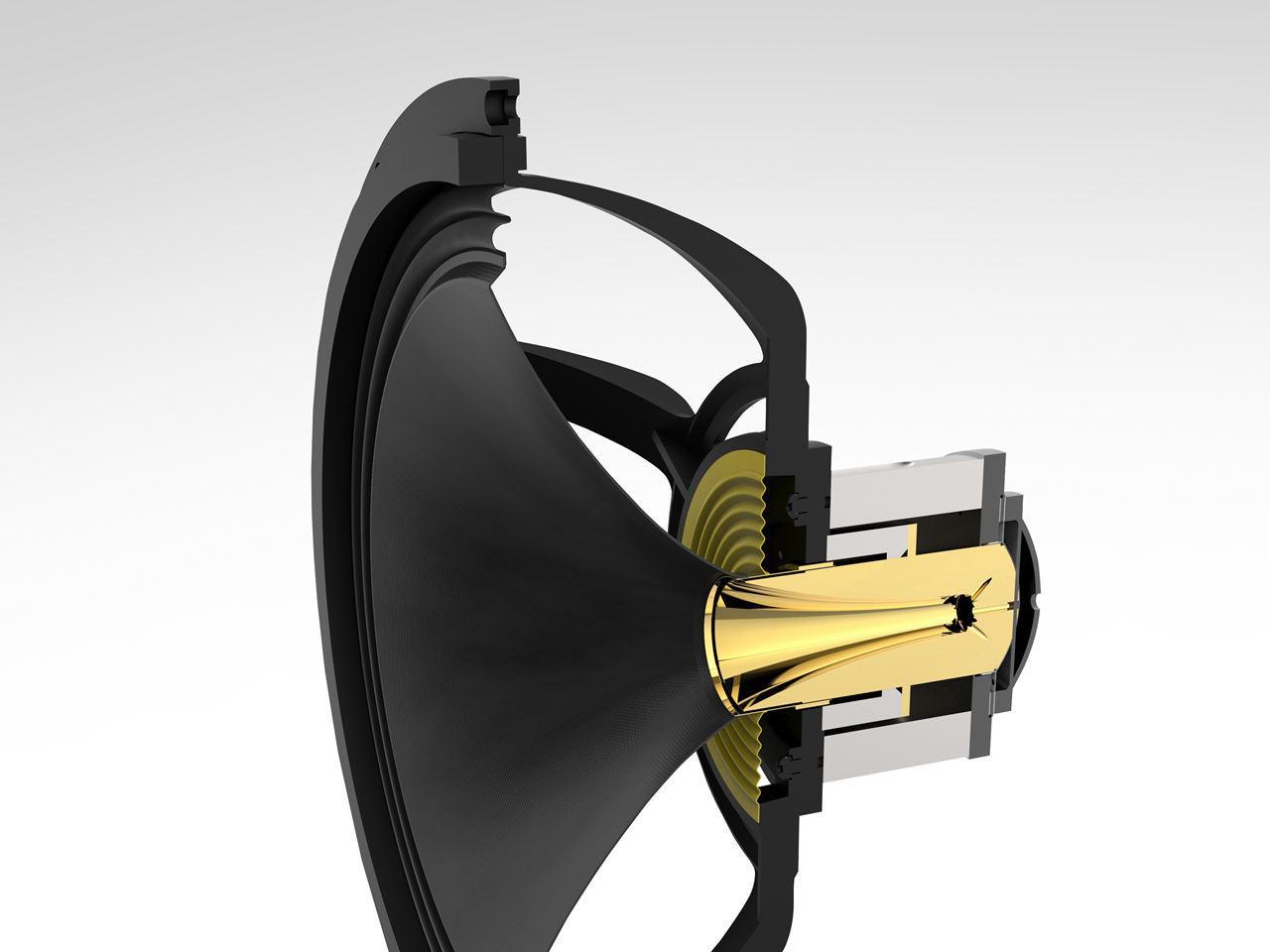
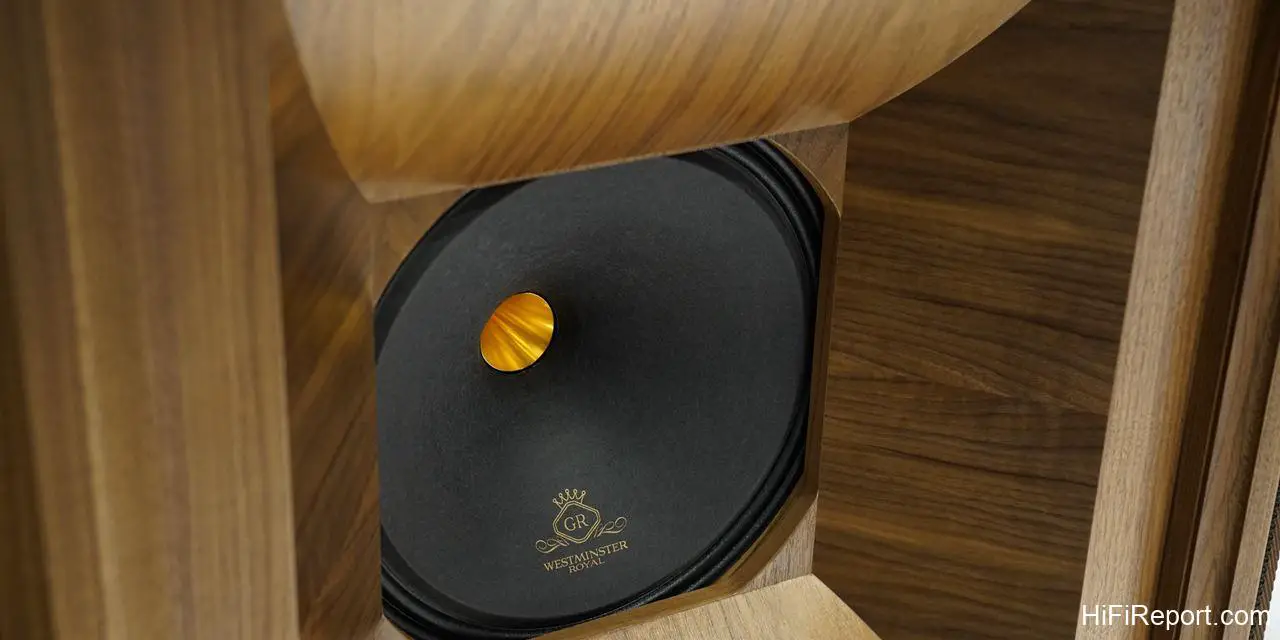
Tannoy’s Dual Concentric driver can be considered a type of coaxial driver. The basic structure involves placing the high-frequency driver at the geometric center of the mid-bass driver, thereby aligning the acoustic centers of both drivers on the same axis to achieve the ideal point source reproduction.
The key difference between a Dual Concentric driver and a typical coaxial driver lies in the fact that with conventional coaxial drivers, the larger the bass cone size, while extending lower in frequency, the more challenging the integration with the high-frequency driver becomes. Consequently, the size of typical coaxial drivers is limited, and it’s difficult to cover the entire bass frequency range with just one coaxial driver.
Usually, an additional bass driver is needed to reproduce the full bass spectrum, but this compromises the ideal state of full-range point source reproduction.
In contrast, Tannoy developed a 15-inch Dual Concentric driver back in 1947. A single one of these drivers could reproduce the entire frequency range from high to low frequencies, achieving true point source reproduction. It’s no wonder the Tannoy Dual Concentric driver was considered the most advanced audio reproduction technology at the time. Even when examined by today’s technological standards, the Dual Concentric driver remains an extremely precise and ingenious design.
Achieving Full-Range Point Source
How does the Tannoy Dual Concentric driver achieve this full-range point source reproduction state? It’s linked to two crucial design elements: first, the high-frequency driver employs a compression driver design, and second, the bass cone also serves as the horn flare for the high-frequency driver.
Let’s discuss the first key element. The high-frequency driver in a Dual Concentric design is a true compression driver. Its characteristics include high sensitivity, low distortion, and lower frequency extension compared to typical dome tweeters, making it more suitable for proper integration with a large-sized bass driver.
To elaborate further, the principle of a compression driver tweeter is to use a larger diaphragm area to move air, which is then compressed and expelled through a throat that expands from small to large. After the sound waves are coupled through the compression chamber and throat, the high-frequency diaphragm only needs to vibrate minimally to produce sufficient sound pressure energy.
Because only minimal diaphragm movement is required, compression drivers exhibit low distortion and high sensitivity.
Now for the second key element. The shape of the Dual Concentric driver’s bass cone is precisely calculated to also function as the horn flare for the high-frequency driver. As the high-frequency sound waves pass through this horn flare, their energy is further enhanced, and their lower frequency extension can be extended further. This design also helps the Dual Concentric’s high-frequency driver integrate more effectively with the large bass driver.
Design Ingenuity
The Dual Concentric driver actually incorporates many clever designs. One such design involves the precisely calculated position of the high-frequency driver, deeply recessed within the bass driver. Combined with a custom-designed crossover network, this ensures perfect phase alignment between the high and low-frequency drivers.
The horn flare formed by the bass cone also controls the dispersion of high-frequency sound waves, resulting in more consistent sound dispersion across the entire frequency range.
Finally, let’s summarize the four major advantages of the Dual Concentric driver: First, it achieves the most ideal state of full-range point source reproduction, providing the most accurate soundstage localization. Second, it simultaneously possesses the advantages of horn loudspeakers: high sensitivity, low distortion, direct energy, and rich detail. Third, it exhibits full-range phase coherence.
Fourth, it’s a paradigm of minimalist design, requiring only a two-way setup to completely reproduce the entire frequency spectrum.
A driver whose design framework was established seventy years ago still possesses irreplaceable advantages today. It’s no wonder Tannoy’s Dual Concentric drivers are held in such high esteem and beloved by countless audiophiles. Paradoxically, as the Dual Concentric driver has continuously evolved, many Tannoy enthusiasts feel that the sound characteristics of modern Dual Concentric drivers have changed, losing the unique sonic flavor of early classic Tannoy Dual Concentric drivers.
Is this truly the case? I don’t believe so. After auditioning the Westminster Royal GR this time, I was pleasantly surprised to find that its sound signature is quite close to the “Silver Heads” I heard at Mr. Chen’s home over a decade ago. The only difference is that the well-maintained “Silver Heads” have been tempered by decades of time, their sound performance refined to an extremely smooth and mature state.
Modern Dual Concentric drivers, on the other hand, are like freshly brewed wine, requiring continuous listening and time to slowly mature and enter their developed state.
Evolution of the Driver
What are the differences between the latest Dual Concentric and earlier designs? The technical features of the latest generation Gold Reference Dual Concentric driver used in the Westminster Royal GR reveal Tannoy’s meticulous tuning. Let’s look at the high-frequency driver first. Its 2-inch aluminum-magnesium alloy diaphragm undergoes a complex five-stage process to achieve maximum stiffness, resulting in better durability and stability.
The surround, made of equally durable Mylar material, effectively absorbs diaphragm resonance energy. The voice coil is wound with lightweight aluminum wire. Even the wiring connecting the high-frequency driver to the crossover uses specially selected multi-strand copper wire, demonstrating Tannoy’s attention to even the smallest details. Furthermore, the damping of the high-frequency driver’s compression chamber has been tuned for more precise throat coupling.
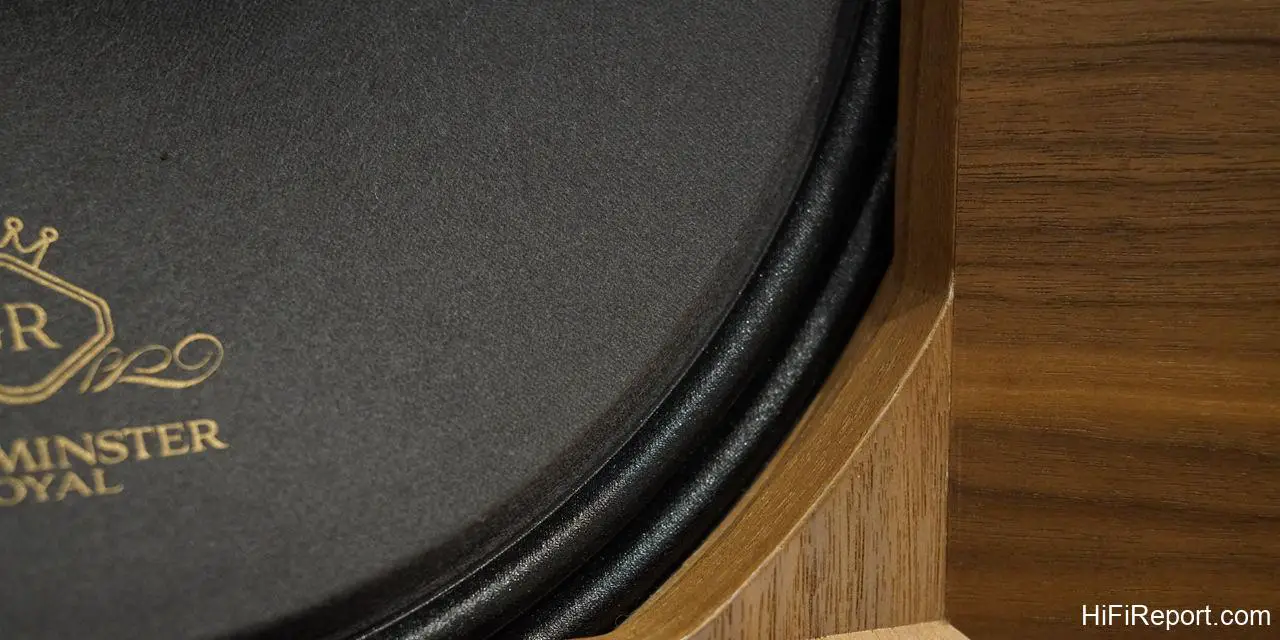
Now, let’s look at the bass driver. Its cone is made from a mixture of paper pulp and various fibers, providing better damping characteristics and more effectively absorbing cone resonance energy. Its double surround is made of fabric, a design inspired by early classic drivers and one of the most durable surround materials. The damping characteristics of the surround have been tuned to ensure more linear piston motion of the cone.
The voice coil has a four-layer structure and can handle higher power. The magnetic system uses Alcomax 3 magnets, and the high-frequency driver uses this magnet material as well. Alcomax 3 is essentially the Alnico magnet favored by audiophiles. It’s a permanent magnet whose magnetic force does not degrade over time.
Alcomax 3 also possesses conductive properties, eliminating non-linear eddy currents within the magnetic system, reducing mid-range distortion, and improving the driver’s sensitivity and transient speed.
The Westminster Royal GR Cabinet
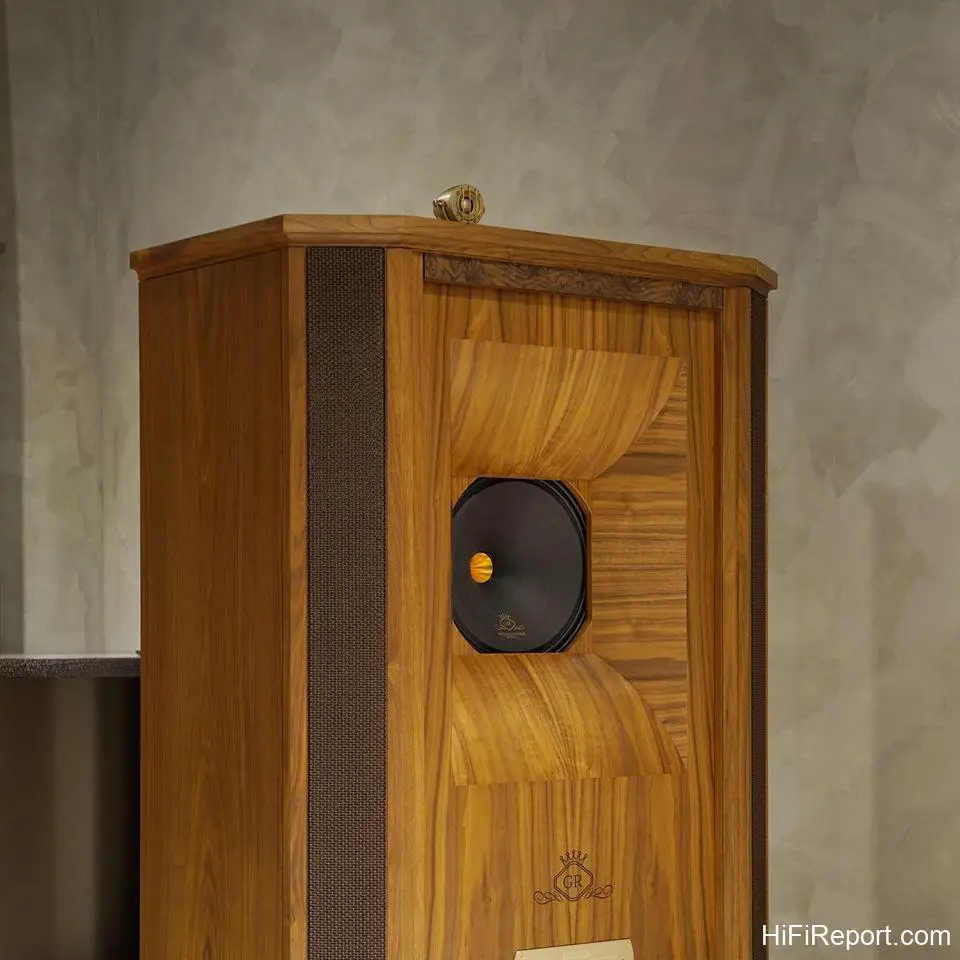
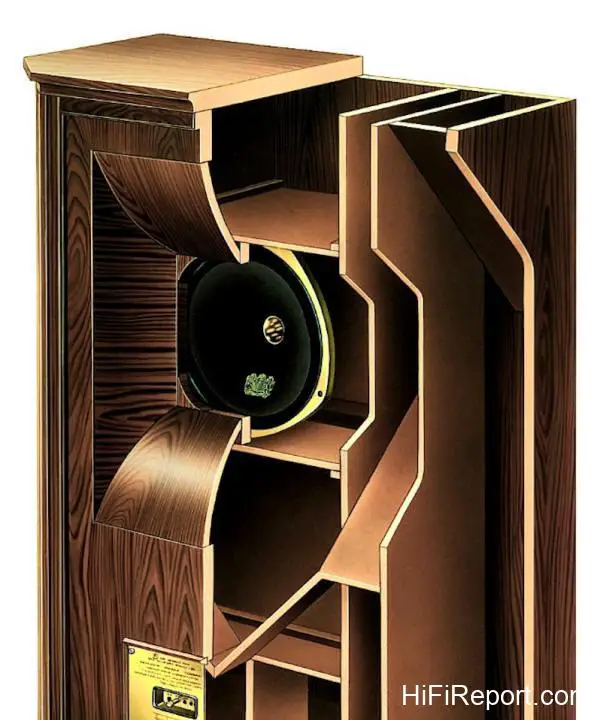
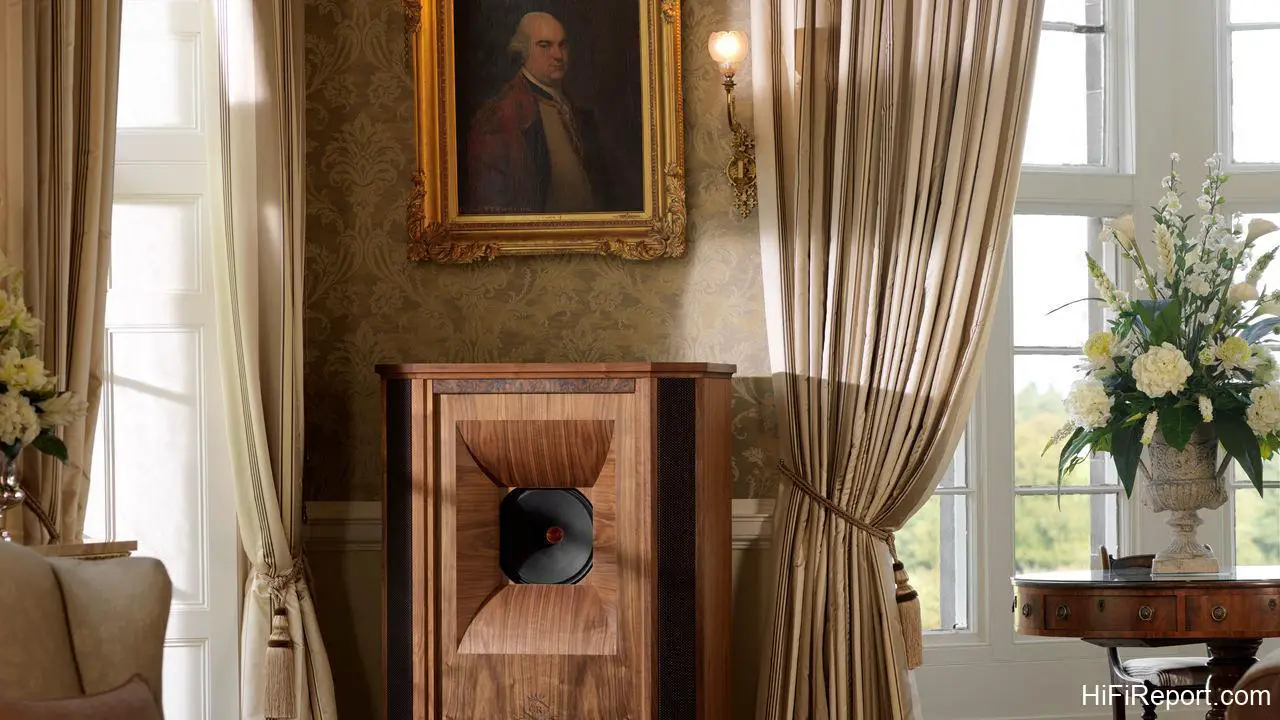
Let’s bring the focus back to the Westminster Royal GR featured in this article. Compared to Tannoy’s 95-year history, the Westminster Royal GR is relatively a young model, but it is arguably the most representative model in Tannoy’s history. Its most distinctive feature is the horn opening at the front of the cabinet, and the complex back-loaded horn structure within the cabinet.
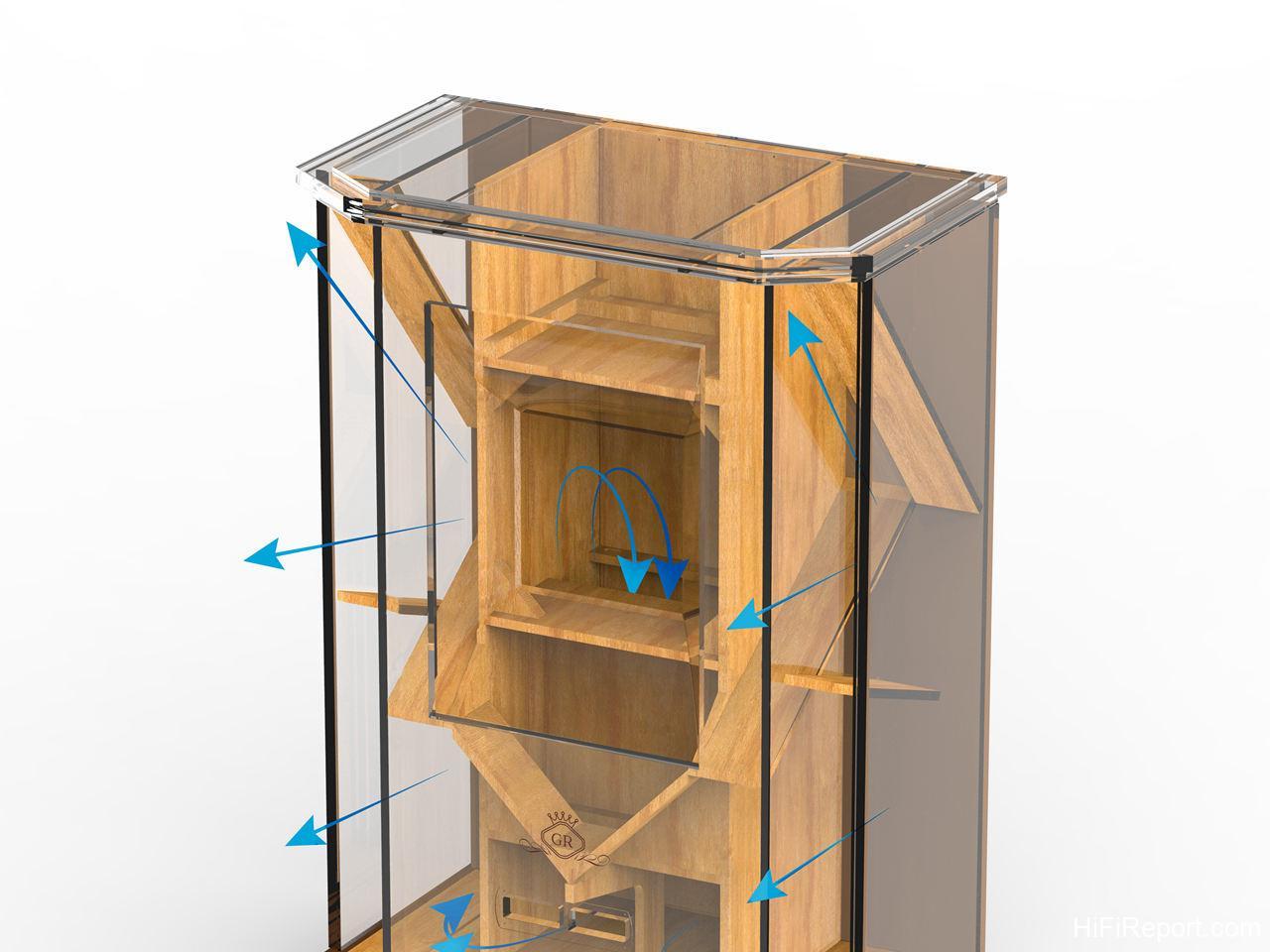
The purpose of this design is, of course, to allow the Dual Concentric driver to extend to significantly lower frequencies. The precisely calculated back-loaded horn not only makes it easier for the bass driver to move air, reducing distortion in bass reproduction, but it also provides better damping for the bass cone, thereby improving transient response speed.

In fact, only when the Dual Concentric driver is paired with a custom-designed back-loaded horn cabinet is the bass extension truly complete, and the ultimate essence of the Dual Concentric driver’s full-range point source reproduction fully revealed.
Please don’t assume that back-loaded horn cabinets are a common design for Tannoy speakers. Throughout Tannoy’s history, only the Autograph, GRF, and Westminster models have employed this design. Among these, the Westminster boasts the largest cabinet and the most complex back-loaded horn structure. The Westminster’s back-loaded horn also features mechanical crossover characteristics.
When reproducing frequencies above 200Hz, the bass driver is coupled with the horn opening at the front of the cabinet. The back-loaded horn only comes into play when reproducing frequencies below 200Hz. The bass extension, at -6dB, can astonishingly reach down to 18Hz, showcasing its incredible capabilities!
Generational Evolution
The current Tannoy Westminster Royal GR is the sixth evolutionary version of the Westminster. The first generation Westminster was introduced in 1982, featuring a bass surround made of foam. In 1987, it evolved into the second generation, named Westminster Royal. The cabinet size was increased and made from thicker birch plywood. The crossover used improved capacitors, and the internal wiring was replaced with Van den Hul products.
The third generation was introduced in 1992, with the model name changed to Westminster TW, where TW stands for Tulip Waveguide for the high-frequency throat. The Westminster TW was actually a lower-priced version of the Westminster Royal, with the magnet changed from the Westminster Royal’s Alnico to ferrite magnets.
The fourth generation was introduced in 1999, model name Westminster Royal HE, where HE in the name stands for Hard Edge, referring to the stiff fabric surround used for the bass cone. This design has continued to the present day. The fifth generation was introduced in 2007, model name Westminster Royal Special Edition (SE). The internal horn structure was reinforced to reduce resonance coloration, and the cabinet exterior offered three choices of exquisite solid wood veneers.

The Westminster Royal GR reviewed here is the sixth generation version from 2013.
Besides the driver being upgraded to the GR version, the sixth-generation Westminster Royal GR also features a significantly upgraded crossover. All capacitors, resistors, and inductors have been upgraded to higher specifications. The crossover wiring uses pure silver wire, and all internal wiring utilizes single-crystal pure copper conductors. The entire crossover circuit board undergoes ultra-low temperature treatment to eliminate structural stress in components, wiring, and solder joints.
Tannoy claims this process makes the sound quality smoother and more natural.
Audition Experience
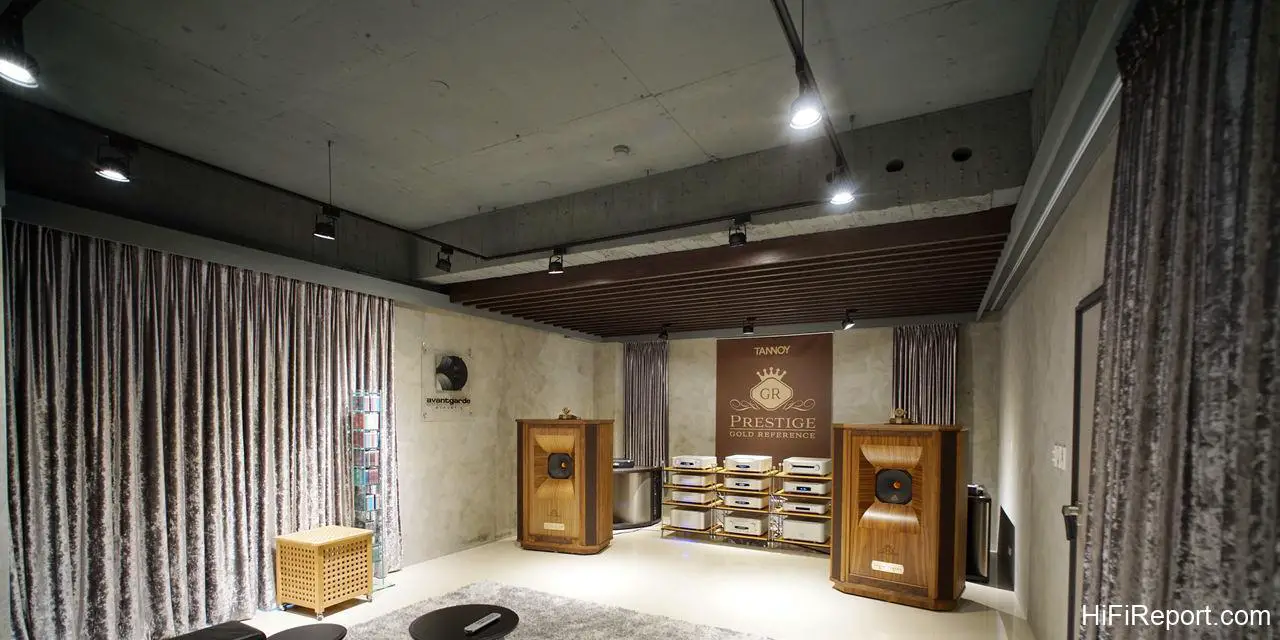
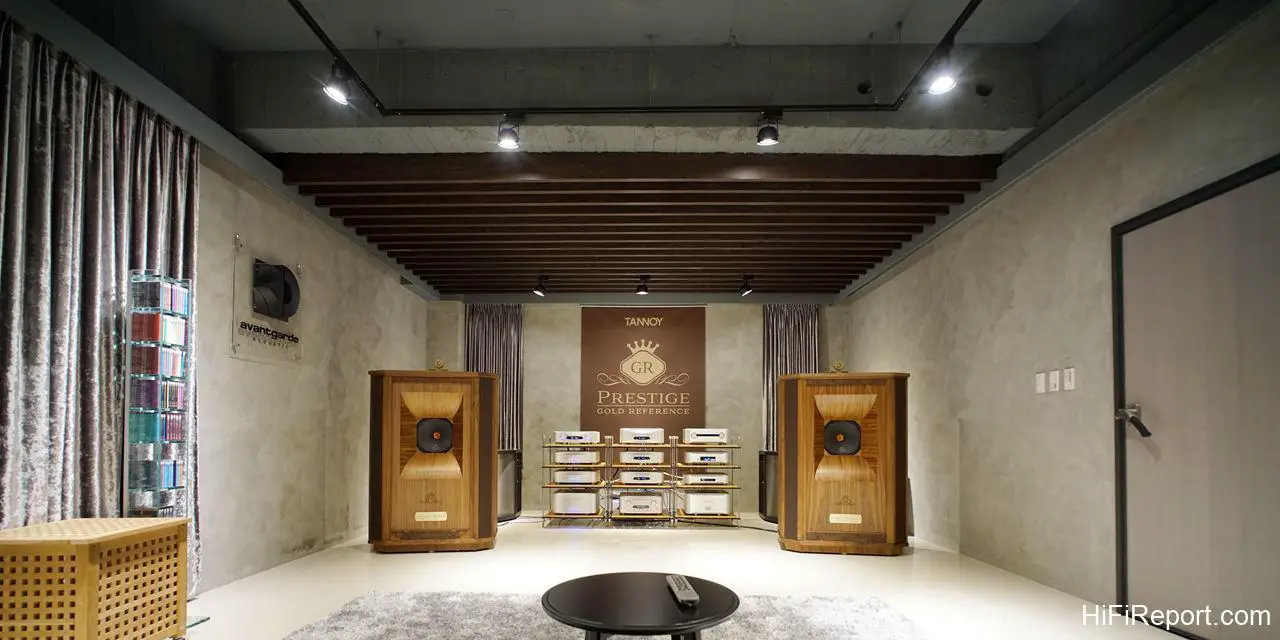
This audition took place in the listening room of the local distributor, Shengqi. This space was recently renovated, removing the ceiling cavity and the cabinets behind the speakers. The previous issue of excessive bass absorption caused by these cavities has been thoroughly resolved, and the reverberation is now controlled just right, opening up the sound of the space considerably.
I honestly feel incredibly fortunate; I must have done something good in a previous life to get this rare opportunity to truly experience the sound performance of my personal Tannoy Holy Grail, the Westminster Royal GR, in this significantly improved space.
Shengqi set up a full suite of top-tier Esoteric equipment to pair with the Westminster Royal GR. The digital source included the Grandioso P1X SACD transport and D1X monaural DACs, complemented by the G-02X external clock. For streaming music, they used the N-03T network transport. The amplification consisted of the Grandioso C1X power-separated preamplifier paired with the Grandioso S1 stereo power amplifier, rated at 150 watts into an 8-ohm load.
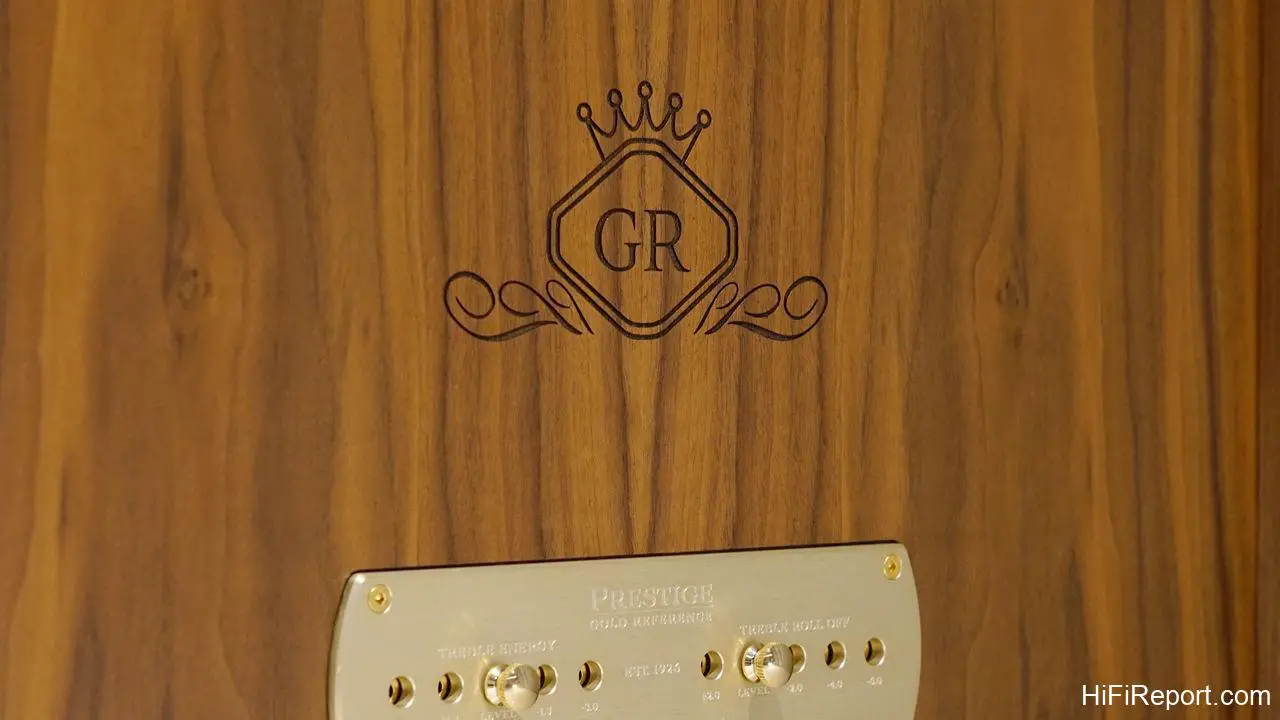
Perhaps you’re wondering why, with the Westminster Royal GR’s high sensitivity of 99dB, they didn’t pair it with a low-power tube amplifier. The answer to this question can be found in the original manual. Tannoy’s recommended amplifier power is 20-350 watts. While a 20-watt amplifier might drive it, the manufacturer believes that instead of driving the Westminster Royal GR at full power near distortion with a low-power amplifier, it’s better to pair it with a higher-powered amplifier.
This allows for more headroom to drive the Westminster Royal GR effortlessly within a more linear operating range, resulting in better sound quality and a more complete realization of the Westminster Royal GR’s capabilities. From this perspective, Shengqi’s choice to use the Grandioso S1 power amplifier to drive the Westminster Royal GR was an extremely appropriate one.
Sonic Impressions
I began my listening with Cowboy Junkies’ “Trinity Session” album. This album was recorded live in a small Canadian church using only one microphone. The Westminster Royal GR faithfully reproduced the natural reverberation of the small church. The decay of the vocals, accompanied by the church’s acoustics, extended with incredible clarity, like parting the clouds, allowing me to clearly “see” the scene of the band playing in the church.
Who said the sound of the Westminster Royal GR is too warm or hazy? In fact, quite the opposite is true. The timbre of the Westminster Royal GR is not only clear and transparent, but its ability to resolve subtle musical information is startlingly high. What surprised me even more at this point was how the massive speakers seemed to completely disappear.
This is the precise soundstage performance demonstrated by the Dual Concentric driver in its perfectly phase-coherent point source reproduction state.
Next, I listened to Martha Argerich playing the two-piano version of Beethoven’s “Symphony No. 6.” Strangely enough, the physically large Westminster Royal GR seems particularly adept at recreating the subtle ambient atmosphere captured in recordings.
This recording didn’t particularly emphasize the high-frequency overtones of the piano, but played through the Westminster Royal GR, the high notes sounded as clear and beautiful as silver bells, and the overtones seemed to extend endlessly into the most subtle depths. Even with headphones, I might not hear such rich overtone extension!
I suddenly realized that what I was hearing was the performance with the addition of Tannoy’s own Prestige GR super tweeters. So, I disconnected the super tweeters for a test. The ability to construct space was indeed slightly diminished, but the high-frequency timbre remained clear, and details were still abundant. With the super tweeters added back, the biggest difference was actually in string instruments. Zeng Yuqian’s violin playing exhibited more focused lines, with stronger penetration.
The sheen of the violin tone was as luxurious as the finest silk. I specifically noted that under the Westminster Royal GR’s interpretation, the subtle variations in bowing technique were not only clearer and more distinct, but every turn of the bow seemed to be handled with deliberate care. This level of performance is something I have never experienced with other systems.
Since the effect of adding the super tweeters was so positive, I decided to keep them connected for the remainder of the audition.
Returning to the piano repertoire, I played Alexandre Tharaud’s new album “Le Poete du Piano.” This time, my attention was drawn to the piano’s low-frequency performance. Under the Westminster Royal GR’s interpretation, Alexandre’s low-note touches were incredibly stable, defined, and utterly convincing. The bass had a rounded, soft texture while also possessing a definite physical presence with ample elasticity.
During passionate passages, the Westminster Royal GR didn’t present a performance that felt oppressive or aggressive, but rather one of tolerance, ease, and expansive grandeur. Crucially, even with heavy bass strikes, I did not perceive any muddiness or bloat caused by cabinet resonance. For such a large cabinet to suppress resonance to such a minimal degree is a testament to Tannoy’s efforts in cabinet structure reinforcement.
Listening to the “Angels & Demons” soundtrack, the Westminster Royal GR’s bass wasn’t hard and stiff; instead, it had a stable, soft, and elastic quality with a substantial sense of weight. Its bass attack and decay speed were not the lightning-fast kind, but when reproducing passages with continuous low-frequency impacts, the Westminster Royal GR’s bass was neither slow nor muddy.
If using a car analogy, its bass isn’t like the stiff suspension of a sports car, but rather the soft, compliant suspension of a luxury sedan.
Listening to Giulini conducting Beethoven’s “Symphony No. 6,” the Westminster Royal GR effortlessly presented a broad and grand scale, clearly delineating the layers of different sections. During impassioned passages, the Westminster Royal GR’s performance remained soft and relaxed. While not as tight and exciting, it felt closer to the live concert hall experience.
In fact, rather than emphasizing tightness and excitement, the Westminster Royal GR excels at revealing the subtle beauty of slow, quiet passages, and slow movements are arguably the most challenging parts of a symphony to reproduce effectively!
I suddenly recalled that over a decade ago, I had auditioned a Westminster at the listening room of KHS, the then-distributor of Tannoy. I estimate it was likely the fifth-generation version. The KHS listening space was larger, and the speakers were positioned far from the rear wall, but I distinctly remember that the soundstage for orchestral music felt very flat.
I always thought that was a characteristic of the Westminster’s soundstage, until this time when I realized that the Westminster Royal GR can indeed portray soundstage depth and layering.
Magical Musical Experience
Allow me to say this: the Westminster Royal GR is a magical loudspeaker. When it plays music, the noisy world immediately stops, and only the music flows gently, the emotions contained within wafting softly as if exuding fragrance on the breeze. When it plays music, I feel instantly enveloped by gentle notes, as if floating in a vast ocean formed by sounds, utterly relaxed, utterly blissful.
The Westminster Royal GR is a loudspeaker that cannot be described by mere audiophile terms; what it plays is true music, and what I receive is true emotion, emanating from the depths of my heart.
Specifications
* Type: Two-way back-loaded horn floorstanding loudspeaker
* Driver: 1 x Dual Concentric driver (1 x 2″ aluminum-magnesium alloy diaphragm high-frequency driver, 1 x 15″ multi-fiber paper cone driver)
* Introduction Year: 2013
* Frequency Response: 18Hz–27kHz (-6 dB)
* Crossover Frequency: 1kHz
* Sensitivity: 99dB (2.83V/1m)
* Nominal Impedance: 8 ohms (Minimum 5 ohms)
* Recommended Amplifier Power: 20–350 watts
* Continuous Power Handling: 175 watts (Peak 700 watts)
* Cabinet Volume: 530 liters

* Dimensions (WHD): 980×1,395×560mm
Associated Equipment
* Esoteric Grandioso P1X SACD Transport
* Esoteric Grandioso D1X Monaural DAC
* Esoteric N-03T Network Transport
* Esoteric G-02X External Clock
* Grandioso C1X / S1 Pre/Power Amplifier
Highlights
* Tannoy’s only current speaker featuring the 15-inch Dual Concentric driver paired with a back-loaded horn cabinet.
* 15-inch Dual Concentric driver equipped with exclusive Alcomax 3 Alnico magnets.
* Bass extends down to 18Hz at -6dB.
* All crossover components upgraded to higher-grade materials.
Considerations
* Not recommended for use with amplifiers of too little power; best paired with amplifiers offering 100 watts or more to fully unleash the speaker’s potential.
* Recommended for use with Prestige GR super tweeters for more complete high-frequency extension and overall better performance.
* Requires sufficient break-in to reveal the full classic Tannoy sound charm.