
TEAC UD-507 Review
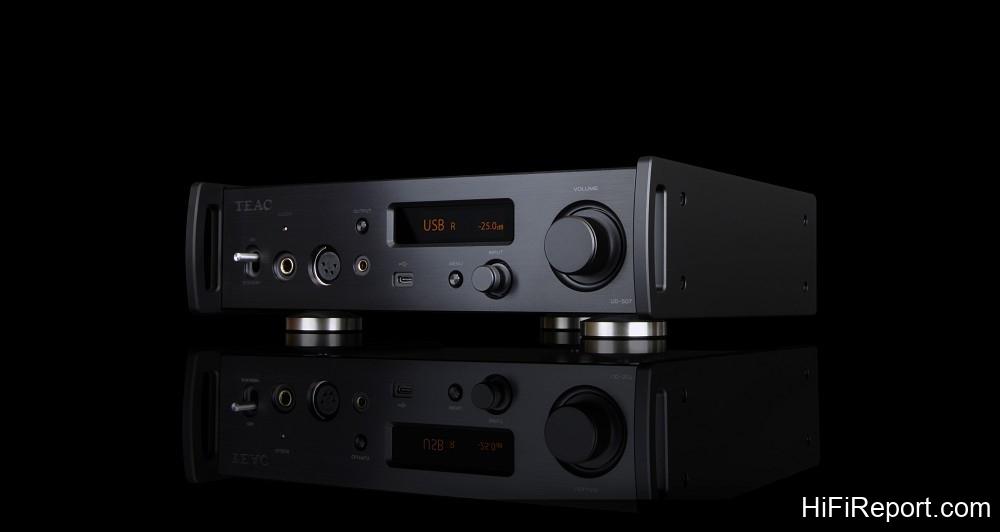
We initially thought the 700 series was an exception, but surprisingly, in 2024, TEAC has equipped the more affordable sub-flagship Reference 500 series with a Discrete DAC. The first model to feature this is the star of this review, the UD-507. This is a multi-functional unit, essentially combining a digital-to-analog converter, an analog preamplifier, and an analog headphone amplifier. It also supports Bluetooth, including high-quality codecs like LDAC, LHDC, and apt-X.
The UD-507’s compact half-size chassis makes it ideal for desktop use, perhaps paired with a laptop source and headphones. For a two-channel system in a living room, I’d recommend pairing it with a dedicated streaming transport or a music server capable of outputting digital audio files via USB. The UD-507’s balanced and single-ended analog outputs can be configured for either fixed or variable volume.
Fixed volume output allows the unit to function purely as a DAC (source) for use with an integrated amplifier or separate pre/power setup. Variable volume output enables it to act as a preamp, driving a power amplifier directly or forming a system with active speakers.
Hardware Design & Features
Moving on to the hardware design, the main circuitry is built on two stacked boards. The lower board primarily houses the various digital input interfaces, control circuits, digital audio processing, and the digital-to-analog conversion stage. To cater to audiophiles’ tuning preferences, the digital audio processing circuit allows PCM input to be optionally upconverted.
Users can select “Upconvert OFF” (original sample rate) or use the “RDOT-NEO” technology to multiply the sample rate by 2x, 4x, or 8x Fs. This converts the sample rate to higher integer multiples: 44.1kHz and its multiples can be upconverted up to 352.8kHz, while 48kHz and its multiples can go up to 384kHz. Upconverting the sample rate helps optimize linearity and improve the signal-to-noise ratio by pushing digital noise frequencies further away from the audible range.
For the digital-to-analog conversion circuitry, the UD-507 is equipped with the TEAC Reference Discrete DAC: TRDD 5. This DAC uses an FPGA chip and TEAC’s proprietary algorithm for 64bit/512Fs ΔΣ modulation. The FPGA chip features four outputs per channel. For each channel, two sets of FPGA outputs control two logic ICs and 16 precision resistors (one logic IC and eight resistors for the positive phase, and the same for the negative phase).
The outputs from all variable resistors are then combined and converted into an audio signal via a low-pass filter circuit. Based on the principle and structure, the number of discrete components in this DAC (including the precision resistors) is the same as in the higher-end UD-701N and Esoteric N-05XD.
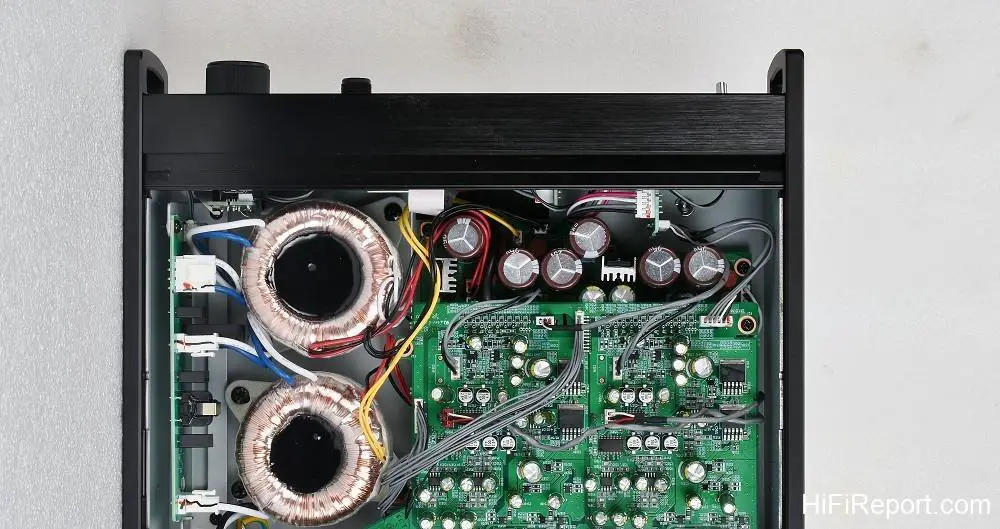
However, the component configuration for the flip-flop control and output JFET amplifier circuits in those higher-end models differs from the UD-507, leading me to anticipate a difference in sound signature.
The “upper” circuit board houses a complete analog preamp circuit. By “complete,” I mean it handles both balanced and single-ended analog audio inputs and employs a “proper” analog volume control circuit, unlike the digital volume control often found in streaming players with preamp functionality. The preamp circuit follows TEAC’s characteristic “dual-mono, full-balanced” structure.
Each channel utilizes a JRC NJW1195A for source selection, combined with a low-noise dual OPA chip, the NE5532, to form the balanced Variable Gain Volume Control System, known as TEAC-QVCS. This design aims to minimize sound quality degradation by keeping the audio signal path as short as possible.
The output stage employs the TI LME49600 headphone buffer amplifier chip, known for its wide bandwidth, high slew rate, and high current output. Two such chips are used per channel for balanced output, forming the buffer amplifier circuit dubbed “TEAC-HCLD2.” HCLD stands for “High Current Line Driver.” In single-ended output mode, the two buffer amplifiers originally configured for balanced output are switched to parallel operation, effectively doubling the output current.
Regarding the power supply, the unit features two toroidal transformers: one dedicated to supplying power to the digital circuitry and the other for the audio circuits. This complete separation of digital and analog power ensures sound purity is not compromised by noise from the digital section.
Furthermore, the analog circuits for the left and right channels are powered individually by separate secondary windings of the toroidal transformer and their corresponding power supply circuits, enhancing channel separation within the audio circuitry.
External Clocking with the CG-10M-X
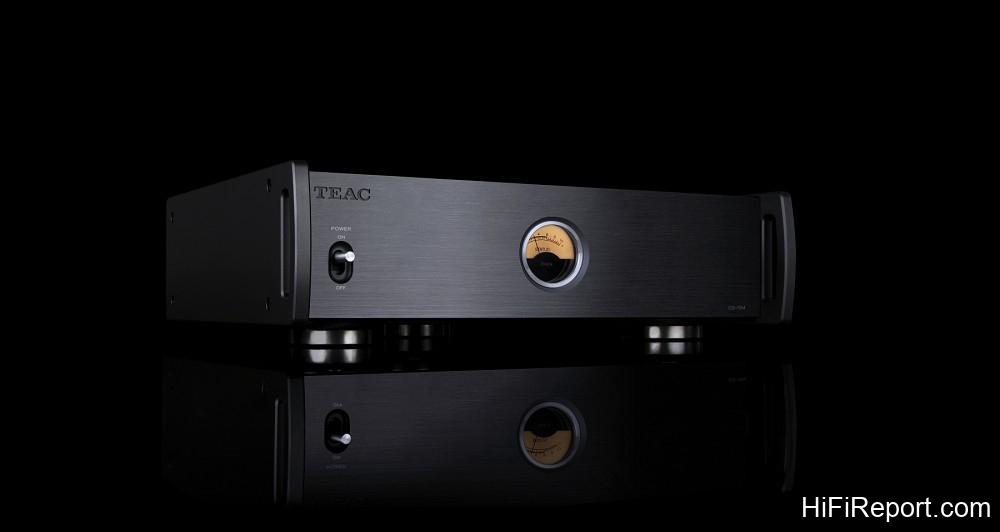
During this review process, I was fortunate to be able to pair the UD-507 with the TEAC CG-10M-X. This is a master clock generator that utilizes an OCXO (Oven Controlled Crystal Oscillator) as its core component. It’s an evolved version of the CG-10M, featuring improvements such as circuit layout and the output buffer amplifier.
It’s also equipped with TEAC’s unique screwless-fastened floating top panel and their proprietary “Stressless Foot” anti-vibration feet on the bottom, arranged in a three-point support configuration (two at the front, one at the back). A single CG-10M-X can provide a master clock signal for up to four external digital sources.
After a sufficient warm-up period, I began listening tests. The very first phase involved comparing the UD-507 using its internal clock versus using the external CG-10M-X. And let me tell you, that clock is a dangerous thing! Initially, just listening to the UD-507 on its own, I found it immensely enjoyable (both in sound quality and tuning flexibility).
It already offered performance far exceeding its price, easily qualifying as a digital source (or DAC/preamp) with exceptional value under USD 3,000. But when I introduced the CG-10M-X’s clock, the difference wasn’t subtle; it was concrete and immediately audible. Soundstage focus became significantly sharper, the sense of visual dimensionality was noticeably enhanced, and the form and weight of voices and natural instruments approached greater realism.
So, I strongly advise anyone whose budget doesn’t stretch to include the CG-10M-X *not* to connect it and listen. Once you hear it, you won’t be able to sleep until you buy it along with the UD-507! While this “add-on purchase” isn’t inexpensive (the CG-10M-X retails for approximately USD 1,500), it elevates the sound quality of this two-unit combination to directly compete with digital sources priced around USD 6,000.
I was well aware that the UD-507’s circuitry punches well above its weight class, so I paired it with equally high-performing equipment to allow both the UD-507 and the CG-10M-X to show their full capabilities.
Exploring Tuning Possibilities
The UD-507 offers numerous options for sound tuning. In the DSP settings, I selected the highest option, 8x FS. Upconverting to the maximum sample rate makes CD-quality audio sound remarkably like Hi-Res, increasing resolution without introducing any harshness or sibilance in the treble.
Another option to experiment with is the DELTA SIGMA Fs setting under DAC configs. Comparing the 512x Fs, 256x Fs, and 128x Fs options revealed that higher multipliers resulted in a finer, more delicate sound texture. Next was the PCM DELTA SIGMA setting, which became my absolute favorite tuning control. When set to “MULTI BIT,” the sound leans towards high resolution and high dynamics, favoring an analytical and realistic sonic profile focused on audiophile attributes.
However, I preferred setting it to “DSD.” My initial listening impression was that the UD-507 sounded relatively youthful and lively compared to the higher-end UD-701N. Choosing the DSD setting pushed it towards a sound signature that prioritizes richness and “flavor.” Furthermore, the DSD LPF setting (with options OFF, FIR 1, FIR 2, FIR 3) had no explanation whatsoever in the manual.
My comparative listening revealed that “the larger the number after FIR, the more mature and rounded the sound became.” I’m sure you can guess that I ultimately settled on FIR 3. Despite the sound becoming more mature, it didn’t lose any speed, and the soundstage maintained excellent clarity and transparency.
The settings mentioned above represent my findings after experimentation, aimed at making the UD-507 not just sound good, but also maximize the listening enjoyment it provides.
Sonic Performance Across Genres
With recent pop music, the sound achieved a superb balance between high-resolution realism and a comfortable, smooth listening experience.
Listening to Veegee’s “Every Tomorrow,” her close-miked vocals created an intimate sense of being in the same room, reproducing the young female artist’s smoky voice with remarkable completeness. With classical music, I experienced the natural sonority of instruments (completely devoid of any digital character). The texture of bowed strings on violins and cellos was delicate, and the response to timbre and dynamics was highly sensitive.
The “sound of the space” within the concert hall and the layering of different orchestral sections were richly portrayed.
With newer multi-bit recordings, the UD-507’s “sound texture” closely resembled that of SACD. Trying out more music genres brought further surprises. It excels at reproducing recordings from the analog era (mastered on tape). Even when playing digital music files, there was a distinct sense of listening to master tapes or a high-end vinyl playback system.
Oscar Peterson Plays The Cole Porter Song Book (a 192kHz/24bit digital file transferred from a 1959 recording) conveyed the warmth and softness of the old recording, with a texture far more refined than expected. The piano had a pleasing degree of luster, and the double bass offered excellent thickness and elasticity. Listening to Stan Getz’s “I’m Late, I’m Late,” I could clearly hear the rich, vintage flavor of the 1961 recording, presented with both vividness and impressively high resolution.
I almost forgot the UD-507 is a digital source – the analog sound it delivers from music files is truly spot on! In the final phase, I connected my Sennheiser HD 800 monitoring headphones (driven via the balanced output). Since the headphone output shares the same circuitry as the rear analog outputs, both speaker and headphone listening offered a neutral presentation, resulting in highly consistent sound characteristics between the two.
Judging purely by sonic performance relative to price, I believe the combined musical capabilities of the TEAC UD-507 and CG-10M-X duo reach the sound quality level of digital sources costing twice as much. Their ability to reproduce modern Hi-Res recordings flawlessly while also making old recordings sound wonderfully analog is truly a “special feature.” I thoroughly enjoyed the highly rewarding listening experience they provided throughout this review.
With their exceptional listening pleasure and outstanding price-performance ratio, they unequivocally deserve our highest recommendation.