
TEAC UD-701N Review
After reviewing the TEAC AP-701, it immediately became one of my most important reference power amplifiers in the under $4,000 price range. TEAC’s Reference 700 series was designed as a system comprising the UD-701N (the subject of this review) and the AP-701 power amp. However, the UD-701N’s release was delayed compared to the AP-701 due to a shortage of key semiconductor components.
I believe many seasoned audiophiles and reviewers have high expectations for it, and rightly so: it’s TEAC’s only “standard size” source component in many years and their flagship product. More importantly, the UD-701N uses discrete components (not a DAC chip) for its digital-to-analog conversion circuit.
Features and Connectivity
Let me start with the UD-701N’s features. Historically, TEAC models starting with “UD” were all “USB-DAC Headphone Amps,” primarily designed for desktop systems where music files are played from a PC, driving high-end wired headphones, and potentially pairing with a pair of active monitor speakers. The UD-701N, however, integrates full streaming functionality in addition to its USB-DAC and headphone amp capabilities.
This means it can function as a USB-DAC headphone amp (with both 4-pin XLR balanced and 6.3mm single-ended headphone outputs), a network streamer, and a streaming preamplifier (equipped with both single-ended RCA and balanced XLR outputs). This makes it highly suitable as the main digital source, and potentially the preamp, in a living room audio system.
The UD-701N’s digital-to-analog conversion supports MQA decoding, and its streaming capabilities include TIDAL, Roon, Spotify, and Qobuz. When connected to a network, the unit can play music files shared from NAS, PCs, music servers, smartphones, and tablets. Supported file types include FLAC, Apple Lossless (ALAC), WAV, AIFF, MQA, MP3, AAC, and DSD (including DSF, DFF, and DoP).
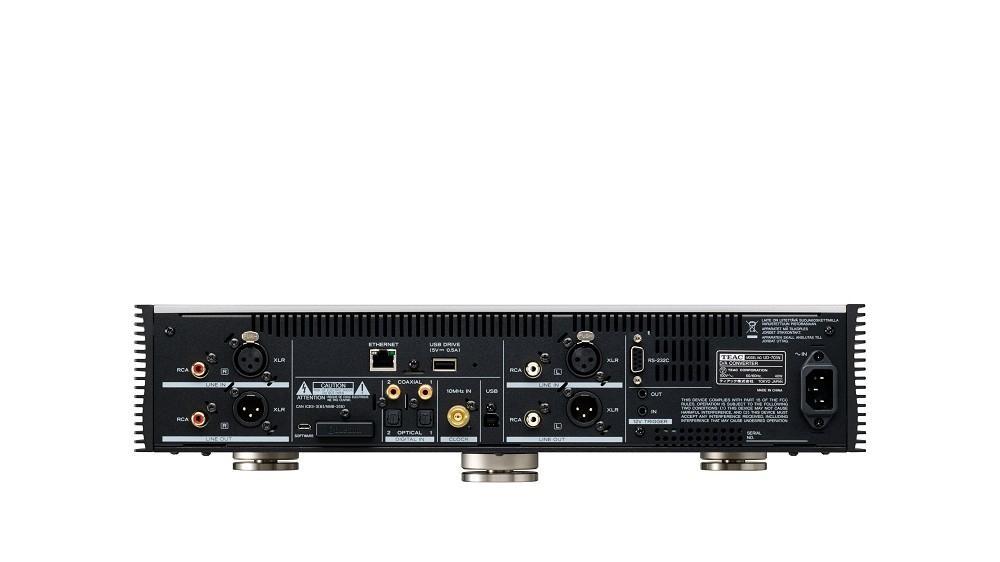
Utilizing the highly versatile UPnP protocol, users can not only use TEAC’s official “HR Streamer” app for track selection and volume control but also third-party apps like mconnect and BubbleUPnP to operate the unit.
Users of this unit can also classify and store music files on a USB storage device and insert it into the unit to function as a “music library.” The UD-701N is compatible with USB storage formats including FAT32 (commonly used for USB flash drives), exFAT (suitable for USB solid-state drives), and NTFS (works for USB hard drives).
In this configuration, playing ultra-high-resolution audio files such as 384kHz/32bit or DSD 22.5MHz is completely unaffected by network status, ensuring smooth, uninterrupted playback. The UD-701N’s Bluetooth version is 4.2, compatible with LDAC, LHDC, AAC, SBC, aptX, and aptX HD codecs.
Discrete DAC and Internal Design
Nearly a year ago, I learned that the UD-701N would not use off-the-shelf DAC chips but rather discrete components to build a Discrete DAC, similar to a very small number of high-priced digital sources. These types of devices typically cost over $6,500. The UD-701N is, as far as I know, the most affordable digital source component on the market equipped with a Discrete DAC.
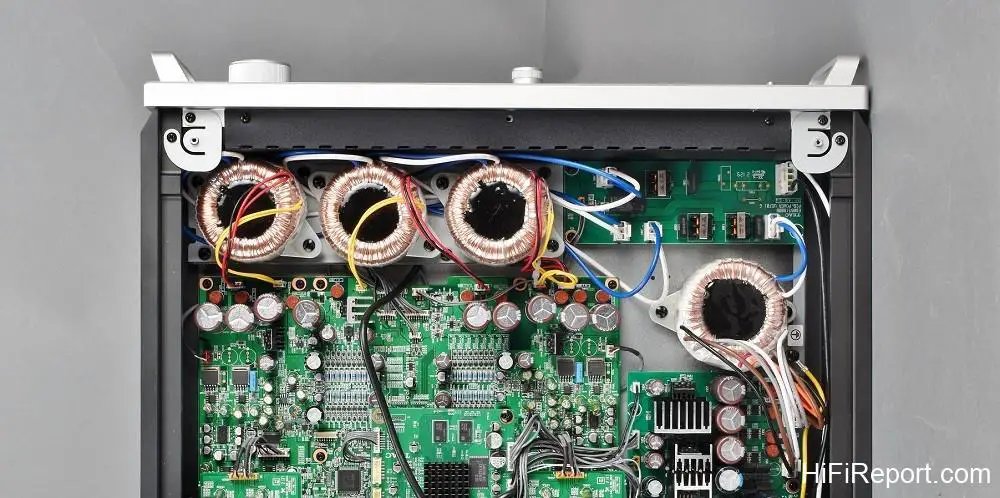
However, what I saw after disassembling the unit was even more astonishing: I recognized at a glance that the UD-701N is practically an Esoteric N-05XD in TEAC clothing!
I reviewed the N-05XD just a few months ago and carefully examined its circuitry, taking photos and making notes on each internal section. Therefore, I can confidently say that the main circuit board, analog input sub-board, and USB/network sub-board of the TEAC UD-701N and Esoteric N-05XD are the same. However, please understand that by “same circuit board,” I mean they use identical printed circuit boards.
The component count, specifications, and models on these boards in the UD-701N are “largely similar,” with a few parts differing from the N-05XD. The digital audio processing circuit’s programming and initial settings also have differences.
Just like the N-05XD, the UD-701N uses an FPGA chip for digital audio processing after the digital audio signal enters the unit. This includes Upconvert processing for multi-bit audio. If the highest setting of “8x Fs” is selected, digital audio with sampling rates of 44.1kHz, 48kHz, and their multiples can be converted to 352.8kHz or 384kHz.
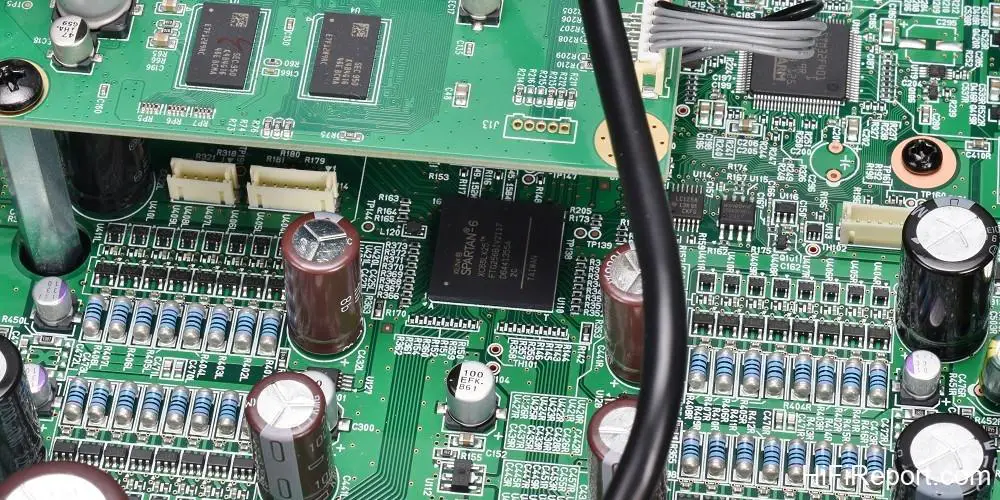
This enhances the subtlety and linearity of the sound quality, pushing digital noise further away from the audible frequency range (resulting in a quieter background).
At the core of the digital-to-analog conversion circuit, this unit replicates the structure of the Esoteric N-05XD’s Master Sound Discrete DAC. Users can choose whether PCM Delta Sigma conversion uses multi-bit or converts to 1-bit (DSD). The FPGA then converts the digital audio into a PWM signal that controls a 32-group array circuit composed of flip-flops and passive components (8 groups each for positive and negative phases per channel).
Following the flip-flop array circuit, a high-performance, audio-specific JFET input OP Amp, the JRC MUSES8920, is used per channel to sum the outputs of the array circuits and perform low-pass filtering. At the end of the DAC circuit, a JFET input OP Amp chip, the MUSES8820, is used for buffer amplification.
Although the UD-701N’s DAC circuit is clearly different from previous TEAC digital sources, the excellent tradition of “dual-mono full-balanced” design remains unchanged. The preamplifier and headphone amplifier circuits for both channels are shared and symmetrically configured on the main circuit board. Each channel uses one JRC NJW1195A 4-Channel volume control chip for balanced analog volume control for both the preamp and headphones.
Subsequently, each channel uses one TI NE5532A dual OP Amp chip for high-level amplification. At the end of the preamp stage (which is also the headphone output stage), a high-current headphone buffer amplifier chip, the TI LME49600, is used. This chip boasts a high slew rate of up to 2,000V/μs (very fast) and ultra-low harmonic distortion of just 0.00003%. For headphone and balanced outputs, two are used per channel, while one is used for the single-ended output.
In summary: the UD-701N’s preamplifier and headphone amplifier circuits are identical to those in the N-05XD.
Power Supply Architecture
Considering the streaming, DAC, and preamplifier (headphone amp) circuits discussed above, from digital to analog, over ninety percent of the UD-701N is identical to the N-05XD (and that’s a conservative estimate). The clear difference lies in the power supply section.
The N-05XD is powered by two quite substantial toroidal transformers, while the UD-701N uses four smaller toroidal transformers: one dedicated to the network circuit power supply, one for the main board’s digital circuit power, and two specifically for the left and right channel audio (analog) circuits. So, it still maintains a “dual-mono” power supply configuration! Besides the transformers, some of the filter capacitors used in the N-05XD are of a higher grade.
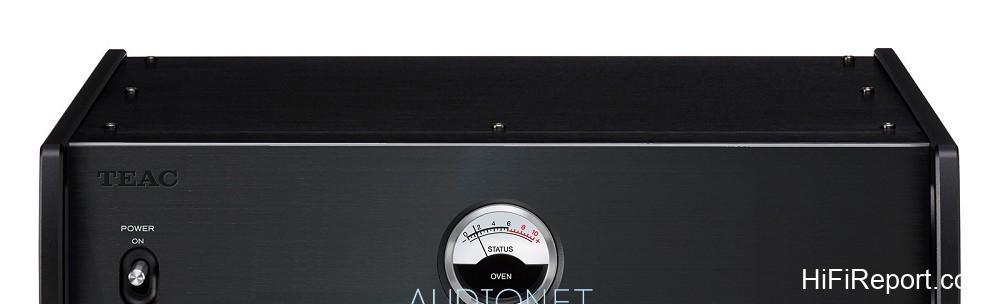
The network card’s power board in the N-05XD uses Schottky diode rectification and includes supercapacitors among its filter capacitors, with a total capacitance exceeding 2,330,000μF. While the UD-701N network card’s power board doesn’t have such an extreme capacitor setup, it also uses Schottky diode rectification. I roughly calculated the total filter capacitor capacitance here to be about 200,000μF. I haven’t seen similar attention to detail in comparable price range devices.
Listening Impressions
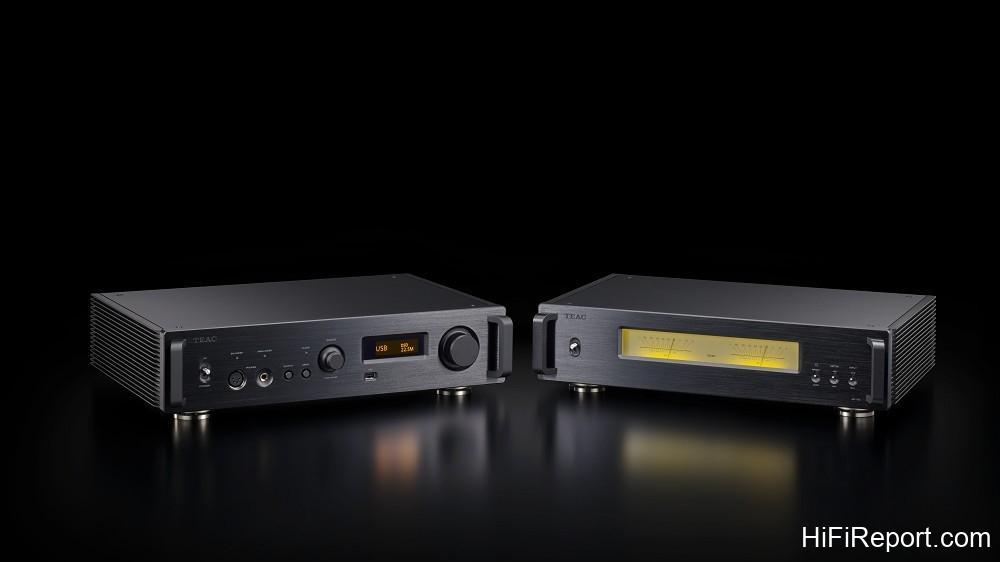
Despite the TEAC UD-701N and Esoteric N-05XD having circuit similarities comparable to twin cars from different manufacturers sharing the same engine and gearbox, we should perceive shared fundamental characteristics. However, differences in tuning and settings will still allow them to exhibit distinct personalities. The system used for this review included the TEAC AP-701 power amplifier, CG-10M clock generator, and Pioneer S-1EX speakers.
After warming up the entire system for two hours, I began listening. Initially, when playing music files, I compared the sound with Clock Sync Off (using the UD-701N’s internal clock) and Clock Sync On (using the CG-10M clock). I believe any listener should be able to hear that the sound is more refined and elegant when the unit uses the CG-10M clock generator.
I am very confident that for UD-701N owners, investing the additional budget in the CG-10M is well worth it to enhance the sense of sophistication and refinement. Using a more precise clock to reduce jitter is a proper approach, and the resulting improvement in sound quality is difficult to achieve through typical tuning methods.
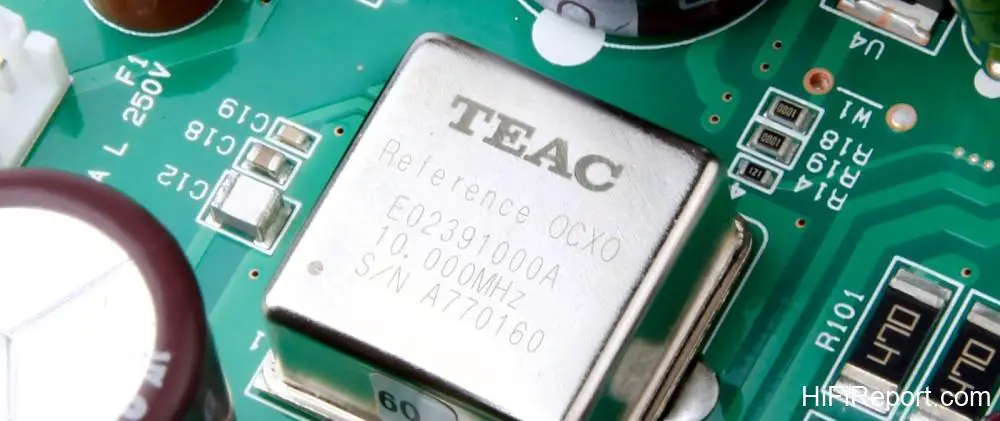
As always, TEAC provides its digital sources with “a ton of tuning functions.” For multi-bit audio input or music file playback, the UD-701N offers Upconvert for integer oversampling, capable of increasing 44.1kHz and 48kHz sampling rates up to 8 times (8x Fs). I believe the “PCM Delta Sigma” setting is a must-try for users. This setting determines the output type of the digital audio before PWM conversion.
When set to “Multi Bit,” I recommend setting the related “Delta Sigma Fs” parameter to the highest “512x Fs.” In this state, “CD quality” music files will sound remarkably like Hi-Res audio in terms of subtlety. I experienced a very transparent sense of space, with visual perception being extremely clear and intense. It revealed sonic details without any restraint or embellishment, delivering wild impact and a certain “spice” to the treble.
I enjoy listening to “current” pop music with this setting, including pop songs, electronic music, hip-hop, etc. Turning up the volume for live concert recordings delivers a vivid, impactful, and energetic stage presence. However, honestly, the sound signature with the settings above differs from the Esoteric N-05XD I reviewed earlier. What I loved most about the N-05XD was its “clear, smooth sound with a massive amount of information leading to a rich and dense listening experience.”
Can the UD-701N achieve this?
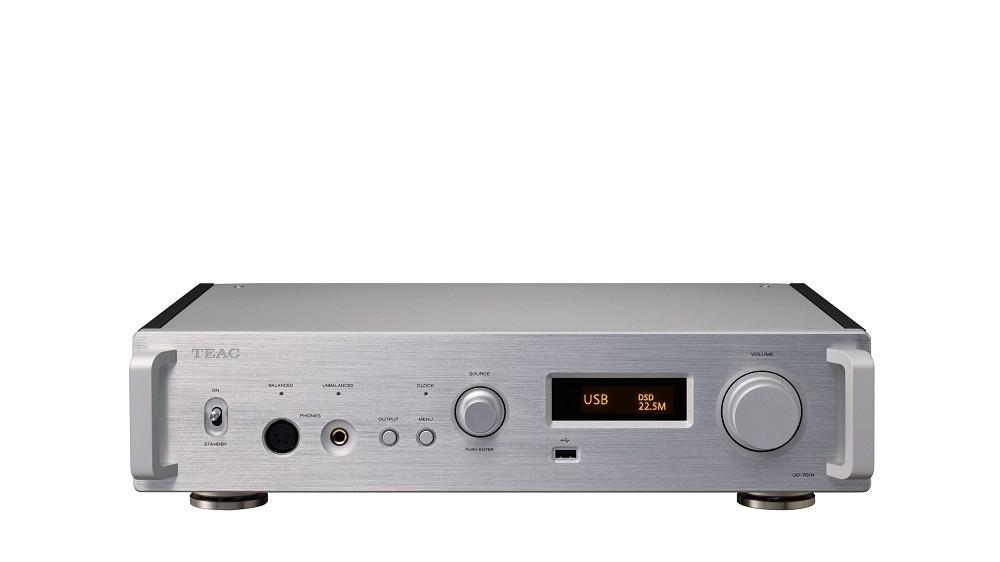
Simply switch the UD-701N’s “PCM Delta Sigma” to “DSD (1 bit)” and set the “DSD Low Pass Filter” to FIR 2. In my opinion, this state allows the UD-701N to express its best musicality and character. The sound quality is highly similar to the Esoteric N-05XD. I believe the main similarity lies in the density of audio information on the time axis. Listening to native DSD (which already has ultra-high sampling rate) decoding is inherently excellent.
Converting multi-bit audio to DSD, however, makes ordinary music files sound like SACD: smooth, with reduced harshness but no loss of detail (you can change the DSD Low Pass Filter to FIR 1 or Off if you want a slightly brighter sound). The sound becomes elegant, and vocals and saxophone tones gain more warmth.
Not only does this mode make me want to spend more time listening to jazz, but the delicate texture of strings and the beauty of the violin tone in the Hilary Hahn – Paris album are something I’ve never heard from TEAC digital source equipment before.
I recommend that owners of this unit, if you are certain the music file you are listening to comes from analog master tapes (before the 1980s), you will find more pleasure listening in this DSD mode. I believe this setting is highly suitable for classical and jazz music. It’s also great for enjoying songs gently, comfortably, and softly at medium or low volume.
The UD-701N’s headphone output and preamplifier output share the same circuit, so the sound characteristics when listening with speakers versus headphones are consistent (unless the equipment you pair is not neutral). The headphone output has sufficient driving power; I recommend using the balanced (XLR) output to drive headphones for more energy and higher dynamics.
Does the UD-701N qualify as an “affordable N-05XD”? I believe it does, but with the condition that “the CG-10M must be added.” Even then, the combined price of the UD-701N and CG-10M is less than half the price of the N-05XD. The UD-701N and N-05XD share a very similar refined sound quality and analog character. In terms of sonic personality, the UD-701N is like a “younger version” of the N-05XD, with delicate texture, high resolution, and freshness.
In contrast, the N-05XD sounds more serene and luxurious. That a product with a suggested retail price under $3,500 can make me compare it to equipment costing $10,000 is remarkable. Furthermore, as far as I know, within the under $3,500 range, besides the UD-701N, you probably won’t find another source unit using a Discrete DAC. It has absolutely sufficient reasons to earn a Best Recommendation.
Specifications
* Discrete DAC design using discrete components
* Functions: USB-DAC Headphone Amplifier, Network Streamer, Streaming Preamplifier
* Headphone outputs: 4-pin XLR Balanced, 6.3mm Single-Ended
* Line outputs: RCA Single-Ended, XLR Balanced
* MQA decoding support
* Streaming Services Supported: TIDAL, Roon, Spotify, Qobuz
* Network Playback Compatibility: UPnP (NAS, PC, Music Server, Smartphone/Tablet)
* Supported File Types: FLAC, Apple Lossless (ALAC), WAV, AIFF, MQA, MP3, AAC, DSD (DSF, DFF, DoP)
* USB Storage Compatibility: FAT32, exFAT, NTFS
* USB Storage High-Res Playback: Up to 384kHz/32bit PCM, DSD 22.5MHz
* Bluetooth Version: 4.2
* Bluetooth Codec Support: LDAC, LHDC, AAC, SBC, aptX, aptX HD
* Digital Audio Processing: FPGA-based, Upconvert (up to 8x Fs)
* DAC Architecture: Master Sound Discrete DAC (based on Esoteric N-05XD structure)
* PCM Delta Sigma Modes: Multi Bit, 1 Bit (DSD)
* Op-Amps: JRC MUSES8920, MUSES8820, TI NE5532A
* Volume Control IC: JRC NJW1195A 4-Channel
* Headphone Buffer Amp: TI LME49600 (2000V/μs slew rate, 0.00003% THD)
* Circuit Design: Dual-Mono, Full-Balanced
* Power Supply: Four independent toroidal transformers (Network, Digital, Left Analog, Right Analog)
* Network Card Power Supply: Schottky diode rectification, Filter Capacitors (approx.200,000μF total)