
The StudioTek 130 G4 Review
From the era of three-gun projectors to today, for projector enthusiasts with no budget constraints who simply demand the absolute best, Stewart has consistently topped my list of recommended screen brands. If the viewing environment boasts perfect light control (to the point of near-total darkness) and the projection system is primarily for watching movies, years ago I would have suggested the HD130.
As single-chip projectors have evolved, however, Stewart’s successive generations of the StudioTek 130 have become the premier choice.
Technical Details and Development
Before this review, whenever I thought about the image characteristics of a Stewart screen, my mind would almost immediately recall the deep impression left by the StudioTek 130 G3 review I conducted in 2012. That screen was, in my experience, a “heavyweight” performer, exhibiting the richest colors and an exceptionally dense image – a truly intense viewing experience.

In December 2020, during the debut exhibition of Sony’s new projectors, I saw the VPL-VW790ES paired with the StudioTek 130 G4. At that moment, I felt that this “4th generation” StudioTek looked quite different from its predecessor. Finally, the opportunity arose. This time, at Ming Jen Audio in Hsinchu, after meticulously calibrating the projector, I could use my most familiar software to carefully examine the image characteristics of the StudioTek 130 G4.
Let me first clarify that “StudioTek 130 G4” refers only to the screen material itself, not the complete screen. Users can choose the screen size and type based on their needs. For the highest image quality with the flattest possible surface, a fixed frame screen is the undisputed choice. If used in a living room, a motorized retractable screen is an option.
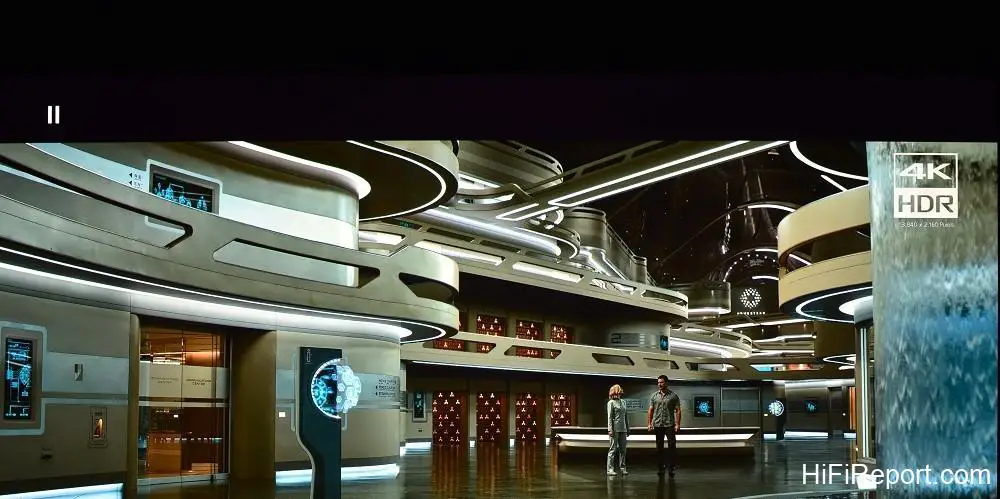
Even with motorized screens, Stewart offers a patented tensioning structure that pulls the screen horizontally, ensuring the surface remains flat.
Like its predecessor, the G3, the StudioTek 130 G4 was developed in close collaboration with industry veteran Joe Kane. I believe this collaboration was not solely for performance (the StudioTek 130 G4 is already certified by JKP, THX, and ISF), but more importantly, to ensure relevance. It allows the new StudioTek’s image characteristics to better meet the demands and expectations of today’s top-tier enthusiasts.

In terms of development timeline, the StudioTek 130 G3 was born in the Full HD era, while the StudioTek 130 G4 emerges in the UHD era (including 8K and 4K). The evolution of image standards and projector performance places different demands on screen resolution, contrast, and color reproduction.
I am confident that enthusiasts who purchased the StudioTek 130 G3 back then would not regret it. Stewart screens are renowned for their meticulous coating process. The material is sprayed from below, allowing larger particles to fall away, with only the finest mist adhering to the surface. The production involves careful inspection and multiple coats.
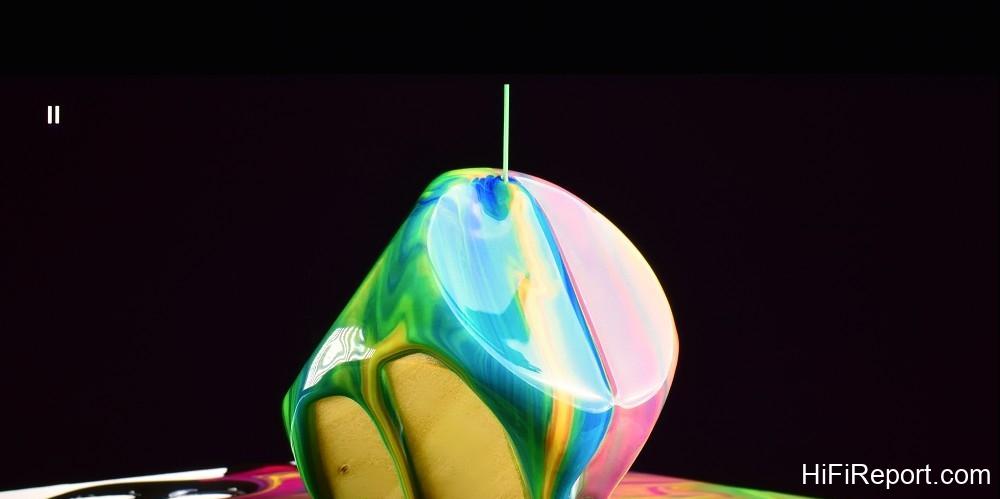
The smoother the screen’s optical surface and the finer the particles, the less irregular reflection occurs, resulting in better edge definition for fine lines. Therefore, even as projectors evolved from Full HD to 4K, the StudioTek 130 G3 could still meet the resolution demands of true 4K.
The precision of the new Stewart screens has evolved to “16K+”. This even finer coating process further reduces “crosstalk” between any pixel and its adjacent pixels. More importantly, the advent of UHD brought BT.2020 (with its wider color gamut) and various HDR formats, presenting new challenges for screen manufacturers. For Stewart, the “formula” for their coating materials is both a closely guarded secret and a core expertise.
Years of accumulated experience give them the “ability to control color rendition.” They can even tailor screens to match the color characteristics of specific brands of home theater projectors. The StudioTek 130 G4 features a dedicated fourth-generation optical coating material, which, according to the manufacturer, offers improved focus, clarity, brightness uniformity, and color performance compared to the previous generation.
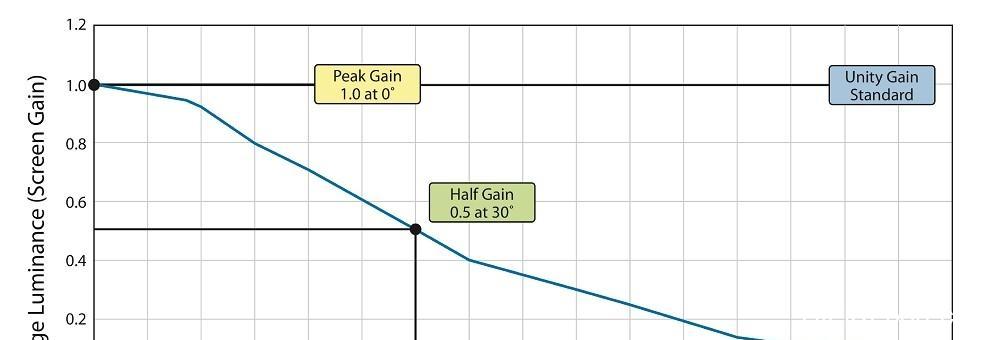
Regarding reflection characteristics, the StudioTek 130 G4 retains a peak gain of 1.3. Compared to a standard 1.0 gain matte white screen, the StudioTek 130 G4 can display higher image brightness under the same projector light output, better highlighting the impact of HDR high dynamic contrast. The StudioTek 130 G4 boasts a wide half-gain angle of 80 degrees. This signifies the screen’s significant emphasis on brightness uniformity across the entire image, from the center to the corners.
The “hotspot” phenomenon, where the center is significantly brighter than the corners, is also considerably less pronounced than with ambient light rejecting or pearl screens. Many enthusiasts or designers might not consider the issue of brightness uniformity, so here’s a tip: to minimize the impact of hotspots, it’s best to use “medium to long throw” projection (using the middle to telephoto range of the projector lens).
Reducing the difference in projection angle between the center and edges of the image improves brightness uniformity. Relatively speaking, the StudioTek 130 G4 hardly requires concern about projection throw distance. The manufacturer recommends a minimum throw distance of only 1.3 times the image width. This allows the projector to be mounted closer to the screen, and using the wide-angle end of the lens still ensures brightness uniformity, offering greater installation flexibility.

Test Setup and Methodology
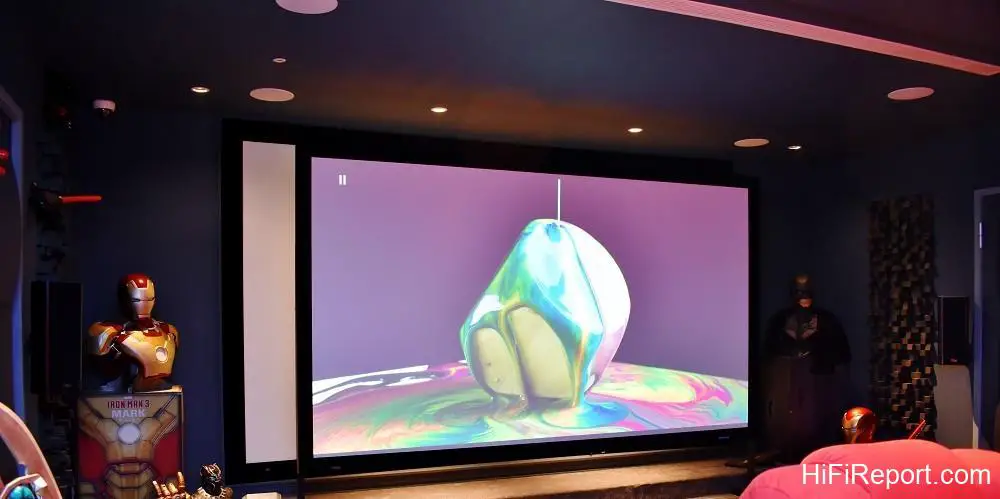
The test setup for this review used a 135-inch StudioTek 130 G4 fixed frame screen paired with a Sony VPL-VW760ES 4K SXRD laser light source projector. After calibration, my first test was for focus and resolution. Using a 4K Resolution Pattern test image, I examined the fine lines, just one pixel wide, that alternate black and white. Whether vertical, horizontal, or diagonally interwoven, every line was perfectly distinct.
The contrast between each pixel and its neighbor, and the edge definition of fine lines, were incredibly close to that of a high-end thin-panel television. I then approached the screen for a closer look. The 4K SXRD imaging chip has an aperture ratio of over 90%, meaning small pixels and even smaller gaps. After precise projector focusing, the StudioTek 130 G4 still allowed me to clearly see the pixel gaps of the 4K SXRD. The resolution and sense of focus are indeed exceptional.
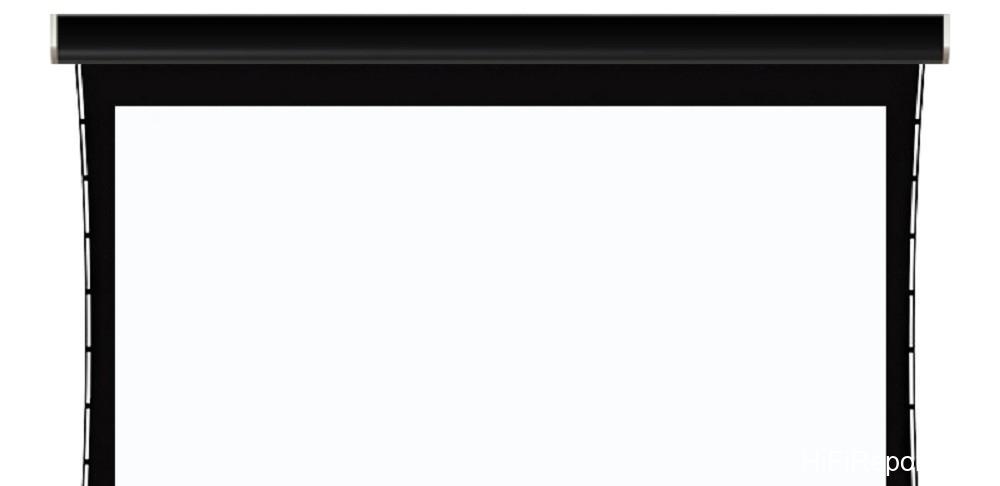
Image Performance Analysis
Test patterns are merely tools for inspection; what truly matters to enthusiasts is the actual viewing experience. When I switched from the test patterns to playing familiar 4K movies, the StudioTek 130 G4 genuinely made me feel as though I had swapped out the projector entirely. This is not hyperbole; I have previously conducted a thorough review of the VPL-VW760ES, and this screen somehow made it seem like I was watching a different, unfamiliar projector.
I strongly felt that the StudioTek 130 G4 possesses three exceptionally prominent qualities:
Firstly, its professional-grade “truth serum” characteristic. It imparts an extremely strong sense of focus and precision to the VW760ES’s projected image, directly revealing the subtle texture of details, much like a professional 4K monitor. There is not the slightest hint of ambiguity or blur. Even powder-like noise, resembling grains of sand, cannot escape its scrutiny.
When I witnessed the texture of the 4K image on the StudioTek 130 G4, I was astonished to realize its level of detail was even higher than that of the Stewart Phantom HALR, which I had tested over half a year prior and considered the king of ambient light rejecting screens. I believe it is absolutely worth the effort for enthusiasts to achieve perfect light control for this screen. On another note, we know that Sony’s super-resolution technology is highly effective at optimizing image quality.
However, the StudioTek 130 G4 still has the capability to allow me to clearly discern the difference in subject cohesion and texture clarity between videos shot with newer and older professional 4K cameras. Without a doubt, it is qualified to serve as a professional screen for film directors.
The second characteristic is an unprecedented level of “clarity.” A screen is essentially a piece of fabric, but when projecting in a fully dark environment, I want the visual sensation to be “completely transparent.” If, while watching a movie, the screen makes the viewer aware of the “material feel of the fabric,” then it has failed! Based on my experience reviewing and observing screens, higher image quality screens exhibit less “fabric feel,” less “haze,” and higher “transparency.”

The only downside is that they are more expensive. The StudioTek 130 G4, however, is as clear as pure water. Even scrutinizing it intently with the intention of finding fault, I could not perceive the screen surface at all. This extremely high transparency allows viewers to experience a very real and powerful sense of “spatial depth extending into the screen.”
The third quality is its excellent gradation characteristics, encompassing both light/dark and color. Normally, watching movies with a projector makes it somewhat challenging to see details in dark areas. However, the dark areas on the StudioTek 130 G4 appear remarkably clear. Is this truly because the dark areas are brighter? I don’t believe so.
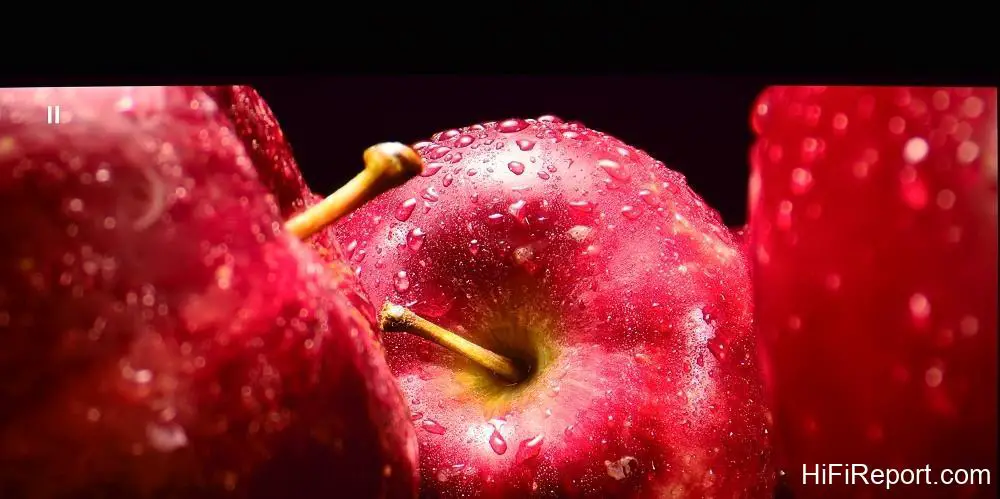
Rather, it skillfully renders very distinct layers of light and shadow in the dark regions, while fully revealing the luster of objects in the mid-tones and highlights.
In terms of color characteristics, I believe there is a significant difference between the StudioTek 130 G4 and its predecessor. The previous G3 had a warm tone tendency, with rich, intense colors and a sense of greater weight to objects. The StudioTek 130 G4, in contrast, has a neutral tone. The “range of variation between color intensities” is very wide, allowing viewers to easily distinguish subtle differences in hue and depth. It has a strong capacity to handle “extremely saturated colors.”

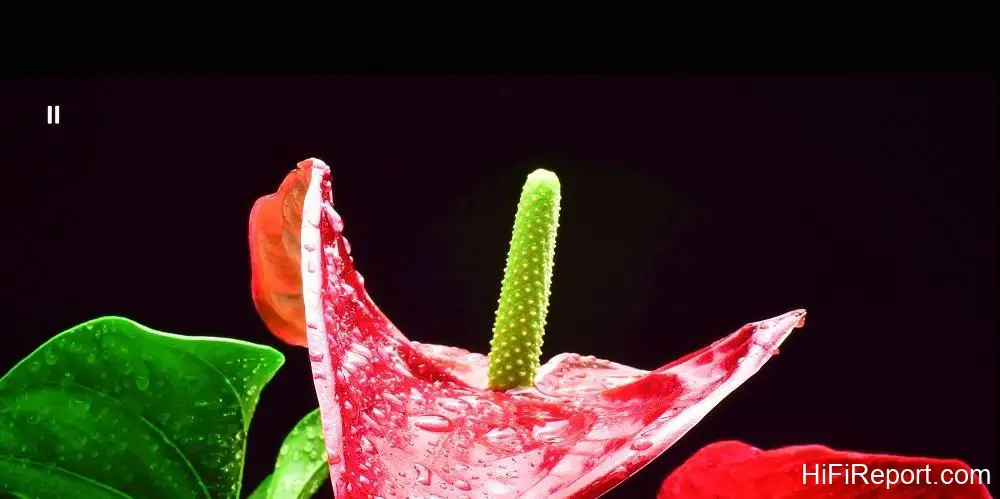
The red of the flamingo flower is boldly vibrant, giving me a powerful color impact, and yet, even when displaying such high saturation red, it maintains rich layers of variation, allowing the vivid red flower to clearly exhibit a sense of three-dimensionality.
Conclusion and Recommendation
The Stewart Filmscreen StudioTek 130 G4 is, without exaggeration, the highest image quality screen I have reviewed to date. It is also the screen where I have seen the biggest “before and after” difference. If you were previously using a high-end screen from another brand and now switch to the StudioTek 130 G4, you will be astonished to discover that you were only utilizing perhaps 70% of your projector’s potential before.

The StudioTek 130 G4 has the capability to unlock the remaining 30%, leading to astonishing leaps in texture detail, color dynamics and layering, and screen spatial depth. In terms of absolute image quality, the StudioTek 130 G4 should receive the highest recommendation. If enthusiasts are purchasing a new 4K projector in the USD 16,000+ range or already own one, please place the StudioTek 130 G4 at the top of your screen shopping list.
Specifications
* Screen Type: N/A (Material only)
* Applicable Conditions: 16K, 8K, 4K+, 4K, Passive 3D/2D
* Peak Gain: 1.3
* Half Gain Angle: 80 degrees
* Ambient Light Rejection Value: 17%
* Minimum Projection Distance: 1.3 times the image width