
Thorens TD 202 Turntable Review
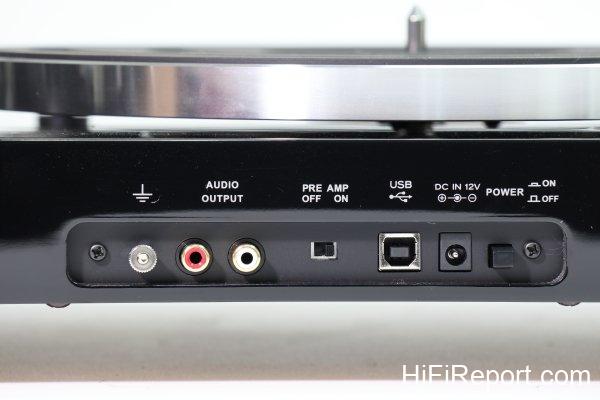
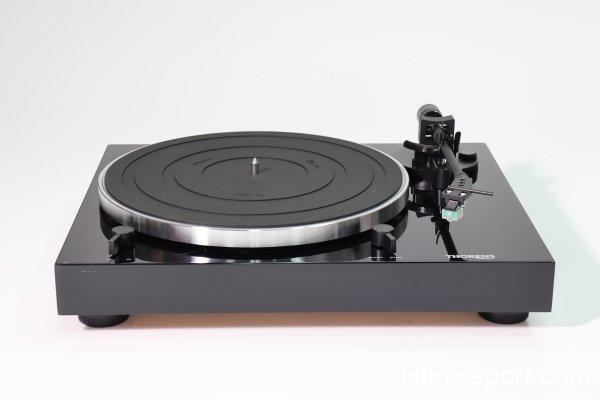
For audiophiles, Thorens is synonymous with high-quality turntables. In late 2018, they introduced two “entry-level” turntables, the TD 201 and TD 202. Back in November 2018, I had the privilege of unboxing and briefly auditioning the more affordable TD 201 at Zhi Ren Audio, making it a global first look! Now, the slightly more upscale TD 202 has arrived at our editorial office. Despite being positioned as entry-level, the TD 202 is feature-rich, boasting a built-in analog-to-digital converter and a USB output, allowing you to digitize your vinyl collection by connecting it to a computer with recording software.
Wait a minute, USB output on an entry-level turntable? Thorens isn’t the only one doing this! Indeed, Sony offers the PS-HX500, which provides almost identical functionality, including a built-in phono preamp for direct connection to an amplifier’s line-level input. However, this is Thorens we’re talking about! While Sony has greater global brand recognition, Thorens is a venerable and specialized brand in the vinyl world, capturing the attention of discerning audio enthusiasts.
A Century-Old Brand in the Audio World
Thorens is a rare breed – a century-old company. Founded in 1883 by Swiss engineer Hermann Thorens, the company’s initial foray into “audio” wasn’t turntables, but exquisitely crafted musical boxes (an early form of audio entertainment). It wasn’t until 1903 that Thorens began producing Edison-style phonographs, and subsequently transitioned into the vinyl era as analog recording technology evolved. Over its long history, Thorens has weathered three bankruptcies. In the 1960s, the company relocated to Lahr, Germany, becoming a German brand and producing numerous iconic and beloved turntables.
However, the rise of CDs as the dominant music format dealt a blow to LPs, and Thorens faced market decline. In 1999, Heinz Rohrer joined the company to spearhead a restructuring plan. By 2002, he took over Thorens and moved the company back to Switzerland, near Basel, a renowned watchmaking hub, thus reverting to its Swiss identity.
Under Heinz Rohrer’s leadership, Thorens began to innovate with fresh designs and color schemes, aiming to attract a younger demographic while also developing high-end products.
Yet, in 2018, Thorens changed hands once again. Gunter Kuerten, former CEO of Elac, acquired Thorens and relocated the company to Bergisch Gladbach, near Cologne, Germany. Thorens is now, once again, a German brand.
As you can see, in just over a century, Thorens has journeyed from being a Swiss brand to a German brand, then back to Swiss, and now back to German again – a testament to the ever-changing tides of business.
New CEO Launches Two Entry-Level Turntables
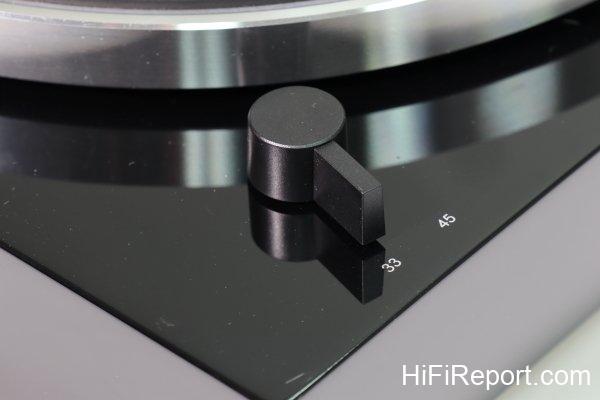
Gunter Kuerten, the new CEO of the century-old Thorens, naturally aims to make his mark. Thorens officially announced the change in CEO and the company’s relocation to Germany on May 1, 2018. Moving swiftly, by the end of 2018, Thorens launched two new models, the TD 201 and TD 202, targeting the crucial Christmas shopping season in Europe and North America. These new Thorens turntables are positioned at the “entry-level” price point. The TD 201 has a European MSRP of 449 Euros, while the TD 202 is priced at 599 Euros. This indicates Thorens’ strategy to start with affordable turntables, solidify the foundation of this historic brand, and then gradually update their product line towards higher-end models.
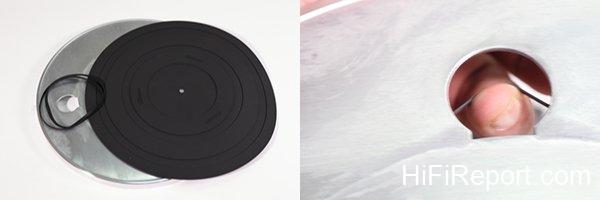
The TD 201 and TD 202 are closely priced with a modest difference. Their fundamental architecture is virtually identical, and the setup process is almost the same. Readers can refer to our initial unboxing report of the TD 201. We unboxed it live at Zhi Ren Audio, and by following the installation sequence in the video, you can easily set up both the TD 201 and TD 202.
Three Key Upgrades in the TD 202
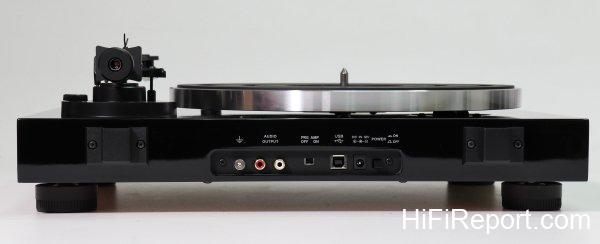
So, what justifies the 150 Euro price difference between the TD 202 and TD 201? There are three key distinctions. First, both use MM cartridges, but of different grades. Second, the TD 202’s platter is noticeably thicker and more substantial than the TD 201’s. Third, the TD 202 adds a USB output with a built-in analog-to-digital conversion circuit, allowing you to digitize vinyl records into digital music files by connecting to a computer.
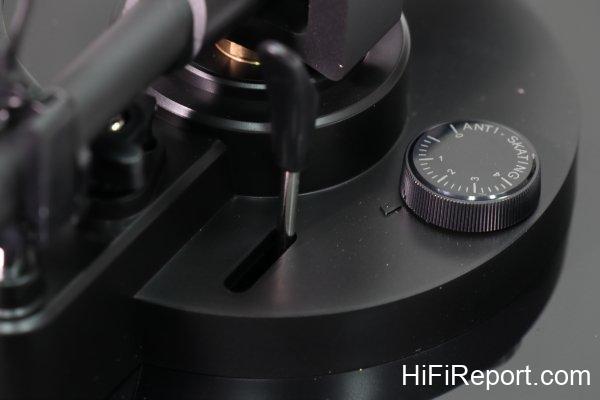
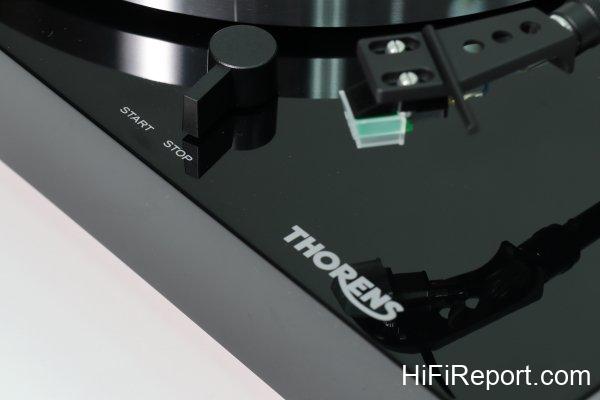
The TD 202 employs an Audio Technica AT-95E cartridge, while the more affordable TD 201 uses the AT3600 from the same manufacturer. The AT-95E has a manufacturer’s suggested retail price of $49 USD. However, I couldn’t find the AT3600 listed on Audio Technica’s official website, nor its price, suggesting it might be an OEM model. Nevertheless, I found listings on Amazon priced around $27 USD. Therefore, the cartridge alone in the higher-grade TD 202 accounts for a $22 USD price increase.
Furthermore, the TD 202’s platter is thicker and uses more material, adding to the cost. The inclusion of the USB output and the AD conversion functionality are also additional expenses. Considering these upgrades, the mere 150 Euro price difference largely reflects the increased material and component costs.
Simple Setup and User-Friendly Operation
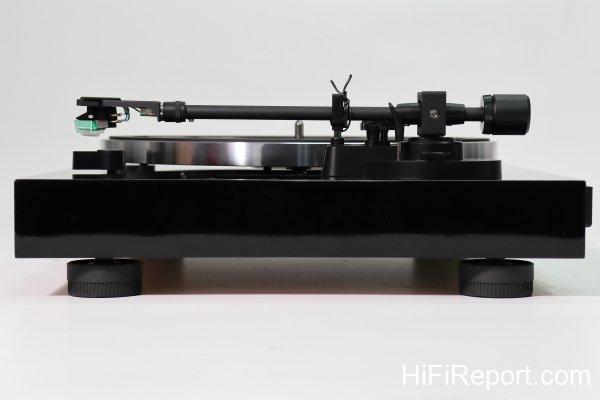
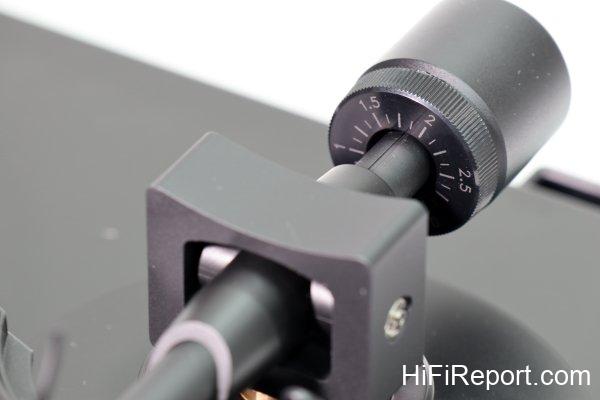
Setting up the TD 202 is straightforward. You only need to adjust the stylus pressure (tracking force). Using a stylus force gauge is recommended for accuracy. In fact, affordable balance-beam style analog stylus gauges are readily available, and it would be a thoughtful touch if Thorens included one as a small gift to consumers, ensuring more precise stylus pressure adjustment.

However, if you purchase the TD 202, excitedly set it up, and then realize you don’t have a stylus gauge, don’t worry. When installing the counterweight, make sure the “0” mark is aligned with the tonearm pivot point. Then, gently push the counterweight inward while keeping the “0” mark centered. Once the counterweight engages in the fixed groove, it’s considered zeroed. From this point, you can rotate the counterweight to adjust the weight according to the printed scale. The accuracy will be reasonably close.
The factory recommended stylus pressure range is 1.5 to 2 grams. I experimented within this range and settled on 1.6 grams.
Stylus pressure adjustment is ultimately a matter of personal sonic preference. The manufacturer’s recommendation is a reference point. Too little stylus pressure can lead to poor tracking and skipping, while excessive pressure may damage records. Within the recommended range, lighter stylus pressure tends to yield a more transparent sound but with less bass presence. Conversely, heavier pressure often improves bass response but may slightly reduce high-frequency clarity. Therefore, when adjusting stylus pressure within the manufacturer’s recommended range, experiment to find your preferred sonic balance.
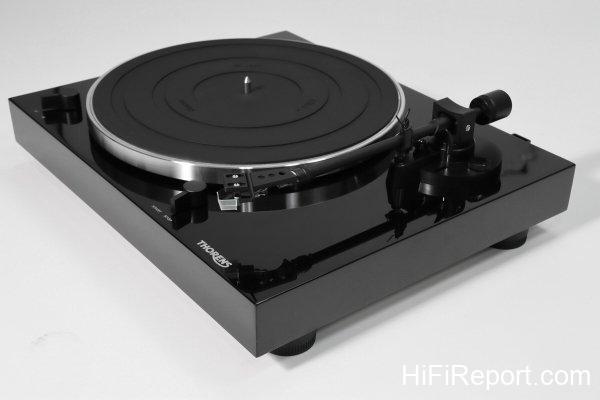
After setting the stylus pressure, the tonearm base has an anti-skate adjustment. Set it to the corresponding value based on your chosen stylus pressure.
USB Output up to 16bit/48kHz
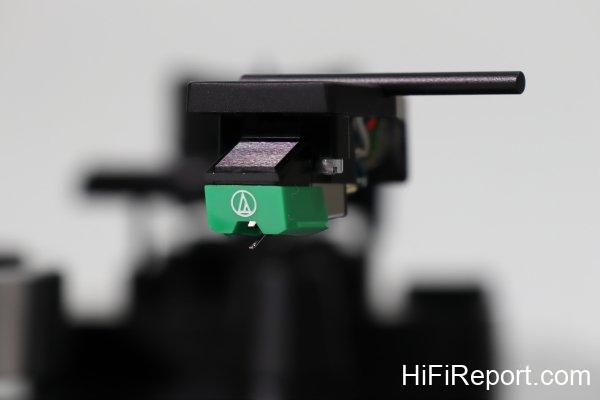
For the TD 202’s USB digital output, I connected it to my Macbook Pro. A new sound option, “USB Audio Codec,” appeared in the sound settings – this is the TD 202. It offers both input and output options. Before recording vinyl, you need to select this sound device. Using recording software, you can then digitize your vinyl records into digital music files.
However, Thorens doesn’t include computer recording software, so you’ll need to find your own. I personally prefer using Pure Vinyl. Also, the TD 202’s USB output supports a maximum resolution of PCM 16bit/48kHz. It is recommended to use a 16bit/44.1kHz output, which is the same as CD quality. This way, when playing back the digital files through a computer, the DAC only needs to handle 16/44.1 format, eliminating the need to frequently adjust the digital output and the DAC’s decoding compatibility.
With stylus pressure and anti-skate adjusted, the TD 202 is essentially ready to play music. But I have one more crucial tip: the TD 202 comes with a transparent dust cover. I strongly recommend removing the dust cover completely when listening to music with the TD 202 and placing it aside. Put it back on after you’re finished listening.
Why? If you listen to music with the dust cover open, the cover itself is a large, flat reflective surface that will reflect sound downwards, negatively impacting audio quality. And definitely avoid listening with the dust cover closed, as this will cause the dust cover to resonate with the turntable, resulting in a muffled and constrained sound.
Recommended Upgrade: External Phono Stage
Although an entry-level turntable, the TD 202 operates very quietly when spinning. The built-in phono preamp has moderate gain, requiring you to compensate with higher volume on your amplifier. However, it is still usable. If budget is a constraint, you can initially use the TD 202’s built-in phono stage. But I strongly recommend pairing it with an external phono preamp to significantly unlock the TD 202’s impressive potential.
Initially, listening with the TD 202’s built-in phono preamp, I felt the turntable offered good value for its price. However, after connecting the KECES Ephono, a power-separated phono preamp, I truly realized the TD 202’s exceptional value.
Why? The biggest concern with budget turntables is motor or bearing noise. With low preamp gain, these noises might be less noticeable. But with sufficient gain, any hidden noise within the turntable becomes amplified. When using the TD 202’s built-in phono stage, I didn’t hear much noise due to the low gain. However, when paired with the higher-gain Ephono, the TD 202’s background noise remained remarkably low. This indicates the high precision of the bearing, free from any rumbling sounds, and excellent suppression of motor noise. This level of performance at its entry-level price point truly highlights the TD 202’s outstanding value.
Full Midrange, Music Just Sounds Right
With the addition of the capable external phono stage, the Ephono, I could truly enjoy listening to vinyl on the TD 202! Listening to the classic “Jazz at the Pawnshop,” MM cartridges and jazz music are a perfect match. In “Limehouse Blues,” the pre-music ambiance of the bustling pub was captured with detail by the TD 202. The soundstage depth was relatively shallow, bringing the instruments closer to the listener. The MM cartridge’s robust midrange delivered a pleasantly rich and mellow tone to the woodwinds, while the double bass laid a light and fluid foundation. The music flowed smoothly and comfortably.
I continued with jazz, playing another classic, “Kind of Blue,” Miles Davis’s best-selling album from 1959, still beloved six decades later.
The “stringy” texture of the plucked double bass had appropriate weight on the TD 202. The mid-bass range had full and rounded notes. The trumpet’s sound was clear, with the high notes not becoming harsh, lending a suitable thickness to the brass instruments.
Despite being an entry-level turntable, the TD 202 exhibited good noise suppression and a clean sound, free from harshness. The MM cartridge’s full midrange imbued the music with a warm and inviting character.
Sweet Female Vocals
Switching to an audiophile recording, “Open Arms” by Aiza Seguerra, released by S2S. This Filipino female singer with a buzz cut possesses a sweet and captivating voice. Initially released on CD, its popularity led S2S to release a 180-gram virgin vinyl audiophile edition.
Listening to “Vincent,” after the electric piano intro, Aiza Seguerra’s sweet vocals were presented with warmth and substantial presence by the TD 202. Subtle lip and teeth sounds enhanced the recording’s realism, while the rich midrange made the music even more tender and beautiful.
Indeed! Listening to vinyl, how can one resist the allure of a warm and full midrange? Next, I pulled out the “2015 Kaohsiung Hi-End Audio Show Commemorative Vinyl,” listening to Yan Hua Rong’s performance of Tchaikovsky’s “The Seasons, Op. 37.” This is a live recording from the National Concert Hall. Listening to “January, By the Hearth” from side A, the TD 202, paired with the Ephono, provided a quiet background. The piano notes were relatively small in scale but with ample solidity, presenting a crisp and melodic flow. The dynamic variations in the music were also conveyed smoothly. It’s surprising how well a turntable at this price point can perform! However, then came a “cruel test.” I disconnected the Ephono and switched back to the TD 202’s built-in phono preamp. Oh dear, the gain of this built-in preamp was adequate for jazz, but it revealed its limitations with classical music. The piano’s presence shrank significantly. Turning up the amplifier volume amplified the background noise. It seems the TD 202 truly benefits from an external phono preamp. The built-in phono stage is usable, perhaps for a while, but sooner or later, you’ll want to find a capable external phono preamp for it.
Worth Considering in Your Shortlist
In late 2018, Thorens aggressively entered the entry-level market with the TD 202 and TD 201, returning to the fundamentals of entry-level vinyl playback: plug-and-play simplicity and easy setup. The more advanced TD 202 adds a USB output for digitizing vinyl records, a desirable feature for entry-level users. However, the TD 202 faces stiff competition in this price range. Japanese brands like Sony and TEAC offer similar products, and European brands such as Pro-Ject, Rega, and Edwards Audio are also in the mix. Nevertheless, the TD 202 benefits from the heritage of the century-old Thorens brand, coupled with a practical and unpretentious design. If you’re looking for an entry-level turntable, the Thorens TD 202 is definitely worth including in your shortlist for consideration.
Specifications
* Model: Thorens TD 202
* Drive System: Belt Drive
* Motor Type: DC Motor
* Speeds: 33 1/3 RPM, 45 RPM
* Speed Deviation: +/- 2%
* Wow and Flutter: 0.2%
* Signal-to-Noise Ratio: 67dB or higher (A-weighted, 20kHz LPF), 60dB or higher (unweighted, 20kHz LPF)
* Platter: Aluminum Die-cast
* Platter Diameter: 12 inches
* Tonearm Type: Static Balance Straight Tonearm
* Tonearm Material: Aluminum Tube
* Effective Length: 8.8″, 223.6mm
* Stylus Pressure Range: 0 to 4g
* Cartridge Weight Range: 3.5 to 6.0g
* Overhang: 18.6mm
* Anti-skate Adjustment: Yes
* Cartridge Type: MM type (Audio-Technica AT-95E)
* Stylus Construction: Bonded Round Shank
* Channel Separation: >18dB
* Channel Balance: 2.5dB
* VTA: 20 degrees
* Impedance: 47k ohms
* Output Voltage: 2.5mV (1kHz, 3.54cm/sec.)
* Stylus Pressure: 2.0g +/-0.5g
* Cartridge Weight: 5.7g +/-0.5g
* Headshell Weight: 11g (including Screws, Nuts and Wires)
* Analog Output: Gold-plated RCA
* Power Supply: AC 100 to 240V, 50/60Hz
* Power Consumption: 1.5W (less than 0.5W at Standby)
* Dimensions: 420 x 355 x 121mm
* Weight: 3.9 kg