
Totaldac D1 Streaming DAC Review
Did you attend the TAA Hi-Fi Show at the Grand Hyatt in 2025? Do you recall the system showcased by HiFiReport Audio at the event? If you’ve forgotten, or perhaps missed the show entirely, fret not – there’s still a chance to catch up.
HiFiReport has relocated this impressive audio system back to their company’s listening room, offering interested individuals the opportunity to schedule an audition.
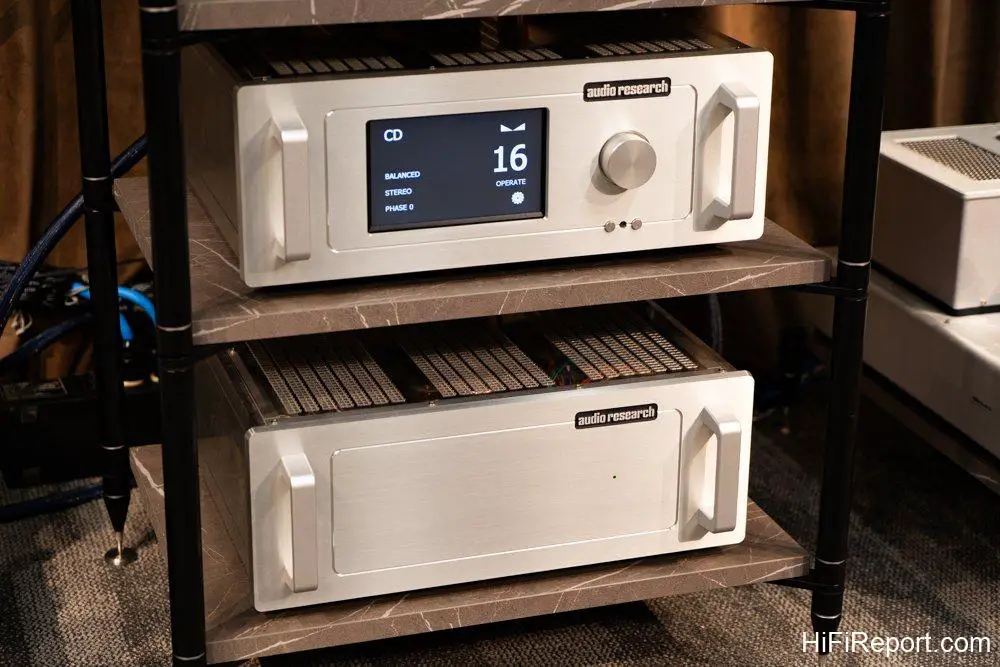
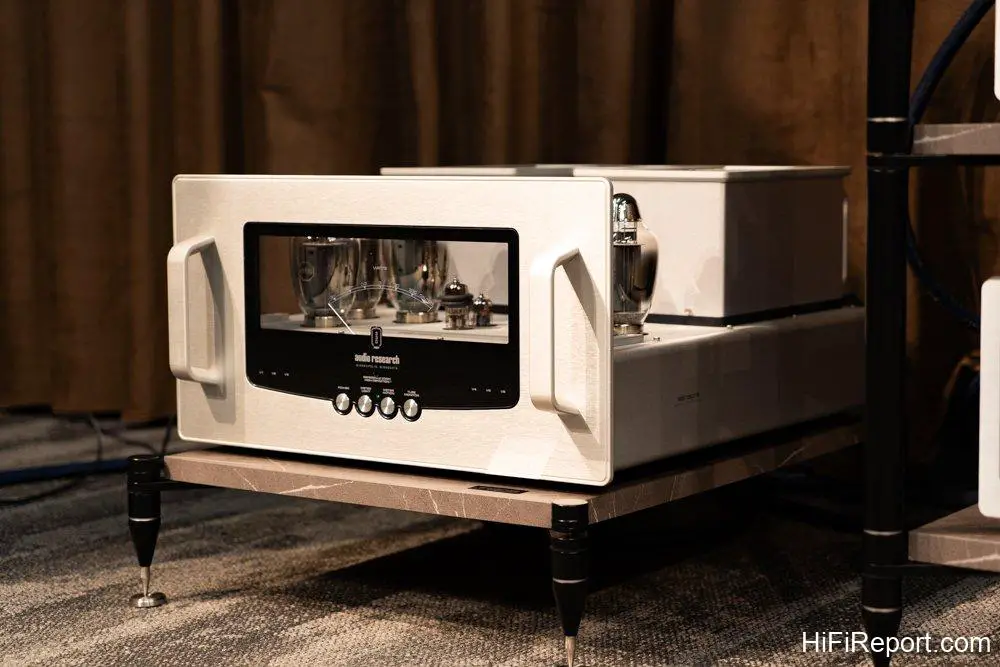
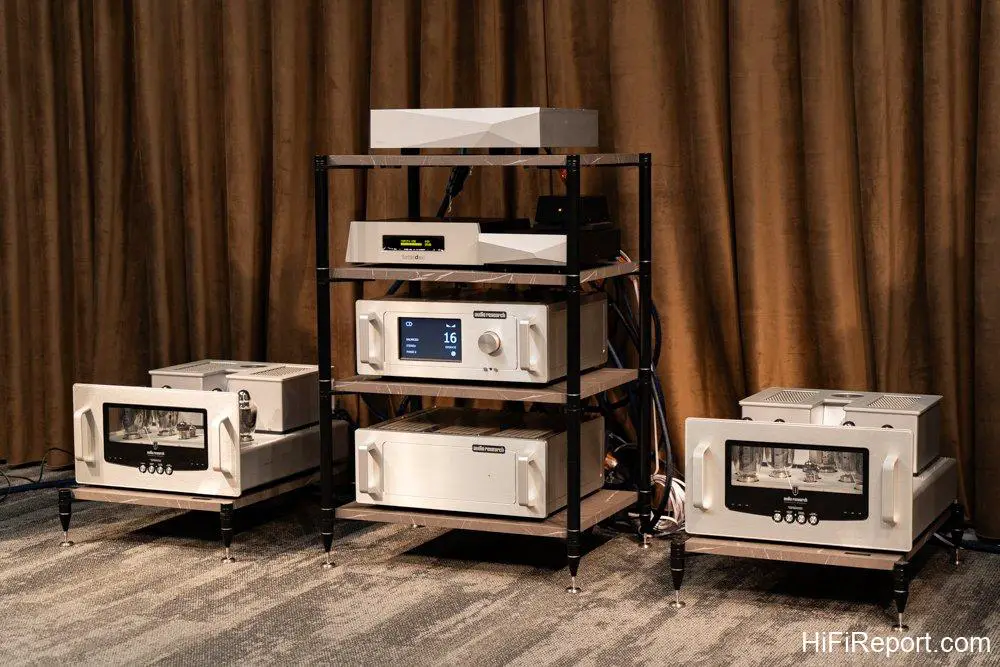
This particular system primarily features Audio Research’s flagship Reference 10 two-chassis preamplifier and Reference 330M monoblock power amplifiers, driving Audiovector’s near-flagship R8 Arreté loudspeakers.
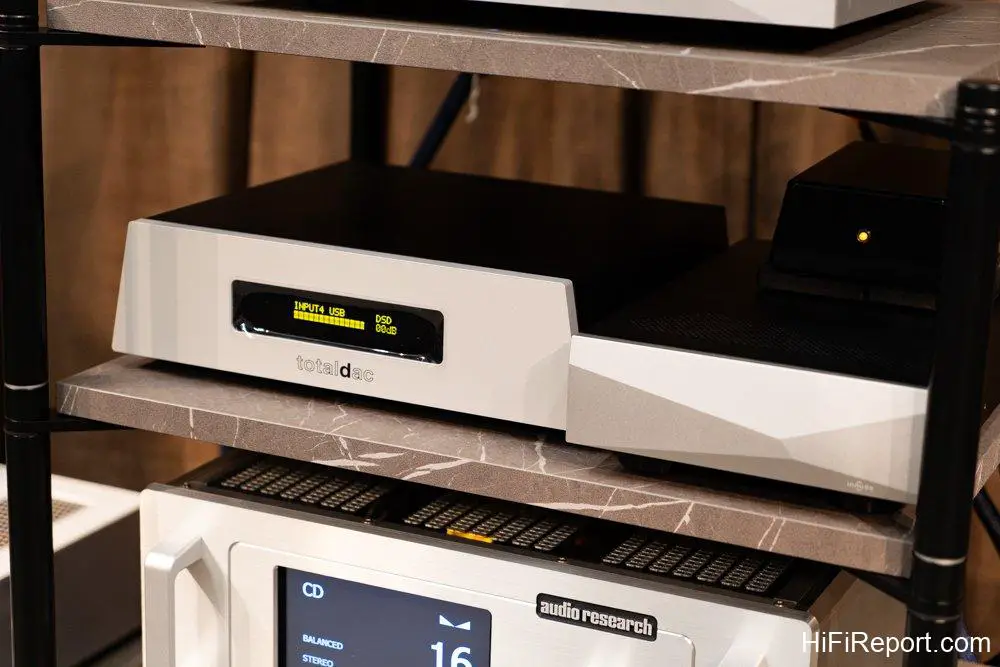
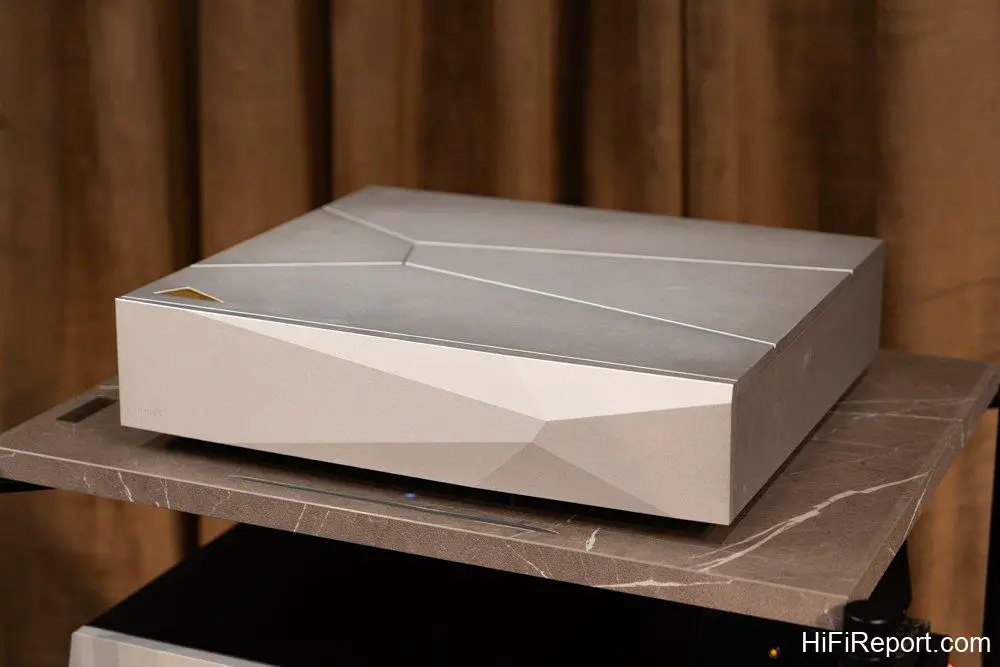
For the source, an Innuos Zenith Next-Gen serves as the Roon Server, while Totaldac’s top-tier integrated source, the D1 Total, functions as both a Roon Bridge and a DAC.
While the audition at HiFiReport encompasses an entire system, this review will focus on two key components: the Totaldac D1 Total as the source, and the Audiovector R8 Arreté loudspeakers.
For those interested in the amplifiers, you can refer to my previous listening notes on the Audio Research Reference 330M at HiFiReport. Information regarding the Innuos Zenith Next-Gen music server can be found in our earlier launch event report.
Totaldac: French R-2R DAC Specialists
Let’s begin with the Totaldac D1 Total.
Totaldac is a French brand, established in 2010, dedicated to the development of digital sources—especially DACs.
For a period, I was deeply intrigued by R-2R architecture DACs, and Totaldac is undeniably a master of this craft.
However, after some online research, my enthusiasm waned—I figured I’d likely never encounter one.
My reasoning was simple: French audio products generally face an uphill battle in the market, and Totaldac units are far from inexpensive, indeed quite pricey. Yet, their exterior design lacks any semblance of refinement.
To my surprise, HiFiReport demonstrated such foresight and willingness to introduce it.
Totaldac’s products, from entry-level to high-end, are all designated D1.
However, an additional name appended to D1 serves to differentiate their respective tiers.
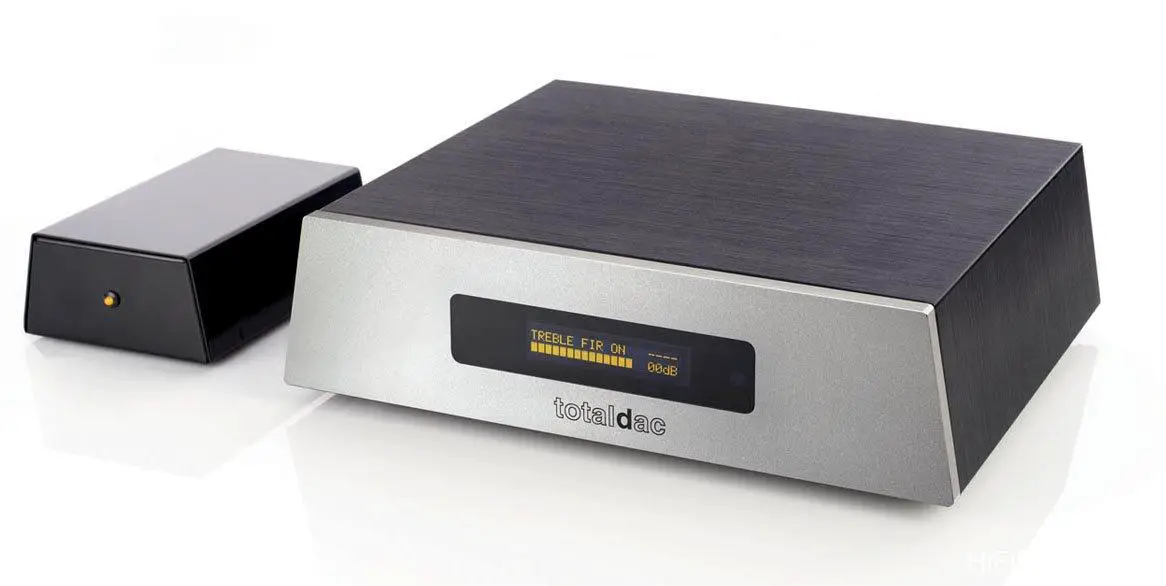
Interestingly, not only do all Totaldac products bear the D1 moniker, but their chassis exteriors also appear identical, making it genuinely difficult to distinguish one DAC from another by sight alone.
Beyond DACs, Totaldac also offers a CD transport, which shares the same chassis as their DACs, differing only by a cutout for the top-loading disc mechanism.
I understand this approach.

Chassis are typically outsourced, requiring factories to meet minimum order quantities, and once produced, they consume valuable warehouse space.
If various products share a common chassis, it can somewhat reduce costs, but this creates marketing challenges.
Every Product Features an External Power Supply
Totaldac products span a wide price range, from roughly $5,400 to $32,000, with the flagship model appearing identical to the entry-level unit. Furthermore, Totaldac’s chassis design is remarkably simple and unadorned. The only variation is that the sides of the chassis aren’t perpendicular but angled, giving the component a trapezoidal appearance when viewed from the front.
Moreover, all products come with an external power supply, isolating the transformer to prevent electromagnetic interference – a perfectly sensible approach.
Interestingly, while different tiers of equipment feature distinct power supply designs, their power supply units still look the same.
Audio indeed demands “audition before judgment,” with sonic performance determining its worth. But Totaldac’s faith in this principle seems almost unwavering!
R-2R Ladder DAC Architecture: More Direct, Simpler
The trapezoidal shape of the chassis actually has a logical basis.
Totaldac is a leading specialist in the R-2R Ladder DAC field.
R-2R refers to a ladder-type voltage divider circuit constructed with resistors of R and 2R values. Its circuit diagram resembles a ladder, hence the name Ladder DAC.
Presumably, this is why Totaldac designed their chassis to be trapezoidal. The R-2R Ladder DAC circuit outputs a divided reference voltage based on the input digital signal’s bit data.
The bit data controls the switches within the ladder network, determining whether current flows. As a result, this resistive ladder network generates currents and voltages of different weights from each divided path. After these currents and voltages are summed in a summing circuit, the resulting sum of current and voltage becomes the analog signal.
Compared to the commonly used Delta-Sigma DACs found in DAC chips, the R-2R architecture bypasses oversampling, noise shaping filters, and does not require I/V conversion. Its path and architecture are simpler, reducing the potential for distortion inherent in the aforementioned processes.
This is why many believe R-2R DACs produce a more natural sound.
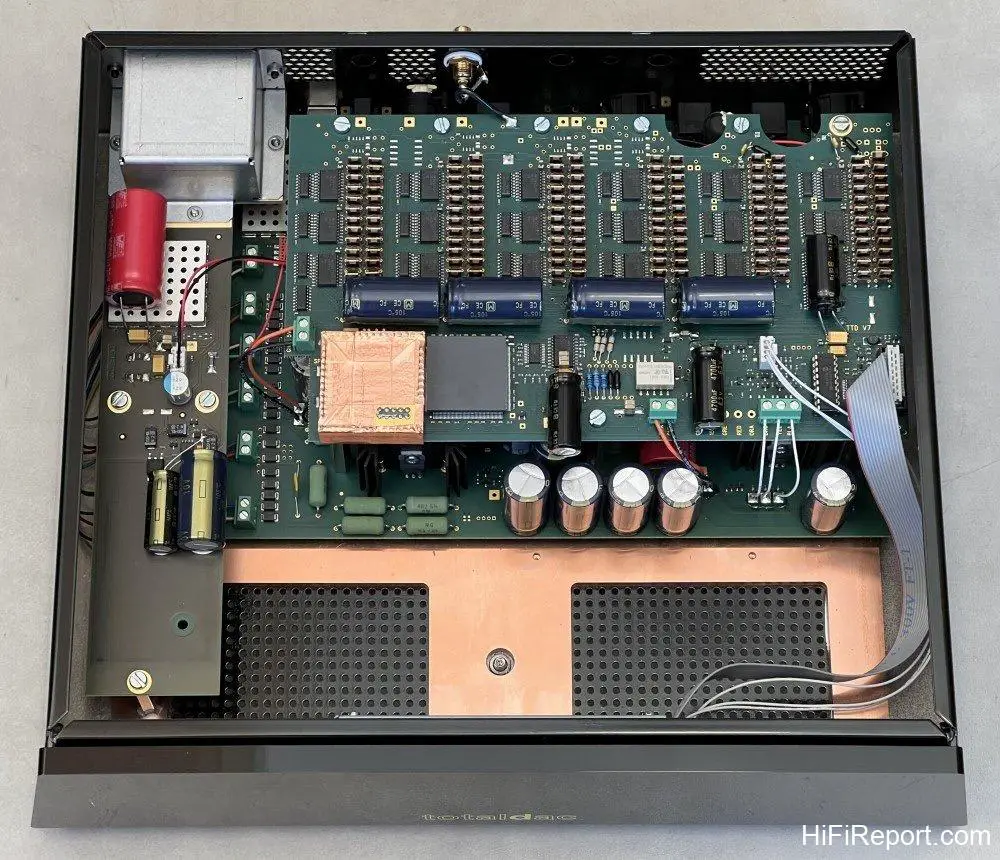
Utilizing High-End Audiophile Resistors, Main Designer Personally Solders Resistor Arrays
However, the R-2R architecture also presents its own challenges.
One major difficulty is the precision of the resistors. While the R-2R architecture circuit only uses two resistance values, resistor precision is crucial for accurate current and voltage division. Many R-2R DAC manufacturers use SMD components to create resistor arrays, and some even externally package and modularize R-2R resistor arrays.
In contrast, Totaldac employs a more traditional, labor-intensive through-hole method, with chief designer Vincent Brient personally soldering the resistor arrays.
Totaldac also selects expensive, low-distortion Vishay Bulk Metal Foil resistors, boasting a precision of 0.01%. I found online that these resistors cost approximately $18 to $30 per piece, depending on the quantity purchased.
For Totaldac’s entry-level DAC, a single R-2R resistor array uses 24 resistors. Since it’s a differential circuit, two such arrays are responsible for one channel, totaling 96 resistors for both left and right channels. Higher-end DACs utilize even more ladder resistor arrays.
Across Totaldac’s DAC lineup, from entry-level to high-end, the aforementioned complete R-2R ladder resistor array is used in one, two, or three sets, forming the D1 Unity, D1 Biunity, and D1 Triunity DAC tiers, respectively, as listed in their catalog.
This means that Totaldac’s mid-range DAC uses 192 Vishay Bulk Metal Foil resistors for its R-2R array; their highest-end DAC’s R-2R array utilizes as many as 288 resistors. (Note: The official website states that these three tiers of DACs use 100, 200, and 300 Vishay resistors respectively, which is likely an approximation.) The cost of the R-2R resistor components alone in their DACs exceeds the price of many complete audio components on the market.
Not Chasing High Specifications, Focusing Solely on Problem-Solving
Interestingly, Totaldac’s supported sample rate specifications are quite limited, only reaching PCM 24bit/192kHz. Beyond that? No capability. What about DSD? Only through DoP, up to DSD 2.8MHz. Beyond that, again, no capability.
Other R-2R DACs on the market, whether high-end brands like MSB, Rockna, or Aqua, or more affordably priced options such as Holo, LAiV, and Denafrips, all support significantly higher bit depths and sample rates. On paper, Totaldac’s specifications appear to lag behind.
However, I must say that specifications are one thing, and listening experience is another. Reviews of Totaldac DACs worldwide almost unanimously praise their sound quality. During my own audition, I completely forgot about specifications, becoming deeply immersed in the music.
The model I auditioned this time was the Totaldac D1 Total. This unit integrates streaming circuitry into the D1 Triunity DAC and features volume control, making it a complete source that can even bypass a preamplifier and connect directly to a power amplifier. Its built-in streaming circuitry is, in fact, the same as the latest version found in the Totaldac D1 Streamer Live, meaning Totaldac has transplanted the streamer unit’s circuitry directly into the D1 Total.
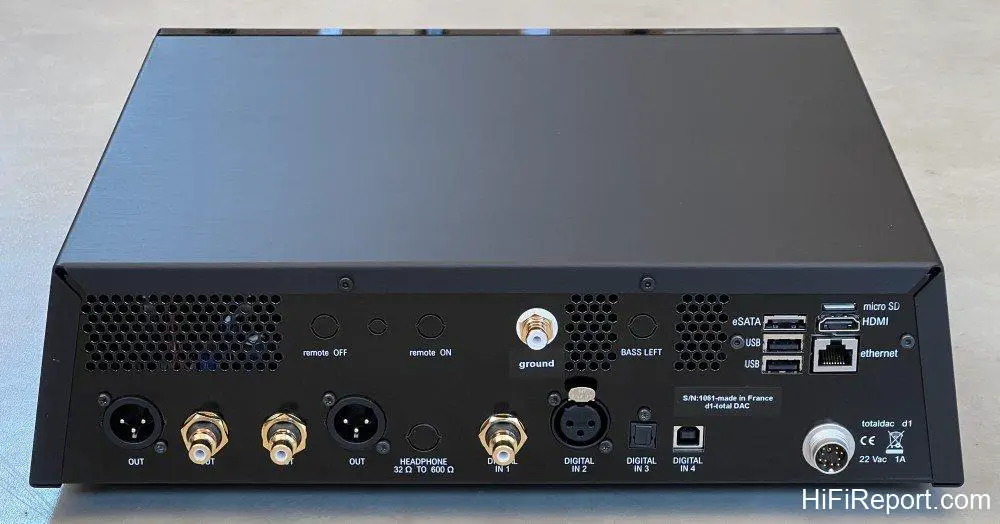
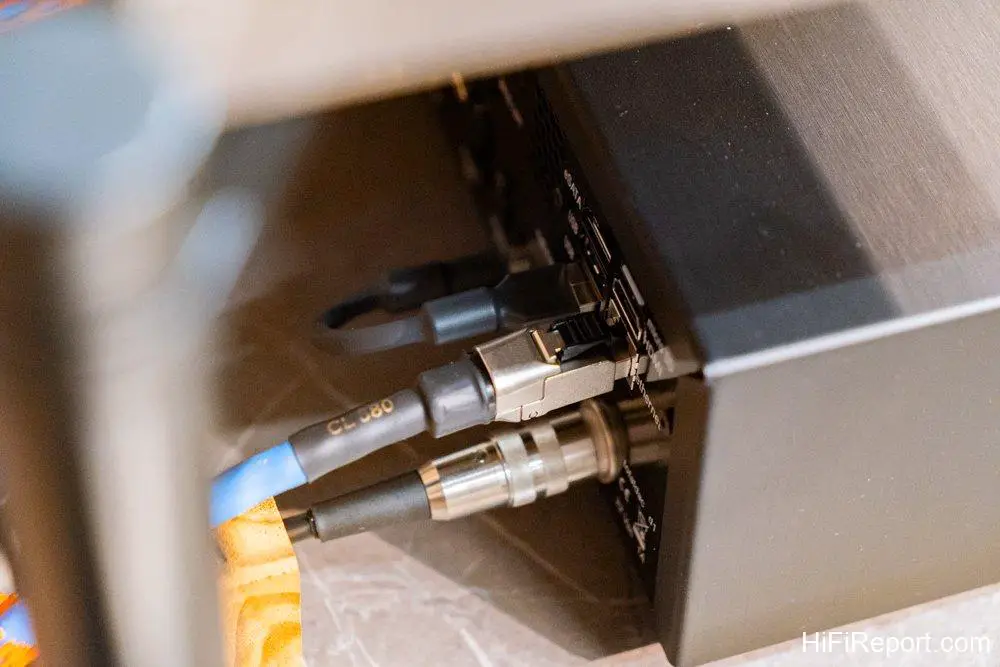
This streaming circuitry, originally designed for the Streamer Live, includes optimized filtering for digital output. Totaldac wisely reused it in the D1 Total, resulting in its unique digital transmission path—via a USB loop. On the rear panel of the D1 Total, the streaming section includes an RJ45 network interface and a USB Type-A digital output. When in use, a Type A-B USB cable connects this output to the USB digital input of the DAC section, an external transmission path that is exceedingly rare in today’s audio market.
Digital equipment requires addressing jitter issues. For the D1 Total, Totaldac provides a specially customized clock generator with a precision of 40 femtoseconds, paired with buffer memory for FIFO (first in, first out) processing to eliminate timing errors. The power supply input also features a specially designed coupling circuit to provide stable power. All these design elements, originally developed by Totaldac for the Streamer Live, have been incorporated into the D1 Total.
Discrete Class A Amplification, Remote Control-Only Operation
Regarding digital input terminals, the D1 Total features one USB type B, one optical, one coaxial, and one AES/EBU input. For analog output, there’s one RCA single-ended and one XLR balanced pair. I should add that Totaldac’s output voltage is quite high, with 3.5Vrms for RCA and 7Vrms for XLR.
However, the D1 Total’s sound is remarkably balanced, as I will elaborate on later in the sound section. It not only possesses ample dynamic headroom but also maintains exquisite finesse throughout. Its DAC’s analog amplification circuit employs discrete transistors for Class A amplification, aiming for lower distortion and a more linear, analog-like sound.
While the unit’s exterior is plain, its base is fitted with substantial copper blocks, providing superior damping for the chassis. Upon closer inspection, though Totaldac appears simple and understated, its overall design philosophy is profoundly hard-core.
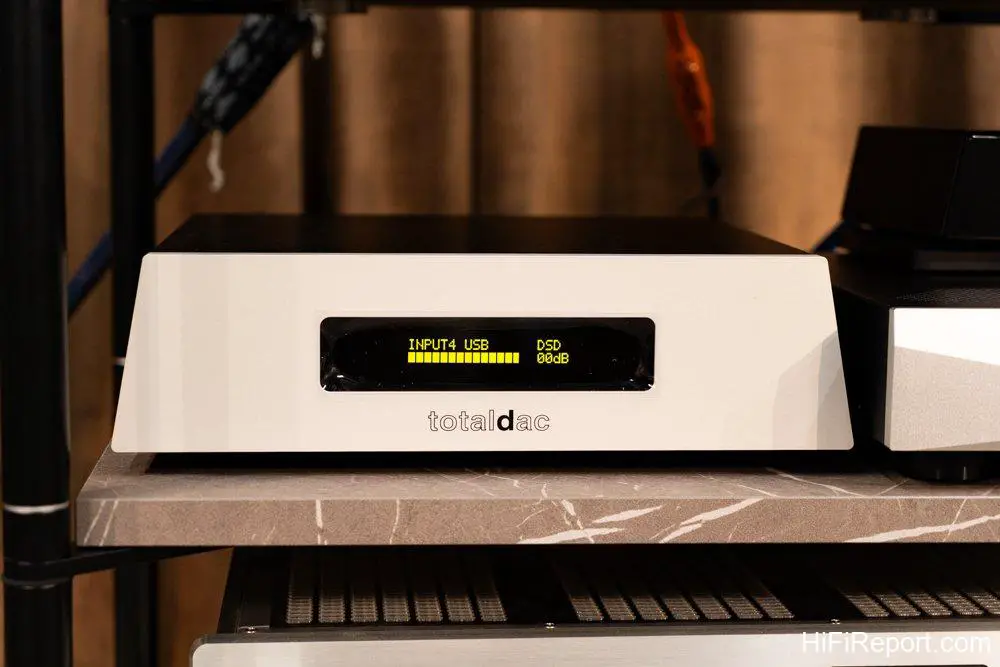
Operationally, the D1 Total lacks any physical buttons or knobs; all functions are controlled via remote. The display panel is unflashy, utilizing a yellow OLED screen with pixels and fonts that exude a vintage quality. Many digital streaming devices, aiming to enhance user experience and product modernity, incorporate high-brightness, high-resolution full-color screens, or even touchscreens. Modern users are accustomed to smartphones and tablets, making such interfaces more familiar. This represents one product philosophy.
But Totaldac rejects this approach. They return the product to its fundamental purpose, yet by omitting physical buttons and a dedicated app, the remote control becomes singularly important.
The D1 Total supports streaming services including Roon Ready, JPlay, and Audirvana, with JPlay and Audirvana offering D1 Total users 2-month and 3-month free trial periods, respectively. UPnP/DLNA/Openhome compatibility is a given, and third-party playback software like Mconnect and Bubble are also supported. Perhaps due to its French origin, Connect streaming only supports Qobuz Connect; users of Tidal, Spotify, and other services will need to play through Roon.
Audiovector and its Six Core Technologies
Beyond the Totaldac D1 Total, another highlight at the event was the Audiovector R8 Arreté.
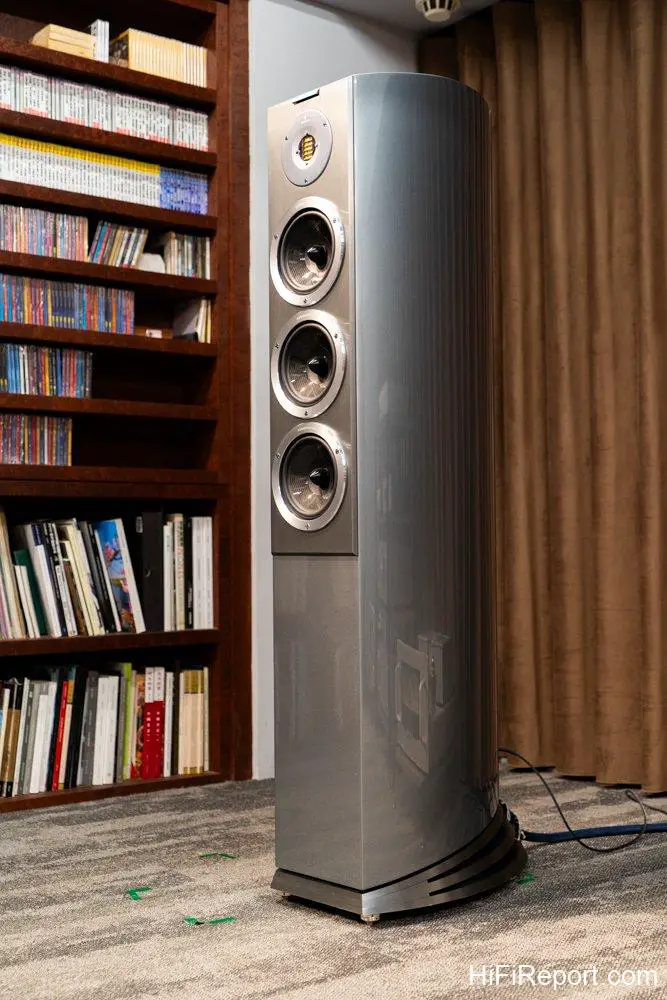
As Audiovector’s second-tier flagship loudspeaker, the R8 Arreté is a five-way, floor-standing speaker featuring seven drivers. Seven drivers? Yes, seven drivers, with a five-way crossover, and Audiovector not only employs multiple drivers and multi-way crossovers but also incorporates numerous technologies and a highly unique design.
Let’s first discuss their proudly touted technologies, all of which embody their loudspeaker design philosophy. The R8 Arreté incorporates the following six major technologies:
1. **LCC (Low Compression Concept):** This “low compression” concept signifies Audiovector’s commitment to ensuring their speakers reproduce music with complete fidelity and credibility at any volume level and with any type of music, without losing any detail, information, or dynamics. This relies on the drivers’ diaphragms maintaining extremely low distortion under all operating conditions.
2. **SEC (Soundstage Enhancement Concept):** This “soundstage enhancement” concept ensures that when listening to Audiovector speakers, regardless of their placement, the sound always fills the space, immersing the listener in a soundstage ambiance akin to being at a live performance.
3. **NES (No Energy Storage):** The “no energy storage” concept means that the drivers are not burdened by the mass of the speaker cabinet, allowing them to exhibit more agile transient response. Benefiting from solutions developed for the flagship R11 Arreté loudspeaker, this NES concept has been trickled down to other speakers, contributing to the reproduction of more realistic sound and a more open soundstage.
4. **NCS (Natural Crystal Structure):** Through cryogenic treatment of components and internal wiring at -238°C, copper molecules are rearranged, eliminating internal crystalline stress and reducing electrical resistance, resulting in clearer and more transparent sound.
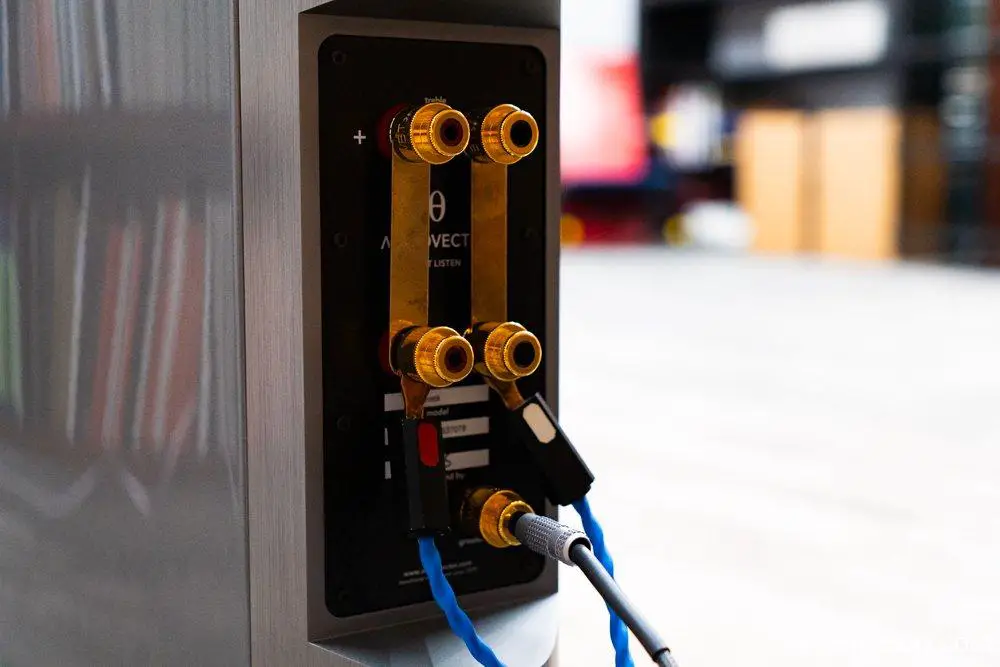
5. **FGC (Free Grounding Concept):** Audiovector’s mid-to-high-end loudspeakers are equipped with grounding terminals, designed to dissipate faint residual currents from the speaker drivers’ metal frames, preventing these currents from causing coloration and distortion. If these currents can be shunted to a grounding box or via the grounding pin of a power outlet, the sound becomes cleaner, more precise, and exhibits enhanced realism.
6. **IUC (Individual Upgrade Concept):** Audiovector introduced this concept early on, proclaiming their speakers to be “upgradeable.” If a customer’s initial budget is limited, they can purchase the standard version; later, when budget allows or their system reaches a certain level, they can send it back to the factory for a paid upgrade to a higher-tier version.
In-house AMT Tweeter, Unique Rear-Firing Midrange Design
Audiovector systematically categorizes its proprietary technologies into the points listed above, all of which are present in the R8 Arreté, making this near-flagship a culmination of their signature craftsmanship.
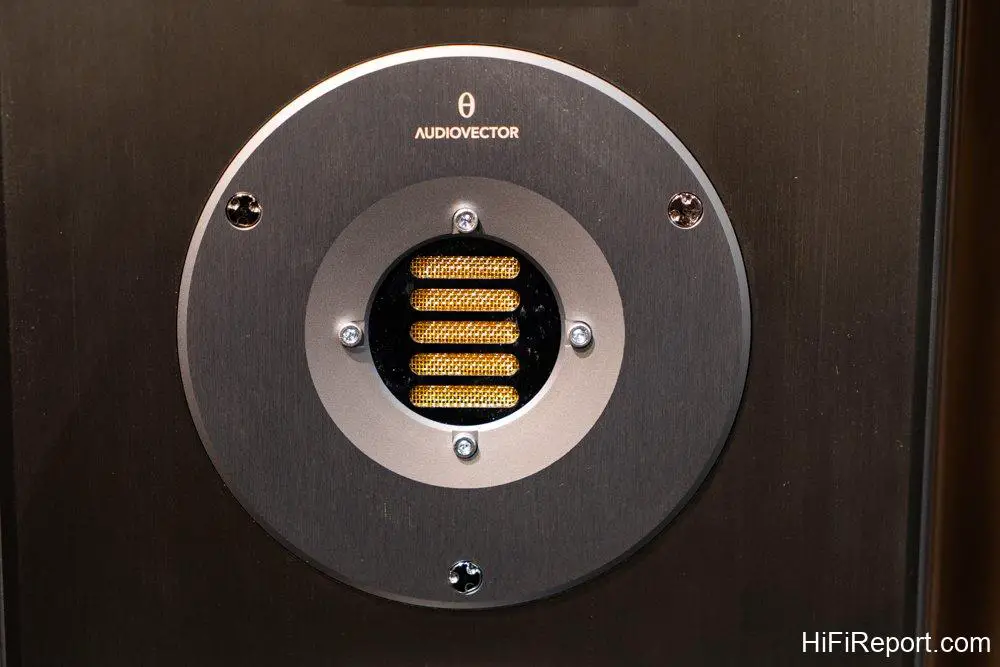
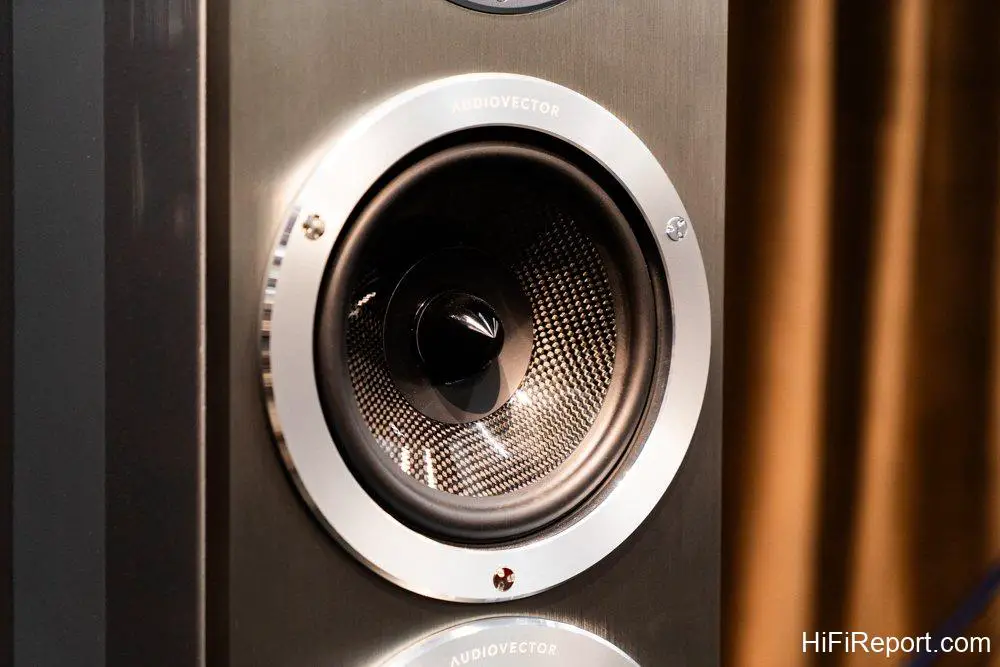
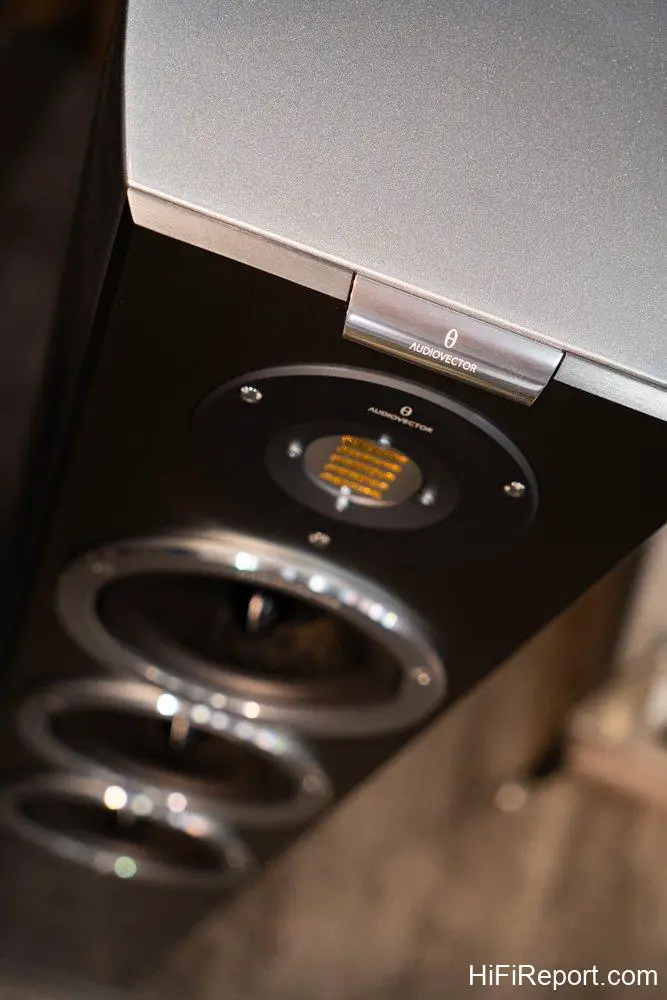
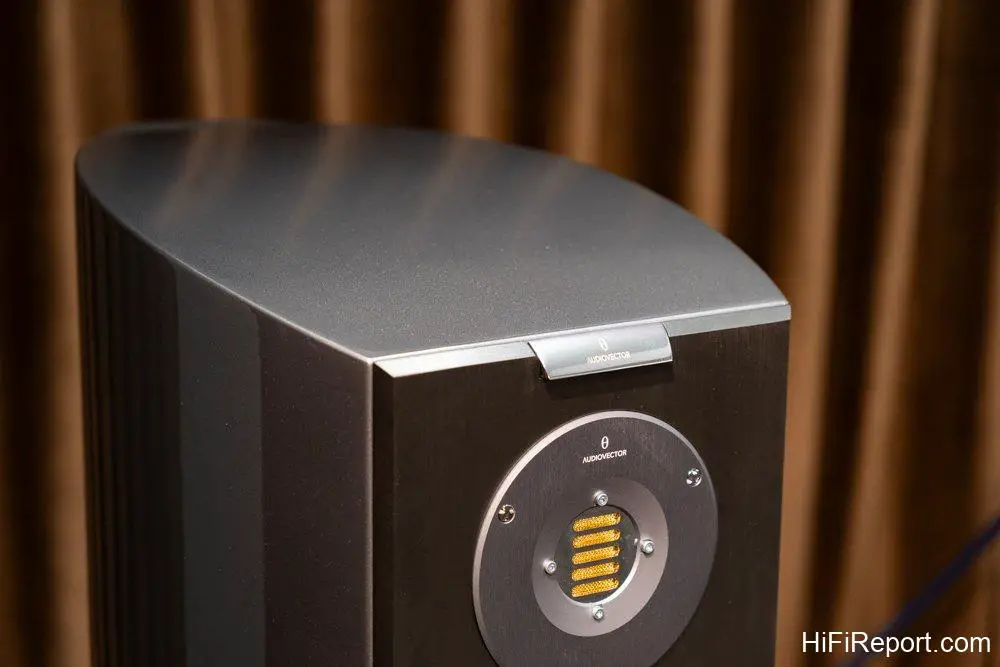
It features a self-manufactured AMT (Air Motion Transformer) tweeter. Through a special rear-opening design, the R8 Arreté achieves an effect akin to having a rear-firing tweeter. Below the AMT tweeter are three 6.5-inch mid-bass drivers, utilizing a sandwich diaphragm structure composed of Aramid woven fabric and artificial wood resin. This diaphragm is extremely light, exceptionally rigid, and free from any inherent material “sound,” which the manufacturer calls Titanium Tech.
However, these three are not true mid-range drivers; they are purely mid-bass units. The actual mid-range driver’s position is surprisingly located at the rear of the speaker, firing backward. Behind the speaker, a 4-inch Titanium Tech midrange driver can be faintly seen through the rear metal grille. This design is truly rare. While some speakers incorporate rear-firing drivers (tweeters, midranges, or woofers), these are usually auxiliary units. Yet, the 4-inch rear-mounted midrange in the R8 Arreté is the primary midrange. The manufacturer offers no technical details, which only suggests Audiovector’s audacious design and confidence.
Isobarik Double Woofer System
The bass driver is located at the bottom of the speaker, firing downwards, and employs an Isobarik dual-woofer configuration. An 8-inch woofer is visible externally, with a 6-inch woofer hidden inside. Through the combined movement of these two drivers, an isobaric condition is created internally, allowing for more precise bass movement. This design can also be seen in their retro-style speaker, the Trapeze Reimagined, launched last year. While Isobarik-designed speakers exist on the market, Audiovector’s specific implementation – downward-firing, with an 8-inch plus 6-inch dual-driver setup – is uncommon.
DFF Technology: Low Resistance, High-Efficiency Crossover Topology
Regarding the crossover, the R8 Arreté is equipped with Audiovector’s DFF (Dynamic Feed Forward) crossover technology, used in their R Series Arreté-level loudspeakers. By utilizing high-quality copper wire wound coils, it achieves 50% lower resistance than typical inductors. This reduction in crossover resistance minimizes energy loss and lessens heat buildup. The use of cryogenically treated capacitors and film resistors results in a lower noise floor, leading to a cleaner, more transparent sound and improved transient response from the speakers.
Intricate Craftsmanship, Teardrop-Shaped Cabinet with Non-Parallel Panels
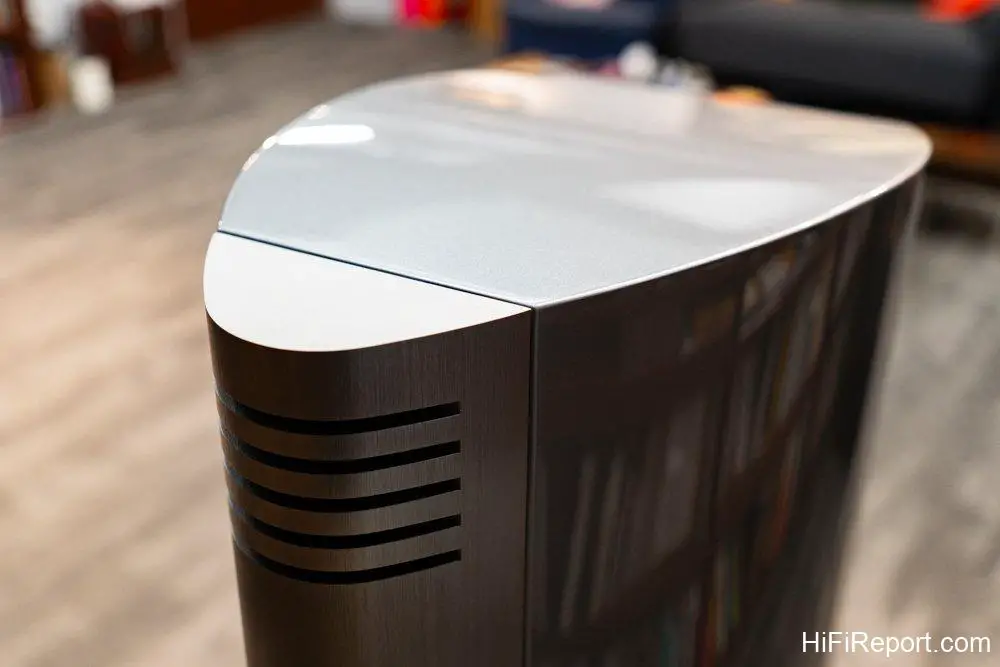
The R8 Arreté’s cabinet features a teardrop shape with dual curved sides, ensuring that not only are there no parallel surfaces around the perimeter, but the top and bottom ends are also non-parallel. This design reduces the formation of standing waves inside the cabinet, which can degrade sound quality. Square speaker enclosures are easier to construct, simply requiring precise cuts and assembly. However, creating such curved cabinets necessitates specialized jigs and gradual pressure molding, significantly increasing both difficulty and cost.
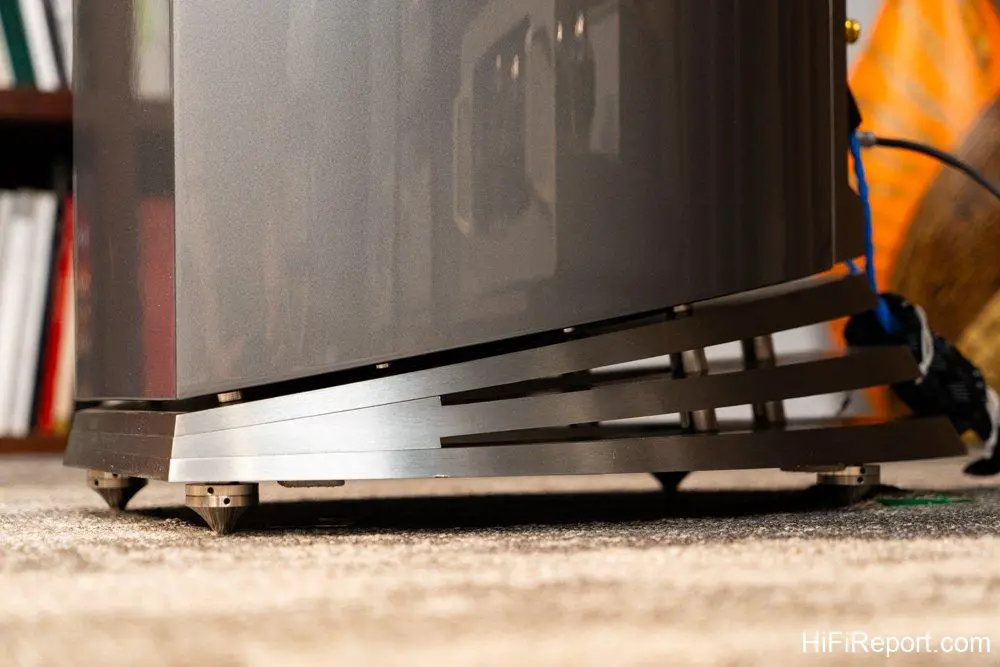
Internally, the cabinet also features isolated compartments for each driver, preventing back waves from interfering with each other. This compartmentalization also strengthens the cabinet’s rigidity, further reducing vibrations. The rear of the cabinet is adorned with a ridge-like metal grille, featuring horizontal sound-transparent slits. Remember, the midrange driver fires backward, and the bass reflex port is also located at the rear. The front baffle, rear panel, and speaker base are all precisely machined from aerospace-grade aluminum, enhancing overall structural rigidity while imparting a premium aesthetic to the speaker.
One of Audiovector’s FGC (Free Grounding Concept) technologies is implemented via the grounding terminal on the rear. The factory includes a pair of grounding cables: one end is a banana plug for connecting to the speaker, and the other is a power plug for direct connection to a wall socket, grounding through the socket’s ground pin. I must emphasize that the difference in sound with and without grounding is substantial. After experiencing it, you’ll wonder: shouldn’t all speakers have this feature?
Dynamic Performance: Effortless Power and Refinement
It’s time to delve into the listening experience.
HiFiReport’s decision to bring their audio show system back and open it for scheduled auditions demonstrates their profound confidence in this combination. I had visited HiFiReport’s exhibit twice at the audio show, but on both occasions, it was the other system – Rockport Lyra paired with Constellation – that was playing. I had unfortunately missed hearing this Totaldac, Audio Research, Audiovector combination.
Thankfully, I had the opportunity to make up for it. This afternoon at HiFiReport Audio, I simply didn’t want to leave.
The larger the system, the better it can reproduce musical dynamics. Dynamics refer to the range between the loudest and softest passages in music. The greater this contrast, the more challenging it is for an audio system to reproduce it completely. This is why recording engineers sometimes deliberately compress the dynamic range during mastering, reducing the contrast slightly. This maintains musical impact without overly burdening the audio system. Otherwise, on systems with limited dynamic contrast, soft passages might be indistinct, and loud passages could exceed their limits and distort.
In my view, the first hurdle for high-end audio is to reproduce as much of the music’s dynamic range as possible. This system’s dynamic performance truly exceeded my expectations. The Audiovector R8 Arreté’s drivers are not particularly large; the three visible woofers on the front baffle are only 6.5 inches, and the overall speaker size is merely that of a medium floorstander. Furthermore, the amplifiers are tube-based. Yet, this system’s dynamic performance is completely reassuring. Whether I listened to majestically dynamic orchestral pieces, symphonies, or played large-scale solo instruments like piano or organ at high volumes, it always handled them with effortless composure, almost as if saying, “Bring it on! I can handle more!”
Expansive Soundstage, Clear Layering
Take, for instance, Mussorgsky’s “Night on Bald Mountain,” conducted by Eduard Mata with the Dallas Symphony Orchestra. The opening’s eerie triplet figure, set against a backdrop of low strings, is swiftly followed by the trombones leading the charge with the devil’s theme—a passage that is quick, strong, and powerful. This opening, transitioning from soft to loud, was remarkably smooth. Even with the volume cranked up, the soundstage remained stable and confident, never sounding cluttered.
Subsequently, a folk-infused dance emerges, a wild revelry. Here, the ensemble is complex, the harmonies rich, and the powerful music exudes a rugged quality. Just as the bells chime, signaling the end of the night and the cessation of the witches’ Sabbath, a gentler theme emerges, ushering in the dawn. Mata’s “Night on Bald Mountain” is a gem from the early days of digital recording in the 80s, characterized by its warm, full sound and expansive, grand soundstage. On this system, the powerful music unfolded step by step with clear layering. I genuinely don’t know which component to praise most; the R8 Arreté is truly exceptional, the 330M is undoubtedly reliable, and the D1 Total possesses a truly commanding presence.
Bright, Natural Timbres; Musical Details and Organization Revealed
Bruckner’s Symphony No. 9 is also a piece that severely tests an audio system’s dynamic reproduction capabilities. Bruckner extensively uses silences in his music, creating a sense of segmentation and abruptness. He also favors tremolos in ensemble passages, adding rich dynamic variations amidst overlapping string and wind instrument sounds. He often punctuates a peaceful musical section with a powerful tutti, before allowing the orchestra to return to tranquility. These drastic fluctuations are what make Bruckner’s music elusive, making it difficult for some to approach, yet captivating to those who understand him.
Listening to Stanislaw Skrowaczewski conducting the Minnesota Orchestra in this symphony fully showcased the system’s prowess. The soundstage was expansive and deep, making the ensemble sound clear and distinct, while the music flowed seamlessly. The previous piece, “Night on Bald Mountain,” from the 80s, bore the rich and full characteristics of recordings from that era. This Bruckner Ninth, however, is a gem from 90s digital recording; Reference Recordings’ recordings are clean, transparent, dynamically wide, and highly resolving.
Totaldac doesn’t emphasize the decoding specifications pursued by modern audio equipment, supporting PCM only up to 24bit/192kHz. In this day and age, how can such a product sell? But they don’t seem worried, so why should I be? Anyone who frets about its “insufficiently high” specifications will, after listening to a Totaldac, find themselves, like me, questioning: Are specifications truly that important? If I’m just playing a CD, or a 44.1kHz or 96kHz streaming file, isn’t what the DAC delivers within my required sample rate range the most crucial aspect?
The Totaldac D1 Total made me realize, the more I listened, that I shouldn’t be trapped in a specifications obsession. The soundstage it presents is wide, deep, and clearly layered. The timbre it delivers is natural, with a healthy brightness. The texture it reproduces is dense, full, and rich. The sound picture it provides is clear, transparent, and completely unveiled. All these benefits were evident from “Night on Bald Mountain” to Bruckner’s Ninth.
Clear Musical Logic, Colorful Tonal Blending
Beyond orchestral and symphonic works, the organ, as a single instrument, rivals an entire orchestra in its dynamic and frequency response range. Unlike other instruments, organs are typically permanently installed in a space, and their sound merges with that environment. The size and shape of this space, along with the acoustic properties of its building materials, directly influence the organ sound we hear. This is why, when reviewing organ recordings, record labels often specify which church or concert hall, which organ builder’s instrument, and even its year of construction. Organists, when playing a different instrument in a new location, must feel the sound the organ produces within that space, considering reflections, reverberation length, harmonic composition, and so on, to decide their registration choices during performance.
Listening to Peter Hurford’s performance of J.S. Bach’s Toccata and Fugue in D Minor, BWV 565, the sheer scale presented by this system was astonishing. The R8 Arreté’s broad frequency response allowed the organ, whether exhibiting brilliant and colorful timbres or deep and heavy bass, to be reproduced with excellent fidelity. The palpable sense of energy, when portraying the organ, was truly convincing. Especially during the Toccata section, as the main melody progressed, the lower keyboard provided a rich foundation of sound and abundant harmony. Then, in the Fugue section, the rapid, flowing melodies and contrapuntal voice leading created a vibrant tapestry of blended timbres—it was absolutely captivating. This piece is so famous, but have you truly listened to it attentively? If you previously found it too noisy and never bothered to finish it, then BWV 565 played on this HiFiReport system should resolve your dilemma.
Excellent Transient Response, Powerful Piano Impact, Extremely High Fidelity
The piano likewise possesses a wide frequency range, immense dynamics, and a richly varied tonal palette. Taking Ivo Pogorelich’s rendition of “Pictures at an Exhibition” as an example, the opening “Promenade” unfolds with solid piano tones, steadily articulated step by step. A subtle shift reduces the playing force, revealing a change in timbre. This “Promenade” gradually grows heavier, with powerful chords in the later section, the forceful piano notes captivate the listener.
The quirky theme of “Gnomus,” enhanced by the sustain pedal, is truly marvelous, allowing the decay of notes to slowly fade into the air. The rhythm and chordal usage, along with layered changes between *fortissimo* and *pianissimo*, imbue this “Gnomus” with immense tension. The impactful *fortissimo* passages are nothing short of quick, fierce, and precise.
Consider also the sustained notes and embellishments in the “The Old Castle” movement, coupled with the haziness introduced by chromatic scales. The piano’s unique sustain function grants pianists a broad interpretative range for timbre. In “Bydło,” the heavy, deep chords resonate. The sensation of the low strings vibrating, rich in detail, reveals a truthful aspect, even as I increased the volume beyond that of a live piano performance. This is another fascinating aspect of audio reproduction: the ability to “surpass” live performance.
The layering of harmonics through sustained notes, previously mentioned, is also audible in “Catacombs.” Heavy chords are followed by long, drawn-out decays, which then build upon subsequent notes—this layering of sound is truly a magical quality of the piano! In “Con Mortuis in Lingua Mortua” (With the Dead in a Dead Language), the right hand plays a stable high-pitched figure, paired with the left hand’s melody and chords, creating a high-low, bright-dark contrast that evokes an eerie atmosphere. “Baba Yaga” features forceful and aggressive playing, transitioning between chords and arpeggios, presenting a picture that is both intriguing and unsettling.
Pogorelich’s recording is my most familiar version of “Pictures at an Exhibition,” often played on high-end systems. This listening session, I feel, has elevated my reference impression of this piece even further. Whether it’s the accuracy and naturalness of the timbre, the density and richness of the texture, or the grand and effortless dynamics, the extremely high fidelity makes this recording sound as spectacular as a live performance.
Details Create Liveliness, Smoothness Achieves Musicality
Finally, I want to share some listening impressions of vocals.
Sara Bareilles’ “Brave Enough: Live at the Variety Playhouse” is a live concert recording that excellently captures the live atmosphere. Coupled with the singer’s versatile vocal delivery, it’s particularly thrilling on a system that excels in liveliness. In the album’s opening track, “Love on the Rocks,” Sara Bareilles’ voice is stable. In her self-accompanied performance, there are no issues with rhythmic inconsistencies; everything is under her control and masterful presentation. The smooth transition from low to high notes in the song is handled with exceptional fluidity. When reaching high notes, she integrates nasal resonance, making them even clearer and more soaring. Furthermore, her clear enunciation—the subtle details of her vocalization—are perfectly audible on this system.
The R8 Arreté delivers an abundance of fine detail. The 330M also provides excellent resolution and transparency. As for the source, the D1 Total imbues this bright and analytical sound with a warm texture. This synergy results in a presentation rich in nuanced texture and fullness.
Concluding Thoughts: A Medley of Impressions
I don’t know how long this profoundly impressive system will remain at HiFiReport Audio. I hope that when you read this article and call to book an audition, it will still be there.
An audio system is a cohesive whole. All that I’ve described—the sounds I heard—are the cumulative result of the Innous, Totaldac, Audio Research, Audiovector, and Siltech components working in concert. I cannot individually pinpoint which aspect of the sound performance originated from which piece of equipment. What I experienced was their collective creation. It wasn’t just sound; it was a captivating musical presentation.
I am an audio journalist and a reviewer, but first and foremost, I am a music lover. The most advanced technology, the finest components, the highest specifications, the most impressive test data—these merely shape and describe an industrial product. It is only when music emerges that the journey of spiritual resonance truly begins. Neither Totaldac nor Innuos, neither Audio Research nor Audiovector, hold meaning in isolation. Their true value manifests only when they unite, playing music that compels me to listen to track after track.
The complete system prepared by HiFiReport is undeniably expensive. However, when benchmarked against the broader market, whether it’s servers, DACs, pre/power amplifiers, speakers, or cables, one can always find even pricier alternatives. What is the point of chasing price in the realm of audio? Yet, if one seeks the beauty and emotional depth of music, this system offers an abundance that is truly exceptional.
Specifications
Totaldac D1 Total
* Type: Streaming DAC
* Digital Inputs: Coaxial x 1, Optical x 1, USB Type B x 1, AES/EBU x 1
* Analog Outputs: RCA x 1, XLR x 1
* Network: Ethernet
* Max Supported Sample Rate: Up to 24bit/192kHz, DSD 64 through DoP
* Supported Streaming Services: Roon Ready, JPlay, Audirvana, Qobuz Connect, UPnP/DLNA/Openhome compatible (Mconnect, Bubble, etc.)
* Dimensions: DAC / 360 x 110 x 290 mm (WxHxD), Power Supply / 122 x 66 x 180 mm (WxHxD)
* Weight: 7 kg (15.4 lbs)