
Innuos Zenith MK3 Music Server Review
In the burgeoning era of network and streaming music, high-end audio players have steadily evolved. Portuguese brand Innuos entered this arena in 2009, dedicating itself to network-enabled digital streaming music players. Through years of experience and adapting to industry changes, Innuos has developed several generations of products. Today, we delve into the Zenith MK3, a high-end model from their third generation.
Positioned just below the flagship Statement, the Zenith MK3 embodies the essence of Innuos’ design philosophy, offering a compelling representation of their performance capabilities.
Digital File Processing Hub
The Innuos Zenith MK3 is specifically engineered as a processing platform for network streaming and digital music. It serves as a bridge, seamlessly transitioning digital music files to another streamer or directly to a digital-to-analog converter (DAC). Analogous to using a computer as a source, the Zenith MK3 offers a dedicated, high-performance alternative.
While some devices in this category incorporate varied computational methods, upsampling, file storage, or external clock functionalities, they are often marketed under different names, such as music players or music servers, leading to potential confusion. The key is to focus on the features that align with your needs and, ultimately, to evaluate the actual sonic performance through critical listening.

Versatile Features for the Audiophile
Functionally, the Innuos Zenith MK3 supports a wide array of network music services, including popular platforms like Tidal, Qobuz, and internet radio. It also provides internal hard drive storage for music files, offering various capacity options from 1TB to 8TB at the time of purchase. The Zenith MK3 can handle PCM, native DSD and DoP, and MQA files, and includes MQA core decoding. This means even if your DAC doesn’t support MQA decoding, you can still enjoy 24bit/96kHz MQA files.
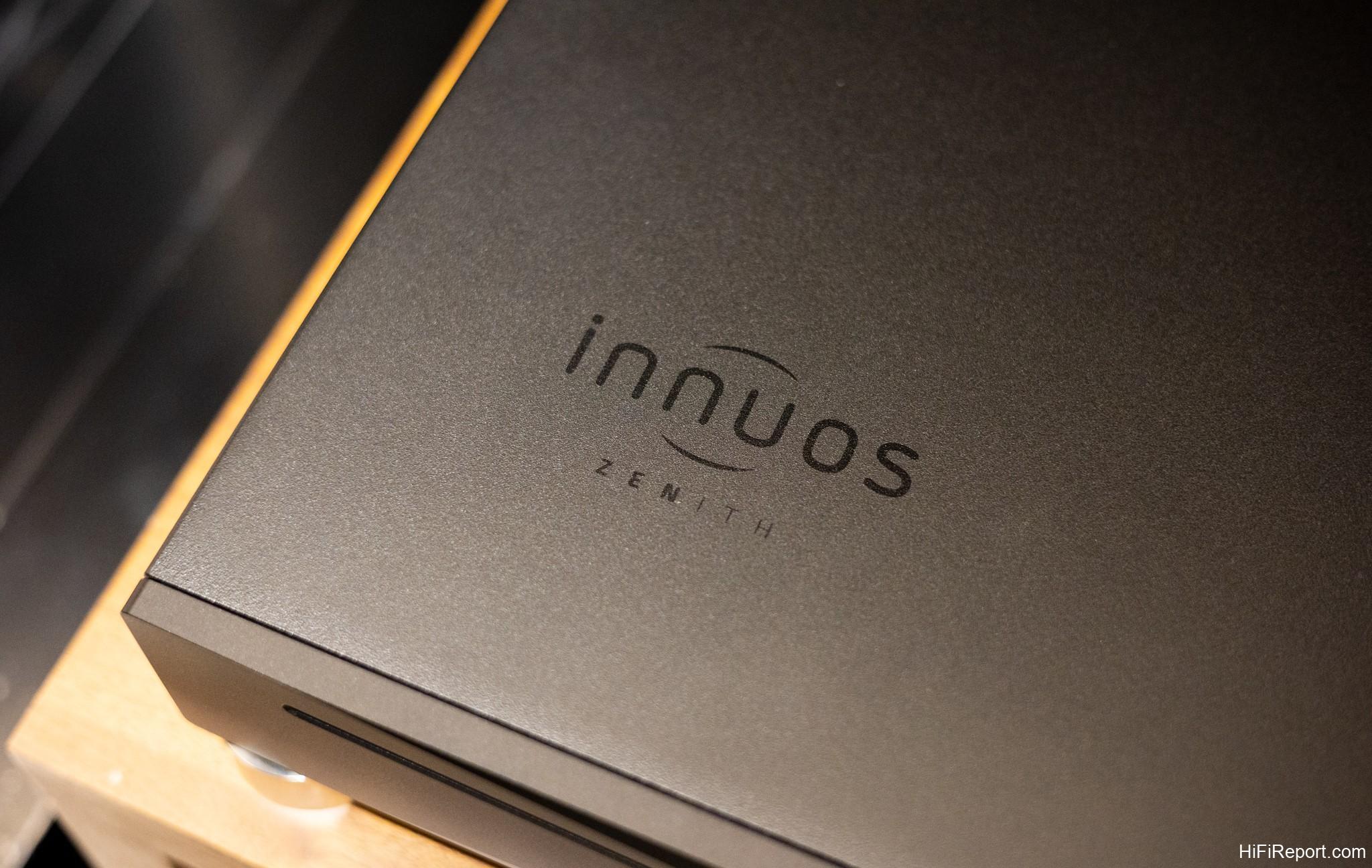
Equipped with a TEAC CD drive, the Zenith MK3 allows for ripping CD collections to its internal storage. Supporting DLNA/UPnP, it can access music files from other NAS devices on your network or stream its stored files to other devices, facilitating integration with existing music NAS setups or enabling Sonos-like multi-room wireless applications. While external hard drive playback is not currently directly supported, Innuos has confirmed this feature will be available in a near future update.

For output, the Zenith MK3 offers a wired RJ45 network output for connecting to another network streamer, or USB output for direct connection to a DAC, requiring your DAC to have USB input capability.

Simple and Convenient Control
Operating the Innuos Zenith MK3 is straightforward, with multiple control options provided by Innuos. Firstly, there’s the proprietary Innuos Sense App. For a network streamer brand of this caliber, a dedicated, user-friendly control app is essential, and Innuos delivers a complimentary and intuitive experience. The Zenith MK3 also supports Roon, the popular music management and playback software.

Users seeking more advanced features can opt for a Roon subscription, and the Zenith MK3 can function as both a Roon Core and Roon Endpoint. Additionally, web browser control is supported, allowing operation via PC or Apple computers.

High-Quality Audio Principles
The Innuos Zenith MK3 is designed with a clear focus on high-fidelity audio reproduction, extending beyond mere functionality with numerous audiophile-grade design elements. According to Innuos, the unit incorporates several key enhancements. Firstly, the power supply employs a Triple-Linear design, utilizing new, high-grade Mundorf capacitors, ultra-low noise regulators, and medical-grade mains filtering.

Secondly, a custom-designed circuit board is implemented to minimize EMI generated by the board itself, contributing to a quieter musical backdrop. Thirdly, the network ports—one for external network connection and another for output to an external network player—are meticulously isolated to eliminate potential noise contamination. Fourthly, vibration and EMI management are addressed with new asymmetric isolation feet and a reinforced chassis base.
Fifthly, playback utilizes RAM caching, with 8GB of internal memory, 4GB of which is dedicated to music file buffering for playback, eliminating the need to spin the hard drive during music reproduction. Sixthly, MQA software decoding is supported, offering complimentary decoding of MQA files up to 24bit/96kHz. When connected to a DAC with full MQA decoding capabilities, the Zenith MK3’s software decoding can be disabled.

Zenith MK3 Key Features
* Custom-designed circuit board for reduced EMI

* Dual network ports with dedicated isolation transformers

* Innovative Triple-Linear power supply with ultra-low noise regulators and high-grade Mundorf capacitors

* 8GB Memory (4GB dedicated for RAM Playback)

* Asymmetric isolation feet

* Ultra-low noise, audiophile-grade USB output

* New vibration and EMI improved SSD

* Quad-core Intel CPU

* Roon Core compatibility
* Medical-grade mains filter
Our listening session took place at Beimen Audio, located near Ximen in Taipei, utilizing T+A’s MP 2500 as a DAC, PA 2500 integrated amplifier, and S 2000 CTL loudspeakers.
Beimen Audio showcases a comprehensive range of Innuos products.
Excellent Resolution and Natural Soundstage
Entering the listening phase at Beimen Audio, the listening room proved to be quite impressive, with a depth significantly greater than its width. Upon playback, the overall frequency range exhibited a remarkably natural and clear resolution, surpassing my previous experiences with T+A speakers. The sound was not harsh or fatiguing, and the frequency bandwidth felt unrestricted, even with leaner recordings, demonstrating the system’s excellent sonic density.
Listening to Hilary Hahn’s “Bach Concertos,” the violin tone was rendered with elegance and fluidity, natural and realistic, with a well-balanced frequency spectrum. The lower registers were taut and defined, never bloated, showcasing excellent clarity and articulation. The music effortlessly filled the listening space, and the exceptional quietness of the background was noteworthy.
Throughout the listening session, a sense of tranquility prevailed, and the noise-free sonic foundation made it easy to become deeply immersed and enjoy each piece.
Balanced Sonic Density and Dynamics
Moving to Chie Ayado’s “To You,” focusing on vocals and piano accompaniment, the Innuos and T+A system conveyed the vocal nuances with clarity and naturalness. Details were not only distinct but transparently delivered. Sonic density was full yet not overly weighty, exhibiting agility where lightness was needed and impactful weight in passages demanding gravitas.
Transparency in the piano accompaniment was particularly noticeable, and both the width and depth of the soundstage were exceptionally well-rendered. Imaging was focused without harshness, and the overall soundstage was spacious yet coherent, resulting in a comfortable and engaging listening experience.
Grand and Exuberant Performance (Wacko Wang’s Notes)
Starting with Michael Bublé’s “Feeling Good” as a reference track, the entire song unfolded like a richly layered and captivating live performance. The striking contrast in dynamics was immediately apparent. The opening passages felt delicate and subdued, with Bublé’s vocals gently lifted by the underlying instruments, creating a sense of a stage slowly rising, the voice emerging from a subtle haze, building anticipation for the performance to come.
As more instruments joined, the music became increasingly opulent, and the soundstage expanded dramatically, conveying a sense of immense spaciousness. The brass instruments were particularly noteworthy for their brilliance and clarity, exhibiting a vibrant and soaring quality without any harshness. Instruments maintained a comfortable and well-defined separation, allowing both the brighter and more mellow timbres to coexist without blurring or blending into each other.
The ability to discern intricate details within such a grand scale performance contributed to the overall richness and immersive quality of the presentation.
Soul-Cleansing, Heavenly Sound
Next, listening to Chlara’s “Say You Won’t Let Go,” the vocal reproduction through the Innuos Zenith MK3 was exceptional. Chlara’s inherent lightness and ethereal quality were fully revealed. Her pure, transparent voice, set against a pristine background, created a soul-stirring and beautiful listening experience.
The delicate plucking of guitar strings at the song’s beginning was rendered with both continuity and distinct note separation, each note clearly defined yet connected, with a refined tonal quality, resulting in an exceptionally comfortable and pure sound. As Chlara’s vocals began, they carried a tender and affectionate warmth, yet with an underlying firmness. This delicate ethereal quality, combined with the intellectual beauty in her voice, was truly captivating.
The clarity of detail was also remarkable, with subtle nuances and inflections in her vocal delivery rendered with precision, leaving a feeling of musical healing and a sense of serene comfort after the song concluded.
Irresistible Sonic Allure
Finally, Renee Olstead’s “Summertime” was used as a reference, showcasing the Innuos Zenith MK3’s ability to deliver both focused power and nuanced vocal contours. From the song’s outset, the dynamic shifts, from gentle passages to powerful crescendos, and the subtle variations in vocal delivery were rendered with striking clarity and realism, like a tangible, elastic line with graceful curves.
As the piano entered, its unique texture and lively notes, combined with the deep resonance of the bass strings, imbued the song with a heightened sense of dynamism and dramatic shifts in intensity. The low-frequency performance was also notably well-balanced, avoiding excessive heaviness or bloat, yet delivering a substantial and impactful presence, expanding momentarily and then quickly receding.
When the brass instruments joined, the song’s rhythmic complexity reached another level of dynamic richness. From the swaying vocals to the instrumental accompaniment, the Innuos Zenith MK3 imbued the entire track with an irresistible and captivating allure that made it difficult to stop listening.
Innuos Zenith MK3 Music Server Specifications
* Music Output: USB 2.0 supporting USB Audio Class 2, DoP, Native DSD and MQA, Dedicated Ethernet Streamer Port
* Connectivity: 2 x RJ45 – Bridged Gigabit Ethernet, 1x USB 2.0 (DAC), 1x USB 3.0 (Backup)
* Disc Compatibility: CD, CD-R, CD-RW, Red Book
* Music File Format for Ripping: FLAC (zero compression), WAV
* Streaming File Format Compatibility: WAV, AIFF, FLAC, ALAC, AAC, MP3, MQA (with supported DACs)
* Sample Rates: 44.1kHz – 384kHz, DSD64, DSD128, Native DSD up to DSD512 on selected DACs
* Bit Depths: 16bit, 24bit, 32bit
* Control Interfaces: iOS, Android, Windows, OS X Web Browsers, Innuos Sense App
* CD/DVD Drive: TEAC Slot-loading drive
* Internal Storage: 1TB, 2TB, 4TB or 8TB SSD (Factory Fitted, Not Upgradeable)
* CPU: Intel Quad Core N4200
* Memory: 8GB DDR3 Low-Voltage RAM (4GB Dedicated for RAM Playback)
* Streaming Services: UPnP/DLNA, Qobuz, Tidal, Radio Paradise, Internet Radio, Roon Core, Roon Endpoint
* CD Metadata: FreeDB, MusicBrainz, Discogs, GD3
* Music System Support: Sonos Multi-room Wireless Music System, DLNA/UPnP compatible devices
* Dimensions: 420mm x 340mm x 83mm (W x D x H)
* Weight: 9 kg