
Trinnov Amethyst Optimizer Review
Trinnov, a French company specializing in professional audio processors, focuses on spatial sound processing for both multi-channel theater systems and two-channel setups. Utilizing advanced measurement techniques combined with proprietary algorithms, Trinnov aims to create the best possible sound calibration for users’ listening spaces.
From their product features to their website presentation, Trinnov exudes the dynamism and innovative technology of a rising French company poised to inject fresh energy into the audio world.
In this first part, we will introduce Trinnov as a company and detail the practical process of room measurement and optimization using the Amethyst with Kii Audio Three active speakers. The second part will delve into the Amethyst’s preamplifier output performance with separate power amplifiers, including an analysis of the sonic differences before and after room correction.
Innovative Company, Sound Science Based
Founded in 2003, Trinnov is a relatively young company at only 14 years old compared to many established High-End audio brands. For its first decade, the company focused on the professional audio sector, developing solutions for 3D sound processing, surround sound processing, and recording studio calibration for renowned recording studios, television stations, and radio broadcasters across Europe and America.
Since 2010, Trinnov has broadened its product range to include two-channel audio and room correction equipment, digital processors for home theaters, and multi-channel monitoring platforms. In 2012, they launched the Amethyst, a top-tier two-channel audio processing preamplifier, at the Munich High End Show.
This was followed in the subsequent three years by the 32-channel Magnitude32 processor, the 32-channel Altitude32 preamplifier-processor, and digital processing products for cinema applications.
Broad Market Recognition
From this brief history, it is clear that Trinnov’s clientele spans recording studios, television and radio stations, cinemas, and home audio enthusiasts. They even OEM audio processing equipment for several well-known audio product manufacturers. Their defining characteristic is the breadth of their audio processing product line, encompassing two-channel and multi-channel home audio, recording monitoring systems, and commercial cinema equipment.
In an era of rapidly evolving audio processing formats, a young company amassing such a diverse range of commercial and professional clients underscores Trinnov’s expertise, innovation, responsiveness, and solution-oriented approach, all highly recognized across the industry.
[Image: British Super Audio Mastering engineers Andy Miles (left) and Simon Heyworth (right) choosing Trinnov]
Scientific Room Optimization, Beyond Trial and Error
Trinnov collectively terms its products “Optimizers,” reflecting their core value: sound optimization as their sole purpose. In the realm of home audio, Trinnov aims to directly compensate for both system and room acoustic deficiencies. Even High-End audio equipment and loudspeakers, while exceptional, possess their own sonic signatures and limitations. Listening spaces, on the other hand, present an even wider array of acoustic challenges.
Every audiophile encounters unique and often intractable problems in their own listening environment. If commercial cinemas require sound processing equipment, then typical home environments are even more in need of such assistance.
Trinnov distinguishes itself from similar products by offering a complete solution. Regardless of system complexity, it can analyze the spatial acoustics and directly apply corrective compensation, addressing both room and speaker issues. In contrast, other manufacturers may offer analysis or adjustment capabilities separately, lacking the integrated and rapid analysis and correction found in a single Trinnov device.
Advanced 3D Acoustic Measurement
Unlike traditional real-time analysis and 1/3 octave correction methods, Trinnov employs MLS (Maximum Length Sequence) signals to capture the full impulse response of each speaker within the room. By adding the time domain to frequency response, the Optimizer can precisely map the location of each speaker in the space, differentiating between direct sound and reflections, and processing each subtle nuance accordingly.
Soundstage Depth and Width Adjustment
Consider this example: the diagram illustrates a home space with a multi-channel system. The left side depicts a standard multi-channel setup with five channels in a balanced arrangement, which is often impossible to achieve in typical rooms due to spatial constraints. The right side shows a compromised setup.
In such situations, speaker distribution becomes uneven, leading to not only volume disparities but also phase and timing issues, as well as interference between speakers and with the room itself. Trinnov products are designed to address these very challenges. They go beyond traditional EQ adjustments, tackling sound phase, time alignment, and level matching across channels and frequency bands.
While the underlying processing is complex and sophisticated, operation remains quick and user-friendly, with the device handling intricate tasks automatically.
Amethyst: Flagship Home Audio Optimizer
The Trinnov Audio Amethyst, a Room/Speaker Optimizer, is specifically designed to address room and speaker acoustics while also serving as a high-performance preamplifier. This processor is feature-rich, targeting the most discerning High-End two-channel audio enthusiasts. Consequently, significant engineering effort has been invested in its preamplifier circuitry to meet the sonic demands of top-tier users.
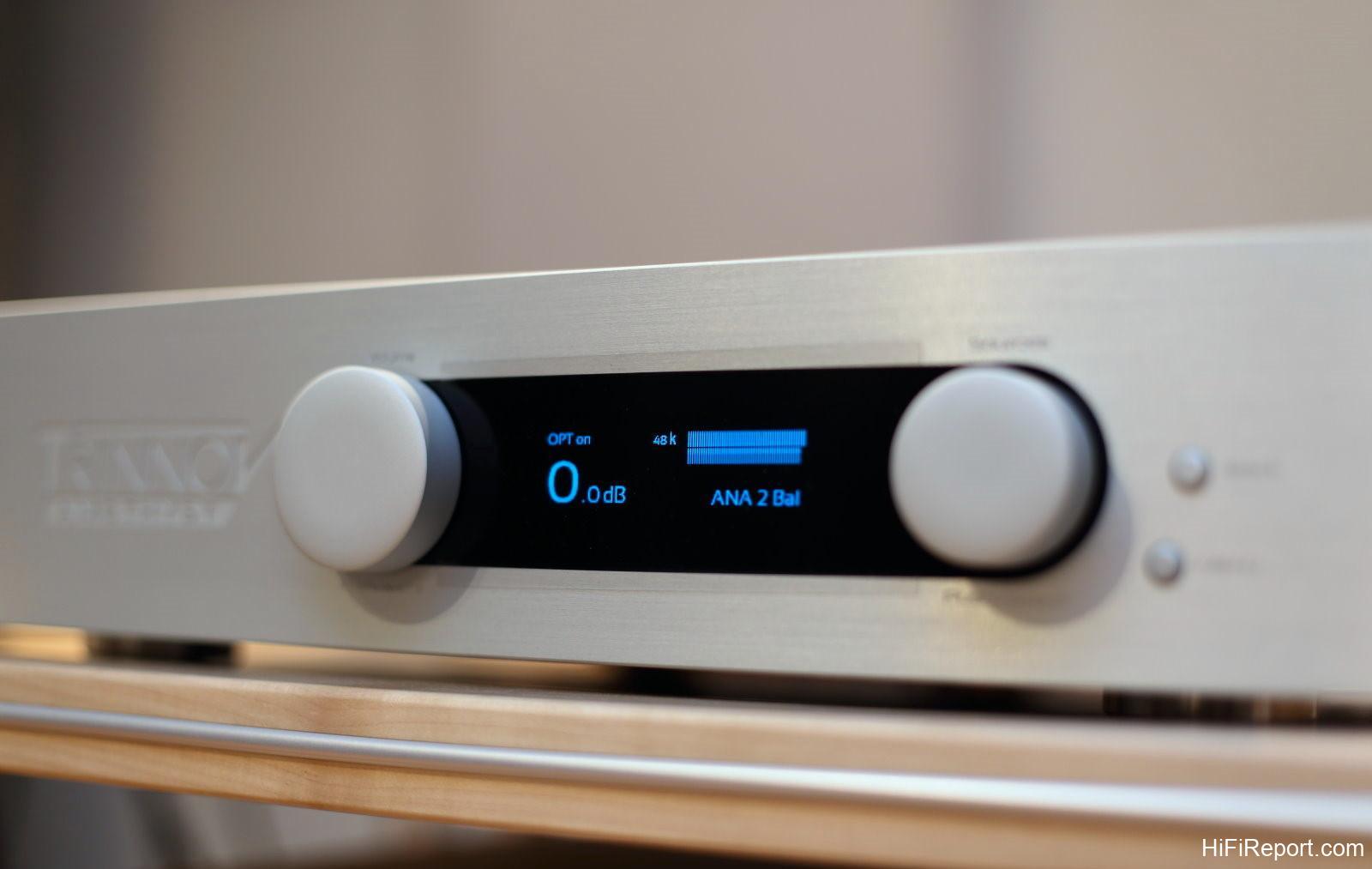
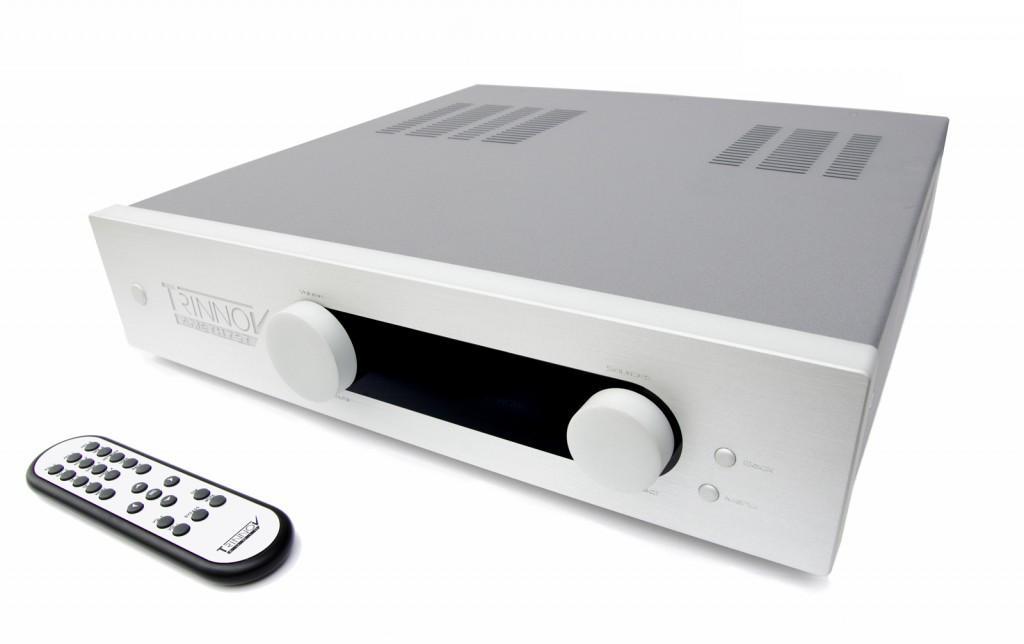
Within Trinnov’s product line, the Amethyst is positioned as the flagship model for two-channel applications. Trinnov’s core processing logic involves first measuring the final sound resulting from the interaction of the audio system and the listening environment. After analyzing this information, it applies digital processing and outputs the corrected signal. Beyond sound processing and preamplifier output, the Amethyst offers a range of additional functionalities.
High-Quality Audiophile Specifications
The Amethyst incorporates 24bit/192kHz DACs (Digital-to-Analog Converters) and 24bit/96kHz ADCs (Analog-to-Digital Converters), enabling it to process both digital and analog signals. Because adjustments are made in the digital domain, the inclusion of ADCs allows for analog signal input and subsequent correction. Internally, it features an MM phono stage.
It also supports high-resolution music file playback via DLNA network connectivity, handling WAV, AIFF, OGG, and FLAC formats up to 24bits/192kHz. Users can directly stream music from computers, NAS devices, or music services like Tidal. The Amethyst is also Roon Ready.
Versatile Input and Output Connectivity
As a highly functional device, the Amethyst prioritizes flexible and convenient operation. Although designed for two-channel systems, it boasts a comprehensive array of connectivity options, accommodating up to 11 input sources and 8 output destinations.
The Amethyst’s 11 inputs include: 2 XLR balanced analog inputs, 1 RCA single-ended analog input, 1 RCA single-ended analog input switchable to MM Phono, 2 AES/EBU digital inputs, 2 Coaxial S/PDIF digital inputs, 2 Optical S/PDIF digital inputs, and 1 high-resolution UPnP network digital input. Outputs comprise: 2 XLR balanced analog outputs, 2 RCA single-ended analog outputs, 2 AES/EBU digital outputs, and 2 Coaxial S/PDIF digital outputs. Word clock input and output are also provided.
The extensive output options provide users with significant flexibility, supporting configurations from stereo, bi-amp, 2.1, 2.2, 3.1, up to 4-channel output setups.
For this review, we paired the Amethyst with German Kii Audio Three speakers to practically demonstrate its operation and detailed adjustment capabilities. This part will focus on the room measurement and correction process, while the subsequent part will emphasize its preamplifier sonic performance and the extent of sonic improvement achieved through room correction.
The measurement process utilizes Trinnov’s control software, operated directly via iPad. Connecting the Amethyst to the network allows for remote control of all functions via iPad.
Measurement: The Foundation of Optimization
The first step is to position Trinnov’s proprietary 3D measurement microphone at the listening sweet spot, at ear level. The audio information captured will be 100% synchronized with this position. Since our listening space is dedicated to two-channel audio, we opted for a precise single-point measurement at the primary listening position. All subsequent adjustments are based on this measurement location. In my opinion, measurement is the most crucial aspect of using the Amethyst.
The precision evident in Trinnov’s custom-designed measurement microphone underscores the company’s high level of emphasis on this critical stage.
Optimize System Setup First
Given the Amethyst’s room correction capabilities, does this mean speaker placement and system matching become less critical? The answer is definitively no. While the Amethyst is exceptionally capable, it is not a panacea. All corrective adjustments have limitations, and the operational capacity of the system and speakers themselves remains finite. If the initial sound is significantly skewed, excessive correction can place undue stress on the equipment, potentially shortening its lifespan.
Therefore, the operating software includes adjustable correction range limits. Users should strive to optimize system setup as much as possible before employing the Amethyst to address inherent limitations or room acoustic challenges.
High-Precision 3D Measurement Microphone
The control app provides step-by-step guidance on microphone setup and measurement procedures. Each 3D measurement microphone has a unique ID, which is important. While all 3D microphones are manufactured to the same specifications, their acoustic characteristics will inevitably exhibit minute variations. Prior to shipment, Trinnov individually tests each microphone and records its specific performance data in a database. This meticulous process ensures the highest possible measurement accuracy.
These details highlight Trinnov’s professional and rigorous approach to measurement. After all, any errors in measurement would compromise the effectiveness of even the most advanced correction algorithms.
Adjustable Measurement Area for Listening Needs
What if a broader listening area is desired, perhaps encompassing three or more seats in the listening space? It is important to remember that Trinnov also offers theater-oriented products, and achieving more averaged correction across a wider area is certainly feasible. When multiple listeners are present, measurements can be taken from various positions, such as the center, left and right sides, and even front and rear rows.
Trinnov then calculates the optimal correction curve based on user-defined weighting, for example, 50% for the center sweet spot, 15% each for the left and right seats, and 10% each for the two rear seats. For this review, we focused on 100% weighting for the primary listening position, resulting in higher precision at that specific location, but potentially greater sonic deviation at other positions.
[Image: Rear panel of Trinnov Amethyst during measurement. The measurement microphone transmits analog signals to the Amethyst. The active Kii Audio Three speakers receive digital signals directly from the Amethyst via AES output.]
Fast Measurement and Computation, User-Friendly Operation
Once set up, Trinnov measures the left and right channels individually. The measurement process is rapid, with each channel requiring only a few test signals from the speakers. The entire measurement takes only tens of seconds. Subsequently, Trinnov automatically initiates computation, requiring approximately three minutes to generate comprehensive acoustic information curves. Multi-channel configurations or measurements from multiple listening positions will naturally require more time.
Detailed Room Acoustic Information
Is it necessary to input any numerical values before measurement, such as microphone-to-speaker distance, speaker-to-speaker distance, or room dimensions? Trinnov requires none of these. This is because Trinnov’s proprietary measurement microphone is not a single-point sensor but comprises four transducers arranged in a vertically staggered configuration. Trinnov analyzes the time elapsed between signal emission from the system and its reception by the microphone.
Due to the varying positions of the transducers, the speed of sound arrival, gain, frequency, and phase will exhibit slight differences. This data enables Trinnov to deduce room size, speaker-to-listener distance, speaker-to-speaker distance, and differentiate between direct and reflected sound, among other parameters.
Intuitive and Flexible Adjustment Process
After measurement and computation, the acoustic information is displayed on the iPad (or computer). Trinnov offers several pre-defined target curves, allowing users to directly select and switch between them. Trinnov balances the speaker’s inherent sonic characteristics with the selected target curve, preventing excessive deviation from the speaker’s native sound profile. Users can, of course, opt for absolute precision in curve adjustment.
Because sound is inherently subjective and aesthetic, users can fine-tune the gain of each frequency band, compensating for deficiencies or enhancing or attenuating specific frequency ranges to create a personalized response curve. For example, those who prefer a bass-heavy sound can boost low-frequency gain. The adjustable frequency resolution is remarkably fine.
Beyond frequency response curves, Trinnov captures information on sound phase, time alignment, impulse response, and more. Data acquisition implies the capability for adjustment, which is a key differentiator of Trinnov from other manufacturers. Upon activating the Optimizer after measurement, all these sonic characteristics are automatically corrected to their ideal states. While users can manually adjust these parameters, the process is highly complex.
Trinnov recommends relying on the automatically calculated corrections, as accurately manipulating these sonic elements without specialized expertise is challenging.
User-Friendly Graphical Interface
In the graphs shown below, “Before” represents the original room acoustics, i.e., the measured state, “After” shows the corrected state, and “Filter” indicates the magnitude of applied correction. A noticeable correction is visible around 400Hz. The horizontal axis options above the curve graphs provide access to other information and correction details, including direct sound (Amp.
direct), phase (Phase), group delay (Group Delay), impulse response (Impulse), and linear impulse response (Impulse (lin)). The “2: Natural” option at the top is one of the factory-preset reference target curves. These curves serve as excellent starting points for initial experimentation.
[Image: Screenshot of Trinnov Amethyst control interface showing Before, After, and Filter curves.]
For manual sound adjustments, users can directly modify settings within the optimization menu.
Analog Sources Benefit from Amethyst
Trinnov’s sound processing relies on proprietary DSP processing chips and circuits for digital signal manipulation. While digital input to the Amethyst is the preferred method, analog signals can also be used. Analog signals can be directly bypassed, allowing the Amethyst to function solely as a preamplifier. Alternatively, analog signals can be converted to digital via the internal ADCs to leverage Trinnov’s valuable correction capabilities for fine-tuning the sound.
Therefore, even analog sources can benefit from Amethyst’s optimization.
Enhanced Balance and Precision
Applying Amethyst’s corrections results in a significant sonic transformation, enhancing overall balance and sonic precision without altering the inherent character of the audio system. Switching between different built-in target curves audibly demonstrates distinct changes in frequency balance, clarity, and the perceived quantity of bass, midrange, and treble.
While some sonic profiles may be preferred over others, the Amethyst’s flexible and intuitive adjustment capabilities ensure that both addressing acoustic flaws and tailoring the sound to personal preferences are easily achievable.
Beyond my own listening space at HiFiReport, I have also experienced High-End systems enhanced by the Amethyst at HiFiReport Audio on numerous occasions. The system tuning at HiFiReport Audio, under the expertise of Mr. Chang, is already exceptionally refined, approaching a smooth and balanced frequency response curve. The addition of the Amethyst noticeably elevated the sonic performance even further.
During two audio exhibitions last year and several multi-channel listening sessions at HiFiReport Audio, I was equally impressed by the effectiveness of Trinnov systems in cinema audio. Regardless of room acoustics, Trinnov consistently delivered balanced and clear sound, achieving high-fidelity cinema audio performance.
The Ultimate Solution for Acoustic Challenges
The Trinnov Amethyst is a remarkably powerful room correction device, surpassing any home audio product we have encountered in terms of functionality. Utilizing a precision four-point 3D measurement microphone, it rapidly gathers comprehensive acoustic information about the system and listening environment. Subsequently, the proprietary software allows for adjusting frequency response, time alignment, phase, and impulse response.
The software can automatically apply corrections, or users can fine-tune parameters manually. Frequency response adjustment is particularly engaging, allowing users to refine factory-preset target curves or create custom curves from scratch, offering both broad and granular control.
Many acoustic challenges are difficult to address in listening rooms, such as asymmetry, aesthetic considerations, or room layout constraints that limit extensive physical room treatment. The Amethyst seamlessly integrates into home audio systems, automatically optimizing sound and allowing for user customization. Trinnov’s measurement, computation, and correction technologies represent a leading edge in home audio room correction and are among the most user-friendly solutions available.
Trinnov Amethyst Optimizer Specifications
* Analog-to-Digital Sampling Rate: 24 bits/96 kHz
* Digital-to-Analog Sampling Rate: 24 bits/192 kHz
* Signal-to-Noise Ratio (A/D): 119 dB (A-Weighted)
* Signal-to-Noise Ratio (D/A): 118 dB (A-Weighted)
* Analog Inputs/Outputs:
* 2 single-ended channels inputs via 2 x cinch (47k Ohms)
* 2 single-ended channels line/phono inputs via 2 x cinch (47k Ohms)
* 4 single-ended channels outputs via 4 x cinch (100 Ohms)
* 4 balanced channels inputs via 4 x XLR (20k Ohms)
* 4 balanced channels outputs via 4 x XLR (100 Ohms)
* AES Inputs/Outputs:
* 4 channels inputs via 2 x XLR (110 Ohms)
* 4 channels outputs via 2 x XLR (110 Ohms)
* SPDIF Digital Inputs/Outputs:
* 4 channels inputs via 2 x cinch (75 Ohms)
* 4 channels outputs via 2 x cinch (75 Ohms)
* 4 channels inputs via 2 x toslinks
* WORD CLOCK Input/Output:
* 1 input via BNC (75 Ohms)
* 1 output via BNC (75 Ohms)
* Processor Specifications: Intel Dual-Core 1.8 GHz, DATA WIDTH 64 bits, floating point RAM 1 Go DDR3 STORAGE Flash Drive 1 GB
* Weight: 10kg