
Trio G3 Review
First off, I must state that this article will dedicate a significant portion to detailing the design and unique technology behind the Avantgarde Trio G3 speakers, with comparatively less focus on listening impressions than my previous reviews. Why? Because after a thorough study of the relevant materials, I realized that without clearly explaining these design and manufacturing techniques, the sheer technological prowess of the Avantgarde Trio G3 would be completely overlooked.
Most people wouldn’t grasp the true value of these extraordinary horn speakers or understand their price tag. This would be profoundly unfair to Avantgarde. Therefore, please bear with me and read through the technical sections before we delve into my listening experience.
Evolution of the Trio G3
Avantgarde was founded in 1991 by two audio enthusiasts, Holger Fromme and Matthias Ruff. Their very first speaker model was the TRIO Classico, a rare design at the time featuring spherical horns made of ABS material. As the name “Trio” suggests, it incorporated three horns for the treble, midrange, and bass. This speaker debuted at the International Funkausstellung (IFA) in Berlin in 1991, marking the beginning of Avantgarde’s history with spherical horn speakers, which continues to this day.
Thirty years later, in 2021, Avantgarde unveiled a completely new version of the Trio, named the Trio G3. After the Trio G2, Trio XD, and Trio Luxury Edition 26, what significant changes did the Trio G3 bring? I must say, the changes are extensive. One could argue that apart from the appearance of the three horns, everything else has been revamped.
So, what exactly has changed? Firstly, the Trio G3 is available in three versions: passive, iTron active, and Wireless streaming. Secondly, the length of the treble horn has increased. While the midrange and mid-bass horns haven’t seen major changes in physical dimensions, all three driver units are new. Thirdly, the frame supporting these three horns has been redesigned. Fourthly, the position of the treble driver can now be adjusted forwards and backward, a feature not present before.
Fifthly, owners of the passive version can purchase the active module later to upgrade to the iTron active version. Eventually, they can even add a wireless streaming module, transforming it into an all-in-one horn speaker (the streaming module is not yet available).
Sixthly, the accompanying subwoofer has been replaced by the SpaceHorn, which is smaller yet more efficient, and its internal 12-inch bass driver is also new. Seventhly, the gain of the treble, midrange, and mid-bass units can all be adjusted individually. The SpaceHorn utilizes DSP, allowing adjustment of the frequency range below 115Hz via a computer connection (a feature present in the XD and 26 versions).
These seven major points are just the most prominent changes; there are many other details I haven’t mentioned. Perhaps it’s fair to say that the Trio G3 is a further evolution of the Trio Luxury Edition 26, as its external appearance is quite similar to the G3.
Horn Design and Technology
We know that Avantgarde is a renowned manufacturer of horn speakers, specializing in spherical horns. In the media, there have been debates about which company first used spherical horns, but there’s really nothing to argue about. Humans have known about using spherical horns to make musical instruments for hundreds of years; aren’t the French horn, trumpet, and tuba all spherical horns? Horns were inherently round.
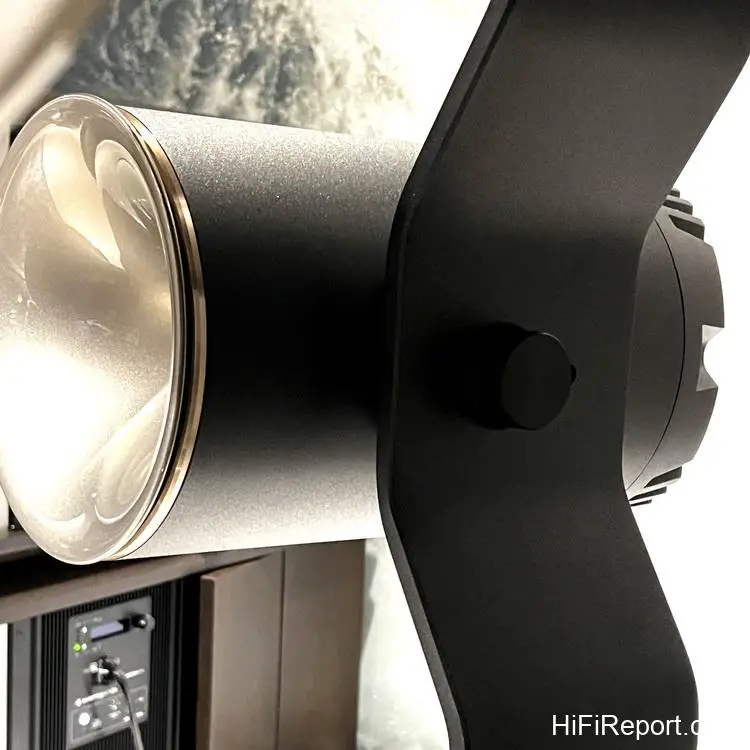
However, later designers of horn speakers deliberately made horns flat to control directivity, leading some audio enthusiasts to mistakenly believe that horns *should* be flat and that spherical horns are a new invention.
Why are horns needed? Essentially, horns are used to increase the sensitivity of a sound source. By mediating the high and low impedance of air within the horn, the intensity of the sound can be significantly increased. A common example is the “megaphone” used in everyday life. Theoretically, the higher a speaker’s conversion efficiency (not sensitivity), the lower its distortion rate. Since horns are tools that can increase conversion efficiency, they have been used for a long time.
In the early days of gramophones, before electrical amplification, music listening relied on a horn attached to the stylus.
After the introduction of vacuum tube amplifiers, the first exponential horn was presented by C.R. Hanna and J. Slepian in 1924 at the American Institute of Electrical Engineers (AIEE). Later, in 1926, Paul Voigt proposed the Tractrix horn, followed by Harry F. Olson of RCA in 1930, and Edward C. Wente of Western Electric in 1936, and subsequently by Gustavus, Webster, Klipsch, Altec, JBL, and so on.
Today, horn speakers have largely retreated from the mainstream market due to their large size and high cost. However, many die-hard horn manufacturers and enthusiasts haven’t given up, and Avantgarde is one such manufacturer.
Why do so many people still champion horn speakers? Simply put, if you can build a high-quality horn speaker and overcome the issue of bass extension, you can drive it with very low-power amplifiers to achieve an enormous dynamic range and a massive sense of musical scale. The energy of the sound waves is simply incomparable to traditional dynamic speakers.
Furthermore, low-power amplifier circuitry and manufacturing costs are typically lower, and their sound reproduction can be more direct, offering advantages that high-power amplifiers lack. Hence, for a long time, horn speakers have had sensitivities around 100dB or even higher, and audio enthusiasts love pairing them with low-power tube amps (under 10 watts) to unleash earth-shattering sound energy.
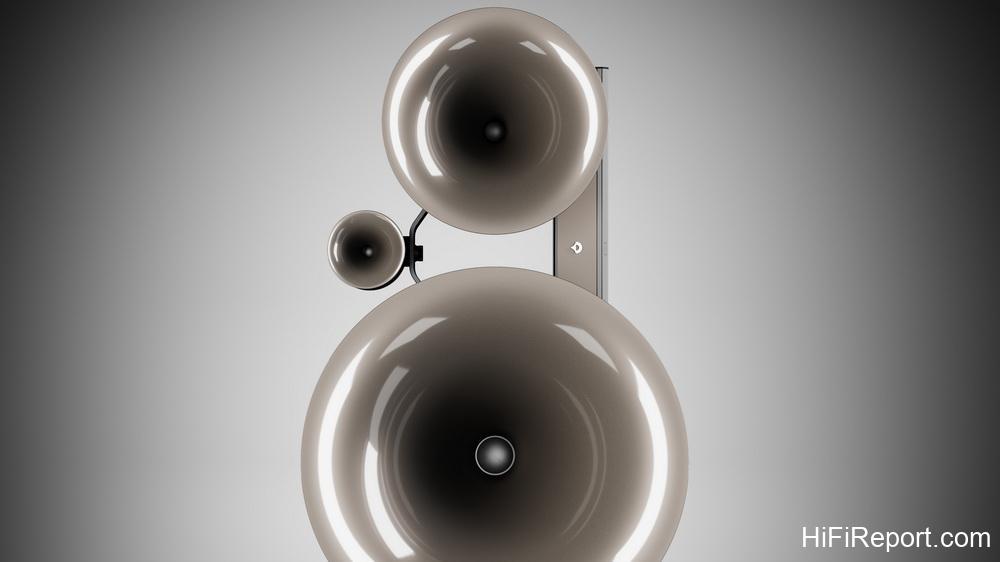
You might ask, what are the advantages of Avantgarde’s spherical horns? According to Avantgarde, firstly, they concentrate sound energy, improving the efficiency of electrical-to-acoustic conversion. Secondly, they reduce interference from side wall reflections, thus lowering musical distortion.
Thirdly, through the horn’s design itself (Avantgarde calls it Spheric LowCut and Air Gate), they achieve a form of mechanical crossover, eliminating passive crossover components and reducing phase distortion.
Classical horn speakers mostly use compression drivers for treble and midrange units. What about the Trio G3? It uses a compression driver for the treble, but a non-compression driver for the midrange, while the mid-bass unit is also a compression type. What is a compression driver? Imagine a faucet connected to a hose. The water flowing from the faucet creates constant pressure in the hose. At this point, the water doesn’t “spray out” but flows out slowly.
Once a nozzle, with a smaller diameter than the hose, is attached to one end of the hose, the pressure inside the hose increases, causing the water to spray out at a faster speed.
This simple principle is easily understood, and a compression driver essentially works the same way. A pressure chamber narrower than the diaphragm’s diameter is placed in front of the driver’s diaphragm. This increases the pressure of the sound waves emitted by the diaphragm, causing them to be accelerated and “sprayed” out from the narrow chamber. This is what’s called a compression driver. Almost all horn speakers use compression drivers.
With an appropriate diaphragm-to-pressure chamber ratio, combined with the horn’s throat, mouth, and air coupling (high impedance to low impedance coupling), the driver’s sensitivity can be increased.
Typical horns are made of wood, metal, or Glass Fiber Reinforced Plastic (GFP). Regardless of how these materials are processed, the surface must ultimately be polished and finished manually. During the manual polishing process, it’s impossible to maintain the horn’s surface curve with extreme precision, which can cause air flow resistance and even affect the horn’s curvature.
Avantgarde, on the other hand, uses ABS (Acrylnitril-Butadien Styrol). This material is injection-molded onto a steel mold under a pressure of 2,500 tons, with the steel mold having a tolerance of +/- 0.05mm. How heavy is the steel mold? It varies depending on the size of the treble, midrange, and mid-bass horns. For example, the mid-bass horn SH9504, with a diameter of 950mm, has a steel mold weighing over 8,000kg.
Because of the single-piece injection molding process, the horns don’t require manual finishing and can maintain the highest precision. Manufacturing such large horns using injection molding means the mold costs alone are staggering.
Evolution Drivers Explained
All three drivers in the Trio G3 (treble, midrange, mid-bass) are completely new designs, termed Evolution Drivers.
The XT3 treble driver features a horn mouth diameter of 200mm, which is 20mm wider than before, increasing the radiation area by 25%. The horn length has increased from 85mm to 176mm. A longer throat horn allows for a smaller driver diaphragm with lighter mass, extending the frequency range up to 28kHz. The XT3 treble driver has an impedance of 16 ohms.
In terms of overall performance, the XT3 has 10dB lower THD compared to the previous generation XD treble driver, reducing distortion from 1% to 0.32%, a significant improvement in performance. It handles the frequency range from 4,000Hz to 28kHz.
The XM3 midrange driver has a compression ratio close to zero, an impedance of 27 ohms, and a sensitivity of 109dB, with a horn mouth diameter of 570mm. This driver incorporates Air Gate technology, which reduces higher frequency distortion to one-fourth. We all know that the midrange driver is extremely important because roughly 70% of the musical signal we hear comes from the midrange. This midrange driver’s diaphragm size is almost equivalent to the throat diameter.
It relies on the diaphragm’s long excursion to produce a wide midrange, rather than the compressed sound of traditional horns. The XM3 uses a Strontium Ferrite Magnet, with powerful magnetic force directly acting on the 27-ohm voice coil. Paired with an air gap as thin as a silicon wafer, it can generate immense sound wave energy. The midrange driver handles frequencies approximately between 600Hz and 4,000Hz.
The XL3 mid-bass driver has a horn mouth diameter of 950mm and is 650mm long, with a throat opening of 100mm. It has an impedance of 16 ohms and handles frequencies from 100Hz to 600Hz. This mid-bass driver uses a 200mm diameter diaphragm, a compression design, featuring what the company calls a TripleLayer Compound Diaphragm. It can produce a startling sound pressure level of up to 109dB at 100Hz.
As for its magnet, the manufacturer claims it uses the world’s best rare earth magnet, and to further enhance magnetic force, they’ve also placed auxiliary magnets inside the voice coil former. How they achieve this is a marvel.
The spiders (suspension) of these three Trio G3 drivers are also unique. For off-the-shelf speaker drivers, since the manufacturer doesn’t know the specific frequency range the user will employ, the suspension’s tolerance range is typically made larger. This results in weaker suspension control at both low and high excursions.
However, because Avantgarde produces its drivers in-house and knows precisely the frequency range each unit will handle, they can narrow the applicable range of the spider, improving suspension control.
You might wonder why the Trio G3’s treble driver impedance (16 ohms) is the same as the mid-bass driver, while the midrange driver is 27 ohms. Avantgarde cleverly utilizes the different impedances of the three drivers to achieve similar sound pressure levels, eliminating the need for crossover networks to adjust the volume produced by the three units.
You might also ask why the driver impedances are so high (16 ohms, 27 ohms) compared to the typical 8 ohms impedance rating for most speaker drivers. A higher speaker driver impedance means the voice coil has more turns; more turns mean stronger driving force on the diaphragm (although the voice coil is also heavier than an 8-ohm voice coil), allowing for greater sound pressure output.
Furthermore, speaker impedance affects the damping factor, which influences the control over the speaker driver. The damping factor is calculated by dividing the speaker impedance by the amplifier’s output impedance (ignoring other factors for now). For example, if the speaker impedance is 8 ohms and the amplifier output impedance is 0.05 ohms, the damping factor is 160. If the speaker impedance is 27 ohms, the damping factor is 540.
Numerically, the amplifier clearly has better control over a 27-ohm driver than an 8-ohm driver.
In fact, Avantgarde’s high-impedance drivers are part of a coordinated system, not a random choice. The manufacturer recommends pairing them with their own amplifiers or choosing the active version to maximize the performance of the high-impedance drivers. Why is this the case? Here’s the essence of the manufacturer’s explanation:
We know that speakers produce music because current from the amplifier flows into the speaker’s voice coil, which “floats” in a magnetic field. The larger the current, the greater the excursion of the diaphragm connected to the voice coil. Therefore, it is the *current* that moves the speaker driver’s diaphragm, not the *voltage*.
The paradox is that most amplifiers on the market are Voltage Drive types, sending voltage into the speaker driver from the output terminal along with the musical signal.
Since speaker drivers require current to move, how does voltage manage to move them? This is due to Ohm’s Law. We’ve all learned Ohm’s Law: Current = Voltage ÷ Resistance. If the voltage is constant, a larger resistance results in a smaller current. Conversely, a smaller resistance results in a larger current.
So, when voltage enters the voice coil, if it encounters a constant resistance, it can be converted into a constant current to drive the speaker driver. The problem is, a speaker’s impedance is not a constant resistance. Although rated at 8 ohms or 4 ohms, the impedance value changes with frequency. If the 8 ohms were constant, the current converted from the voltage would also be constant. In this case, the speaker diaphragm would move linearly, perfectly tracking changes in the input signal.
Conversely, if this 8 ohms is not constant but is constantly changing, it means that when the speaker driver is in motion, the current cannot remain linear, and thus the diaphragm’s movement cannot perfectly track the input signal, resulting in distortion.
Simply put, when the impedance decreases in a certain frequency range, the current increases, and the speaker produces a louder volume. Conversely, when the impedance increases in a certain frequency range (usually near the driver’s resonant frequency), the current decreases, and the speaker produces a quieter volume. This fluctuating volume caused by changes in speaker impedance spoils the original musical signal, yet most people don’t notice it when listening to music.
Furthermore, the inductive reactance of a dynamic speaker driver’s voice coil increases at high frequencies, which increases the driver’s impedance, meaning the volume of the treble driver will decrease. Also, the inductive reactance of the voice coil is dependent on the distance between the voice coil and the magnetic pole piece.
As the voice coil moves back and forth in a piston-like motion, the distance to the pole piece is constantly changing, causing variations in inductive reactance and thus impedance. In summary, driving dynamic speakers with voltage-driven amplifiers presents these issues. Avantgarde believes this distortion can be as high as 20%.
Besides impedance changes, there’s another issue: Counter-Electromotive Force. When a speaker driver moves, it acts like a miniature generator. The voltage and current generated in the voice coil are sent back to the amplifier’s output terminals through the speaker cable, cancelling out some of the outgoing voltage. This means the voltage received by the speaker driver differs from the input signal, which is another source of distortion.
Lastly, the heat of the voice coil can also cause signal compression. When the voice coil carries large currents, its temperature rises. A rise in voice coil temperature means its internal resistance also rises. When the amplifier is at full power output, the internal resistance can increase by 40%, which also compresses the musical signal.
Active iTron Technology
Having discussed the drawbacks of voltage-driven amplifiers at length, it seems strange that the vast majority of amplifiers on the market are voltage-driven. According to the manufacturer, this is because current-driven amplifiers struggle to control driver movement around the resonant point. The resonant point range is typically where impedance is highest and resonant volume is greatest. The amplifier’s current would be wasted in this area, making it prone to audible overload distortion.
In other words, although voltage-driven amplifiers have many shortcomings, this particular drawback of current-driven amplifiers is more critical, so designers tend to choose voltage-driven designs.
So, what are the benefits of current-driven amplifiers that Avantgarde is so passionate about? Avantgarde’s rationale is that when driving a driver with a current-driven amplifier, there is no delay in the current entering the voice coil, resulting in faster driver response and lower distortion. To this end, Avantgarde has dedicated research to finding a solution.
Their conclusion is that as long as passive crossover components are eliminated and the speaker driver’s resonant point is outside its frequency response range, a current-driven amplifier can be used effectively.
The Trio G3’s mid-bass driver handles frequencies above 100Hz, well above its resonant frequency. The resonant frequencies of the midrange and treble drivers are also outside the frequency ranges they handle. Therefore, a current-driven amplifier will not negatively impact the resonant range of these three drivers; instead, it provides faster speed and response.
Ultimately, because these three drivers are designed and manufactured by Avantgarde in-house, and there are no passive crossover components (as described below), they can utilize current-driven amplification. In fact, the iTron active module is a zero negative feedback, single-ended, balanced voltage-to-current converter, which is essentially a current-driven amplifier. This design by Avantgarde co-founder Matthias Ruff is currently patent-pending.
Crossover and Crossover-Free Design
The Trio G3’s crossover design is also unique. We know that the purpose of a crossover is to prevent multiple drivers from reproducing the same frequency range, which would cause muddy and indistinct sound. The Trio G3’s crossover network relies on the natural low-end cutoff performance of the horns themselves (mechanical crossover).
Horns have a characteristic: if the wavelength of a certain frequency is larger than the horn’s mouth size, that frequency will automatically be filtered out and cannot be reproduced (this is why reproducing low frequencies requires very large horn dimensions).
Avantgarde calls this phenomenon of natural low-frequency attenuation by the horn the Spheric LowCut Technology. How are high frequencies attenuated? Avantgarde uses what they call their AirGate design. Simply put, none of the Trio G3’s high, mid, and mid-bass drivers use any passive crossover components.
They rely on natural physical attenuation, thus avoiding the phase distortion, coloration, and power loss issues of conventional passive crossovers and enabling the use of current-driven amplifiers.
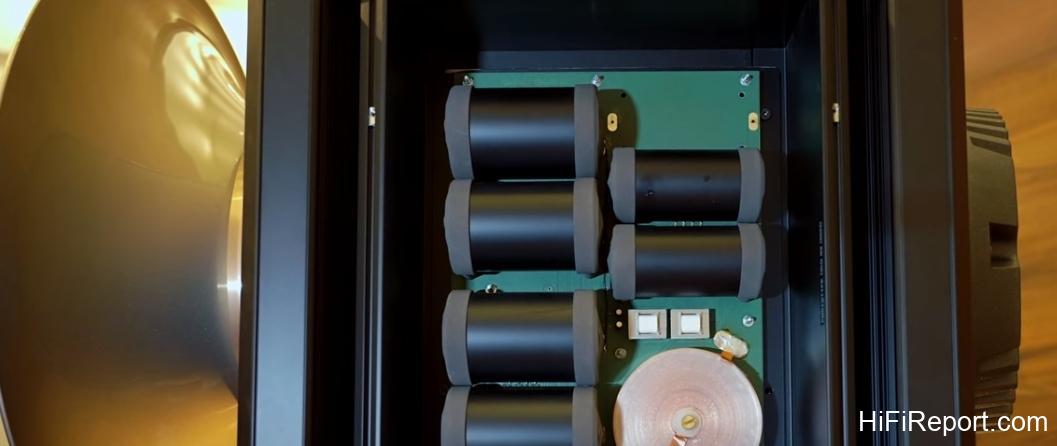
However, to protect the treble driver from damage by low-frequency impulse signals and prevent the voice coil from overheating, Avantgarde has added what they call NatureCap. This capacitor is not a typical film capacitor but is wound with thin aluminum foil and uses an oil-impregnated fiber compound as the dielectric. This NatureCap is manufactured in Germany and is 25 times larger than the capacitors used previously.
Having only the NatureCap is not enough. To shield the capacitor’s dielectric field from the oscillation caused by the polarity switching of the musical signal, each NatureCap has its own DC power supply to stabilize the polarity. Avantgarde calls this circuit PolarisationPlus. With these designs, Avantgarde achieves the highest level of integration between their drivers and amplifiers.
Stand and Adjustability
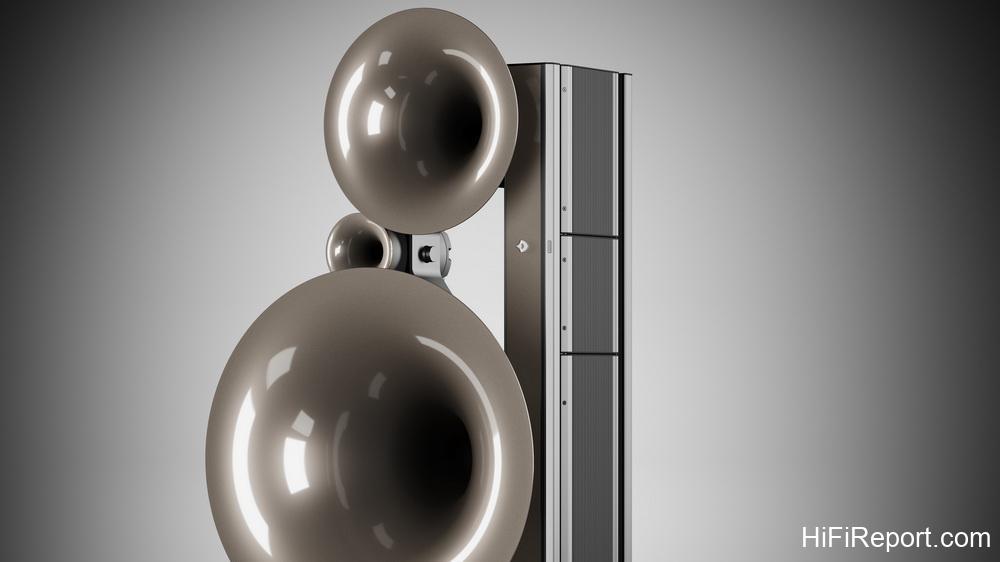
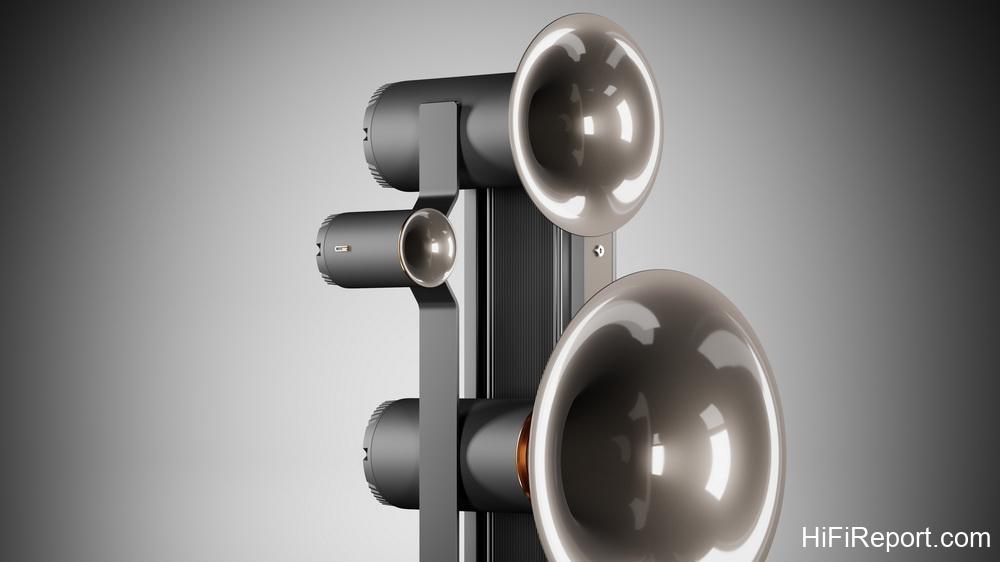
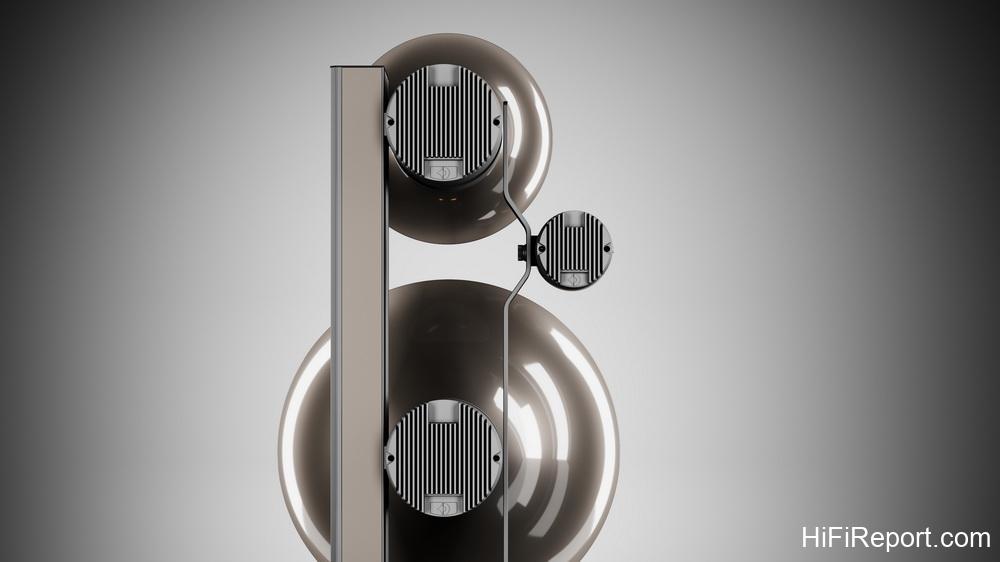
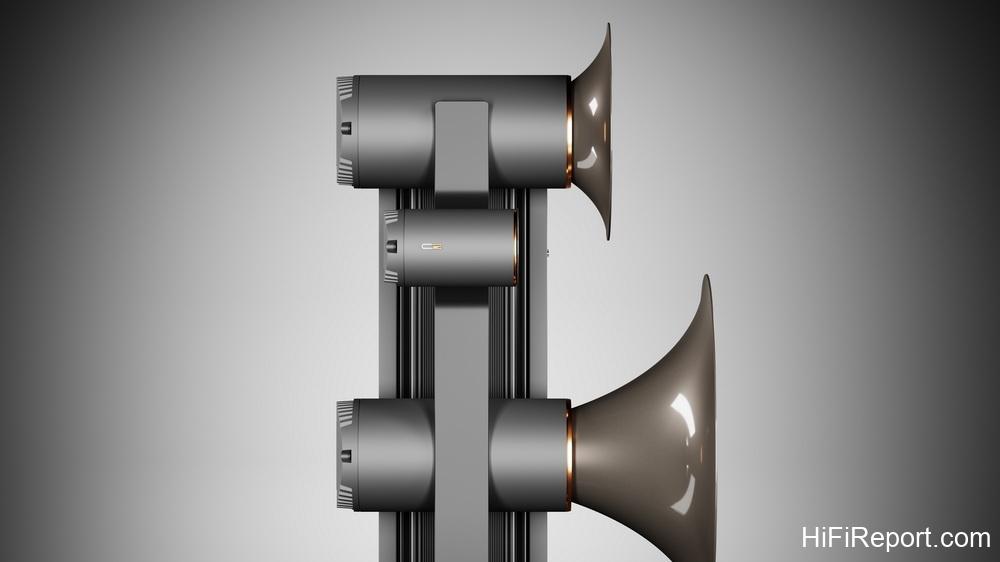
Now let’s discuss the Trio G3’s stand design, which is also a key feature. The Trio G3’s appearance differs significantly from previous Trio models. In comparison, the older Trio stands looked “thin and meager,” while the Trio G3’s stand is luxurious and imposing, combining both functionality and aesthetics. It’s a highly successful industrial design. One side of the Trio G3’s high, mid, and mid-bass horns is bolted to a roughly 10mm thick plate-like support frame.
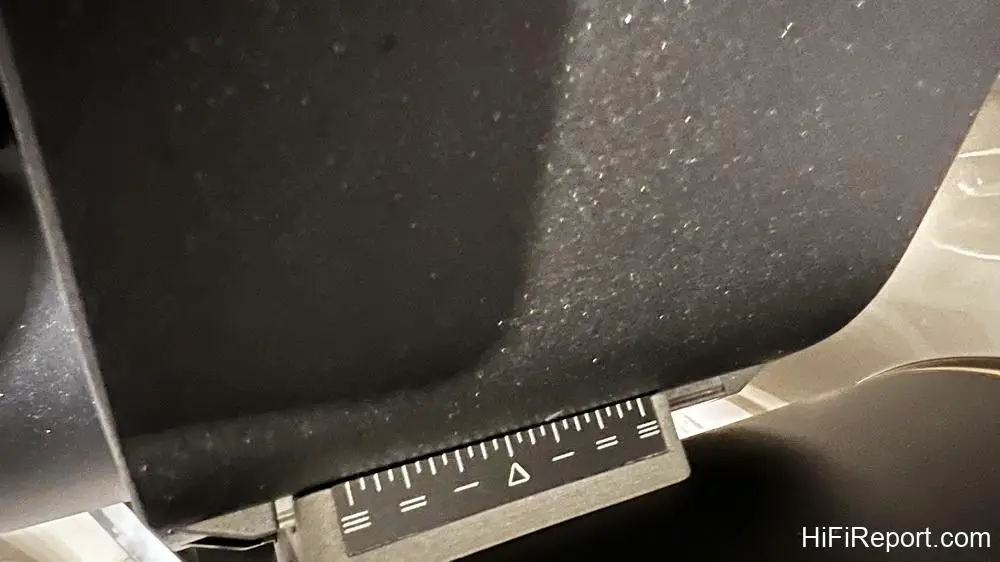
The other side is bolted to a rectangular vertical box frame (140mm wide, 457mm deep, 1473mm high), which houses all the circuitry and amplifiers. The plate-like support frame extends downwards, forming a heel-like shape that props up the rectangular vertical box frame, acting as vibration-isolating feet. Among the three horns, only the treble horn is fixed to the plate frame, without contact with the rectangular vertical box frame, and its position can be adjusted forwards and backward.
Why can only the treble horn’s position be adjusted forwards and backward, while the other two horns are fixed? This is because the Trio G3 is designed for consistent vertical axis emission, achieving time-phase coherence. If the two speakers have no toe-in angle pointing forward, this vertical axis alignment is fine. However, if the speakers have a toe-in angle, the diaphragm’s emission point of the treble unit will be slightly ahead of the emission points of the midrange and bass units.
Therefore, the treble unit’s position must be appropriately adjusted backward to ensure that the emission points of the treble, midrange, and mid-bass units remain on the same vertical axis, achieving time-phase coherence. How much adjustment is needed? It varies depending on the toe-in angle, requiring self-adjustment and experimentation.
Modular Design and Connectivity
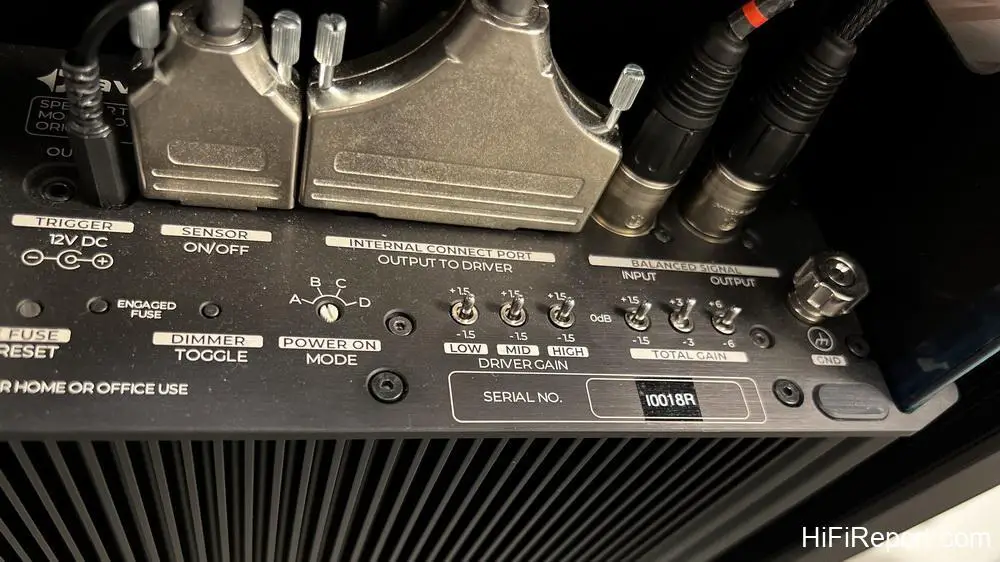
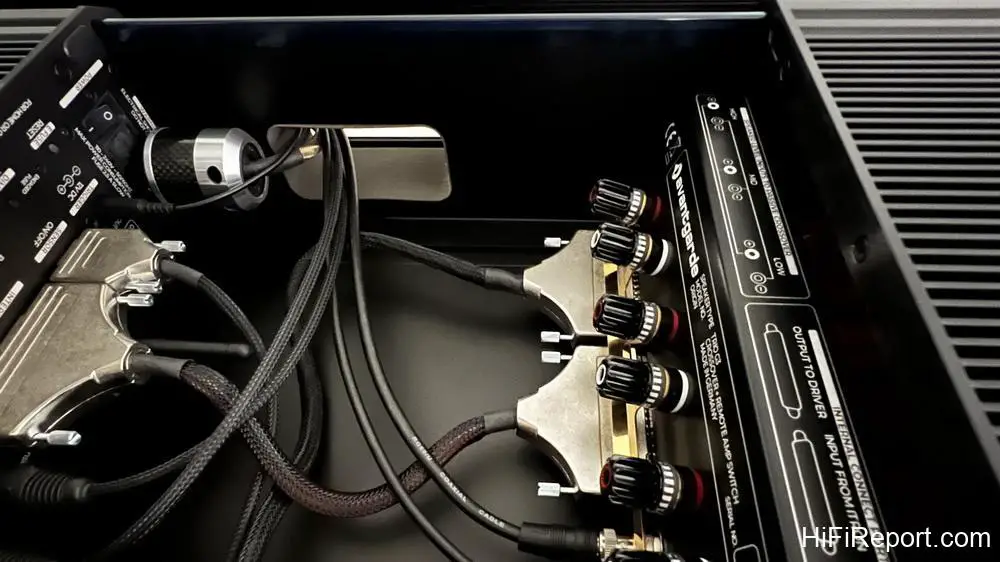
As mentioned earlier, the Trio G3 comes in passive, iTron active, and wireless transmission versions. These circuits require housing, and the vertical rectangular box frame is used to accommodate different modules as needed, along with various connectors and adjustment functions. The iTron active version contains three 100-watt power modules, with each amplifier driving one driver.
The wireless transmission version adds wireless streaming capabilities to the active version, compatible with ROON and supporting services like Tidal and Spotify. The streaming module also includes a DAC, utilizing the latest generation AKM Velvet Sound digital-to-analog converter chip, supporting 192kHz/24bit. The volume control is entirely analog. AKM Velvet Sound is their latest generation top-tier DAC chip, released in 2022. How quickly the Trio G3 has adopted it!
Customizable Gain Control
The Trio G3 has a feature not previously available: gain adjustment. Not only can the overall synchronous gain of the three drivers be adjusted, but the individual gain of the treble, midrange, and mid-bass speakers can also be adjusted separately. For Total Gain, there are three settings: +/- 6dB, +/- 3dB, and +/- 1.5dB. For individual adjustment, the treble, midrange, and mid-bass each have a +/- 1.5dB adjustment range.
Do not underestimate these gain adjustments; when skillfully applied, they can significantly improve the overall sonic balance.
SpaceHorn Subwoofer
We’ve discussed the Trio G3 main unit; let’s look at the SpaceHorn Subwoofer that accompanies it. Avantgarde began developing subwoofers to pair with their horn speakers over 20 years ago. The previous generation subwoofer was called BassHorn. The subwoofer paired with the Trio G3 is a completely new design, named SpaceHorn. Its bass driver (XB12) is also newly designed, with the voice coil diameter increasing from 100mm to 153mm.
The voice coil length also reaches 480mm, nearly 50% longer than the previous generation.
The diaphragm is a blend of long paper fiber and carbon fiber, the frame is integrated aluminum, and the pole piece is made of low-carbon steel. And the magnetic force? 1.15 Tesla. This powerful magnetic force is achieved by magnetizing it using Europe’s largest 200,000-volt magnetizer. The new bass driver can produce approximately four times the energy of the previous bass driver.
Furthermore, the folded horn is about 40% longer than before (1,898mm), increasing sensitivity by 5dB (40Hz-150Hz, approximately 6 times), yet the physical volume has decreased.
There are two types of SpaceHorn: one with a single 12-inch bass driver internally, and another with two 12-inch bass drivers. Each bass driver is driven by a 500-watt amplifier. These two types of subwoofers differ in external size. You can use two smaller ones, or a combination of two large and two smaller ones, or of course, no one will stop you from using four large ones. Simply put, the new SpaceHorn is smaller and more efficient than the previous BassHorn.
SpaceHorn EQ Adjustments
In the past, Avantgarde’s bass horns already had equalization adjustment functions, which could be connected to a computer via network cable or Wi-Fi for equalization adjustments. Now, the SpaceHorn has evolved. By simply connecting a single network cable and daisy-chaining all SpaceHorns via the two network ports on the subwoofer itself, they can be linked together, eliminating the need to connect each subwoofer individually to a router, as was necessary before.
Equalization is done via DSP and is divided into user and expert versions. The user version offers intuitive slider controls for eight bands of adjustment. The expert version is very complex and requires a password from the local distributor to access. The expert version can store 80 EQ presets, allowing users extensive customization, making it extremely powerful. This DSP EQ adjustment function is not exclusive to the SpaceHorn; it was already present in the previous BassHorn.
The SpaceHorn’s expert EQ adjustment is very comprehensive. Its adjustment range extends up to 115Hz, but from the displayed curve, it also affects frequencies slightly higher than 115Hz. The adjustable parameters include choosing the filtering method for HPF (High Pass Filter) and LPF (Low Pass Filter) (Bessel, Butterworth, and Linkwitz-Riley) and their slopes (from first to fourth order), as well as the equalization method (High Shelf, Low Shelf, Bell, etc.
), frequency points, Q value, and gain. These adjustment parameters alone provide ample scope for users to experiment. Additionally, there are adjustable Delay, Limiter, and Compressor functions, truly for expert use.
In the expert version adjustment parameters, you can see that the default under the Type option is “Bell”. Generally, parametric EQ allows selection between Bell (Band) EQ, Shelf EQ, or other methods. Both Bell and Shelf options allow adjustment of gain, Q value (frequency range), and frequency point. Bell EQ, as the name suggests, displays the adjusted frequency range and gain in a bell-like shape. Shelf EQ is divided into Low Shelf and High Shelf.
Low Shelf EQ causes a gradual attenuation or boost of frequencies below the selected frequency point; High Shelf EQ causes a gradual attenuation or boost of frequencies above the selected frequency point. The effective range is determined by the Q value: a larger Q value means a narrower effective range; a smaller Q value means a wider effective range.
The gain determines the amount of boost or cut. In simple terms, Bell EQ can precisely target a specific frequency point, while Shelf EQ affects an entire range of frequencies. The choice depends on the user’s needs. The expert EQ adjustment allows inputting 10 frequency points. I believe that for frequencies below 115Hz, selecting 10 frequency points for Bell Type EQ should be sufficient, which explains why the manufacturer sets Bell as the default.
Listening Experience
This covers the technical essence of Avantgarde and the Trio G3. Now, I will begin sharing my listening experiences from my two visits to the distributor’s listening room. The system used featured an Esoteric Grandioso C-1X preamplifier, paired with an N-01XD streaming player and a G-1X clock. Music listening was primarily via Tidal. Since I was listening to the iTron active version, no separate power amplifier was needed.
Initial Impressions and Calibration
During my first visit to the distributor, I asked the staff to play music they frequently listen to, to understand the sonic performance of the Trio G3 in that specific listening space. After listening to a few tracks, I found that the Trio G3 was not delivering the wide, full, expansive, and utterly transparent sound characteristic of large horn speakers. In fact, what I heard was the sonic effect of a typical medium-sized speaker played at a lower volume.
If the Trio G3 could only sing like this, there would be no reason to purchase them; one might as well just get any pair of Tannoy speakers.
A massive horn speaker system like the Trio G3, coupled with four SpaceHorns, could not possibly produce such a “cat-like” sound. So, I first ran a frequency sweep to examine the frequency response curve of the Trio G3 in the listening space. As I suspected, observing the frequency response curve with 1kHz as the reference point, the frequency range from 2kHz upwards had a slightly excessive presence. However, this wasn’t the main issue.
The crucial problem was a low-frequency peak of over a dozen dB between 100Hz and 50Hz. The 10dB roll-off below 31Hz was less impactful, so the primary culprit was the massive low-frequency peak in the octave between 50Hz and 100Hz.
Due to this strong low-frequency peak, the staff couldn’t turn up the volume when listening to music. As soon as the volume was increased, the bass peak would overwhelm the musical details, creating a booming sound that made focused listening impossible. Given this, the issue should not be difficult to resolve, as the 50Hz-100Hz range is managed by the SpaceHorn and could be appropriately addressed using the expert version’s EQ adjustments.
We opened the expert EQ and began working on taming the low-frequency peak between 50Hz and 100Hz.
Refined Sound Through Tuning
After multiple iterations of listening to music, making judgments, and adjusting, the resulting frequency response curve clearly showed that the low-frequency peak between 50Hz and 100Hz had been successfully reduced. However, the frequency range below 63Hz was slightly more attenuated than before, and the frequency range between 125Hz and 250Hz was a bit lacking. I decided to leave the frequencies above 1kHz alone for the time being, as they didn’t have a critical impact.
Nevertheless, I used the gain adjustments for the three horn drivers to fine-tune the frequencies above 100Hz.
At this point, the overall listening experience of this Trio G3 system was completely transformed. The C-1X preamplifier’s volume, which was initially set at -37, could now be turned up to -26 after adjustment. With the bass peak tamed and the volume increased, the majestic and powerful musical presence characteristic of large horn speakers with subwoofers emerged. This is how horn speakers are meant to sound! Otherwise, what’s the point of buying horn speakers?
As I had another appointment that day, I left things as they were, planning to listen again another time.
A few days later, I returned for my second visit. I had instructed them not to alter the parameters I had set, so they remained preserved. Upon arrival, I revisited the SpaceHorn expert EQ, aiming to slightly boost the frequency range below 63Hz. Simultaneously, I again adjusted the gain of the three horn drivers. It’s important to realize that each horn producing a different volume can combine to create distinct listening experiences.
Therefore, to achieve the optimal mid and high-frequency listening experience, you must adjust the gain of the three horns, as frequencies below 100Hz are handled by the SpaceHorn.
After several back-and-forth adjustments, I quickly found the sonic effect I was looking for. The final result was that when listening to classical music, the bass frequencies had a very appropriate presence. When listening to pop music, some tracks felt a bit bass-heavy. Ultimately, I decided to allow pop music to have a slightly richer bass presence, as my primary goal was to evaluate the system’s performance with classical music.
Of course, the impact and dynamics of pop music would still be absolutely satisfying. Unfortunately, before leaving that day, I forgot to measure the frequency response curve again, so I lack that comparative data.
Sonic Character and Performance
Do horn speakers sound hard, like hitting metal? Some do, but the Trio G3 does not! Does the bass of horn speakers fail to go deep? Most horn speakers have this issue, but the Trio G3 does not! Are horn speakers unable to reproduce the sweet and supple sound of a violin? Many horn speakers are too rigid, but the Trio G3 is not! Does the midrange of horn speakers sound closed in? Of course not! Are horn speakers grand in scale? Absolutely, unless you can’t turn up the volume.
Is the transient response of horn speakers very fast? Few speakers can match it. Is the sound of horn speakers very direct and detailed? Very few speakers can compare to horn speakers in this regard, though some horn speakers can be too forward and aggressive. However, the Trio G3 is not.
In fact, during my adjustment process, my primary focus was on material featuring violins, cellos, pianos, violin sonatas, string quartets, orchestral works, and symphonies. My repeated adjustments aimed to make the violin sound sweet and nuanced, the cello’s bowing texture realistic with rich detail and a charming nasal quality, and the piano notes clear and crystalline like rolling beads. The low strings needed to be soft, elastic, and able to descend deeply.
With string quartets, I focused on whether they could produce beautiful harmonies. For large orchestral works, I listened for the vast soundstage, clear layering, and precise imaging. Were the timpani and bass drum impactful enough?
When listening to pop music, I focused on whether different singers’ voices were faithfully reproduced, retaining their original timbre. Was the kick drum’s thump fast, tight, and weighty? Was the music itself vibrant and alive? Was the balance between high, mid, and low frequencies good enough? Was the impact strong enough without being aggressive? Could the slightly hard texture of plucked acoustic bass be reproduced? Were the bass notes full and bouncy enough?
I won’t list all the pieces I listened to, as there were too many. But I can say that the Avantgarde Trio G3 is absolutely a horn speaker system worth purchasing. My reasons are: Firstly, its flexible and easy-to-use adjustments allow the Trio G3 to adapt to different listening room conditions, making it less prone to failure.
Secondly, with the addition of the SpaceHorn, its bass presence and depth surpass any horn speaker I have heard, and you have the flexibility to purchase two smaller ones, two larger ones, or mix and match. Thirdly, it can reproduce the nuanced and sweet sound of violins and cellos, along with a realistic woody texture. Fourthly, its piano sound has excellent body and weight, and it sounds very real.
Fifthly, if you want to experience a wide midrange (including vocals), this is the one to choose.
After two visits to the distributor’s for listening and adjustment, I believe I was able to achieve about 80% of its potential performance. The remaining 20% requires the owner to slowly refine and adjust it themselves. This will surely unlock the full capability of the Trio G3 and SpaceHorn. What is the allure of a speaker system costing hundreds of thousands of dollars?
It lies in the ability to personally sculpt the sound characteristics you desire; it lies in experiencing a state of musical nirvana that others cannot reach. Do you want to explore such a world? Then the Avantgarde Trio G3 and SpaceHorn await.
Specifications
* Type: Three-way horn system with bass horn subwoofer
* Introduced: 2021
* Three-way Horn Frequency Range: 100Hz-28kHz
* SpaceHorn Bass Horn Frequency Range: Below 100Hz
* Sensitivity: > 109dB
* Nominal Impedance: 19 Ohms
* Recommended Amplifier Power: 2 Watts or more
Associated Equipment
* Streaming Player: Esoteric N-01XD
* Clock: Esoteric G-1X
* Preamplifier: Esoteric Grandioso C-1X
Key Features
* Three-way horn design.
* SpaceHorn folded bass horn.
* Unique driver design.
* Active iTron amplifier utilizes current drive.
* Grand scale, large soundstage, exceptional detail, highly direct sound.