
Waversa Systems WStreamer Streamer Review
More and more people are regarding streaming music services, such as Tidal, Qobuz, Spotify, KKBox, and internet radio, as a crucial source of daily music listening. However, these music services all originate from the internet, and most traditional audiophile sound systems lack internet connectivity. It becomes necessary to employ devices like computers, music servers, or streaming players to bridge the gap between the internet and existing home audio setups.
Is there a simpler approach? Absolutely. Consider the WStreamer streaming transport from Waversa Systems. This palm-sized device can receive network signals and output digital audio via USB Audio or RCA coaxial connections. This allows you to enjoy streaming music using your existing DAC.
Solid Technical Foundation
Before diving into the WStreamer, let’s briefly introduce Waversa Systems.
Founded in South Korea in 2012, Waversa Systems is an IT technology company specializing in chip and system design. The company name, Waversa, is a combination of “Wave” and “Versatile,” signifying its multifaceted capabilities in the digital realm. Their expertise extends beyond digital audio to encompass automotive systems, security applications, telecommunications, military, and medical fields, showcasing a truly diverse skillset.
While Waversa Systems is a relatively young company, online sources indicate that Collin Shin, the leading figure, has been involved in IT and vacuum tube circuit design for over three decades. This suggests expertise not only in IT and digital domains but also in analog amplification, explaining why Waversa Systems’ product line includes pure analog devices and tube amplifiers alongside streaming equipment.
Essentially, Waversa Systems aims to integrate analog audio, digital audio, and network technology to deliver equipment with Hi-End quality and performance.
Waversa Systems boasts several unique proprietary technologies. One example is WAP (Waversa Audio Processor) digital audio processing technology, introduced in 2013. It utilizes algorithms originally developed for medical equipment to reconstruct the original analog signal. This contrasts with conventional DAC approaches that rely on upsampling, oversampling, filtering, and interpolation, then filtering again. WAP is claimed to effectively reduce quantization errors, resulting in a more analog-like sound.
Furthermore, Waversa Systems has developed its own dedicated network streaming audio protocol, WNDR (Waversa Network Direct Rendering). This protocol is used in their streaming playback devices and can even be licensed to other streaming player manufacturers.
What is WNDR? It’s analogous to DLNA or Roon’s RAAT, enabling devices on a network to exchange data and stream music.
According to Waversa Systems, WNDR eliminates buffering, resulting in lower latency and reduced transmission noise compared to DLNA, ultimately enhancing sound quality.
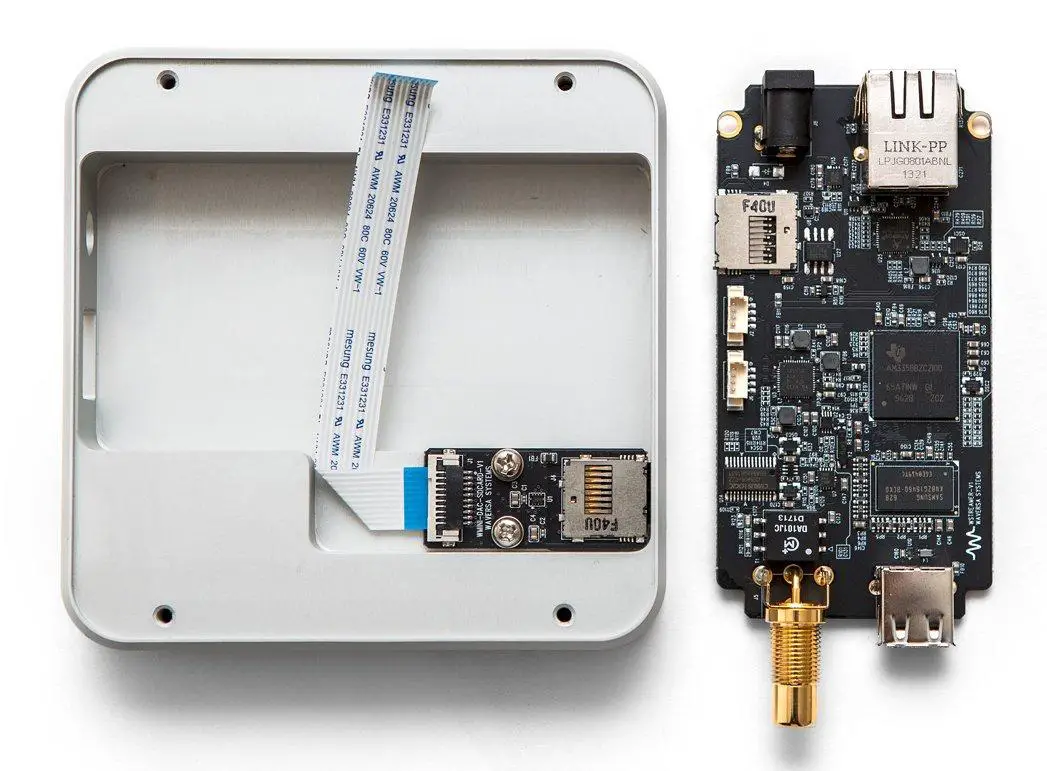
CNC Machined Chassis
Waversa Systems adopts a straightforward approach to model naming. The model name directly reflects the equipment’s function, making it immediately clear to potential buyers.
For instance, the WStreamer clearly indicates its function as a streaming player, leaving no room for confusion. The key detail to grasp is that the WStreamer is a digital transport, lacking analog outputs and requiring connection to a DAC for playback.
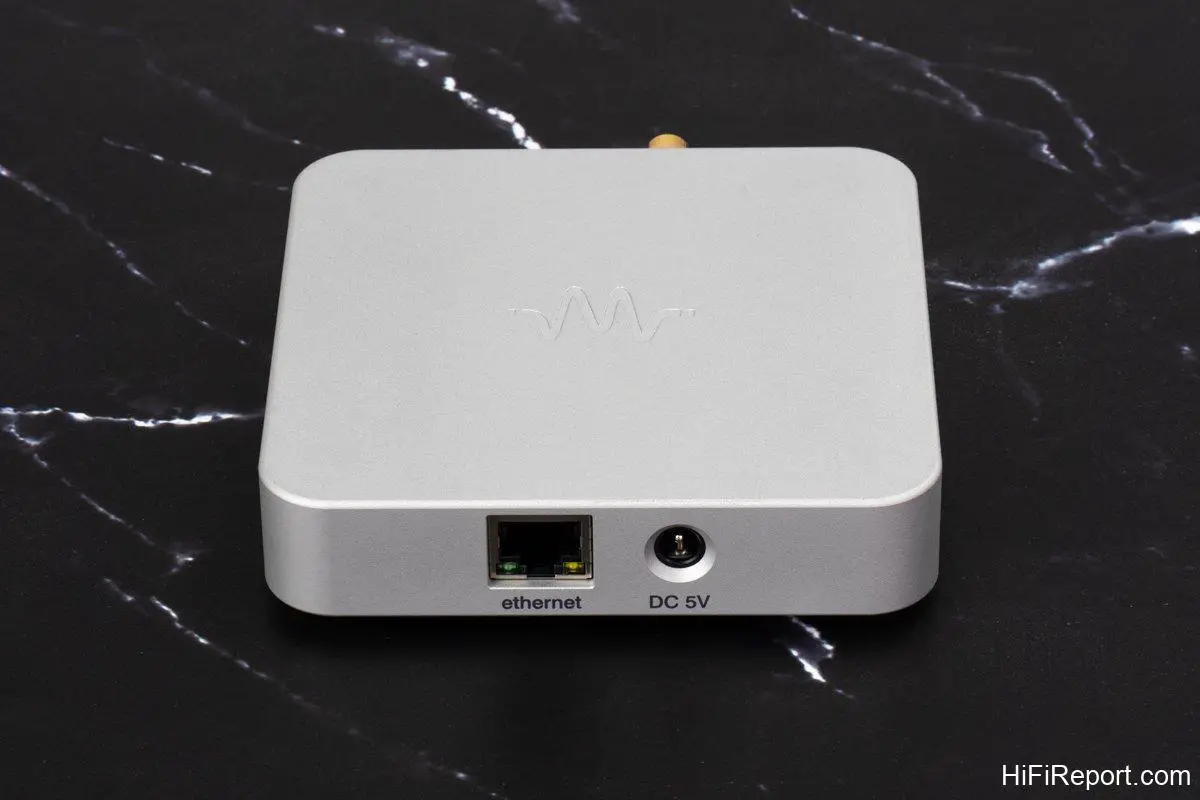
(Image from Waversa Systems Official Website) The WStreamer features a single RJ45 network input and two output options: USB Audio and S/PDIF RCA.
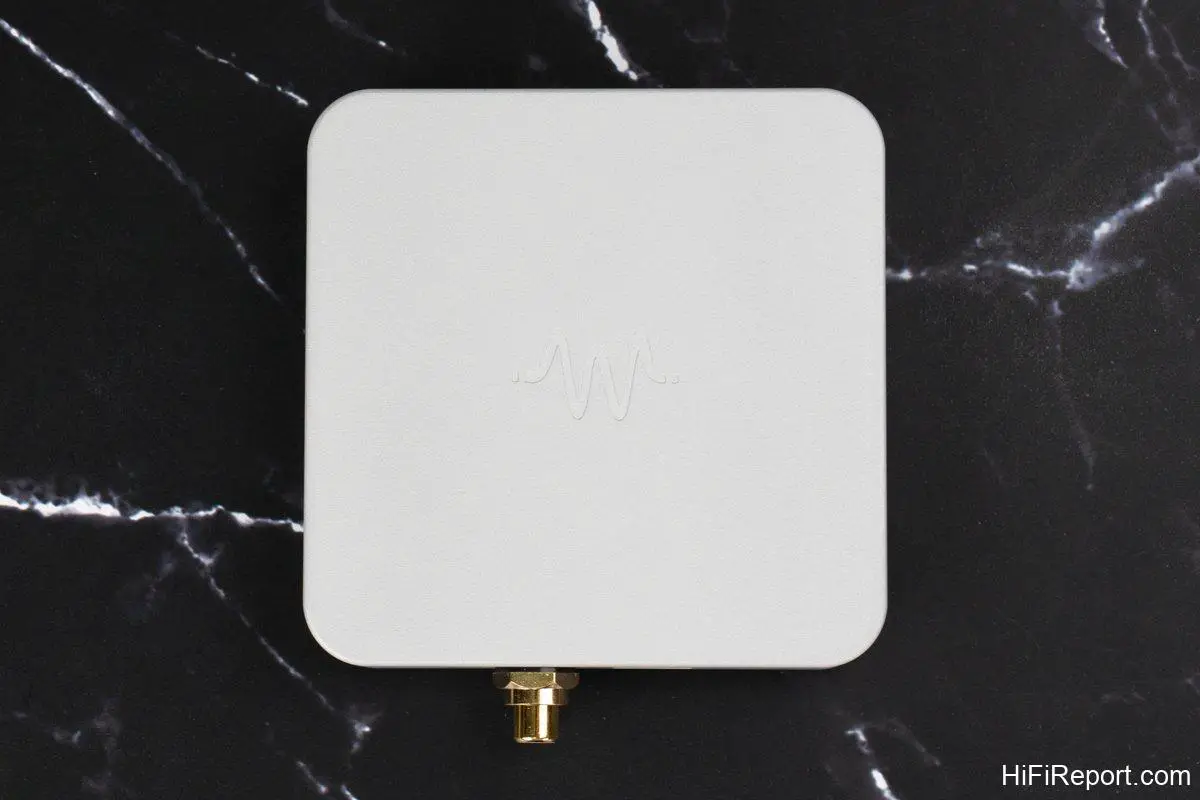
Its dimensions are remarkably compact, only 10 centimeters square, allowing it to fit into virtually any small space on a rack. Placement is never an issue.
The WStreamer comes standard with a 5V DC power supply with a common 5.5 × 2.1 mm DC plug. Given that most power supplies now use either 5.5 × 2.1 mm or 5.5 × 2.5 mm plugs, upgrading to a higher-quality power supply is easily achievable.
The WStreamer lacks a power switch and begins operating as soon as it’s plugged in. It’s designed for continuous operation, as the internal ARM processor consumes very little power and generates minimal heat, making 24/7 operation energy-efficient.
The WStreamer’s chassis is meticulously machined from a solid block of aluminum using CNC. This construction offers two primary benefits: first, the solid chassis reduces resonance, contributing to improved sound performance; second, it enhances heat dissipation, minimizing thermal noise and further benefiting audio quality.
Beyond its proprietary WNDR transmission protocol, the WStreamer also supports DLNA, Roon Ready, and AirPlay. This compatibility ensures seamless access to major high-resolution music streaming services like Tidal and Qobuz, as well as internet radio.
In terms of supported sampling rates, the WStreamer’s S/PDIF RCA output handles up to 24 bit / 192 kHz PCM transmission, while the USB output extends to a maximum of 32 bit / 384 kHz PCM and DSD256. This capability is more than sufficient for the vast majority of high-resolution playback needs.
Furthermore, the WStreamer incorporates a dual clock system, precisely catering to both 44.1 kHz and 48 kHz audio frequencies.
Qualities of a Superior Source
The listening evaluation took place in my home audio setup.
Being a Roon user, I connected the WStreamer to my usual SOtM sNH-10G switch and then linked it to an Audiobyte Black Dragon DAC. This setup allowed me to evaluate the WStreamer within my familiar listening environment.
For comparison, I also connected a thin laptop, loaded with Roon Bridge, to the sNH-10G. This effectively transformed the laptop into a Roon Ready streaming transport, serving as a reference point. A/B comparisons were conducted to discern the WStreamer’s sonic characteristics.
The comparison process was remarkably swift. Within just a few tracks, it became evident that the WStreamer and a standard laptop occupy different tiers of streaming transports. In contrast, the laptop sounded comparatively dull, flat, and less layered, with blurred outlines, a constricted soundstage, and poor separation. Overall, its performance could only be described as pedestrian.
The WStreamer, however, distinguished itself with a darker noise floor, more transparent and pristine sound, and a more open and relaxed presentation, resulting in a livelier listening experience.
Further comparisons became unnecessary, as focused listening to the WStreamer alone sufficed. It was clear that sound quality transcends physical size. Despite its diminutive form factor, the WStreamer possesses all the hallmarks of a high-caliber source component.
The WStreamer’s bundled power supply is a compact, generic-looking switching power adapter, resembling a smartphone charger in size. Initially, I was skeptical, noting its 0.3A current limit. I wondered if a more robust power supply would yield sonic improvements. I experimented with several 5V power supplies I had on hand. After careful listening, I realized the stock power supply was surprisingly competent, undoubtedly selected by the manufacturer for its performance.
The only power supply that demonstrably outperformed the stock unit was the Ferrum Audio Hypsos, a unit I still had after a previous review. The Hypsos offered enhanced fullness and weight, more natural extension at both frequency extremes, and an even quieter background. However, the Hypsos costs more than the WStreamer itself, making such a pairing unlikely for most users.
In essence, I had once again fallen victim to judging a book by its cover.
Having established the adequacy of the stock power supply, I proceeded with the remainder of the listening evaluation using it.
Details Define the Difference
While a transport doesn’t dictate tonal character—that’s the DAC’s domain—it profoundly influences detail retrieval and the accuracy of spatial imaging and localization. The WStreamer delivers commendable performance in these critical areas.
Take, for instance, RR’s “Big Band Basie” album. Track 1, “Shiny Stockings,” opens with a subtle swing rhythm. Through the WStreamer, I discerned a wealth of detail far exceeding that of the laptop, including microdynamics, reverberation and decay, and the textural nuances within instrumental timbres. Piano notes were more sustained and refined, possessing a cleaner, more transparent quality with enhanced brilliance.
This abundance of detail and pristine sonic backdrop contributes to a superior sense of spaciousness, encompassing openness, depth, soundstage dimensions, and instrumental separation—all areas where the WStreamer excels.
As “Shiny Stockings” progresses into its powerful big band crescendo, the WStreamer conveyed a clear and potent sense of impact. The sound was lively, brisk, and free of sluggishness, fully capturing the vibrancy and energy inherent in big band swing, compelling me to tap my feet along with the music.
In contrast, the laptop sounded overly restrained, lacking the live ambiance of a performance. Dynamic contrasts were less pronounced, creating a sense of confinement.
The fundamental distinction between a high-quality source and a typical one lies in realism. This realism stems from authentic timbral textures, accurate sonic images, and realistic spatial representation. The WStreamer embodies the realism expected of a superior source component.
Consider the 2017 Audiophile Demonstration CD, featuring piano pieces released by Steinway & Sons. Through the WStreamer, the piano materialized with palpable presence between the speakers. Clear reverberation and overtones flowed naturally, with effortless extension at both high and low frequencies. The sound was poised yet dynamic, relaxed yet cohesive, exhibiting commendable density and weight—altogether, a delightful sonic experience.
Enjoying high-quality network streaming doesn’t have to be complicated. Selecting the right equipment is half the battle, and the WStreamer is an excellent choice. Despite its small size and simplicity, it minimizes interference from complex circuitry and components, paradoxically facilitating superior sound.
Of course, achieving truly authentic and natural sound requires a complementary high-quality network environment. Dedicated network switches designed for streaming audio can minimize interference with network audio signals. Coupled with compliant, high-grade network cables, these elements synergize to allow the WStreamer to perform at its best.
Specifications
**Waversa Systems WStreamer**
* Type: Network Streaming Digital Transport
* Inputs: RJ45
* Outputs: USB Audio, Coaxial RCA
* Streaming Features: DLNA, AirPlay, Roon Ready, WNDR Support
* Supported Sampling Rates: Coaxial up to 24 bit / 192 kHz PCM, USB up to 32 bit / 384 kHz PCM / DSD256 (DoP)
* Power Input: 5V DC
* Dimensions: 100 × 20 × 105 mm
* Weight: 400 g