
WiiM Sound Lite Speaker Review
Overview
The WiiM Sound Lite is a mid-range wireless streaming speaker that delivers exactly the same acoustic hardware, streaming capabilities, and AI room correction as its more expensive stablemate, the WiiM Sound — stripped of the touchscreen and without the voice remote in the box, at a price that now sits squarely head-to-head with the Sonos Era 100. Launched in late December 2025 as WiiM’s second entry in its growing speaker lineup, the Sound Lite makes a clear-eyed value proposition: if the 1.8-inch display on the Sound was not drawing you in, or you already own a WiiM remote, you can have the identical audio performance and the identical feature set for significantly less. That is a compelling argument in a market segment where Sonos and Apple have long charged a premium for hardware that WiiM’s internal benchmarks now credibly challenge.
The WiiM Sound surprised the audio community when it launched in October 2025, not because a WiiM speaker was expected to be bad, but because it turned out to be genuinely good — good enough to earn favorable comparisons to the Apple HomePod 2 and win listeners over from established Sonos installations in direct household listening comparisons. The Sound Lite inherits every aspect of that acoustic achievement. The same custom 4-inch long-throw paper-cone woofer, the same dual 1-inch silk-dome tweeters, the same Class-D amplifier running at 100 watts peak, the same precision 2-way crossover, the same AI RoomFit calibration system, and the same complete streaming protocol stack all carry over without any engineering change. What Hi-Fi? confirmed explicitly that WiiM “promises its signature hi-res audio and open-platform streaming, so its sound quality and abilities should be identical to the Sound.” The Lite is not a lesser speaker. It is the same speaker with a different front panel and a different box contents.
In the wireless speaker market at this price point, the Sound Lite enters competing directly with the Sonos Era 100 — arguably the most proven and widely recommended entry-level smart speaker of the last several years. That competition is meaningful: Sonos offers a polished ecosystem, excellent app, and reliable multiroom behavior, but the WiiM Sound Lite brings a broader streaming protocol stack, hi-res 24-bit/192kHz audio support that the Sonos does not match, AI room correction that the Sonos does not offer, Wi-Fi 6E, and Ethernet — all at the same asking price. TechRadar’s review of the Sound described it as a “genuine challenger” to Sonos and Apple, and the Sound Lite inherits every one of those competitive advantages while removing only the optional display accessory.
This review covers the Sound Lite across six dimensions: its driver technology and acoustic design, build quality and physical design (including what changes and what doesn’t versus the Sound), audio performance, real-world placement and system-building uses, user feedback from early buyers and press, and a precise verdict on who the Sound Lite is for and when to spend more on the Sound instead.
Key Features & Tech Specs Explained
Same Driver System as the Sound: No Acoustic Compromise
The WiiM Sound Lite uses the identical driver configuration as the WiiM Sound: a 4-inch long-throw paper-cone woofer for bass and mid-bass, paired with dual 1-inch silk-dome tweeters for upper midrange and high frequencies, crossed over by a precision 2-way network that keeps each driver operating in its optimal frequency band. Long-throw refers to a woofer designed to move further in and out than a standard cone — like a longer-legged runner covering more ground per stride — which allows deeper bass extension and higher output from a compact enclosure without distortion creeping in at higher volumes. The dual tweeter arrangement widens horizontal dispersion, spreading the high-frequency sound more broadly across the room and contributing to the sense of space and soundstage width that reviewers of the Sound commented on positively.
The 100-watt peak output specification is identical between Sound and Sound Lite, covering the same ground in room-filling capability. CEPRO notes the 50Hz to 20kHz frequency response — reaching down to the lower registers of bass guitar, kick drum, and lower-register piano — without requiring a subwoofer for most music genres in normal room sizes. The paper-cone woofer is chosen specifically for its natural damping behavior; it moves cleanly and stops cleanly, avoiding the resonances that cheaper composite-cone designs can introduce at the upper limits of their range. The combined effect of this driver package is what TechRadar described in the Sound review as “a broad and powerful soundstage” with “full, balanced bass” — a characterization that translates fully to the Sound Lite because the drivers are the same.
AI RoomFit: The Acoustic Equalizer for Real-World Placement
The AI RoomFit system works identically in the Sound Lite as in the Sound and the Amp Ultra: open the WiiM Home app, tap Calibrate, hold your smartphone at the listening position, and the speaker plays a sweep of measurement tones. The app captures how those tones sound in your specific room and calculates a custom equalization profile that compensates for wall reflections, bass buildup in corners, and the tonal colorations caused by nearby furniture and surfaces. Think of it as a personal acoustic consultant who visits your room, listens carefully, and adjusts the speaker’s output to counteract every unflattering thing your room does to the sound.
This feature has practical significance that goes beyond its specification sheet value. Wireless speakers frequently end up in acoustically suboptimal positions — on kitchen counters flanked by reflective tile, on bookshelves with the back wall close behind, in a room corner where bass frequencies pile up and become muddy. Most competing speakers at this price offer no correction for these scenarios; what you hear is what the room gives you. The Sound Lite adapts to the room rather than demanding the room adapt to it. The calibration process takes under two minutes, and — as noted in the WiiM Sound review by TechRadar — it produces better results when using an iPhone for measurement, delivering more precise compensation than Android in their testing. The RoomFit algorithm also continues to improve through server-side updates, meaning the calibration quality available to Sound Lite owners will improve over time without any action required.
Wi-Fi 6E, Ethernet, and Bluetooth 5.3: The Connectivity Advantage
The WiiM Sound Lite includes Wi-Fi 6E (supporting 2.4GHz, 5GHz, and the 6GHz band), a 100Mbps Ethernet port, and Bluetooth 5.3 — a connectivity suite that exceeds what any competing wireless speaker at this price currently offers. Wi-Fi 6E’s 6GHz band is less congested than the legacy bands because fewer devices use it yet, delivering more reliable streaming in apartment buildings and dense neighborhoods where Wi-Fi interference is a daily reality. The Ethernet port is the kind of option that most smart speaker manufacturers simply don’t bother including; WiiM includes it as standard, acknowledging that some users have challenging wireless environments or simply prefer the certainty of a wired connection. No configuration is required — plug in a cable and the speaker prefers it automatically.
Bluetooth 5.3 supports standard SBC and AAC codecs for casual wireless streaming from a phone without Wi-Fi involvement, and can also output to Bluetooth headphones — a genuinely useful option for late-night listening from the same music source playing in the room. TechRadar’s Sound review specifically noted this headphone output capability as a versatile and practical feature.
Streaming Protocol Stack: More Services Than Any Competitor
The Sound Lite supports Google Cast (Chromecast built-in), Spotify Connect, TIDAL Connect, Qobuz Connect, Amazon Music via Alexa Cast, DLNA/UPnP for local network libraries, Roon, and LMS (Logitech Media Server for legacy Squeezebox integration). The WiiM Home app natively integrates Amazon Music, TIDAL, Deezer, TuneIn, iHeartRadio, YouTube Music, Qobuz, Plex, and numerous internet radio services. This represents a broader native service footprint than Sonos, Apple, or Bluesound in a single device. The full hi-res chain supports 24-bit/192kHz playback — a specification that the Sonos Era 100 does not match, topping out at 24-bit/48kHz.
The consistent omission across WiiM’s current speaker generation is AirPlay. The Sound Lite does not support AirPlay in any form. Apple Music remains accessible via Google Cast from the Apple Music app, and Bluetooth provides a fallback wireless path, but native AirPlay behavior — grouping with HomePods, control through iOS media center, Siri speaker routing — is unavailable. TechRadar’s Sound review described this as the WiiM Sound being “the fourth new WiiM product to ship without Apple AirPlay support,” a pattern that reflects a deliberate architectural choice rather than an oversight. For Apple Music listeners who rely on AirPlay as their daily workflow, the WiiM product line as currently constituted is not the right ecosystem. For everyone else, the protocol breadth is unmatched.
Build Quality & Design
The WiiM Sound Lite is a compact cylinder, slightly taller than it is wide, wrapped in a tightly woven fabric grille in black or white finish. Its dimensions and weight are identical to the Sound — the only external change is the front face: where the Sound has a 1.8-inch circular touchscreen, the Sound Lite has a flat, fabric-covered surface matching the rest of the body. The result is a cleaner, more minimal appearance that Gear Patrol describes as “a more minimalist design” that some users may actually prefer to the display version. Physical touch controls on the top panel — volume up, volume down, play/pause, and a multifunction button — handle all local playback control without needing a phone or remote.
The build quality carries over from the Sound in full. Smart Home Sounds’ hands-on with the Sound described the fabric finish as “solid, tightly woven and much more high-end than expected” — a characterization that applies equally to the Lite’s identical exterior. The weight and density of the cabinet provide acoustic inertness, preventing the cabinet itself from resonating at bass frequencies and coloring the sound. There is no visible port or vent on the exterior, suggesting a sealed or heavily damped internal enclosure design that contributes to the tight, controlled bass character reviewers noted in the Sound. The power connection is permanent — the Sound Lite is not a portable speaker and requires a power outlet within reach of its cable.
The box contents are the notable difference from the Sound: a power cord and a brief setup card, and nothing else. The WiiM Voice Remote 2 Lite, which ships in the Sound’s box, is sold separately and adds Alexa voice control, preset buttons, and Bluetooth remote playback. This is the correct product decision — users who want voice control buy it once and use it across multiple WiiM devices; users who control everything from the WiiM app or via Google Cast and Alexa devices they already own don’t pay for a peripheral they don’t need. Available in both black and white finishes.
Sound / Performance
Because the WiiM Sound Lite uses identical drivers, identical amplification, and identical DSP to the WiiM Sound, its acoustic performance is the reference established by the Sound’s reviews — and that reference is genuinely strong for its price tier. Rolling Stone’s review of the Sound described “crisp-sounding audio and full, balanced bass,” noting it is loud enough to fill a medium-sized room without pushing volume to harsh levels. TechRadar found “a broad and powerful soundstage,” specifically praising the driver configuration’s ability to throw the sound field wider than the physical speaker suggests. The midrange and vocal reproduction — the frequency range most critical to musical enjoyment and most revealing of a speaker’s character — is clean and well-defined, with acoustic instruments and voices reproduced with natural texture rather than the artificial brightness that cheaper tweeters can introduce.
The bass response from the 4-inch woofer is capable for its size: full enough for jazz, acoustic, pop, and most rock without a subwoofer in small to medium rooms, with the 50Hz floor approaching the fundamental frequencies of bass guitar and kick drum. In larger rooms or for genres that depend on sustained sub-bass — electronic music, hip-hop, film soundtracks — the WiiM Sub Pro wireless subwoofer is a natural companion that connects over Wi-Fi without cables between the two units. RoomFit calibration, as documented across reviews of both the Sound and the broader WiiM speaker family, produces an audible improvement in bass control and tonal balance in typical real-world placement scenarios. Users who run the calibration after initial setup and then before it consistently describe the calibrated result as the clearly preferable presentation. Source: hifireport.com © HiFiReport, all rights reserved.
Stereo pairing — grouping two Sound Lite units as left and right channels — delivers a step change in both soundstage width and overall presence that transforms casual room-filling audio into something that engages as a proper listening experience. Multiple reviewers and community users who evaluated stereo pairs of the Sound (identical hardware) describe the combined result as competitive with entry-level wired bookshelf systems, which is a meaningful result for a wireless all-in-one solution. At the Sound Lite’s price, a stereo pair costs what the Sonos Era 300 costs alone — a comparison that the WiiM community has not been slow to notice.
Real-World Use Cases
The Sound Lite’s most direct use case is as a standalone room speaker for a space where you want convenient, high-quality streaming without a visible screen or a remote on a shelf. A bedroom, home office, kitchen, or guest room installation benefits from the Lite’s minimalist presence — it sits unobtrusively, sounds excellent, and requires only the WiiM app to configure and control. The app-only control model works smoothly for the majority of users who already have a smartphone within reach; the Voice Remote 2, sold separately, adds tactile preset recall and Alexa access for users who want it. The 3.5mm analog input — confirmed present on the Sound Lite’s spec sheet — enables connection of a laptop, portable player, or TV headphone output for sources that don’t stream natively.
The Sound Lite also excels as the entry point for a WiiM multiroom ecosystem built specifically for budget-conscious room coverage. In households where the main listening room already has a WiiM Amp or Amp Pro driving passive speakers, adding Sound Lite units to secondary rooms builds out the multiroom system at a lower per-room cost than any alternative with comparable audio quality and protocol flexibility. Since the Sound Lite participates in Google Cast groups, Alexa multi-room groups, and WiiM native groups simultaneously, it integrates with whatever multiroom behavior the household has established, without configuration friction. Source: hifireport.com © HiFiReport, all rights reserved.
For users considering the Sound vs. Sound Lite decision specifically: the Sound adds a 1.8-inch touchscreen that displays album artwork, a VU meter, playback controls, and EQ presets accessible by touch, plus the Voice Remote 2 Lite in the box. If you plan to interact with the speaker primarily through the app — the more common usage pattern — the touchscreen adds ambient visual enjoyment during playback but does not change the listening experience. If you intend to use the speaker in a living room where it is a visible focal point, or in a bedroom where checking the time and track without reaching for a phone is a genuine daily benefit, the Sound’s screen and included remote represent a clean justified premium. For all other situations, the Lite’s savings are straightforwardly valid. Source: hifireference.com © HiFiReference, all rights reserved.
What Real Users Are Saying
The Sound Lite arrived too recently for a large volume of long-term verified buyer feedback, but early adopter commentary and the body of WiiM Sound reviews — covering identical hardware — establish a consistent picture. The most common positive theme is genuine surprise at audio quality from a speaker in this form factor and price tier: users consistently describe the sound as fuller, more detailed, and more engaging than their previous Bluetooth or smart speaker alternatives. Bass in particular draws comment: users describe it as present and controlled rather than the bloated or absent extremes that wireless speakers at this price often exhibit, which is consistent with the woofer design and RoomFit calibration working as intended.
The app experience is a consistent source of enthusiasm. WiiM Home’s breadth of natively integrated services — covering every major streaming platform in a single coherent interface — contrasts favorably with the service fragmentation that Sonos and other platform-locked speakers impose. Users with Qobuz, TIDAL, Amazon Music, and local DLNA libraries describe managing all of them from one app without workarounds, which is a practical daily convenience that the protocol spec sheet alone doesn’t fully communicate. The multiroom synchronization is described as reliable and musically coherent — no audible lag between rooms when grouped, with album transitions and track changes staying in time across zones.
The absence of AirPlay appears in early feedback from iPhone-primary users who did not check the product specification before purchasing, and who expected AirPlay as a standard feature of any wireless speaker at this price. This is the single most consistent point of friction in early reviews and community discussion. The solution available — Google Cast from the Apple Music app — is functional but requires more steps than AirPlay’s native iOS integration, and it cannot be used to join AirPlay groups with HomePods. For users whose household is not Apple-centric, this point of feedback is irrelevant to their purchasing decision; for those who are, it is the primary due-diligence question to answer before buying.
Pros & Cons
Pros:
- Identical acoustic hardware to the WiiM Sound — same 4-inch long-throw woofer, dual 1-inch silk-dome tweeters, 100W peak output, and 2-way precision crossover — at a meaningfully lower price, confirmed by WiiM and corroborated by What Hi-Fi? and multiple publication launch reports.
- AI RoomFit room correction adapts the speaker’s output to the acoustic characteristics of the specific room and placement position, producing audible improvements in tonal balance and bass control that competing speakers at this price do not offer.
- Broadest streaming protocol support in the price tier: Google Cast, Spotify Connect, TIDAL Connect, Qobuz Connect, DLNA, Roon, LMS, and Alexa Cast — more native integration than Sonos Era 100, Apple HomePod 2, or any competing wireless speaker at this price, based on spec analysis.
- Wi-Fi 6E and Ethernet connectivity exceed the network specifications of every major competing smart speaker at this price point, providing more stable and interference-resistant streaming in dense wireless environments, based on spec analysis.
- Available in two finishes, stereo-pairable, and compatible as center/surround speaker in a WiiM 5.1 home theater system — a rare scalability for a wireless speaker at this price, based on spec analysis.
- 3.5mm analog input enables direct connection of non-streaming sources, adding practical flexibility for laptop, TV, or portable player use.
- Hi-res 24-bit/192kHz playback support exceeds the Sonos Era 100’s 24-bit/48kHz ceiling, ensuring no artificial quality ceiling below the source material, based on spec analysis.
Cons:
- No touchscreen — the Sound Lite’s front face is entirely fabric-covered with no display; album art, track information, and EQ shortcuts accessible directly on the Sound are not available without the app.
- Voice Remote 2 not included — control is limited to the WiiM app and physical top-panel buttons out of the box; Alexa voice access requires either purchasing the remote separately or using a separately owned Alexa device.
- No AirPlay support — a permanent architectural limitation across current WiiM speakers that specifically affects Apple Music via AirPlay, HomePod grouping, and iOS-native casting behavior; Bluetooth and Google Cast via Apple Music app are available as alternatives but are less convenient.
- No hands-free voice assistant — the speaker’s microphone is used only for RoomFit calibration; Alexa requires the optional WiiM Voice Remote 2 and Google Assistant requires a compatible separate device, based on spec analysis.
Who Should Buy This?
The WiiM Sound Lite is the right choice for anyone who wants a high-quality wireless streaming speaker for a bedroom, kitchen, office, or secondary living space and controls their audio primarily through an app or by voice through a device they already own. The acoustic performance is identical to the Sound, the streaming protocol support is unmatched in the category, and RoomFit room correction gives it a practical acoustic adaptability that no competing speaker at this price offers. Users already invested in the WiiM ecosystem — with streamers, amplifiers, or other WiiM Sounds in the home — will find the Lite integrates as a natural additional zone with zero configuration friction and full multiroom participation.
The Sound Lite is also the logical choice for users who want to build a stereo pair on a considered budget. Two Sound Lites at the combined price still undercut many single-speaker alternatives in the premium smart speaker tier, while delivering the genuine left-right separation, soundstage, and dynamics that a single mono or pseudo-stereo unit cannot match. Rolling Stone’s description of the Sound as “crisp audio and full, balanced bass” translates into a stereo pair that makes a serious case for the combination as a primary desktop or compact room listening system.
Users who want the album art display as a visual focal point during playback, who want immediate hands-on touch control without reaching for a phone, or who use the speaker in a living room where the screen’s ambient presence is genuinely valued should buy the WiiM Sound instead. The additional cost covers a real feature set with real daily utility — it is not just cosmetic. Similarly, users who want voice control through Alexa built into the speaker without a separate device should budget for the remote at the time of purchase, factoring it into the total cost comparison against the Sound. Apple Music users who rely on AirPlay as their primary casting method should look elsewhere in the WiiM lineup — specifically the WiiM Mini or Pro which retain AirPlay support — or consider a speaker from an AirPlay-native brand.
Verdict
Overall score: 8.5/10 (Sound quality 50% / Features & ecosystem 20% / Build & design 15% / Value 15%)
The WiiM Sound Lite earns its recommendation cleanly and without complicated caveats, as long as you understand what it trades away. The acoustic hardware is unchanged from the Sound: a properly designed 2-way driver system, a capable 100W amplifier stage, RoomFit room correction, and 24-bit/192kHz hi-res playback, all in a compact fabric-wrapped cabinet available in black and white. The streaming protocol stack — Google Cast, Spotify Connect, TIDAL Connect, Qobuz Connect, DLNA, Roon, LMS, and Alexa Cast — is more comprehensive than Sonos, Apple, or Bluesound offer at any comparable price. Wi-Fi 6E and Ethernet are infrastructure advantages that will make a practical difference in dense network environments where cheaper Wi-Fi radios struggle.
What the Sound Lite gives up — the touchscreen and the included remote — are optional interface preferences rather than acoustic or functional compromises. For users who live in their streaming apps and have no particular attachment to ambient album art displays, those two features represent a valid saving. For users who want those features, the Sound is the sensible purchase and worth the premium. The WiiM Sound Lite is, in objective acoustic and technical terms, one of the most capable wireless speakers available at its price point in early 2026 — and the RoomFit room correction means it will perform better in the imperfect placement positions of real homes than most competitors that cost the same or more.
Verdict: Strongly Recommended — for app-first, Google Cast, or Alexa-native listeners seeking hi-res wireless streaming with room correction at an entry-level smart speaker price. Confirm your AirPlay dependency and touchscreen preference before choosing between Sound Lite and Sound.
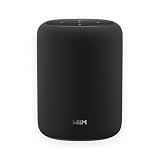
- Hi‑Res Audio, Expertly Tuned – Enjoy up to 24‑bit/192 kHz Hi‑Res streaming, powered by a 100W peak amplifier, 4″ paper‑cone woofer and dual 1″ silk‑dome tweeters for natural mids, smooth highs, and room‑filling clarity.
- Smarter in Any Room – AI RoomFit technology optimizes the sound to your specific space and placement—balanced bass, clean vocals, and engaging detail wherever you place it.
- Open by Design – Stream in the WiiM Home App or cast directly via Google Cast, Spotify/TIDAL/Qobuz Connect, Alexa Cast, DLNA, Roon/LMS; join WiiM, Google Cast, Alexa multi‑room groups.