
Wilson Audio Sasha DAW Review
Saturday, April 9th, sunny day.
I drove along the national highway, and surprisingly, the traffic was exceptionally smooth. Google Maps showed no congestion at all along the way.
Counting it, this was my thirteenth lecture at HiFiReport. I have never had such a smooth journey in all these trips.
Turning into Taike Road, I found a vacant parking spot right across from HiFiReport. Even parking was easy today.
I pushed the door open and walked in. Mr. Chang, the owner of HiFiReport, was visibly surprised to see me, “You’re early today!”
“The highway was clear all the way, so I arrived earlier than expected,” I replied. Familiar with the place, I didn’t need to be shown and headed straight to my usual spot near the storage room door and the extended bar—a corner I’ve grown accustomed to occupying.
Tucked away in this corner, I can quietly review my lecture notes and occasionally look up to observe everyone in the store.
There were two tables of customers that day. One table was a couple with two children. I noticed the gentleman was seated in the spot Mr. Chang usually occupies when fine-tuning the audio setup. I guessed he must be an audiophile.
Sure enough, he was chatting with Mr. Chang about audio equipment while enjoying his meal. His daughter was also engaging in lively conversation with the proprietress, even revealing details about her father’s new car. They were clearly regular customers.
Having not signed up for the afternoon lecture, the family left after finishing their meal.
Once the table was cleaned and sanitized, I moved to the paper sofa, rested my elbow on the table, leaned forward slightly, clasped my hands together, and gently pressed my index finger joints against my chin.
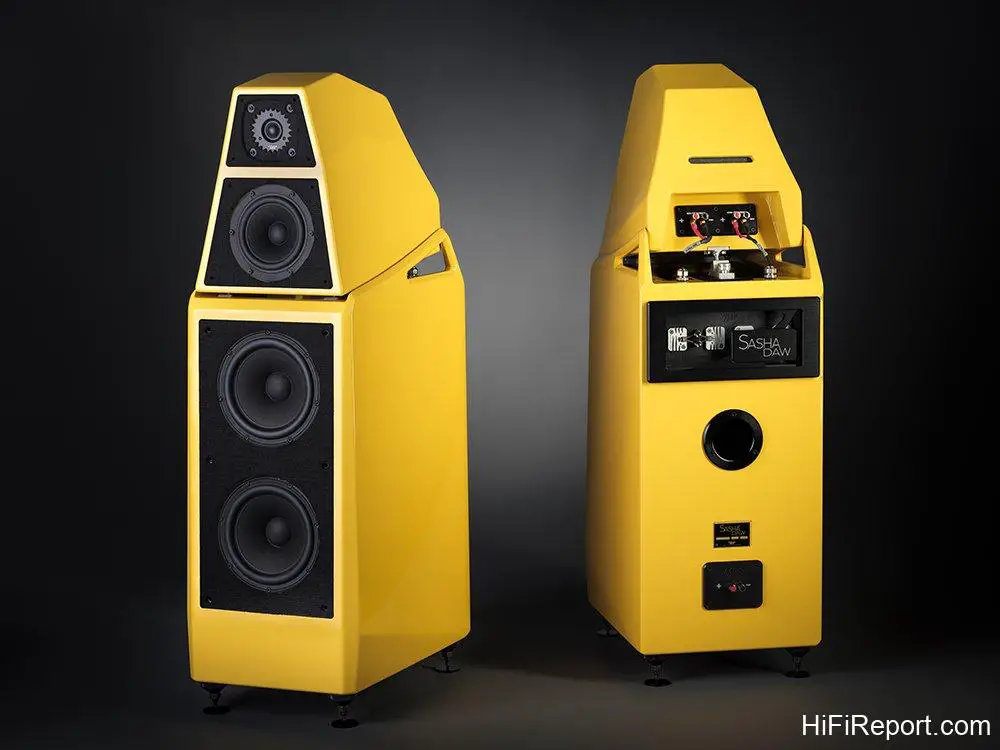
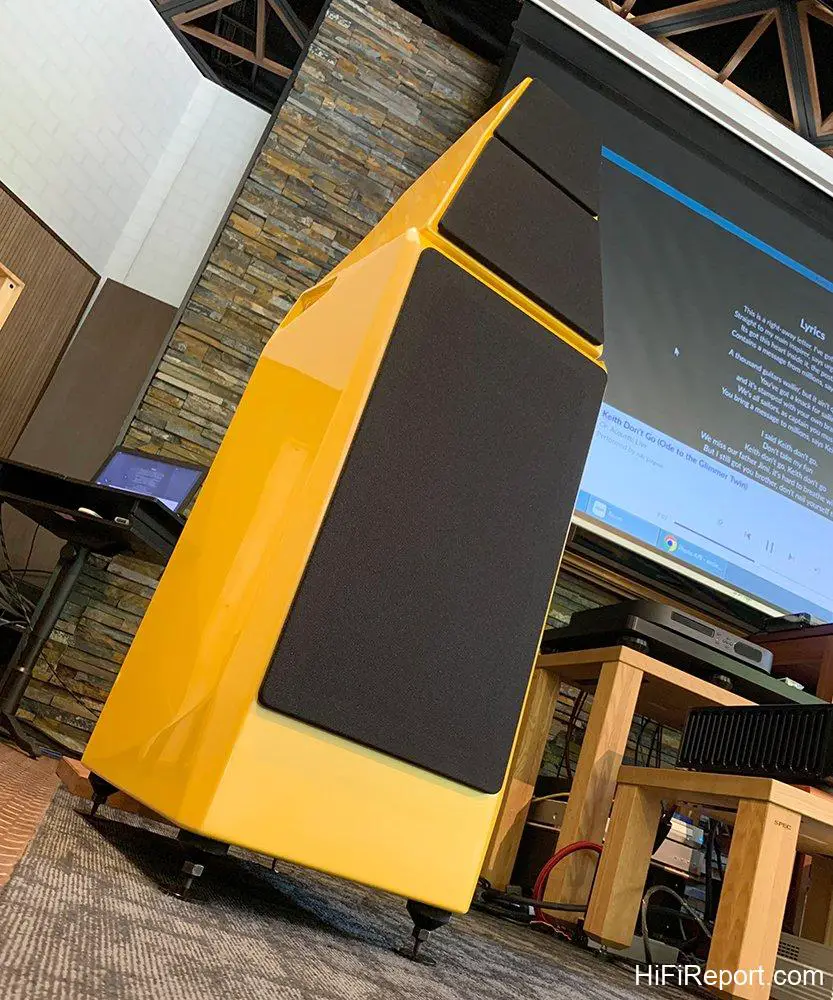
Squinting, I gazed at a pair of speakers in front of me, their color somewhere between yellow and not-quite-yellow, a glossy pearl finish in Saffron Pearl—a yellow with just a hint of orange.
These were the speakers for today’s music lecture—the Wilson Audio Sasha DAW.
Sasha DAW: Rooted in WATT/Puppy Heritage
The predecessor to these speakers is the renowned WATT/Puppy. After eight generations of upgrades, it was renamed Sasha, though in essence, it’s a continuous lineage.
Tracing back its origins, WATT/Puppy is arguably the product that best represents Wilson Audio’s founder, Dave Wilson.
In his early years, Dave was passionate about recording. To perfectly monitor his recordings, he designed the WAMM (Wilson Audio Modular Monitor).
However, the massive WAMM was only suitable for home listening and couldn’t be taken on location.
Once, after a recording session using two pairs of small monitor speakers he bought off the shelf, he returned home and played the recordings through his WAMM. He immediately realized the recording was flawed, and the monitor speakers he used on location had failed to reveal these issues.
This experience made Dave realize that to produce excellent recordings, he needed to design a monitor speaker that could rival the WAMM. This was the genesis of the WATT.
Later, many WATT owners sought to extend the bass response by adding subwoofers. Dave discovered that commercially available subwoofers couldn’t keep pace with the WATT’s speed. So, he embarked on developing a bass module with dual 8-inch woofers—the Puppy.
From then on, the name WATT/Puppy became widely known and has maintained its prestige for over 30 years.
In 2009, WATT/Puppy was renamed Sasha. In 2014, Sasha 2 was introduced. Following Dave Wilson’s passing in 2018, his son Daryl, to honor his father, commemorated Dave’s lifelong achievements with the WATT/Puppy and Sasha speakers. He named the new model Sasha DAW, using the initials of Dave’s full name, David Andrew Wilson.
This imbued the already storied and historically significant WATT/Puppy speakers with even more legendary status.
Third Encounter
I opened my MacBook and selected HiFiReport’s Core in Roon.
Mr. Chang had adopted Roon and subscribed to Tidal early on. For my lectures here, I simply share my Tidal playlist with him, and he adds the tracks to his library. On the day of the event, I can then access the playlist from his collection.
I played the tracks in order, checking the playback quality and volume levels, and also wanting to listen to the Sasha DAW’s performance.
My first encounter with them was at the Wilson Audio Sasha DAW launch event in 2018, when Daryl came to Taiwan for the presentation.
The second time was at the Munich High End Show the following year. I remember spending over 20 minutes in that demo room alone.
This was my third time.
Both previous listening experiences had left me with wonderful impressions.
For an audio enthusiast like myself, WATT/Puppy has always been a dream, a goal. And now, they were right in front of me.
Well-Defined Soundstage Layering
Being part of the Wilson Audio family, the Sasha DAW exhibits a slightly different character from the Alexia 2.
Compared to the Alexia 2’s spaciousness and grandeur, the Sasha DAW is more precise and transparent.
For instance, in the track “Dry Your Tears, Afrika” from the movie soundtrack “Amistad,” the opening female vocals are rich and resonant, with clear and natural cranial resonance.
As the vocals gradually fade, they are followed by African drums leading into rhythmic children’s choir singing, layered percussion, and orchestral accompaniment. The Sasha DAW clearly presents the well-defined layers of the soundstage.
Highlighting Instrumentation with Precise Imaging
Another example of rich and elaborate orchestration can be found in “Devil’s Dance” from the movie “The Witches of Eastwick” soundtrack. John Williams slightly rearranged the score to make it more suitable for concert performances, leading the Boston Pops Orchestra, which he had conducted for many years. This piece is a showcase of Williams’s orchestration prowess.
The main theme itself is not complex, yet it blends magical atmosphere with humorous charm. Because of its simplicity, each repetition of the theme undergoes variations.
Listening to each layer of change, the rich and varied instrumentation is full of interest and nuance.
The Sasha DAW’s layering, combined with precise localization and clear imaging, further highlights the brilliance of the orchestration.
Moreover, the instrument proportions reproduced by the Sasha DAW inspire confidence.
I wouldn’t dare to say it’s absolutely accurate, but with such realistic and immersive sound quality and proportions, I would say it possesses reliable reference quality.
Rich, Defined, and Solid Piano Tones
Mr. Chang’s speaker placement aims for a wider listening area rather than being limited to the sweet spot. The toe-in angle is not aggressive, and the speakers are spaced wide apart, yet the central image doesn’t feel hollow.
Switching back to “Devil’s Dance,” this time the Anne-Sophie Mutter solo violin version. John Williams extracted the main theme melody, entrusting it entirely to the violin. The development of the entire theme becomes even clearer.
The violin tone is solid, highly focused, and rich in detail. The texture and nuances of the bow and strings are distinct and clear. Various timbres are created through changes in bow pressure and angle.
Mutter’s playing is passionate and unrestrained; the dynamic undulations convey the musical expression.
From the window-side seating behind me, a mother and son were dining. The mother spoke, “Listen to this violin…” I didn’t catch the rest because the music just reached a dramatic climax.
However, I suspect this mother must be a music lover, and what she wanted to say was likely aligned with my own thoughts.
From the reflection on the Macbook screen, I vaguely saw the mother and son turn around, facing the speakers and listening intently.
As I changed tracks, the son got up and started talking to Mr. Chang.
They began chatting about audio equipment. This young man, around thirty years old, indicated in his conversation that he was also an audiophile. They discussed many things, and the man showed great interest in the various brands of equipment displayed at HiFiReport.
Later, Mr. Chang told me that this mother and son knew about the event but missed the registration. They had come all the way from [location omitted]. Although he was managing numbers due to the pandemic, he couldn’t turn away such dedicated customers.
And so, two more listeners joined the event that day.
Effortlessly Capturing Musical Dynamics
Beyond detail, imaging, proportion, and layering, the Sasha DAW’s dynamic performance is also outstanding.
For example, in “Adventures on Earth” from the movie “E.T. the Extra-Terrestrial,” the music blends several pieces from the latter part of the film. In the escape and flight sections, the music’s emotion progresses from tension and excitement to elation and wonder, finally reaching a safe place where the protagonist prepares to say goodbye to E.T. The tender farewell theme is sweet and warm, tinged with a sense of parting sorrow.
In the earlier escape and pursuit sections, the sharp sound of the piccolo evokes tension. The trumpet plays the main melody, while timpani and bass drums in the background suggest soundstage depth.
The flight theme is led by strings. The rich, dense strings, combined with the woodwind and brass responses, make you recall the wondrous aerial scenes.
Just as the music climbs to a high point, it suddenly plummets, and the music transitions to gentle quietness.
The dynamic shifts throughout are substantial, yet the Sasha DAW still clearly articulates the musical details, endowing each sound source with a clear and tangible presence, regardless of volume level.
When the English horn plays the farewell melody, the soft tremolo of the violins is simply beautiful! Finally, the spaceship appears, and the majestic grandeur returns with the brass leading the charge. Timpani adds weight to the music, and the piece concludes with a brilliant brass fanfare.
The dynamic undulations drive the emotional changes during listening. The ensemble capability of HiFiReport’s system is undeniable. Sasha DAW presented all of this, making it undeniably captivating.
Impeccable Pairing with Dan D’Agostino
While the Sasha DAW is undoubtedly impressive, the amplifier is equally crucial.
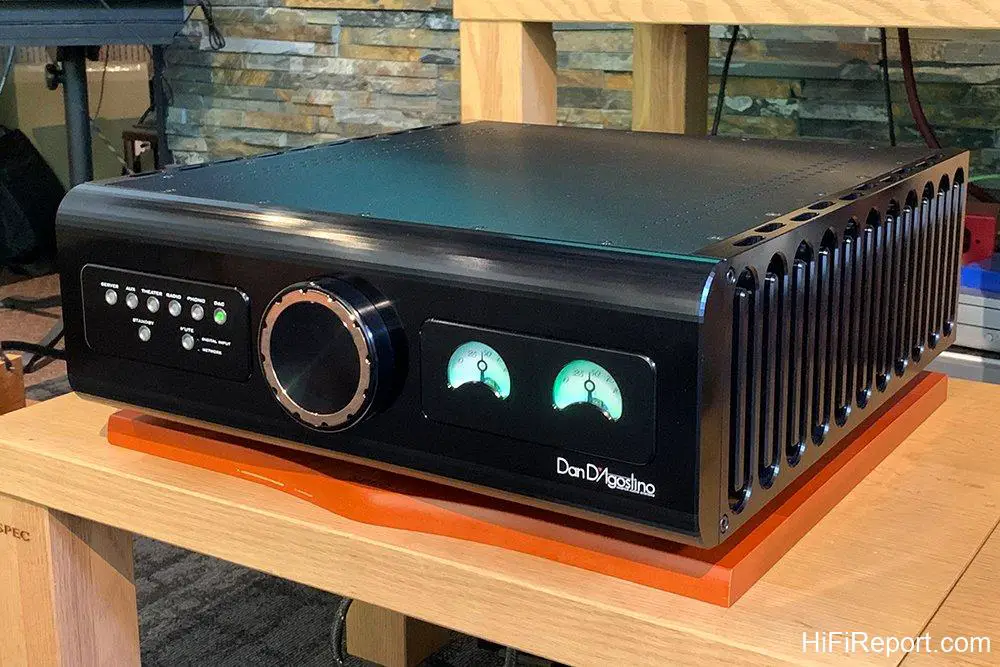
If the speakers are the orchestra, the amplifier is the conductor. Who is standing on the conductor’s podium for the Sasha DAW? Mr. Chang chose the Dan D’Agostino Progression Integrated amplifier.
Last April, when I lectured at HiFiReport, guiding listeners through Saint-Saëns’ “Symphony No. 3 ‘Organ’,” Mr. Chang used Wilson Audio Alexia 2 speakers, paired with the Dan D’Agostino Progression Pre/Stereo preamp and power amp combination.
I’ve lectured at HiFiReport numerous times, using various speakers, including the Alexia 2 on several occasions. Each system and pairing has its own characteristics, but when it comes to playing large-scale orchestral works, Dan D’Agostino driving Wilson Audio is always an impeccable match.
200W per Channel, High Current Output
This time, with Sasha DAW speakers and the Progression Integrated amplifier, the pairing remained comprehensive and flawless.
The Progression Integrated delivers 200W per channel into 8 ohms, and the power doubles as impedance halves. Even with significant speaker impedance variations, it remains unfazed. Dan D’Agostino consistently insists on amplifiers being able to handle speaker impedance changes and provide ample driving force when needed.
It employs 14 On Semiconductor transistors in total, the same as used in the Momentum HD series, and each one is measured and matched to ensure perfect waveform reproduction in addition to abundant power.
R2R Volume Control Preserves Dynamics
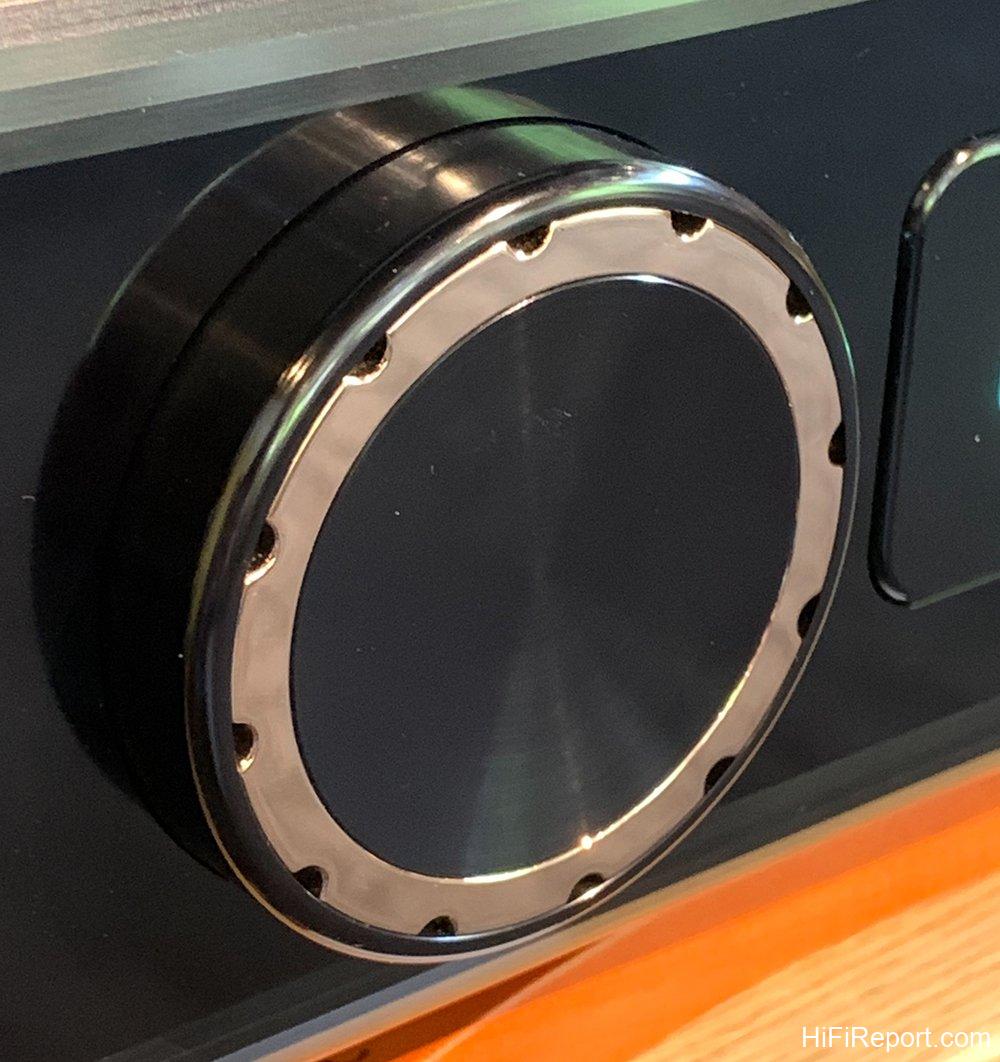
The volume control utilizes Dan D’Agostino’s signature R2R ladder resistor array, using relays for switching and voltage division.
The machined aluminum volume knob has a smooth feel, and the faint mechanical clicks are the sound of the relays operating.
The manufacturer emphasizes that this volume control design has one crucial objective: to not compress the music’s dynamics.
Optional Phono and DAC Modules
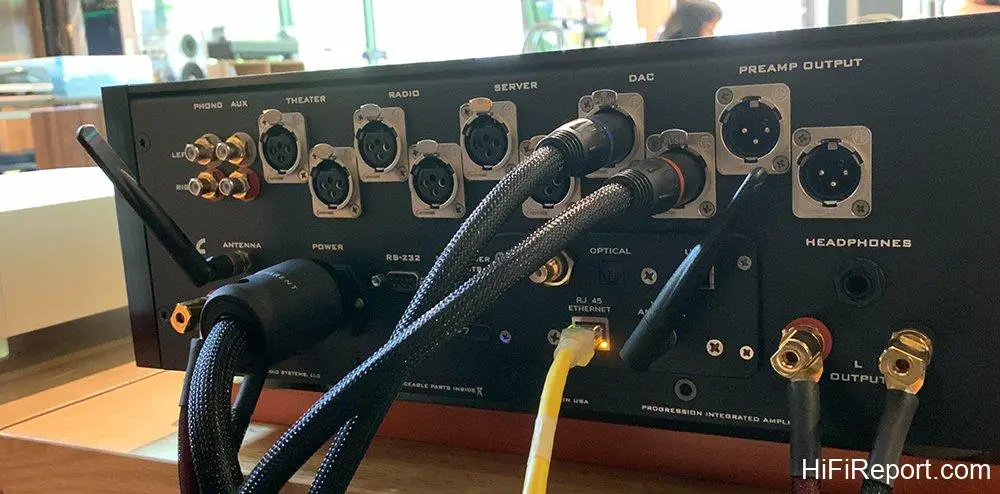
The Progression Integrated comes with four XLR balanced inputs, two RCA single-ended inputs, and one XLR preamp output for use with a separate power amplifier.
Furthermore, users can add optional modules to expand the Progression Integrated’s functionality.
DAC and phono stage modules are available as options. The DAC module includes optical, coaxial, USB (type B), Ethernet, and WiFi inputs. Network streaming supports Roon Ready.
The included remote control uses Bluetooth, eliminating the need for line-of-sight operation like traditional infrared remotes, making it easier to use.
If the DAC module is installed, downloading the Dan D’Agostino app on a smartphone enables streaming playback control and even allows the phone to function as an amplifier remote.
During my lecture, as tracks from different albums had varying volume levels, Mr. Chang conveniently adjusted the volume using his phone.

Composed and Controlled with Orchestral Crescendos
Driven by the Progression Integrated, the Sasha DAW displayed composure and control in “Devil’s Dance” and “Adventures on Earth.” In the more bombastic “Star Wars Main Title” and “The Imperial March,” its poised and measured performance fully explained why Dan D’Agostino and Wilson Audio are often mentioned together.
Listening to the spirited brass fanfare opening of the Star Wars theme, immediately followed by Luke’s theme—the Star Wars music we know so well.
Then the French horn call of the Rebel Fanfare, coupled with the march-like rhythm driven by timpani, leading into a more disciplined rendition of Luke’s theme.
When Leia’s theme appears, the cello sings softly, with woodwinds responding, a brief lyrical interlude before the heroic Luke’s theme returns.
In the tutti orchestral sections, the Progression Integrated appropriately drives the Sasha DAW, proceeding steadily and confidently. In tender, lyrical passages, it is equally capable of captivating and moving you.
Even more impressively, in the complex and rich ensemble passages, the system still clearly resolves the intricate details within the musical fabric.
Clarity Amidst Density
“The Imperial March,” on the other hand, showcases sonic thickness and texture.
After the presentation of the Imperial March’s motif representing Darth Vader, a development-like section follows, transitioning to a softer passage with flutes and violins playing rapid short phrases. After repeated layering, the French horn returns with Darth Vader’s motif – it’s still the Imperial March in disguise.
There is clarity amidst the density, and the realism and tangible presence of the flute are first-rate. These are qualities that are often missed even when sitting in the audience at a live performance.
Mid-High Module from WAMM
Speaking of which, we must revisit the Sasha DAW’s design.
Like the WATT/Puppy system, the Sasha DAW is divided into upper and lower modules.
The upper module is the pyramid-shaped mid-high frequency module, a design inherited from its predecessors. The lower module is the bass enclosure housing dual woofers.
The mid-high module uses a 1-inch silk dome tweeter and a 7-inch paper cone midrange driver. These two drivers are actually identical to those used in the WAMM, meaning the mid-high module can be considered a derivative of the WAMM.
From this, it’s clear that Daryl understands the design goals of his father when he created WATT/Puppy.
Larger Bass Enclosure than Sasha 2
The lower bass module houses two 8-inch woofers, inheriting the 8-inch woofers from the Alexia 2, which debuted in 2017. However, Wilson Audio didn’t simply transplant the drivers; they are slightly modified versions tailored to the Sasha DAW’s cabinet volume.
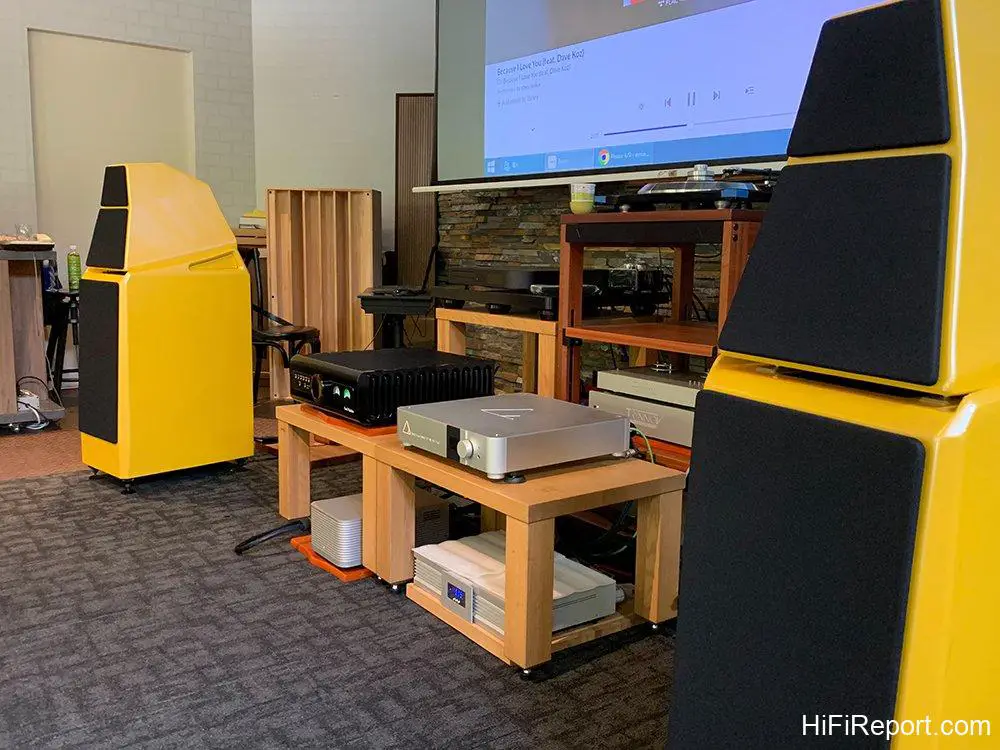
And the Sasha DAW’s cabinet is larger than the Sasha 2. The bass module volume is increased by 13.3%, and the mid-high module volume is increased by 10.2%.
The larger volume benefits dynamic performance, and the bass can extend deeper.
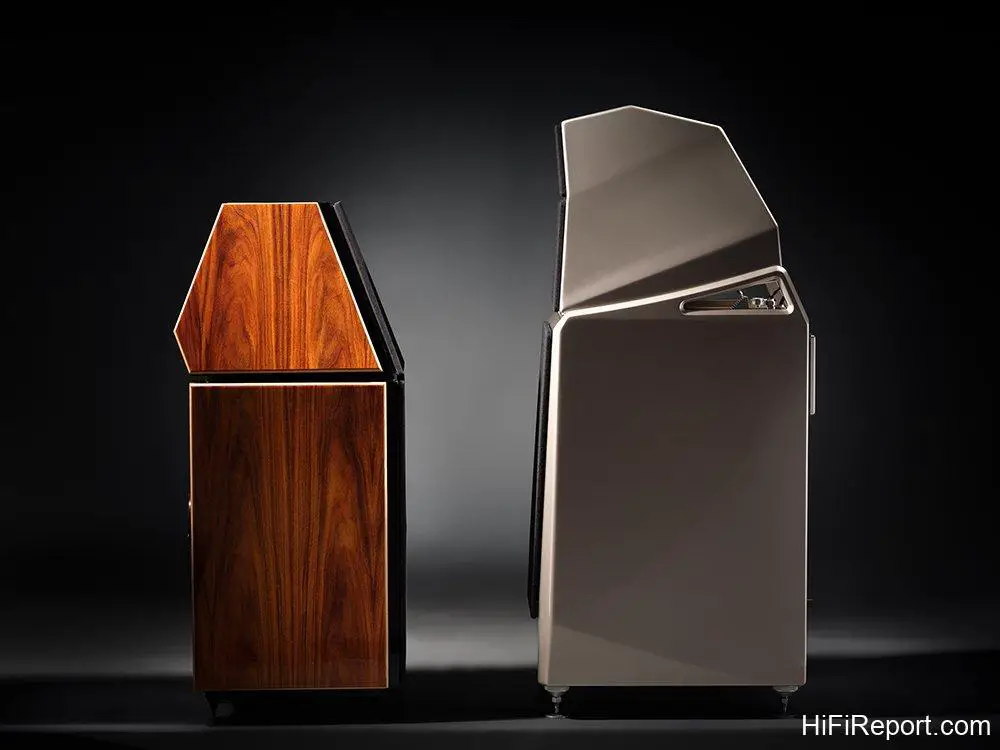
Composite Cabinet: X-Material and S-Material
Wilson Audio speaker cabinets, originally made of wood, later transitioned to composite materials.
In Dave’s vision of the ideal speaker, the cabinet should not introduce coloration and must control residual energy.
Sasha DAW not only uses Wilson Audio’s acclaimed X-material composite but also the newly developed S-material. The former is particularly advantageous for bass and treble, while the latter is more conducive to improving midrange accuracy and beauty.
On the Sasha DAW, there is a design element inherited from Dave’s last flagship masterpiece, the WAMM Master Chronosonic: triangular, razor-like openings on both sides of the bass module, near the mid-high module.
The manufacturer states that these openings help reduce airflow pressure between the two modules.
Adjustable Mid-High Module for Time Domain Accuracy
Furthermore, when discussing Wilson Audio, their emphasis on time domain accuracy is essential.
Dave was arguably one of the most time-phase-conscious speaker designers of his generation.
WAMM is, of course, an extreme design, and no other speaker in the world can match the time domain adjustment precision of the WAMM Master Chronosonic.
How is it achieved? Through modular design and adjustable angles.
The Sasha DAW’s mid-high module can be moved forward and backward and its tilt angle adjusted.
Users can fine-tune the mid-high module according to the listening position and speaker distance.
This design existed before, but Sasha DAW even angled the bass module backward to ensure smoother integration with the mid-high frequencies.
Lower Distortion, More Engaging Music
Returning to speaker design, from drivers and cabinets to phase alignment, the listening impressions mentioned earlier are all explained.
This is why Mutter’s violin sounds so tangible and detailed, so solid and focused, yet the high notes are exciting without being harsh.
This is why we can always hear clear layers and logic in complex orchestral ensembles, with a transparent sense of space.
Lower driver distortion, lower cabinet resonance distortion, and lower time domain distortion—resulting in captivating and engaging music.
Revealing Musical and Sonic Nuances
After the lecture concluded and the guests departed, I returned to my seat. Mr. Chang was nearby, and I asked him to recommend a few tracks.
The first track he played was Sara Bareilles’ live performance of Elton John’s “Goodbye Yellow Brick Road” from her live album.
The piano intro features the right hand playing fixed chords and the left hand playing a simple melody.
The piano was brightly and richly recorded, but lacked the mechanical texture of a real piano. The sound was somewhat monotonous, and I immediately recognized it as an electric piano.
Ah, no wonder WATT was originally designed by Dave for recording monitoring. Now in its umpteenth generation, revealing the nuances of various performances and recordings is effortless for Sasha DAW.
Sara Bareilles’ vocals sounded rounded, three-dimensional, and clear. As the song progressed, the dynamics of her singing and the electric piano playing widened, and the Sasha DAW demonstrated its ample headroom.
The sound was solid, with excellent density, yet completely devoid of harshness.
The song ended with Bareilles’ sustained notes, but unfortunately, the audience was eager to applaud, and I was still immersed in the song’s melancholic mood when I was startled by the sudden applause and cheers.
Excelling in Both Dynamic and Delicate Passages
Another female vocalist, also a talented singer-songwriter who accompanies herself, Katie Melua, sang “Perfect World” in a Bob Dylan-esque folk style while playing guitar.
The acoustic guitar tone was warm, with captivating resonance. When the second verse came in, piano, percussion, and female backing vocals joined.
The harmonies made the song sound gentler, percussion enhanced the rhythm and added weight, and the piano enriched the music’s brightness and melodic color.
The song is simple, the overall mood peaceful and soothing.
Good speakers should be versatile, handling both dynamic and delicate passages. Sasha DAW is just that—excelling in both bombastic and intimate musical moments.
Bass Extension that Shakes Your Core
There’s one more track I must share with you—”Undring” by harmonica player Sigmund Groven and organist Iver Kleive. This is from the Norwegian independent record label 2L, available in 24bit/352.8kHz MQA on Tidal.
This track is truly fascinating. The harmonica, so small and delicate, and the organ, so immense and powerful—the contrast is stark.
The harmonica focuses on the mid-high frequencies, showcasing the Sasha DAW’s upper module capabilities, while the organ, with its broad range extending deep into the low frequencies, tests the bass module’s extension.
The Sasha DAW rendered the harmonica with clarity and three-dimensionality, the reed sound texture incredibly realistic. The polyphonic notes blown through lip and tongue coordination were remarkably clear.
As for the organ, though taking a supporting role, its deep bass notes still resonated powerfully, especially in the passages where the harmonica ascends and the organ descends. The Sasha DAW fully demonstrated its ability to extend at both ends of the frequency spectrum.
Surpassing Expectations
Leaving HiFiReport and getting onto the highway, I encountered a few kilometers of congestion near Hukou, but it didn’t dampen my spirits at all.
Today, I heard the Sasha DAW, and the beautiful music it produced when paired with the Progression Integrated. A little traffic jam? So what? I entered the industry late and missed the chance to interview Dave himself. As for Daryl, who carries on his father’s legacy, I’ve met him twice.
Although I missed the WATT/Puppy era of market dominance, I have had three encounters with the Sasha DAW.
In interviews, Dave mentioned several principles guiding his speaker design: high resolution to hear more of the recording, low coloration, fast driver response, low cabinet residual energy, emphasis on micro-dynamic detail, and excellent soundstage performance to discern microphone placement in the recording space.
Today, I heard all these qualities in the Sasha DAW.
This speaker, designed by Daryl without his father’s presence, not only inherits all the traditions and aesthetics of Wilson Audio from the Dave era but also surpasses them.
Hail, David Andrew Wilson.
Hail, Sasha DAW.
Specifications
* **Wilson Audio Sasha DAW**
* Type: 4-driver, 3-way bass-reflex floorstanding speaker
* Drivers: 1-inch silk dome tweeter x1; 7-inch midrange x1; 8-inch woofer x2
* Frequency Response: 20 Hz – 30 kHz +/- 3 dB
* Sensitivity: 91dB
* Impedance: 4 ohms (minimum 2.48 ohms)
* Recommended Amplifier Power: 25W or more
* Dimensions: 1136.7 x 368.3 x 582.6 mm (HxWxD)
* Weight: 107.05 kg
* **Dan D’Agostino Progression Integrated**
* Output Power: 200 watts/8Ω, 400 watts/4Ω
* Frequency Response: 1 Hz – 80 kHz (-0.5dB); 20Hz – 20 kHz (±0.01 dB)
* Distortion: 0.15% @ 1 kHz (200 watts @ 8Ω)
* Signal-to-Noise Ratio: 95 dB
* Input Impedance: 100k Ohms
* Output Impedance: 0.1 Ohms
* Dimensions: 438 × 188 × 511 mm (WxHxD)
* Weight: 26 kg