
Wilson Audio TuneTot Bookshelf Speaker Review
This marks my third encounter with the Wilson Audio TuneTot, this time at HuaSheng Audio. The listening room was expansive, boasting considerable depth, easily accommodating large floor-standing speakers. Yet, here I was, about to audition the bookshelf-sized TuneTot in this grand space. Was it asking too much of a compact speaker? Not to worry – as a member of the Wilson Audio family, the TuneTot is built to perform, regardless of the challenge.
Munich Curiosity
My interest in the TuneTot, Wilson Audio’s latest entry-level speaker, sparked in Munich back in 2018 when I first saw it unveiled. Firstly, at the Munich High End Show, I only saw the speaker, without the opportunity to hear it. Secondly, Wilson Audio had incorporated their proprietary X-Material into the TuneTot’s construction, alongside the high-end Convergent Synergy Tweeter and the same 5.25-inch paper cone woofer found in the Sabrina. Essentially, Wilson Audio distilled much of their core technology into the TuneTot bookshelf speaker, making its sonic capabilities incredibly intriguing. So, when the first batch of TuneTots arrived in Taiwan and began appearing in audio dealerships, I kept a close watch. When Very Audio was among the first to post unboxing photos, I immediately contacted Mr. Su to arrange a preview, experiencing the TuneTot in a “nearfield listening” setup at Very Audio.
During the audition at Very Audio, the dedicated ISOBase was not available. Subsequently, I visited ZhanLe Audio, boldly placing the TuneTot “against the wall” and pairing it with the ISOBase for another listen. This time, the aim was to evaluate the TuneTot’s adaptability to more typical home placement scenarios.
Challenging Large Spaces
Having already listened to the TuneTot twice, what was the purpose of this third session at HuaSheng Audio? The answer lies in the title – to assess the TuneTot in a large space! Furthermore, I wanted to explore different equipment pairings to gain a deeper understanding of this new generation bookshelf speaker from Wilson Audio. After all, Wilson Audio’s reputation was initially built upon the WATT bookshelf speaker, and many years later, the TuneTot might represent another fresh start for the company.

The challenge of using small speakers in large rooms is familiar to audiophiles. The key is to pair them with amplifiers that offer ample power and excellent control, effectively “squeezing” the maximum energy out of the bookshelf speakers.
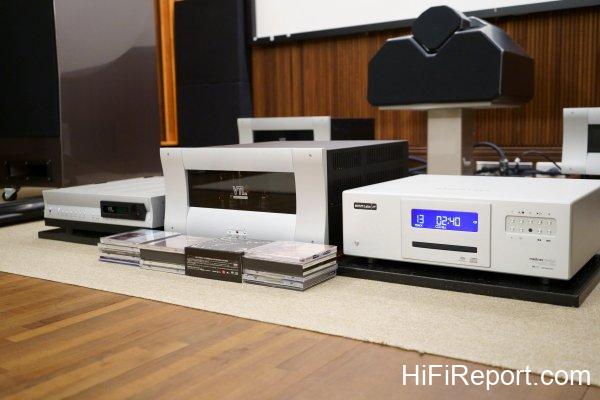
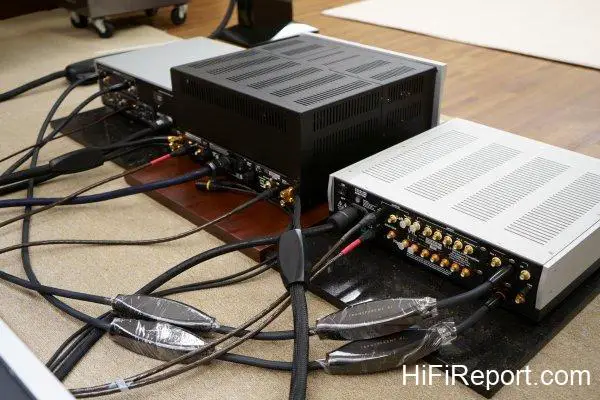
HuaSheng presented a system featuring the VTL TL 5.5 II preamplifier and S200 power amplifier, with the EmmLabs XDS1 SACD/CD player as the source, and a complete loom of Transparent cables.
I was already familiar with the sound of the VTL TL 5.5 II and S200, having used them with my Wilson Audio Sasha 2 speakers at home. The S200, with its substantial 200 watts of output power, is undoubtedly a high-power amplifier, signaling HuaSheng’s serious intent.
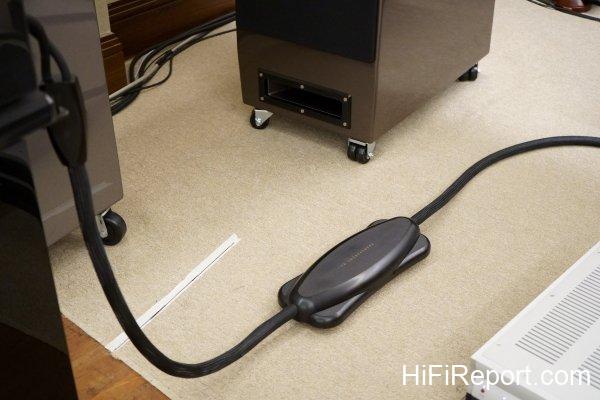
In reality, audio dealerships invest considerable effort in preparing for equipment auditions, even before media reviews. They carefully select system pairings and optimize speaker placement. This isn’t exclusive to media; it’s a standard service professional audio retailers offer to all their customers.
Ultimately, choosing audio equipment requires satisfactory listening experiences. Dealers naturally want to showcase their systems in the best possible light, allowing consumers to appreciate the true potential of the equipment and make informed comparisons and choices.
Therefore, scheduling audition appointments with audio dealers in advance is recommended, especially when you have specific equipment in mind. This allows them to prepare and present their best setup for your evaluation.

Bookshelf with High-End DNA
As this was my third encounter with the TuneTot, I will briefly reiterate its design highlights.
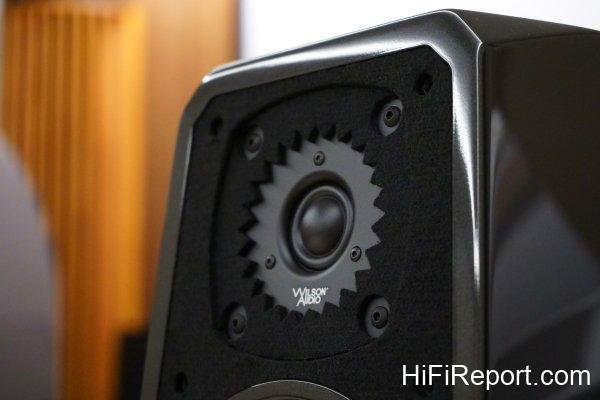
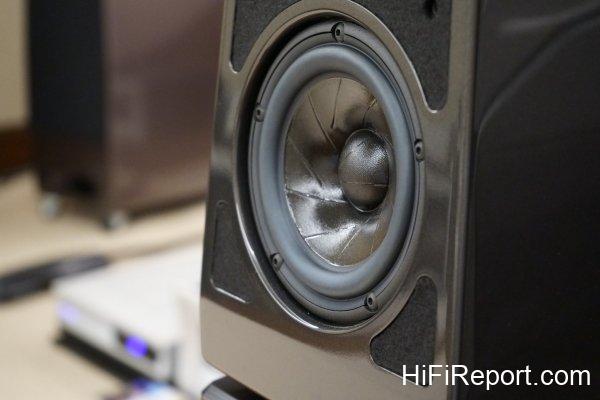
Despite being Wilson Audio’s entry-level bookshelf speaker, the TuneTot’s cabinet is entirely constructed from their proprietary X-Material, effectively minimizing cabinet resonance. The tweeter is the same CST (Convergent Synergy Tweeter) soft dome unit used in the flagship WAMM, and the mid-bass driver is borrowed from the Sabrina.
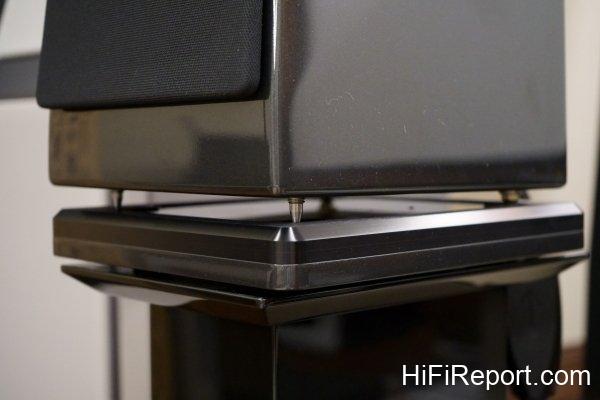
Reflecting Wilson Audio’s dedication to “time alignment,” the TuneTot allows for height adjustment via its four bottom spikes, enabling fine-tuning of the speaker’s vertical tilt and time-phase characteristics.
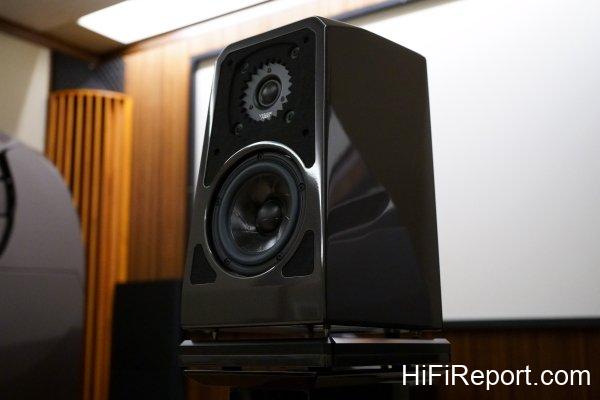
Wilson Audio also offers three optional accessories for the TuneTot, collectively known as the TuneTot Ecosystem: speaker grilles, mid-bass trim rings, and the ISOBase. These are available as extra-cost options.
The speaker grilles provide additional protection and dust prevention, while the trim rings are purely cosmetic, according to the manufacturer, with no impact on sound quality. These two accessories are therefore optional, based on your needs and preferences.
However, the ISOBase stands out for its technological sophistication. Constructed from a composite of X-Material and aluminum, it demonstrably affects sound quality. During my audition at ZhanLe Audio, the wall-placed TuneTot exhibited slightly bloated bass. Adding the ISOBase maintained the low-frequency extension but tightened up the imaging and focus. It is a performance-enhancing accessory, and whether it’s necessary is best determined through auditioning.

AMG-Inspired Aesthetics
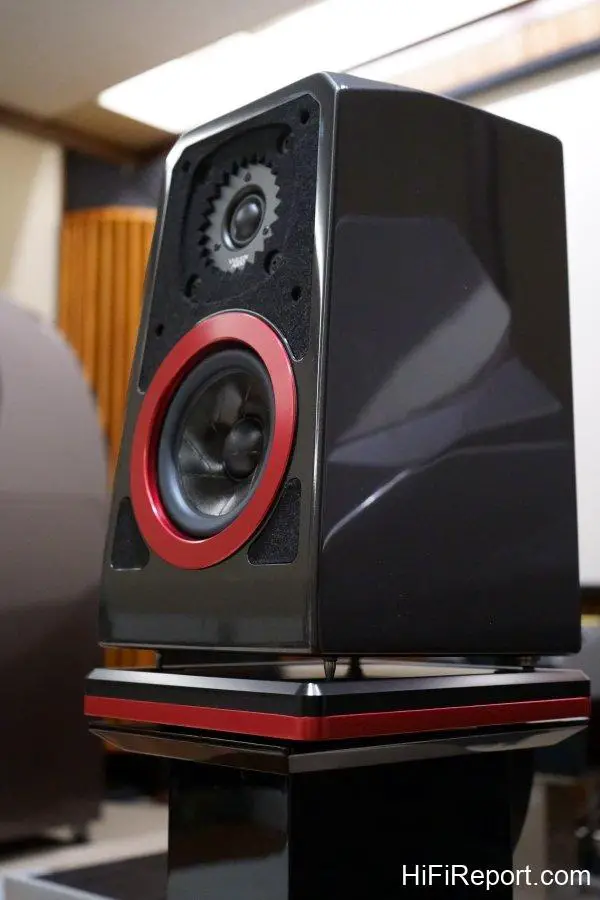
Regarding the TuneTot’s trim rings, a minor incident occurred before my visit to HuaSheng. I had already borrowed a pair of TuneTots, and the version I received was a vibrant red. While I was tempted to call it Ferrari red, Wilson Audio hadn’t officially used that term, likely to avoid trademark issues. I knew HuaSheng had a black version of the TuneTot prepared, with black trim rings. It occurred to me: what if I paired the red trim rings with the black TuneTot? So, before heading out, I brought the red trim rings along. Surprisingly, the red and black contrast was remarkably striking. I remarked to HuaSheng’s manager, Mr. Lin, “This is essentially an AMG color scheme. For your customers who drive AMGs, this combination is a guaranteed match.”
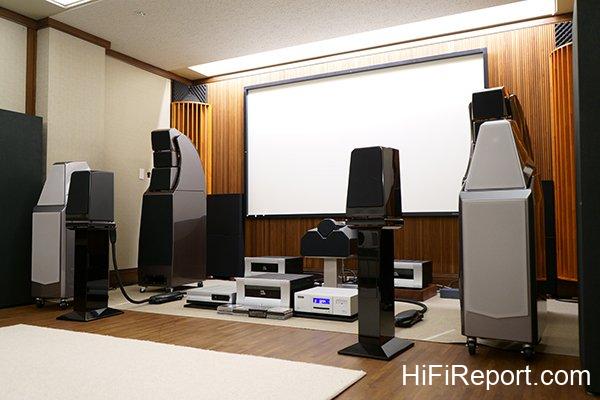
Furthermore, in HuaSheng’s listening room, I noticed three pairs of Wilson Audio speakers simultaneously. The Alexx stood guard in the rear corner, the Sasha 2 occupied the middle ground, and the TuneTot was positioned in the prime listening spot. What would happen if these three generations went head-to-head? I became incredibly curious, even considering suggesting a musical demonstration event to HuaSheng. I could present a couple of classical masterpieces, familiarizing the audience with the pieces, followed by listening sessions with each speaker in turn, allowing for in-depth exploration of their sonic capabilities.
It would be akin to preparing three AMG vehicles – an A45, C43, and E43 – for back-to-back test drives. Each model, representing a different class, would undoubtedly offer a distinct driving experience, yet each AMG would promise driving pleasure. My idea of auditioning three Wilson Audio speakers in the same space stemmed from a similar concept. However, planning such an event would require careful consideration. Should we use the same amplifier for all three, or pair each with its ideal amplification? And if all speakers are to be placed in the optimal position, the equipment swapping alone would be time-consuming. Furthermore, the best listening position is in the center row – should we arrange for rotating listening positions? These are all logistical details that need careful thought. I need to ponder this “Wilson Audio Triple Threat” idea further to see if it’s feasible.
Unexpected Bass Depth
“Blue Coast Collection”… I was getting sidetracked. Time to refocus and properly listen to the TuneTot! Driven by the high-power VTL amplification, handling the large space shouldn’t be a problem. I selected the “Blue Coast Collection” compilation, starting with “Looking For Home.” This track features a male vocal duet with two guitars, a seemingly simple arrangement, yet it contains subtle low-frequency details, such as the singers’ foot taps on the stage. This served as a light warm-up for the TuneTot. Despite HuaSheng’s spacious listening environment, the TuneTot clearly reproduced the thumping sounds of footsteps on the floor. The bass was full and rounded, contrasting beautifully with the crisp guitars and sincere, resonant vocals, creating a rich sense of recording venue ambience.
The TuneTot possesses a rich and dense midrange, lending substantial body to the male vocals. Under the forceful drive of the S200, the speakers seemed to vanish into the space, creating a wide and deep soundstage extending beyond the speakers.
Next, I switched to the Three Blind Mice “The Super Extended Resolution Sound of TBM” compilation. Three Blind Mice recordings are known for their close-miked, multi-microphone techniques, resulting in particularly large sonic images. I started with the first track, “Star Dust.” The TuneTot reproduced an expansive piano image, capturing the nuances of the key strikes and the beautiful shimmering tone, along with the subtle mechanical sounds of the piano pedals. When the jazz ensemble joined in, the loose and expansive images of the drums and double bass exceeded my expectations for the TuneTot’s size.
Triode Mode Sweetness
Listening to the Three Blind Mice “The Super Extended Resolution Sound of TBM” compilation, I began to pay attention to the TL 5.5 II preamplifier’s volume setting. Repeatedly listening to “Star Dust,” I found that volume levels between 10 and 15 were suitable for background music, providing a gentle, soft sound with decent detail in the mid and high frequencies, albeit with less bass presence.
For comfortable listening, a volume setting of around 25 was ideal. At this level, the bass fullness emerged, and the soundstage became more expansive and deep.
Pushing the volume to 30 increased the loudness and bass fullness further, but pushing it higher started to introduce a sense of strain, losing some of the relaxed feel of jazz.
However, based on my previous TuneTot experiences, I knew these speakers were robust. The TL 5.5 II, at a volume of 30, was clearly not being pushed even halfway to its limit. Why was there a sense of strain at higher volumes? Then I recalled the VTL S200’s unique feature: switchable triode and tetrode operating modes. It was time to explore the sonic differences of these two modes with the TuneTot. I switched to the fourth track, “Misty,” which begins with a powerful piano attack, followed by softer passages, creating significant dynamic contrast. Listening in tetrode mode, with the TL 5.5 II volume at 30, the piano was at its fullest and most impactful, but pushing the volume further started to sound strained.
Switching to triode mode, a volume of 30 became too soft. I increased it to 40, which produced a similar loudness to the tetrode mode at 30. However, the piano now sounded sweeter and smoother, with a warmer tonal palette. As the drums and double bass entered, the bass became more prominent and softer in texture compared to tetrode mode. I realized I was on the right track: for raw power and explosiveness, the S200 in tetrode mode, driving the TuneTot hard, was the way to go. But for a sweeter, more delicate musicality, triode mode was definitely the preferred choice.
Switching between triode and tetrode modes on the S200 is straightforward, simply pressing a button on the rear panel. However, the amplifier circuitry switching does require a brief waiting period.
The S200’s front panel features three indicator lights. A red light on the left indicates triode mode, while a blue light signifies tetrode mode.
Bass String Plucks with Q
Having switched to triode mode, I next selected Rebecca Pidgeon’s “The Raven” album, specifically the audiophile favorite, “Spanish Harlem.”
The track opens with a robust double bass pizzicato. In triode mode, the S200’s output power is halved, but the resulting 100 watts was still more than sufficient to drive the TuneTot. Maintaining a volume of 40, the double bass laid a solid foundation, while Rebecca Pidgeon’s sweet vocals filled HuaSheng’s spacious listening room. The speakers effortlessly disappeared into the space.

The excellent speaker setup and placement were not my achievement, but the result of HuaSheng’s meticulous pre-session preparations.
I increased the volume slightly to 45, savoring the “Spanish Harlem” with its bouncy, elastic bass lines. Despite the TuneTot being a bookshelf speaker, its mid-bass region possessed a rich coloration, adding a substantial foundation. The S200 in triode mode allowed for confidently pushing the volume higher, reproducing large and realistic instrument images while adding to the lively and engaging atmosphere of the jazz performance.
Precise Soundstage Imaging
Next, I shifted gears to classical music, selecting the Mozart Piano Trios performed by Pires, Dumay, and Wang Jian, still using the S200 in triode mode.
Starting with the first movement of K. 502, this recording boasts excellent soundstage presentation. The piano trio instrumentation – piano, violin, and cello – places the piano broadly in the center, the violin slightly to the left, and the cello to the right. On a well-tuned system, the relative positions of these three instruments are clearly discernible.
HuaSheng’s large space allowed the soundstage to expand naturally, creating a spacious soundfield behind the TuneTot. The three instruments engaged in a lively interplay, with the piano sounding transparent and expansive, the violin exhibiting a bright tone, and the cello responding with a rich and sweet timbre. The overall tonal character was both rich and sweet. Lost in Mozart’s cheerful melodies, I closed my eyes, imagining the three musicians performing in the recording studio.
Romantic Chopin
Pires’ recording of Chopin’s Piano Concerto No. 2. Pires has long been a favorite pianist of mine. I particularly enjoy her Mozart interpretations. Perhaps only Haebler’s Mozart performances surpass Pires in my estimation.
Continuing with Pires, I switched to the romantic Chopin Piano Concerto No. 2, listening to the slow movement.
Concertos demand a larger scale, so I increased the volume further, still in S200’s triode mode, to level 45. The opening orchestral strings and woodwinds had barely begun when I felt the volume could still be increased.
I paused the CD and pushed the TL 5.5 II preamplifier volume to 50. The TuneTot’s low-frequency strings became fuller and rounder, and the woodwinds sounded even clearer. I listened intently, awaiting the piano’s entry.
The slow movement of Chopin’s Piano Concerto No. 2 has a story behind it. Chopin, then under twenty, was a student at the conservatory and had a crush on a female vocal student in his class. Too shy to express his feelings, Chopin confided in classmates that the half-year of unrequited longing was poured into the slow movement.
Before Pires transitions from the introduction to the main theme, at a critical point of melodic connection, she introduces a very brief pause in the piano sound, as if representing Chopin’s hesitant heart, before launching into the poignant theme.
On the TuneTot, played at a sufficient volume, this fleeting piano note break was beautifully rendered. Upon entering the main theme, the TuneTot conveyed the piano’s bright tonality. When the theme repeated for the second time, raised an octave, the piano arpeggios cascaded like pearls rolling on a jade plate. The crystalline clarity of the upper-midrange and high frequencies enhanced the romantic sentiment of Chopin’s music.
Dynamic Tchaikovsky
The tender Chopin highlighted the TuneTot’s beautiful midrange and high-frequency reproduction. The CST tweeter delivered a lovely high end, with rounded, lingering decays. Even pushed to higher volumes, it remained refined and smooth, never exhibiting harshness or aggression.
Next, I moved to a more challenging piece: Lang Lang’s performance of Tchaikovsky’s Piano Concerto No. 1, with Barenboim conducting the Chicago Symphony Orchestra, directly jumping to the lively third movement, Allegro con fuoco.
The timpani’s opening statement did not disappoint the TuneTot. The timpani’s position was slightly recessed, creating a sense of soundstage depth. The piano protagonist entered, positioned slightly forward, with clear note articulation and distinct dynamic gradations in the key strikes. The orchestra’s enthusiastic response to the piano’s energy was also convincingly rendered.
As an Alexia 2 owner, I know that larger Wilson Audio speakers would naturally deliver greater scale and dynamics. However, in HuaSheng’s large space, the TuneTot’s ability to reproduce orchestral dynamics in Tchaikovsky’s Piano Concerto No. 1 surpassed expectations – truly impressive!
Tetrode Unleashes Dynamics
Finally, I selected Reference Recordings’ “Tutti!” to test the TuneTot’s limits. I had already pushed the TL 5.5 II volume to 50. However, RR recordings typically have a lower recording level, about 6dB less than most CDs, allowing for further volume increase. I started Rimsky-Korsakov’s “Dance of the Tumblers,” gradually increasing the volume to assess the TuneTot’s capabilities.
From 50 to 55, it was still fine. Pushing it a bit more, to 60, the TuneTot held its composure. I restarted the track from the beginning. The TuneTot’s power was remarkable. The speakers vanished into the space, and the strings unleashed dense melodic layers. At the climax, the rapid strikes of the triangle resonated brightly, the TuneTot’s clear triangle sound interacting dynamically with the orchestra’s fortissimo passages. Even at high volumes, the TuneTot did not falter.
At this point, the S200 power amplifier was still in triode mode. For the final test, I switched to tetrode mode, unleashing the full 200 watts to drive the TuneTot.
A volume setting of 60 was now too much, exceeding the limit. Reducing it to 52 and restarting, it was perfect. In tetrode mode, the TuneTot’s bass became more robust, with improved density. With the amplifier operating at full power, the speaker control was enhanced, and the high frequencies became even more brilliant.
Listening to the TuneTot with the S200 in both operating modes was like switching driving modes in a car between “Comfort” and “Sport.” The S200 in triode mode revealed the TuneTot’s comfortable sweetness, while tetrode mode transformed the TuneTot into a dynamic powerhouse. Which sonic character you prefer is a matter of personal taste.
Varied Pairings, Varied Pleasures
From the Gryphon pairing at Very Audio, to the full Nagra system at ZhanLe Audio, and now the VTL pre-power combination at HuaSheng, all three systems drove the TuneTot excellently, each with slightly different sonic nuances and strengths. Gryphon offered solidity and stability, Nagra presented clarity and sweetness, and VTL provided the flexibility of switchable triode and tetrode modes, offering choices to suit different preferences.
The TuneTot, while remaining the same speaker, revealed different facets of its character when paired with different equipment. However, in all three instances, the amplifiers were considerably more expensive than the TuneTot itself! Are there more price-appropriate pairings? Yes, indeed. The TuneTot I borrowed for home listening was paired with the VTL IT-85 integrated amplifier, with both components being in a similar price range. How did that sound? Stay tuned for the next installment.
Specifications
* Type: Bass reflex bookshelf speaker
* Drivers: 1 x 1-inch soft dome tweeter, 1 x 5.75-inch paper cone mid-bass driver
* Sensitivity: 86 dB
* Impedance: 8 ohms (minimum 6.61 ohms @ 172Hz)
* Frequency Response: 65 Hz – 23 kHz
* Dimensions: 37.67 × 21.87 × 25.88 mm (H×W×D)
* Weight: 13.15 kg (per channel)