
AIM NA2 Network Cable Review
At AIM, a renowned Japanese cable manufacturer, the pursuit of exceptional audio cables is rooted in over four decades of professional expertise. Their approach is simple yet rigorous: start with measured specifications, tirelessly prototype, listen, adjust, and repeat. This iterative process of creation and critical listening is the bedrock of AIM’s philosophy, ensuring every cable delivers outstanding sound quality.
I previously reviewed AIM’s flagship network cable, the NA9, and was thoroughly impressed. This time, I’m putting their entry-level offering, the NA2, to the test. The verdict? If budget is no concern, the NA9 remains an exceptional choice. However, for the more cost-conscious audiophile, the NA2 provides incredible value and a taste of high-end performance.
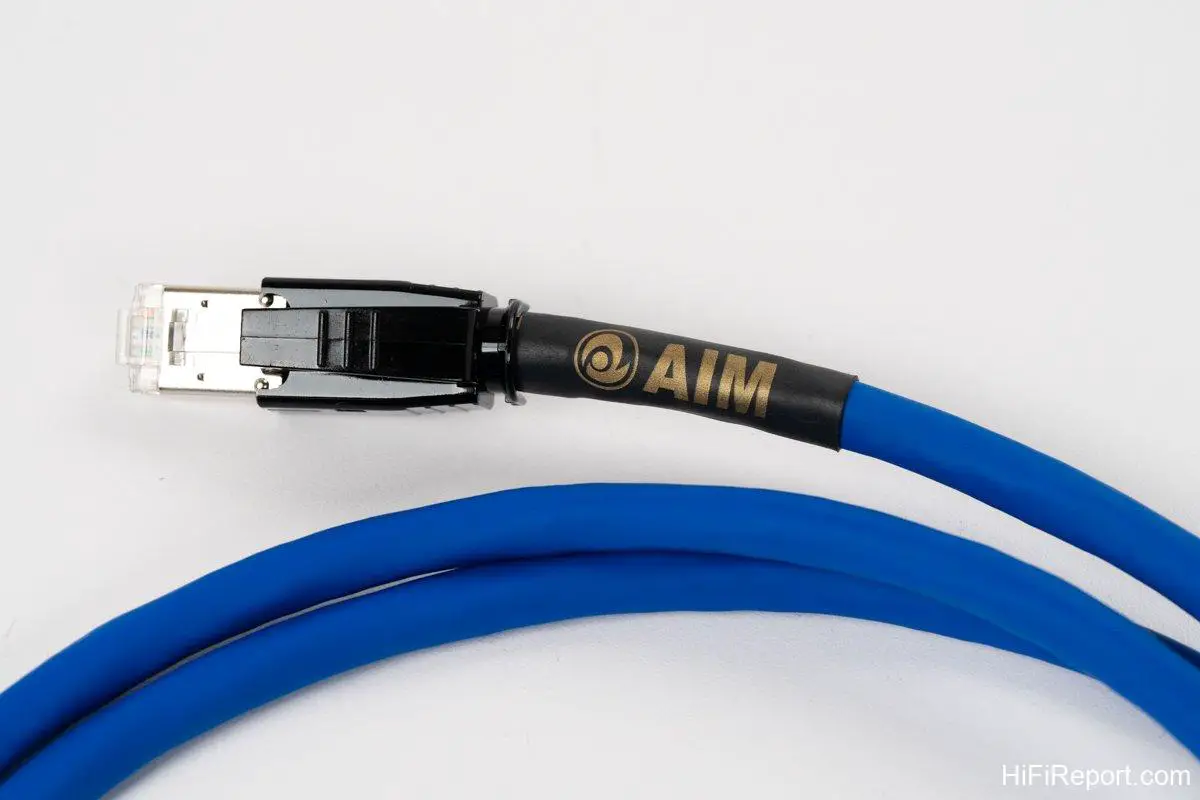
Japanese Craftsmanship
AIM’s current lineup of network cables includes three models: NA9, NA6, and NA2, with the model number reflecting their hierarchy. As the entry-level option, the NA2 is significantly more affordable than the flagship NA9, costing roughly one-tenth of its price. This price difference stems from cost considerations. The NA2 foregoes AIM’s signature multi-layered “Hoplon” shielding structure and Telegartner RJ45 connectors. Instead, it adopts a design approach more commonly found in professional-grade commercial network cables.
However, dismissing the NA2 as merely another high-end network cable would be a mistake. Its build quality is exceptional. Like its higher-end siblings, the NA2 is meticulously handcrafted at AIM’s factory in Kanagawa, Japan, by experienced technicians. Each cable undergoes rigorous testing before leaving the factory, setting it apart from mass-produced commercial network cables.
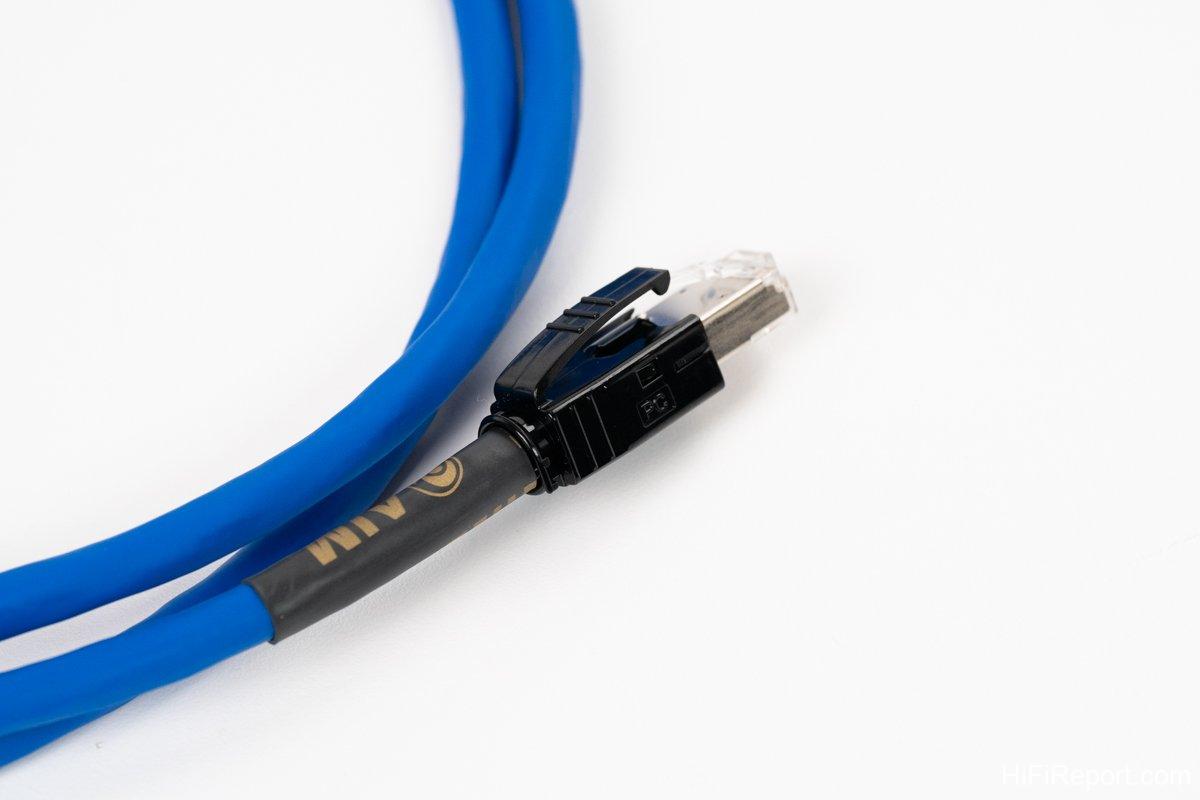
Dual-Layer Shielding
Consistent with AIM’s cable design philosophy, the NA2 utilizes high-purity oxygen-free copper (OFC) for its conductors. Inside the NA2, eight 24AWG solid-core OFC conductors are employed instead of stranded wire. This construction contributes to a slightly stiffer cable despite its moderate overall diameter. These eight solid-core conductors are arranged in four twisted pairs, separated and maintained at a precise distance by a central cross-shaped spine. This design prevents crosstalk and ensures optimal signal integrity.
Shielding is crucial for network cable performance, and the NA2 employs a dual-layer approach. First, a layer of aluminum foil is applied, followed by a dense copper braid. This combination of shielding layers effectively isolates the signal from external interference.
For the RJ45 connector, the NA2 uses a transparent polycarbonate crystal head with nickel-plated copper shielding inside. This provides a degree of shielding at the connector point. The connector’s tail end features an injection-molded plastic housing that appears robust and durable.
Immediate Sonic Improvement
The listening evaluation took place in my home setup. The source was an Audiolab 9000N streaming player, connected to a newly released Diva Audio EX-7 Mini network switch. The NA2 was inserted between the 9000N and the EX-7 Mini, with a Linkom Cat.8 network cable serving as a reference for comparison. Other components in the system included a Holo Audio Serene preamplifier, a NuPrime Evolution STA stereo power amplifier, and Aurum Cantus Grand Harmony speakers.
I began with Anne Bisson’s “Hoping Love Will Last” from her “Blue Mind” album. This is a gentle, lyrical ballad that opens with delicate piano chords, later joined by pizzicato double bass and drums. Comparing the two cables, the superior sound of the NA2 was immediately apparent from the very first piano note. The NA2 noticeably improved the piano’s high-frequency extension, lending a more ethereal quality to the timbre. The reverberation was richer, creating a more expansive sense of space, and the overall sonic texture was more refined, delicate, and of higher quality.
Furthermore, the NA2 seemed to reach deeper into the lower frequencies, enhancing the solidity of the soundstage’s foundation. This could also be attributed to the quieter, cleaner background, and lower noise floor achieved with the NA2, making the low frequencies feel more profound. The cleaner sonic backdrop also enhanced dynamic contrasts. Subtle nuances became more pronounced, resulting in improved micro-dynamics even in quieter passages.
In comparison, the reference cable presented a somewhat looser sonic image. Piano notes lacked precise definition, and the tonal texture sounded slightly veiled and less transparent. The bass also appeared less focused. The difference between the two cables was quite significant.
Refined Texture
Next, I evaluated the NA2’s performance with string instruments, selecting Mutter’s rendition of Mozart’s Piano Trio No. 6, second movement, “Andante cantabile.” As anticipated, the difference was once again striking. The NA2 not only sharpened the violin’s melodic lines, making them clearer and more distinct, but also significantly reduced any sense of harshness around the edges. This resulted in a sound that was both finer and smoother. In essence, the NA2 delivered a more refined texture and a higher sense of quality.
The piano trio also features a cello. Through the NA2, the cello’s sound became warmer and richer. This was due to an enhanced resonance of the instrument’s body, often described as “nasality,” which became more pronounced. This added sweetness and richness to the tone, making it inherently more pleasing to the ear. While the reference cable didn’t sound unpleasant with this piece, the A/B comparison revealed that it rendered the sound somewhat looser, with less focus and a flatter soundstage. The texture was also grainier, and the separation between the three instruments was less defined, prompting an immediate desire to switch back to the NA2.
How about large-scale orchestral works? For this, I chose RR’s “HDCD Sampler” compilation, featuring both symphonic and choral pieces. The primary distinction between the two cables in this context was soundstage presentation. The reference cable produced a wider but shallower soundstage, creating a sense of spaciousness and openness. The NA2, on the other hand, offered a more focused and deeper soundstage, with a clearer delineation of width and height.
The NA2 also exhibited several other advantages. The individual instrumental sections were more clearly defined in shape and position, resulting in improved separation and front-to-back layering. The bass drum’s placement was more precise, its form more compact and defined, enhancing clarity and focus. This subtly accentuated transients and dynamics, injecting greater vitality and impact into the music.
Similarly, in Li Zongsheng’s “Rationality and Sensibility Works Concert” live album, elements like the drum sounds, electric bass notes, and vocal images were rendered with greater focus and clarity by the NA2. The dynamics were more pronounced, and the enhanced transparency made the sound more direct, natural, and lifelike. This, in turn, heightened the sense of realism and conveyed the energetic atmosphere of a live concert more convincingly.
Just Buy It
Having auditioned numerous so-called “audiophile-grade” network cables, I’ve encountered some very expensive options that deliver commensurate improvements, justifying their price. Others offer decent enhancements but at a less compelling price-to-performance ratio. The NA2, however, stands out as one of the most affordable cables in this category, yet delivers a surprisingly significant upgrade. Its value proposition is exceptional.
My recommendation for the NA2 is straightforward: don’t overthink it. (In fact, at this price point, the decision is hardly difficult). Just buy it.
Specifications
* Type: RJ45 Network Cable
* Conductor: Solid-core OFC, 24AWG x 8
* Shielding: Aluminum Foil, Copper Braid
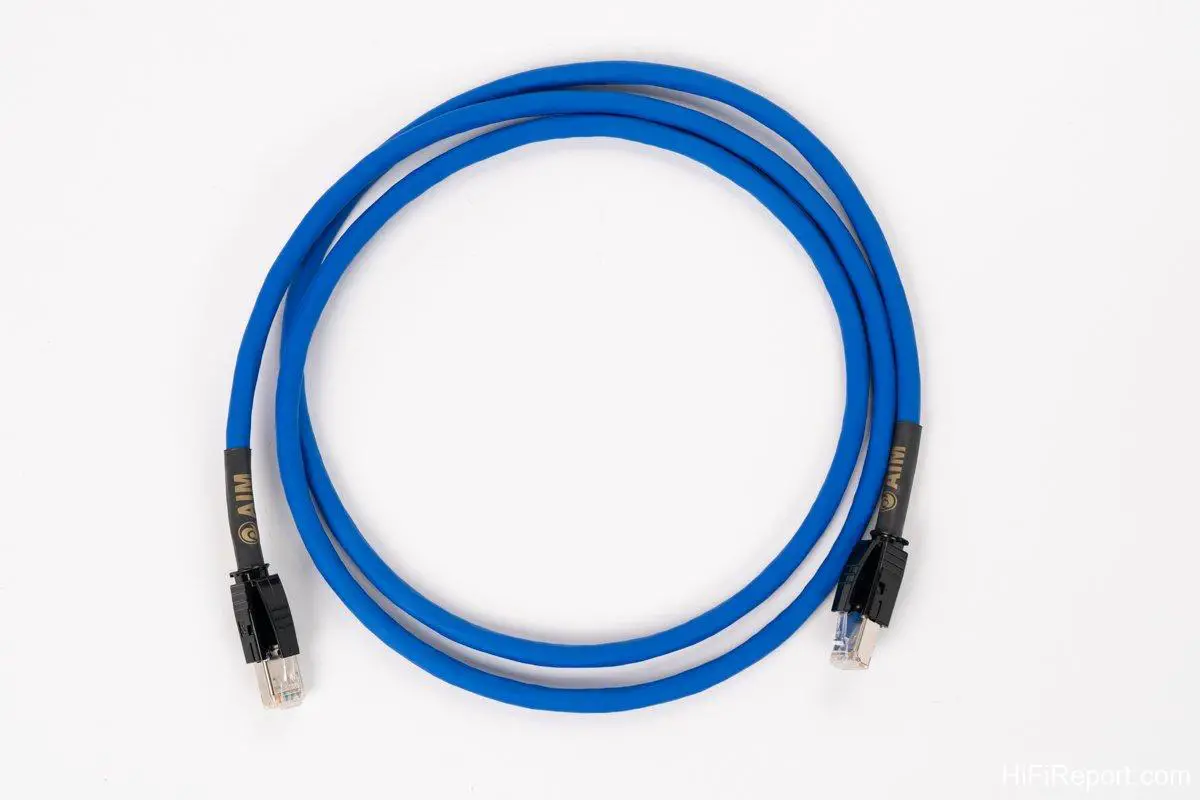
* Cable Diameter: 7.1 mm