
Airpulse P100X All-in-One Audio System Review
Do you possess an old soul? Are you drawn to vintage items? Do you find yourself seeking the echoes of time within aged objects, buildings, and streets? Do you appreciate the palpable, direct, and humanistic texture and style that vintage items exude? If so, the Airpulse P100X speaks your language.
Airpulse: A Collaboration with Phil Jones
The founder of Airpulse, Zhang Wendong, is also the chairman of Edifier. His vision is to make high-quality audio accessible to every household, ensuring affordability for all. After achieving success with Edifier active speakers, he connected with Phil Jones, the legendary designer behind the classic Acoustic Energy AE1 bookshelf speaker. Sharing a common philosophy, they forged a partnership, giving birth to the Airpulse brand.
(For more on the Airpulse brand story, presidential interviews, and factory tours, please refer to the series of reports written by Lin Zhiyu, listed at the end of this article.)
Unrivaled Vertical Integration
Airpulse boasts an impressive level of in-house manufacturing, setting it apart from many competitors. With the exception of the passive 7001 and Silver Reference 1 models, designed for traditional two-channel systems with separate amplifiers, the entire Airpulse lineup consists of active speakers.
Compared to other brands in the same market segment, Airpulse’s high degree of vertical integration is a distinct advantage. They handle their own design, research and development, manufacturing, and assembly. While they state that the drivers are not manufactured in-house, in reality, their driver production is virtually self-made.
Their definition of “not self-made” refers to sourcing individual components. They procure diaphragms, surrounds, spiders, voice coils, frames, T-yokes, washers, magnets, and other parts according to their specifications and assemble these components into complete drivers within their own factory. So, are their drivers outsourced, or are they self-made? Furthermore, the speaker cabinets are, of course, manufactured in-house, and even the circuit boards required for their active speakers are designed and produced internally. This level of vertical integration is simply unmatched by many trendy, brand-name audio products on the market.
Retro Aesthetics and Exquisite Craftsmanship
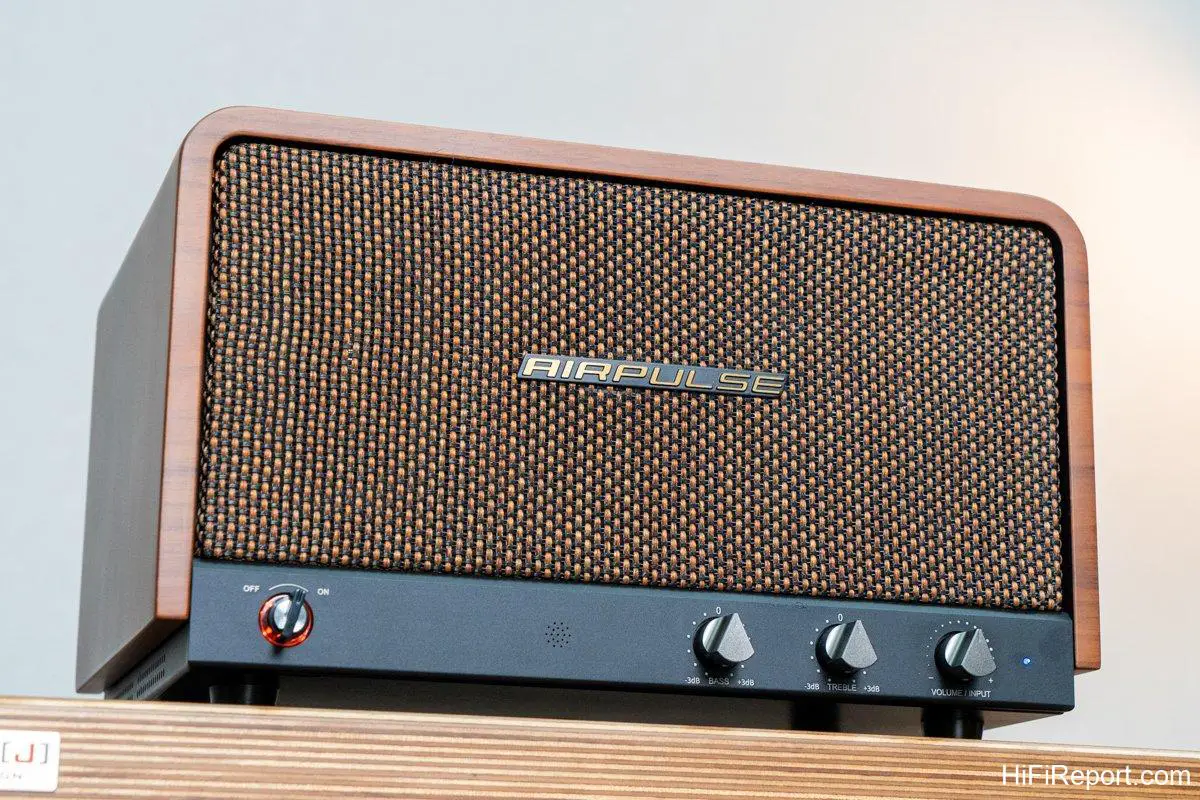
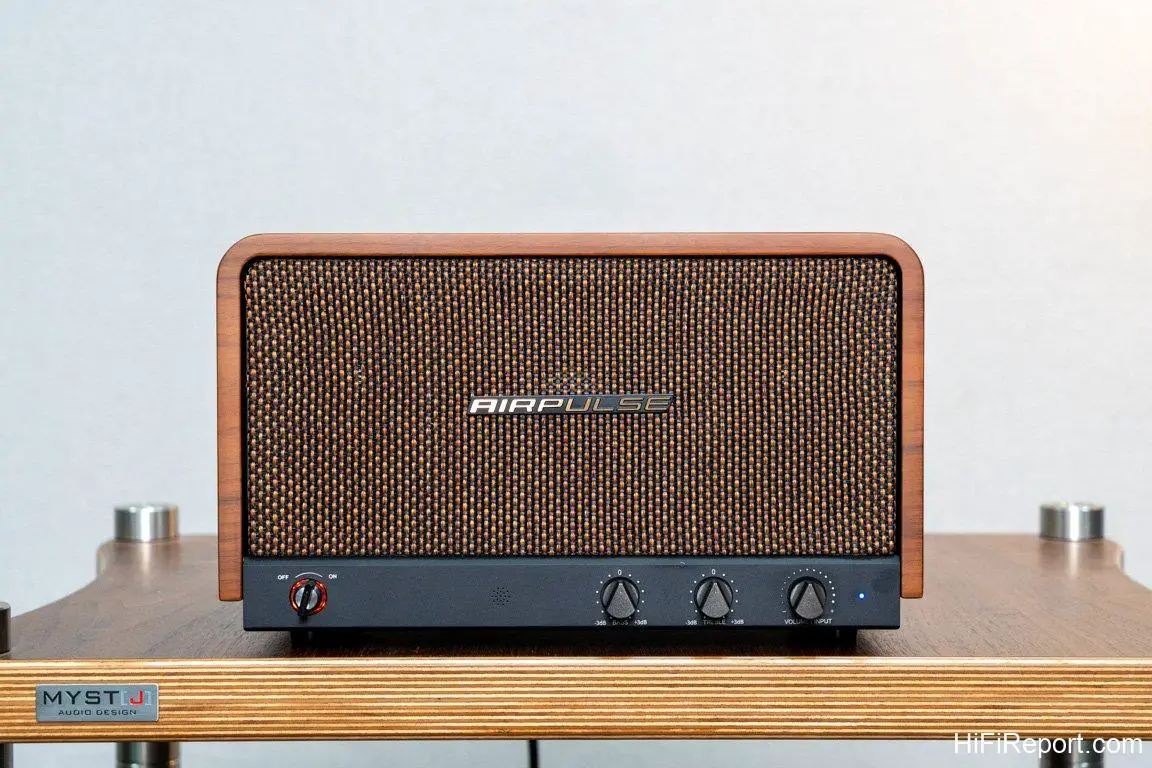
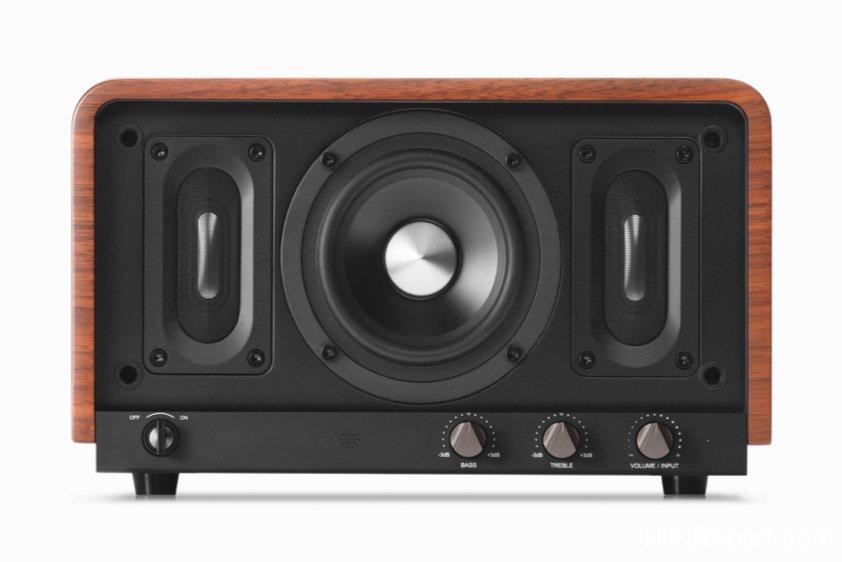
The P100X marks Airpulse’s debut in the all-in-one audio system category. Its design embraces a retro aesthetic, paying homage to the radios of the 1940s and 50s. The wooden frame of the cabinet is exquisitely crafted, featuring rounded edges that create a gentle, classic ambiance.
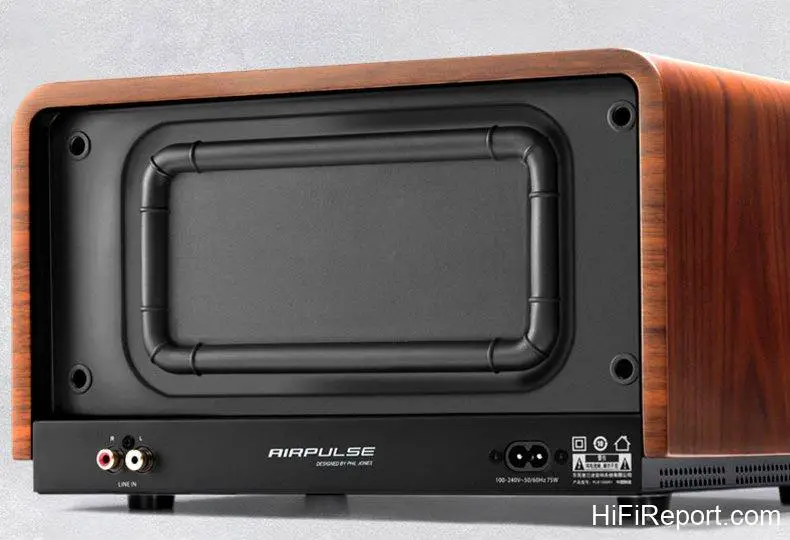
Drivers are positioned both at the front and rear, concealed by coarse-weave fabric grilles. The light brown fabric complements the wood veneer of the cabinet, adding layers of color and texture. This fabric is truly the soul of the unit’s vintage charm.
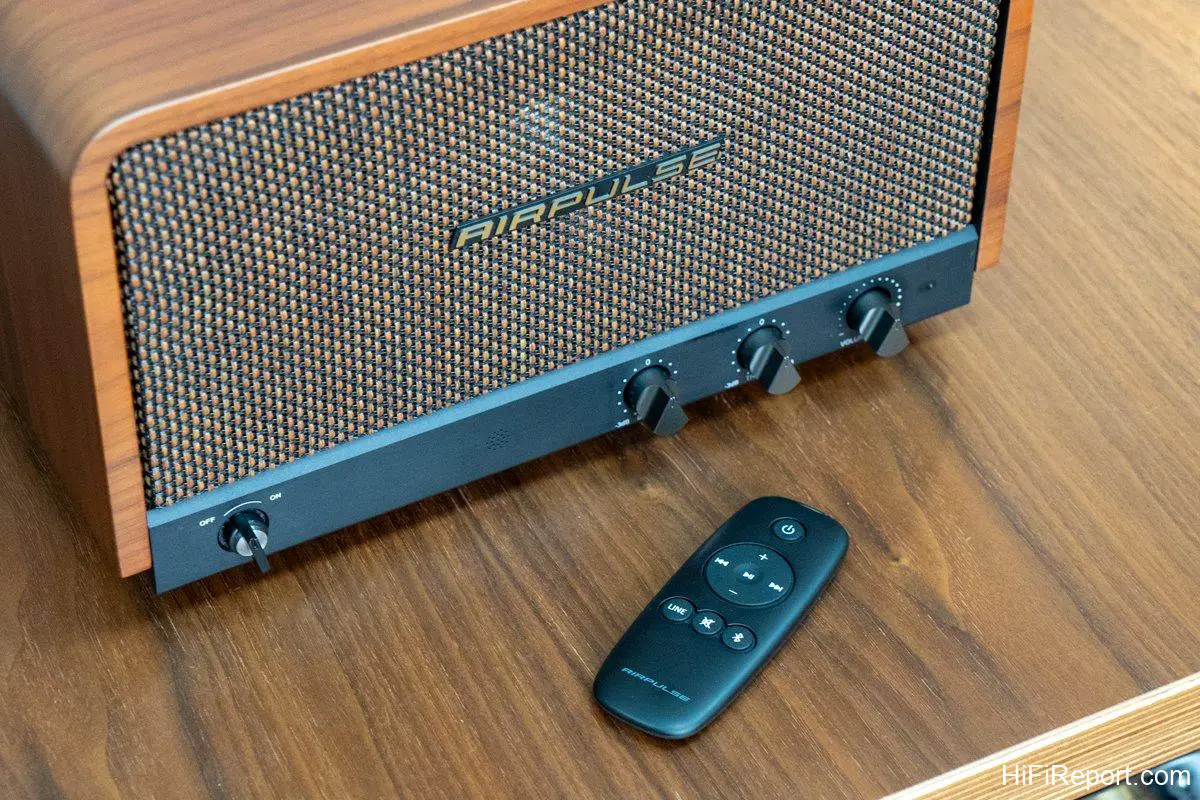
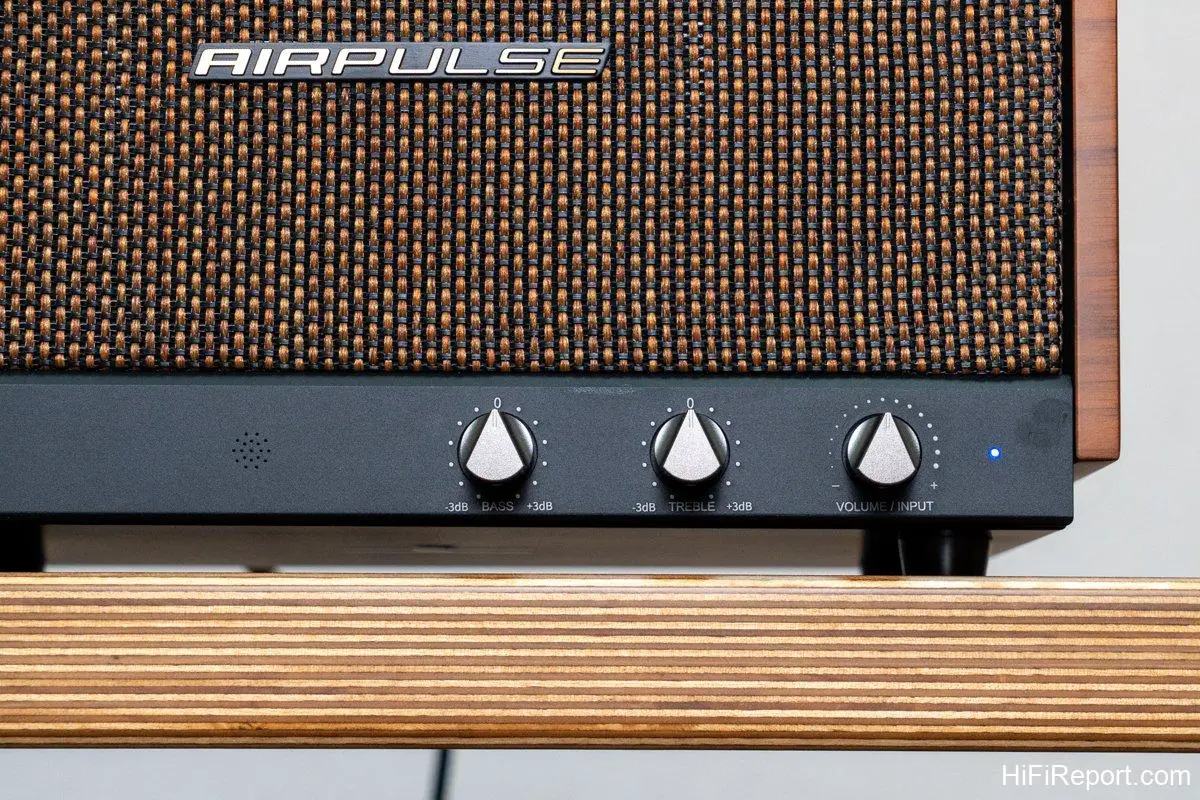
The control panel is located beneath the fabric grille, just above the base. On the left is the power switch—turn left to power off, right to power on. The tactile feel and mechanical click of the switch further enhance the analog, old-fashioned experience. To the right are three knobs for “Bass Adjustment,” “Treble Adjustment,” and “Volume Control.” The metal knobs feature triangular cutouts that serve as indicators, with the apex of the triangle pointing to the current setting.
However, this design feels somewhat contrived, design for design’s sake, which I personally don’t appreciate. The triangular knobs disrupt the harmonious retro aesthetic of the P100X. In practice, the triangular volume knob isn’t as intuitive to use as round or flat knobs (like the power switch).
Furthermore, because digital volume control is employed, the volume adjustment is continuous, with no start or end point. Coupled with the P100X’s lack of a display screen or indicator lights to show the volume level, the triangular knob completely loses its purpose as an indicator.
In summary, I adore the P100X’s cabinet, the retro coarse-weave fabric, and the overall classic atmosphere it creates. However, the triangular knob design is something I cannot commend.
Unique A-Blade Tweeter
Ultimately, judgments on operational design are subjective; my disapproval doesn’t mean others won’t find it appealing. However, technical hardware aspects are more objective. Airpulse has long emphasized Phil Jones’s design expertise, and despite the products being reasonably priced, the technological content is substantial.
The drivers used in the P100X are also developed and designed in-house. The tweeter features Phil Jones’s patented A-Blade (air-blade) unit, a long, elliptical driver that offers better dispersion and a smoother frequency response compared to conventional dome tweeters.
For the mid-bass, a 4.5-inch aluminum alloy diaphragm long-throw driver is used, driven by a 30mm voice coil and a ferrite magnet. To achieve fuller, deeper bass while avoiding wind noise from bass reflex ports, the P100X adopts a sealed cabinet design, complemented by a large rectangular passive radiator on the rear panel. This approach enhances bass output and extension while maintaining a clean and natural low-frequency response.
(Image: Airpulse Official) (Image: Airpulse Official)
Dual Digital Amplification with Transparent Internal Wiring
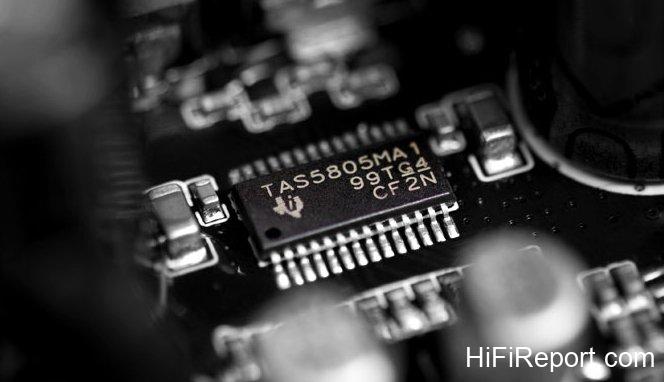
The P100X incorporates a built-in amplifier, utilizing two Texas Instruments TAS5805M digital input Class-D amplifier chips. One chip operates in BTL mode to drive the A-Blade tweeter, while the other operates in PBTL mode to power the woofer; this is essentially a “bi-amp” design in audio terms.
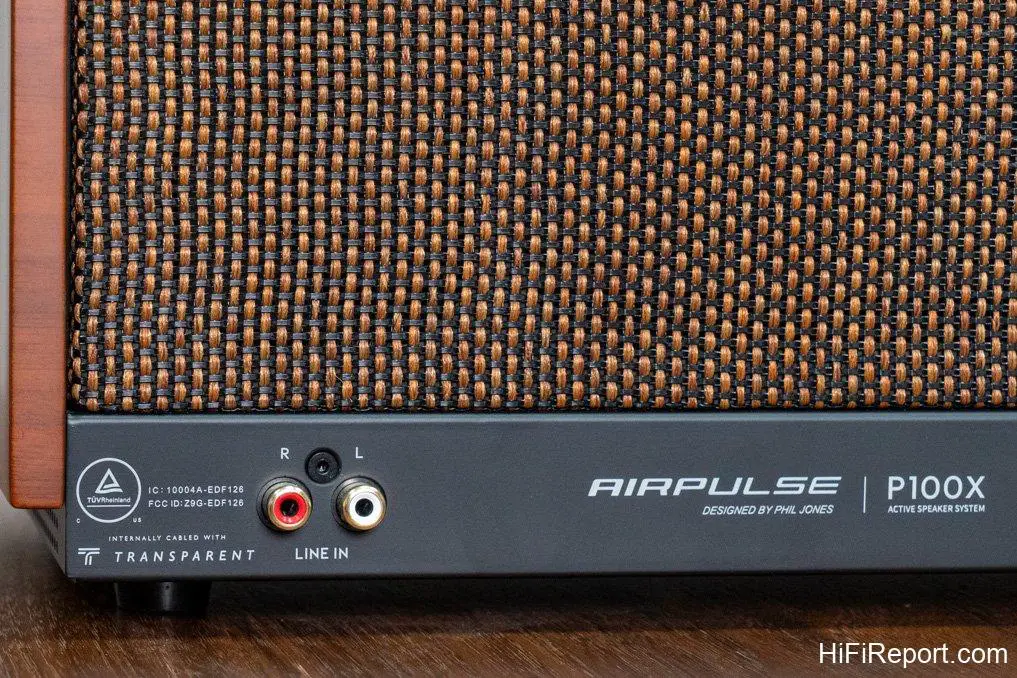
Each digital amplifier chip delivers 23W in stereo mode and up to 45W in mono mode, supporting input sampling rates up to 96kHz. The P100X offers two input options: Bluetooth input, featuring a Qualcomm QCC3031 V5.0 Bluetooth chip with aptX HD codec support, ensuring optimal audio quality for Bluetooth streaming, and an RCA analog input for connecting other source devices.
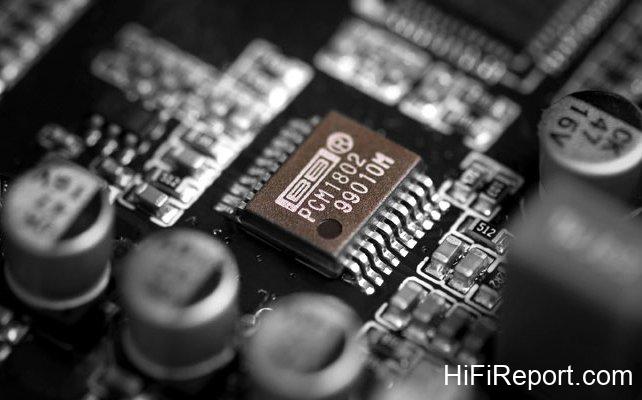
To accommodate the digital amplifier, the analog input stage employs a Texas Instruments PCM1802 ADC chip to convert the incoming analog audio signal into a digital format for subsequent amplification.
(Image: Airpulse Official) (Image: Airpulse Official)
Transparent Internal Wiring
Another noteworthy feature of the P100X is its use of internal wiring from the renowned American cable brand Transparent. This ensures high-quality signal transmission for the final stretch to the drivers.
Since music playback is primarily intended via Bluetooth pairing, relying on mobile devices for control, a remote control might seem unnecessary. However, given the inclusion of an analog input, the manufacturer provides a remote, which serves as the sole means to switch between analog and Bluetooth inputs, as there are no physical controls on the unit itself for input selection. If you frequently switch between Bluetooth and analog inputs, it’s essential to keep the remote safe.
(Image: Airpulse Official)
Clear, Balanced Sound at Any Volume
When it comes to sound quality, Airpulse truly excels. The P100X made an immediate impression on the entire editorial team shortly after being unboxed. I was in the B1 listening room, cycling through various music genres. To assess the EQ effects, dynamic performance, and maximum sound pressure level, I repeatedly played tracks at different volumes. Before long, two colleagues came downstairs to “check in.”
“Oh, you’re listening to this.”
“Hey, it sounds pretty good.”
“The bass is quite powerful.”
And just like that, a spontaneous review session began.
“Come on, give me more details, I’m taking notes. Your comments are all valuable.” I’m not sure which song drew them downstairs, but the P100X’s sound is undeniably outstanding in its class. Its sound is clear and free of muddiness, with excellent frequency balance. It maintains composure without distortion even at maximum volume.
Is that all? Is that the extent of my review? Yes, essentially. If I were to offer the simplest summary, that would be it. For an all-in-one audio system housed in such a compact enclosure, achieving this level of performance is truly remarkable. In the same category, plastic-enclosed systems often sound muddy and harsh. Bass-reflex designs can exhibit unnatural mid-bass bumps. And with EQ adjustments, maximizing bass boost often leads to harsh highs and boomy lows. The P100X avoids all these issues.
Warm, Clear Vocals with Rich Detail
Listening to Shelby Lynne’s “Just a Little Lovin’,” the percussion in the intro is crisp and well-defined. As soon as her vocals enter, the P100X’s midrange prowess becomes apparent – warm yet clear, full-bodied but not heavy.
Annette Askvik’s “Liberty” is a recording rich in vocal articulation details, and the P100X faithfully conveys these nuances. The accompanying strings, percussion, and keyboard are not obscured either. Even at higher volumes, releasing more energy, the song’s structure, vocals and accompaniment, remains clear. At lower volumes, the vocals remain distinct and unblurred. The saxophone’s richness and metallic sheen are also well-preserved.
Airpulse’s speaker-making foundation is undeniably solid. As you can see in the original factory reports I’ve included at the end, their driver designs undergo rigorous Klippel computer-aided testing, and they possess their own anechoic chamber in-house. This deep technical foundation enables them to deliver sound performance that surpasses others in its class.
Clean, Non-Boomy Bass, with EQ Fine-Tuning
Just as achieving good bass in two-channel speakers is challenging, exceptional bass is rare in all-in-one audio systems. The P100X’s bass performance alone is enough to make it stand out from the crowd. Listening to Fink’s live recording of “Trouble’s What You’re in,” the guitar is crisp and clean, and the drums are deep, punchy, and full-bodied. Even at slightly higher volumes, there’s no sign of collapse or harshness. Christine and the Queens’ “Christine” showcases electronic drums with satisfying fullness and impactful punch.
I experimented with adjusting the bass level. Even when I turned the bass knob fully clockwise, maximizing the bass boost, the bass output and fullness noticeably increased, but without compromising musical clarity or resolution. Upon closer inspection, I realized that the P100X’s bass and treble adjustments have a limited range of +/- 3dB. This modest adjustment range is likely why the sound remains so natural.
Impressive Power and Authority at High Volumes
When listening to the soundtrack of “Top Gun: Maverick,” Hans Zimmer’s reimagined theme, with its grand scale and layers of lush strings, transforms the original youthful, energetic, and exciting spirit into an epic, heroic theme. The drums are thick, heavy, and deep, and the electric guitar’s declaration of the theme connects the past and present, but with a more solid and substantial feel than the original.
The Airpulse P100X mirrors this effect. With its retro appearance, it brings the glamour and charm of the analog golden age to today’s digital streaming era, reinterpreting it for a modern context.
Great for Movies with TV
My colleagues were drawn downstairs by “Top Gun: Maverick.” Roy shared that he owns an Edifier D12 Bluetooth speaker, slightly larger than the Airpulse P100X. He places it directly on his TV cabinet, using the TV’s analog audio output for the D12, finding it ideal for movies, sports, and news.
This sparked an idea. Keeping the signal via Bluetooth, I searched for “4K Clips And Trailers” on YouTube on my computer and played movie clips. One clip, often used for demos, was from “Top Gun: Maverick,” featuring Tom Cruise as instructor Mitchell piloting a jet at high speed at low altitude to a bombing target. The high-G forces from the high-speed flight cause Mitchell to breathe heavily. The F18 engine roar, the sonic boom of high-speed flight, and the pilot’s breathing over the comms system—the P100X handles these sound effects with dynamic ease, showcasing a wide range of dynamic contrasts. Even at higher volumes, the P100X shows no signs of strain or distortion. While not a typical use case, it demonstrates the P100X’s impressive capabilities.
Simply Great Sound
Do you have an old soul? The Airpulse P100X’s retro aesthetics can satisfy your nostalgic longings, but its robust performance truly shines when you listen to it. Remember, don’t judge the P100X by two-channel audio system standards. Consider: with $586 USD, what kind of dual 45W amplifier and 4.5-inch woofer speaker system could you assemble? Moreover, no two-channel system can match the P100X’s ease of placement, setup simplicity, and effortless music enjoyment.
All-in-one audio systems like the Airpulse P100X may not replace dedicated two-channel systems, but they offer an ideal solution for simple and enjoyable music listening, and, simply put, they sound fantastic.
Specifications
* Type: Bluetooth All-in-One Audio System
* Inputs: RCA High-Level Input x1, Bluetooth
* Drivers: A-Blade Tweeter x2, 4.5-inch Aluminum Diaphragm Mid-bass x1, Rectangular Passive Radiator x1
* Power Output: L/R (Tweeter) 10W+10W; (Mid-bass) 1x40W
* Frequency Response: 52Hz-20KHz
* Signal-to-Noise Ratio: ≥90dB(A)
* Input Sensitivity: LINE IN 400±50mV, Bluetooth Input 400±50mFFS
* Dimensions: 300x179x215mm (WxHxD)
* Weight: 5.1kg