
Analysis Plus Gold Oval Speaker Cable Review
Let me preface this review by stating that I am an Analysis Plus user, so there might be a touch of personal bias when writing about their products.
To get straight to the point, the Gold Oval is expensive, but its price is justified. After all, this is their flagship product, designed to establish authority and solidify their reputation in the industry.
First Encounters with Pro Audio Products
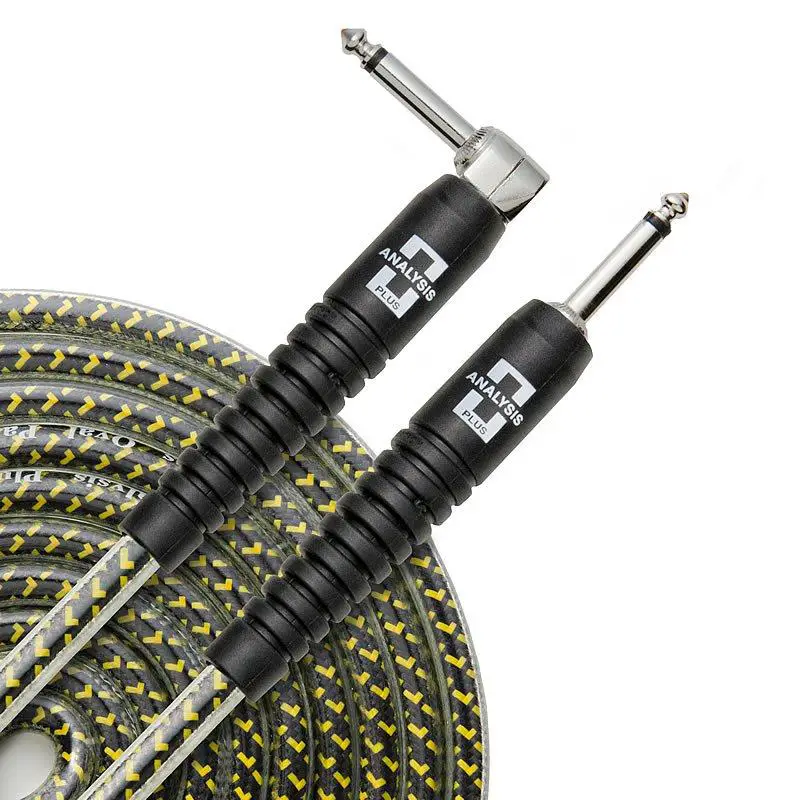
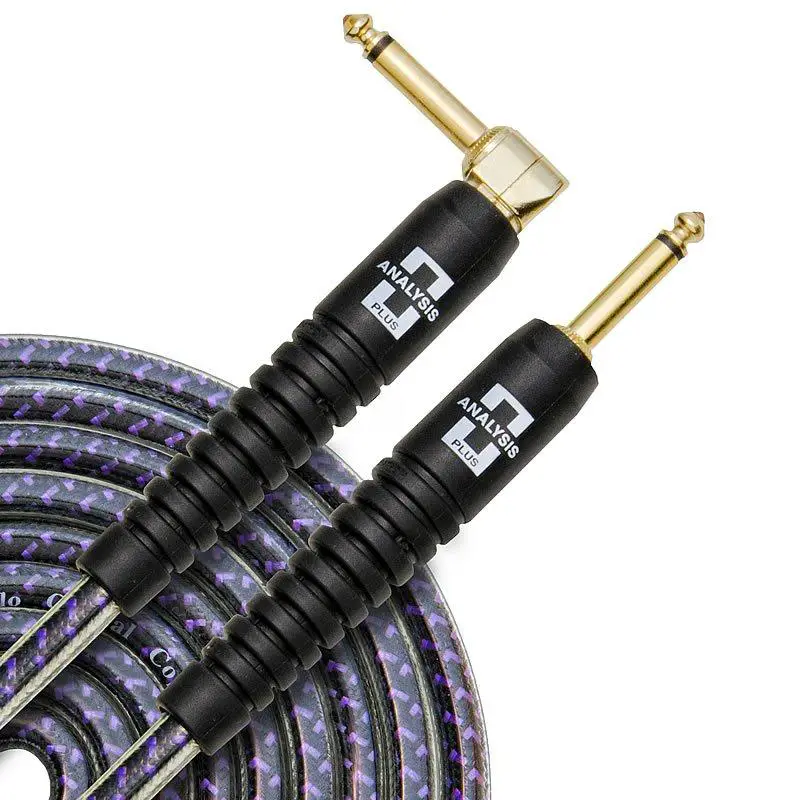
My initial experience with Analysis Plus wasn’t with their Hi-Fi cables, but rather with their electric guitar cables and Qi Jack guitar connectors. Three years ago, when my son started playing guitar, I rekindled my old passion and joined him in exploring new gear. This led me to discover contemporary guitar heroes like John Mayer and Joe Robinson. It was through John Mayer’s use of Analysis Plus electric guitar cables that my interest was piqued.
Rumor has it that John Mayer uses Yellow Oval cables for recording and Studio Oval cables for live performances. Naturally, I wanted to try both, so I purchased one of each. A quick online search revealed that the Yellow Oval starts at $99.99 USD (price increases with length), and the Studio Oval is even pricier, starting at $239.99 USD. Not exactly cheap!
Significant Upgrade with Electric Guitar Cables
At this point, some might argue that Hi-Fi cables can easily cost ten times more, so these guitar cables aren’t expensive at all. However, electric guitar cables fall under the Pro Audio category, where prices are generally not exorbitant. PA audio cables, due to high usage and wear, are often priced based on volume. A standard electric guitar cable typically costs around $30 USD. Compared to Analysis Plus, the Yellow Oval could buy ten standard cables, and the Studio Oval could buy thirty. This comparison highlights the relatively higher price point of Analysis Plus electric guitar cables.
But how could I truly appreciate the prowess of Analysis Plus without experiencing it firsthand? So, I started with the Yellow Oval. The result? I was immediately hooked. The midrange became more prominent and dynamic, almost as if a compressor had been added. This led me to purchase the Studio Oval as well, and while I was at it, I also got the Qi Jack to upgrade my PRS Silver Sky (John Mayer signature guitar – you can tell I’m a fan).
Patented Design with Technical Basis
For audiophiles who enjoy experimenting with cables, Analysis Plus might be a relatively unfamiliar brand. Despite being available for over a decade, they haven’t had much media exposure until recently, with a more proactive approach including participation in audio exhibitions, they are finally gaining more visibility.
As an Analysis Plus user, I had already done my research and knew that their product technology is grounded in solid principles. For instance, the Qi Jack guitar connector is designed to maximize the contact area of the conductor, minimizing contact resistance and ensuring impedance consistency between positive and negative terminals. This is theoretically sound design, but it’s also more complex to manufacture, hence the higher cost – nearly $60 USD per piece. From an audio component perspective, this might not seem expensive, but from an electronic parts perspective, it’s a costly component.
Top-Tier Speaker Cables Starting at Ten Thousand Dollars
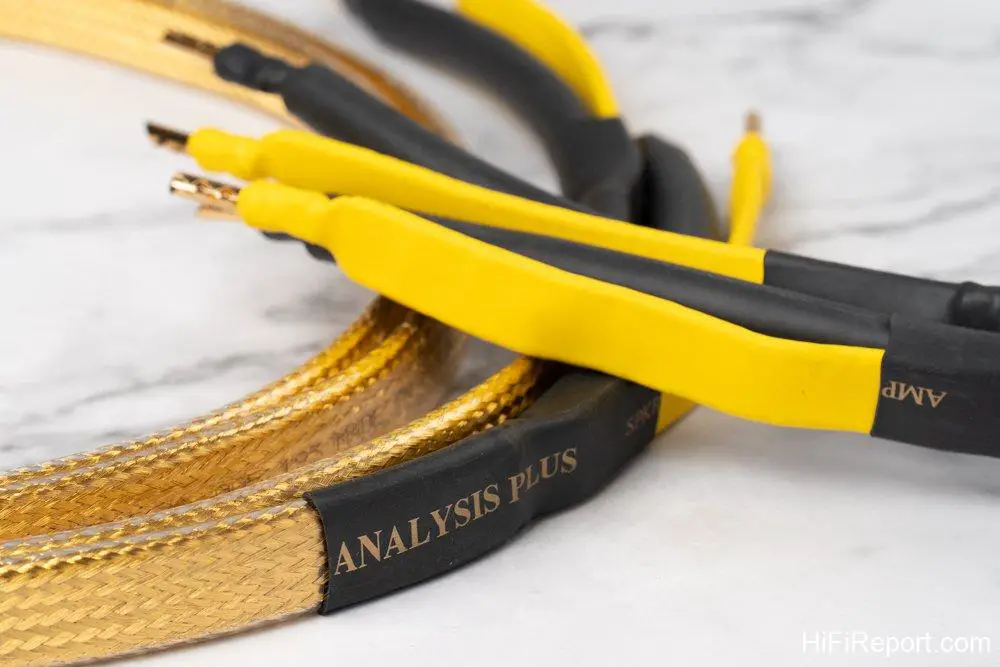
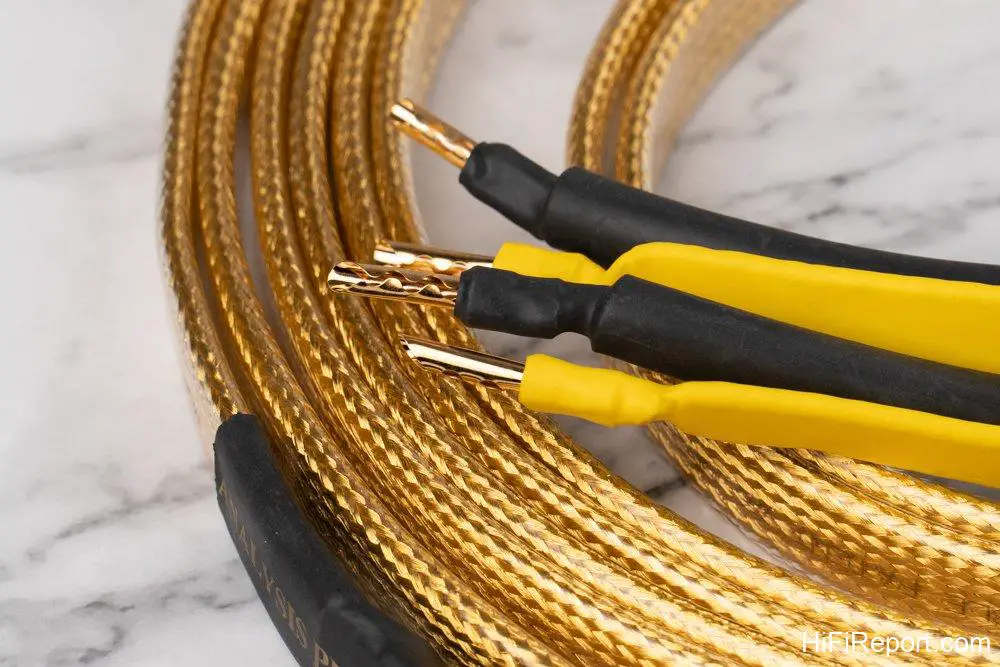
Having used Analysis Plus Pro Audio cables myself, I was naturally interested when I heard about their Home Audio products. That’s how the Gold Oval speaker cables ended up in my hands. However, when I learned the price, I was genuinely stunned. The US website lists the starting price at $11,599.99 USD (for a 4-foot pair), reaching up to $23,999.99 USD (for a 10-foot pair). Note that the currency is US dollars! This is already in the realm of top-tier Hi-End speaker cables! Now you understand why I started this review with guitar cables. The Gold Oval completely exceeded my expectations of Analysis Plus. My impression was that Analysis Plus cables were technically focused and relatively affordable. The Gold Oval speaker cables in front of me, however, were unexpectedly expensive. I realized that this must be Analysis Plus’s statement piece, a “Dragon Slaying Saber” or “Heaven Sword” intended to solidify their position in the high-end audio world.
Patented Hollow Oval Structure Developed Thirty Years Ago
Before delving into the Gold Oval speaker cables, let’s understand the origins of Analysis Plus. This brand, established in 1992, has thirty years of history as a specialist cable manufacturer.
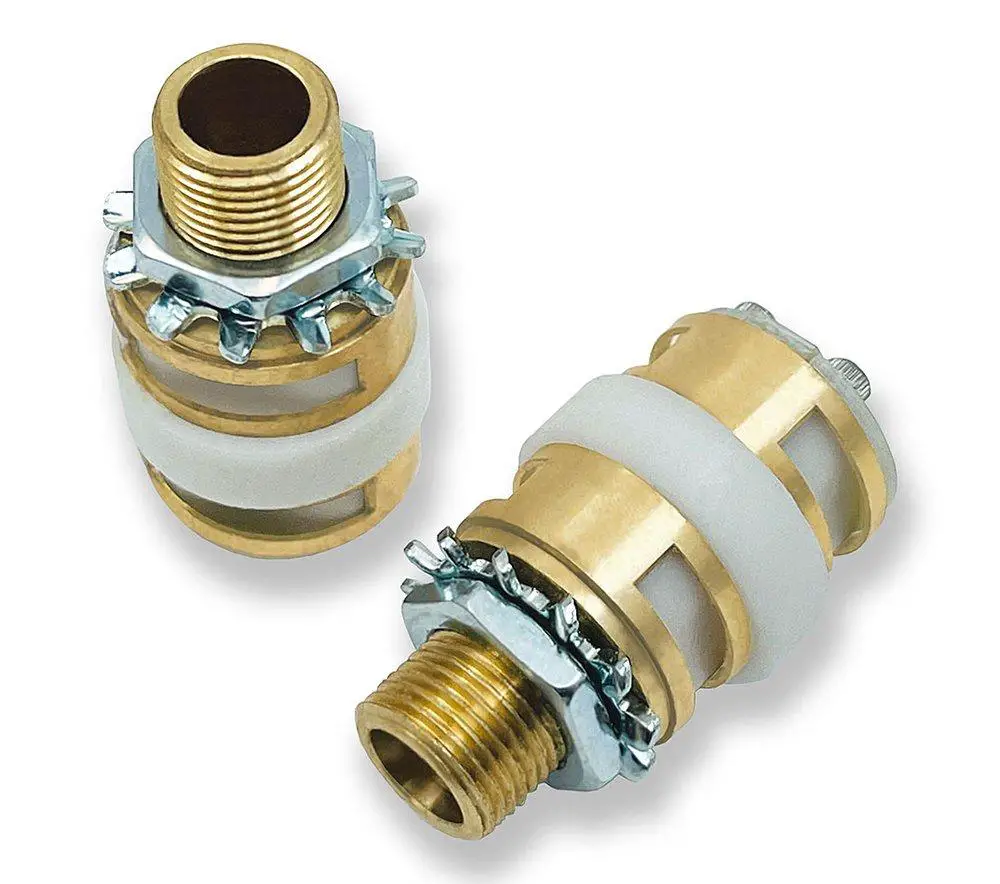
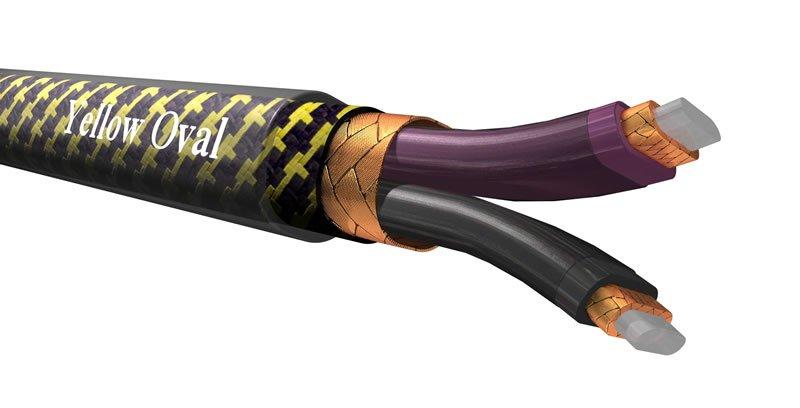
Founder Mark Markel previously worked for a large cable manufacturer, responsible for computer simulation and measurement, analyzing various data related to music signal transmission. He discovered the proximity effect and current bunching issues in signal transmission, problems that traditional cable structures struggled to eliminate. He invented the hollow oval structure, which, through computer simulations, proved effective in mitigating these negative effects. He patented this design and founded Analysis Plus.
Computer simulation and measurement might seem commonplace to the internet generation, but thirty years ago, conducting computer simulations was a significant undertaking. Not only was the hardware expensive, but software resources were also scarce, often requiring custom program development. For Analysis Plus to perform simulations for proximity effect, current bunching, and skin effect, it demonstrates their technical foundation. Their website’s knowledge base extensively details the technical aspects of the hollow oval structure, supported by various measurement charts illustrating its effectiveness.
The hollow oval conductor is Analysis Plus’s core patented technology. From their entry-level speaker cables to the most expensive Gold Oval, the conductor structure remains consistent. This is why Analysis Plus claims that their most value-for-money speaker cable is the entry-level Black Oval, with a starting price of $179.99 USD (price varies with length). This price point seems reasonable, but the flagship Gold Oval is dozens of times more expensive. Is it justified?
Demonstrating High-End Cable Capability
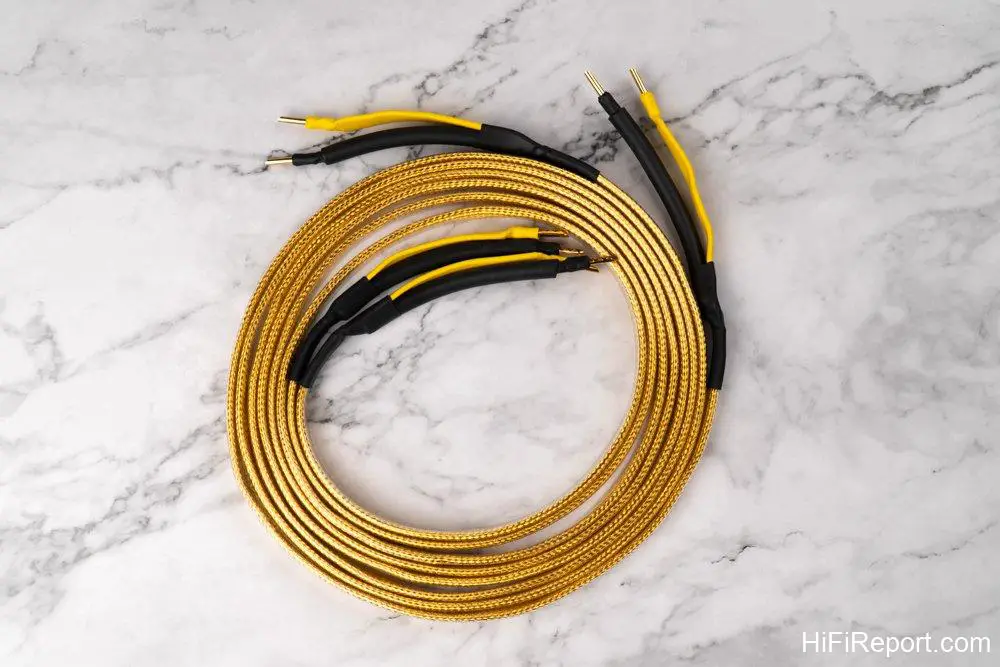
So, while auditioning the Gold Oval, I arranged a video interview with Analysis Plus factory manager Shane Juhl. After discussing Analysis Plus’s history and core technologies, I cut to the chase. I acknowledged Analysis Plus’s undeniable cable technology and perceived value, but questioned the high price of the Gold Oval, which seemed inconsistent with their brand image. Shane chuckled and admitted that the Gold Oval is indeed very expensive. However, he explained that it’s a product of self-challenge for Analysis Plus. Their other product lines typically outperform competitors in the same price range, but they lacked a truly high-end cable offering. To prove that Analysis Plus could compete at the highest level, they incorporated precious metals, plating the conductors with a substantial layer of pure gold, demonstrating their capability to create top-tier Hi-End cables.
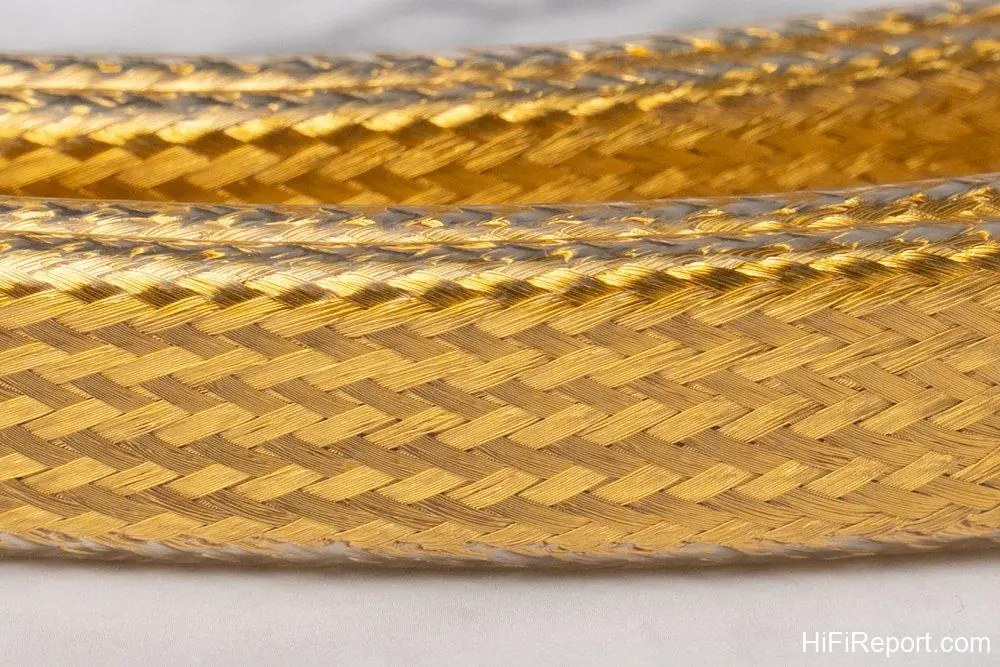
Essentially, the Gold Oval was created to showcase Analysis Plus’s ability to craft top-tier Hi-End cables, a flagship product to establish their authority and reputation. Beyond the core Hollow Oval structure, they added a 24K gold plating to elevate the Gold Oval’s status with precious metals.
24K Gold Plating and Dedicated Tooling
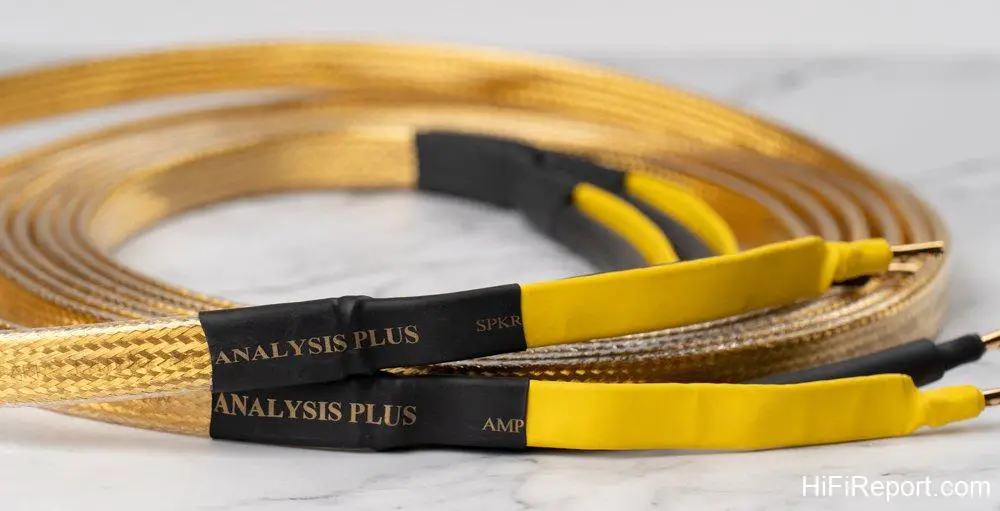
Is 24K gold plating the sole reason for the Gold Oval’s high price? Of course not. To minimize the skin effect, Analysis Plus’s oval hollow conductors utilize finely stranded braided wires, increasing the conductor’s surface area. However, the Gold Oval employs even finer Litz wires for its braiding. This necessitated the creation of specialized tooling for the Gold Oval, and the internal Hollow Oval structure is also more complex than other Analysis Plus products. These factors collectively drive up the Gold Oval’s production cost.
After speaking with the manufacturer, I gained a better understanding of the Gold Oval’s pricing. But the ultimate test is in the listening. My personal experience with Analysis Plus electric guitar cables showed a clear upgrade in sound quality, particularly in midrange thickness and high-frequency clarity, which I immediately appreciated. Despite its high price tag, the Gold Oval speaker cables also delivered an instantly noticeable and captivating sonic upgrade.
Piano Trio Soundscape Comes Alive
Since the Gold Oval speaker cables I received were terminated with banana plugs, I initially used them with Dynaudio Contour 60 speakers, driven by an EAR 868P preamp and 509 MK II power amp. The digital source was a YBA CDT-450 and Merging NADAC. The moment I connected the Gold Oval, the improvement was striking. The soundstage expanded in depth and width, yet instrument images didn’t shrink. Instead, they became more focused and defined, creating a more layered and organized presentation within the spacious soundstage. Listening to the Brahms Piano Trio No. 1 performed by Suk, Katchen, and Starker, the warm and rich analog recording from Decca, when paired with the Gold Oval, gained even more luster and liquidity in the mid-high frequencies. In the opening movement, the piano’s soft entrance leads to the cello. Starker’s cello sound is rich and warm, and the Gold Oval beautifully rendered the piano and cello’s image. The piano was centered, with the cello slightly to the right. When Suk’s violin emerged from the right side of the soundstage, the Gold Oval presented a clear and lifelike piano trio image.
Beyond clear instrument imaging and a lustrous, liquid tone, the Gold Oval’s captivating quality lies in its smooth and warm musicality, along with an unobtrusive soundstage quietness. This further enhanced the interplay within the piano trio. In the first movement of Brahms’ Piano Trio No. 1, the three instruments are given equal prominence, showcasing their individual beauty, sometimes in dialogue, sometimes in harmony. As the violin and cello weave together, the piano provides a supportive foundation with undulating chords. With the Gold Oval, this interplay and intertwining became even more beautifully and vividly rendered. During intense passages, you could sense the musicians’ heightened emotion, while in softer moments, the instruments flowed with greater grace. The dynamic variations brought out a more dramatic expression.
Effortlessly Discerns Recording Differences
Switching to another recording, I listened to the Brahms Piano Trio No. 1 performed by Pires, Dumay, and Wang. This newer DG recording, while lacking the tonal density of the older Decca, offered a more refined soundstage depth, quietness, and sense of space. Pires’ piano is more delicate and airy, Wang’s cello responds gently, and when Dumay’s violin enters, its robust lines underpin Brahms’ romanticism. The piano and cello then respond with stronger notes, as if Dumay is urging them to answer Brahms’ music with more assertive expressions. The interplay shifts from initial tenderness to intense, interwoven combat.
I realize I’ve been talking mostly about Brahms, almost as if this is a Brahms review rather than a Gold Oval speaker cable review! But the Gold Oval speaker cables genuinely possess this musical allure, effortlessly revealing details within the recording. I’m aware that overall detail retrieval is enhanced, but my focus isn’t on individual instrument improvements, but rather on the more vivid and natural presentation of musical expression. In forte passages, the violin projects a more resolute character, while in piano passages, it becomes more relaxed. The Gold Oval presents the dynamic and emotional range of the music with greater dramatic variation.
Mahler Demands Expansive Layers
After listening to the Gold Oval with the Contour 60s for a while, I couldn’t resist trying them with Wilson Audio Alexia 2s. However, the Alexia 2s don’t accept banana plugs, only spades. I considered using adapters, but worried about potential sonic degradation. Ultimately, I loosened the Alexia 2’s speaker terminals slightly, creating just enough space to accommodate the banana plugs. I knew this might compromise the Gold Oval’s contact area and slightly diminish performance, but such exceptional speaker cables deserved to be tested with the Alexia 2s. The Gold Oval speaker cables lived up to expectations. Beyond the warm and rich midrange, the high and low frequencies extended broadly and naturally. The tone was dense and smooth, with a silky, liquid sheen in the mid-high range, and authoritative weight in the bass. When faced with complex music, the Gold Oval displayed even greater composure. Listening to Bernstein’s Vienna Philharmonic recording of Mahler’s Symphony No. 5, Movement 5, the brass section bursts forth from the depths of the soundstage, followed by the woodwinds in response. The tonal nuances of various woodwind instruments create a refreshing pastoral atmosphere. The first theme group, built by brass and woodwinds, paints a bright sonic picture, with the strings responding in the lower register, leading into the fugue section. The Gold Oval’s soundstage layering allowed the fugue to weave a rich musical tapestry, with the strings and brass sections echoing each other in brilliance. Listening to Mahler like this is truly magnificent.
Of course, the fifth movement of Mahler’s Symphony No. 5 isn’t just about the pastoral freshness of the opening. Bernstein’s version is approximately fifteen minutes long. Around the ten-minute mark, the fugal texture transcends mere freshness. The brass becomes a frenzied roar, reaching a peak before suddenly falling silent, replaced by the low murmur of woodwinds and the bright clarity of harp arpeggios. Then, it returns to the pastoral lightness. After the thirteen-minute mark, tension gradually builds, intertwines, and layers, culminating in the chorale theme at thirteen minutes and thirty seconds. The Gold Oval expands the soundstage, laying down a solid foundation. Bernstein unleashes the Vienna Philharmonic at full force. The brass chorale, played in unison, washes over like a warm current, ushering in the jubilant finale, ending with a clean and decisive finish. Bravo, a truly spectacular Mahler performance.
Eva Cassidy’s Vocals Possess Beautiful Decay
Simply describing the Gold Oval’s balanced frequency response or its refined tonal quality doesn’t fully capture its sonic allure.
I want to use Eva Cassidy’s “Live At Blues Alley” album, specifically “Bridge Over Troubled Water,” a recording I know and love intimately. Yet, listening to it through the Gold Oval brought a delightful sense of freshness.
Where does this freshness come from? The vocal decay. This live recording captures the subtle ambience of a small club. Most speaker cables can reproduce these details. However, the Gold Oval’s fresh perspective lies in the decay of Eva Cassidy’s voice. In the first section, with guitar accompaniment, during Eva Cassidy’s a cappella part, the Gold Oval not only captures Eva Cassidy’s powerful vocals, but, most beautifully, the tail end of each phrase. Her voice trails off subtly before abruptly ending, then seamlessly transitioning to the next phrase, imbuing the vocals with even greater emotional impact. Eva Cassidy truly sang with her soul, and the Gold Oval faithfully reproduces the subtle nuances of her voice. Despite being a recording I’m intimately familiar with, the Gold Oval speaker cables revealed previously unnoticed details, not just a wider spatial ambience, but the emotional impact of the music, which is what makes the Gold Oval so captivating.
Speaker cables that cost as much as a compact car are undoubtedly expensive. When I first received the Gold Oval, I was initially skeptical. I knew of their solid technical foundation, but I didn’t expect them to release such pricey speaker cables. However, after spending time with them, I believe the Gold Oval’s price is justified. Its sound is refined and noble, and it brings a sense of freshness to recordings, making canned music feel more alive. These qualities alone are worth the price of admission.
Of course, the Gold Oval is indeed expensive. But this has piqued my curiosity about the Crystal Apex and Solo Crystal Oval 8, priced around a thousand US dollars, and the Silver APEX at just over two thousand US dollars. Compared to the Gold Oval, these three speaker cables are significantly more affordable. If they offer even 80% of the Gold Oval’s performance, they would be exceptional value.
Once Heard, Their Excellence is Clear
In conclusion, the Gold Oval speaker cables are designed for those “pursuing Hi-End perfection,” showcasing Analysis Plus’s state-of-the-art technology. You might consider them expensive, but if you have the opportunity to listen, you’ll realize that Analysis Plus is genuinely capable, and their sonic performance can rival any product in its class. This is their “Heaven Sword” and “Dragon Slaying Saber”. Once heard, their excellence is undeniable.
“`