
IsoAcoustics Stage 1 Board Combo Review
For me, attending Hi-Fi shows is a work necessity, but I’m also a consumer at heart. If something catches my eye, and I’m having a good time browsing, I’m happy to make a purchase. This IsoAcoustics Stage 1 Board Combo (hereafter referred to as Stage 1 Combo) is a new toy I ordered at a recent Hi-Fi show. What’s amusing is that the Stage 1 Combo wasn’t even on display! I simply inquired if IsoAcoustics had any products suitable for guitar amplifiers, and that’s how I discovered the Stage 1 Combo. I immediately placed an order, and not just for one, but a set of three!
Impulse Buy
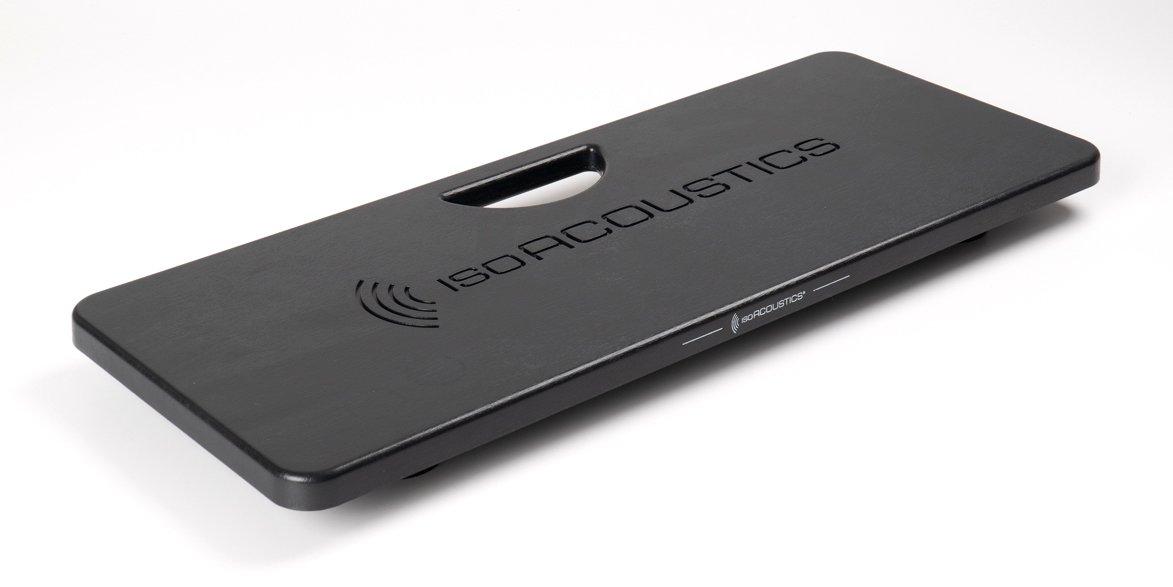
Why so bold? Ordering three without even hearing the effect of the guitar board, and buying three at once? The reason is simple: I’m familiar with IsoAcoustics’ technology and its ability to solve the kind of issues I was experiencing. Just by looking at the Stage 1 photos on my phone, I saw its maximum weight capacity was 45 kilograms, which is more than sufficient for my amplifiers. So, I ordered three. And please don’t ask why three. Naturally, it’s because I have three amplifiers that need them. Did you think I bought them as decorative items?
Addressing the Issue
Speaking of the Stage 1 Combo solving my problems, let’s first discuss what those problems actually are. About three years ago, my son started learning guitar, playing both electric and acoustic. I also rekindled my student-era interest, and we started playing together. Naturally, my son encouraged me to buy more guitars, and so, the toys kept piling up. Fortunately, it’s a healthy hobby, and they spend more and more time practicing at home. My wife is happy to let us father and son tinker away.
Acoustic guitars don’t require amplifiers; in fact, the challenge is finding a silent guitar for late-night practice. Electric guitars are the opposite. Without an amplifier, every electric guitar sounds rather weak and lacks dynamic range. So, I chose a British Blackstar HT5 Combo for my son, and for myself, I opted for the HT5 Head+Cab, the model with separate amplifier head and speaker cabinet.
Of course, Dad has to have better gear than his son; after all, the one who pays calls the tune.
5-Watt Tube Amp Still Too Loud
HT5 stands for 5 watts of vacuum tube amplification. Yes, you read that right, just 5 watts. They even have an HT1, with a power output of only 1 watt. However, the night I brought the HT5 home, I immediately regretted it. I should have bought the HT1 instead of the HT5. Five watts is still too loud for home use, especially with teenagers who often get carried away and crank up the volume. When the HT5 is turned up loud, with the overdrive effect sizzling, it can be heard across the street! I often have to go upstairs and forcibly turn down the volume, afraid of disturbing the neighbors.
Speaker cabinets not only project sound outwards, but they also transmit low-frequency energy downwards through the floor. We live in an old townhouse, and my son’s room is directly above mine. As soon as the HT5 is turned on, I know it, because the buzzing low-frequency energy, combined with the overdrive distortion, transmits downwards with every power chord.

Since we are family, we should be tolerant of practice sounds, and we agreed to keep the volume down as much as possible after 10 PM. The HT5 also has a feature to reduce the output power; with the push of a button, 5 watts becomes 0.5 watts, making volume control much easier. However, even when the amplifier is on and working at a lower volume, it still vibrates, and the energy transmitted through the floor is still noticeable.
Isolating Low Frequencies Through the Floor
How to solve this? The simplest and cheapest method is to buy concrete hollow bricks and elevate the amplifier. But hollow bricks are hard, and placing them in a room means you might painfully stub your toes if you’re barefoot. Besides, when it comes to teenagers’ rooms, it’s best not to offer too many suggestions, otherwise, you’ll get a bunch of incomprehensible excuses, and it becomes a headache.
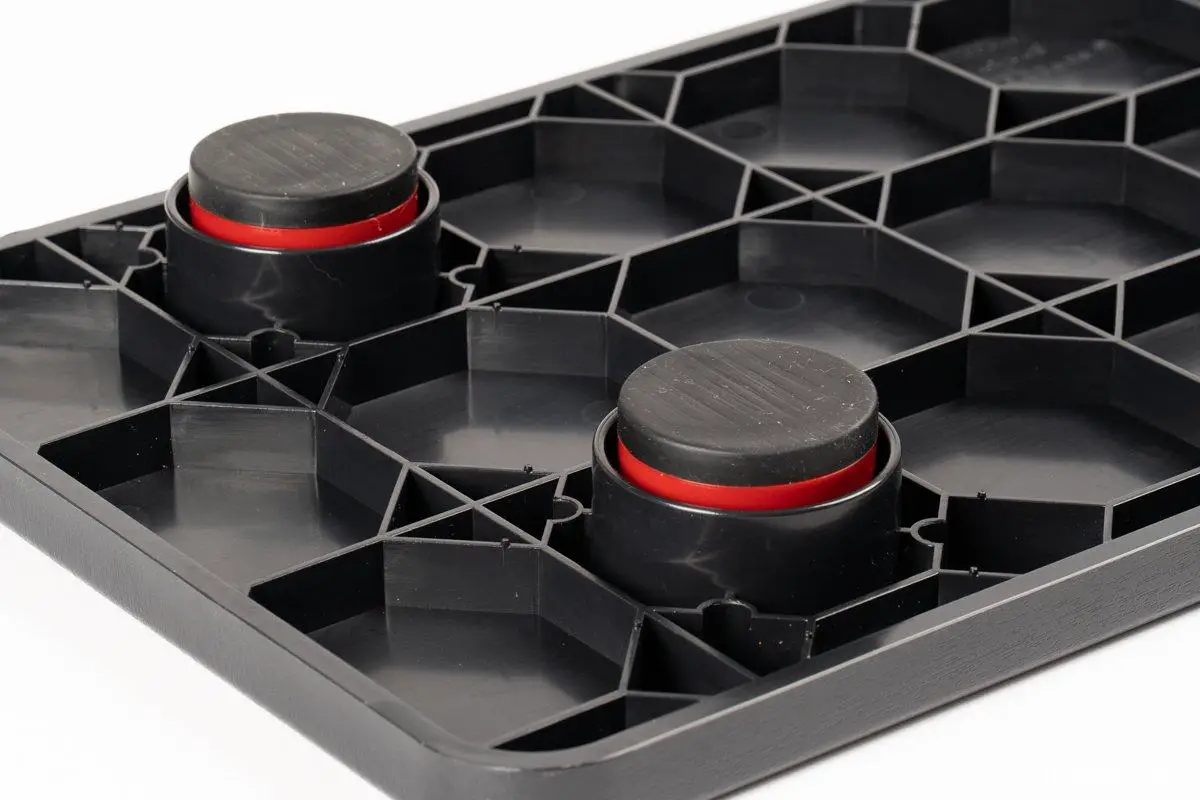
So, when I learned about the IsoAcoustics Stage 1 Combo at the Hi-Fi show, you can imagine how happy I was. I’ve used their isolation pucks before, and they work very well. This was exactly what I needed: to isolate the electric guitar amplifier’s vibrations from the floor. As for whether isolation improves the sound, that’s for guitar players to fuss over. My primary need was “isolation.”
Moreover, IsoAcoustics, a Canadian company, started in Pro Audio, specializing in vibration isolation. Their technology is well-established, so the Stage 1 Combo was sure to be effective.
They have been focused on vibration isolation for over a decade, with all their products related to this core competency, expanding from Pro Audio to the home audio market, and even into the OEM market, designing custom isolation feet for many international high-end audio manufacturers.
Steve Vai Made Me Buy It
All the above are “rational” reasons – a professional manufacturer providing a product that offers the vibration isolation function I needed. But the final reason, the one that made me decide to order three units without even auditioning them, was this: Steve Vai uses Stage 1 for recording and live performances. That’s impressive. If even a guitar virtuoso uses it, it must be outstanding.
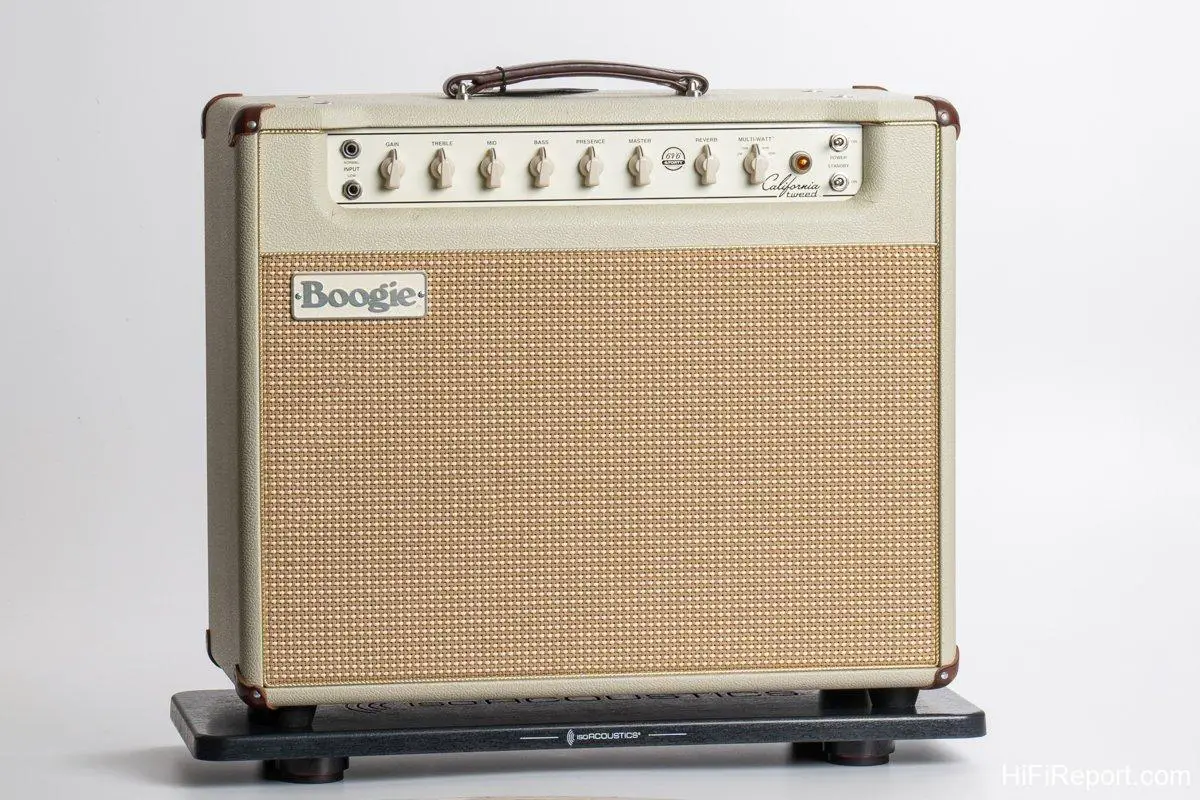
No need to think twice, I was sold! A few days after the Hi-Fi show, the Stage 1 Combo arrived. I immediately placed one under the Mesa Boogie California Tweed in my office and did a before-and-after comparison. The most noticeable improvement was in the power and solidity of the low frequencies. Guitar amplifiers placed directly on the floor often produce muddy low frequencies due to downward reflections from the speaker. Simply raising the amplifier slightly cleans up the bass. This is basic physics. With the Stage 1 Combo added, regardless of its isolation effect, just the act of elevating the amplifier a bit makes the low frequencies cleaner, the notes tighter, and the dynamic punch better.
Noticeable Isolation Effect
What about the isolation effect? I tried it at home first with my HT5 Head+Cab. Good, I could hear less low-frequency energy transmitting downstairs. It achieved the effect I wanted. As for the teenager’s HT5, I handed him a Stage 1 Combo and let him handle it himself.
As for whether the sound improved with the Stage 1 Combo, I would say, for electric guitars, unless you’re only using the amplifier’s built-in effects, like Overdrive, Reverb, Vibrato, most of the tone comes from effects pedals and the guitar itself. With the amplifier on the Stage 1 Combo, the clean tone does feel more solid and stable in the low frequencies, effectively reducing muddiness. But regarding midrange thickness and high-frequency extension, frankly, all of that can be dialed in with effects pedals. Whether it’s digital multi-effects or analog stompboxes, just tweak the parameters, and you can shape the tone however you want.
So, whether the Stage 1 Combo actually improves the sound of the electric guitar amplifier isn’t the most crucial point.
Eric Clapton famously said, “Tone is in your hands!” This encourages everyone not to be overly concerned about the quality of guitars or amplifiers. The most important element of tone is in your hands. If your technique isn’t good, don’t blame your gear. The equipment itself isn’t at fault; if your technique is lacking, you won’t produce good sound, and you can’t blame anyone else. It’s all about practice.
Self-Indulgence with Steve Vai-Level Gear
I know practicing takes time, but practicing without disturbing others is also important. Buying the Stage 1 Combo isn’t about making the guitar amplifier sound better, but about vibration isolation, preventing the guitar amplifier from transmitting extra low-frequency energy between the floor and ceiling. Did it achieve the effect? Absolutely. IsoAcoustics has been focused on this very thing for over a decade, and even Steve Vai uses it. Although my technique will never reach Steve Vai’s level, using the same Stage 1 Combo as him is still a bit of self-indulgent fun!
Specifications
* Dimensions: 63.5 x 25.4 x 4.7 cm
* Weight Capacity: Up to 45 kg