
Arcam PA720 Review
Audio equipment specifications can tell you something, but they can also be easily misleading. This is often the case with the power ratings of AV receivers. For example, a rating of 220 watts per channel might sound impressive to the uninitiated – “Wow, that’s powerful!” – considering that very few two-channel integrated amplifiers boast such muscle. However, the crucial information lies within the parentheses following the power spec. The most common caveat seen is “1 channel driven, THD 10%”.
This indicates that the AV receiver can only achieve the manufacturer’s stated figure when *only one channel is outputting signal*, and at peak output, the harmonic distortion reaches a staggering 10%. I ask you, who uses an AV receiver to listen to just one channel? Furthermore, who can tolerate listening to sound with a 10% distortion rate? I’d be heading for the door before it even hit 5%!
If you’re accustomed to inflated figures, you might find the Arcam PA720’s specifications unremarkable. But seasoned enthusiasts will be interested. It’s rated at 100 watts per channel (8 ohms) / 140 watts per channel (4 ohms) with *all 7 channels driven simultaneously*. With 5 channels driven simultaneously, it delivers 110 watts per channel (8 ohms) / 175 watts per channel (4 ohms). Driving just 2 channels simultaneously yields 140 watts per channel (8 ohms) / 225 watts per channel (4 ohms).
Moreover, at 80% of its rated power output, the harmonic distortion is merely 0.002%. This is where Arcam shines; they don’t inflate figures for marketing purposes. The specifications they provide are genuinely intended to help enthusiasts and professionals understand if the PA720 truly meets their needs.
Physical Layout and Connections
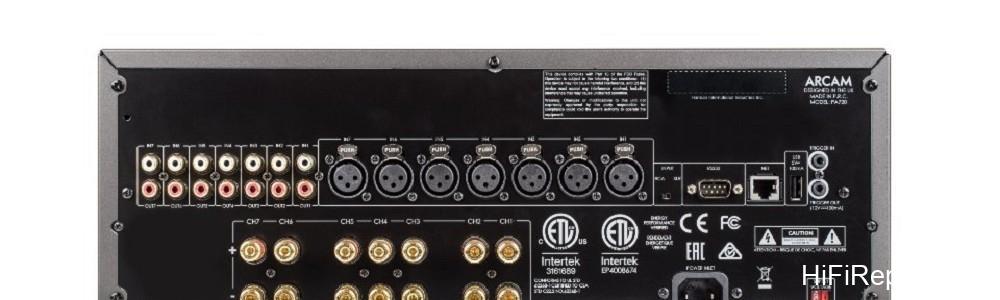
Let’s take a look at the rear panel of the PA720. On the right side, you’ll find network and RS232 terminals, allowing for control via automation systems, making it suitable for custom installations. It features 7 channels of both balanced (XLR) and unbalanced (RCA) inputs. Since there’s a single switch to select between XLR and RCA input for all channels, you must use either balanced *or* unbalanced inputs consistently across *all* channels; you cannot mix them.
Additionally, when using RCA inputs, this unit can also provide output. The OUT1~OUT7 terminals are essentially paralleled with the IN1~IN7 signals coming from the surround processor. If you wish to implement a “seven-channel bi-amp” setup to drive your speakers, or configure a speaker array, you can simply connect the OUT1~OUT7 to another PA720.
A Primer on Amplifier Classes
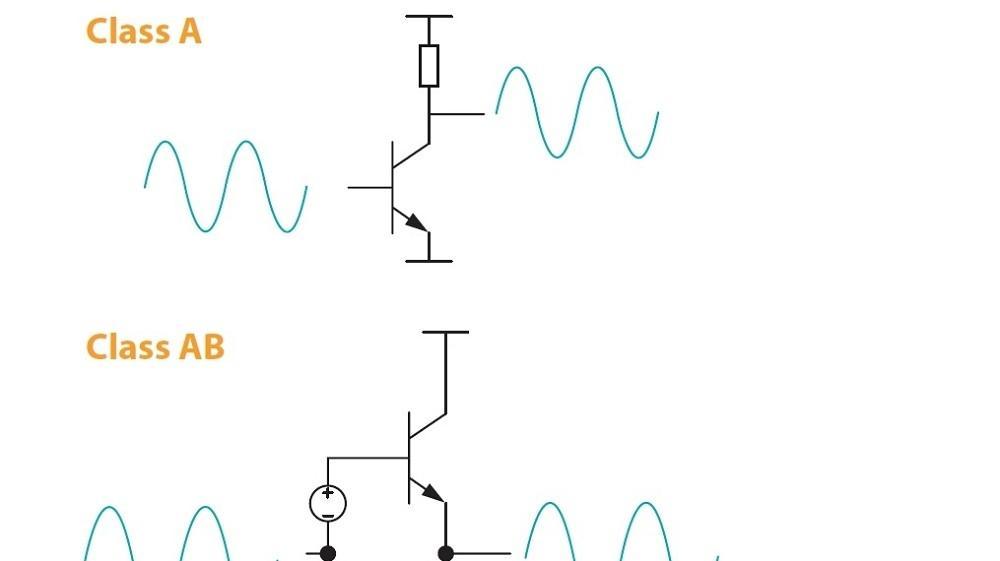
Next, let’s explain the operating principles of the Arcam PA720’s circuitry. Currently, the most widely used power amplifier circuit is the Class AB (AB class) push-pull output stage. Many old-school enthusiasts favor Class A (A class) for its optimal linearity at low power output, which employs full-wave amplification.
There’s also Class D (D class amplification), which converts the audio signal into PWM (Pulse Width Modulation) for amplification, and then uses a low-pass filter to restore the high-power PWM signal back into an audio signal.
Class AB is an improvement on Class B. It involves slightly raising the operating point of the Class B push-pull output stage transistors from zero to solve the issue of crossover distortion. Because the operating point is between Class B and Class A, it’s called Class AB. Therefore, a typical Class AB amplifier essentially operates in Class A at “very low power output”. However, since many enthusiasts know that Class A sounds good, designs like “Quarter A” emerged in the 1980s.
These intentionally increase the bias of the Class AB output transistors, raising the quiescent current to expand the Class A operating range of the Class AB amplifier. This means that up to a quarter of the amplifier’s rated power output operates in Class A. For example, an 80-watt Quarter A amplifier would operate as a Class A amplifier at output levels below 20 watts.

Class AB was developed primarily because Class A’s efficiency (electrical energy utilization) is too low. However, whether it’s Class A or Class AB, their maximum efficiency is achieved at maximum power output. In other words, if a 100-watt amplifier is only outputting 1 watt or even less during casual, low-volume listening, its efficiency is very low at that moment. Is there a way to improve this?
Arcam’s Class G Amplification
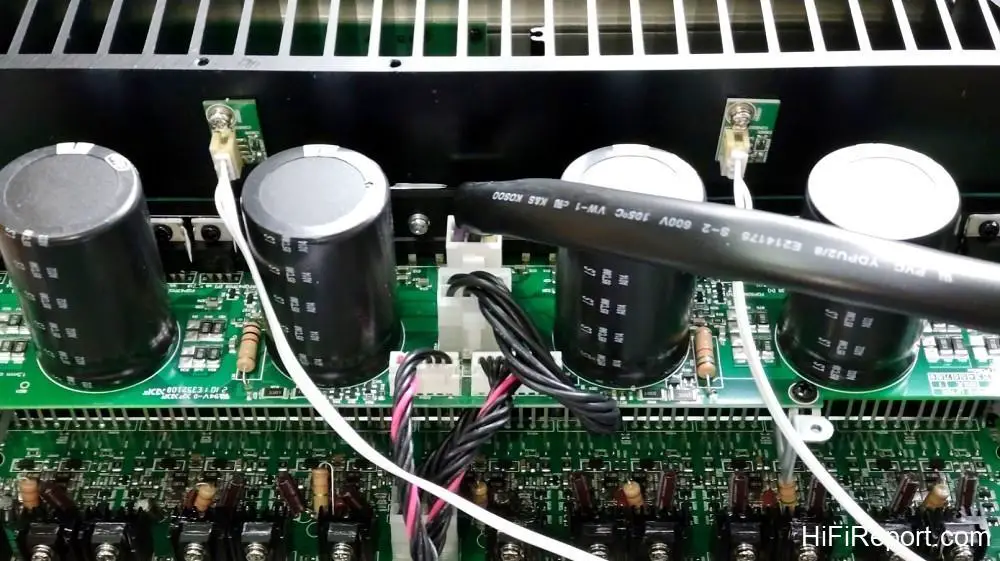
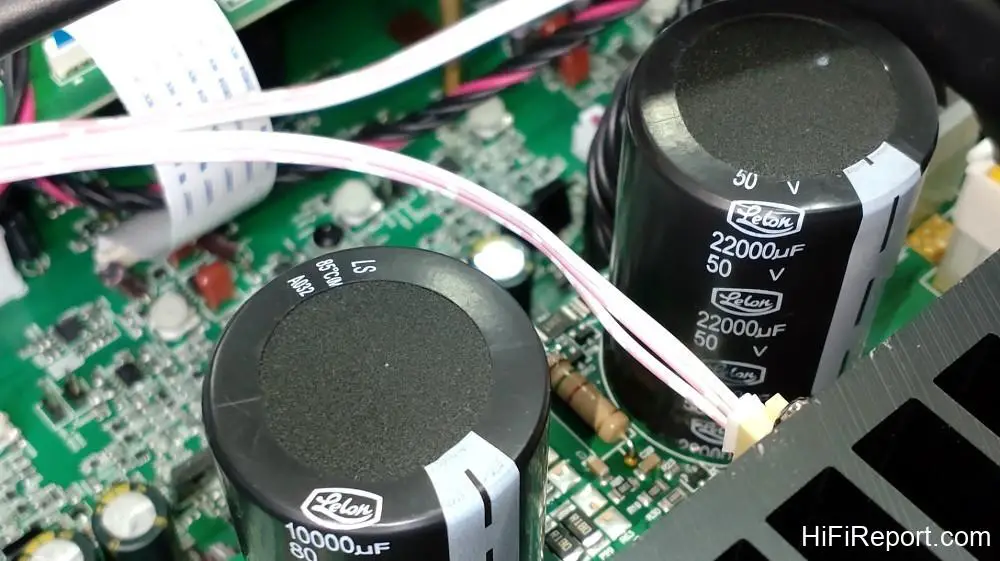
The Arcam PA720’s Class G (G class amplification) effectively addresses the problem of low efficiency at medium and low power output.
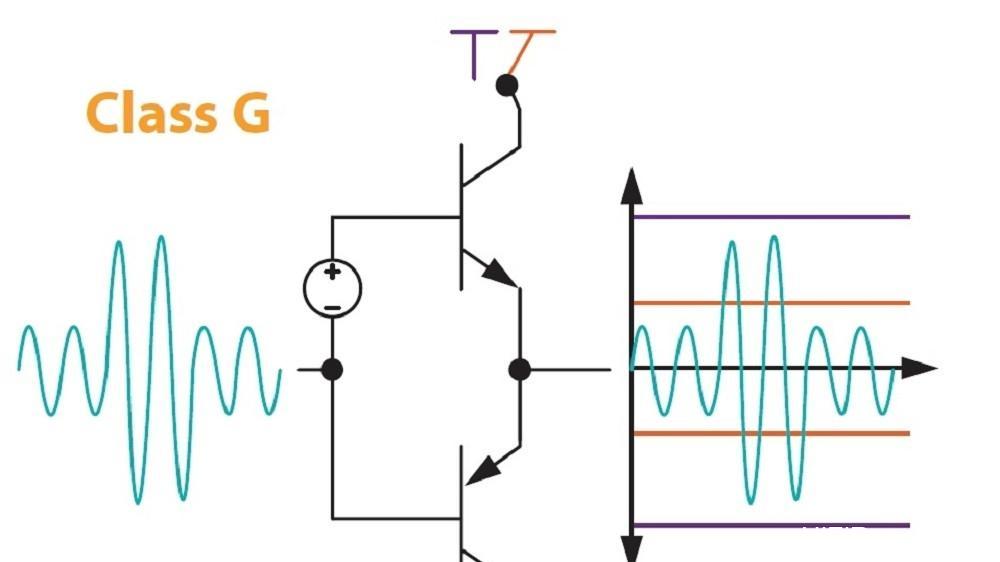
Please see the diagram above [assuming a diagram was referenced in the original text]. This illustrates the simple working principle of Class G: the output stage of all Class AB and Class A amplifiers uses only one power supply, providing a fixed DC voltage. The higher the power output of the amplifier circuit, the higher the required supply voltage.
However, at medium and low power output levels, the larger the difference between the supply voltage and the output audio voltage, the lower the efficiency becomes.
The Class G approach provides two or more sets of supply voltages. The example shown [again, assuming a diagram] uses two supply voltages. During normal volume listening and medium-to-low power output conditions, the output stage transistors are powered by the lower voltage supply. Compared to Class AB, Class G at this point reduces the difference between the supply voltage and the output voltage during medium-to-low power output, thereby improving efficiency.
At high power output levels, the power supply for the output stage transistors switches to the high voltage supply. This method allows the energy utilization at medium and low power output states to approach that of high power output states, which is the hallmark of Class G. However, Class G also requires well-designed audio detection and control circuitry to ensure good continuity of the output signal during the transition between the high and low voltage supplies.
So, Class G amplification circuitry is essentially a “gear-shifting Class AB amplifier.” Arcam’s implementation is even more interesting. According to Arcam, their Class G amplifiers operate in Class A when powered by the low voltage supply. The PA720 is stated to operate in Class A up to 20 watts. I did a quick calculation: if the load (speaker impedance) is 8 ohms, for 20 watts RMS output in Class A, the quiescent current for each power transistor is approximately 0.79 Amperes.
If calculated based on 20 watts peak into an 8-ohm load, the quiescent current for each power transistor is approximately 0.665 Amperes. Although the current isn’t high, using a lower voltage supply for Class A amplification is also more energy efficient than using a higher voltage supply (resulting in slightly less heat). But the PA720 has seven channels in total, so good heatsinks are still essential.
What happens above 20 watts? The power transistors switch to being powered by the higher voltage supply, operating as a normal Class AB amplifier. I really like this design. Because when we listen to music at medium or low volumes, we naturally “savor” the sound quality. At this point, the PA720 acts as a Class A amplifier. If you want to turn up the volume and energize the room, nothing is more important than high output power.
In this situation, the PA720 can instantly transform into a high-power Class AB amplifier. Simply put, the PA720 is a 7-channel amplifier that switches between two roles: Class A and Class AB. I believe its true purpose for using Class G isn’t primarily efficiency, but rather to allow users to “listen to music with Class A sound”!
Setting Up the Listening Test
To truly understand the characteristics of the Arcam PA720 and unleash its full potential, I brought in reference equipment that is arguably punching above the PA720’s weight class. The preamplifier I used was the flagship surround processor from the NAD Masters series, the M17 V2i. It’s not only neutral but also possesses extremely high sonic precision and features full-frequency Dirac Live correction.
The speakers I paired it with are the Pioneer EX series speakers that I’m very familiar with, along with an M&K M10 active subwoofer.

I began by testing the PA720’s performance with music. As many AV receivers now have a Pure Direct mode that bypasses all additional audio processing for the best sound quality, I disabled the M17 V2i’s Dirac correction and set the left and right channels to “Large”. This way, when listening to music in two-channel mode, the PA720 drove the full range of the Pioneer S-1EX floorstanding speakers, with the subwoofer silent.
This allowed me to test both the PA720’s driving power and its sound quality simultaneously.
Music Performance – Power and Dynamics
First, let’s talk about the driving power. With no subwoofer assisting, I listened to the first track “Again and Again (eyes mix)” from milet’s *eyes* album. Starting from the 18th second of the intro, there’s a very deep, strong ultra-low frequency presence. The PA720 didn’t just allow the S-1EX to produce immense energy that filled my 8-tatami-mat listening space and was physically felt; the ultra-low frequency was full, truly extending deep.
Moreover, even with the speakers producing such high-volume bass, the control remained excellent. This kind of stability made me feel very confident and willing to turn the volume up high.
Speaking of high volume, some music isn’t about conveying beauty but rather comes across as raw and wild, a very direct expression of emotion. Such music absolutely requires power for proper expression, like Macy Gray’s “Bang Bang”.
The same is true for live rock recordings captured with dummy-head binaural techniques, such as Lou Reed – Take No Prisoners – Live. Before the singing starts on the first track, “Sweet Jane,” the drummer taps the kick drum a few times. If the amplifier you’re using has enough power, speed, and control, under conditions of sufficient power and transient response, the punch and dynamics you hear from the kick drum will sound real.
Given the PA720’s driving power, if your room has decent soundproofing and your neighbors are friendly or nonexistent, you can feel free to listen to live recordings at volumes that make you feel like you’re actually in the Live House.
Music Performance – Sound Quality
Although Arcam is one of the representative old brands from the UK, the PA720’s sonic characteristics are not typically “British sound.” Instead, it falls into the category of the “new generation” British sound that I’ve quite liked in recent years. The powerful and fast bass I mentioned earlier is not a characteristic of typical British sound. However, it still maintains the typical British sound’s core characteristic of being centered around a warm and substantial midrange.
Yet, its midrange is less overtly moist and slightly less warm, making the midrange relatively cleaner and without any sense of stickiness. Listening to Gautier Capucon’s performance of Rachmaninoff’s Cello Sonata in G Minor, Op. 19, one can fully appreciate the PA720’s “high-resolution midrange.” The sound of the cello possesses very delicate texture and rich tonal variations.
Typical British sound tends to be more restrained in the high-frequency region. Some say this contributes to a sweeter, rounder sound. However, I don’t believe the PA720’s treble shows a tendency towards roundedness or softening. Listening to Hilary Hahn play the Presto from Bach’s Sonata for Violin Solo No. 1 in G Minor, BWV 1001, it still fully expresses the upper extension and sheen of the violin without any softening.
When listening to music at normal volume, I am absolutely certain that the Arcam PA720 sounds like a Class A amplifier. You don’t need to turn up the volume high; the level of realism in the sound is as if you have already stepped into the space of the musical performance. Listening to Hsu Che-pei sing “The Last Love Letter,” the focus is no longer on texture but on the emotional impact the music conveys.
Movie Performance
In terms of movie sound performance, I believe the PA720’s energy, speed, and resolution will make users feel, “Ah, this is the benefit of using separate components.” It’s not just capable of powerfully conveying the immersive tension of war films, able to “subdue with force” through immense energy like a real cinema; its sound is entirely unlike the muddy, rough quality of some high-power amplifiers. Instead, it is quite refined and realistic.
The quiet background allows even subtle sounds dispersed throughout the three-dimensional space of a movie soundtrack to have a strong sense of presence. The soundstage is wide and transparent, with high visibility, and the size of sound images and their movement within the space are very clear and precise. While watching a movie, without me needing to point it out, users will naturally feel and appreciate the beauty of the film score.
Conclusion
The suggested retail price for the Arcam PA720 is ¥132,000 NTD, which is approximately $4,200 USD. For a seven-channel power amplifier, averaging less than $600 per channel, it is undoubtedly an affordable product. However, in terms of sound performance, I believe it far surpasses its price range. Users don’t just get the impact, convincing power, and aggression for movie soundtracks.
When listening to music at normal volumes, it behaves entirely like a Class A amplifier: the realism, warmth, and emotion in the music will make it hard to believe this is truly an affordable multi-channel power amplifier. Therefore, if you are considering upgrading your current system or purchasing separate multi-channel preamps and power amps, I strongly recommend the Arcam PA720 – a 7-channel power amplifier with outstanding performance-to-price ratio.
Specifications
* 7-channel power amplifier
* 7 channels driven: 100W/channel (8Ω), 140W/channel (4Ω)
* 5 channels driven: 110W/channel (8Ω), 175W/channel (4Ω)
* 2 channels driven: 140W/channel (8Ω), 225W/channel (4Ω)
* Harmonic Distortion (THD): 0.002% (at 80% rated power)
* Input Impedance: 47kΩ
* Sensitivity: 1V
* Class G amplification (Class A up to 20W)
* Inputs: 7x XLR (Balanced), 7x RCA (Unbalanced)
* Outputs: 7x Speaker terminals, 7x RCA (Parallel to RCA input)
* Control: Network, RS232