
Argento Flow FMR EE Power Cable Review
In the realm of audiophilia, each enthusiast harbors a personal summit to conquer. My recent experience auditioning the Argento Flow FMR EE, a flagship power cable from Denmark, left me in awe, unveiling yet another pinnacle in power cable design.
Three Decades Building a Boutique Audio Cable Legacy
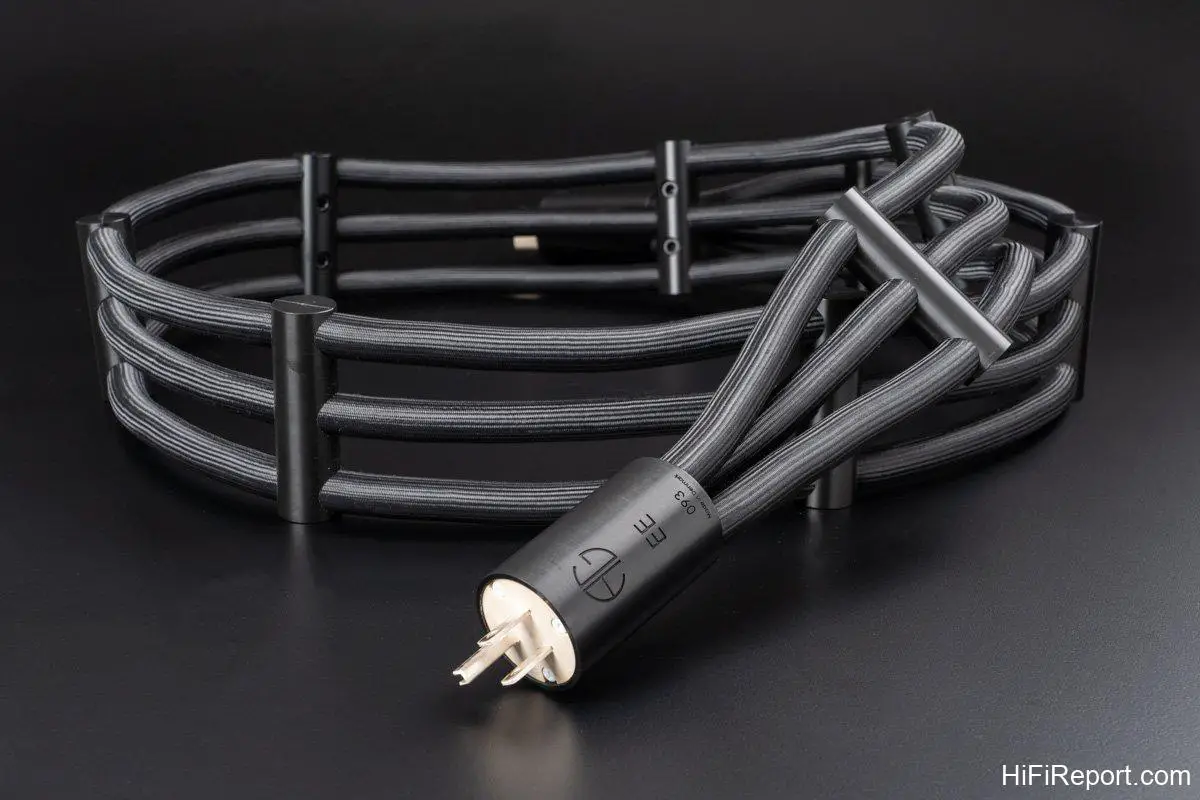
My first encounter with the Argento FMR EE power cable was at the 2021 TAA Audio Show. Initially, the design struck me as “excessive.” It was, after all, just a power cable, yet Argento had meticulously separated the live, neutral, and ground conductors, further augmenting the structure with a custom-designed cable separator. The visual impact was undeniably impressive. To unite these three robust conductors, Argento employed bespoke connectors at both ends. Such a high-caliber power cable naturally demands equally refined craftsmanship; the flawless exterior and meticulous attention to every detail were readily apparent.
Upon learning the price of the FMR EE power cable, many might scoff. “Just a cable,” they might argue, “how could it possibly be so expensive? Is it even necessary?” Early in my career as an audio reviewer, I shared similar sentiments. However, my journey in audio media has revealed the immense challenges of staying true to one’s vision. Without unwavering dedication, achieving an ideal becomes an impossible feat.
Argento’s esteemed position in boutique audio cables isn’t a result of overnight success or inflated pricing. It’s the culmination of thirty years of painstaking effort, gradually establishing their reputation, a testament to their unwavering commitment.
Thirty Years Honing Boutique Audio Cable Expertise
Founded in 1991, Argento began as a small operation, initially serving only the Danish domestic market. The launch of the Serenity series in 2003 marked their foray into the international audio scene. By 2008/9, the Flow series emerged, embodying over a decade of accumulated expertise, propelling Argento into the elite echelon of boutique audio cable manufacturers. The subsequent, higher-tier FMR and FMR EE series built upon the foundation of Flow, amplifying the materials and craftsmanship to create Argento’s contemporary classics.
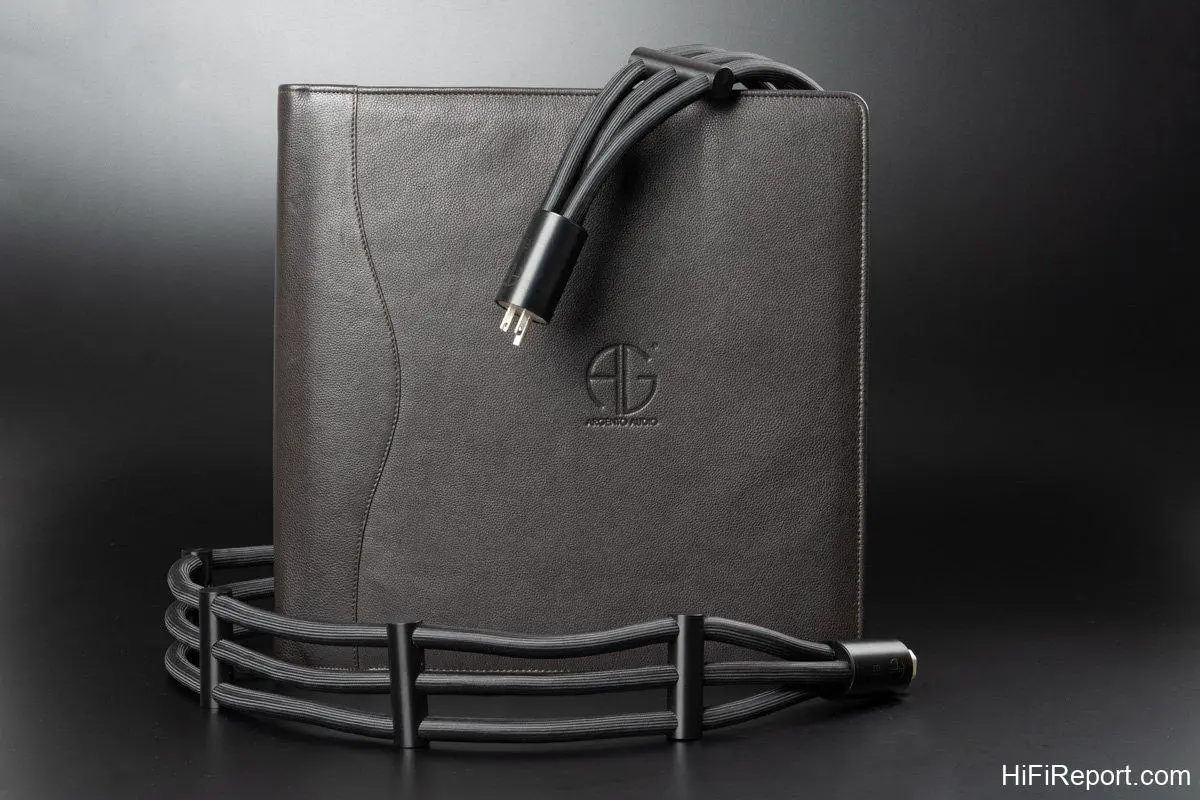
Both FMR and FMR EE represent evolutionary steps from the Flow series. FMR stands for Flow Master Reference, while FMR EE denotes Master Reference Extreme Edition. Having reached a technological zenith with the Flow series in 2008/9, further advancement proved to be exceedingly challenging. It took Argento nearly eight years to unveil the FMR and FMR EE, showcasing their current state-of-the-art expertise.
Embodiment of Argento’s Technological Prowess
Argento’s signature lies in their use of silver conductors, emphasizing high purity. The Flow series already embodied the pinnacle of Argento’s silver wire crafting techniques. The FMR EE in my possession shares the same technological foundation, but with a threefold increase in materials and meticulous refinement in every detail, repeated three times over. Therefore, our discussion must begin with the Flow series.
Flow utilizes high-purity silver, though Argento refrains from specifying the “Nines” purity level. Instead, they emphasize “high purity annealed silver,” signifying superior and more stable electrical signal transmission. Building upon this foundation, Argento subjects the conductors to two cycles of ultra-deep cryogenic treatment and surface polishing, further stabilizing the conductive properties. These meticulous processes, invisible to the eye, are time-consuming and demonstrate a commitment to slow, deliberate craftsmanship.
Beyond the premium silver conductors, insulation is paramount. Common insulation materials in audio cables include plastics, cotton, and air, often used in various combinations to achieve insulation while maintaining a low dielectric constant to minimize capacitive reactance. However, Argento deemed these materials insufficient and developed their proprietary VDM insulation technology, an exclusive Argento patent.
Patented VDM Insulation and Vibration Damping Technology
VDM stands for Vibration Damping Material, a technology consistently applied across Argento’s product range, from the entry-level Serenity to the top-tier Flow, FMR, and FMR EE. While Argento remains discreet about the specific technical details of VDM, they highlight its dual function as both an excellent insulator and a vibration-damping material. This unique characteristic effectively mitigates microphonic effects. This patented VDM technology is exclusively Argento’s.
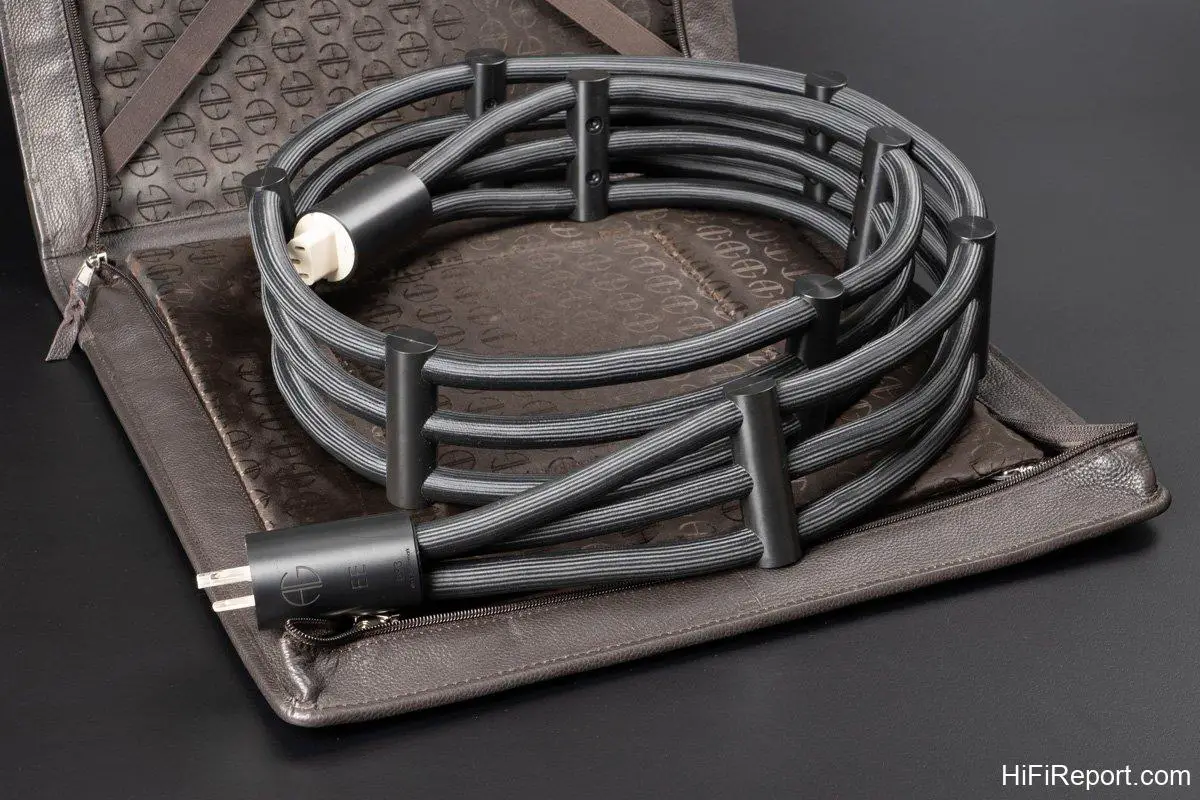
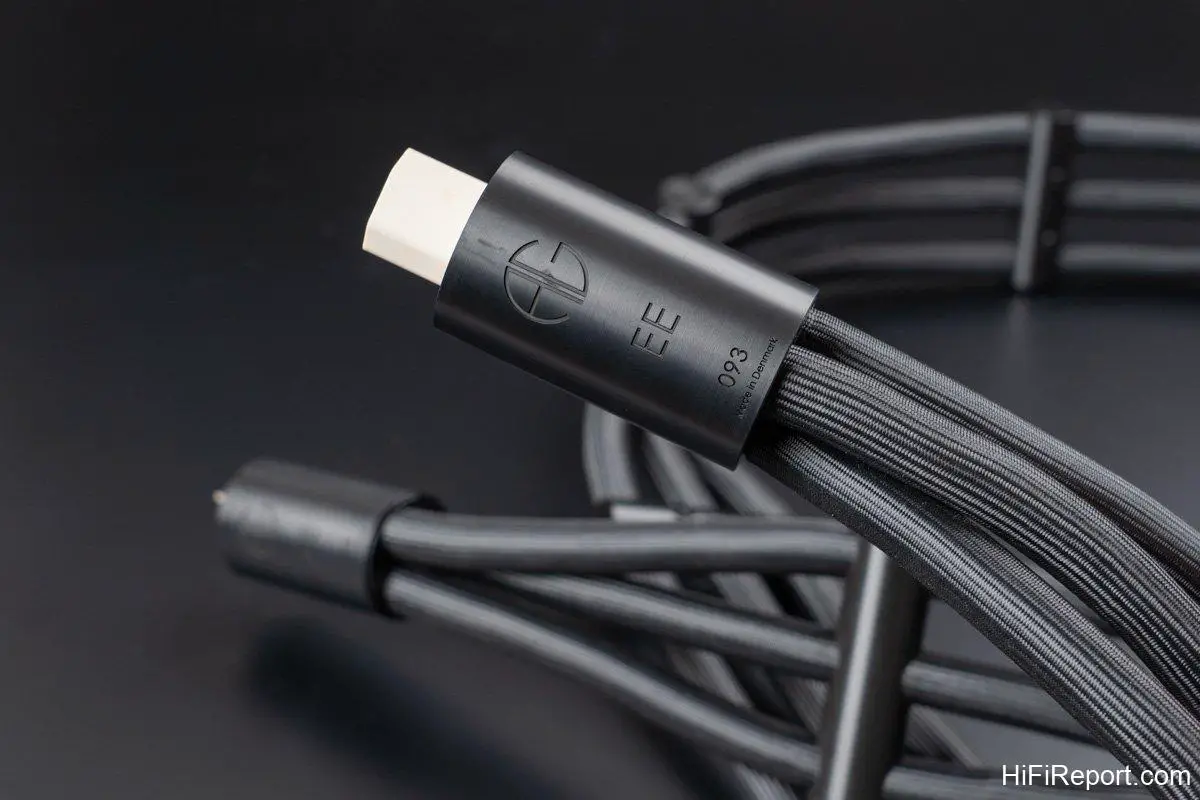
For the Flow series connectors, Argento employs custom-made silver connectors, assembled without solder, using crimp connections to maintain an all-silver pathway from conductor to connector, avoiding the introduction of lower conductivity solder. Naturally, FMR EE, as the flagship model, also features bespoke connectors.
Triple the Materials, Triple the Polishing
Understanding the technology behind Flow simplifies grasping the essence of FMR EE. The underlying technology remains consistent, but FMR EE elevates material usage and craftsmanship to new heights. Silver conductor volume is tripled, and the ultra-deep cryogenic treatment and conductor surface polishing are repeated three times to ensure an impeccably smooth conductor surface.
Why the emphasis on a smooth conductor surface? The answer lies in the skin effect. When electricity or signals travel through a conductor, they predominantly flow along the surface. By polishing the silver surface to a flawless finish, the aim is to minimize skin effect, allowing unimpeded signal flow.
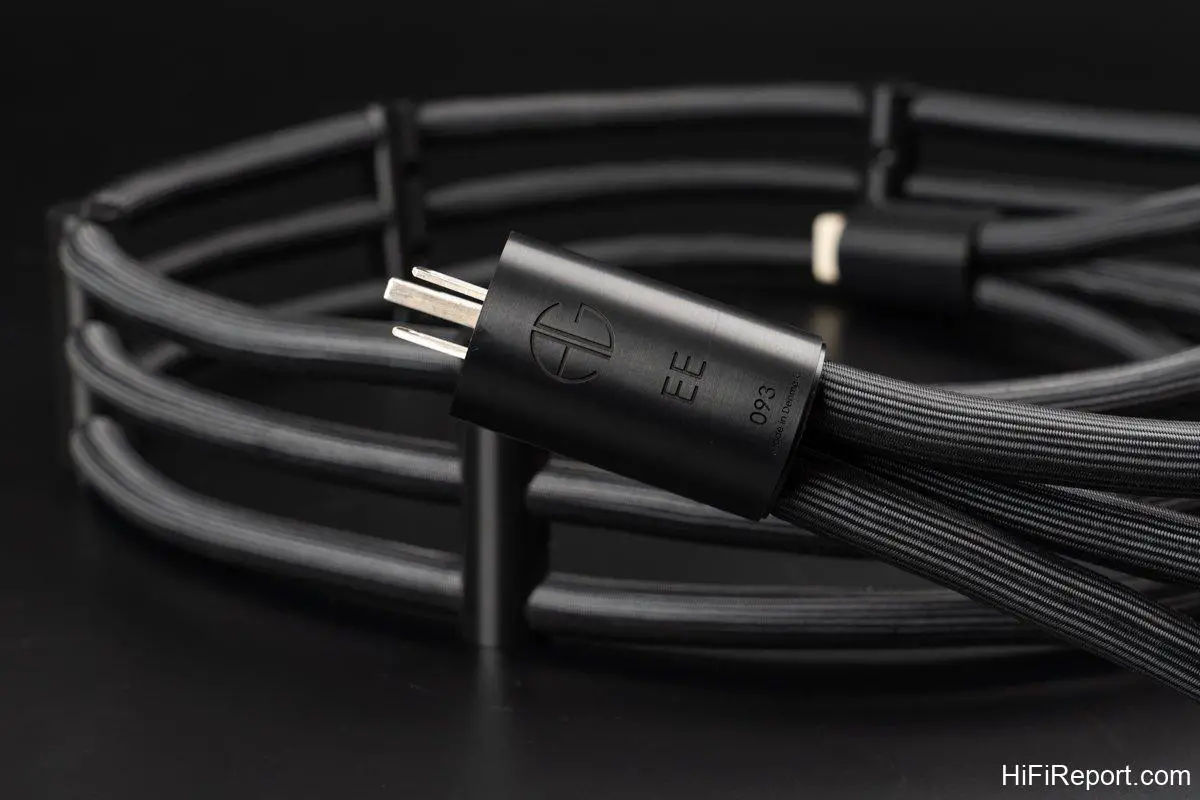
Employing fine-gauge stranded wires, repeated polishing to reduce skin effect, and ultra-deep cryogenic treatment for complete annealing—are these technical principles unknown to other manufacturers? Certainly not. However, executing each step meticulously and thoroughly incurs significant costs. Cryogenic treatment alone, involving gradual temperature reduction to -192 degrees Celsius using liquid nitrogen followed by slow return to room temperature, can take three to five days per cycle. Imagine repeating this three times! Similarly, conductor polishing, while technically straightforward, demands considerable labor and time, all contributing to the overall cost.
Ultra-Deep Cryogenic Treatment and Custom Components
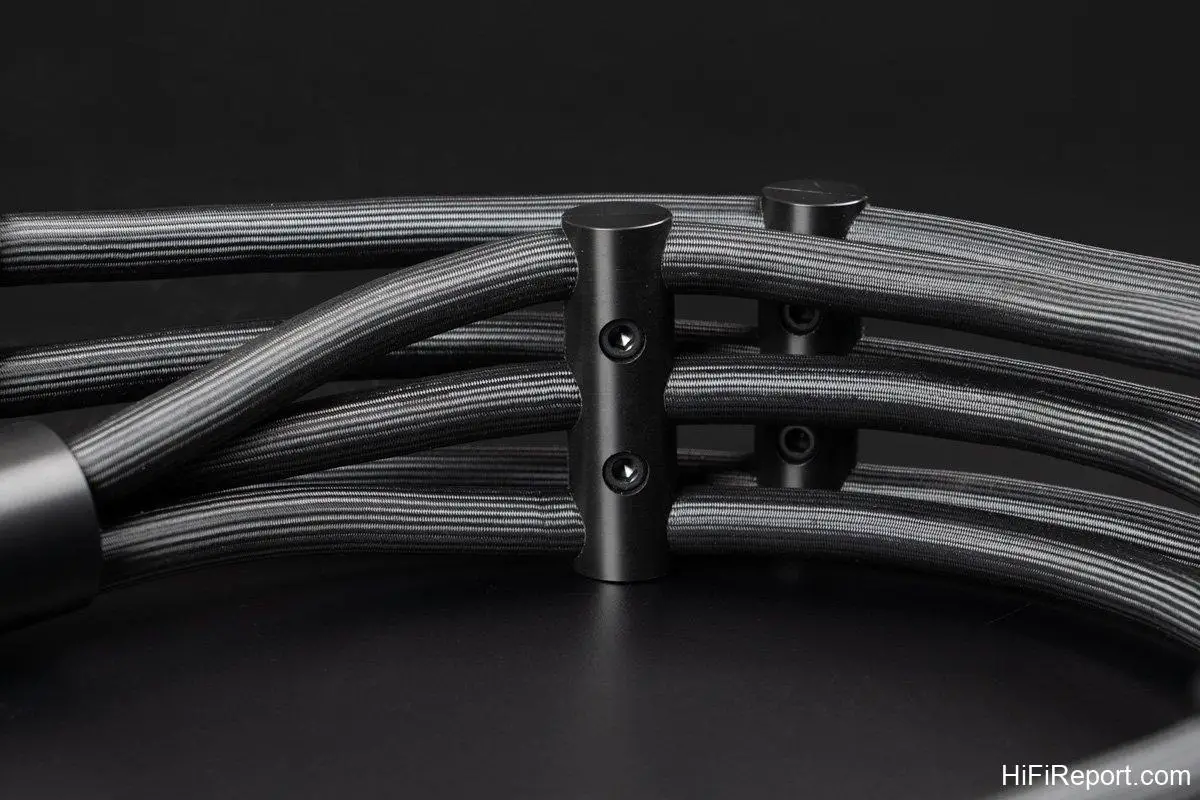
Visually distinguishing FMR EE from Flow is straightforward. Firstly, Flow is a single, robust power cable, while FMR EE separates the live, neutral, and ground conductors, securing them with sturdy, custom-made metal separator brackets. These components are precision-machined from metal using CNC technology. Secondly, Flow features a white cable jacket, whereas FMR EE adopts a black exterior – Argento’s only black cable, underscoring its exceptional status.
Upon close examination of the FMR EE, beyond Argento’s technical claims, elements like ultra-deep cryogenic treatment, repeated polishing, and fine-gauge stranding are demonstrably meticulous processes. Argento also emphasizes the precise length matching of each conductor, ensuring identical lengths for live, neutral, and ground.
Is this level of precision crucial? For a product like FMR EE, representing the pinnacle of power cable design, every detail matters when striving for absolute perfection.
Paired with EAR 868P and mbl N21 Amplifiers
Now, let’s delve into the sonic performance of the FMR EE. In the HiFiReport listening room, I initially paired it with an EAR 868P preamplifier and 509 MK II power amplifier. I connected the FMR EE to the 868P preamp to assess its impact on a lower-power consumption component. Subsequently, I switched to an mbl Noble C11 preamp/N21 power amp combo, deploying the FMR EE with the high-power N21 power amp to discern any differences related to varying power demands.
I began my listening session with the FMR EE paired with the EAR tube amplifier. Due to having only one FMR EE, I couldn’t use it with the monoblock 509 MK II amplifiers, so it was connected to the 868P preamp. This particular FMR EE had already been showcased at audio shows and should have been adequately broken in. Its immediate impact was undeniably impressive.
Truthfully, evaluating cables at this echelon carries considerable pressure. If no discernible difference emerges after installation, writing a review becomes challenging. Furthermore, if the sonic alterations are not to my taste, composing a favorable review also becomes difficult. Whether the sound aligns with my preferences is typically apparent from the first track played after connecting the cable!
A Cable That Compels Continuous Listening
The first disc I placed into the Audionet ART G5 CD player was a Stockfisch Records recording, Katja Werker’s album “Contact Myself 2.0”. The FMR EE’s initial notes immediately eased my apprehension. First, the refined sonic elegance imparted by the FMR EE was genuinely captivating, instantly appealing to my sonic sensibilities. This immediate preference indicated a strong alignment with my sonic ideals. Second, the FMR EE didn’t artificially accentuate any particular frequency range; instead, it presented a balanced, full-spectrum sonic beauty. Third, the FMR EE’s sonic character wasn’t clinical or sterile; rather, it was rich, full-bodied, luscious, and sweet – a top-tier power cable that compels continuous listening across diverse musical genres.
Katja Werker’s “Contact Myself 2.0” is an album that is unequivocally worth owning. In an era of increasingly sophisticated digital multi-track recording and post-production, a musician daring to record “live in the studio” is a rarity. Katja Werker’s original “Contact Myself”, recorded in 2000, aimed to capture a live studio performance, minimizing digital post-processing to preserve the raw essence of the recording session. Two decades later, she collaborated with Gunter Pauler, the owner of Stockfisch Records, to realize her vision of capturing a live studio performance once more.
If you are unfamiliar with this album, a quick Google search for “Yes” (https://youtu.be/2jEAaE1Dg5Y) will lead you to a video of the recording session.
Immersed in the Recording Venue
My original system already presented “Yes” with commendable musicality, but the FMR EE brought a heightened sense of proximity to the recording venue. Katja Werker, performing solo with guitar, and guitarist Gert Neumann, seated face-to-face, created a soundstage where their guitars were naturally integrated within the recording space. Both played fingerstyle arpeggios, but Katja Werker’s guitar, with a capo, possessed a brighter, more soaring tone. The FMR EE unveiled even finer nuances in their performances. From the intricate details of guitar fingerpicking to the subtle inflections in Katja Werker’s vocals, the FMR EE amplified the emotional expressiveness of the music, placing me, the listener, in the position of a studio monitor, experiencing the live recording session firsthand.
The FMR EE conquered my senses with just female vocals and guitar. The heightened sonic refinement it introduced is truly difficult to articulate. I recognize that such a statement from an audio reviewer is somewhat irresponsible – my role is to describe sound, not to declare it indescribable. However, the essence of music often transcends language. When words fail to convey emotions, music steps in to bridge the gap. Hence the adage, “When words leave off, music begins.”
Freshness in Familiar Recordings
Although FMR EE is a silver cable, exhibiting the characteristic high-frequency refinement of silver, its mid-bass performance surpassed my expectations for silver cables. The bass was substantial yet relaxed, fostering a relaxed and immersive listening experience.
Listening to “My One And Only Love” from the collaboration between John Coltrane & Johny Hartman, a CD I’ve owned for decades, the FMR EE injected a renewed sense of freshness.
John Coltrane’s saxophone during this period retained a gentle, understated style, predating his more avant-garde explorations. His tone was exquisitely beautiful, and the FMR EE intensified this romantic sensibility. Paired with Johny Hartman’s velvety vocals, the subtle brushwork on the jazz drums, the delicate piano accompaniment, and the resonant pizzicato of the double bass, even in this older analog recording, the FMR EE breathed new life and vibrancy into the vintage recording.
Unleashing Power with the Power Amplifier
While I was already thoroughly impressed with the FMR EE’s performance with the 868P preamp, using such a substantial power cable solely for a preamp seemed like overkill. Switching to the mbl system, and connecting the FMR EE to the power-hungry N21 power amplifier, revealed the true potency of the FMR EE. Its dynamic prowess became fully apparent when paired with a power amplifier. Of course, this wasn’t solely attributable to the FMR EE; the N21, with its 380 watts of output, is inherently a beast of an amplifier. The FMR EE simply added the finishing touch.
Listening to Sara K.’s “Horse I Used To Ride” from “Play On Words”, a Chesky Records recording known for its audiophile quality and wide dynamic range, the FMR EE enhanced the presentation. Sara K.’s vocals and guitar are centered in the midrange, but the weighty percussion and crisp transients carved out a vast and richly textured soundstage. With the FMR EE in the system, the recording’s expressiveness became even more natural, and the subtle nuances in Sara K.’s voice conveyed even deeper emotion. The recording quality became even more apparent, and the FMR EE seemed to unearth even more detail, revealing the inherent energy within the recording.
Lifelike Realism at High Volumes
Switching to classical music, I listened to Mozart’s Piano Concerto No. 25, Abbado’s final concerto recording with Argerich and the Orchestra Mozart. During the lively and joyful third movement, with its modest orchestral forces, I increased the volume to approximate the sound pressure of sitting in the front rows of a concert hall. The mbl C11/N21 combo effortlessly drove the Alexia 2 speakers, maintaining composure even at elevated volumes. The FMR EE further quieted the background, deepened the soundstage, and brought the orchestra closer, while preserving excellent layering and depth.
And the piano! I rarely listen to Argerich at such volume levels, but with the FMR EE in place, the piano’s dynamic gradations became more vivid and luminous, yet without sacrificing midrange richness—in fact, it improved, imbuing each note with greater fullness. The delicate nuances of every keystroke were rendered with lifelike realism, captivating my attention.
Finally, I played RR’s “Tutti!”, listening to Rimsky-Korsakov’s “Dance of the Tumblers.” The orchestral crescendo built to a festive climax, culminating in a powerful fortissimo. The dramatic dynamic contrasts and festive exuberance unfolded. Percussion instruments shimmered with brilliance, and the strings, woodwinds, and brass sections took turns showcasing their timbres. The N21’s power was undeniable, and the FMR EE not only augmented this power, enriching the sense of energy, but also imparted an ineffable sonic refinement, particularly in the soaring brass, with its bright and realistic timbre. The crystalline clarity of the triangle was like silver bells. Such musical enjoyment is truly sublime.
A Sublime Musical Feast
Spending time with the FMR EE has reinforced my appreciation for my role as an audio reviewer. While acquiring an FMR EE may be financially unattainable for me, the opportunity to experience and evaluate this pinnacle of power cable design, and to elevate my impression of Argento to new heights, is invaluable. It’s a silver cable, possessing the refined and pleasing shimmer of silver, with beautiful sonic trails. Yet, its full, rich, rounded, and luscious mid-bass exudes a sense of sonic authority. If you are fortunate enough to own an FMR EE, congratulations. You are in possession of a sublime musical feast, granting you the privilege of experiencing the beauty of music at its finest, every moment you listen.
Specifications
* **Type:** Power Cable
* **Conductor:** Pure Silver