
Audio Physic Tempo 35 Floorstanding Loudspeaker Review
Time truly flies; a decade passes in the blink of an eye! I vividly recall my visit to HiFiReport’s listening room ten years ago in July, where I auditioned the Tempo 25. Even though it was just a brief two-hour session, the experience left a lasting impression and remains fresh in my memory.
That year marked Audio Physic’s 25th anniversary. The company chose their evergreen and perennially popular Tempo model as the foundation, incorporating drivers and technologies from their flagship series to create the highly commemorative Tempo 25.
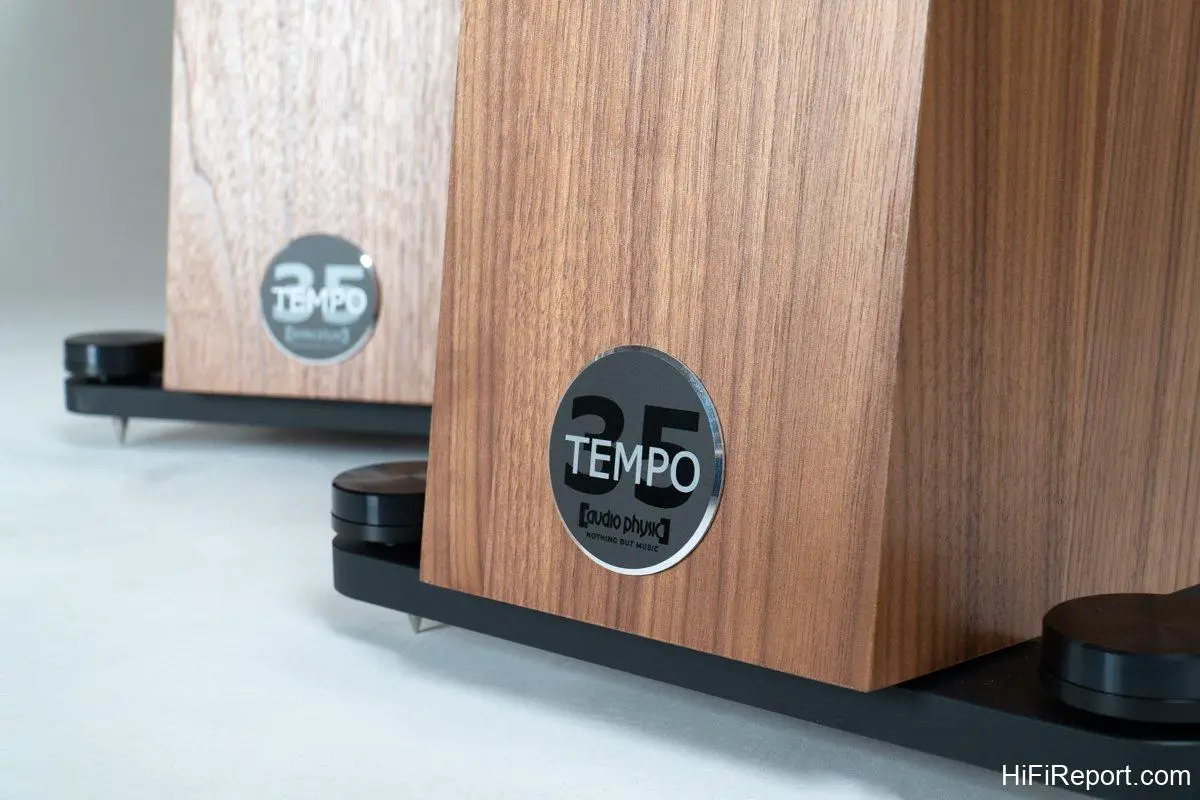
Now, ten years later, Audio Physic celebrates its 35th anniversary, and Tempo remains one of their most beloved models. To mark this milestone, Audio Physic has once again turned to the Tempo, introducing the Tempo 35.
This time, however, the Tempo 35 has been delivered to HiFiReport, allowing me to savor and evaluate it at my leisure.
Enduring Classic
It is no exaggeration to call the Tempo Audio Physic’s most significant and classic product over its thirty-five-year history.
Founded in 1986, Audio Physic launched the original Tempo in its inaugural year. Through continuous refinement and evolution over the years, the Tempo has witnessed Audio Physic’s growth and development firsthand.
How many generations of Tempo have there been? A quick online search suggests no fewer than ten.
The original Tempo and the subsequent Tempo 2 were both two-way designs. However, two core Audio Physic design principles – the slanted baffle and narrow cabinet – were established from the outset and remain unchanged to this day.
The Tempo 3 evolved into a three-way configuration, albeit with only one bass driver, the same size as the midrange driver, mounted on the front baffle to maintain the narrow cabinet profile.
A significant evolution arrived with the Tempo 4. The bass drivers were relocated to the sides, allowing for larger diameters and enabling the use of two drivers per speaker, resulting in a more comprehensive low-frequency performance.
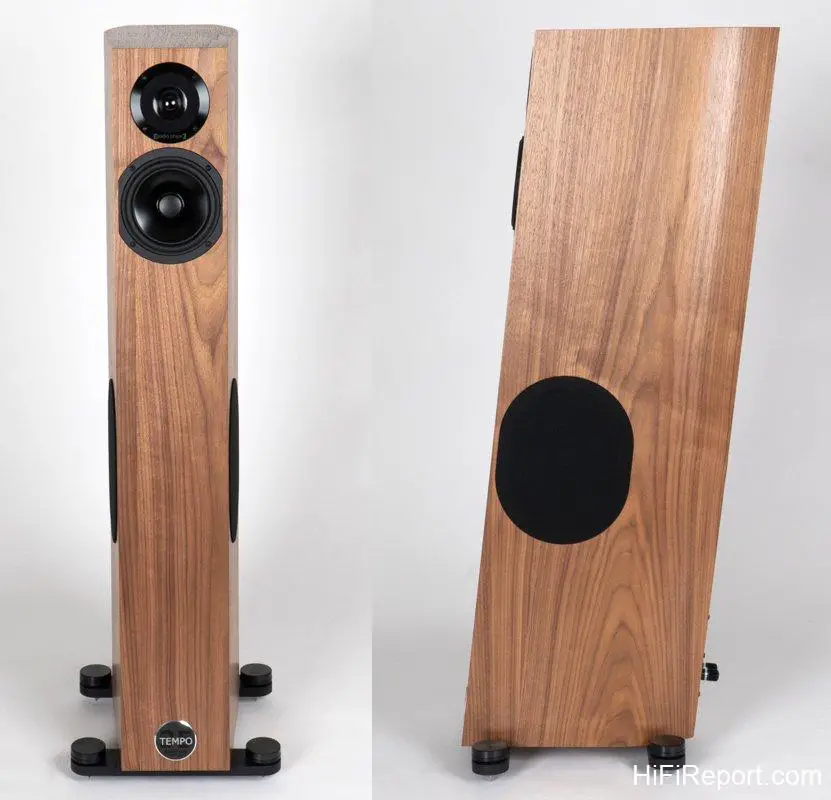
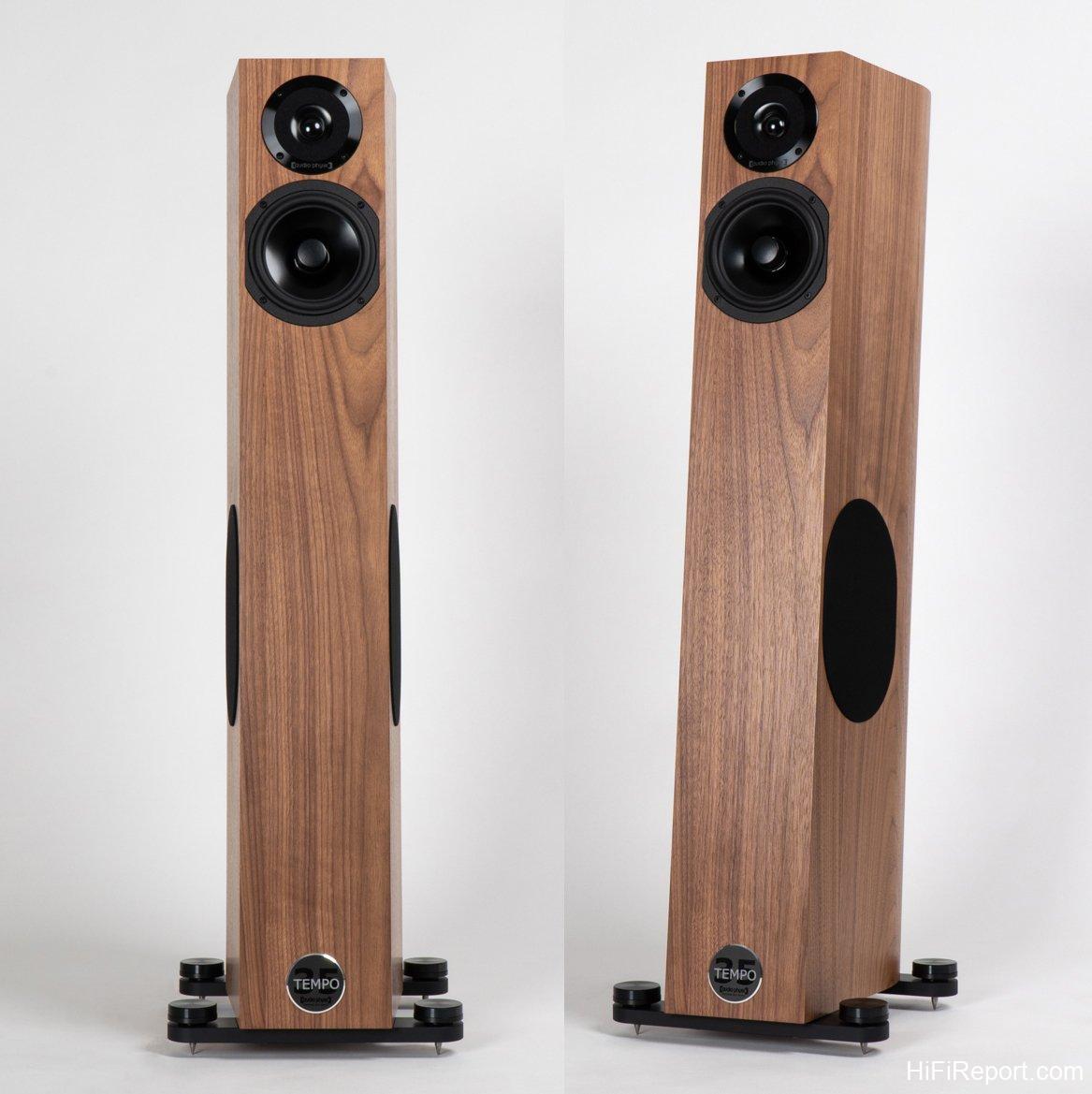
Furthermore, the Tempo’s distinctive appearance solidified at this stage. The cabinet leaned backward, with a narrow front baffle, substantial depth, and a teardrop shape achieved by the front-narrow, rear-wide, and curved side panels.
Following the Tempo 4 were the Tempo 5 and Tempo 6, culminating in the Tempo 25 in 2011, commemorating the company’s 25th anniversary – the very model I auditioned at HiFiReport.
Next came the Tempo 25 Plus and Tempo Plus (the 30th-anniversary edition launched in 2016), and finally, the current Tempo 35.
Although the Tempo 35 is the second smallest model in the Reference series (only larger than the Step 35 bookshelf speaker), almost every new technology developed for higher-end models trickles down to the Tempo 35, enabling it to embody Audio Physic’s motto: “Nothing but music.”
Let’s delve into these technologies to understand the Tempo 35 better.
Slender Profile, Dual 6.7″ Woofers
All Audio Physic speakers share a consistent aesthetic: a slightly tilted front baffle and a narrow cabinet.
The tilted baffle ensures that sound waves from the tweeter, midrange, and woofer reach the listener simultaneously. This is crucial because the acoustic origin point of a driver is the voice coil, not the diaphragm. If drivers are mounted on a vertical plane, the tweeter’s voice coil would be closest to the listener, causing high frequencies to arrive first, and vice versa for the woofer. The tilted baffle corrects this time alignment issue.
However, Audio Physic later incorporated designs with an additional mid-bass or bass driver on top of the cabinet, suggesting alternative methods to address time-phase inconsistencies.
The narrow front baffle minimizes high-frequency diffraction, enhancing imaging and soundstage performance.
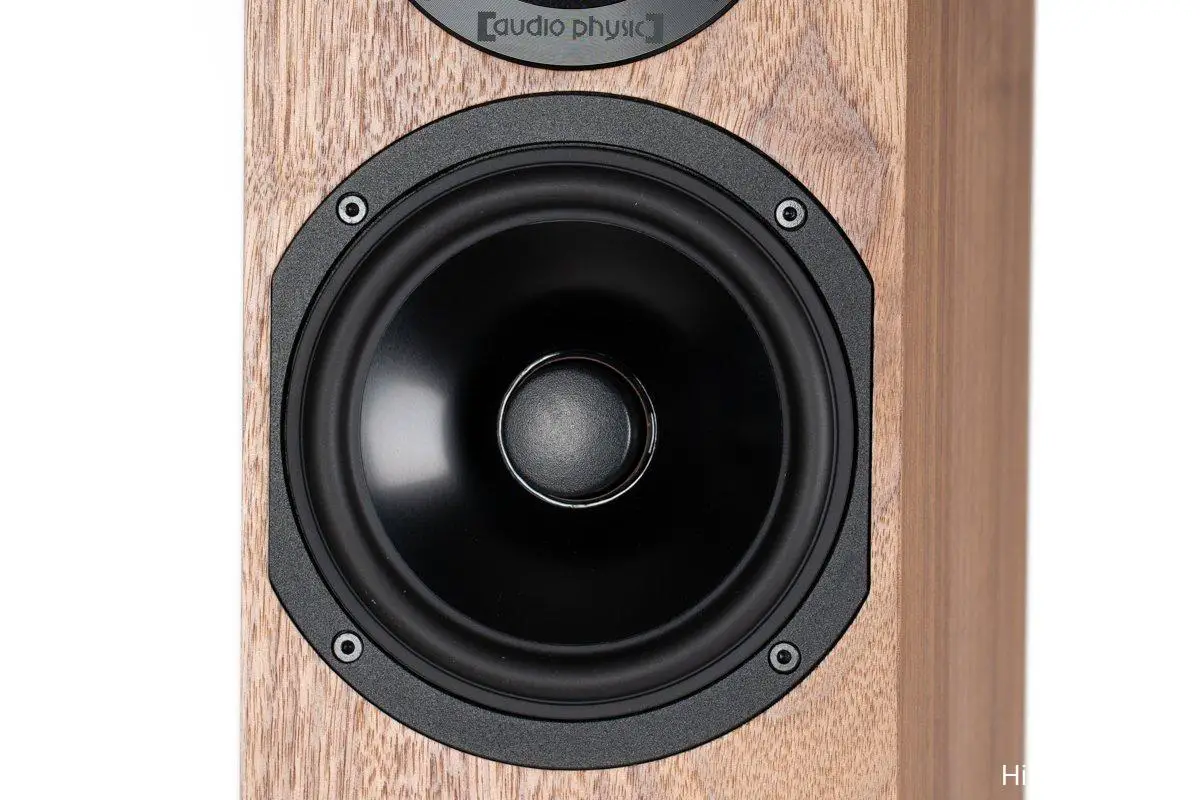
However, a narrow cabinet naturally limits the size of the bass driver, potentially compromising low-frequency performance. To overcome this, the Tempo 35 positions two 6.7-inch aluminum cone woofers on the side panels. This placement removes diameter constraints, allowing for a remarkably deep bass extension down to 32 Hz.
Furthermore, these two woofers are mounted “back-to-back” inside the cabinet in a “Push-Push” configuration. This arrangement cancels out each driver’s back-action forces, preventing unwanted vibrations from reaching the cabinet and thereby improving sonic purity.
Latest 3rd Generation HHC Drivers
In terms of drivers, the Tempo 35 features the latest third-generation HHC units, including the HHCT III tweeter and HHCM III midrange.
HHC stands for Hyper Holographic Cone. While the name sounds sophisticated, the underlying principle is quite straightforward: to enable the drivers to resist internal cabinet vibration interference. The goal is for drivers to reproduce only their intended sound, free from extraneous noise caused by cabinet resonances.
What methods are employed? One example is ACD (Active Cone Damping). The inner diameter of the surround is slightly smaller than the cone. During assembly, the surround is stretched before being bonded to the cone, actively applying tension to the cone to suppress ringing.
Another technique is CCAC (Ceramic Coated Aluminum Cone). A special ceramic coating is applied to the aluminum cone surface, increasing rigidity and providing appropriate damping, making it less susceptible to external vibration interference.
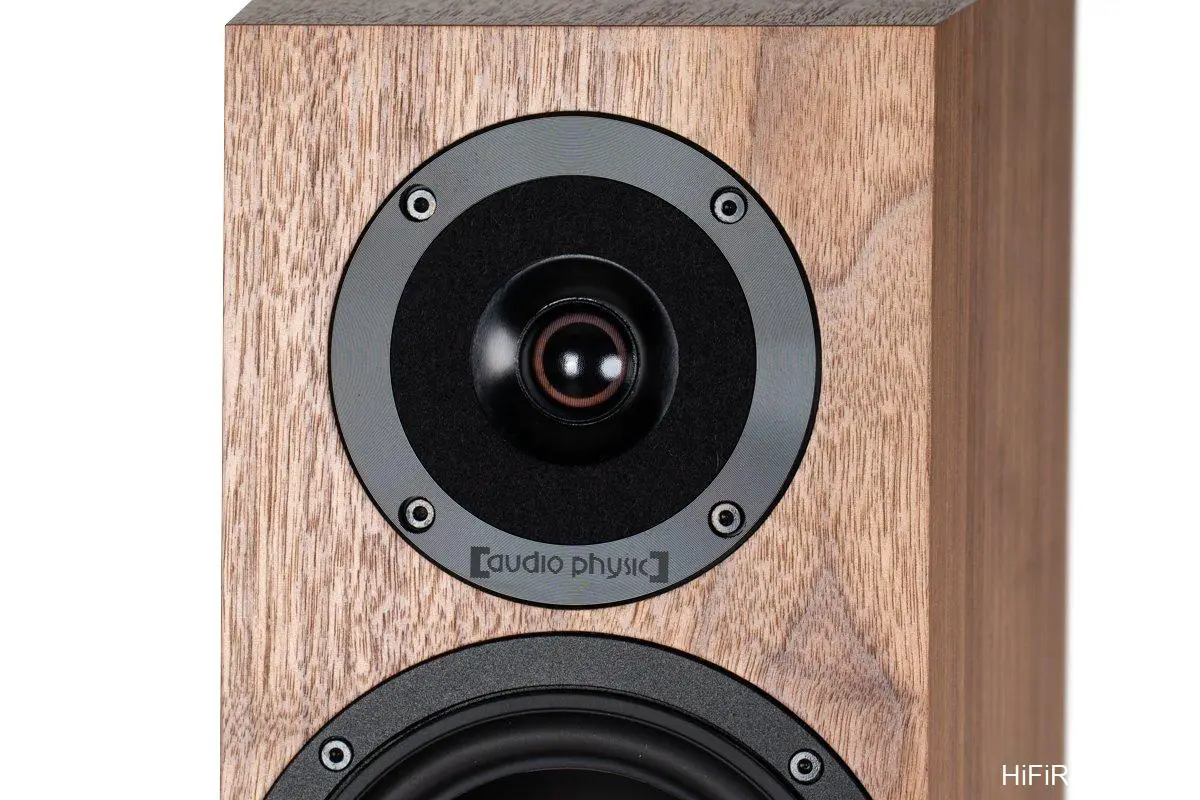
Most notably, there’s the “Dual Basket Design.” The basket is divided into inner and outer layers. The inner basket, connected to the cone, is made of a high-tech damping material to absorb and dissipate cone vibrations. The outer basket is made of metal for high rigidity and serves as the mounting point to the cabinet. The contact area between the two baskets is minimized, and the damping material further reduces vibration transmission, preventing mutual interference.
Comprehensive Vibration Control
Regarding the internal cabinet structure, the Tempo 35 maximizes efforts to minimize sound wave and pressure interference between different drivers. Therefore, the tweeter, midrange, and woofer each have their own dedicated chamber.
Furthermore, the woofer chamber has been redesigned, significantly improving low-frequency transient response.
The most unique aspect is the “Ceramic Foam Bracing” used inside the cabinet.
This ceramic foam resembles a kitchen sponge with extremely large pores, except it’s made of ceramic and is grayish-white.
Despite being mostly pores and very lightweight, ceramic foam possesses high rigidity, even stronger than MDF. It replaces traditional internal cabinet partitions and bracing structures while providing damping to absorb internal noise and standing waves.
With ceramic foam bracing, areas in the Tempo 35 that would typically require MDF are now filled with damping pores. This eliminates the need for separate damping materials or sound-absorbing materials, significantly increasing internal volume. This “large cabinet volume” within the slim Tempo 35 is likely why it achieves such impressive bass extension down to 32 Hz.
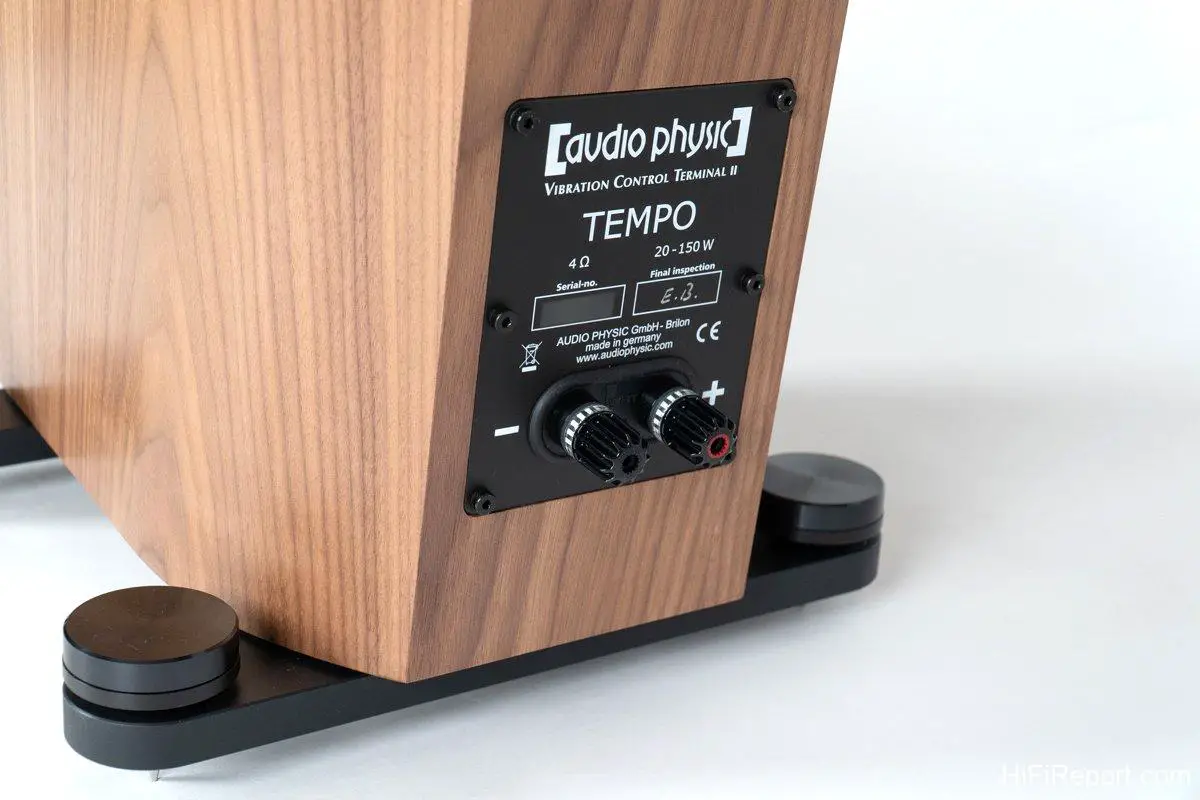
To further suppress unwanted vibrations along the signal path, the Tempo 35 utilizes VCT (Vibration Control Terminal) for the speaker terminals. The WBT speaker binding posts are first mounted onto a base, which is then fixed to the rear metal plate using rubber damping pads. This prevents cabinet vibrations from reaching the speaker terminals.
Consequently, the speaker terminals on the Tempo 35 are not rigidly fixed to the back panel but have some elasticity. Therefore, it’s crucial not to use the speaker terminals as handles when moving the speakers, as this could cause permanent damage to the damping.
In addition, certain critical components on the Tempo 35’s crossover are individually vibration-damped, ensuring meticulous vibration isolation.
Toe-in Angle Optimization
The listening tests were conducted in the HiFiReport listening room, using YBA CDT450 CD transport, Merging NADAC, EAR 868 tube preamplifier, and a Linear Acoustic LAV-60 MKII integrated amplifier as the power amplifier.
Since the Tempo 35 speakers were brand new and hadn’t been broken in, I initially spent some time running them in to allow the internal components, wiring, drivers, and damping materials to settle. Only then did I begin critical listening.
Correct speaker placement is crucial for the Tempo 35, especially given the placement recommendations on the manufacturer’s website, which serve as an excellent starting point.
According to Audio Physic’s advice, if space permits, a certain distance should be maintained between the speakers and the back wall, between the speakers and the side walls, and between the two speakers themselves, ensuring these three distances are not equal.
The website also suggests that the listening distance to the speakers should be slightly shorter than the distance between the two speakers, for example, 2 meters and 2.4 meters respectively, to minimize room influence.
Speaker placement must also be combined with appropriate toe-in.
Audio Physic recommends that the optimal toe-in angle is achieved when the projection axes of the left and right speakers cross slightly behind the listening position. The further back the crossover point (smaller toe-in angle), the wider the soundstage, but image focus may be less precise.
If more than one person is listening simultaneously, with two or three people seated, the crossover point can be positioned slightly in front of the listening position (larger toe-in angle), widening the sweet spot.
During my actual listening experience, I also found that the Tempo 35 indeed requires a relatively large toe-in angle. Because it has woofers on both the inner and outer sides, without sufficient toe-in, the inner woofers of the two speakers can easily interfere with each other, and the outer woofers can directly fire into the side walls, resulting in blurred or uneven bass response, even booming. Appropriate toe-in can prevent these issues.
Warmth and Realism
Once properly positioned, the characteristics and advantages of Audio Physic speakers, exemplified by the Tempo 35, truly shone.
For instance, listening to “Honeysuckle Rose” from Jane Monheit’s “Taking a Chance on Love” album, a lively and cheerful tune with a simple jazz trio accompaniment of double bass, piano, and drums, the Tempo 35 presented a clear and realistic sonic picture with excellent 3D imaging.
The relative positions of the double bass and vocals were clearly defined, with highly prominent and distinct images and superb separation. The hierarchical relationship and proportional sizes of the lead vocals and accompaniment were clearly delineated, and the front-to-back layering was outstanding, resulting in a top-notch soundstage that was truly impressive.
Furthermore, the sonic images produced by the Tempo 35 were substantial and full-bodied, not thin or delicate, yet not overly large, striking a pleasing and realistic balance.
Track 2, “In The Still Of The Night,” is a ballad primarily accompanied by a string orchestra. Here, the Tempo 35’s sonic texture became apparent – soft, mellow, and smooth. Layers of strings unfolded, dense and flowing, creating a comfortable and captivating listening experience.
Jane Monheit’s vocal image was not only tangible and defined, but her vocal lines also exhibited rich variations with clear contours, conveying both warmth and authenticity, drawing me closer into the intimacy of the performance.
Best Soundstage I’ve Heard
Next, I played the “Supreme Sessions II” test disc, a live performance recording captured directly to master using only two microphones. Listening through the Tempo 35 was even more immersive and lifelike.
Playing the first track, “Autumn Leaves,” featuring a male vocalist accompanied by piano, saxophone, bass, and drums, I’ve heard this track on numerous systems before, but this was the best soundstage presentation I’ve ever experienced. Previous auditions didn’t match the Tempo 35’s performance. The spatial dimensions were clearly defined, making the speakers seem to disappear. It felt as if the band was performing right in the listening room. Each instrument had a distinct image and a strong sense of presence, with just the right size and clearly defined positions – some in front, some behind, some larger, some smaller, all without blending together. It was incredibly engaging! Moreover, the timbre of both vocals and instruments was rich and captivating. The saxophone had a full-bodied, breathy quality, yet this richness was grounded in realism, revealing clear textures that made the sound not only pleasing but also highly engaging over extended listening.
I continued listening track after track, almost forgetting I was conducting a review. One thing I didn’t forget was the Tempo 35’s commendable sonic density, which didn’t become loose or diffuse despite its soft texture.
Bookshelf Precision, Floorstanding Authority
Next, it was time to assess large-scale orchestral works. I selected the 2017 Hi-Fi Show Commemorative CD, featuring curated recordings from Steinway Records.
Playing track 1, Tchaikovsky’s Piano Concerto No. 1, the Tempo 35 performed like a bookshelf speaker with exceptional bass output and extension. It combined the precision and clear 3D imaging of a bookshelf speaker with smooth and natural top-to-bottom extension. This allowed the symphony orchestra to sound grand and imposing, with effortless dynamics and energy, and well-organized layers and structure, which was truly remarkable for such slender speakers.
The Tempo 35 also presented solo piano pieces with composure and authority. The scale was sufficiently grand, and the lower register was stable and solid, surpassing bookshelf speakers or similarly sized floorstanding speakers.
Piano music also highlighted the Tempo 35’s excellent detail retrieval. Track 3, Bruckner’s “Fantasy in G major,” revealed lingering spatial reverberation behind the soothing and melancholic melody. Each note had excellent body, rich piano resonance, and also possessed a crystalline, liquid, and airy quality, with vibrant and varied colors that were instantly appealing.
Was this sonic character solely attributable to the Tempo 35? Not entirely. It also reflected the sonic signatures of the Merging NADAC, EAR 868, and Linear Acoustic LAV-60 MKII. The Tempo 35, with its rich expressiveness, faithfully conveyed the characteristics of the upstream components, creating the captivating piano timbre.
Own and Enjoy Now
Through this extended period with the Tempo 35, I gained a deeper understanding of Audio Physic’s brand ethos: striking a perfect balance between rationality and emotion, realism and artistry, precision and fluidity. They enable listeners to not only hear the notes but also feel the musical atmosphere, generating a sense of joy.
Audio Physic’s success is not based on anything extraordinary, but simply on thirty-five years of relentless research and development and continuously refined technologies. This enduring commitment is the key to a company’s long-term viability.
Will there be a Tempo 40 or even Tempo 45? I believe so. But instead of waiting for future iterations, the smart consumer would seize the opportunity to own and enjoy the Tempo 35 now.
Specifications
* Type: 4-driver, 3-way bass-reflex floorstanding loudspeaker
* Drivers: HHCT III tweeter × 1, HHCM III midrange × 1, 6.7-inch aluminum cone woofer × 2
* Sensitivity: 89 dB
* Impedance: 4 ohms
* Frequency Response: 32 Hz – 40 kHz
* Recommended Amplifier Power: 20 – 150 watts
* Dimensions: 1000 × 187 × 320 mm (H × W × D)
* Space Required for Placement: 290 × 430 mm (W × D)
* Weight: 21 kg