
Audioplan Maxwell U Balanced Cable Review
Having auditioned and used numerous audio cables, I’ve noticed a recurring theme: almost every cable brand claims their products are neutral and balanced, imparting no coloration to the sound—essentially, adding nothing to the original recording.
Conversely, many audiophiles believe that cables are indeed a tool for fine-tuning, capable of subtly altering a system’s sonic character.
This discrepancy suggests a bit of marketing sleight of hand might be at play.
Audioplan, however, makes a similar claim – their cables are entirely neutral, adding nothing that wasn’t already present in the recording, allowing listeners to experience music with greater emotional impact.
Is this claim justified? In my experience, yes, unequivocally. The Maxwell U might just be the most sonically transparent yet richly detailed and vibrant interconnect I’ve ever encountered. It imbues music with such expression and listening enjoyment that I felt an immediate regret for not discovering it sooner.
Four Decades of Audio Excellence
Before delving into the Maxwell U interconnect, allow me to briefly introduce Audioplan, a brand that, like myself until recently, many may find relatively unfamiliar.
Audioplan is currently helmed by Thomas Kühns. The company was founded in 1980 by Thomas’s parents, Volker and Renate Kühns. Volker was responsible for product research, design, manufacturing, and sales, while Renate managed operations and administration. Thomas initially assisted his father in R&D and manufacturing.
In 1993, Renate sadly passed away after a prolonged illness. Thomas inherited 49% of the company shares and began to take on significant operational responsibilities. By 2004, Thomas assumed full control of Audioplan, continuing to develop new products with the support of the existing experienced staff and has been running the company independently ever since.
Did Volker retire and enjoy a life of leisure after passing the company to Thomas? Not quite. Volker established Black Forest Audio, pursuing his own product visions.
Reviewing Audioplan’s company history and product timeline on their website reveals that their product focus has consistently revolved around four core areas: loudspeakers, power filters (primarily isolation transformers), cables, and Sicomin carbon fiber composite vibration damping materials.
Audioplan launched their first loudspeaker, the Kontrast I, in 1981. During loudspeaker development, they recognized the significant impact of power on sound quality, leading to the creation of their first PowerPlant power filter in 1982 to address power-related issues.
Furthermore, finding suitable cables to complement their systems proved challenging, prompting them to develop their own cable designs, earning a patent in 1983.
Sicomin vibration damping materials were developed in the mid-1980s.
With loudspeakers, cables, and power solutions in their portfolio, but no electronics, one might wonder about their reference system. The answer lies with French brand Jadis.
Audioplan has been the German distributor for Jadis since 1986, a partnership that continues to this day. Jadis components form Audioplan’s reference system. Their collaboration extends beyond mere distribution, encompassing technical aspects as well. Audioplan has commissioned exclusive models from Jadis for sale in Germany, Austria, and Switzerland. Moreover, most standard Jadis models sold in Germany undergo detailed adjustments and improvements by Thomas Kühns, enhancing their sonic performance and overall capabilities.
Audioplan also distributes the Italian brand Norma, adding solid-state electronics to their portfolio, creating a more comprehensive reference environment.
Named After Scientists
Returning to our focus, the Maxwell U interconnect.
Thomas Kühns employs a rather unique naming convention for his products, opting for the names of scientists rather than Greek gods, constellations, natural phenomena, or abstract adjectives.
The interconnect series is named Maxwell, after James Clerk Maxwell (1831 – 1879), the British physicist whose electromagnetic theory is considered one of the most significant discoveries in modern physics.
The speaker cable series is named Faraday, honoring Michael Faraday (1791 – 1867), another British physicist who discovered electromagnetic induction and invented the electromagnetic rotator, a precursor to the electric motor.
The power cable series is named Ampère, after André-Marie Ampère (1775 – 1836), the French physicist who made crucial contributions to classical electromagnetism, and for whom the unit of electric current, the Ampere, is named.
Thomas’s choice to name his products after scientists suggests a strong emphasis on scientific principles and empirical evidence in his designs.
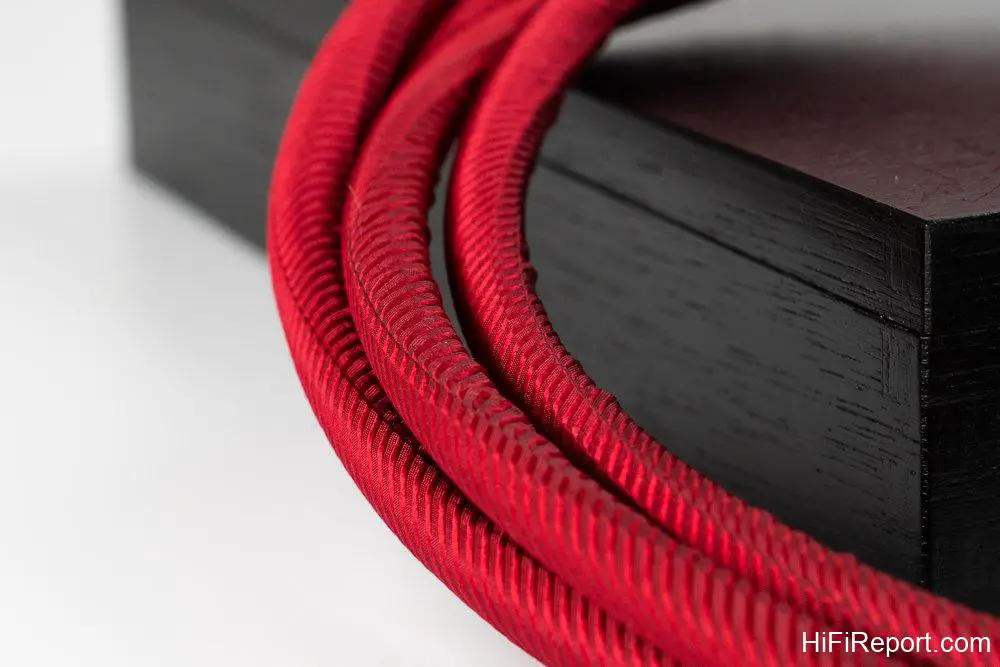
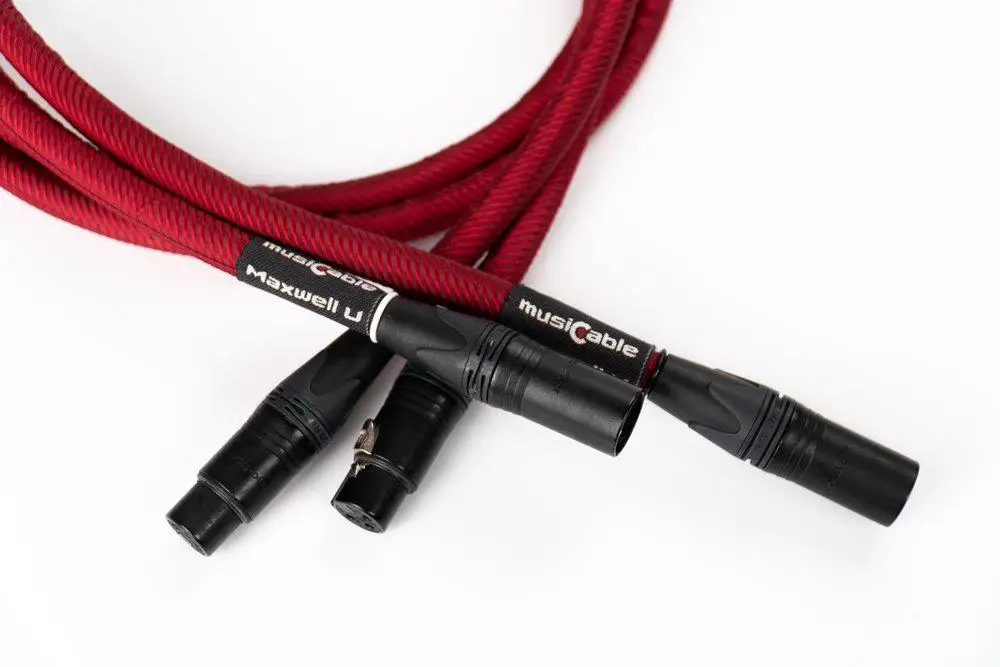
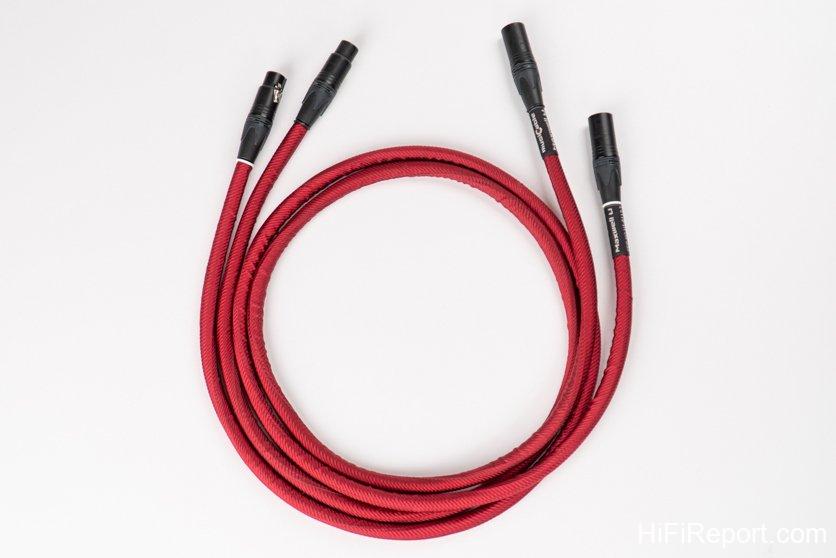
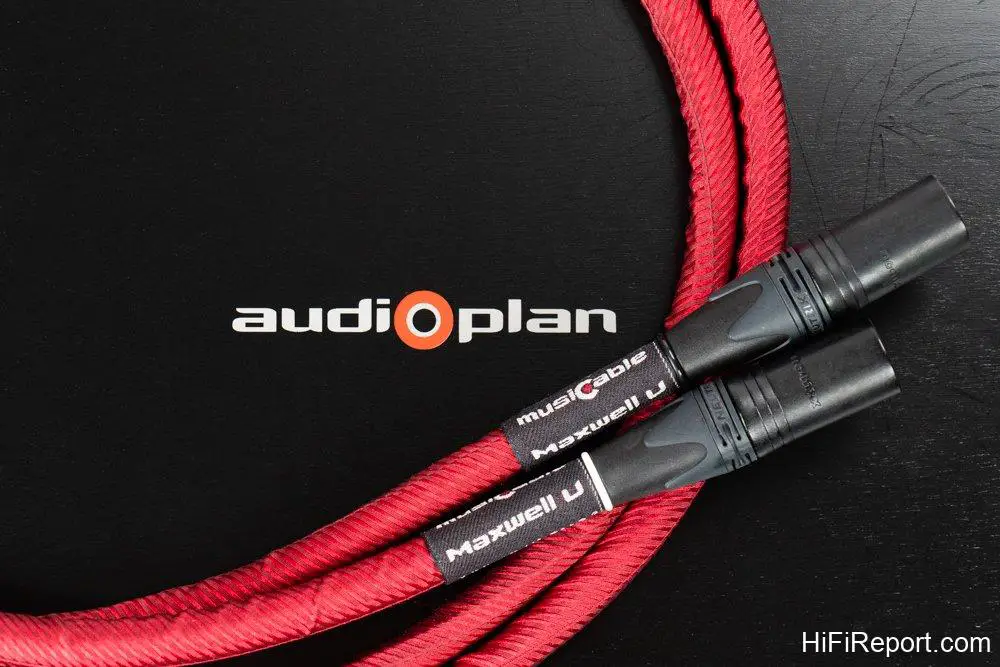
Audioplan currently offers four interconnect models: Maxwell A, Maxwell S, Maxwell L, and Maxwell U. The Maxwell U sits at the top of the range. All four models are available in both RCA single-ended and XLR balanced configurations. I received the Maxwell U balanced version for review.
Audioplan provides limited information regarding their cable design specifics, primarily highlighting their use of CRC (Conductor Resonance Control) technology. This technology employs specialized damping measures to suppress resonance within the conductor material, thereby preventing mechanical vibrations from interfering with the delicate musical signal.
CRC technology is implemented not only in the Maxwell U but also across their entire cable range.
For the conductor material in the Maxwell U, Audioplan utilizes silver-plated copper, aiming for a natural, harmonious, and balanced sonic character, while also ensuring sufficient detail retrieval.
Highly Directional Design
One of the most distinctive aspects of Maxwell U, and indeed Audioplan cables in general, is their pronounced directionality – more so than perhaps any other brand.
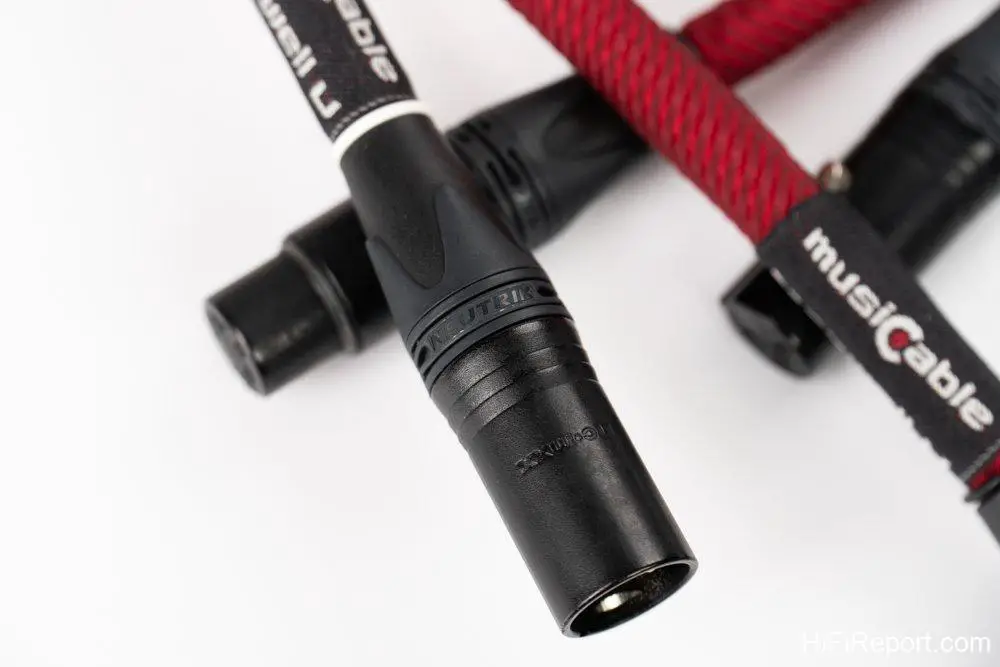
Audioplan cable directionality is twofold: signal flow direction and ground direction.
Signal flow direction is crucial for power cables and speaker cables. Consequently, Audioplan power and speaker cables are marked with arrow labels indicating the designated signal flow direction. The arrow should point towards the receiving component or the power source, respectively.
While it’s impossible to reverse a power cable connection due to differing connector types, speaker cables could be connected incorrectly. The arrow serves as a visual guide to ensure correct orientation.
Ground direction is specific to interconnects.
The Maxwell U cable features a fabric tag attached to one end of the cable, indicating the ground direction. This tag signifies that this particular connector should be plugged into the “preamplifier” end.
Crucially, regardless of whether the Maxwell U is used between source and preamplifier, or preamplifier and power amplifier, the tagged end must always connect to the preamplifier.
Does this mean signal flow direction is irrelevant? Audioplan believes that ground direction is paramount, even more so than signal flow direction. As the Maxwell interconnects incorporate grounding, priority is given to ground directionality.
A question arises: while RCA interconnects can be reversed without issue, XLR connectors are inherently directional due to their pin configuration. How is this addressed? Maxwell U XLR interconnects are offered in two versions, specifically designed for source-to-preamplifier and preamplifier-to-power amplifier applications. It is imperative to specify the intended application clearly with the retailer when purchasing.
Lifelike Music
The auditioning process involved two systems: my personal setup and HiFiReport’s reference system.
Why such thorough listening across two systems? Because the Maxwell U impressed me immensely. After experiencing it at home, I was so captivated that I wanted to hear it again with the Wilson Audio Alexia 2 speakers at the office. Hence, the dual listening sessions.
The Maxwell U balanced interconnect I received was the “source” version, intended for use after a source component. At home, I connected it between my Holo Audio Spring 3 DAC and EC 4.8 preamplifier. Other components in my system included an Auralic Aries G1 streamer, NuPrime EVO One power amplifier, and Aurum Cantus Grand Harmony loudspeakers.
How to describe the Maxwell U? In a word: vibrant.
Listening to the Tchaikovsky Piano Trio led by violinist Renaud Capuçon, a live concert recording, through the Maxwell U, I immediately noticed a subtle “air” or ambiance in the background, something I hadn’t perceived before.
Upon closer listening, I realized it was the ambient air movement and spatial reverberation captured in the recording, contributing to the sense of a live performance.
I felt a diminished barrier between myself and the music. The sound was conveyed with greater immediacy and realism, not only vivid in its presentation but also agile and emotionally expressive. In passages of heightened intensity, the dynamic impact was particularly direct, amplifying the emotional engagement.
The Maxwell U excelled with classical music, creating a sensation of being face-to-face with the performers. I could discern the subtle rosin texture of the bow on the strings with remarkable clarity and refinement. Piano keystrokes were rendered with crispness and precision, and the sound possessed a very appropriate sense of weight and body. The overall frequency balance was also exceptionally even.
Natural Frequency Extension
Listening to “Days without Tears” from the original soundtrack of the Korean drama “Mr. Sunshine,” sung by Korean vocalist Kim Yuna, a melodically poignant and emotionally charged song, further highlighted the cable’s strengths. The recording employs close-miking techniques to enhance emotional intimacy, resulting in a larger perceived image and a more forward soundstage.
The Maxwell U not only deepened the deliberately crafted spatial depth of the recording but also rendered the singer’s sibilance and breath sounds with delicate clarity. Crucially, the Maxwell U’s detail retrieval was remarkably effortless, releasing information across the entire frequency spectrum without strain. I never felt that it artificially emphasized sibilance; rather, the entire musical picture was rendered with enhanced clarity.
The high-frequency performance of the Maxwell U is exceptional, with superb extension in both directions, resulting in a sound that is airy, effortless, relaxed, and vividly alive.
In comparison, my reference interconnect, the Harmonic Technology Para-I balanced cable, sounded less vibrant and emotionally engaging. Even though the Para-I is already considered a lively cable – indeed, its liveliness was a key reason for my initial purchase – the Maxwell U surpassed it in this regard.
Regarding tonal characteristics, frankly, it’s difficult to describe the Maxwell U’s inherent sound signature. It seemed to impart virtually no sonic fingerprint of its own, allowing the inherent tonal qualities of the connected components to shine through. In that sense, its sonic character is almost “non-existent.”
In my experience, many expensive high-end cables noticeably improve density, image focus, and dynamic impact. The sound often becomes purer, more refined, and the background seemingly “blacker.” However, this can sometimes come at the expense of musicality and liveliness, with subtle details obscured and the sound becoming somewhat sterile.
The Maxwell U is entirely different. It simply conveys the music completely, allowing it to sound richer and more captivating.
While it might not cater to audiophiles seeking dramatic sonic transformations, I believe true HiFiReport enthusiasts will deeply appreciate its qualities.
Sparkling Sound
The second phase of listening took place in the HiFiReport listening room, using Wilson Audio Alexia 2 loudspeakers. The associated components were a YBA CDT450 CD transport, Merging NADAC DAC, EC 4.8 preamplifier, and EAR 509 power amplifiers. The Maxwell U was connected between the NADAC and EC 4.8.
Playing the renowned audiophile recording “Jazz at the Pawnshop,” I immediately noticed the familiar clarinet and vibraphone timbres were noticeably brighter and more luminous than I had previously experienced, like flowers freshly in bloom.
The Maxwell U is not about weighty sound; its forte is vibrancy. The clarinet sounded remarkably agile, with fluid lines and notes that seemed to dance freely. The vibraphone’s mallet strikes on the metal bars were rendered with crispness, and the high frequencies shimmered airily, exhibiting exceptional agility. The resonance within the vibraphone’s tubes was particularly rich, fully expressing the instrument’s inherent tonal colors.
The cymbals were also exceptional, exhibiting delicate textures upon gentle strikes, imbued with a touch of brilliance within their lightness. One could discern the subtle variations in each cymbal strike, revealing a wealth of sonic nuances.
The piano also sounded superb, transparent yet possessing a lovely sweetness.
The Maxwell U’s musicality elevated this live recording, making it even more atmospheric and captivating. In comparison, the reference interconnect, the Tromba Mandolin XLR, sounded less transparent, with a slightly heavier, denser texture. The clarinet exhibited a touch of nasality, a larger sonic image, and a greater sense of weight. It was also pleasing to listen to, presenting a different sonic flavor.
Listening to the Blue Coast Records sampler, track 1, “Looking For A Home,” featuring beautifully detailed acoustic guitar and slide guitar, further illustrated the Maxwell U’s strengths. The subtle friction of the slide on the guitar strings, creating the vibrato effect, became incredibly delicate and smooth, with exquisite textural refinement. Acoustic guitar plucks were both crisp and mellow, without any harshness, resulting in a remarkably relaxed and natural listening experience.
While the vocal image was not overly emphasized, the singer’s vocal texture and nuances were conveyed with remarkable clarity.
Moving to track 3, “Lilianna,” a Flamenco-style piece featuring a classical guitar accompanying a soulful male vocal.
Having just listened to acoustic guitar, switching to classical guitar, with its steel strings replaced by nylon strings, can often sound dull, lifeless, and uninteresting. The tonal shift from bright and crystalline to warm and rounded can sometimes feel dim and lackluster. However, through the Maxwell U, this was not the case. The classical guitar’s tone possessed exceptional transparency, and the notes remained agile, retaining a lovely mellow quality and clear textural detail. In particular, the constantly varied right-hand techniques – fingerpicking, strumming, tapping, plucking – were all rendered distinctly and dynamically, each articulation clearly delineated, making for a richly rewarding listening experience.
Superior Low-Frequency Resolution
Finally, using the “Uncompressed World Vol. III” test disc, I wanted to demonstrate the Maxwell U’s exceptional low-frequency resolution.
I’ve listened to this test disc numerous times, finding several lyrical tracks particularly enjoyable. However, in previous listenings, I perceived the low frequencies as somewhat over-emphasized and lacking in clear layering, feeling slightly muddy. Listening to it again through the Maxwell U, I realized the recording was actually exceptionally well-engineered.
In what way? Listening track by track, I discerned significant differences in the low-frequency characteristics of each song. Some tracks featured a larger kick drum image, others smaller. Some bass lines were positioned more forward, others deeper in the mix. Some bass sounds were drier, leaner, and shorter in duration, while others were fuller, richer, and sustained longer. These nuances were far less apparent in previous listening sessions. The Maxwell U’s superior low-frequency resolution amplified these distinctions, allowing me to clearly perceive the subtleties of the drummer and bassist’s performances, adding an unexpected layer of listening enjoyment.
Furthermore, the Maxwell U exhibited excellent frequency balance, with no discernible added coloration or emphasis across the spectrum. The overall balance was exceptional. The soundstage width and height were appropriate, and spatial imaging and localization were clearly defined, faithfully reflecting the recording’s full sonic picture.
Pure and Rich
The Maxwell U is both the purest and the richest interconnect.
Its purity lies in its commitment to faithfully conveying the original information from the recording, without attempting to add or subtract anything from the sound. Its richness stems from the inherent richness of the recording itself. When you hear the complete sonic picture, how can it not be rich? Regarding price, the Maxwell U is certainly not inexpensive, but I believe it is a true gem in the vast ocean of high-end audio cables, offering performance that rivals top-tier cables without their stratospheric price tags.
If your goal is to experience music at its best through your audio system, I believe the Maxwell U will not disappoint.
Specifications
* Type: Interconnect Cable
* Conductor: Silver-plated Copper
* Capacitance: 100 pF/m
* Inductance: 0.6 µH/m
* Resistance: 0.08 Ohm/m
* Connectors: Neutrik XLR Ag / Balanced, WBT 0152Ag / Unbalanced
Reference System
* Sources: Auralic Aries G1 Wireless Streaming Transport / YBA CDT450 CD Transport
* DACs: Holo Audio Spring 3 / Merging NADAC
* Preamplifier: Electrocompaniet EC 4.8
* Power Amplifiers: NuPrime Evolution One / EAR 509
* Loudspeakers: Aurum Cantus Grand Harmony / Wilson Audio Alexia 2
* Cables: Harmonic Technology Para-I Balanced Interconnect / Telos QAC Power Cable / Neotech NES-3001 Speaker Cable / Tromba Mandolin XLR Interconnect / Tromba Marina OCC-1 Speaker Cable / Xsymphony Precision One Power Cable / Transparent Reference XL AES/EBU Digital Cable
* Accessories: MYSTJ Audio CMS Equipment Rack / Tiglon TMR-2 Equipment Rack / ASI Tuning Devices
“`