
Cardas Clear Cygnus Interconnect Cable Review
Recently, I had the pleasure of listening to the Cardas Clear Reflection interconnects and speaker cables, which sit in the middle of Cardas’s high-end Clear series, below the Clear Beyond and Clear, and above the Clear Cygnus and Clear Sky.
I thought that experiencing a mid-tier cable like the Clear Reflection would provide a good overall grasp of the Cardas Clear series’ sound signature.
However, after listening to the Clear Cygnus, I realized that this “assumption” was premature.
Inheriting Cardas’s Traditional Technologies
Cardas’s cable designs and underlying principles are generally consistent. All models in the Clear series share some of Cardas’s most acclaimed technologies, including: their proprietary high-purity copper conductors, produced with a slower drawing speed and a unique annealing process; cross-field construction Litz wire; Golden Ratio constant-Q stranding to overcome resonance; and the Matched Propagation technology, using PFA Teflon and air tubes as dielectric materials.
For a detailed explanation of these technologies, you can visit the Cardas website or refer to my previous review of the Cardas Clear Reflection. I won’t repeat them here.
The Clear Cygnus is actually the successor to the Clear Light.
When Cardas introduced the Clear Light, it was a simplified version of their classic Clear cable, incorporating the technological essence of the Clear line but at a more affordable price, allowing consumers to enjoy the benefits of Cardas Clear cable technology.
Cardas then further refined the structure and materials of the Clear Light, resulting in the new generation Clear Cygnus.
However, while researching the Clear Cygnus, I discovered something interesting.
Generally, higher-end cables tend to have a larger conductor gauge and a more complex design.
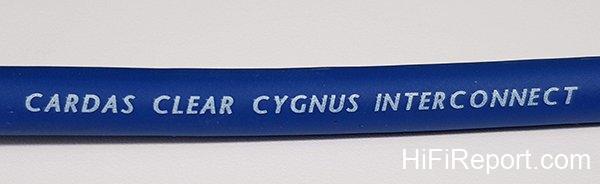
Looking at the outer diameter of the Cardas Clear series cables, they do seem to follow this rule. Clear Beyond is the thickest, followed by Clear, then Clear Reflection, and finally Clear Cygnus and Clear Sky are the thinnest.
But, the main conductor gauge doesn’t necessarily follow this pattern.
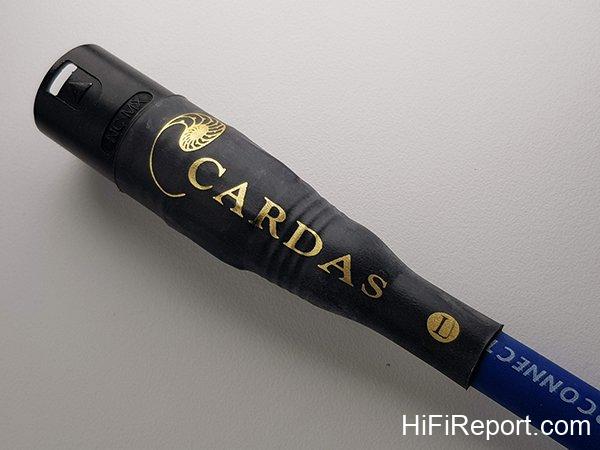
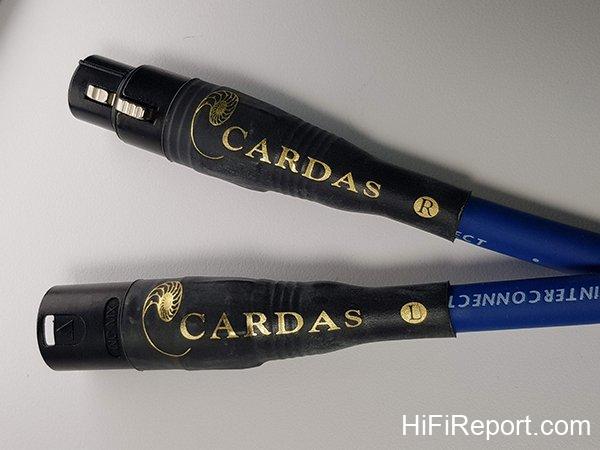
For example, the Clear Cygnus’s main conductors consist of 4 strands of 25.5 AWG wire, while the Clear Reflection has 2 strands of 25.5 AWG. Strangely, the flagship Clear Beyond has 4 strands of 26.5 AWG, which is even, technically,less.
I found this odd before connecting them to the equipment for a listening test. After the audition, it wasn’t just odd; it was astonishing.
A Lively, Fresh, and Open Sound of the Swan
Why was I astonished? Isn’t the Clear Cygnus supposed to have thicker conductor wires? Why, then, did it sound less thick and full than the Clear Reflection? On the contrary, the Clear Cygnus was more agile and lively than the Clear Reflection, with a brighter sound, more prominent details, and clearer musical layers and textures.
What’s going on? Am I suggesting that the less expensive Clear Cygnus is better than its higher-tier sibling? Not necessarily.
If you listen carefully, you’ll notice that the Clear Reflection has better density and warmth, a better sense of body, more abundant bass, a more stable lower end, and overall a more settled sound.
And, very remarkably, the Clear Reflection, with its smaller conductor gauge, actually delivers a fuller sound energy.
I can’t explain the underlying reasons, but I will say that for users who pursue a lively sound, the Clear Cygnus is superior to the Clear Reflection, at least in terms of agility and openness.
From this perspective, the Clear Cygnus shouldn’t be considered a “lower-tier” Cardas, but rather a Cardas with “a different flavor.”
Connect it to your system, and you’ll immediately notice the Clear Cygnus’s energetic and lively sound, with an open and transparent soundstage.
It doesn’t quite resemble the traditional Cardas sound signature we’re familiar with, lacking that strong, rich musicality, but it draws you into the music in a different way.
Sitting there listening, it feels like there’s a live performance in front of you.
The stage not only expands to the sides but also extends in depth.
The layering and separation of the music are excellent, and the sound image is crystal clear.
Is this really a Cardas?
Open Layering Reveals Musical Structure and Harmony
Listening to Gunter Wand conducting the North German Radio Symphony Orchestra in Beethoven’s Symphony No. 3, the orchestra unfolds freely, the layers open up, and the structure of the music becomes clear.
This isn’t just about the positioning of the instrumental sections; it’s about the harmony between them. Harmony, in turn, is related to timbre. If the layers of the instrumental sections aren’t clear, the harmony will be muddy, obscuring the beautiful timbre.
The Cygnus did an exelent job presenting.
The Clear Cygnus handles this crucial aspect of music listening exceptionally well, which already speaks volumes about its value.
For example, in the first movement, Beethoven uses counterpoint to allow different melodic lines to coexist and interact, building up intense dramatic effect.
This wave after wave of buildup, elevation, and then buildup again, conveys a powerful spirit of struggle.
The Clear Cygnus masterfully rendered the dynamic fluctuations of the music, bringing out the texture of the woodwinds during their passages and clearly separating the instrumental sections in the contrapuntal structure.
And it gets even more complex.
Listening to Sinopoli conducting the Dresden Staatskapelle in a collection of Wagner overtures, take the Tannhäuser overture as an example. The piece begins with the “Pilgrims’ Chorus,” a woodwind ensemble playing a deep and solemn melody. The music slowly develops, gradually rising, increasing in volume until it reaches a climax, then subsiding and returning to calmness before transitioning to the next section.
Here, the Clear Cygnus provided ample dynamic headroom, exhibiting unrestrained freedom when the musical energy burst forth.
The second part depicts Tannhäuser’s arrival at the Venusberg, where he is tempted by sensuality. Joyful and unrestrained melodies flow freely. When Venus appears, a powerful hymn is heard, followed by the soft, alluring call of the violins. Then comes Venus’s motif and the call of temptation, the drunken revelry of the Bacchic dance.
It must be clear.
This section of music needs to be presented clearly.
The Clear Cygnus separated the instrumental sections, clearly delineated the melodic lines, and still maintained Cardas’s signature warm timbre, retaining a warm beneath the bright and open tone.
When the Pilgrims’ Chorus returns, even stronger and more powerful than before, it washes away the previous gloomy and eerie atmosphere, and the music concludes with a solemn pause.
The system’s ability to interpret this complex and intricate music so clearly is a testament to the Clear Cygnus’s contribution.
Ample Energy, Smooth Response, Natural Timbre
Listening to piano performances, the Clear Cygnus demonstrated its strengths in natural timbre, smooth frequency response, rich detail, and ample sound energy.
With Denis Pascal’s performance of Liszt’s Hungarian Rhapsody No. 2, the notes were full of texture, with a bright and crystalline sheen. The left hand’s descent into the bass chords revealed a satisfying weight and sense of string vibration that would satisfy any audiophile.
Denis Pascal’s playing fully embodies the possibility of combining virtuosity and musical beauty. In this recording, you can hear his flamboyant and bold playing, but it’s not just about speed. Within the contrasts of musical dynamics, you can hear the little treats that Liszt hid within. The skillful use of arpeggios adds to the music’s colorfulness, but it also takes a skilled performer to reveal the beauty of this richness.
The Clear Cygnus doesn’t have the same full-bodied energy as the Reflection, but its structure is clearer, and its detailed texture is more defined.
If you then listen to the third Rhapsody, the opening bass chords clearly demonstrate that the Clear Cygnus doesn’t like ambiguity.
Rich in Detail, Excellent Sense of Liveliness
However, the Clear Cygnus’s bass quantity is not as abundant as the Clear Reflection’s. When drums or bass appear in the music, the notes feel solid and distinct. You can even hear the details of the drumsticks lightly touching the drumhead or the fingers plucking the double bass, but the bass notes are slightly leaner.
This listening experience deviates slightly from my impression of Cardas, but I have to say, this flavor is also quite good.
For instance, on the “Hell Freezes Over” album, with the Eagles’ “Hotel California,” the opening guitar is crisp and clear. The subsequent drumbeats, while not as deep as I expected, are very solid. This solidity gives the drums a strong presence.
The conga drum strikes and the shaking of the maracas are particularly realistic.
This recording is already quite bright, and with the Clear Cygnus, the details are even richer, and the emotional intensity is heightened.
Don Henley’s vocals, with his clear enunciation and breathy sounds, further enhance the live performance’s sense of immediacy.
Not Just Hearing the Music, but Feeling It, Being Drawn Into It
Returning to the studio recordings, I listened to tracks from the Dali CD 5.
Through this CD, Dali demonstrates their passion for music. They collaborated with a Danish recording studio, Medley Studio.
Dali commissioned Medley Studios to record the music. Some tracks feature Danish musicians recorded directly in the studio, while others are outstanding recordings produced by Medley Studios.
They further emphasized that during the mastering process, no dynamic compression was applied, allowing the music to retain its original form.
The first track showcases the female vocalist’s wide range of vocal techniques, and the guitar playing details are captured completely. The Clear Cygnus seems to make all these elements in the sonic picture even clearer.
The second track is a blend of funk, blues, and soul. Singer Erann DD’s voice is clear and well-defined, the guitar strumming is powerful, and the electric organ is ethereal and flavorful.
The sixth track is by Danish singer Oh Land. The opening drumbeats are deep and powerful, creating a sense of depth in the soundstage. After Oh Land’s vocals enter, the electronic bass floats and drifts, accompanied by vocal harmonies, creating a truly beautiful atmosphere! I find that the Clear Cygnus’s clear and transparent sound image, along with its abundance of detail, imbues the music with a sense of vitality, allowing the listener not just to hear the music, but to feel it and be drawn into it.
A Breath of Fresh Air
In conclusion, I reiterate that I don’t want to categorize the Clear Cygnus as a lower-tier cable than the Clear Reflection.
I believe it successfully showcases different characteristics, allowing users who seek a fresh and fragrant sound to also enjoy Cardas’s musical offering.
Specifications
* Type: Interconnect Cable
* Conductor: High-purity Cardas copper
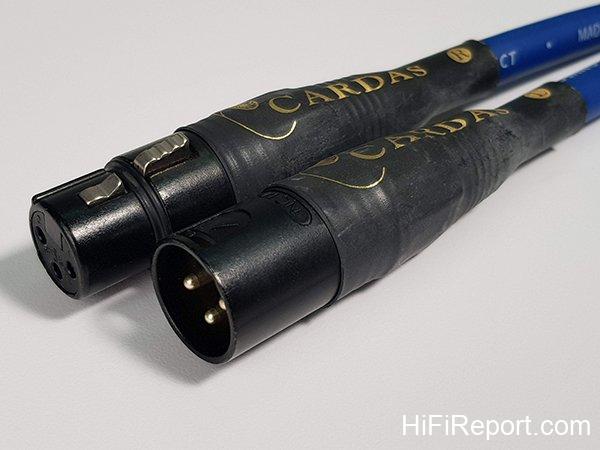
* Terminations: Cardas GRMO RCA connectors or Neutrik XLR