
Crystal Connect Van Gogh Interconnect Review
Crystal Connect? Is it a new brand? Not really. This is the familiar Crystal Cable, just rebranded in December 2020. Along with the name change, they also updated their logo, which had been in use for over a decade. Simultaneously, they launched the brand new Art Series: Monet, Van Gogh, and Da Vinci, offering a complete lineup of interconnects, speaker cables, and power cords. The product in my hands is the Van Gogh balanced interconnect.
Founder Returns as CEO
The year 2020, impacted by Covid-19, saw many industries suffer. However, the audio-visual and musical instrument industries seemed to buck the trend. Due to home isolation and lockdowns, more people stayed home, boosting the “stay-at-home economy” and related sectors. Crystal Connect was among the beneficiaries. According to their official press release, 2020 still saw growth, and the company underwent significant changes. One was the departure of CEO Robert Winterhoff, with founder Edwin Rynveld returning to lead the company. Secondly, both of the founder’s sons joined the company, signifying a stronger family business direction.
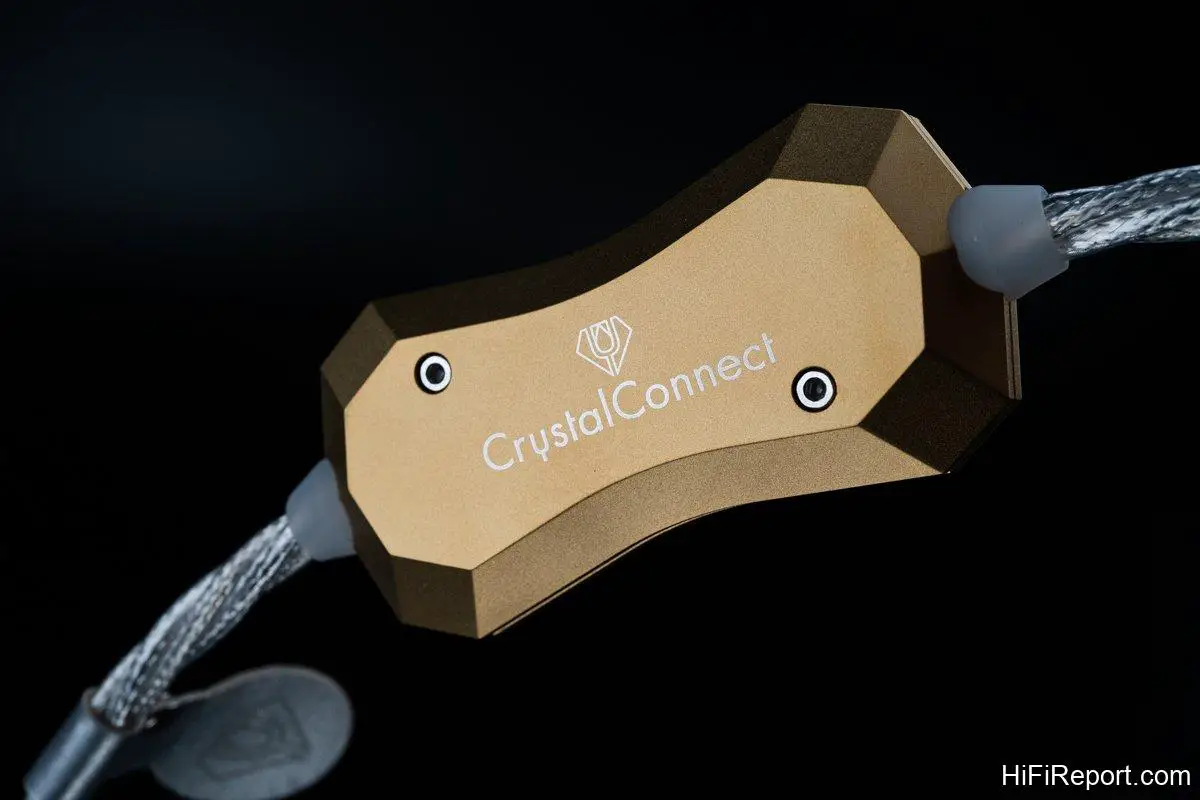
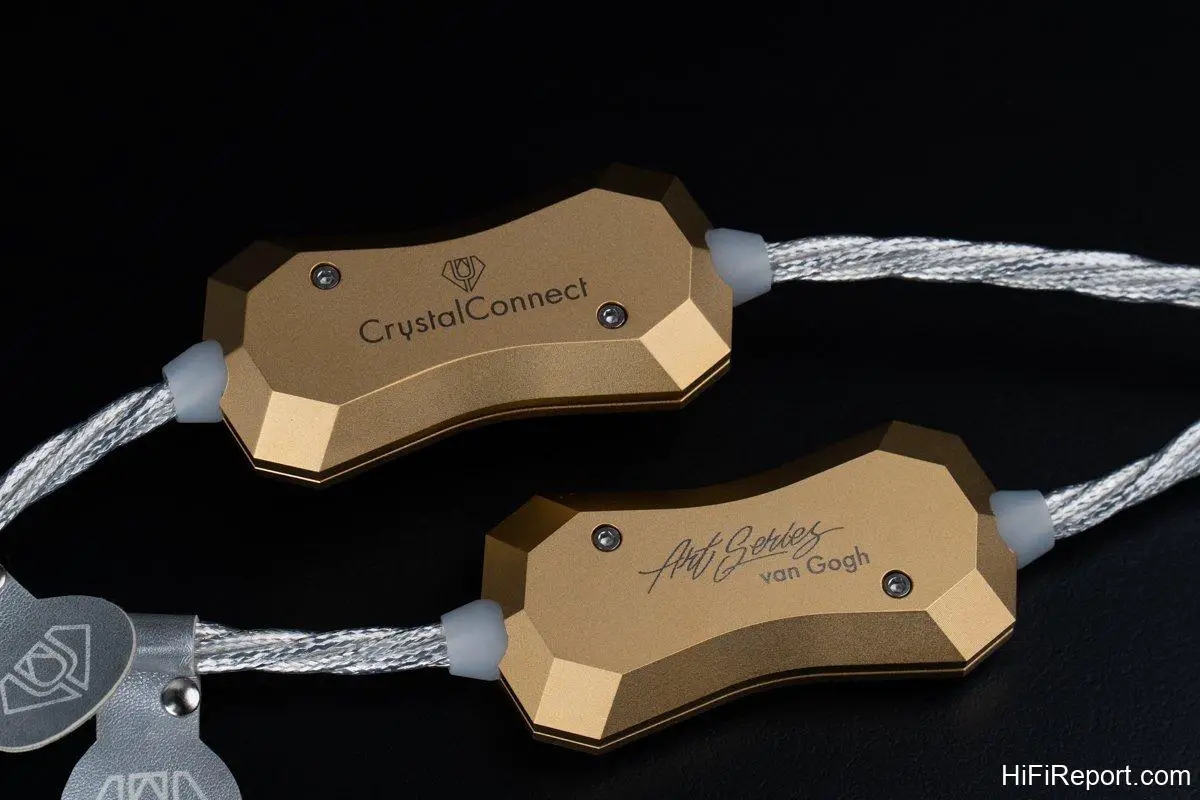
With the younger generation joining the management team, what impact would it have on the products? Certainly, there would be changes, immediately visible in the new Art Series. One example is the round, flat tag on the cable itself. It’s not just for decoration; it’s an NFC Tag.
How do you use it? Download the Crystal Connect App, install and open it, then bring your phone close to the NFC Tag. Tap the wireless symbol on the NFC Tag, and the App will identify the model and specifications of the Crystal Connect cable you have. It will also invite you to register the product online and link you to original factory news and product information.
NFC Tag for Anti-Counterfeiting
Why add an NFC Tag? It’s for anti-counterfeiting. As the saying goes, “popularity breeds jealousy.” Even during the Crystal Cable era, many counterfeit products appeared online. Although genuine cables have product serial numbers that can be checked with the Dutch factory for authenticity, and the cables themselves contain many anti-counterfeiting markers (which the factory has never revealed to me), making it easy to distinguish genuine from fake at a glance, how can general consumers differentiate between real and fake cables? Therefore, the Art Series now all come equipped with NFC Tags. Just scan with the App, and you can immediately know the origin of the Crystal Connect cable in hand. If you encounter an NFC Tag that cannot be scanned, it’s a fake.
Whose idea was it to add NFC Tags for anti-counterfeiting? It was Vitor de Leeuw, the eldest son, now serving as COO. It’s indeed a young person’s idea, using technology to solve the problem of counterfeiting.
Infinite Crystal Silver Technology
Crystal Connect’s current product line includes five major series. The entry-level is the Special Series, mostly used for engineering applications. Next is the Diamond Series, with its slender cable body and gold-silver alloy conductors. This was the product profile of Crystal Cable when it was founded over a decade ago and is the classic series that established the brand’s foundation. I personally own two Diamond interconnects, used for over ten years and still performing excellently.
Moving up are the Monocrystal Series, Future Dream, and Art Series. These three are high-end series, using single crystal silver conductors. The Art Series uses an even more refined single crystal silver, with an advanced metallurgy technology called “Infinite Crystal Silver.”
What is the difference between Infinite Crystal Silver and the previous Monocrystal Silver? The main difference lies in the length of the silver crystals. Ordinary silver wires have many contact points between metal crystals, which can reduce transmission speed and increase resistance. Single crystal silver, however, uses a special metallurgical method to maximize the length of the silver crystals. In this way, in a 1 to 1.5-meter interconnect, there are almost no breakpoints in the silver crystal. This enhances transmission speed, reduces resistance, and minimizes distortion.

Technically, Infinite Crystal Silver and Monocrystal Silver should be essentially the same, but Infinite Crystal Silver has longer crystal lengths, resulting in fewer silver crystal contact points in short-length cables.
Pure Sound Philosophy
In the world of audio cables, I generally categorize them into two schools: the “Pure Sound” school and the “Secret Technique” school. Both schools value cable structure design, but the Pure Sound school emphasizes conductor purity, believing that purer conductors allow music signals to flow more smoothly. The Secret Technique school, on the other hand, adds extra passive circuits, either for filtering out noise or for modifying the music signal.
From this perspective, Crystal Connect clearly belongs to the Pure Sound school. They strive to improve conductor purity, aiming to preserve the music signal’s smooth transmission to the greatest extent.
The earliest Crystal cables used gold-silver alloy, then evolved to the Dream series’ Monocrystal Silver single crystal silver. With the Art Series, they’ve reached even higher purity with Infinite Silver Crystal, minimizing silver crystal contact breakpoints to reduce distortion and resistance.
Single Core and Super Ground Topology
Besides the more advanced Infinite Silver Crystal metallurgy, the Art Series also features structural innovations.
They uniformly use single-core conductors, believing that single-core wires have low capacitance and high dynamic characteristics, and more accurate signal transmission timing and phase, which can make sound imaging more focused.
In the past, Crystal Connect cables mostly used single-core conductors, and the Art Series maintains this. However, another technology is new: Super Ground Topology.
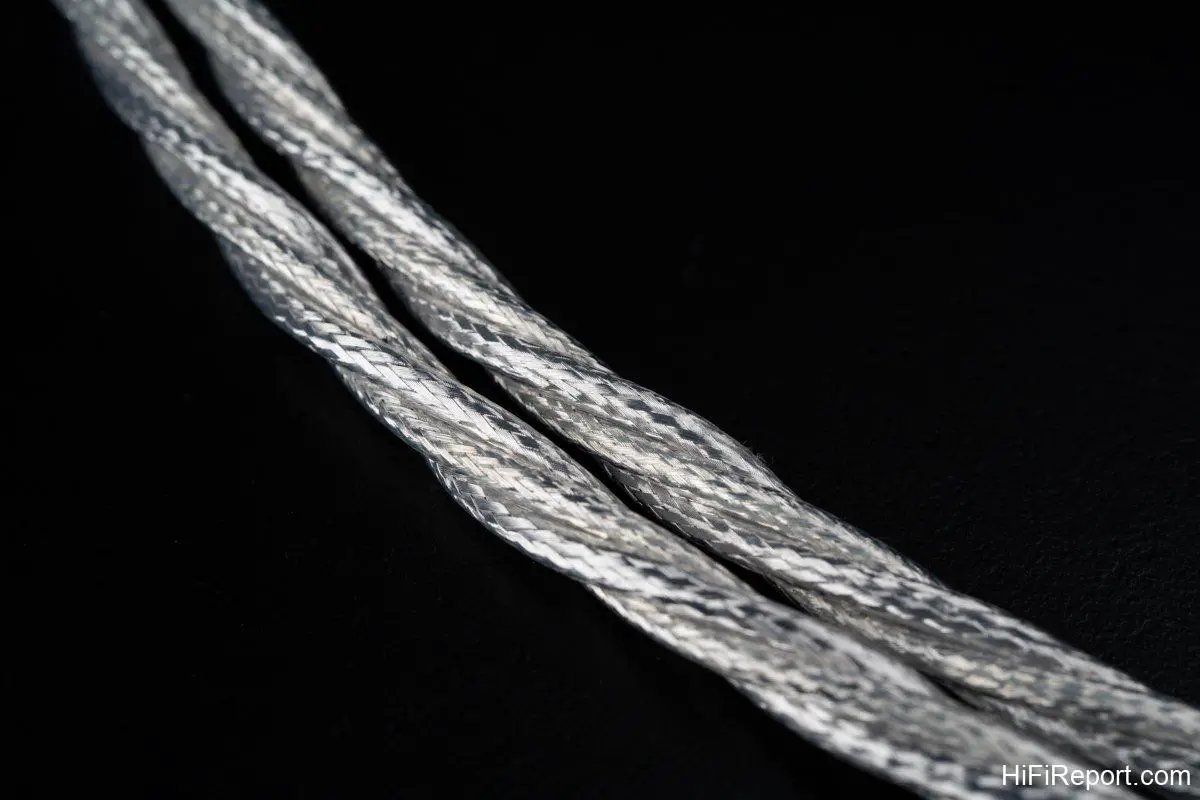
What is this? Whether it’s Monet, Van Gogh, or Da Vinci interconnects, both positive and negative poles use a single conductor each, but the number of ground wires is “over-deployed” in an asymmetrical design. Monet has 3, Van Gogh has 9, and Da Vinci has 15. Each ground wire has the same gauge as the positive and negative conductors. In other words, the conductor area of the ground side of Van Gogh is much larger than that of the positive and negative sides.
What are the benefits of a larger ground? The factory claims it reduces impedance and noise, enhances resolution and dynamics, and makes the music more transparent.
One last change is the decorative ring on the Van Gogh cable, which is slightly larger and not just for decoration. It actually has a galvanically isolated effect. However, as I dare not disassemble it, I’m not entirely sure how the electrical isolation is achieved inside. But the factory information mentions this, so it should be reported to everyone.
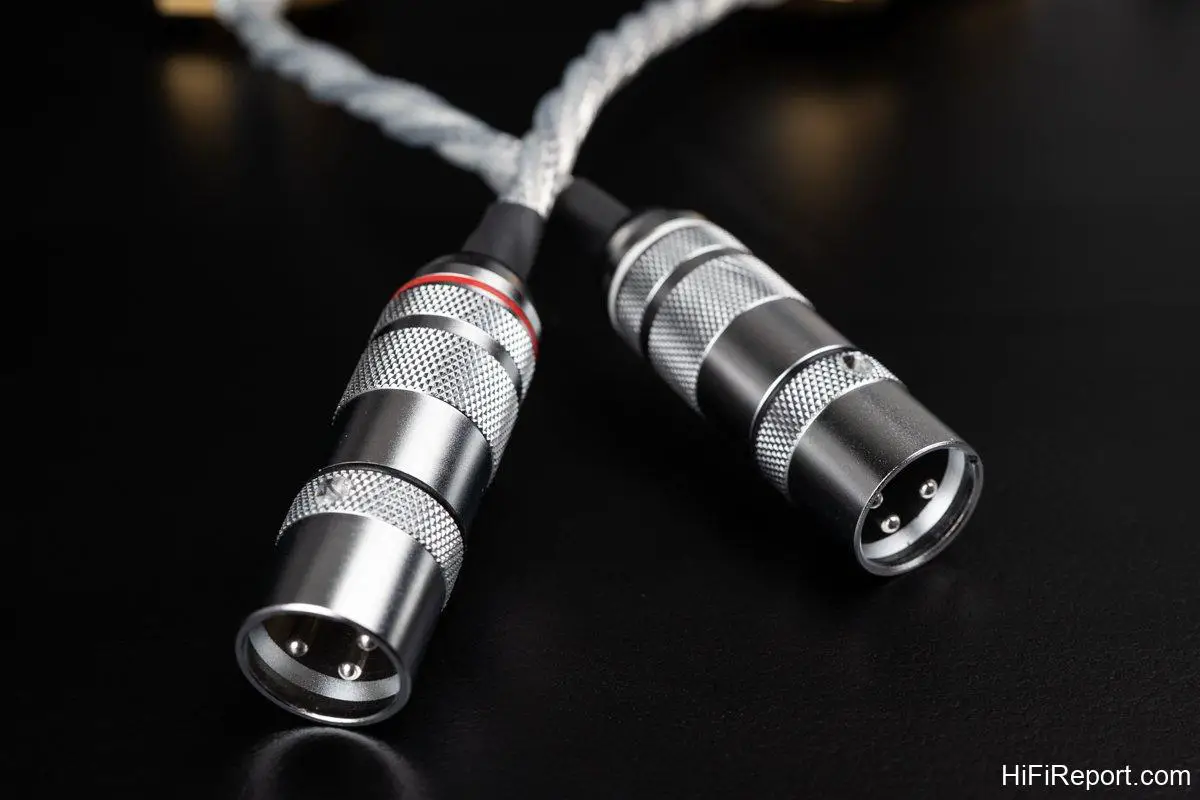
Also, Van Gogh’s XLR balanced connectors use Japanese Oyaide Focus 1, but they are slightly different from the retail version. The retail version has red and blue gemstone decorations to distinguish between left and right channels, but Van Gogh’s connectors all have transparent gemstone decorations.
Immediately Noticeable High-End Sound
Enough about the technical details, it’s time to listen to the sound.
Van Gogh possesses Crystal Connect’s consistent high-end sonic quality, a warm yet bright musical luster, which is the Crystal sound I am familiar with (after all, I’ve used Diamond interconnects for many years). However, Van Gogh is richer in all aspects of musicality, and its musical expression is more natural. During the time I auditioned the Van Gogh interconnects, it seemed every piece of equipment sent to the editorial department for review sounded exceptionally good. I know the Van Gogh interconnects added points to every piece of equipment, but it also shows that the equipment itself has excellent performance. With top-tier interconnects enhancing the sound, the sonic presentation becomes even more refined and natural.
However, Van Gogh’s high-end sound is not about adding any coloration to the music, but rather using a quiet background to highlight the beautiful musical note particles.
I want to use Hsu Jing-Chun’s “Father’s Guitar” as an example. Popular music of that era liked to play with stereo effects. The prelude of “Father’s Guitar” is a nylon-string guitar solo, positioned in the right channel, and then a steel-string guitar emerges from the left. Listening with Van Gogh, the musical background is remarkably dark and deep, contrasting the timbres of the nylon-string and steel-string guitars. When Hsu Jing-Chun’s vocals emerge in the center of the soundstage, Van Gogh enhances the sweetness of her voice. Her singing carries a melancholic and lonely emotion, telling the story of a father whose heart is only filled with the sound of his guitar, missing his wife, and neglecting his children.
Revealing Recording Era
“Father’s Guitar” is a song I’ve listened to for many years and am very familiar with, but listening with Van Gogh, the music feels more deeply emotional, with a stronger emotional impact. Hsu Jing-Chun’s singing is deeply heartfelt, and Van Gogh intensifies the emotional rendering. The nylon-string guitar and steel-string guitar, one on the right and one on the left, play behind the vocals. The recording incorporates many old analog echo effects, with rich detail. After adding Van Gogh, these studio effects become clearer, and you can even hear the sense of age in the recording.

I also want to mention a pop music recording, Wu Bai’s “Falling in Love with Someone Else is a Happy Thing.” This is an early recording from Wu Bai’s debut period, when he wasn’t yet a big star, but the blues-rock flavor is even stronger, more representative of Wu Bai’s original raw musical personality. Back then, he had just emerged from the underground music scene, and recording costs were unlikely to be high, but the “Taiwanese flavor” is even stronger. Listening with Van Gogh, both Wu Bai’s vocals and electric guitar sound direct and raw.
High Energy Taiwanese Rock
Especially the tone of the electric guitar is truly vivid. Back then, Wu Bai used a butterscotch blonde Fender Stratocaster. In the chorus, repeating “Falling in Love with Someone Else is a Happy Thing,” the electric guitar solos flamboyantly in the background. Wu Bai sings, harmonizes with himself, and adds spoken word and embellishments, layering these five tracks together, as if five Wu Bais appeared on stage. Listening with Van Gogh, these multi-track recording effects are incredibly lifelike.
Continuing with the same album, listening to “A-Wei, A-Wei” and “The Power of Money,” you can hear that this album really didn’t cost much to produce back then. It all relied on the band overcoming limitations themselves, still carrying a bit of an underground band vibe. But with Van Gogh for revisiting, you can better feel how a young guitarist from the countryside, starting from obscurity, relied solely on his electric guitar to forge a brand new musical style of “Taiwanese Blues Rock.”
Distinguishing Recording Versions
If you enjoy comparing versions, Van Gogh would be an excellent interconnect choice. Its sound is pure, the background is clean, the timbre has a bright transparency, and it also possesses authoritative bass.
When discussing Beethoven’s Piano Sonata “Pathétique,” I often compare several versions, such as Alfred Brendel’s Philips version. The piano tone is transparent, but the touch is slightly light, lacking some of Beethoven’s weightiness.
Switching to Walter Gieseking’s EMI version, the first movement’s tempo is a bit faster, but the touch is weighty, and the sustain pedal variations are rich and decisive, making Beethoven’s “Pathétique” feel more substantial.
Listening to Garrick Ohlsson’s later recording, the first movement’s tempo is extremely slow, creating the most intense “Pathétique” atmosphere. After the piano strikes heavily, it sustains the subtle sustained notes. The pianist skillfully connects the notes. Even when entering the Allegro section, the tempo is not rushed but played with deep emotion, adding a touch of romanticism beyond the classical.
Listening to these three Beethoven “Pathétique” versions with Van Gogh, it feels as if each pianist is performing right in front of you. The three pianists have different ideas and expressions, but Van Gogh captures the performer’s emotions as much as possible and reproduces them on the audio system. When auditioning Van Gogh, you almost forget the existence of the cable and easily focus on the music.

Improved Layering with Larger Orchestras
Switching to piano concertos, listening to the third movement, Allegro, of Beethoven’s Piano Concerto No. 3. My favorite version is the one by Gulda and the Vienna Philharmonic. The original Decca version is already excellent, but the SACD version later released by Esoteric has excellent remastering, with an even cleaner and purer sound. Those interested might consider collecting both versions.
Listening with Van Gogh, Gulda’s piano performance is remarkably balanced between the left and right hands. The third movement’s Allegro begins with the piano leading, the left hand playing arpeggiated chords, and the melody running in the right hand. Gulda makes the two voices sound balanced, mutually illuminating each other. Van Gogh presents the piano’s dynamic nuances with rich detail. When the sound is weighty, the piano is full and solid; when the right-hand treble soars, the note particles appear crystal clear, echoing the orchestra. When rushing to the coda, Beethoven’s joyful notes paired with the orchestra’s syncopation are truly exhilarating! Listening to even larger-scale compositions, I put on Mahler’s Symphony No. 9, listening to James Levine conducting the Philadelphia Orchestra. This is currently the longest performance time among the Mahler 9th versions I have, indicating the slowest tempo. Listening to the weighty fourth movement, the string section’s sustained chords and large interval leaps force out the music’s tension, as if with furrowed brows. Then, a major key harmony melts the icy heart like an embrace. The string sections float piece by piece in the air. Van Gogh supports the layering of the string sections very openly. Levine’s extremely slow tempo allows the chord progressions to slowly build up. The violin, viola, cello, and double bass sections alternately emerge in the soundstage. When the string volume decreases, the bassoon appears alone in the center, then is submerged again by the extremely romantic string sections, waiting for the brass to emerge, leading out the music’s hope and light.
Mahler’s Music: Layering and Contrast
Van Gogh can reproduce the layers of these musical voices with clear clarity. But what fascinates me most is still its deeply emotional sound. Because it’s a silver cable, Van Gogh has a beautiful brilliance in the mid-high frequencies, but also in the mid-low frequency layering and detailed musical texture. Listening to the fourth movement of Mahler’s Symphony No. 9, with large-scale orchestral dynamic contrasts, Van Gogh makes the musical scene more vivid.
In the middle section of the fourth movement, only the first violin solo remains, while other sections repeat the same musical idea. The music is as fragile as a breath, the volume is small, but Van Gogh maintains beautiful cohesion. Then, warm phrases slowly emerge, as if comforting the violin. Then, the voices become thicker and heavier, all based on the same musical idea. Van Gogh clearly presents the layers of each voice while integrating them into the grand orchestral soundscape. I can almost imagine Levine conducting, on one hand asking the violin section to sustain, and on the other hand asking the double basses to increase volume. When each phrase comes out, who should increase the force of the first note, using a very slow tempo, to unfold the infinite emotion in Mahler’s music.
Capturing Musical Expression
The Art Series is Crystal Connect’s latest masterpiece, equipped with the latest metallurgy technology Infinite Silver Crystal, and many structural breakthroughs. The Van Gogh interconnect is the mid-range product in the series and a good starting point for experiencing the Art Series.
After listening to Van Gogh, if you like it, you can certainly buy it directly. But you can also increase your budget and aim for Da Vinci, or if you want to save some money, go for Monet.
After listening to Van Gogh, I can only say that the most difficult thing in audio is to reproduce musical expression, and Van Gogh’s deeply emotional sound allows listeners to get closer to the musician’s emotions, which is its most captivating quality.
Of course, I know Van Gogh is not cheap, but it possesses an unforgettable sound, rich musical expression, and clear and distinct musical layering. It truly lives up to its “Art” Series name.
Specifications
* Type: Analog Balanced Interconnect
* Connector: XLR (RCA version also available)