
Marten Parker Quintet Speaker Review
The last time I encountered the Marten Parker Quintet was at the TAA Hi-End Audio Show held in a hotel last September. The Parker Quintet was not only a brand-new release but also its global debut. I remember Mr. Chang from Sound Ray Audio telling me, “These Parker Quintet speakers just arrived by plane. If they had been delayed by a few more days, we wouldn’t have been able to showcase them at the show.” Looking at the Parker Quintet, I thought, “They are truly beautiful, possibly the most aesthetically pleasing speakers Marten has ever made.” Even with minimal break-in time, their outstanding potential was already palpable! Over a year later, as I prepared to audition the Parker Quintet at HiFiReport, the excellent initial impression resurfaced, filling me with anticipation for this review.
Marten’s New Mid-Range Powerhouse
Before delving into the Parker Quintet, it’s essential to understand its position within Marten’s product lineup. Marten speakers are currently categorized into five series: Coltrane, Mingus, Parker, Heritage, and Oscar. The newly introduced Parker series neatly occupies the middle ground.
Marten often names its speaker series after jazz musicians. Except for the Heritage series, the other four are named after renowned jazz masters, names familiar to jazz aficionados. The Parker series, however, adopts a different naming convention, drawing from classical music principles.
The Parker series currently comprises three models: Parker Quintet, Parker Trio, and Parker Duo, representing quintet, trio, and duo configurations. You might wonder why they aren’t named five, four, or six, four, two-tet, etc. The number in the name corresponds to the number of drivers used in each speaker. The Parker Quintet features five drivers, the Parker Trio has three, and the Parker Duo has two – quite straightforward! This naming logic is also seen in the Oscar series, which includes the Oscar Trio and Oscar Duo.
Incorporating Innovative Designs
The mid-range position in Marten’s product hierarchy has traditionally been held by the Heritage series. According to Marten’s official website, the initial development goal of the Parker series was simply to refine the Heritage series. However, the improvements became so extensive, incorporating numerous new designs and significantly enhancing performance, that it warranted creating a new series altogether—hence, the Parker series was born.
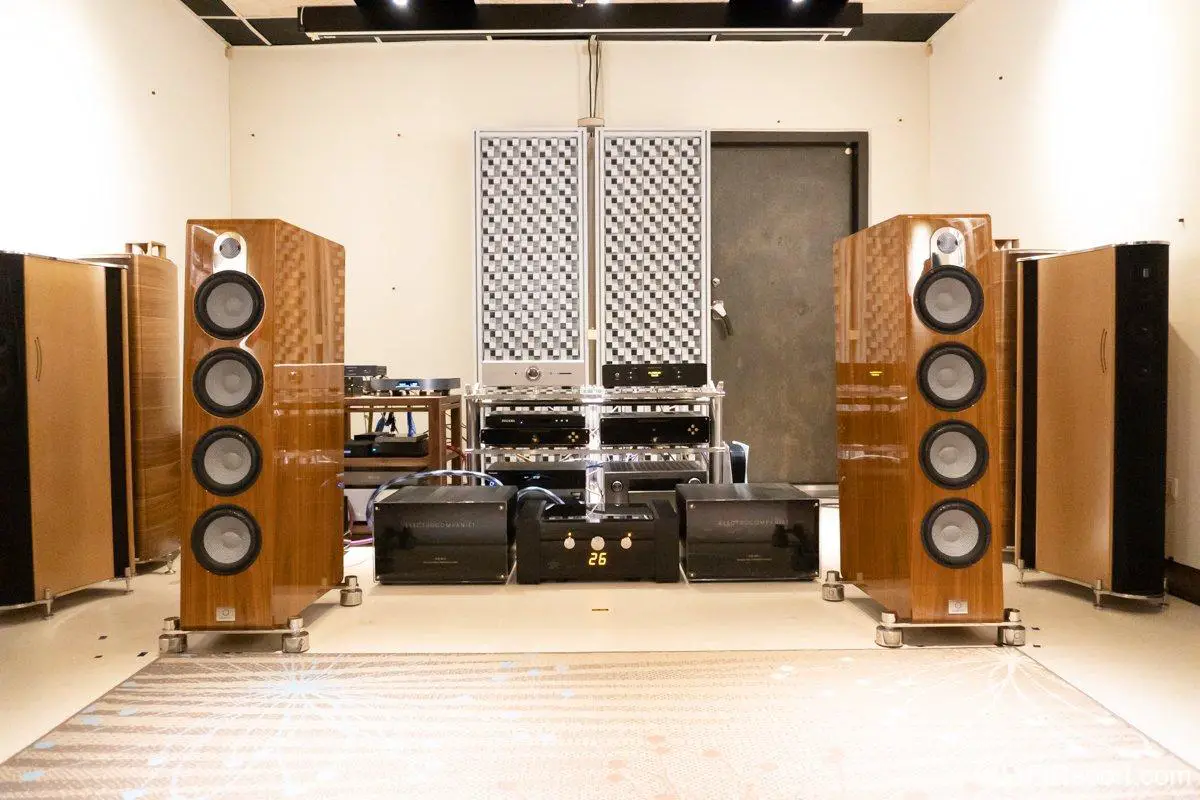
The Parker Quintet, as the flagship model of this series, boasts several innovative designs. Firstly, the drivers are entirely new and custom-designed specifically for this series. Secondly, the cabinet is constructed from a novel material called M-board. Thirdly, the crossover network is a new design known as the Multi-Diverse crossover. Fourthly, the isolation feet are also new, custom-engineered by Marten in collaboration with IsoAcoustics, and are now used in the Coltrane, Mingus, and Parker series.
Custom-Engineered Drivers
Regarding drivers, Marten has historically exclusively used Accuton drivers from Germany. The Parker series breaks from this tradition, featuring entirely new custom drivers designed by Marten’s chief designer, Leif Olofsson, and manufactured by specialized partners.
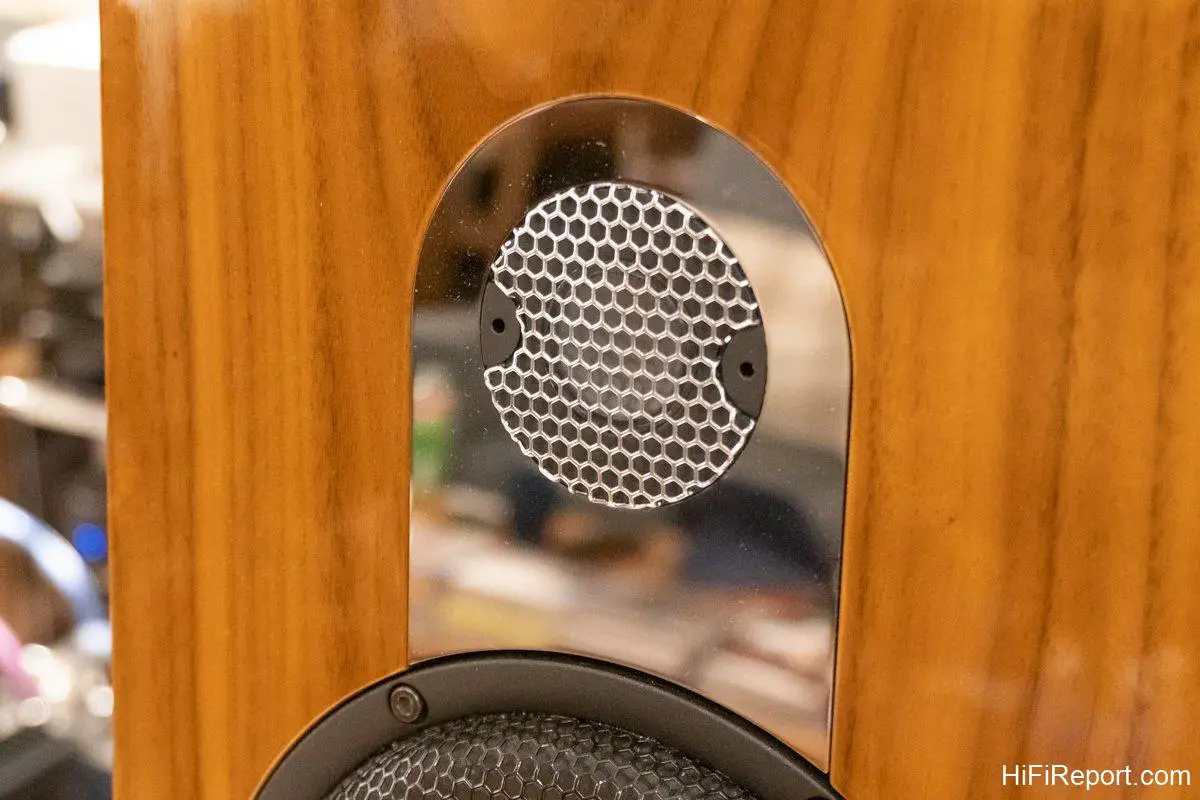
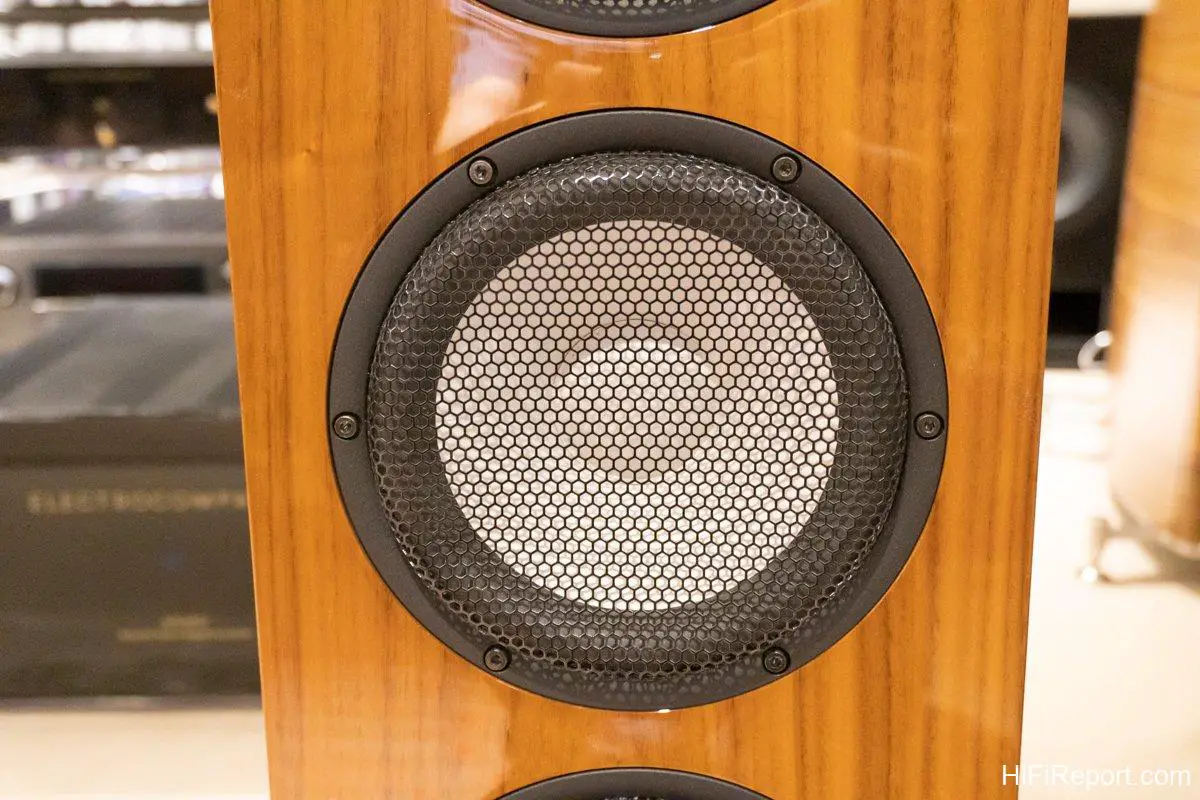
The Parker Quintet employs a 1-inch ceramic tweeter and four 7.5-inch ceramic mid-bass drivers, supplemented by four 9-inch aluminum passive radiators on the rear.
The advantage of custom drivers is that the designer can control every detail from start to finish, ensuring comprehensive control over all performance characteristics.
The Parker Quintet also offers a diamond tweeter version. This upgrade not only includes higher-grade tweeters but also elevates the internal wiring (from Jorma Design in the standard version to Jorma Statement level in the diamond version), crossover components, and terminal quality. Naturally, the price also reflects these enhancements.
The Parker Quintet adopts a 2.5-way passive radiator design, but with only one crossover point at 2.2 kHz. This means the tweeter and the uppermost mid-bass driver form a two-way system with a crossover at 2.2 kHz. The three mid-bass drivers below operate without a crossover, relying on their inherent characteristics.
This design is quite unique, offering both advantages and disadvantages. The benefit is that driver frequency overlap can enhance mid-bass presence and reduce power loss from fewer crossover points, increasing speaker efficiency. Combined with the rear passive radiators, efficiency reaches 93 dB. The downside is that greater frequency overlap places higher demands on driver design and quality.
Among all Marten models, only the Parker Quintet and Parker Trio use a 2.5-way configuration. Other speakers do not utilize the .5-way design, suggesting it’s a new experiment by Leif Olofsson, made possible by the custom-designed drivers. Passive radiator design is featured across the entire Parker series, even the bookshelf Parker Duo has a rear passive radiator.
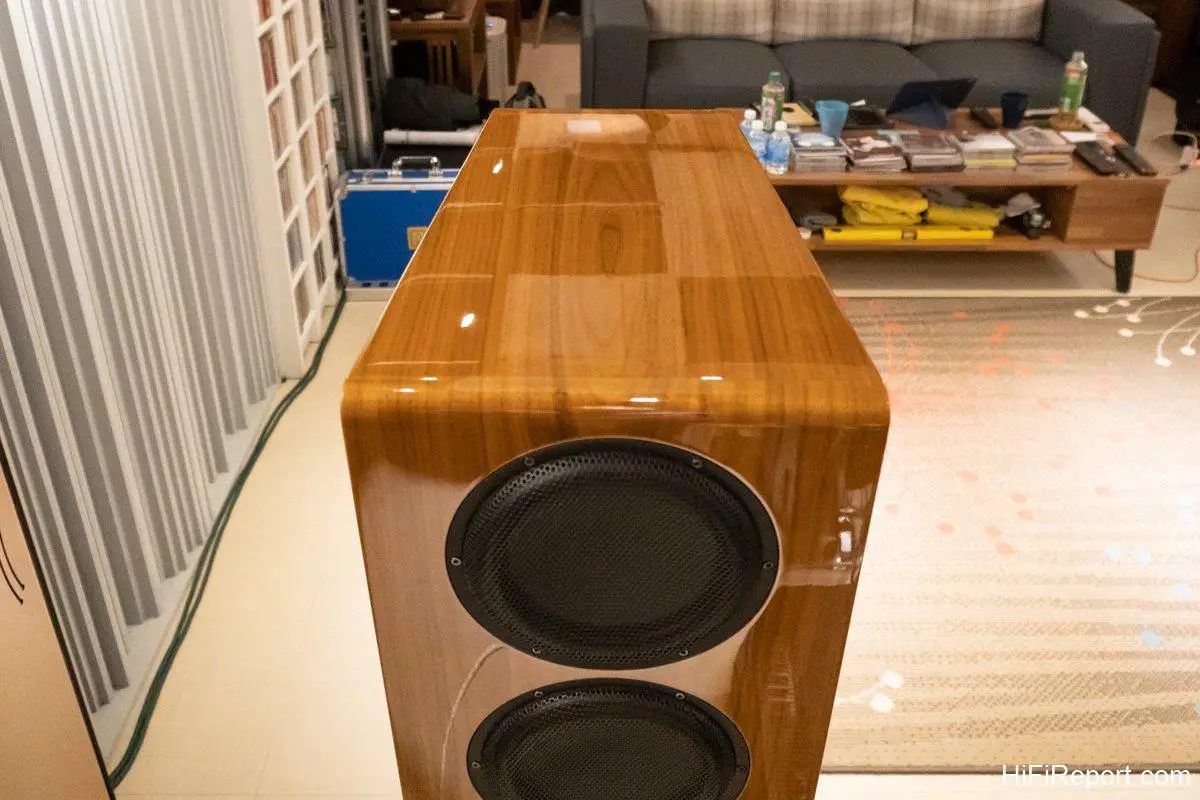
Compared to sealed enclosures, passive radiator designs offer better bass extension and greater efficiency. Compared to bass-reflex designs, passive radiators provide faster bass transients and clearer mid-bass. However, the primary drawback is higher cost.
The Parker Quintet incorporates four 9-inch passive radiators and a substantial cabinet volume, resulting in bass that is not only high quality and plentiful but also extends down to an impressive 24 Hz. The premium price is justified by this performance.
Multi-Layer Cabinet for Resonance Control
The cabinet material of the Parker Quintet represents another significant upgrade.
Previously, only Marten’s flagship Coltrane series used carbon fiber laminate for its cabinets. Marten’s research identified this material as optimal for speaker cabinets after years of experimentation. However, due to cost constraints, only the Coltrane series could utilize it, while other series relied on traditional MDF, reinforced internally to minimize cabinet resonance.
With the Parker series, Marten developed M-board material, employing a multi-layer structure to significantly reduce cabinet resonance, ensuring sound originates solely from the drivers, free from cabinet coloration.
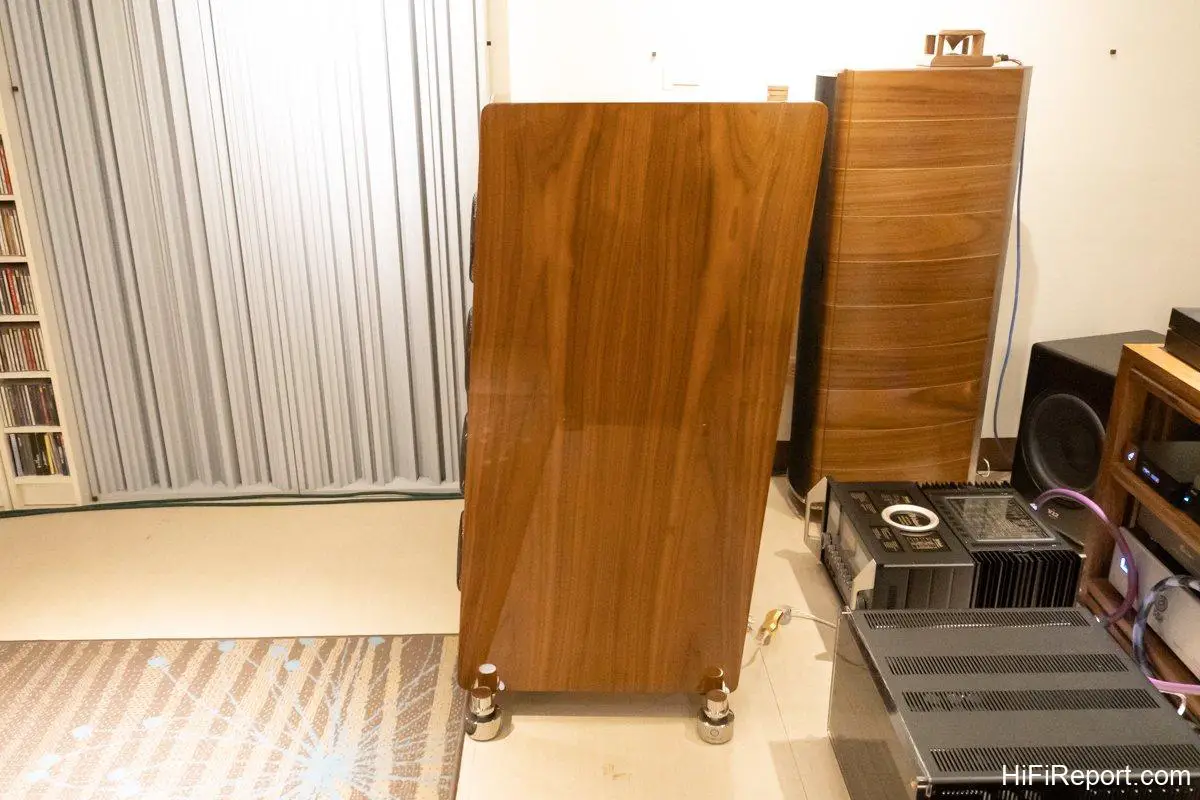
The Parker Quintet’s cabinet shape is also distinctive, featuring a narrow front baffle and a wider rear panel, with a slight backward slant. The top, bottom, front, and back panels are parallel, creating a streamlined, forward-moving appearance from the side. Despite its substantial size, the cabinet doesn’t appear bulky.
For surface finishes, the Parker Quintet offers four options: high-gloss walnut, matte walnut, high-gloss black, and high-gloss white. The review unit at HiFiReport was finished in high-gloss walnut. Upon close inspection, the lacquer was exceptionally smooth and lustrous, exhibiting superb craftsmanship.
The cabinet rests on polished metal bases, front and rear, supported not by typical spikes but by circular isolation pucks, also in polished metal. These are Marten Isolaters, co-developed with IsoAcoustics, designed to effectively isolate vibrations from the floor, reduce resonance, and resist lateral speaker movement, maintaining good bass dynamics. Marten Isolaters are now standard on the Coltrane, Mingus, and Parker series, and are available as upgrades for other series and older products.
With new drivers, new cabinet material, new structure, the crossover network also needed a redesign. Marten has always emphasized low-order crossovers; high-end models like the Coltrane and Mingus series use first-order crossovers. What about the Parker Quintet? It employs a newly developed Multi-Diverse Order crossover technology. The name suggests a crossover with multiple slopes, but it’s unclear whether it’s first or second order. The manufacturer hasn’t detailed its principles, leaving its sonic characteristics to be explored through listening.
Meticulous Setup by Xiaoma
The audition took place in HiFiReport’s dedicated listening room on the second floor. As usual, Xiaoma (Huang Fan-Wei) meticulously set up the system before my listening session. He focuses not only on speaker placement and room acoustics but also on the overall tonal presentation. He patiently experimented with different equipment and cable combinations to achieve the sound that best showcases the Parker Quintet’s strengths.
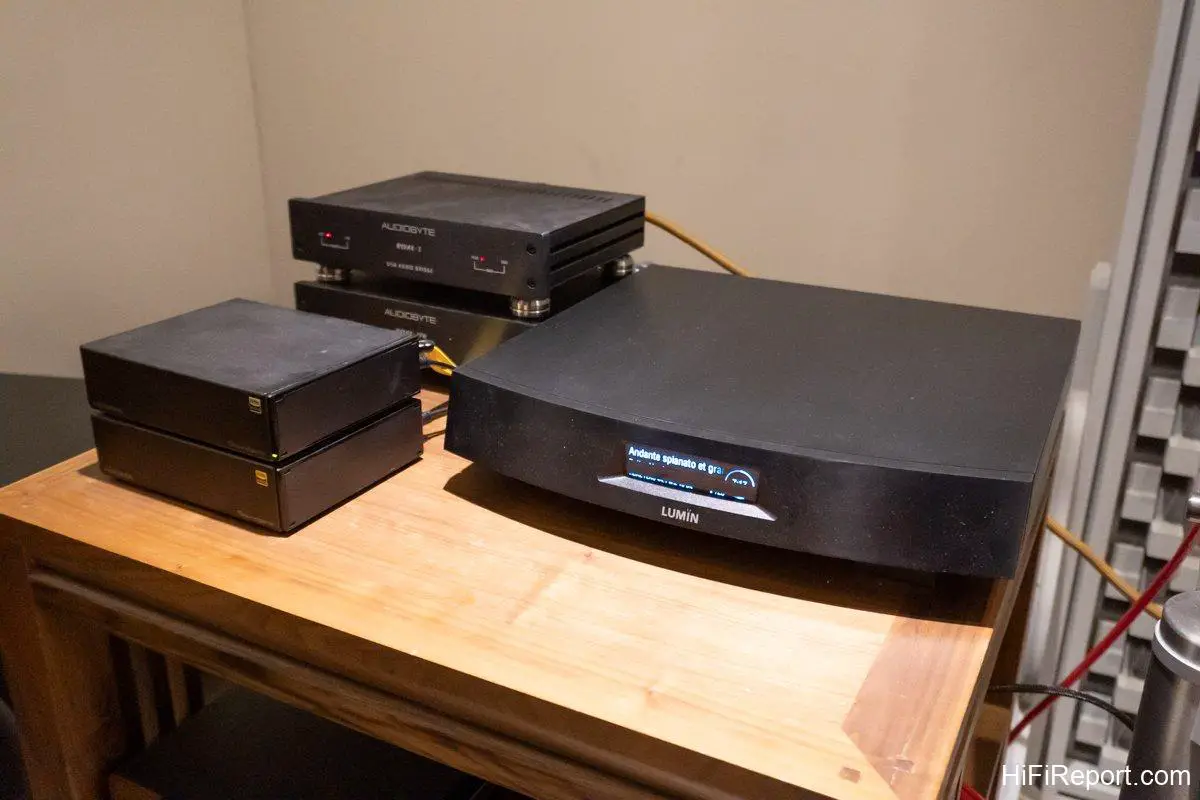
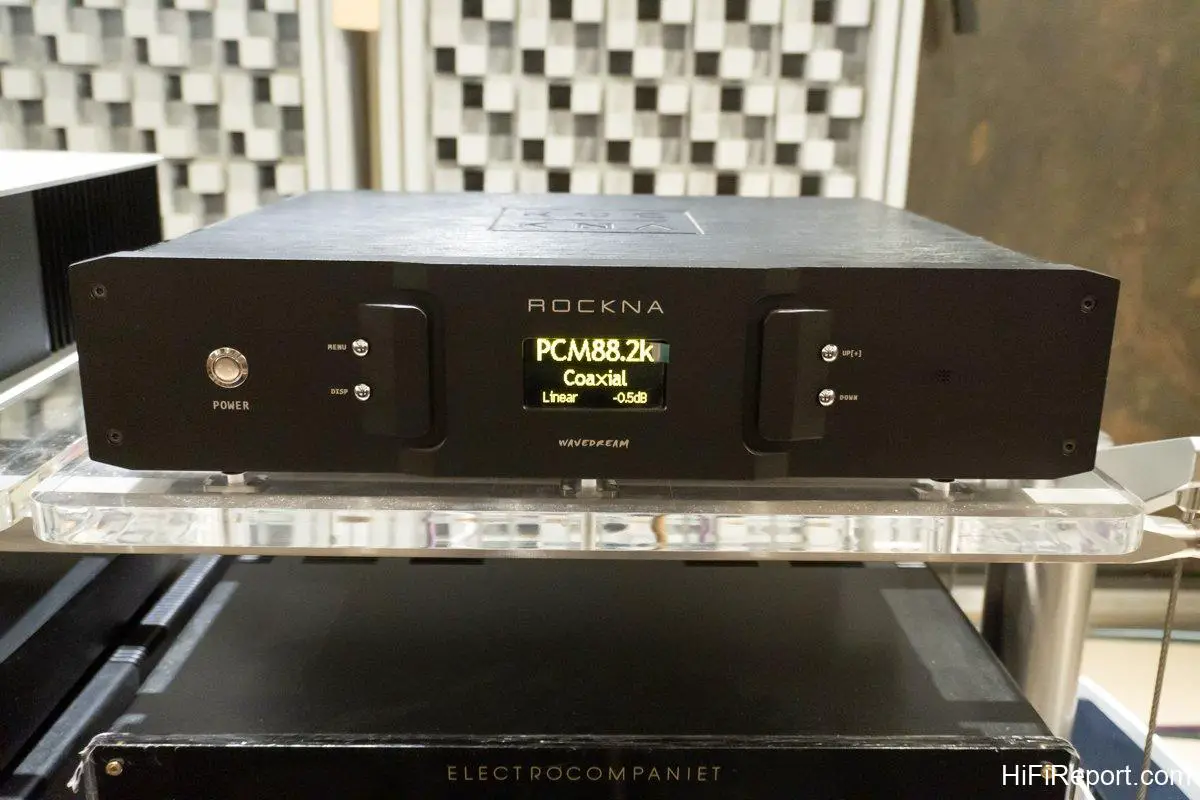
What equipment and cables did Xiaoma pair with the Parker Quintet? The source was a Lumin T2 streamer (with ART Super SE power cable), USB-connected to an Audiobyte Hydra-Z DDC converter (with its own ZPM linear power supply), then RCA coaxial digitally connected to a Rockna Wavedream DAC (with Crystal Connect van Gogh power cable).
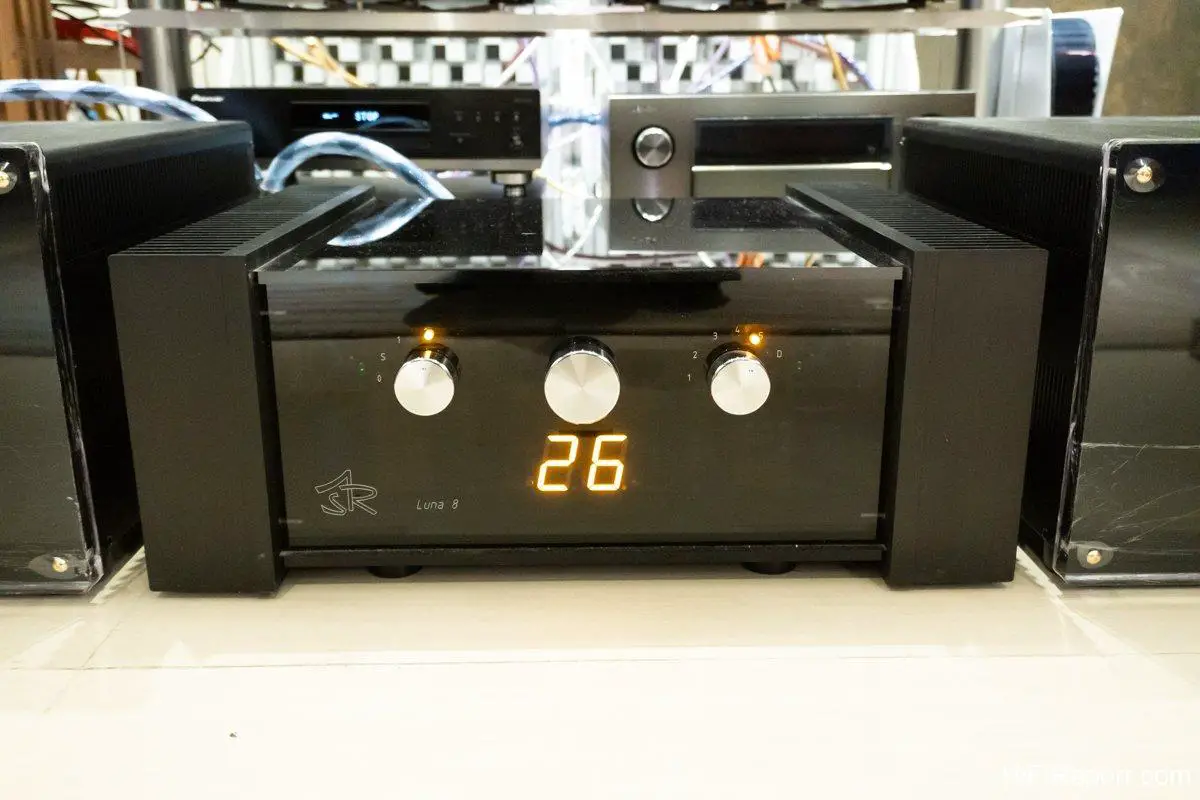
The analog signal from the DAC was fed through a pair of Nordost Frey 2 balanced interconnects to an ASR Luna 8 amplifier (dual-mono power supply), and finally to the Parker Quintet via Crystal Connect van Gogh speaker cables.
For streaming, network quality is crucial, so a Melco S100 audiophile-grade network switch, powered by a Ferrum Audio Hypsos power supply, was used.
This is no ordinary system! The source, DAC, amplifier, and cables are all top-tier components, leaders in their respective domains. The van Gogh speaker cables, in particular, are remarkable, belonging to Crystal Connect’s new flagship series, using single-crystal silver conductors made with the latest metallurgy, priced to match the Parker Quintet itself. What kind of sonic synergy would such a high-end pairing create?
Full-Bodied Sound with Clear Layers
Given it was a Marten speaker review, starting with Marten’s own recordings was appropriate. Marten has released five albums, all recorded in their own studio with invited musicians. The studio also serves as Marten’s listening room, featuring natural reverberation. Recordings are made using only two microphones, capturing live performances directly to master tape without post-processing, preserving authentic spatial cues, timbre, and dynamics.
These five albums are available in various formats, including CD, vinyl, and high-resolution downloads, purchasable from the Marten website.

Taking Marten’s “Supreme Sessions 2” album as an example, track 1, the jazz classic “Autumn Leaves,” features vocals, piano, saxophone, plucked double bass, and drums. Through the Parker Quintet, the sound was remarkably full and rich. The image size of each instrument was quite large, filling HiFiReport’s moderately sized listening room completely. Surprisingly, despite the fullness and richness, the sound was never muddled. It remained layered and organized, with clear outlines for each instrument and distinct separation. It was a very precisely rendered and highly enjoyable sound. Frankly, I’ve rarely experienced such a sonic presentation.
The Parker Quintet’s exceptional richness elevated the saxophone’s allure to its peak. The thick, nasal tone had a touch of viscosity, yet retained clear texture. The timbre was both sweet and realistic, achieving a perfect balance of truth and beauty.
High-Resolution Bass
Track 3, “Capullo de Alelí,” showcased the Parker Quintet’s excellent bass agility. This is a rhythmically vibrant Latin song, though without drums in the accompaniment, only plucked double bass, guitar, and hand-shaken shakers. Through the Parker Quintet, the bass proportion felt larger, with rich presence and full-bodied sound, yet without any sluggishness. The plucked double bass had remarkable elasticity, clear articulation, and strong rhythmic drive. Even without drums, it was full of momentum.
Track 5, “Dance, Drums, Dance,” was even more impressive, with drum images that were incredibly lifelike. This piece is a duet by percussionists Daniel Berg and Fredrik Duvlin, who also play marimba. Described as a “piece,” it’s primarily a drum ensemble. The Parker Quintet not only clearly defined the shape and location of each drum but also distinctly captured the impact of the drumsticks hitting the drumheads and the appropriate bass decay, presenting a complete drum sound.
Furthermore, this track revealed that the Parker Quintet’s bass speed was not just perfectly timed but also remarkably balanced across all frequencies. The drum sound had depth, power, and impact. Combined with an exceptionally clean sonic background, almost devoid of cabinet resonance, it sounded as if someone were playing drums right in front of you—realistic and full of detail.
The most joyous piece was track 6, “Rosetta” by the TubaSextetten brass ensemble, featuring trumpet, tenor saxophone, trombone, banjo, tuba, drums, and male vocals. Through the Parker Quintet, the tonal differences between each instrument were amplified, making them easily distinguishable. Similar to “Autumn Leaves,” each sound image was large and clear, filling the soundstage and creating a lively, festive musical atmosphere.
The tuba’s sound had excellent elasticity, with bass that was plentiful, full, fast, yet not excessively so, with just the right decay. This further confirmed that the Parker Quintet’s bass was not only rich but also possessed extraordinary low-frequency resolution. It’s evident that all aspects of the design work together harmoniously to achieve such a comprehensive sound.
Timbre: Both Real and Beautiful
The Parker Quintet’s exceptional resolution isn’t limited to the bass; it extends across the entire frequency range. For example, listening to Keith Jarrett’s famous “The Köln Concert,” a recording I’ve heard on many systems, the inherent beauty of the recording means it always sounds good. But listening with the Parker Quintet? It was simply exquisitely beautiful, beyond words! I heard incredible piano brilliance, extremely rich overtones, blending into a gorgeous timbre, and abundant reverberation clearly defining the spatial dimensions. It was the most tangible sense of space I’ve ever experienced with this recording.
Similarly, with Keith Jarrett’s “Bye Bye Blackbird” album, a studio recording dedicated to Miles Davis, featuring Gary Peacock on bass and Jack DeJohnette on drums. Through the Parker Quintet, the piano timbre was equally delightful, very sweet, with excellent density and quality of notes. It had substantial weight yet was nimble, especially in texture—clean, pure, and richly nuanced.
Moreover, the delicate shimmer of cymbals had excellent body without losing its ethereal quality, likely a strength of the ceramic tweeter.
Moving to large-scale orchestral music, I chose Ashkenazy’s performance of Rachmaninoff’s Piano Concerto No. 2. The opening section of this piece tests a system’s layering capability, as the string sections enter together, playing the same melody line in harmonic layers. If the separation of sections is insufficient, the musical richness is greatly diminished.
This section posed no challenge for the Parker Quintet. Played at high volume, the strings were not only harmonious and dense, creating a grand scale, but the layers of dynamics were clear and rich. The sonic texture surged like waves, both awe-inspiring and full of energy, yet feeling effortless and relaxed—both comfortable and thrilling to listen to.
Unbelievably Beautiful
Finally, I played Mika Nakashima’s “Best” compilation album. I particularly enjoy track 2, “Stars.” As the music began, something peculiar happened: I suddenly felt as if the entire room had brightened. Of course, the lighting hadn’t changed, but the sound bloomed, radiating brilliance. The opulent, beautiful timbre illuminated my senses! It was simply too good to be true. I know such descriptions might seem vague, but that was my immediate sensation. The musical atmosphere was captivating, making me want to keep listening.
In fact, many tracks auditioned that day evoked similar feelings—the sound was unbelievably beautiful. The Parker Quintet presented a richer, more opulent timbre than I’d heard before, with finer, more nuanced variations, denser yet more focused imaging, effortless extension at both ends of the frequency spectrum, and an exceptionally clean and transparent sonic background. Combined, these qualities created an irresistible sonic allure.
Judged from any perspective, the Parker Quintet is undoubtedly among the best speakers in its price range, and definitely worth owning.
Specifications
* Type: 9-driver, 2.5-way passive radiator floorstanding speaker
* Drivers: 1 x 1-inch ceramic tweeter, 4 x 7.5-inch ceramic mid-bass drivers, 4 x 9-inch aluminum passive radiators
* Power Handling: 350 Watts
* Sensitivity: 93 dB
* Frequency Response: 24 Hz – 40 kHz ± 2 dB
* Impedance: 4 Ω (minimum 2.7 Ω)
* Crossover Frequency: 2.2 kHz
* Dimensions: 117 × 24 – 33 × 54 cm (H×W×D)
* Weight: 60 kg