
Furutech DAS-4.1 Balanced Interconnect Review Review
When it comes to Japanese audio cables that truly stand out for their sonic quality, material integrity, and value, Furutech products are undeniably strong contenders. Their offerings feature a wealth of proprietary technologies and materials, coupled with remarkably transparent cable structures.
Encountering a Furutech cable always ignites my curiosity, prompting me to dive deep into the manufacturer’s documentation, peeling back the layers to understand precisely how such high-quality sound is achieved. For technically-minded audiophiles, this transparent approach is particularly convincing, instilling confidence in their purchase.
Especially in recent years, as audio cable prices have climbed annually, with some top-tier products even surpassing the cost of sources or amplifiers, skepticism can arise despite outstanding performance. This is where the value proposition of Furutech cables truly shines. Beyond their range of excellent factory-terminated cables, they also offer a selection of high-quality bulk cables.
The DAS-4.1 balanced interconnect featured in this review is precisely one such top-tier bulk cable from Furutech, incorporating their finest conductor materials and structural designs.
Value Proposition and DIY Assembly
Significantly, the distributor, Zhong Min, has thoughtfully paired this cable with Furutech’s top-of-the-line XLR connectors for this sample. While a DIY assembly, the components are indistinguishable from, or even superior to, those found in many manufacturers’ flagship cables.
All you need to do is purchase the required length of cable and the necessary connectors, then follow the easy-to-understand soldering tutorials available on Furutech’s official website to craft your own flagship-grade interconnect. This not only makes the process straightforward but also significantly more affordable than purchasing a factory-terminated cable of equivalent quality.
The “4.1” Series and α-DUCC Conductor
The DAS-4.1 belongs to Furutech’s flagship “4.1” series of bulk cables, specifically the interconnect variant. I’ve previously reviewed two other cables from this series: the DSS-4.1 speaker cable and the DPS-4.1 power cable. This series boasts two primary characteristics.
Firstly, the internal structure is incredibly robust, demonstrating meticulous attention to detail in vibration suppression, shielding, and conductor configuration – arguably the most sophisticated design found in any bulk cable on the market today.
Secondly, it utilizes Furutech’s most premium α-DUCC (Dia Ultra Crystallized Copper) pure copper conductor. Developed by Mitsubishi Cable Industries, this is the highest-quality pure copper conductor the Furutech engineering team has been able to source, serving as a key ingredient in their new generation of cables. This conductor is produced using a novel forging technique that aligns the crystal boundaries of 7N-grade oxygen-free copper in a uniform direction.
The crystal grains are also significantly larger than those in standard oxygen-free copper, dramatically reducing conductor resistance and ensuring exceptionally smooth signal transmission.
Finally, the conductors undergo Furutech’s proprietary Alpha Process, which includes ultra-low temperature treatment and demagnetization. The conductors are rapidly cooled and then slowly returned to room temperature, a process that further encourages the crystalline structure to align uniformly. This is followed by demagnetization using large machinery, resulting in what is known as the α-DUCC conductor.
The DAS-4.1 uniquely combines the characteristics of both α-DUCC and α-OCC conductors, harmonizing them to achieve optimal signal transmission and sonic performance.
Cable Construction and Materials
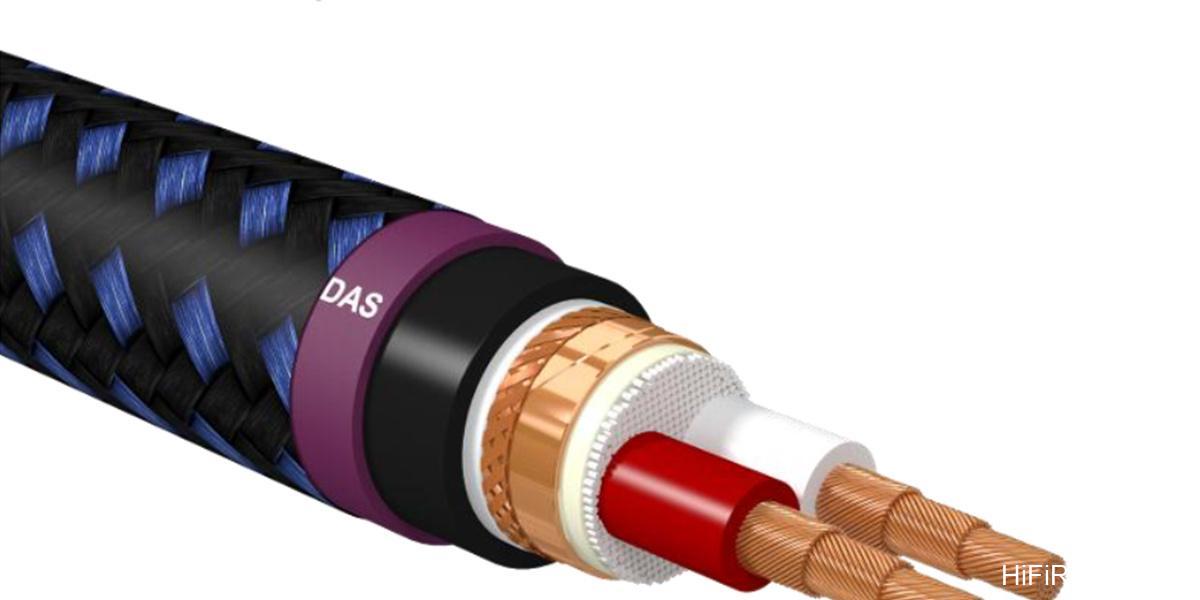
The DAS-4.1 is appealing right from the get-go thanks to its cable body. Although it has a substantial diameter, it’s surprisingly flexible, making routing easy even in tight spaces. Its conductor structure is three-layered: starting from the inside, it features 21 cores of 0.18mm α-OCC arranged in a clockwise helix. The second layer consists of 19 cores of 0.18mm α-DUCC arranged counter-clockwise, and the third layer is composed of 25 cores of 0.18mm α-DUCC arranged clockwise.
These conductors are then insulated with audio-grade PP material to form the two main conductors.
Between the conductors, you can see copious cotton filling. The entire assembly is then wrapped in a layer of non-woven fabric. This is a characteristic Furutech damping design, intended to absorb minute vibrations generated during current flow and also provide buffering protection against external pressure. Next comes a two-layer shield: an inner layer of solid copper foil and an outer layer of α-OCC braided copper. The outermost layer is wrapped in paper for structural integrity.
The cable isolation is also two-layered. The first layer is made from black audio-grade PVC mixed with Nano Ceramic/Carbon composite particles. This material is similar to Furutech’s NCF material and primarily works to eliminate static electricity and convert vibrations into heat for dissipation – an ideal isolation medium. This is followed by a layer of purple audio-grade PVC.

Finally, the cable is finished with an outer PP yarn braid, which forms the familiar blue and black anti-static mesh appearance we see on the surface. It’s quite remarkable to think that the understated and seemingly simple exterior of the DAS-4.1 hides such an intricately precise structure, one that would make many high-end cables blush.
Connectors: CF-601M NCF(R) / CF-602F NCF(R)
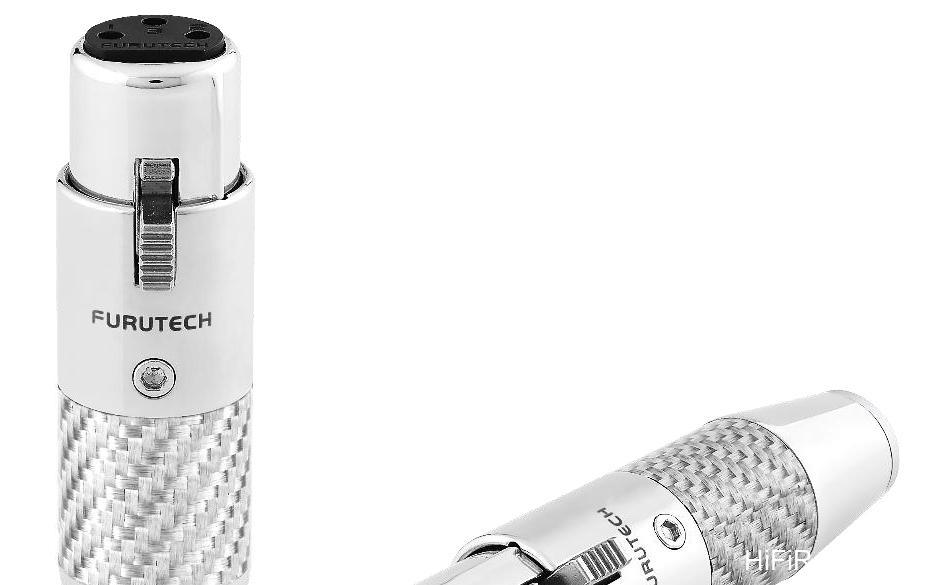
The XLR connectors selected by Zhong Min for the DAS-4.1 are also top-tier: Furutech’s flagship CF-601M NCF(R) and CF-602F NCF(R) balanced connectors. The “R” in the model number denotes Rhodium-Plated. The key difference between this “R” version and the standard CF-601M is the change to a silver carbon fiber outer shell. These are also Furutech’s only XLR connectors incorporating NCF material.
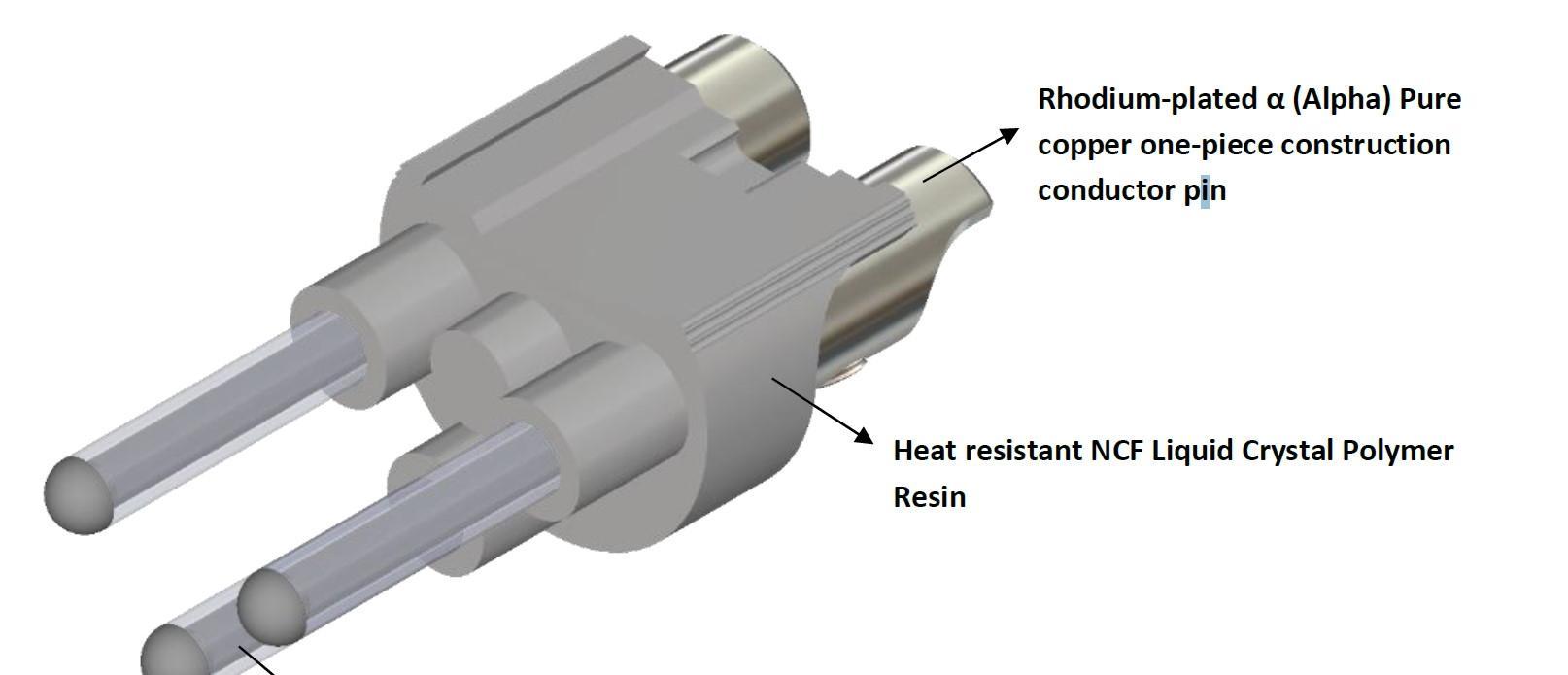
Both the pins and internal conductors of the connectors are crafted from premium α pure copper plated with rhodium, unlike the commonly used brass. This not only provides superior conductivity but the rhodium plating enhances pin hardness, making the connector more durable.
Looking at a cross-section of the connectors reveals that the pins are actually hollow. The black dome structure on the male pin, extending to the black internal housing, is entirely constructed from NCF, nylon, fiberglass, and other materials. The NCF material is a composite of Piezo Ceramic nano-sized crystal particles and carbon fiber powder.
This material possesses excellent electrical properties; it generates negative ions to eliminate static electricity and converts current-induced vibrations into heat. With its superb electrical damping characteristics, it then converts this heat into infrared radiation that dissipates from the surface, achieving optimal vibration suppression.
This comprehensive approach simultaneously addresses the issues of resonance and static electricity while ensuring excellent conductivity. There is arguably no other company on the market that produces connectors to such a high standard as Furutech. It’s no wonder that major Hi-End cable manufacturers are eager to use Furutech’s components, making them the top choice for DIY enthusiasts as well.
Listening Impressions
Our in-house reference cables happen to be entry-level Furutech DIY products, which provided a familiar sonic baseline for comparison when testing the DAS-4.1. For this review, I used a COS D10 streaming DAC paired with a Keces S300+ power amplifier driving our Pioneer S-1EX floorstanding speakers. The DAS-4.1 exhibits Furutech’s characteristic neutral and balanced sound, coupled with immense energy.
The mid-high frequencies are clear and transparent, conveying a strong sense of density whether listening to vocals or instrumental music.
For instance, playing the “Mozart String Quartet No. 3” performed by Quatuor Ebene immediately brought a burst of vitality! The instruments felt larger and more vivid, with precise and clear positioning, eliminating any sense of congestion. The violins exhibited a dense and focused texture, with a natural rendering of the bow’s interaction with the strings. The high frequencies weren’t overly emphasized with artificial sparkle, but rather presented a simple, honest sweetness.
The cello’s timbre was no longer sluggish; I could clearly hear the deep resonance of the strings and the full, distinct sound of the instrument’s body. The players’ dynamic variations and contrasts in intensity were significantly enhanced, transforming the string quartet from something flat and monotonous into a vibrant, lively ensemble with distinct instrumental outlines and positioning unfolding before me.
Similarly, on the first track, “I Can See Clearly Now,” from jazz vocalist Holly Cole’s album “Don’t Smoke in Bed,” the opening double bass was larger and more substantial, the low frequencies brimming with elasticity. The note definition was no longer just a vague sense of energy; I could discern the clear outline of the instrument, with solid, forceful plucks and a vivid sense of the strings vibrating. The mid-range of this cable is not only dense but also smooth and full-bodied.
Holly Cole’s voice was rendered with a large, clear presence, firmly anchored in the center. I could hear more delicate throat details in her clean, sweet voice, and her sibilants flowed effortlessly, without any harshness. Despite the increased energy, the sound never felt compressed or fatiguing; instead, it conveyed a sense of unhurried musicality.
This cable provides ample weight and body from the mid-range extending down to the low frequencies, laying a stable foundation for the music. Listening to Krystian Zimerman’s performance of “Beethoven Piano Concerto No. 2,” the orchestral build-up in the first movement conveyed an overwhelming momentum.
Switching to this cable gave the impression that the amplifier had gained more power; not only was the scale grand and expansive, but the dynamics were also more agile, utterly devoid of any weak or insubstantial feeling. The orchestra’s positioning was fully realized, and between the sections, I could perceive a deep black background free of impurities, resulting in high instrument separation and more vivid, three-dimensional outlines.
The cable’s rendition of the piano texture is also captivating. The notes are transparent and full of body, conveying ample weight and keybed resonance. Even high-pitched strikes retained thickness, never sounding thin. When encountering strong chords, the dynamic impact was powerful, and the lingering resonance of the piano soundboard between phrases was delicate and extended, fully capturing the beautiful timbre of the instrument.
Compared to our in-house reference cables, while the DAS-4.1 shares a neutral and balanced character, it provides a significantly wider bandwidth. I could hear more open musical details, with better extension at both frequency extremes. In contrast, the reference cables sounded comparatively dull and lifeless on this system, and the piano lacked body and fullness. I personally found the DAS-4.1’s sonic signature highly appealing.
It adds no artificial coloration to the mid-high frequencies yet renders instrumental and vocal timbres with exceptional accuracy, faithfully presenting the inherent beauty of the music.
Conclusion
The DAS-4.1’s sound is balanced without any specific quirks, making it a versatile fit for any system. Its tonal quality is neutral and refined. If your system sounds weak, lifeless, or lacks energy or body, this cable can effectively address these issues, providing an overall enhancement in sound quality.
If you’ve been hesitant about investing in flagship interconnects from Hi-End brands that can easily cost thousands of dollars, acquiring the DAS-4.1 bulk cable paired with the CF-601 NCF(R) connectors allows you to maximize every dollar, creating a customized flagship cable with your own hands.
Specifications
* Type: Bulk Interconnect Cable
* Conductor: α-OCC + α-DUCC Copper Conductor
* Shielding: Solid Copper Foil, α-OCC Copper Braided Shield
* Connectors: CF-601M NCF(R) / CF-602F NCF(R) Flagship Carbon Fiber Balanced Connectors (Pins injected with NCF, outer rhodium plating)