
CS Port IME1 Review
Delving further into the background, I discovered that Toshimichi Machino founded CS Port after retiring. Prior to that, he worked at COSEL, Japan’s second-largest power supply company, where he held positions as R&D Director and CEO. This extensive experience provided him with rich design expertise in switching power supplies and amplifiers. COSEL products are also represented by distributors in Taiwan.
Founded in 1969, the company’s factory is located in Toyama, Japan, a city facing the Sea of Japan, approximately 300 kilometers from Tokyo.
CS Port’s company is also situated there. Evidently, Toshimichi Machino has lived in Toyama for decades and chose not to leave after retirement. Perhaps the port city environment influenced the company name, CS Port. ‘C’ stands for Clear, ‘S’ for Sound, and ‘Port’ signifies a harbor. Toshimichi Machino believes his products act like a harbor, protecting vessels from stormy seas by eliminating various types of noise within audio equipment, thereby producing a warm, heart-like sound.
The company’s logo features subtle waves, symbolizing the harmony between audiophiles and music.
All CS Port products are personally designed by Toshimichi Machino. The initial offerings included the 212P tube power amplifier, C3EQ phono equalizer, and LFT1 vinyl turntable. The lineup has since expanded to include the 212PAM2 monaural tube power amplifier, GM70PA stereo tube power amplifier, C3PR tube preamplifier, C3EQM2 tube phono equalizer, and CMT1 MC cartridge step-up transformer.
At audio shows, the colossal tube power amplifier always garners significant attention, along with the uniquely designed vinyl turntable. However, I also noticed something else drawing my eye: the IME1 static eliminator placed on the turntable.
CS Port Pricing
Checking the prices of CS Port products on the agent’s official website, I quickly realized this is a high-end audio manufacturer with rather substantial price tags. The tube phono equalizer costs around USD 12,440, the tube preamplifier is roughly USD 18,600, and the GM70PA stereo power amplifier is about USD 22,340. That monaural power amplifier commands a price tag of approximately USD 64,000. The TAT2 turntable is priced at roughly USD 21,400.

Don’t be fooled into thinking this turntable is inexpensive; that price is just for the ‘turntable’ itself. You still need to add a tonearm and an air pump, as this turntable is air-bearing, and their AFU1-2 tangential tonearm is also air-bearing.
If you opt not to purchase their air-bearing tangential arm, you’ll still need to buy the air pump, which costs around USD 2,200. The tangential tonearm itself is roughly USD 12,030. Looking through the entire catalog, the most affordable item is the IME1 static eliminator, priced at around USD 1,190. After understanding CS Port’s product range and pricing, I immediately called Mr. Zheng at the agent, expressing my interest in the static eliminator and asking if he could send it for a trial.
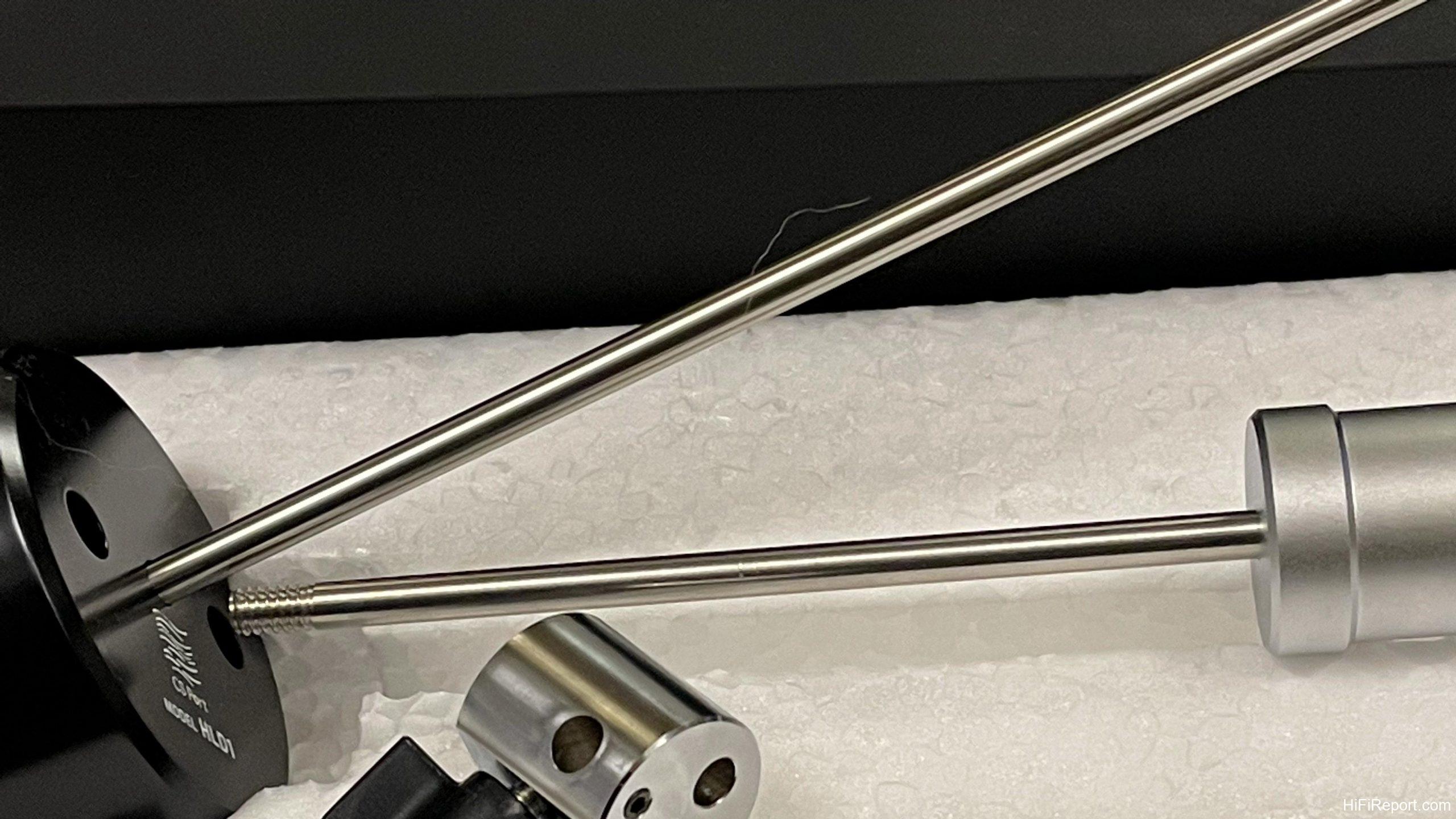
Mr. Zheng was prompt, and I received the package the very next day.
Static Problems
Why my interest in the CS Port static eliminator? For vinyl enthusiasts, static electricity on records is a major nuisance. Vinyl material itself is prone to accumulating static charge, which is why there were attempts to create static-free vinyl records in the past. However, this material likely didn’t deliver good sound quality, so it never became popular. The vinyl records we listen to today are all susceptible to static. What’s the problem with static on vinyl?
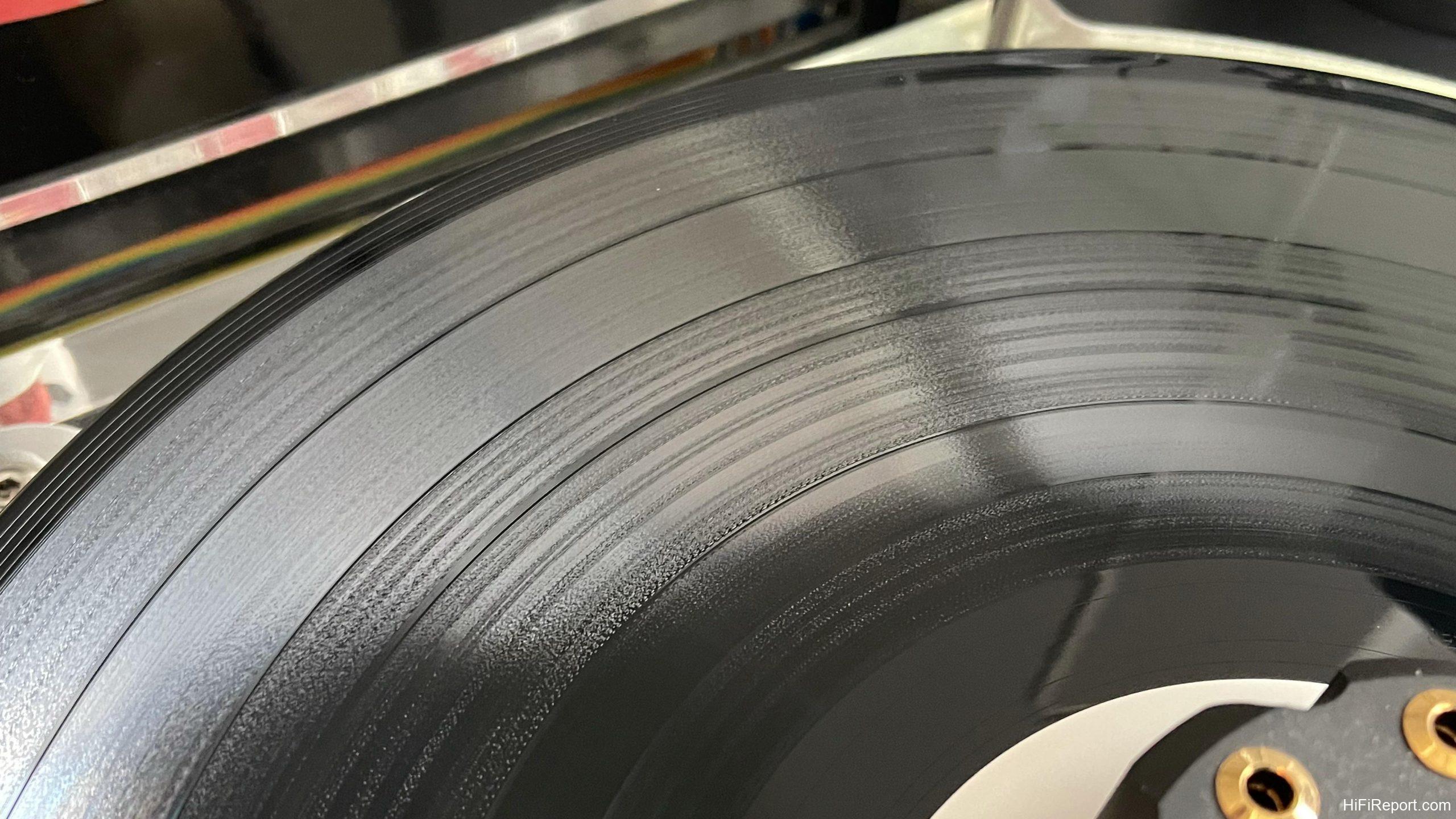
Tiny airborne dust and lint particles are attracted and cling to the record surface, making cleaning frustrating.
Besides attracting dust, static can potentially degrade sound quality. This has led to the market being flooded with various anti-static brushes, static guns, anti-static fans, and anti-static liquids. Even Japan’s DS Audio launched the ION-001 ion static eliminator (CS Port’s IME1 was released earlier), which audio critic Mr. Cai Bingrong has already reviewed in his column. I’ve used various static elimination methods myself, though not the DS Audio ion eliminator.

However, I believe the method of spraying negative ions to neutralize static should be effective.
In reality, static on vinyl records isn’t solely due to the material’s inherent properties. It can also be generated by the record spinning and rubbing against the air, by the stylus friction in the groove, and even by removing the record from its sleeve. So, how high can the voltage from static on a vinyl record be? It can reach up to 500V. However, this is ‘static’ electricity; there’s no need to worry about electrocution.

I haven’t used a static meter to measure the effect after using static brushes and other tools, but I assume they should reduce static to some extent.
IME1 Features
Upon receiving the IME1 from Mr. Zheng, I immediately unboxed it and quickly assembled it according to the instructions. Reading the manual carefully, I discovered it not only eliminates static but also demagnetizes. Demagnetize? Are there iron particles on vinyl records? Yes, there are trace amounts of iron. These tiny amounts can become magnetized by the Earth’s large magnetic field.
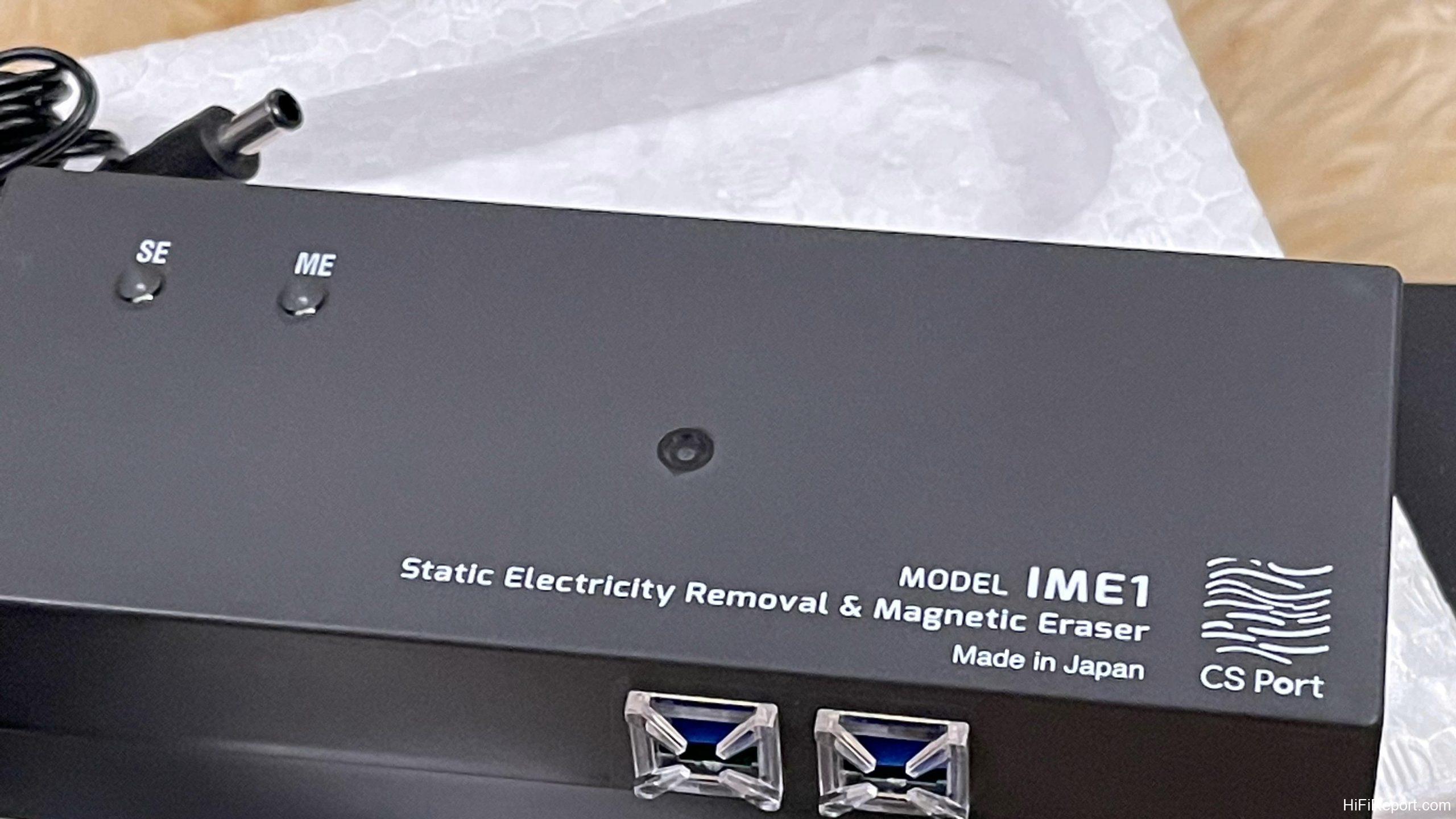
If you use an MC cartridge, which produces a very low output signal, even slight magnetism can interfere with the magnets within the MC cartridge. Therefore, the IME1 also includes a demagnetization function. In fact, demagnetizers for CDs or devices to eliminate magnetism on circuitry have existed for a long time, with various products available on the market. I even own a Gryphon Exorcist demagnetizer, but because it requires connecting wires during use, I rarely use it.
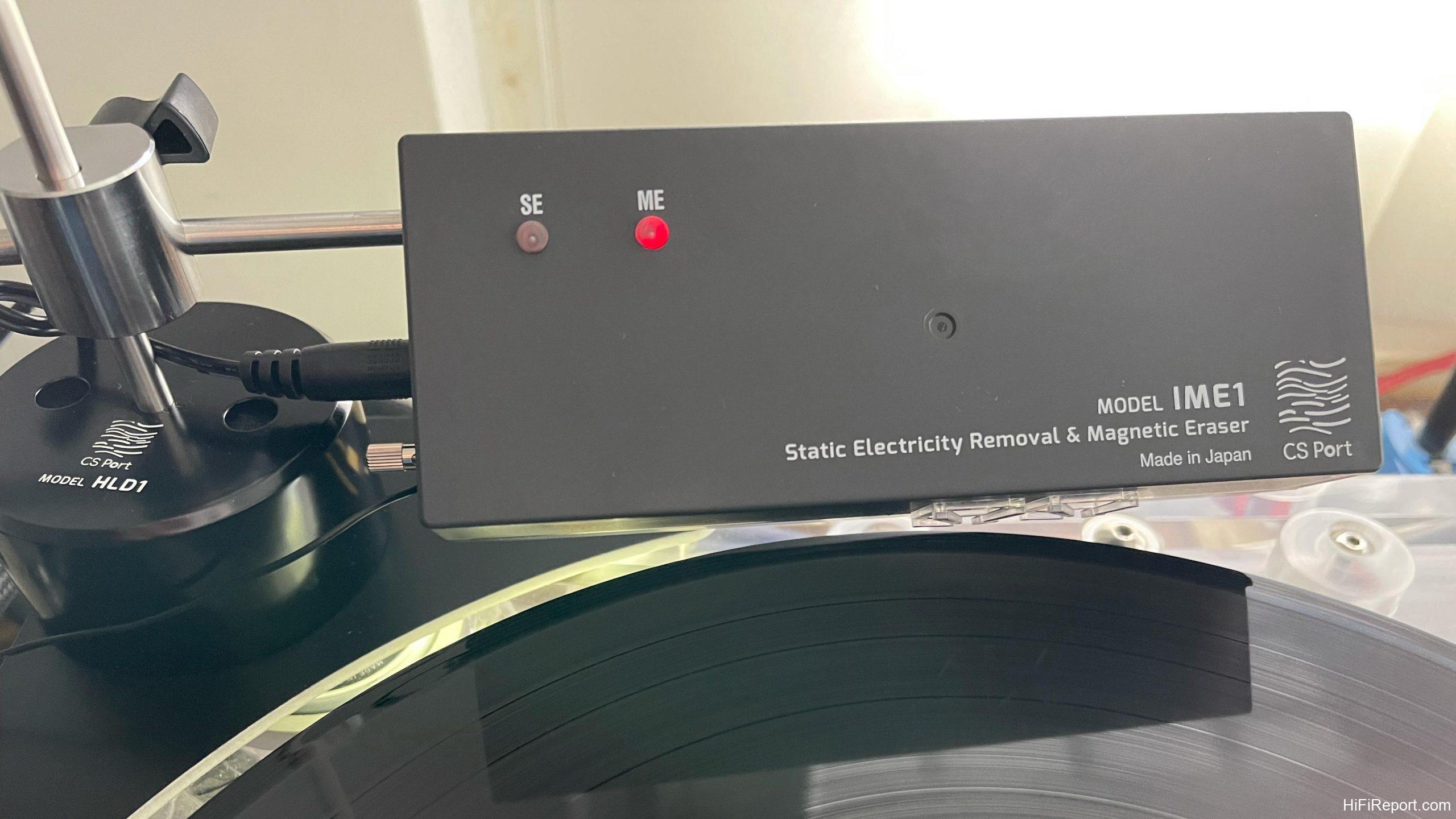
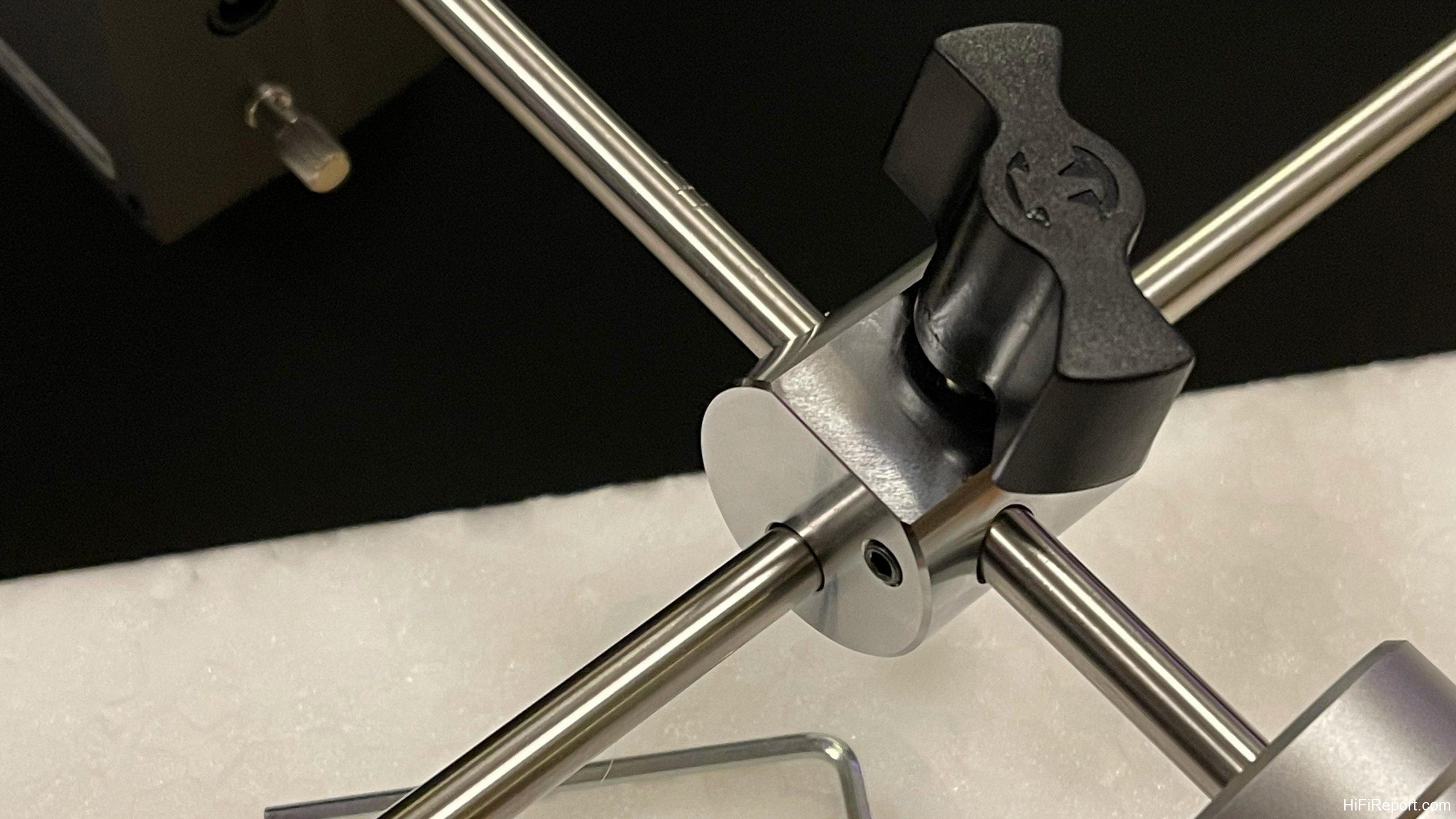
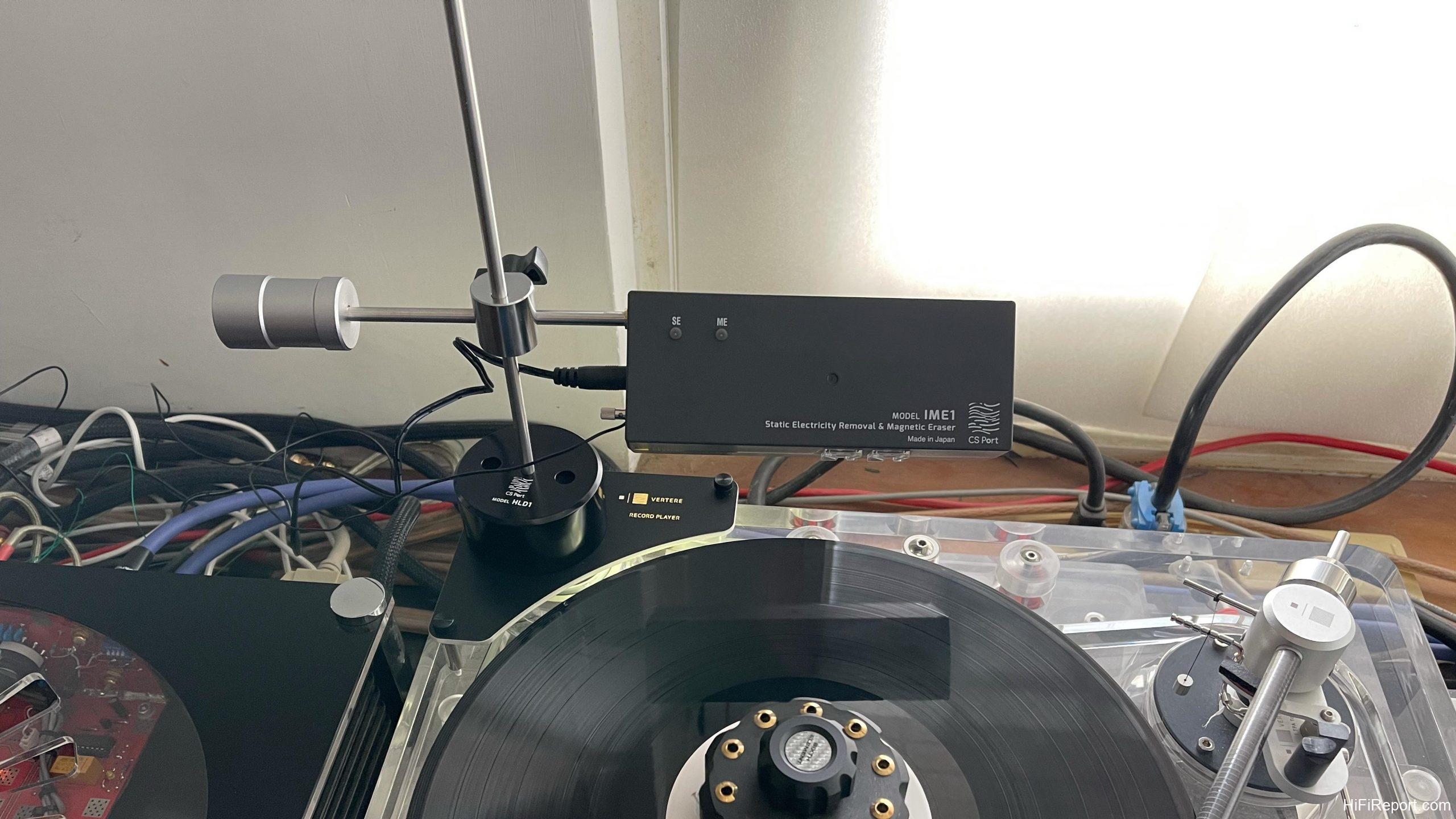
The IME1 is essentially a stand that supports an ion generator. The stand allows for height and angle adjustment. Why adjust the height? For static elimination, the ion generator’s optimal height is about 8-10 centimeters above the vinyl record surface for the best effect. For demagnetization, the height needs to be lowered to an ultra-short distance of 0.5-1 centimeter, practically touching the record. Why adjust the angle (15-30 degrees)?
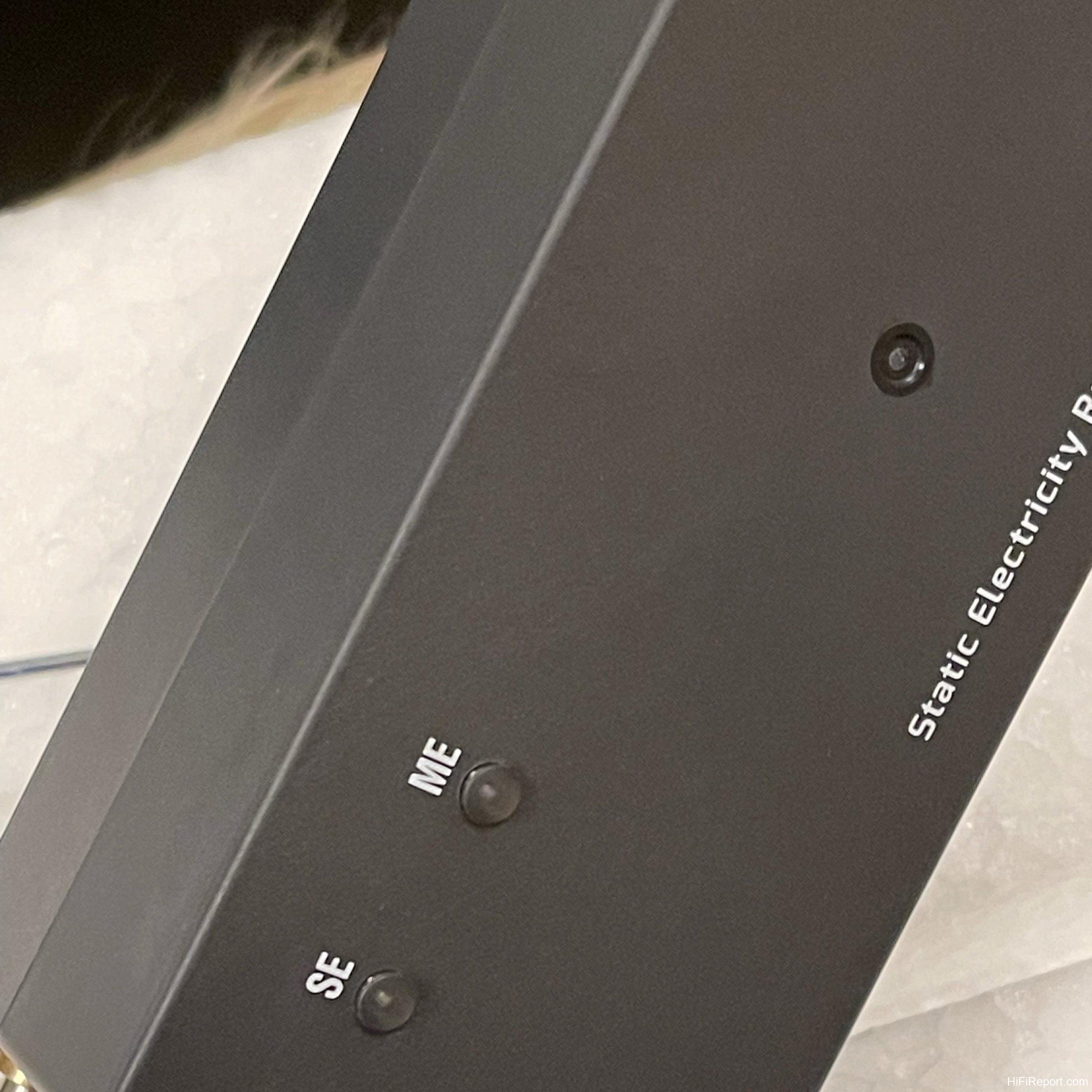
This ensures effective coverage of the entire record surface. The angle only needs to be set once, but the height must be adjusted depending on whether you are eliminating static or demagnetizing. As for where to place the entire IME1 on the turntable? It should be positioned in one of the four corners, with the upper-left corner relative to your listening position being the most suitable. Should it sit on the platter or the plinth? You can place it based on your setup.
The ion generator unit has two ion outlets. The shape of these outlets is the same as DS Audio’s, revealing that both companies source their ion generators from the same Japanese manufacturer. The difference is that the IME1 has two small buttons: SE for static elimination and ME for demagnetization. The optimal time for static elimination is 30 seconds.
After pressing the SE button, it can be turned off after about 30 seconds, though you might extend the time slightly depending on the dryness of your environment. The demagnetization time is 12 seconds; it shuts off automatically when the time is up and emits a beeping sound that gradually fades out during the process. What happens if the static elimination button isn’t turned off and it’s left running continuously? Frankly, I don’t know, and the manual doesn’t mention it.
Later, I consulted Mr. Zheng at the agent, who specifically asked an expert at TSMC (Taiwan Semiconductor Manufacturing Company). The expert’s answer was that there’s no issue with continuous static elimination while playing the record; it won’t have a negative impact and can instantly neutralize static generated by the stylus friction in the groove.
Listening Results
So, is the IME1 static eliminator effective? Yes, it is! At least for static elimination. As for demagnetization, honestly, I can’t hear a difference, but psychologically, I’ve already decided it works – “better safe than sorry,” as the saying goes. How exactly is static elimination effective? Listening to the Hungaroton recording of Vivaldi’s Lute Concertos and Trios, I could hear the sound become more ‘clear’ and transparent.
The lute’s shape also seemed more defined, and the overall soundstage depth was improved. While these enhancements were subtle, they were discernible to the ear.
When I listened to Jennifer Warnes’ ‘Another Time, Another Place,’ I also perceived her voice as having a more palpable presence. With Solti conducting ‘Venice,’ my initial impression was that the music flowed more smoothly, followed by a sense of better layering and detail. Listening to Starker’s performance of Dvořák’s ‘Cello Concerto’ (Mercury), the cello’s sound felt a bit more beautiful, and the overall orchestral texture was slightly improved.
On Hugh Masekela’s ‘Hope,’ the instruments’ sheen, layering, and transparency were also marginally better. In summary, after listening to several frequently played records, I can confirm that the IME1 is indeed effective; it’s not a placebo.
Conclusion
To be honest, the CS Port IME1’s sonic improvement isn’t as dramatic as changing interconnects, nor does it alter the sound character as fundamentally as switching cartridges. Its effect is one of ‘subtle enhancement.’ However, for discerning audiophiles, isn’t the cumulative improvement in overall sound performance achieved through countless small, incremental steps?
Moreover, I also found that after treating records with the static eliminator, their ‘ability’ to attract fine dust and fibers is significantly reduced. After playing an entire side, the record surface remains remarkably clean. Even if your ears don’t perceive any sonic improvement, your eyes can at least witness the IME1’s effect.