
KOJO Aray MKII Power Supply Review
Hailing from Japan, KOJO Technology Inc. () might be an unfamiliar name to many consumers, and this review marks the first time our site is assessing one of their products. However, KOJO is a significant and representative brand in the Japanese audio power supply market. Founded in 1990 in Hirakawa City, Aomori Prefecture, the company initially focused on semiconductor testing and assembly.
Following the devastating Great East Japan Earthquake in 2011, which caused nationwide power shortages and significant losses, they identified a market opportunity and ventured into power supply research and development. Their product range is extensive, spanning various fields including medical, LED, and industrial applications, accumulating a wealth of expertise in power-related technologies.
KOJO: A Power Supply Specialist
Beyond professional power products, in recent years, they have also entered the audio industry, developing headphones, power supplies, power cords, and power strips. These products have garnered significant support from audiophiles in Japan, establishing KOJO as a provider of professional audio-grade power solutions. Recognizing their strength, Lukang Audio in Taiwan has specifically imported KOJO products, allowing audio enthusiasts there to experience their capabilities firsthand.
KOJO offers a wide array of power products. The Aray MKII power supply featured in this article is a mid-range model and their best-seller. Above it sits the flagship Aray MKII SE, which places greater emphasis on chassis vibration damping and component quality, boasting a larger output capacity of 2500VA. There is also a mid-power output model, the Aray6 MKII, suitable for low-power equipment like digital sources, offering 580VA output.
Its more accessible price point makes it an excellent option for those new to the world of dedicated power supplies.

Exterior Design and Connectivity
The Aray MKII power supply sports a rather conventional design, housed in a rectangular chassis finished with a black sandblasted coating. The front panel follows a minimalist aesthetic, featuring a silver rotary switch and three LED indicators. The first indicates the power switch status, the second serves as an overload warning light, and the final one signals power anomalies.
This light illuminates when the input voltage is insufficient or overloaded, or when the internal temperature is abnormal, allowing for simple monitoring of the power supply status to prevent damage to connected audio equipment.
Turning to the rear panel, the Aray MKII provides a total of six AC outlets, all utilizing high-quality medical-grade components from Hubbell in the US, specifically the 8300I model. While the design appears simple, many small details have been meticulously executed. For instance, a grounding post is located at the bottom right corner of the chassis to dissipate static electricity.
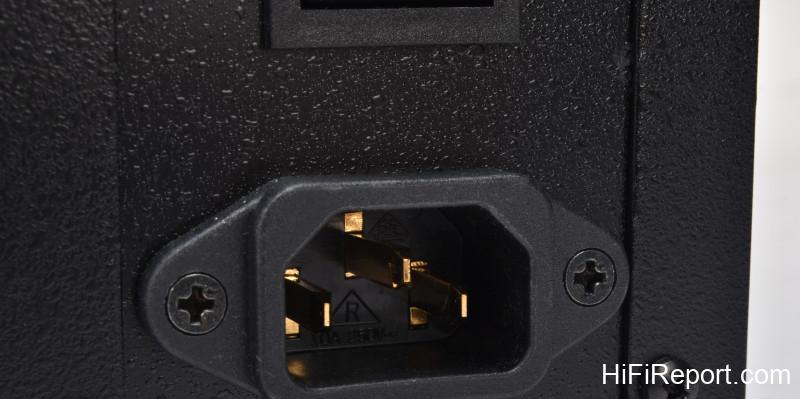
The AC power input socket is made of pure copper plated with gold, ensuring optimal conductivity and preventing pin oxidation, which can affect current transmission quality. The words “Made in Japan” are printed at the bottom left corner of the chassis, instilling confidence in the product’s origin and quality.
Inside the Aray MKII: Technology and Components
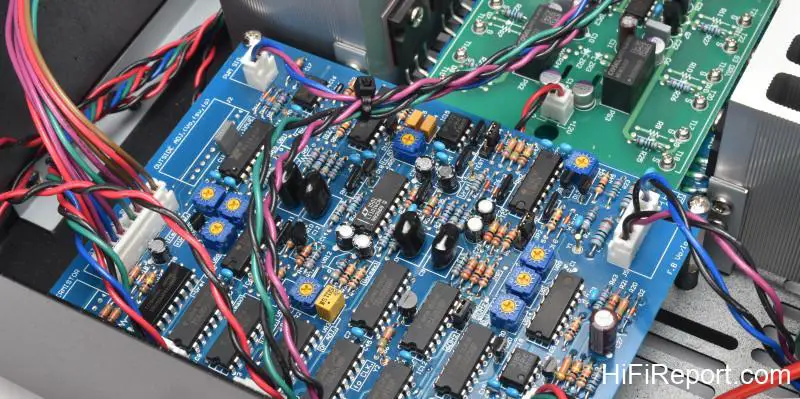
Upon opening the chassis of the KOJO Aray MKII for the first time, you’ll find the interior densely packed. However, I was initially surprised given the unit’s not-insignificant size. Following the typical approach of many audio manufacturers, one might expect a bulky toroidal transformer inside. Yet, this unit deviates from traditional linear power supply designs, instead employing a proprietary “PWM pulse width modulation” system.
Increasingly, innovative power products are adopting this design. While traditional linear power supplies are stable, they are not without drawbacks, including high power consumption, low efficiency, and noticeable current ripple. The Aray MKII utilizes a regenerative method to reconstruct the AC power.
This not only effectively eliminates EMI noise interference from the mains supply and reduces the impact of voltage fluctuations but also, by performing transformation digitally, reduces unnecessary power consumption and increases power efficiency.
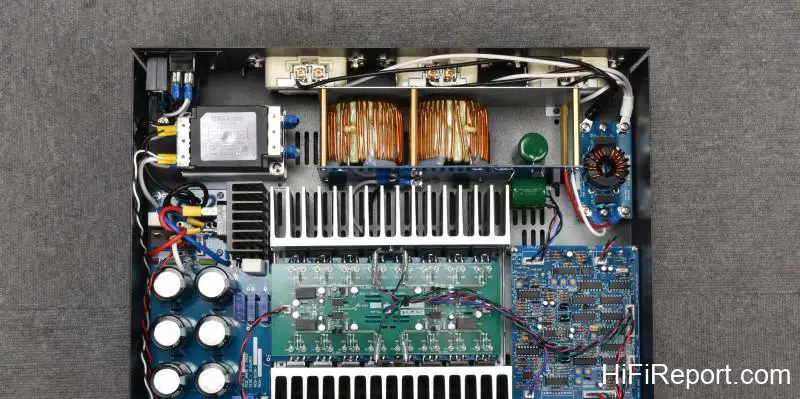
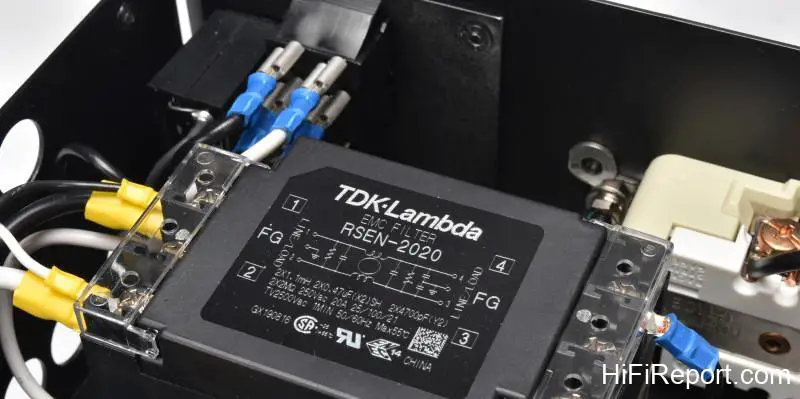
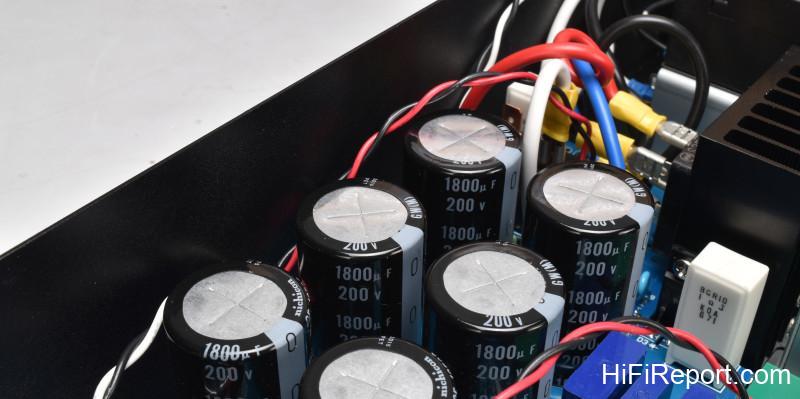
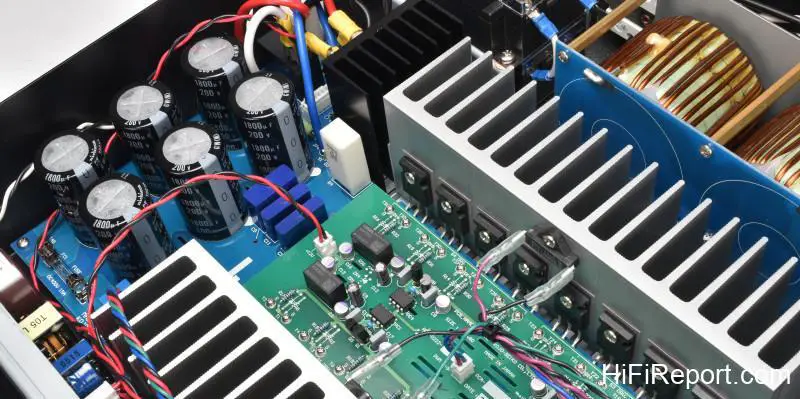
Given that mains circuits are often affected by noise from household electronic devices, upon receiving the input power, the Aray MKII first employs an electromagnetic filter to eliminate EMI noise from the mains. It is also equipped with a surge absorber to prevent current spikes from damaging equipment. Following this, six 1800 μF filter capacitors are used for current storage.
The PWM pulse modulator module features input stage capacitors selected for their low impedance and high ripple current capability, helping to reduce losses and minimize heat generation.
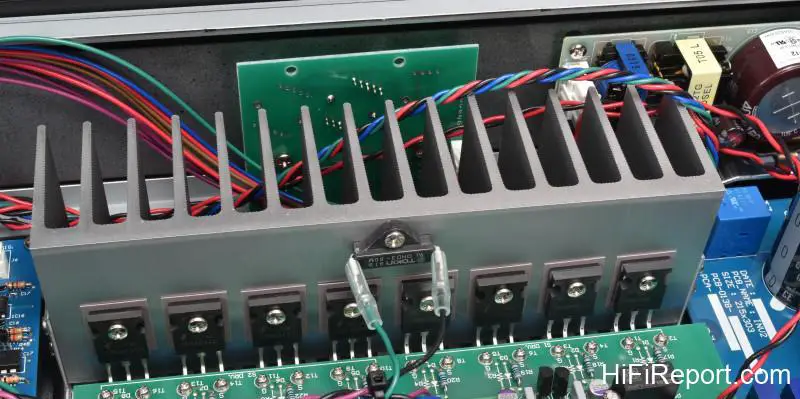
Modulation is then controlled by a Class D drive circuit composed of 8 pairs of IGBTs (Insulated Gate Bipolar Transistors), serving as the primary switching components for PWM. A metal heatsink structure is visible externally on the transistor array, enhancing its operational efficiency. This design provides advantages such as high speed and low loss, enabling an output power of up to 1000VA.
Finally, at the output stage, a large-capacity low-pass filter circuit is employed to filter out noise and voltage waveform distortion. Notably, the choke coil in the Aray MKII is particularly large, and its core material is made of high-purity (99.99%) electrolytic iron called Myron. Additionally, a metal plate is used externally to shield the choke, ensuring highly effective noise isolation.
Impact on Video Quality
Beyond being a dedicated audio power supply, the manufacturer also emphasizes its significant positive impact on display performance. Therefore, during my testing, I also connected it to a Panasonic TH-65JX650W 4K LED TV to assess changes in the image. Watching LG’s official 4K HDR test videos, the first thing I noticed after connecting the Aray MKII was a significant increase in image brightness.

Any softness around the edges of image objects disappeared, highlighting their form and making the picture appear sharper and more vibrant. Details like the contours and veins of leaves became incredibly three-dimensional. Similarly, the texture of animal fur became more direct and revealing, with individual hairs standing out vividly, creating a sense of realism as if a veil had been lifted, making the picture more lifelike and dynamic.
Furthermore, with abundant power supply, one can feel as though every bright spot on the TV can operate at its full potential, resulting in stronger contrast between light and dark areas. Dark areas become blacker, and the amount of detail increases significantly, presenting more saturated colors and more realistic images! This change also makes the sense of depth and layering within the scene more pronounced.

What’s more, while the image sharpness and brightness are enhanced, it doesn’t feel overly processed; instead, it appears more comfortable and natural, fully showcasing the color capabilities of the Panasonic TV.
Audio Performance
Next is the audio performance, which is of most concern to audiophiles. I set up a two-channel system using a Mytek Brooklyn Bridge streaming DAC/preamp, paired with a Ray Audio KT120 tube integrated amplifier, driving a pair of Harbeth M30.2XD bookshelf speakers, and streamed music from Tidal. Initially, the Brooklyn Bridge’s sound is quite neutral with no particular pairing idiosyncrasies.
The Ray Audio tube amp possesses the warm and lively tube character while also offering excellent resolution, adding a touch of modernity compared to most tube amps. Paired with the Harbeth’s warm and sweet mid-range characteristics, the sound is quite balanced, offering both resolution and a smooth, sweet texture. Although the overall style leans towards a rich mid-range, the character is utterly captivating!
This setup made me initially concerned whether connecting the power supply would alter its original sonic characteristics. However, upon switching to the KOJO Aray MKII, I realized my worries were unfounded, as the change in sound quality was not only noticeable but entirely positive! First and foremost, the sound felt incredibly transparent, completely sweeping away any original impurities.
The musical background became exceptionally quiet, and the soundstage expanded outwards, allowing musical forms to emerge distinctly from the blackness with prominent and three-dimensional outlines. Simultaneously, the extension at both frequency extremes improved significantly. The slightly thin high frequencies became much fuller, and the somewhat restricted low-frequency quantity of the speakers increased slightly without becoming bloated or loose.
I could hear a more focused and elastic texture in the bass, making the three frequency bands sound much more balanced. The sweet mid-range texture characteristic of British BBC-style speakers remained, but with less sluggishness and roughness, appearing more transparent and dynamic.
Playing the fourth track, “As Easy As Rolling Off,” from James Taylor’s album “American Standard,” the sense of space was immediately three-dimensional from the opening. The brisk acoustic guitar strumming was sweet and relaxed, each note full of elasticity. Not only could I hear a richer sense of string vibration, but the subtle dynamics of fingers moving on the strings were also incredibly clear!
At this point, James Taylor’s voice no longer had a sluggish or blurry feel; his presence had high density, with clear and full articulation and lip/teeth details, without any sense of thinness or strain.
Similarly, listening to the Oscar Peterson Trio’s “We Get Requests” album, the piano sounded more transparent and full of moisture, each note crystal clear. Phrases trailed off with a more airy and natural decay. Simultaneously, the key presses felt heavier, and in the lower registers, I could hear the subtle resonance of the piano body, making the piano’s presence more distinct and solid.
The double bass in the background exhibited a clearer “gut” flavor, holding the potential for excessive low-frequency energy firmly in check. The texture felt tighter and more elastic. Accompanied by the swinging rhythm of the jazz drums, a fully three-dimensional image of the band was created.
Next, I played the familiar “John Williams in Vienna” album. Before upgrading the power supply, large orchestral music sounded somewhat congested and constrained on this system. Now, it’s completely different. I could feel a wide, fan-shaped soundstage unfolding behind the speakers, with the orchestra laid out in a line, the positions of instruments precise and clear. There was no blurring between instruments, highlighting the rich layers of the performance.
In the third track, “Devil’s Dance,” Mutter’s opening violin solo gained a luxurious sense of airiness, with more delicate high-frequency extension. The resonant wooden body of the violin was already a strength of this system, but now with the added power, even during rapid playing, the details remained unambiguous. I could hear a rich sense of texture from the bow strokes, and the violin’s body resonance was smooth and sweet.
Conclusion
There are many choices for power supplies, most of which improve power quality through isolation and filtering. The KOJO Aray MKII power supply, in addition to multiple layers of filtering, adopts a “complete power regeneration” approach. This is analogous to a home water distillation system, where tap water is vaporized and then recondensed into drinking water. This process involves multiple filtration steps and is completely isolated from the impurities in the tap water.
The resulting water is naturally pure and free of contaminants. This analogy perfectly describes how the Aray MKII completely cuts off the interference of mains noise and the problem of unstable voltage. Among power products at a similar price point, it is the one I have heard that provides the most significant and positive improvement in sound quality.
If you are still struggling with power issues for your audio system, the KOJO Aray MKII will be a worthwhile investment that solves the problem once and for all.
Specifications
* Product Type: AC Power Supply
* Output Voltage: AC 110V (±0.5%)
* Regulation Method: Fast PWM Inverter (Transformerless)
* Power Supply Capacity: Maximum 1000VA
* Total Harmonic Distortion: <0.8% * Instantaneous Maximum Current: 120A * Surge Protection Device: 1000A (8/20μsec) * Response Frequency: 60Hz (±0.01%) * Sockets: FURUTECH INLET-G (Input), 6 outlets (HUBBELL 8300I) (Output) * Dimensions: W: 432mm D: 351mm H: 88mm * Weight: 10kg