
Dali Opticon 6 MK2 Review
In 2020, Dali introduced the second generation of their Opticon MK2 series, injecting fresh and formidable contenders into the entry-level speaker market.
Dali has consistently demonstrated an almost uncanny knack for balancing cost, price, and performance. Their strategic deployments in the more affordable audio segment have been nothing short of remarkable, each release eliciting widespread admiration.
Consider the Oberon series, for instance. In the realm of budget-friendly speakers under $1,600 USD a pair, it unequivocally earns a top spot on any recommendation list, thanks to its impressive sonic capabilities and appealing aesthetics.
Or take the Katch Bluetooth speaker – a vibrant and stylish device that captures attention instantly. As an aside, if you find your TV sound lacking, a Katch One can serve as a sleek soundbar or a standalone music system, mounting beautifully on any wall.
Even at prestigious events like the Munich High End Show, Dali’s booth stands out. The company clearly understands how to curate a youthful and dynamic atmosphere through thoughtful design and presentation.
Stepping into their space, one no longer perceives high-fidelity audio as distant or unattainable, particularly for younger generations. Dali has effectively built a bridge, fostering communication with a new wave of audio enthusiasts.
Opticon MK2: A Visual Evolution
This is the Dali I recognize and admire.
The MK2 iteration of the Opticon series is another resounding success. In my view, Dali has made all the right moves.
Without a legacy model for direct comparison, quantifying the sonic improvements remains elusive. However, the advancements in the Opticon MK2’s aesthetics are immediately apparent and undeniable.
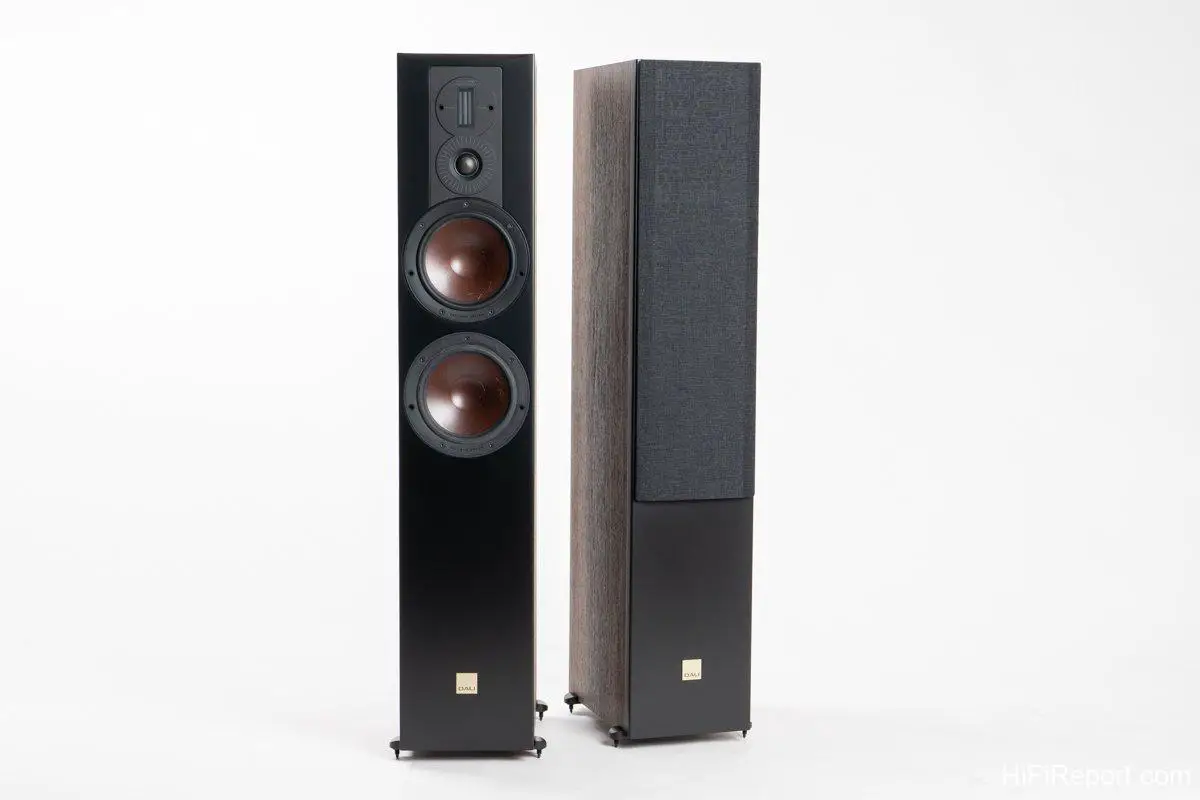
Upon unboxing the speakers, an immediate sense of delight arises – the Opticon 6 MK2 is genuinely beautiful.
The design skillfully leverages materials to create a palpable texture on the rectilinear cabinet, delivering a compelling tactile experience right from the first touch.
This is where Dali excels.
Run your fingers over the Tobaco Oak veneer. The pronounced grain offers a tangible sense of rawness and natural character.
Even the speaker grille is distinctive. Dali has opted for a more coarsely woven fabric with a pronounced texture, pleasing to the touch and visually intriguing.
In the realm of affordable loudspeakers, the Dali Opticon MK2 series truly stands apart as something special.
Hybrid Tweeter Technology
The Opticon 6 MK2 is the second largest model in the series, positioned below the flagship Opticon 8 MK2, which boasts larger bass drivers, an additional midrange unit, and a substantial weight exceeding 30 kg per speaker.
Despite its sub-$3,200 USD price point per pair, this slender floorstander incorporates several of Dali’s signature technologies.
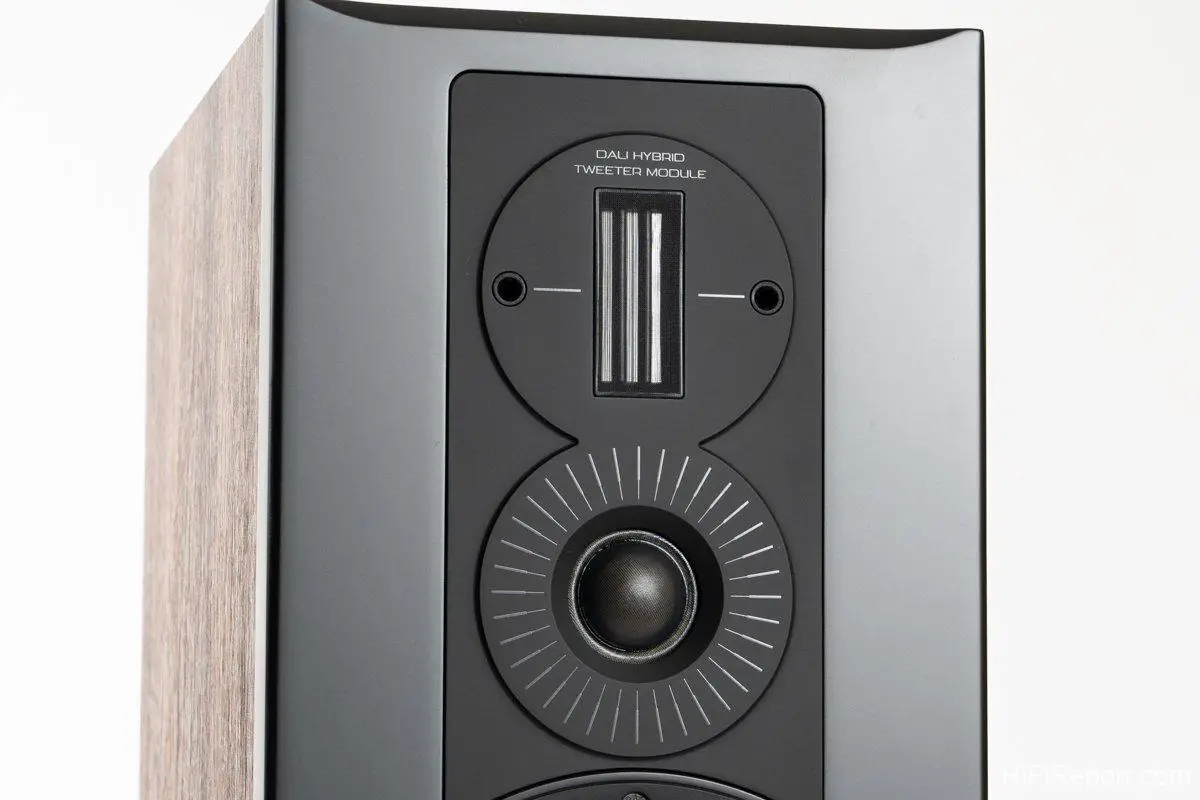
Foremost among these is the renowned Hybrid Tweeter module, combining a 17 x 45 mm ribbon tweeter with a 29mm soft dome tweeter.
This hybrid configuration of ribbon and soft dome tweeters is a hallmark of Dali’s design philosophy, employed for many years.
While similar designs might exist in some high-end brands, it’s rare to find Hybrid Tweeter technology trickling down to speakers in this price range.
Dali, however, makes it a standard feature in nearly all floorstanding speakers above the bookshelf models in the Opticon MK2 range.
What are the advantages? Dali explains that even the finest soft dome tweeters begin to roll off in frequency response beyond 10kHz, whereas ribbon tweeters can extend much higher.
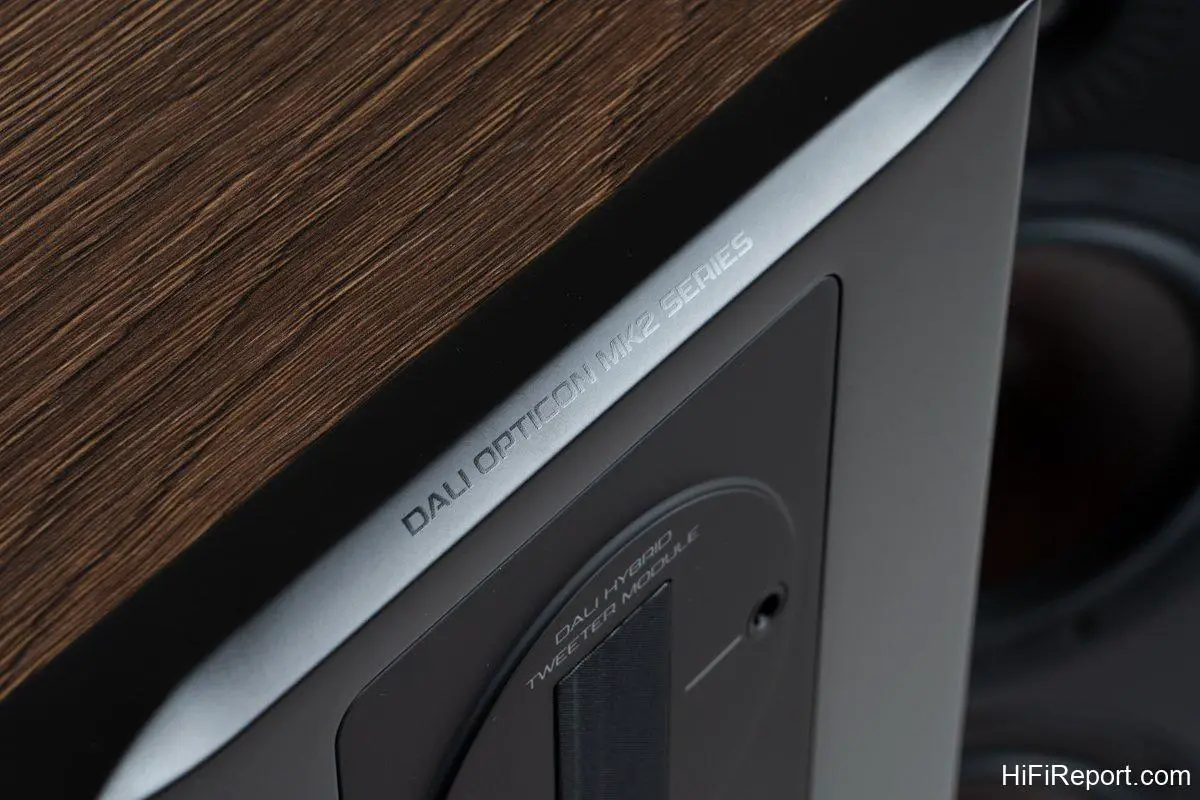
Therefore, the inclusion of a ribbon tweeter in the Opticon 6 MK2 serves to reinforce frequencies above 14,000Hz.
This dual-tweeter design allows the Opticon 6 MK2 to achieve a frequency response extending up to 30kHz. Furthermore, ribbon tweeters excel in horizontal dispersion, maintaining excellent off-axis response.
SMC Woofer Technology
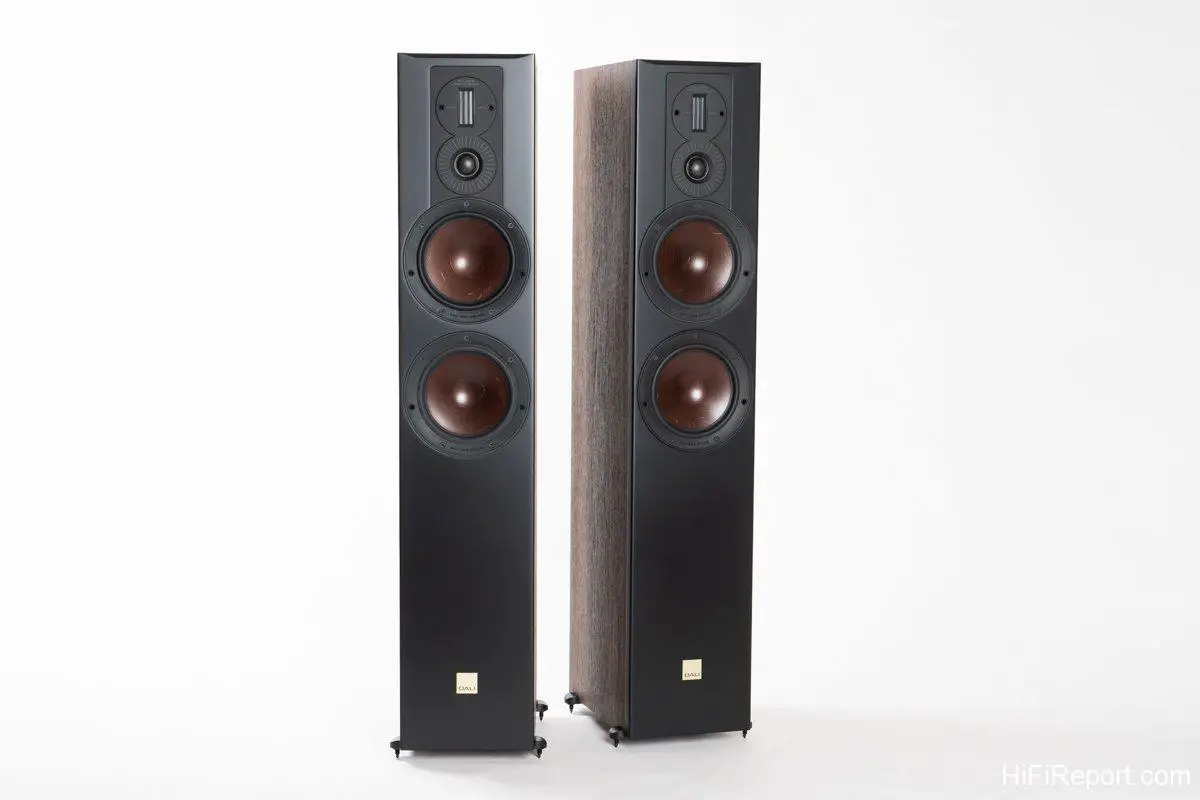
Beneath the dual tweeter module reside two 6.5-inch woofers.
Dali manufactures their own drivers, granting them considerable leverage in implementing technology trickle-down across their product lines.
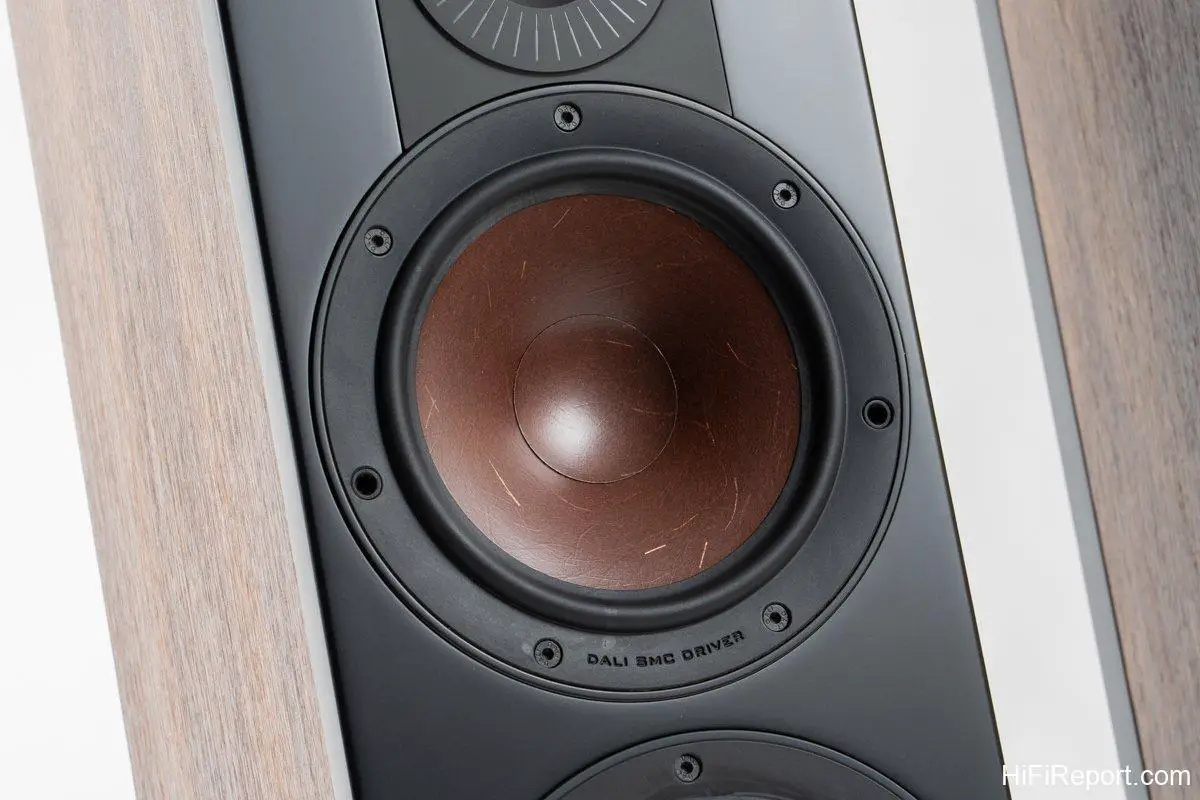
The woofers in the Opticon 6 MK2 bear a striking resemblance to those found in the flagship Epicon series. This is no coincidence; it’s precisely that flagship technology being applied here.
The woofer cones utilize Dali’s acclaimed wood fiber-reinforced paper pulp diaphragms. These cones possess inherent rigidity and damping, resulting in exceptionally low breakup distortion and a natural sonic character.
The driver frames are constructed from die-cast aluminum, offering robust rigidity and efficient heat dissipation. Combined with carefully designed ventilation, this ensures optimal thermal management during driver excursion, preventing the magnetic system from overheating and introducing distortion.
The technology transfer extends beyond just the diaphragm. Dali incorporates another signature innovation known as SMC (Soft Magnetic Compound). This material is composed of spherically shaped, coated magnetic granules that can be molded into any desired form. Magnets made from SMC, when used in loudspeaker drivers, significantly reduce eddy current and magnetic hysteresis effects. This leads to more linear driver movement, preserving rich detail even at low volumes and maintaining a consistently natural sound.
Upgraded Crossover Components
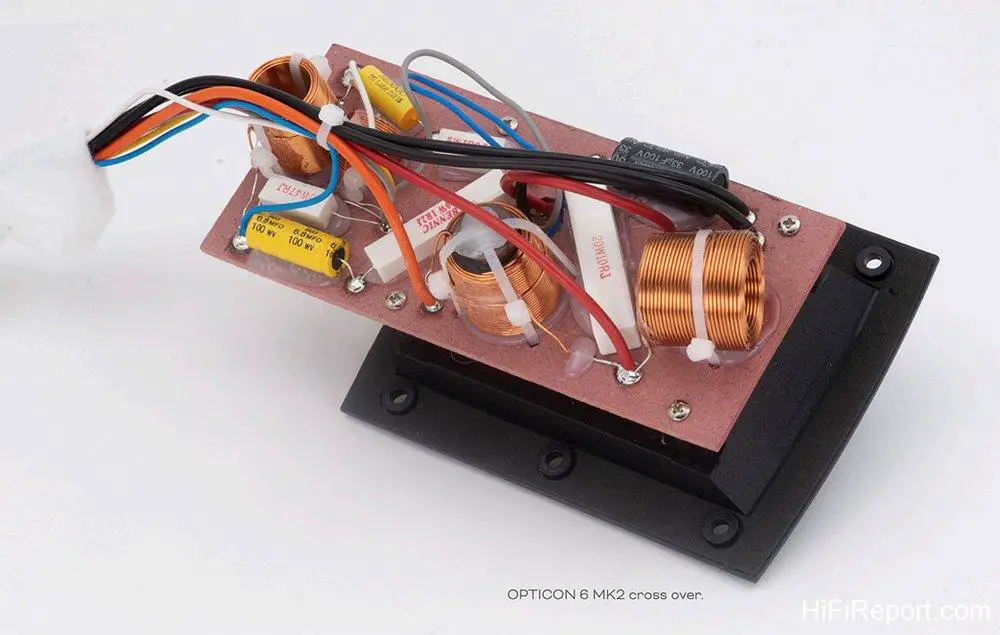
In the crossover network, the Opticon 6 MK2 adheres to Dali’s established principle of minimizing component count to reduce energy loss.
The MK2 iteration features upgraded capacitors with lower loss characteristics. This enhancement contributes to a smoother frequency response, greater detail retrieval, and improved sonic precision across the entire Opticon MK2 series compared to its predecessor.
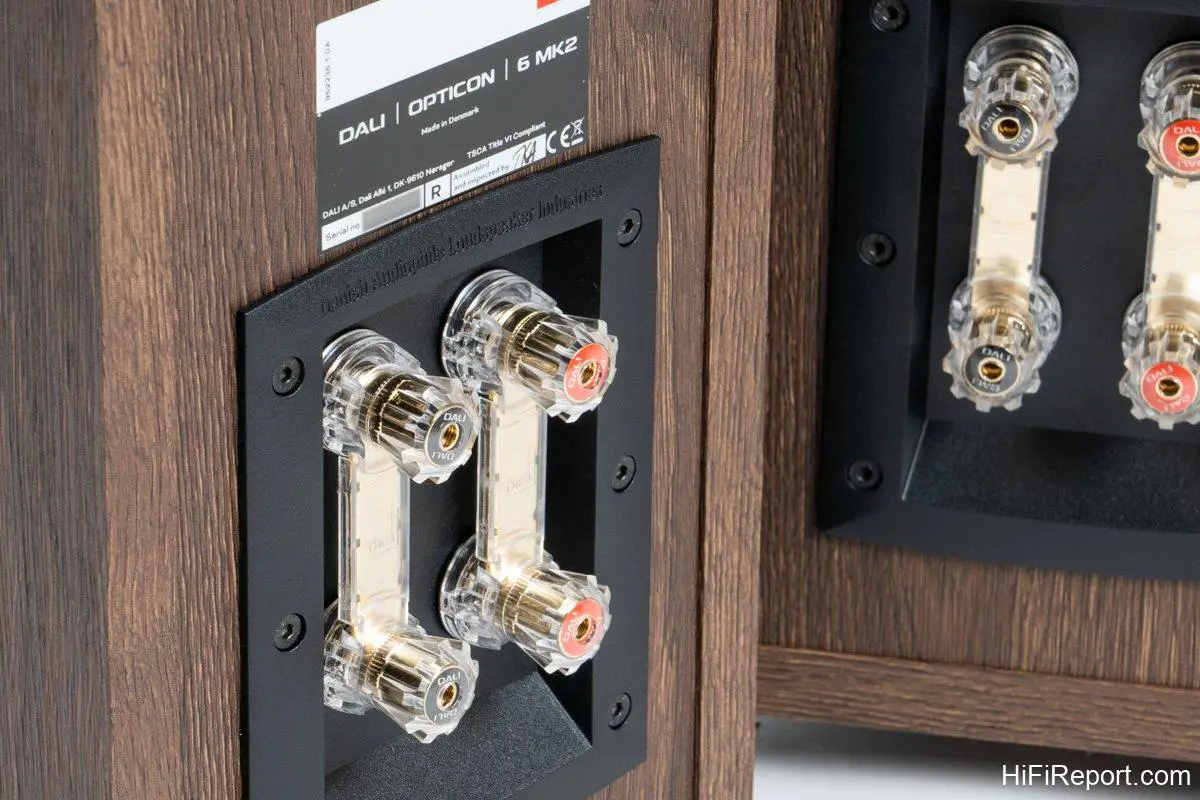
Dali mounts the crossover directly behind the speaker terminals, minimizing signal paths.
The substantial, gold-plated, pure copper speaker terminals are a luxurious touch, particularly for speakers in this price bracket.
Robust Cabinet Design
While the cabinet design may not feature extravagant curves or shapes, the rectangular enclosure is undeniably solid and substantial.
Constructed from MDF, the front baffle is a hefty 25mm thick. Internal bracing further reinforces the cabinet structure, not only minimizing backwave interference between drivers but also enhancing overall cabinet rigidity and reducing unwanted resonances.
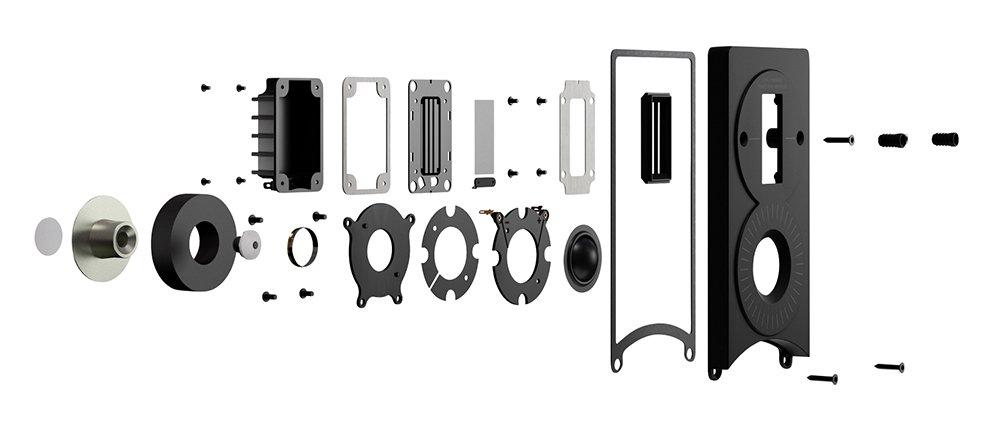
The grille of the Opticon 6 MK2 forgoes the trendy magnetic attachment in favor of traditional pin fixings. However, Dali cleverly conceals the pin receptacles within the driver frames and baffle, maintaining a clean and visually uncluttered aesthetic.
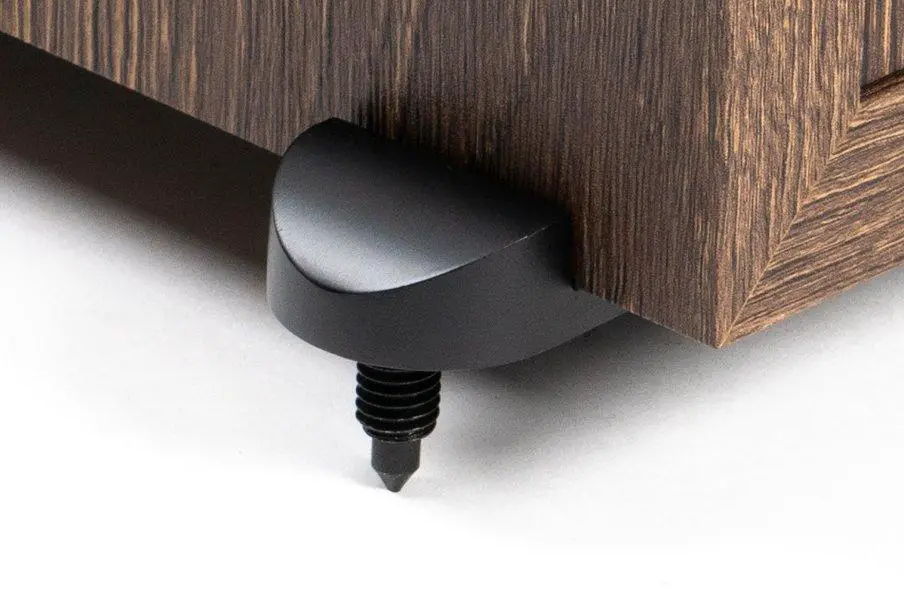
Extended plinth feet at the base increase the speaker’s footprint, enhancing stability. Height-adjustable spikes provide further flexibility for leveling the speakers on uneven surfaces.
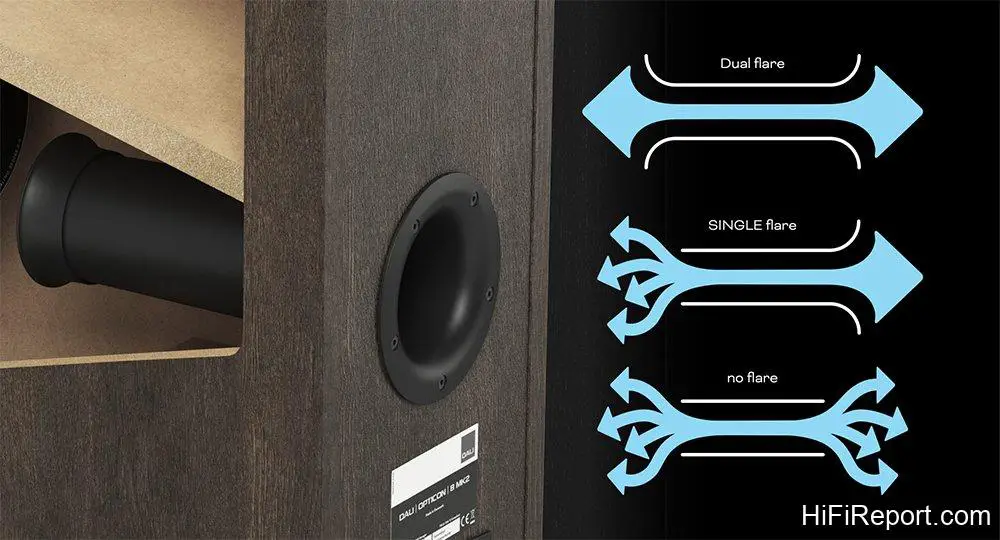
Dual Flare Reflex Ports
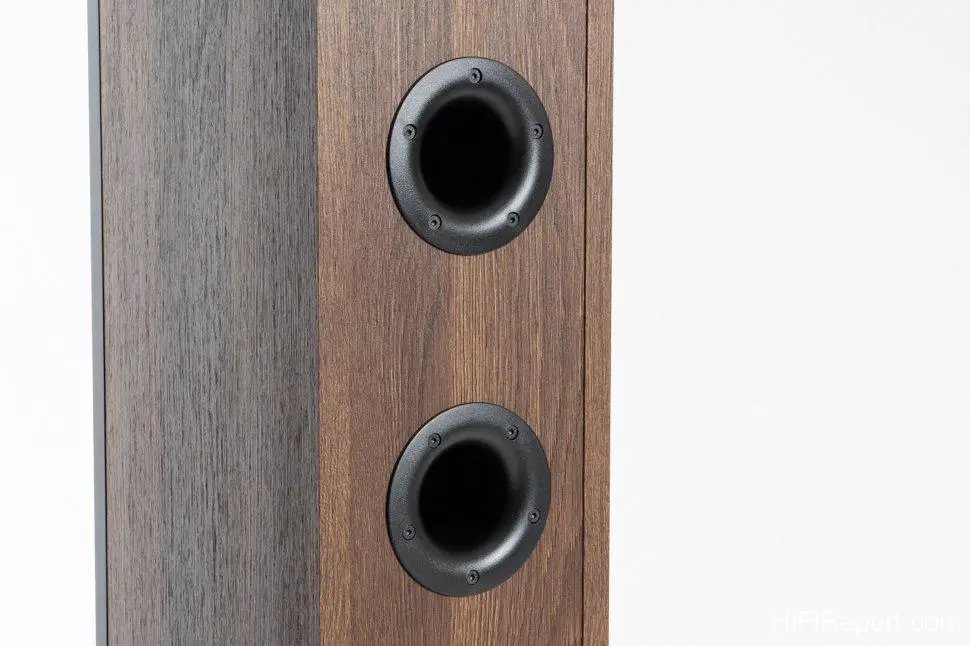
Two bass reflex ports are located on the rear panel. Dali refers to this design as Dual Flare, asserting that it reduces air turbulence compared to a single port design. This “breathing” efficiency is said to improve bass extension.
Pair-Matched Production
Finally, it’s worth noting that Dali loudspeakers, particularly those sold in pairs, are manufactured as matched pairs from the outset.
Even with the more affordable Opticon 6 MK2, the left and right speakers bear consecutive serial numbers.
Dali emphasizes that this isn’t merely a post-production pairing process involving labels. Instead, they are manufactured as a pair, assembled by the same technician.
This meticulous approach aims to minimize any potential discrepancies between the two speakers.
Intriguing, isn’t it? I’m unaware of other manufacturers employing this exact method, but Dali’s commitment to pair matching is noteworthy.
User-Friendly Performance
Regarding sonic performance, I can confidently say the Opticon 6 MK2 is a speaker purchase unlikely to lead to regret.
It’s remarkably easy to drive, possesses a naturally smooth tonal balance, and exhibits a slightly full-bodied character. Yet, the overall sound remains relaxed and spacious. While it accurately delineates the contours of sound sources, it avoids aggressive or overly forward presentation.
Furthermore, speaker placement is remarkably forgiving. I experimented with various configurations: straight ahead, slight toe-in, aggressive toe-in, wider spacing (2 meters), and narrower placement (around 1.5 meters, flanking a TV).
While each configuration yielded subtly different sonic nuances, the Opticon 6 MK2 consistently delivered pleasing sound. Dali truly crafts user-friendly loudspeakers.
Natural and Lively Instrumental Texture
Assessing timbre and tonal quality, I turned to an album featuring Goran Sollscher and Patrick Gallois performing Piazzolla compositions. This recording, with its intimate instrumentation of classical guitar and flute, benefits from close miking, resulting in exceptionally clear and vivid instrumental textures.
Through the Opticon 6 MK2, Sollscher’s guitar notes are full-bodied, resonating richly with the instrument’s body. The lingering decays are captivating. Capturing these decays beautifully hinges not only on treble performance but also on a balanced midrange – too much midrange thickness can obscure the delicate nuances and ethereal quality of the reverb tails.
The Opticon 6 MK2 surpassed my expectations in conveying the guitar’s subtle nuances, a genuinely delightful surprise.
As for Gallois’ flute, the breathy quality of air moving through the metal tube is strikingly realistic. The soaring high notes are energetic and powerful, possessing a certain impact without becoming harsh or strident.
Dali has clearly invested considerable effort in fine-tuning the Hybrid Tweeter module. The smooth and sweet treble of the Epicon series is understandable, but achieving such refined high-frequency performance in the entry-level Opticon 6 MK2 is truly commendable.
Dynamic and Detailed Performance
The Opticon 6 MK2 presents a remarkably vibrant and natural sound, refraining from an overly heavy or weighty character. This imbues the music with a sense of vitality.
Listening to Liza Ferschtman and Inon Barnatan’s rendition of Beethoven’s Violin Sonata No. 10, the recording’s richness and fullness were beautifully rendered by the Opticon 6 MK2. The violin and piano blend seamlessly, creating a captivating performance.
The violin is tangible and substantial, its form clearly defined and three-dimensional. The nuances of bowing technique and expressive gestures are vividly conveyed.
The piano, particularly in its middle and upper registers, is crisp and solid, while chords possess weight and power.
This particular sonata is devoid of melancholy, instead brimming with joy and exuberance. The Opticon 6 MK2’s lively sonic character perfectly captures and projects this cheerful and intimate atmosphere.
Moreover, the Opticon 6 MK2 handles dynamic shifts with poise.
This piece exhibits considerable dynamic range. The Opticon 6 MK2 manages to reproduce subtle passages with ample information, ensuring musical completeness.
During fortissimo passages, when the music swells with energy, the speakers never sound strained or forced, maintaining composure.
The Opticon 6 MK2 is indeed quite impressive.
Expansive and Layered Soundstage
When reproducing large-scale orchestral works, the Opticon 6 MK2 conjures a wide and deep soundstage.
The layering and placement of instrumental sections within the sonic panorama are readily discernible, even at higher volumes, without collapsing into sonic mush.
Listening to John Williams conducting the Vienna Philharmonic in a performance of his own compositions, specifically “The Flight to Neverland” from the movie “Hook,” the simple theme undergoes constant transformations, rapid yet multifaceted. Percussion instruments possess weight, and the music progresses with a joyful, buoyant rhythm – the exhilaration of embarking on an unknown journey.
In contrast, “Excerpts” from “Close Encounters of the Third Kind” is mysterious and suspenseful.
The piece’s opening section, with its modernistic style, demands considerable ensemble precision from the orchestra. The sudden fortissimo outbursts and dramatic dynamic contrasts pose a challenge for any audio system.
During the climactic tutti passages, the Opticon 6 MK2, naturally, cannot match the sheer scale and grandeur of larger loudspeakers. However, at appropriate listening levels and distances, the soundstage it presents is remarkably compelling.
The tonal color, texture, and weight of the strings are exceptional for speakers in this price range.
Engaging and Detailed Vocals
Playing a live concert album by Faroese singer-songwriter Eivør, the Opticon 6 MK2 effectively conveys her versatile vocal styles and musical genres.
In the opening track, “Mín Móðir,” Eivør’s vocal delivery is multifaceted, ranging from powerful and unrestrained to breathy and intimate. She employs significant amounts of air in her singing, including non-lexical vocables and breathy sighs. The Opticon 6 MK2 captures these subtle nuances, vividly portraying her vocal expressions and techniques.
The live atmosphere of this track is exceptionally well captured, with audience sounds creating a sense of spaciousness.
However, one of the track’s highlights is the powerful drum performance. Being a smaller floorstanding speaker, the Opticon 6 MK2 does exhibit a slight limitation in deep bass extension.
The second track, the English-language song “Where Are the Angels,” features a simple arrangement of vocals and guitar. Yet, the Opticon 6 MK2 still reveals the beauty and nuances of this track.
Again, we hear Eivør’s vocals with remarkable clarity and detail, capturing breathy passages, vibrato, and nasal resonance with precision.
Despite the abundance of detail and substantial vocal presence, the sound remains relaxed and non-aggressive.
This is characteristic of the Opticon 6 MK2 – providing a wealth of information while maintaining an easy and effortless listening experience.
Punchy and Articulate Bass
The opening track of “Eivør Live” was featured on Dali’s own “Dali CD 4” compilation. Another track from that compilation, James Blood Ulmer’s “Cry,” also proved to be a thrilling listen through the Opticon 6 MK2.
The track commences with a single-note guitar melody, followed by the entrance of drums.
James Blood Ulmer’s vocals then join in.
The rhythm guitar maintains a crisp and clean sonic profile. The drums are powerful and full-bodied. While the deep bass of the kick drum may lack ultimate subterranean depth, it is clean and fast. The articulate drums and cymbals exhibit excellent realism and immediacy.
James Blood Ulmer’s vocal texture is clearly defined. His slightly raspy and gravelly voice is authentically bluesy.
The electric guitar solo in the latter half of the track is both intense and richly colored. The bass lines and percussive attack are well-defined, without any blurring or muddiness.
The Dali Opticon 6 MK2’s ability to reproduce this track with such vibrancy and dynamism underscores Dali’s confidence in their speakers’ performance, justifying its inclusion on their demonstration CD.
Immersive and Disappearing Act
The Opticon 6 MK2 makes Michael Jackson’s music utterly exhilarating.
The lively, open, and natural midrange and treble effortlessly capture Michael’s vocal style and timbre. The clear layering within the complex arrangements of his songs reveals the multitude of elements at play. The controlled and fast bass keeps the rhythm tight and energetic.
Listening to “They Don’t Care about Us,” the relentless, driving rhythm never falters. The electronic drums are fast and impactful, each beat potent. The Opticon 6 MK2 effectively conveys the speed and sharpness of these percussive elements.
The swirling wall of electric guitars is richly textured and vibrant. Hearing the guitars reproduced with such fidelity, I must again commend the Opticon 6 MK2’s hybrid tweeter module.
“Stranger in Moscow” also features a powerful and driving rhythm. The continuous electronic drumbeat throughout the track, created from layered drum sounds, is richly textured. The orchestration creates a wide and deep soundstage, with Michael’s vocals positioned at a comfortable distance. The Opticon 6 MK2 effortlessly draws you into the music, immersing you in the sonic landscape and allowing the speakers to seemingly disappear.
Exceeding Expectations
Every listening session with Dali speakers is a pleasurable experience, and my time with the Opticon 6 MK2 was no exception.
What are your expectations for a pair of floorstanding speakers priced under $3,200 USD? How beautiful can they be? How refined? How good can they sound? How versatile? If you adopt an uncompromising, high-end audio purist perspective, the Opticon 6 MK2 may not be the ultimate pinnacle of performance.
However, judging by the standards of $3,200 USD floorstanding speakers, the listening enjoyment and sonic surprises the Opticon 6 MK2 delivered exceeded not only my expectations but will likely surpass yours as well.
Specifications
* Type: 4-driver 2½ + ½-way bass reflex floorstanding speaker
* Drivers: Ribbon super tweeter x1, 29mm soft dome tweeter x1, 6.5-inch wood fiber cone woofer x2
* Frequency Response: 49Hz – 30,000 Hz (+/- 3 dB)
* Sensitivity: 88 dB
* Impedance: 4 ohms
* Maximum SPL: 110dB
* Recommended Amplifier Power: 25 – 200W
* Crossover Frequencies: 800 Hz / 2,200 Hz / 14,000 Hz
* Dimensions: 1001 × 195 × 330 mm (H x W x D)
* Weight: 19.3 kg