
darTZeel LHC-208 DAC & Integrated Amplifier Review
HiFiReport Audio recently became the official (agent) for darTZeel, and their exceptional equipment has quickly arrived. Among the new arrivals is the darTZeel LHC-208, a brand-new product that just started shipping in June. It is the first unit to reach the Asian high-end market. The LHC-208 is a versatile piece of equipment, functioning not only as an integrated amplifier but also as a DAC with Ethernet streaming capabilities.
Hailing from Switzerland, a country renowned for its luxury goods and home to numerous high-end audio manufacturers, darTZeel stands out. While their product line is not extensive, they generate significant buzz because each model is a meticulously crafted masterpiece, born from considerable dedication and time.
The LHC-208 features a touchscreen interface. Simply plug it in and swipe left or right on the screen to power it on.
Internally, the LHC-208 employs an analog circuit architecture and design mirroring that of the CTH-8550 integrated amplifier. However, in the LHC-208, the pre-amplifier and power amplifier circuits for both channels are housed on a single circuit board, sharing a common power supply and capacitors. In contrast, the CTH-8550 boasts a fully dual-mono design, utilizing twice the components of the LHC-208.
The LHC-208 delivers a robust output power of 175 watts per channel into 8 ohms and 275 watts per channel into 4 ohms. A notable innovation in the analog system is the cooling system. It utilizes a system designed by Arctic Cooling, another Swiss company. Even when operating at full tilt, the fan noise is remarkably low, effectively managing the temperature of the output transistors.
The integrated DAC in the LHC-208 supports high-resolution audio formats up to 352.8kHz/24bit PCM and DSD128. darTZeel’s previous reluctance to incorporate digital processing stemmed from their belief that digital music often lacked the organic vitality of analog systems. They dedicated considerable thought to effectively handling digital files. In the LHC-208, they have implemented a streamlined circuit board and a specialized DAC chip, eschewing unnecessary upsampling.
Maintaining a purist approach to playback, PCM files are fed directly to the DAC chip, while DSD files retain their native format, entering the capacitor output stage. A completely new clock system is also employed.
This new clock system deviates from conventional atomic clocks, rubidium clocks, or super PLL clocks. darTZeel posits that clock precision and sound quality are not directly correlated. Consequently, the LHC-208 uses a standard PLL, but it is designed to “observe” the incoming music data stream from NAS devices and other sources. The PLL primarily provides the NAS with a data transmission rate frequency.
Once this frequency is established, the music data is transferred to a frequency synthesizer within the LHC-208. This synthesizer preserves the original characteristics of the music file. By avoiding PLL adjustments during this process, feedback issues within the oscillator circuit are eliminated. The precision of this synthesizer is measured not in ppm (parts per million) but in ppb (parts per billion), significantly reducing the need for PLL intervention to near insignificance.
The LHC-208’s sonic performance is currently fully realized, with ongoing updates planned for its operational features and functionalities.
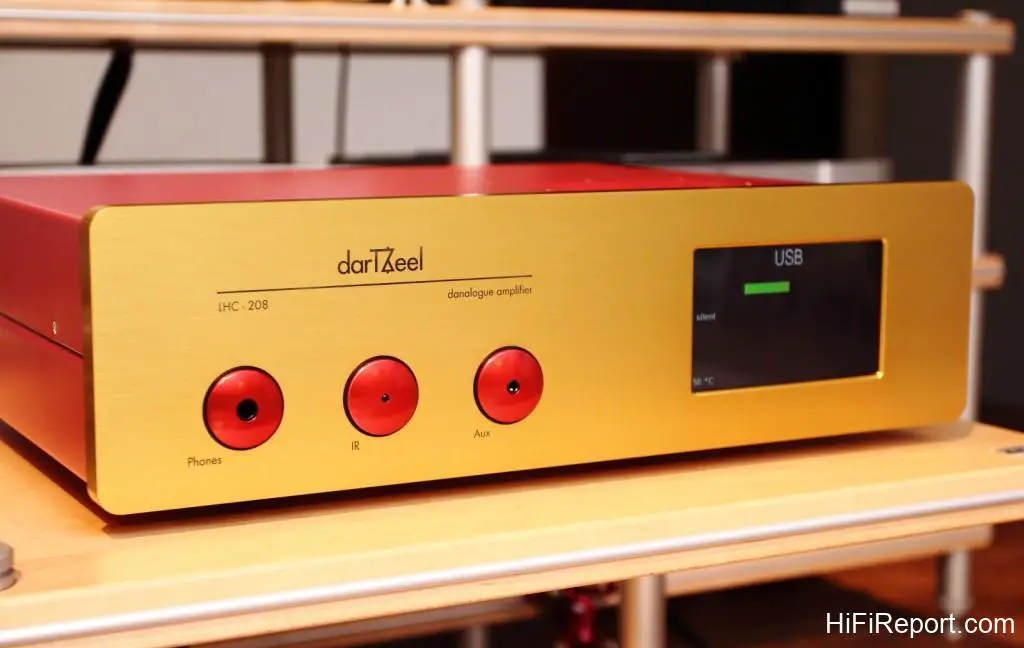
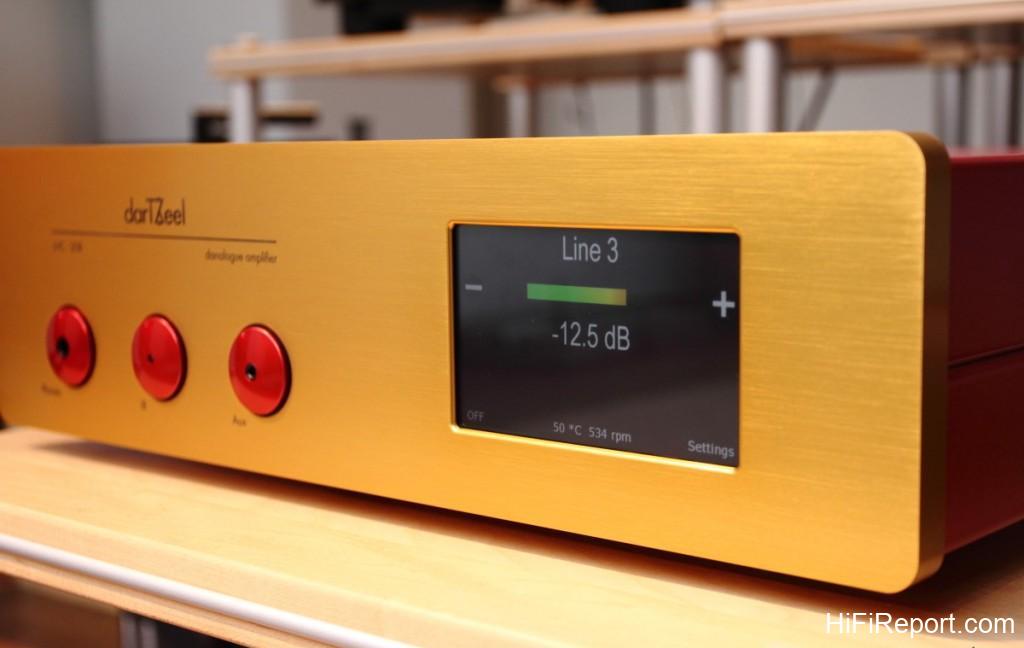
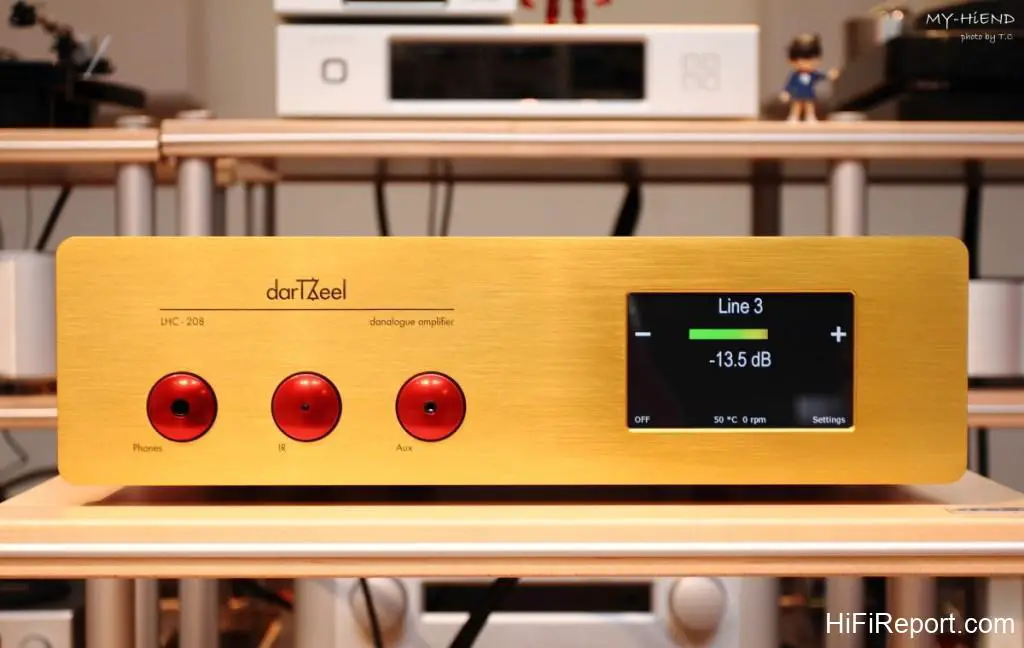
The LHC-208’s front panel is dominated by a striking touchscreen display for operation and status indication. It controls volume, input selection, displays the current music format, internal temperature, and more. The LHC-208 allows for DSD volume adjustment via settings. This addresses the common issue where PCM and DSD recordings often have different volume standards. PCM masters are typically normalized to 0dB, while DSD often remains at -4 to -7dB.
This discrepancy can lead to volume jumps when playlists contain both formats. The setting to boost DSD volume by 6dB effectively resolves this issue.
On the left side of the front panel, three prominent red circular elements are visible. These are not buttons. The leftmost is a 6.35mm headphone output jack. The LHC-208 includes a dedicated headphone amplifier circuit. When headphones are connected, the speaker output is automatically muted, and volume levels are independently memorized for each output, preventing sudden volume spikes when switching between headphones and speakers.
The second red circle is an infrared receiver for the remote control. The third is a 3.5mm auxiliary analog input jack.
The LHC-208 includes a remote control, though not the same aluminum billet remote supplied with the CTH-8550. This decision was made to reduce overall cost and retail price. Furthermore, with the network streaming functionality, darTZeel plans to release dedicated control apps for Android, iOS, Mac, and Windows 10. Remote control functions will largely be handled via tablets. Thus, the physical remote is not strictly essential.
However, for users who “adore” the high-quality aluminum remote of the CTH-8550, it will be available as an optional accessory.
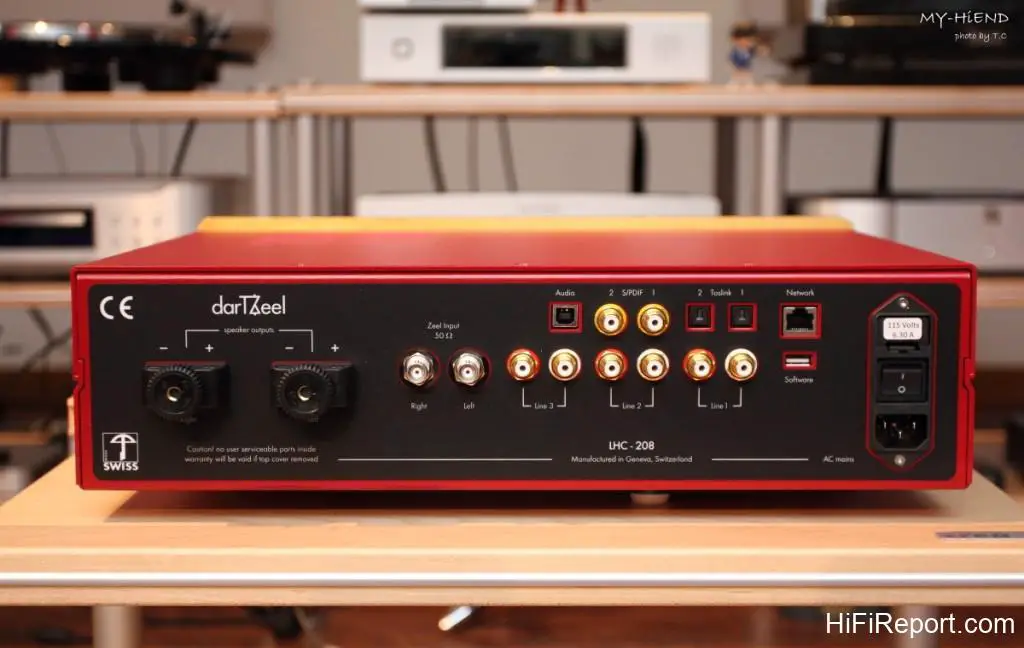
The rear panel of the LHC-208 reveals a comprehensive array of input terminals. Beyond the power socket and speaker binding posts at the far left and right, the center section includes one Zeel Input BNC terminal (50 ohms), and three pairs of RCA analog inputs. Digital inputs comprise one USB input, two S/PDIF (192kHz/24bit), two Toslink (96kHz/24bit), one Ethernet port (192kHz/24bit, DSD128), and a USB port designated for firmware updates.
When using the USB input, any standard playback software can be used, although the manufacturer advises against iTunes due to its lack of DSD support and potential alteration of digital files before transmission. For Windows or iOS users, XMOS driver software installation is recommended. Ethernet streaming is darTZeel’s preferred method of playback.
They contend that different network cables do not audibly impact sound quality and that network connections effectively isolate the LHC-208 from computer-generated interference frequencies. darTZeel’s experience indicates this isolation is significantly beneficial. Another advantage of Ethernet transmission is its inherent error correction. If data packets are corrupted or lost, the LHC-208 instructs the storage device (NAS) to resend until data integrity is verified.
The internal digital file playback buffer includes a two-second delay, ensuring the LHC-208 receives 100% accurate music data. This error correction protocol does not apply to USB transmission.
The specialized Zeel Input BNC terminal is designed for connection to other darTZeel devices equipped with darT Output BNC terminals. darTZeel’s design philosophy emphasizes impedance matching for signal transmission to preserve musical fidelity.
LHC-208 Internal Architecture Revealed
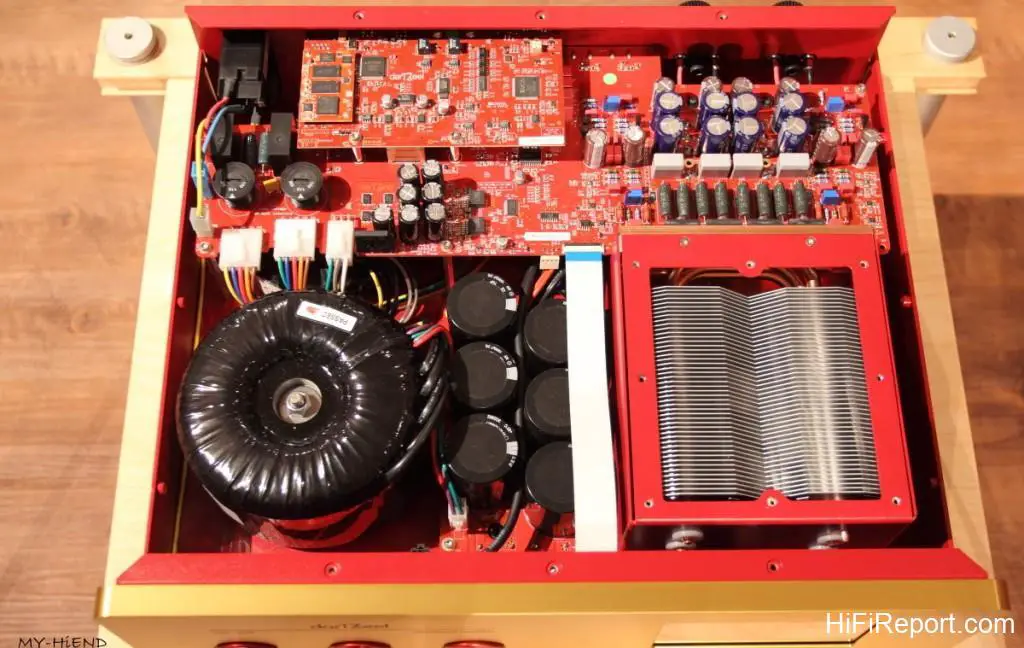
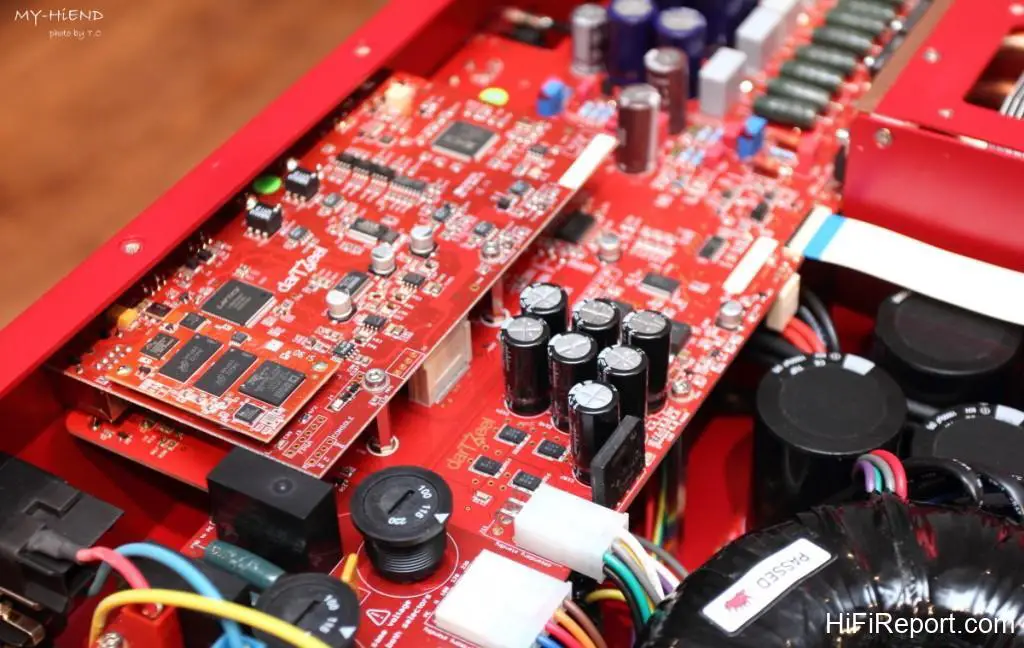
In the internal view, the rear panel is towards the top of the image. The upper circuit board is the digital processing section, while the lower board handles analog processing. The front panel is at the bottom of the image. The power supply section is on the left, and the cooling system is on the right.
darTZeel employs a unique power supply configuration, using one large and one small toroidal transformer instead of two identical units. This is not for separate circuit board power, but rather to utilize the larger transformer during normal to high power output and the smaller one during low power operation.
The toroidal transformers are sourced from Noratel, a Spanish manufacturer and a leading European supplier of power transformers for automotive, medical, and professional audio applications.
The LHC-208 boasts a high-quality cooling system. It features numerous large heatsinks on top, several metal heat pipes in the middle, and a fan at the bottom. The cooling system is provided by Arctic Cooling, a Swiss company specializing in computer cooling solutions known for their low noise performance. Arctic Cooling custom-designed this compact, efficient, and quiet cooling system specifically for darTZeel.
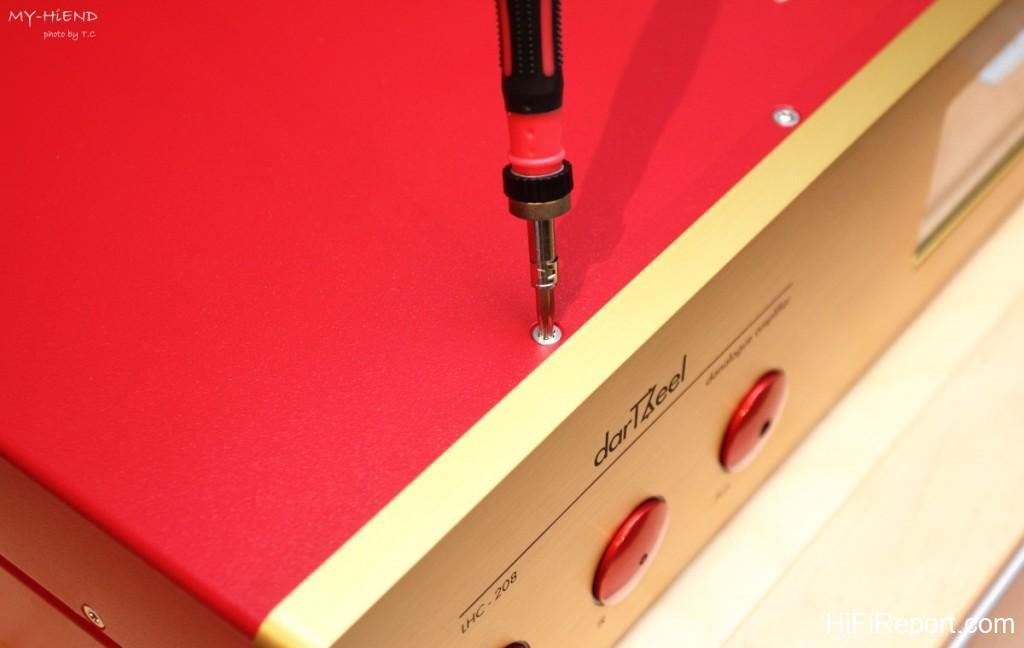
Interestingly, Arctic Cooling also manufactures headphones and speakers, suggesting their understanding of acoustics may have contributed to this partnership with darTZeel. The cooling system is securely mounted to the chassis, further reinforced with eight screws after the top cover is installed.
The digital circuit board, densely populated with chips, utilizes an XMOS chip for USB reception and a Lattice logic FPGA. The LHC-208 has two USB ports, one of which can accommodate a USB drive, directly connecting to the analog circuit board below. This port is likely dedicated to firmware updates and not intended for music file playback.
The analog circuit board is densely populated with capacitors. The LHC-208’s analog circuit design closely resembles the higher-end CTH-8550 integrated amplifier. The primary difference is the LHC-208 houses both left and right channel pre- and power amplifier stages on a single board.
The internal construction reveals darTZeel’s commitment to high-quality components in the LHC-208. The cooling system, large toroidal transformers, extensive capacitor arrays, and digital processing chips are all sourced from reputable suppliers. Considering the LHC-208’s relatively compact chassis, fitting so many components demonstrates considerable design ingenuity. The quality of the cooling system and components underscores their importance.
darTZeel not only guarantees the quality and lifespan of internal components but also maintains ample spare parts inventory, providing users with long-term peace of mind.
There are several ways to use the LHC-208. For most users, it will function like a standard DAC, simply accepting digital signals and outputting audio. However, Ethernet network streaming, the manufacturer’s preferred method, offers unique advantages. The following outlines how to set up network streaming with the LHC-208.
First, connect the LHC-208 to an Ethernet cable and connect the cable to your home network router. Your smartphone or tablet should be connected to the same local network via Wi-Fi. Next, download a compatible control app on your smart device. For Android, darTZeel recommends BubbleUPnP. For iOS, PlugPlayer or similar apps are suggested. darTZeel plans to release a dedicated control app specifically for the LHC-208 in the future.
Select the LHC-208 as the playback renderer in the app. In the Library section, pull down the local media devices menu. You should see devices on your network. Select your NAS as the file source.
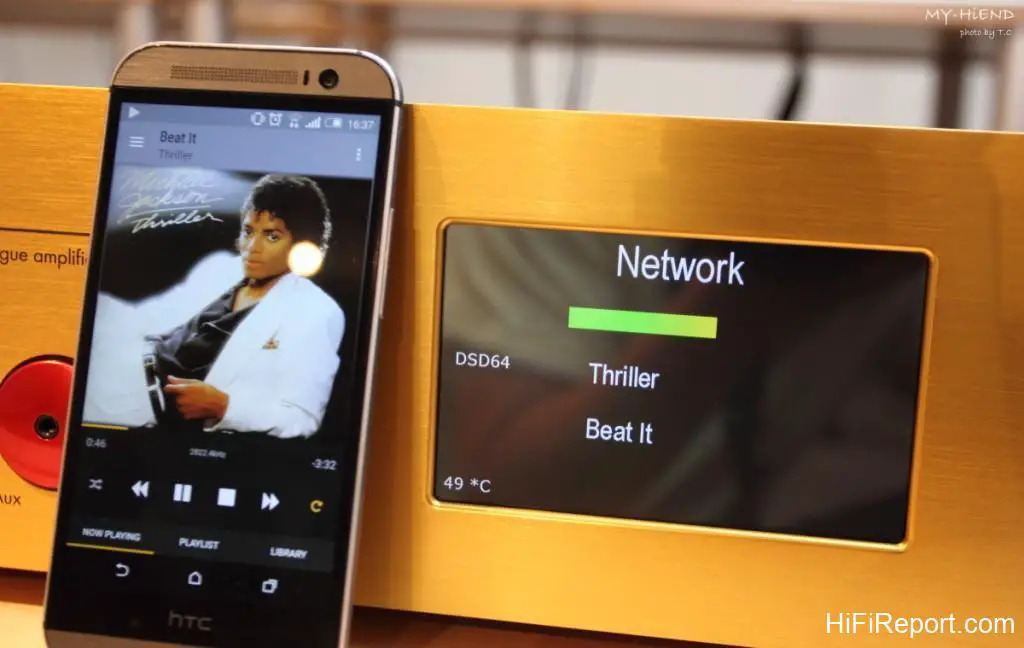
Your music files on the NAS should be immediately visible. Select the menu next to an album or song to access playback options.
Operation is straightforward. You can now use your phone as a remote to listen to music files on your network media devices. The LHC-208’s touchscreen will display song information and format. Future firmware updates from darTZeel will enable album art display on the screen.
Network streaming supports DSD64 and DSD128 files, and PCM up to 192kHz/24bit.
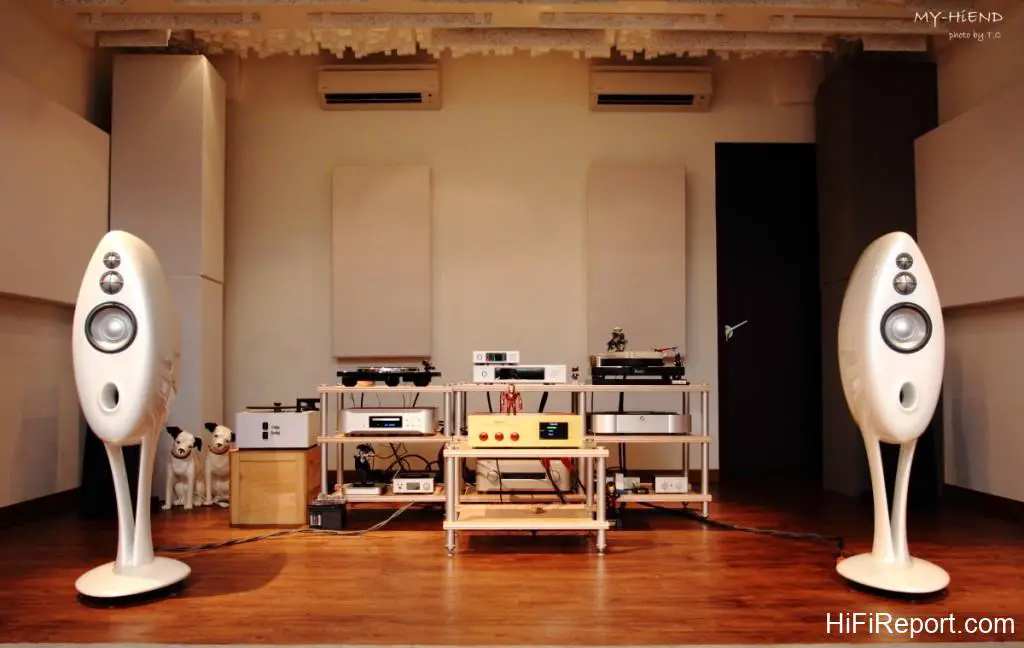
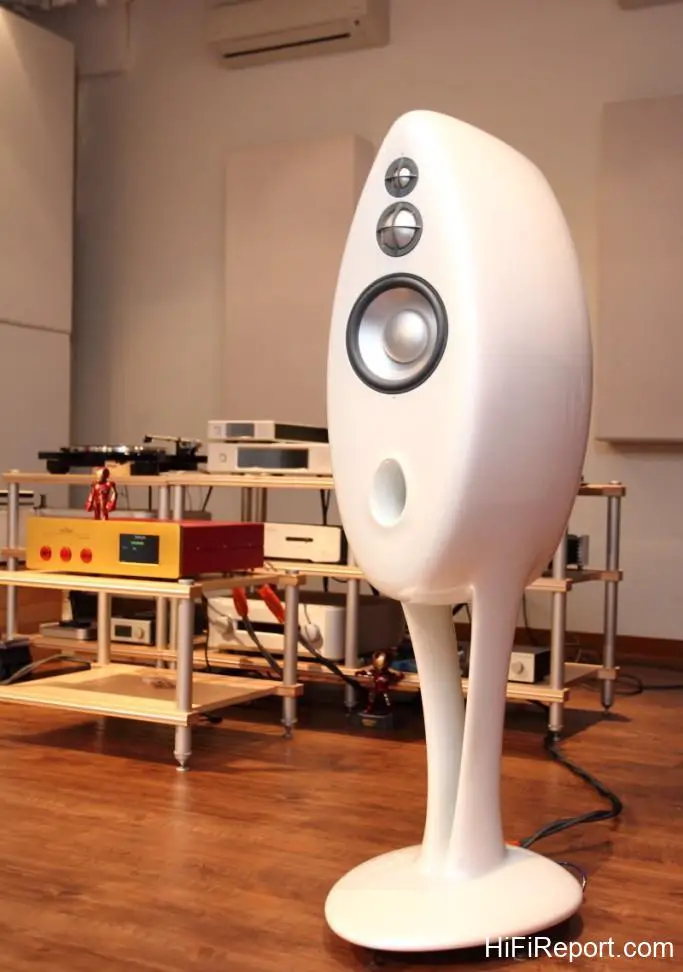
For this review, the LHC-208 was paired with Vivid B1 floorstanding speakers from South Africa. Initial impressions suggest a synergistic and excellent sonic match. We will share our detailed listening impressions soon. At this year’s audio show, HiFiReport will feature Vivid speakers with darTZeel electronics. In addition to the LHC-208, the higher-end CTH-8550 integrated amplifier will be paired with larger Vivid speakers.
This is a relatively uncommon combination, and interested enthusiasts should definitely give it a listen.
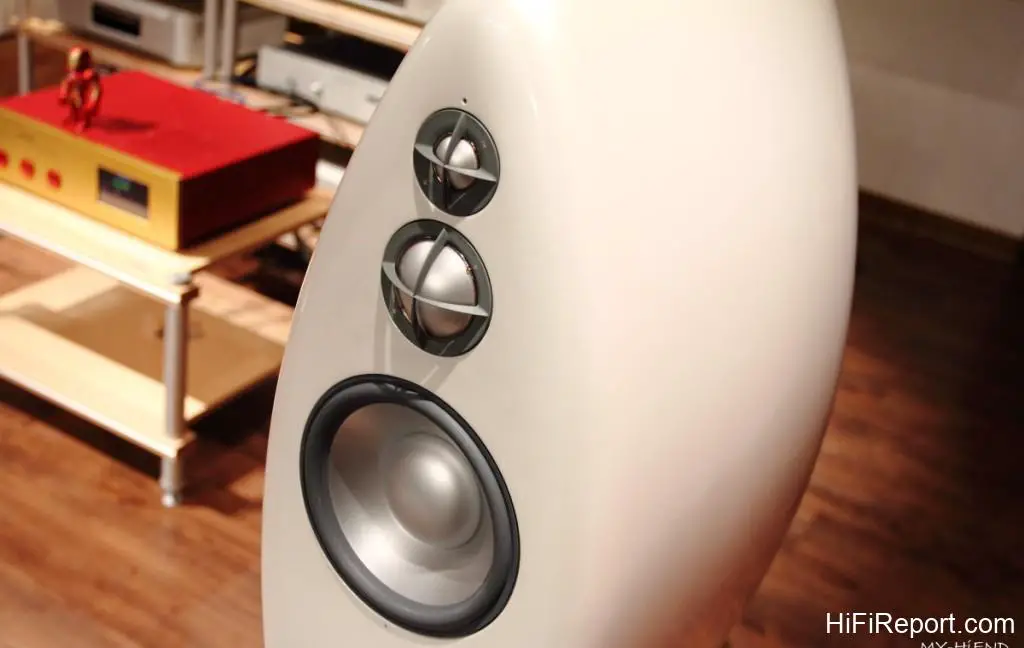
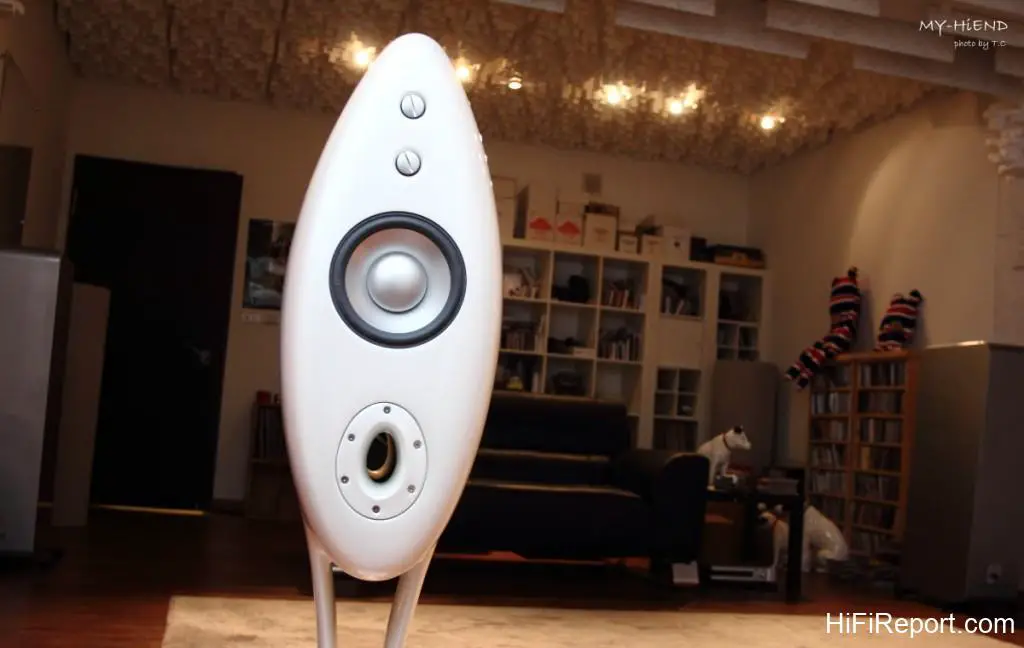
The Vivid B1 speakers used for this listening session are visually distinctive and possess a unique aesthetic. The B1 was Vivid’s first product, launched over a decade ago. The designer is Laurence Dickie, formerly of B&W, who designed the Matrix series and the renowned Nautilus speaker. The internal waveguide design of the Vivid shares similarities with the Nautilus.
The Vivid B1 features a unibody floorstanding cabinet constructed from a concrete polymer and carbon fiber composite, making it exceptionally rigid and heavy, each speaker weighing approximately 38 kg, effectively minimizing cabinet resonance. The B1’s cabinet exterior is devoid of screws, further reducing vibration generation and transmission. The B1 has a sensitivity of 89dB, an impedance of 4 ohms, and a frequency response of 35Hz to 36kHz.
Vivid B1 drivers are manufactured in-house and are exclusive to their products. The spherical dome diaphragms for the midrange and tweeter, as well as the woofer cones, are made from high-quality aluminum alloy, exceptionally light and delicate – absolutely avoid touching them. The dome drivers are not perfectly spherical but closer to a parabolic curve. Conventional dome tweeters are prone to resonance around 20kHz, but Vivid B1’s tweeter resonance is pushed beyond 44kHz.
This is far beyond the 20kHz upper limit of human hearing. Similarly, the B1’s midrange driver resonance occurs above 20kHz, well outside its operating range of up to 4kHz. Vivid has long incorporated carbon fiber around the aluminum dome diaphragms of their mid-high frequency drivers. This innovation allows the drivers to surpass traditional frequency response limitations.
While many manufacturers have adopted this approach, Vivid has further optimized it, enabling the same aluminum diaphragm to extend frequency response by another octave.
The B1’s 26mm tweeter handles frequencies above 4kHz, while the 50mm midrange covers 900Hz to 4kHz. The 158mm woofer design is particularly unique. The Vivid B1 uses two identical woofers, one front-firing and one rear-firing. The front woofer handles frequencies below 900Hz down to 35Hz, seamlessly transitioning from the midrange. The rear woofer operates only in the 35Hz to 100Hz range. This configuration explains why the Vivid B1 is referred to as a 3.5-way speaker.
Why the different frequency ranges for the two woofers? Higher frequencies have shorter wavelengths. If the woofer is too far from the midrange driver, frequency integration issues can arise. The front woofer, positioned closer to the midrange and in phase, is responsible for the 900Hz and below frequency range. Designer Laurence Dickie deemed 100Hz as the optimal upper limit for the rear woofer.
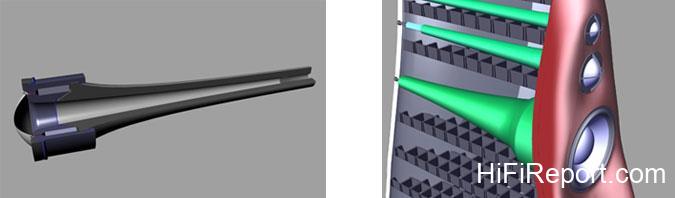
The Vivid B1’s mid-high frequency drivers also incorporate a unique design element, common across other Vivid models. Behind the mid and high-frequency drivers, a tapered tube waveguide extends to the rear of the cabinet. This waveguide dissipates back waves generated by driver movement, preventing back wave interference from causing distortion or resonance, and contributing to a smoother frequency response curve. The cabinet interiors behind the tweeter, midrange, and woofer are hollow.
The drivers are “suspended” within this space, with the front edges mounted to rubber O-rings to isolate them from the cabinet. Consequently, the tweeter and midrange drivers are not directly screwed to the cabinet. The dual woofers are secured together with a single bolt, also not directly attached to the cabinet. This “suspended” mounting approach, HiFiReport believes, is designed to minimize vibration energy generated by driver movement from transmitting to the cabinet.
The diagram below, provided by Vivid, illustrates the tapered tube waveguide extending from the rear of the driver, gradually narrowing in diameter towards the back of the cabinet.
The rear of the Vivid B1 shows the terminations of the midrange and tweeter waveguides as two circular ports. A rear-firing woofer, operating below 100Hz, and a bass reflex port are also visible. The Vivid B1’s bass reflex system is not a single port but a dual front-to-back port design. A single port can create a slight reactive force, potentially affecting the cabinet itself.
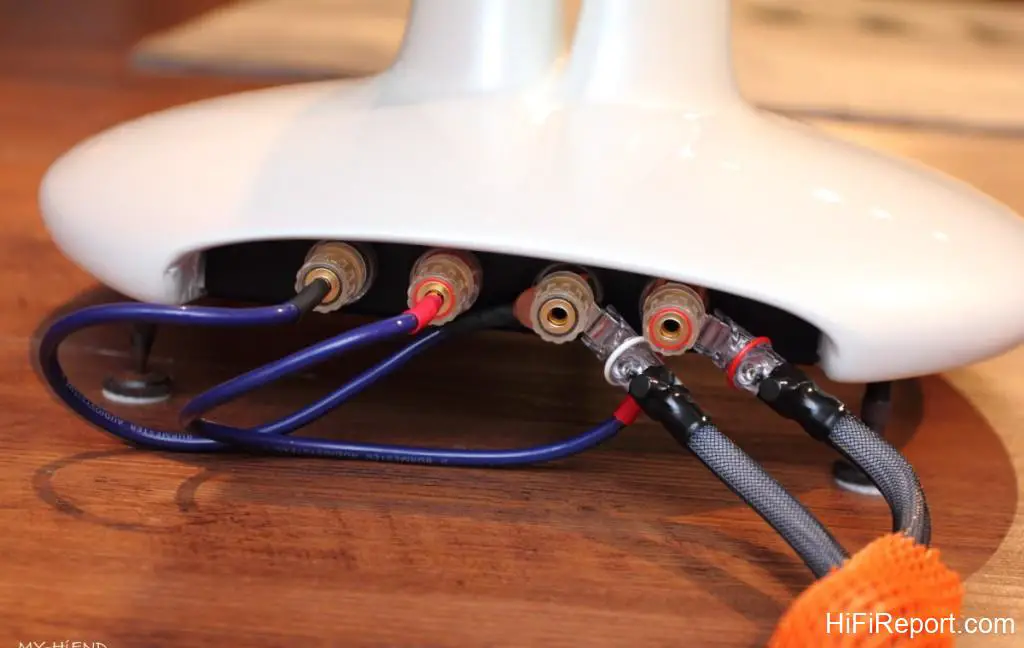
Utilizing two opposing ports significantly reduces port air turbulence and associated resonances compared to a single port.
The B1 uses two pairs of WBT speaker binding posts, allowing for bi-wiring or bi-amping configurations.
Hugh Masekela’s “Hope” album is familiar to many audiophiles. This album is characterized by its wide dynamic range and exceptionally clean recording, almost defying its live recording origins. Vocals and instruments are natural and distinct, with balanced proportions and sound levels. Even audience applause never overshadows the music or feels intrusive.
Listeners can discern every sound element within any given passage; no sound is masked or overlooked, resulting in remarkable musical layering. The LHC-208 excelled in conveying these qualities. It faithfully reproduced this album’s unique character, maintaining order within complex musical textures, never overwhelmed by the intricate arrangements. The buoyant and richly textured track “HA LE SE (The Dowry Song)” (track 11) particularly impressed with this capability.
“UPTOWNSHIP” (track 2) showcased punchy, resonant drum sounds and soaring trumpet melodies. After 20 minutes of listening to this album, the LHC-208’s power and control capabilities are undeniable.
The Hanssler classical album is fundamentally classical with a jazz veneer. The featured cellist, Valentin Radutiu, is classically trained, having studied with renowned classical masters in European musical centers like Salzburg, Vienna, and Berlin. Valentin is not only lauded as one of the most talented contemporary cellists but also as a uniquely insightful musician. This foreshadowed the emergence of this exceptional jazz-infused album.
As a jazz album, it features other accomplished musicians. Benjamin Schaefer plays piano, and Marcus Rieck is on drums, both leading figures in contemporary European jazz. The album’s tracks are selected from the “Great American Songbook.” While the songs are well-known, their age, coupled with new arrangements and interpretations, creates a captivating sense of familiarity and novelty for the listener.
Through the LHC-208, the cello tone in “SMOKE GETS IN YOUR EYES” (track 3) is earthy, unpretentious, warm, and luminous. Valentin’s nuanced technique renders fluid and seamless transitions between high and low notes. The piano sound is substantial and neutral, lacking overt coloration, yet highly memorable. The soundstage is expansive and deep, naturally filling the listening space.
The interplay between pizzicato cello and piano in the mid-section is captivating, leading seamlessly into the movement’s climax. “CRY ME A RIVER” (track 4) fully showcases the diverse range of playing techniques and musical styles. The unpredictable melodic trajectory of the re-arranged piece is highly engaging, fully exercising the system’s capabilities. Dynamic contrasts, fluctuating volume levels, and rhythmic shifts are all rendered with speed and precision.
The LHC-208’s control, accuracy, and abundant power are clearly demonstrated in this track.
For the above two albums, the Esoteric K-07 CD player was used, outputting analog signals to the LHC-208. For the following two albums, digital files were directly input into the LHC-208, utilizing its internal DAC for digital-to-analog conversion. The different DAC implementations resulted in demonstrably different sonic characteristics.
Playing Vincy Chan’s “Love, Unsung Songs” album, a collection of covers of well-known Mandarin love songs, including David Tao’s “Ordinary Friends,” Stella Chang’s “The Person Who Loves Me and the Person I Love,” and Karen Mok’s “If Without You,” among other popular hits. Vincy Chan’s singing style is delicate, reminiscent of Kit Chan, but with more breathiness and nasal resonance, and a more improvisational, jazz-influenced approach.
The album’s songs are all re-arranged with substantial jazz elements, influencing the musical style, instrumentation, and vocal delivery. The LHC-208’s playback highlighted its nimble musicality and clear image separation. The soundstage width generally remained within the speaker boundaries, but image separation was remarkable. The position of each instrument was distinct, especially in tracks with multiple instruments, such as “Ordinary Friends” on this album.
Vocals were centered, while guitar, drums, keyboards, and brass instruments were clearly positioned, creating excellent layering. In the cover of Karen Mok’s “If Without You,” the system effectively conveyed the breathy vocal delivery, characteristic of the original, while maintaining solid instrumental presence. This layered presentation significantly enhanced the emotional delivery of the love songs.
Leslie Cheung’s “Most Beloved” compilation album features mostly rhythmically driven, fast-paced tracks with a strong mid-bass and bass presence. The LHC-208’s amplifier power and control are more than sufficient for these bass-heavy tracks, delivering its power with palpable impact. Tracks like “Enough,” “Don’t Want to Play Anymore,” and “Hot Hot Hot” from the album exemplify this style. Leslie Cheung’s vocals possess both depth and ethereal quality.
The instrumental accompaniment, as mentioned, is exceptionally layered. The tight, punchy bass reproduction amplified the energy of the songs, especially at higher volumes, creating a thoroughly enjoyable listening experience.
The LHC-208 also features a headphone amplifier output. As shown in the image below, when headphones are in use, the screen displays “Headphones active,” automatically muting the speaker output. Volume levels are also memorized separately, eliminating any concerns about sudden volume spikes when switching back to speaker output.
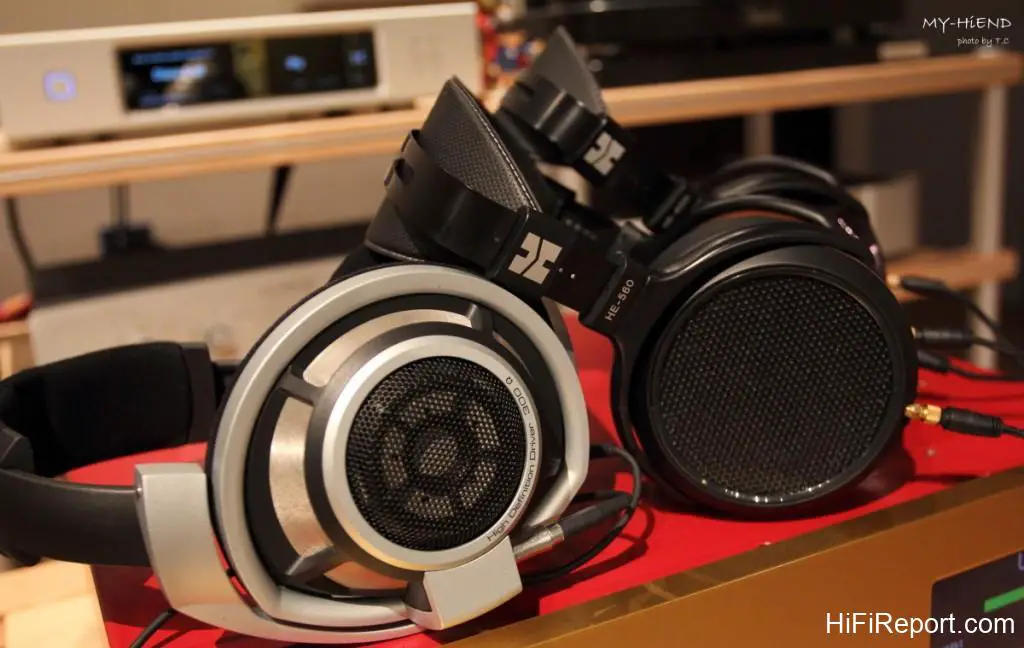
I listened to the previously mentioned test albums and other familiar recordings using three different headphones: Sennheiser HD-800, Hifiman HE-560, and HE-400i. When driving the HD-800 with the LHC-208, the primary concern was power delivery, as the HD-800 is notoriously demanding. Upon connection, the default volume was only at the halfway mark, yet the HD-800 was already singing elegantly. Increasing the volume by approximately 15dB reached my preferred listening level.
The LHC-208’s noise floor is remarkably low; I could barely detect any background noise, a significant strength. Power was not an issue. The HD-800’s frequency response was well-balanced, with a spacious soundstage encompassing both width and depth. The darTZeel LHC-208’s slightly warm and rich sonic character complemented the HD-800’s somewhat analytical and cool sonic signature, resulting in a pleasing overall listening experience.
Next, I connected the Hifiman HE-560, a planar magnetic headphone, also not particularly easy to drive. Under the LHC-208’s control, the mid-bass and bass frequencies were rich and full. The HE-560’s inherent sonic character is already on the warmer side, and combined with the LHC-208’s warmth, I found the sound slightly congested and overly full, making the soundstage feel somewhat cramped.
Switching to the HE-400i, from the same Hifiman family, the HE-400i’s sonic presentation is leaner and more defined compared to the HE-560, alleviating the sense of congestion. With its lower impedance, it presented no driving difficulties. While the HE-400i’s overall sonic refinement may not match the HE-560, it synergized better with the LHC-208 in my personal preference.
I believe that while the headphone amplifier function is a welcome addition, it is likely not the primary purchase driver for LHC-208 buyers, but rather a valuable supplementary feature. However, the LHC-208’s headphone amplifier performance mirrors its speaker output in terms of sonic quality and capability, demonstrating a high standard. This indicates that the headphone amplifier is not merely a tacked-on feature.
darTZeel demonstrates equal attention to detail across every aspect of their product. Regardless of how users experience darTZeel products, they are assured of musical satisfaction.
darTZeel LHC-208 Specifications
* Output power : 175 watts RMS (200 watts peak) @ 8 ohms, 275 watts RMS (300 watts peak) @ 4 ohms
* Line Gain : 0 dB nominal, up to +12dB
* Power Stage Gain : 26 dB @ 8 ohms
* Analog Inputs : 1 x Zeel 50-ohm BNC, 3 x RCA line, 1 x Aux 3.5 mm front panel jack
* Digital Inputs : 1 x RJ45 Network, 1 x USB, 2 x SPDIF (RCA 75 ohms), 2 x TOS Link
* Analog Output : 1 x Headphone 6.35 mm front panel jack
* Frequency response : 7 Hz –170 kHz, +0, -6 dB, 20 Hz – 20 kHz, +0, -0.5 dB
* Rise time : < 0.8 s * Slew rate : > 100 V/s, peak-peak
* DC output voltage : < ± 15 mV max.
* Total Harmonic Distortion (THD) : < 1 % from 7 Hz to 77 kHz within the output dynamic range. * Temporal Distortion : None, at any level and load, as specified above
* Crosstalk : < -60 dB @ 1 kHz * Signal to noise ratio : > 105 dB (A) @ nominal power
* Power consumption : 2 watts Standby, 40 watts @ idle, 900 watts @ maximum output power
* Size in mm : 440 x 350 x 130 (WxDxH)
* Net weight : 16 kg
Vivid Audio B1 Specifications
* Configuration: 3 & 1⁄ 2 way vented cabinet
* Cabinet material: Complex loaded carbon fibre filled polymer
* HF – D26 – 26mm metal dome unit with Tapered Tube loading
* MID – D50 – 50mm metal dome unit with Tapered Tube loading
* LF – C125 – 2 x 158mm metal coned unit (coupled)
* First D26 Break Up mode: 44,000 Hz
* Sensitivity: 89dB @ 2.83Vrms and 1.0 meter on axis
* Nominal Impedance (Ohm ): 4
* Frequency range – 6dB points: 35 – 36,000Hz
* Frequency response: 39 – 33,000 Hz +/- 2dB on reference axis
* Harmonic distortion (2nd and 3rd): < .0.5% over frequency range
* Cross over frequencies (Hz): 100, 900, 4000
* Power handling (music program) watts rms: 300
* Loudspeaker dimensions (H, W, D cabinet, D base) mm: 1095, 265, 375, 420
* Net weight (kg): 38
* Shipping dimensions (H, W, D) mm: 1250, 430, 530
* Shipping mass (kg): 50