
Denon Home 250 Review
With streaming music platforms making huge strides in audio quality this year, services like Tidal, KKBOX, and Apple Music are now offering lossless, and even high-resolution audio. This evolution challenges the capabilities of audio equipment and has prompted audiophiles to transition firmly into the realm of streaming audio products. Many of my colleagues, for instance, began building new streaming systems as soon as they discovered they could access Tidal.
Simply having high-resolution decoding capabilities is no longer enough; now, support for the latest MQA file format is also essential. Beyond upgrading network cables, choosing a switch with signal filtering and clock regeneration is crucial, and even the router at the very front of the network signal chain needs an upgrade. They won’t rest until every single link in the chain is meticulously optimized.
While it’s true that more granular components in an audio system can lead to more stable sound quality, such a complex streaming setup requires a dedicated listening space, complete with proper speaker placement and room treatment. This kind of system is clearly not suited for enjoying streaming music in smaller spaces like a bedroom or study. For this reason, many of my colleagues, in addition to their main audio systems, are also looking for a second streaming setup.
Their sights are set on the increasingly popular “all-in-one streaming speaker.”
Introducing the Denon Home Series
Last month, the Denon Home 350 wireless streaming speaker truly impressed my colleagues. As the largest model in the series, it boasts a sleek, attractive design with dimensions perfectly suited for modern minimalist aesthetics. What’s even more appealing is its comprehensive streaming support and impressive audio performance. Many editors who heard it were thoroughly captivated! This month, the distributor wasted no time and sent over the second model, the Home 250.
It’s a size smaller than the 350 and comes at a more accessible price, yet its functionality is identical to the 350. If your space is limited, it could be a more ideal choice.
Home Series Overview
The Denon Home series offers three models in descending size: the 350, 250, and 150, along with a 550 soundbar.
Physical Design and Controls
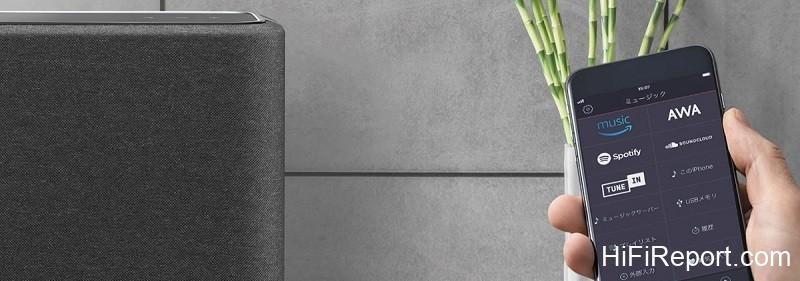
The 250 shares the exact same exterior design as the larger 350. The cabinet has a rectangular shape that’s wide across the front but shallow depth-wise. Its corners are gently rounded, and it’s covered in a deep grey knitted fabric, giving it a soft visual appeal and a look that is both simple and textured.
Furthermore, a wireless speaker with practicality as its main selling point must offer fully smart control. This is why the Home 250 has no physical buttons on its body; all functions are controllable via smartphone.
But what if there’s no internet connection? Don’t worry, the top panel of the unit cleverly incorporates a hidden feature. When your hand approaches the top surface, capacitive touch buttons illuminate. These allow you to control volume, track selection, playback, and even save three preset selections for quick access to your favorite internet radio stations. This touch functionality is not only cool but also adds a touch of tech-savviness to the Home 250’s warm design.
Acoustic Design
Looking at the official exploded view of the Home 250’s internal structure reveals why the front panel area is relatively large: it’s designed to accommodate more drivers. This unit features a 2-way, 4-driver configuration on the front, including two 19mm soft-dome tweeters and two 100mm mid-bass drivers. Don’t let its all-in-one form factor fool you; the internal design incorporates clever acoustic principles. Waveguide structures are positioned around all drivers to optimize sound wave focus.
When listening directly in front of the speaker, this small wireless speaker can create a focused stereo image with enhanced spatial three-dimensionality.
Additionally, the tweeters are angled slightly outwards. This enhances sound dispersion, allowing you to place the speaker in almost any corner of your home and still enjoy excellent music. In practical testing, the results were impressive whether sitting directly in front or moving around the room. Furthermore, the back of the Home 250 features a large 133mm passive radiator. This allows the speaker to deliver richer, more dynamic bass despite the limitations of its flat cabinet design.
Finally, all four active drivers are powered by individual Class D amplifier circuits for optimal performance.
Connectivity Options
In terms of features, the Home 250 is incredibly well-equipped. On the rear panel, for network connectivity, it includes an RJ45 Ethernet port and supports dual-band 2.4GHz/5GHz Wi-Fi. You can connect to your local network to stream music or access audio files from a home NAS or PC using UPnP (Universal Plug and Play). It supports high-resolution audio decoding and playback up to 24bit/192kHz (FLAC, WAV, ALAC) and DSD 2.8/5.6MHz.
Apple users can also stream music from their phones using AirPlay 2. For situations without a network, it has Bluetooth functionality, allowing direct playback from mobile devices. There’s also a 3.5mm AUX input, useful for connecting a desktop computer. If you have a collection of music files, you can play them via the USB port by connecting a flash drive. This covers virtually all mainstream listening methods available today.
The HEOS Ecosystem
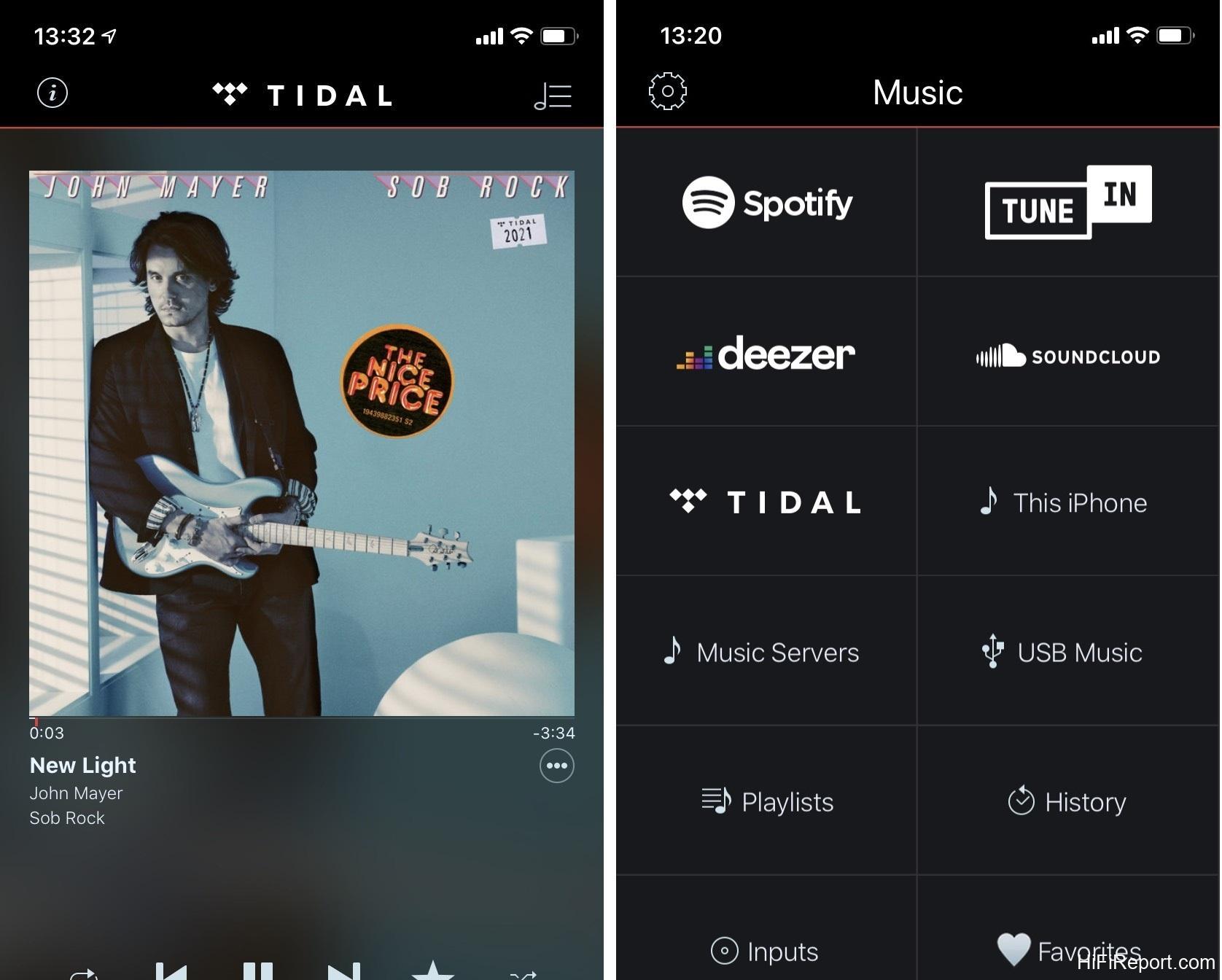
While all these features are standard, a critical aspect of streaming audio products is the app experience. Many Hi-End audio manufacturers, despite having excellent hardware, require the use of third-party DLNA apps. This can sometimes lead to compatibility issues or unstable connections, with disconnections mid-playback being a common frustration. However, the Home series wireless speakers are different. Their main selling point is support for Denon’s proprietary HEOS App.
The app interface is very well-designed and offers high product integration and stable connectivity. When connected to your home network, it automatically integrates streaming platforms like Tidal, Spotify, Apple Music, Amazon Music, and more. Simply log in with your member accounts, and you can operate them seamlessly within the app. It also provides access to numerous internet radio stations worldwide.
Furthermore, it supports UPnP, allowing it to integrate and organize music files from your network-attached storage or PC, automatically sorting them alphabetically by album or artist for easier searching.
Pairing & Multi-Room
Another major feature of the Home series streaming speakers is the ability to define two Denon Home wireless speakers as left and right channels using the HEOS App, effectively turning them into wireless bookshelf speakers. Simply connecting them to the network creates a standard two-channel system. Compared to traditional streaming audio systems, this eliminates the hassle of matching components and offers more flexible placement options.
When not used as a two-channel system, you can easily move them back to individual rooms. If you have other HEOS-enabled audio products, you can also control them remotely with the app, enabling multi-room music sharing. The possibilities are endless.
Sonic Performance
After listening to the Home 350 previously, its powerful bass and expansive soundstage left a lasting impression. I was genuinely surprised that such a compact streaming speaker could deliver that kind of performance! This time, the manufacturer sent the Home 250, which is slightly smaller than the 350 and has fewer drivers. Following the series’ tiered design, I initially didn’t expect significant changes in sound compared to the 350.
However, as I opened the familiar HEOS App and started playing Tidal, something magical happened. The Home 250’s sound quality is neutral and clear, resulting in a much more balanced frequency response and consequently better musical resolution. Could the smaller 250 actually sound better than the 350? Not exactly. Both speakers deliver excellent sound quality. The difference lies in the 350’s higher sound pressure level and greater bass quantity.
The 250’s bass is slightly more restrained, but in smaller spaces, this hits a sweet spot for energy distribution. Without the interference of excessive bass energy, the details become more prominent. Of course, in larger spaces, the 350’s soundstage openness and bass depth would certainly be superior.
Vocal and Instrumental Clarity
In our small listening room, the Home 250’s sound was remarkably clean and highly resolving. While the spatial feel wasn’t as expansive as the 350, it was even more captivating for small-ensemble music. For example, listening to Daniel Barenboim conducting the “Beethoven Piano Trios,” the instrument separation was excellent, with clearly defined instrumental shapes.
Unlike many smaller all-in-one systems that sound flat, congested, or blurry, the Home 250 presented a very soundstage with precise positioning. Furthermore, the transient response in the bass was excellent, making the string lines very clear and articulate, without any sluggishness. The texture of the cello bowing was not blurred at all; details were rich, and there was no sense of harshness.
The piano notes were transparent and rounded, with a hint of warmth and softness in the keystrokes, a very pleasing texture. The lower register passages revealed its charm even more; not only did they have weight, but you could also hear the subtle resonance of the soundboard. This level of resolution is rare in affordable streaming speakers.
Due to the Home 250’s neutral sound profile, the midrange is smooth with very low coloration, and vocal textures aren’t overly exaggerated. This makes it ideal for those who enjoy listening to vocals, allowing them to savor singing details. For instance, playing “Who Will Trim the Moonlight” from Eason Chan’s “C’mon in” album, the details in his vocal throat sounds were rich but not exaggerated.
The articulation of his lips and mouth felt natural and soft, without any sharp, irritating edge, presenting Eason Chan’s magnetic voice directly and uncolored. Additionally, there was none of the common cabinet resonance found in many budget wireless speakers; the sound was clean and transparent. Achieving this sound quality in an all-in-one wireless speaker is truly remarkable!
Final Thoughts
This Home 250 all-in-one streaming speaker is more than just a product focused on convenience. Its operating interface is more comprehensive and smoother than many higher-end audio systems, and its sound quality makes no unnecessary compromises. It’s even worth a listen for Hi-End audiophiles. If you already have a complete streaming system, the Home 250 is absolutely the ideal choice for your “second streaming system” in a bedroom or study.
Specifications
* **Product Type:** All-in-one streaming speaker
* **Drivers:** 19mm soft-dome tweeter × 2, 100mm mid-bass driver × 2, 133mm passive radiator × 1
* **Supported Streaming Platforms:** Spotify (Free & Premium), Amazon Music HD, TuneIn Internet Radio, TIDAL, Deezer, Internet Radio
* **Supported Audio Formats:** WMA (up to and including 192kbps), AAC and MP3 (up to and including 320kbps), FLAC, WAV, and ALAC (up to and including 24bit/192kHz), DSD 2.8 and 5.6MHz
* **Wireless Connectivity:** Bluetooth version 4.2, 2.4GHz/5GHz Dual-band Wi-Fi
* **Wired Connectivity:** RJ-45 × 1, 3.5mm AUX × 1, USB × 1
* **Weight:** 3.7 kg