
Densen CASTAMP Wireless Streaming Amplifier
Streaming players have become a significant trend in the market, with numerous brands developing their own streaming technologies and applications. Online music providers like Spotify, Deezer, and Tidal also offer extensive support and collaborate with hardware manufacturers to enable direct server connectivity. Danish brand Densen has joined this wave with the CASTAMP, a wireless streaming device.
However, unlike many others, Densen has opted for a Google CAST wireless streaming receiver, directly leveraging its wireless signal transmission capabilities.
Riding the Google Wave: Resourcefulness and Expertise Combined
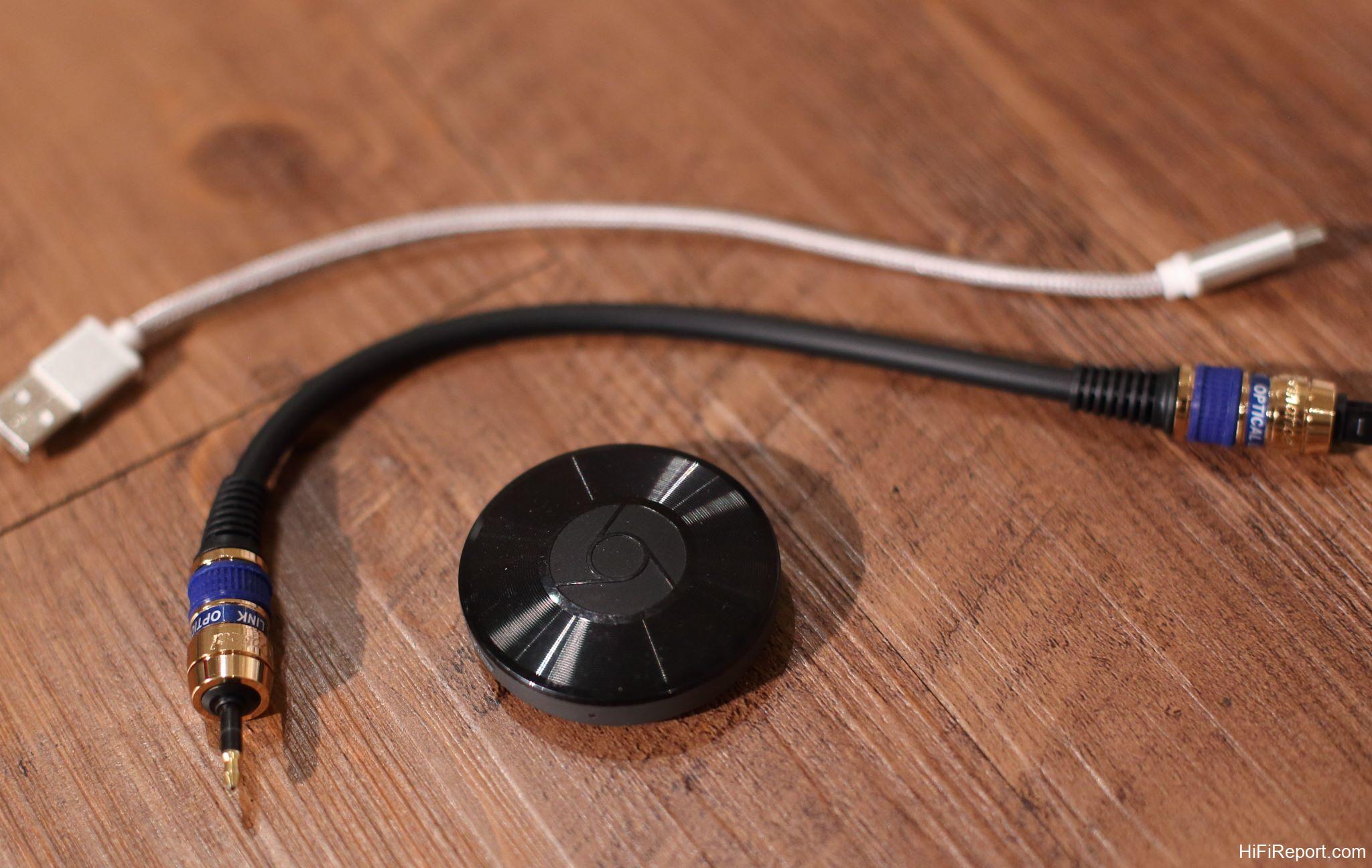
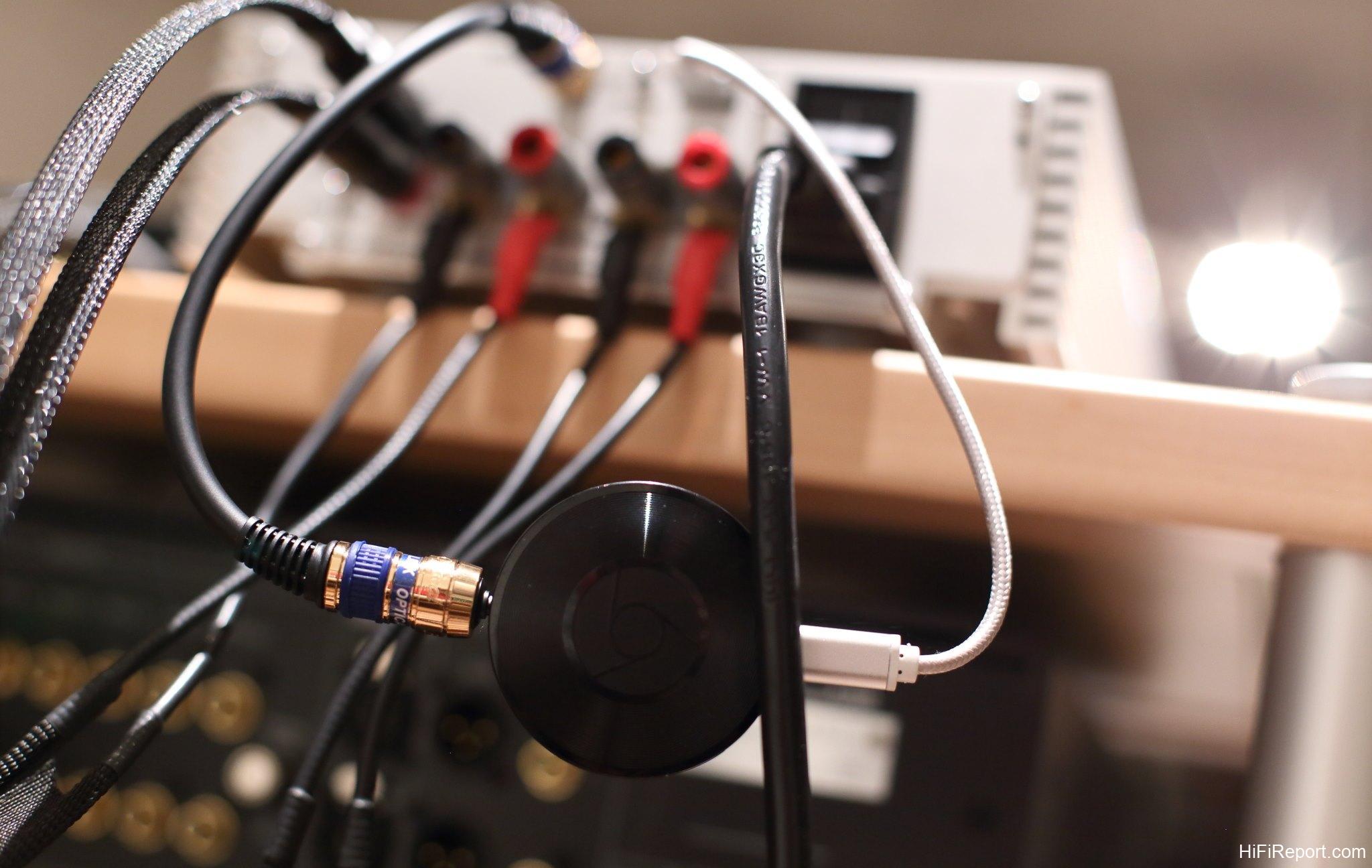
The design team behind the new CASTAMP has directly implemented the Google CAST solution. Users employ the included Google CAST receiver to wirelessly stream music signals, which are then transmitted optically into the Densen CASTAMP. The advantage here is that Google CAST is already a mature product backed by Google’s vast resources. Any audio streaming applications supported by Google CAST are inherently compatible with the Densen CASTAMP.
Audiophile Principles at its Core
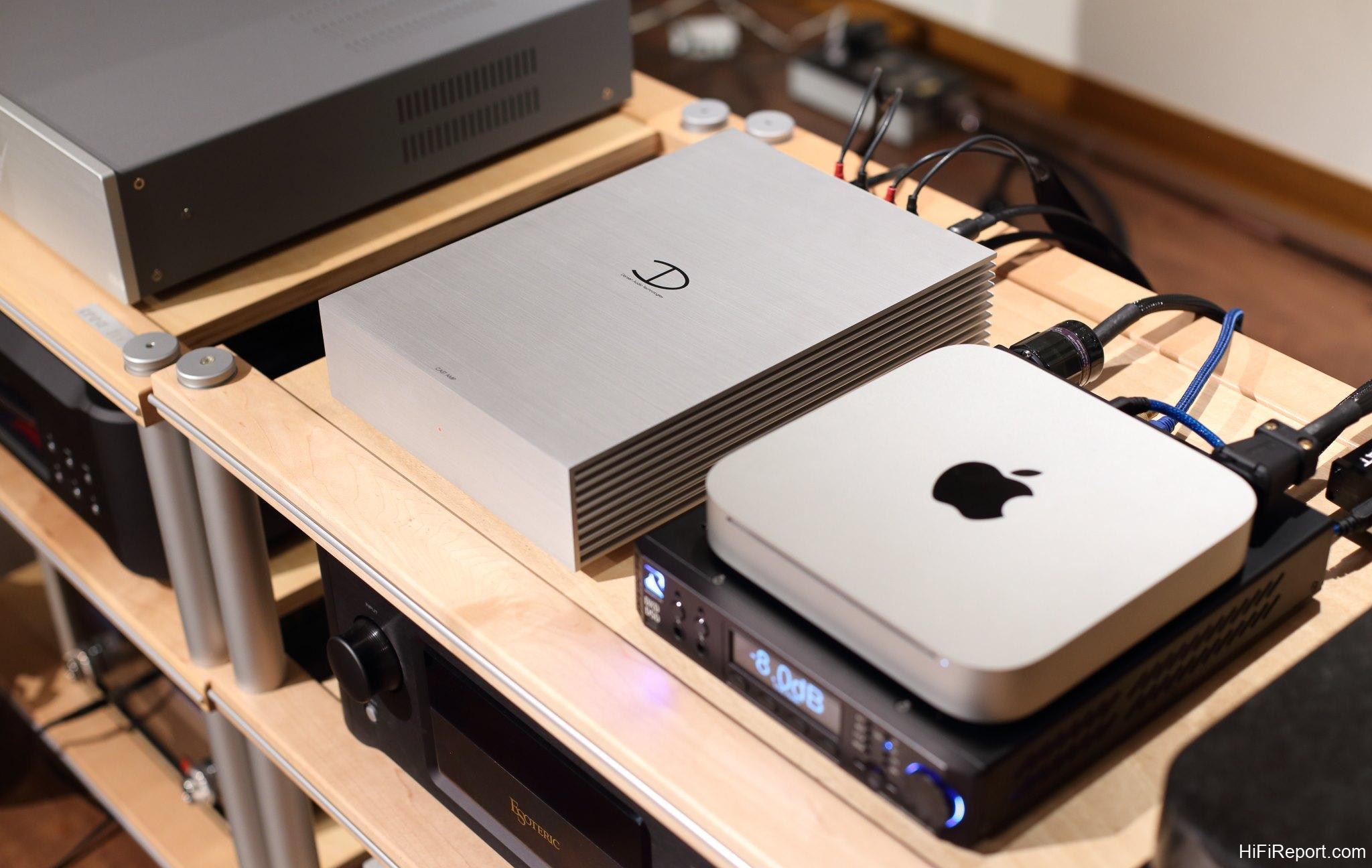
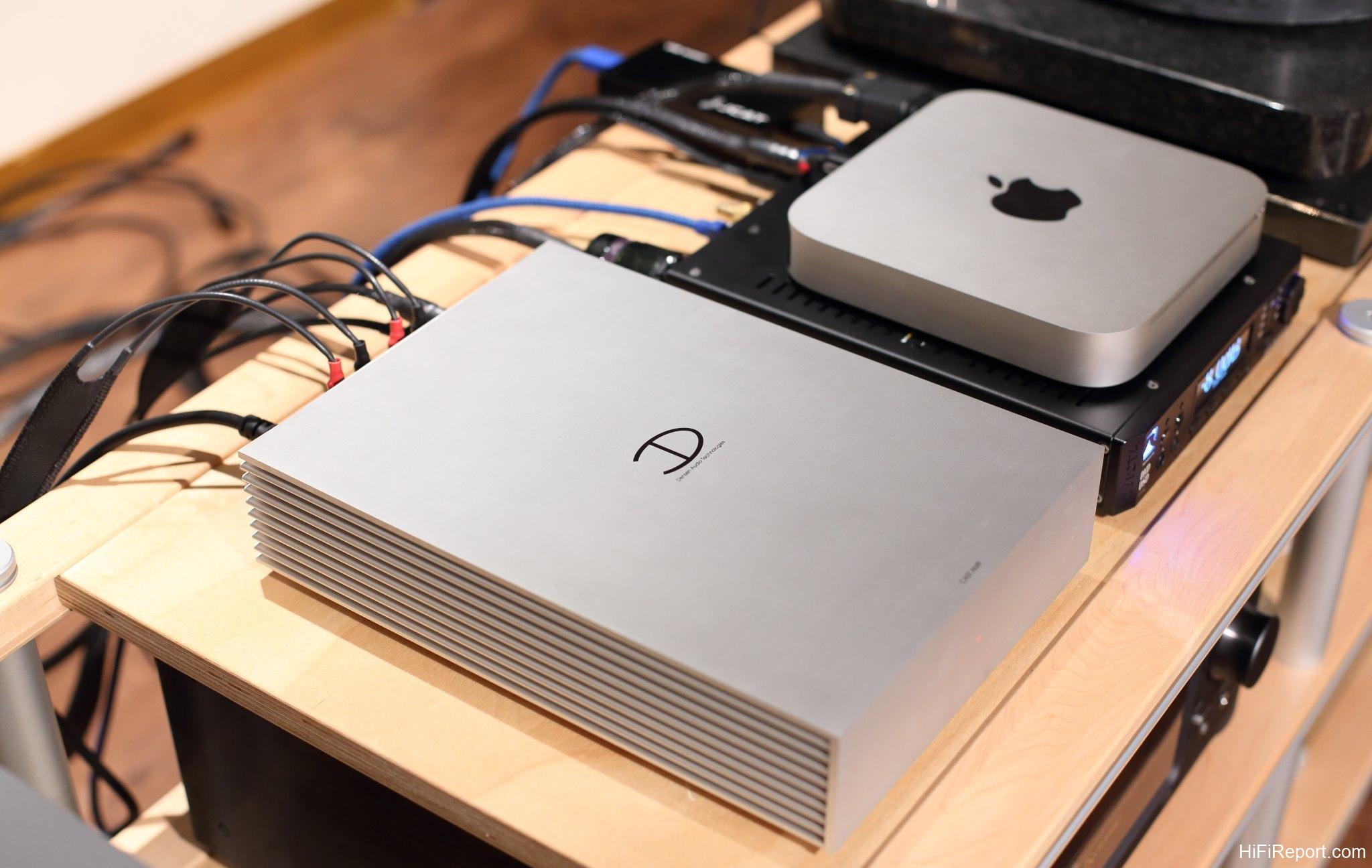
From an audio product perspective, the external Google CAST approach is akin to keeping the wireless receiving circuitry outside the amplifier chassis. This prevents wireless signals from entering the amplifier and avoids high-frequency noise and interference with the analog circuits. The Densen CASTAMP, encased in an all-aluminum chassis like its predecessors, effectively shields against external wireless interference.
This design also allows the entire chassis to act as a heat sink, confidently accommodating high-power amplifier circuits. Furthermore, it includes a set of RCA single-ended analog inputs, functioning as a power amplifier and upholding its identity as a meticulously designed audio component.
Proven Design Expertise
Densen’s DAC design history stretches back to 1996, initially designing for European brands before establishing itself. This deep-rooted expertise makes them highly proficient in DAC design and manufacturing. The CASTAMP receives digital signals from Google CAST, necessitating an internal DAC circuit to convert them to analog. Densen’s proprietary DAC circuit supports up to 24bits/192kHz, exceeding the digital signal sampling rate provided by Google CAST.
Should Google CAST upgrade to transmit signals beyond 24bits/192kHz in the future, Densen assures users of upgrade options with even higher sampling rate DAC circuits.
Audiophile-Grade Construction: Detail Obsession
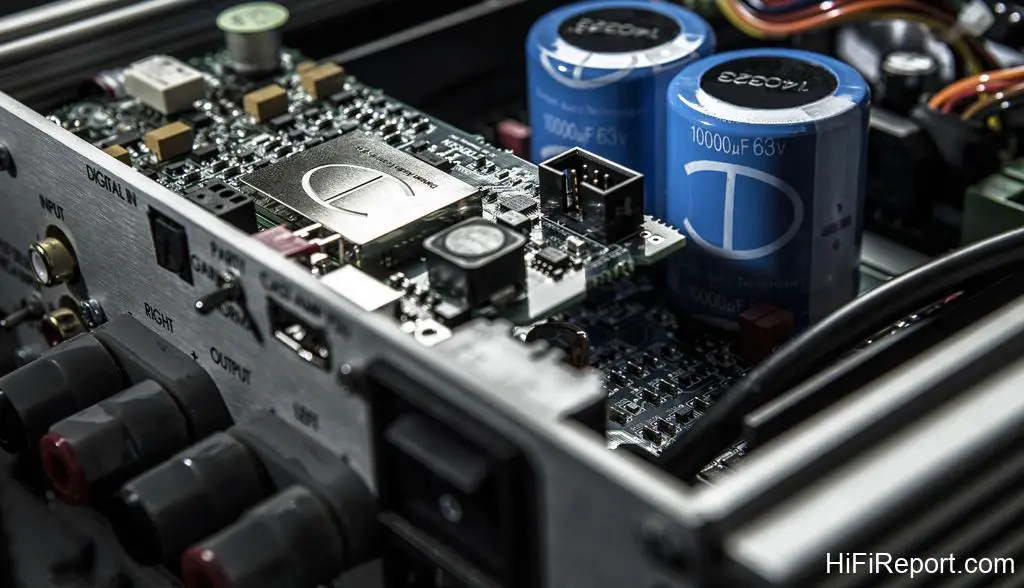
Densen’s commitment to High-End principles is evident in every product, and the CASTAMP is no exception. The internal DAC module is independently shielded, isolating it from other circuits within the chassis. The PCB circuit boards are manufactured in Denmark using robotic arms, ensuring high precision and tolerances below 0.02mm.
Component soldering takes place in a nitrogen reflow oven, preventing oxidation during the soldering process, mitigating short circuits, and enhancing solder joint integrity. The circuit board employs a 4-layer design, with two layers dedicated to grounding, further isolating circuits.
The toroidal transformer is a custom-designed component with enhanced encapsulation, effectively minimizing vibration impact on signals within the circuit board. The power supply is multi-rail and individually regulated, prioritizing power purity. It utilizes Densen’s custom-made capacitors in the power supply section, along with US-made Vishay metal film resistors and capacitors. A total of nine rectifiers provide a substantial 400VA and 20,000uF of capacitor storage.
Adjustable Gain, Cutting-Edge Analog Circuitry
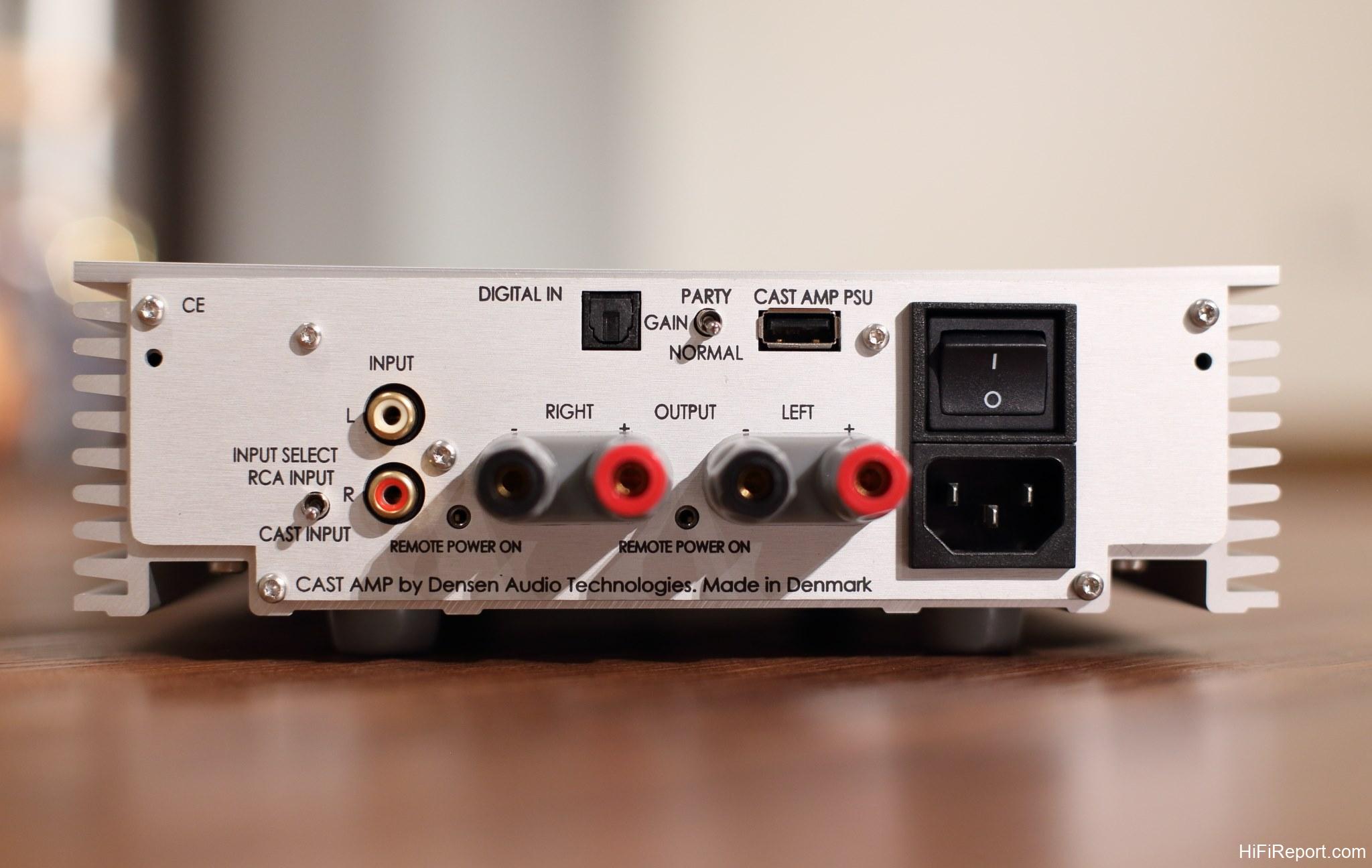
The Densen CASTAMP delivers a power output of 2 x 60 watts into 8 ohms and 2 x 120 watts into 4 ohms. It offers two gain modes: “normal” mode, operating in Class A amplification, and “party” mode, employing Class AB amplification for higher output capabilities.
In terms of analog circuit design, the CASTAMP adopts the circuit structure of the “yet-to-be-officially-released” B-390 monoblock power amplifier. The B-390, showcased at the 2015 Munich High End Show, was initially slated for a late 2017 launch but remains unreleased, presumably in its final stages of refinement. Its estimated price is 40,000 Euros, positioning it as Densen’s flagship model.
The CASTAMP essentially incorporates a simplified version of the B-390’s circuit design, engineered to drive a wider range of loudspeakers.
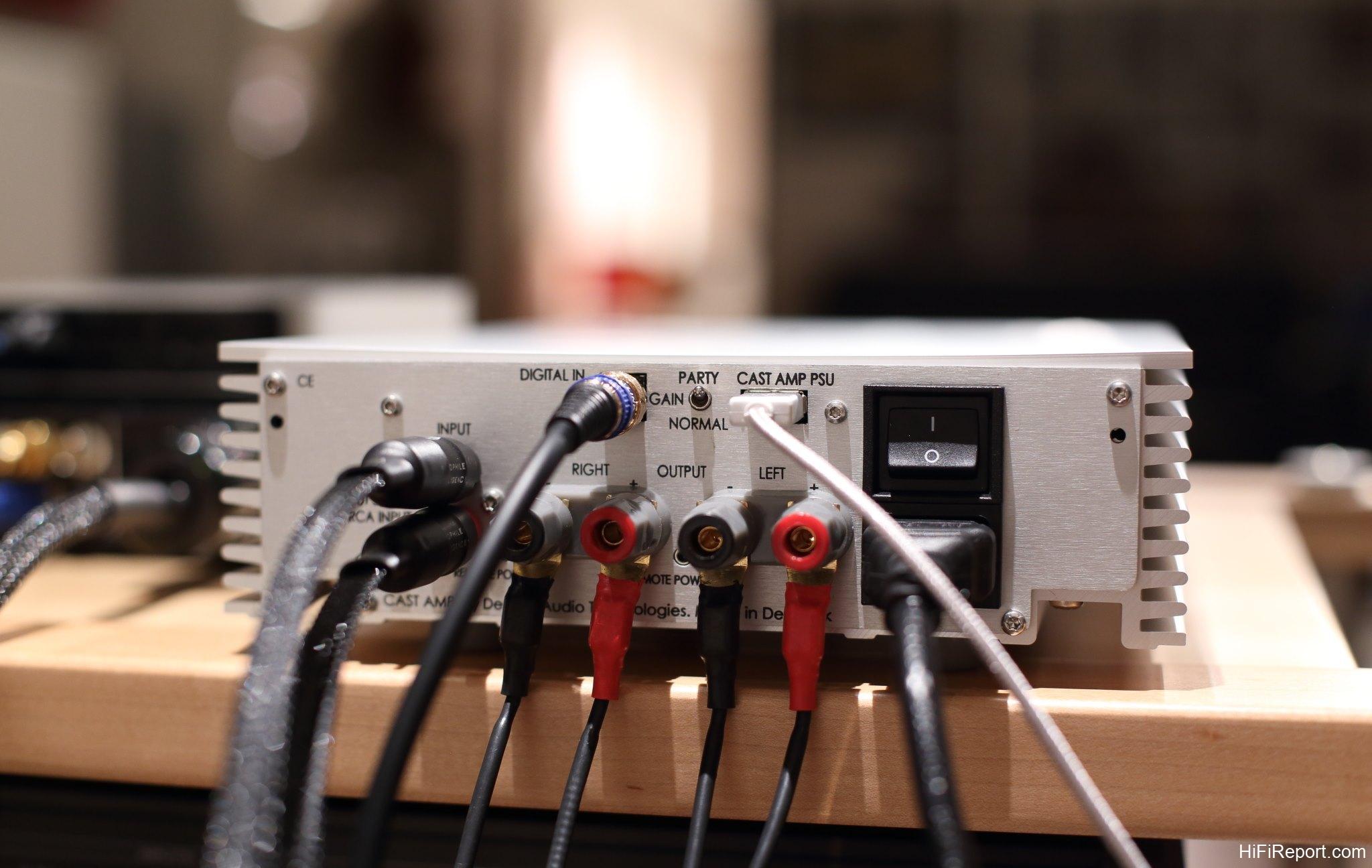
The Densen CASTAMP provides RCA inputs and Google CAST optical input, with USB power delivery for the Google CAST device.
Google CAST setup is straightforward. Users install Google Home on a computer, smartphone, or tablet. After powering on the CASTAMP, following the prompts allows for easy configuration.
Once set up, available online streaming services are displayed. Spotify is readily found. Remember that these streaming services must be installed on the controlling device (computer, phone, or tablet) and the service subscriptions must be active.
Using Spotify as an example, with the app installed and logged into the same account on both tablet and computer, control is possible from either device. Subsequent playback bypasses Google Home; simply launch Spotify and locate CASTAMP within the device list. In this instance, the environment is designated as “living room”.
The Spotify app displays the playback interface.
Simultaneously, the Google Home app reflects the playback. As the Densen CASTAMP lacks onboard volume control, volume adjustments can be made via Google Home or directly using the tablet’s volume buttons. Initial use warrants caution; start with low volume levels. If maximum volume is insufficient, switch the Densen CASTAMP’s rear gain setting to “party” mode. However, our testing with demanding loudspeakers demonstrated ample power even without gain adjustment.
Unparalleled Convenience, Uncompromising Sound Quality
Practical listening tests involved assessing the convenience and audio performance of wireless streaming via Spotify and evaluating the CASTAMP as a pure power amplifier to explore its peak capabilities.
Spotify streaming naturally emphasizes convenience, offering instant access to the latest releases and popular tracks. The vast library of Chinese and international music is virtually inexhaustible, encompassing diverse genres and listener preferences. Paired with Dynaudio bookshelf speakers in the sub-$5,000 range—renowned for their excellent sound but demanding drive—the Densen CASTAMP’s ease of use is remarkable. Essentially, an iPad is the sole supplementary component.
The musical satisfaction derived from such a streamlined setup is genuinely substantial.
Extensive listening across a wide range of pop music, both domestic and international, revealed the Densen CASTAMP’s genuinely impressive sound quality, exceeding initial expectations. Whether casually listening at a desk or critically evaluating in a dedicated listening position, the CASTAMP provided significant enjoyment. Its driving power is undeniably robust; even in normal mode, the soundstage is expansive and open, without any hint of weakness or inadequacy.
Even compressed Spotify streams are rendered enjoyably. For those venturing into the “wireless streaming” realm, this approach is truly excellent.
Speed, Dynamic Excellence: More Than Just Wireless Streaming
Moving beyond wireless streaming, the CASTAMP was connected via RCA inputs to audiophile-grade front-end equipment. An Orpheus source was selected, primarily for its volume control capability, essential as the Densen CASTAMP functions as a power amplifier without volume control. Using high-end sources necessitates a preamp or source with volume control.
In this configuration, decoding duties were delegated to the Orpheus, allowing for a pure assessment of the Densen CASTAMP’s power amplification prowess.
First up was Mark Ronson and Bruno Mars’ “Uptown Funk,” a track defined by its rapid tempo and infectious funk groove, showcasing Bruno Mars’ captivating vocals. The Densen CASTAMP effortlessly kept pace with the song’s relentless energy and speed, exhibiting no hesitation or strain. Even in complex passages, musical details were faithfully reproduced, highlighting the CASTAMP’s exceptional capabilities.
Vocals with Depth, Extension, and Penetration
Next, Jiang Hui’s “Red Songs” collection, a compilation of beautifully rendered tracks, was auditioned. Close listening revealed the Densen CASTAMP’s commendable sonic depth. While Jiang Hui’s voice is known for its clarity and brightness, the CASTAMP imbued it with a noticeable richness. Crucially, her vocal projection and emotional intensity remained intact, particularly evident in track 2, “Empty Dreams.” The soaring vocals and emotive delivery resonated deeply.
Subsequent tracks like “Goodbye, My Beloved Hopeless Love,” “Small Rain in the Wind,” and “Unfamiliar Faces” reinforced the CASTAMP’s balanced approach to dynamics, bandwidth, and musical emotion, leaning towards all-around competence and equilibrium within its price category.
Revealing Nuance and Rich Dynamics
The “Tutti!” album was selected to assess the Densen CASTAMP’s ability to convey scale and nuance in large-scale orchestral works. Track 6, “Mozart: Piano Concerto #21 in C, K 467 – Andante,” presented a relatively tranquil and serene soundscape, allowing for evaluation of piano and string textures, their interplay, and contrast. The overall detail reproduction was impressive, with subtle audience coughs subtly present. The layering between piano and strings was well-defined.
Track 9, “Vivaldi: Concerto In F, RV 569 – Allegro,” introduced greater brilliance and dynamism. String textures became denser, and the contrast between high and low frequencies, along with the power of string ensemble passages, was effectively conveyed. The CASTAMP proved capable of both dynamic power and nuanced detail.
A Smart, Three-Way Win: HiFiReport Verdict
Densen’s CASTAMP leverages Google’s technology to create a remarkably accomplished wireless streaming player. In wireless streaming mode, it functions as an all-in-one system. Its simple configuration delivers high-quality music enjoyment without software complexities. For High-End manufacturers, often smaller companies, keeping pace with rapid software evolution is a significant burden.
Densen’s ingenious approach focuses on their core strengths, resulting in a compelling product for users—a smart, three-way win.
Furthermore, the Densen CASTAMP seamlessly integrates into existing audiophile systems, functioning as a dedicated power amplifier. Densen’s website reveals a growing adoption of Google CAST streaming functionality across their new product line, suggesting its acceptance in European and American markets. In regions where digital streaming adoption lags behind, the benefits of this design may soon be more widely appreciated.
Densen CASTAMP Wireless Streaming Amplifier Specifications
* Output Power: 2 x 60 Watts (8 Ohms), 2 x 120 Watts (4 Ohms)
* Power Supply: 400 VA / 20,000 uF
* 9 Independent Power Supply Rails
* Upgradeable DAC Module
* Google Cast Audio Control
* Dimensions: Height 64 mm (72 mm with cones), Width 220 mm, Depth 310 mm
* Colors: Silver, Black
* Made in Denmark