
Divini Audio LPS-380 Review
The quest for audio perfection often leads enthusiasts down various upgrade paths. One increasingly popular route involves replacing standard switching power supplies with “linear power supplies.” Simple in structure, these units typically incorporate a transformer, rectifier, and filter stages. More sophisticated designs add voltage regulation circuitry after the filtering to further enhance power quality.
While linear power supply technology isn’t new and many manufacturers offer such products, the specifics of design and component selection remain proprietary know-how, leading to a diverse market with various brands garnering dedicated followings.
Design and Build Quality
Taiwanese audio brand Divini Audio has recently entered this arena, launching their flagship linear power supply, the LPS-380. When I first encountered it at an audio show, I was genuinely surprised – could this really be *just* a linear power supply? For starters, its sheer size is substantial, weighing in at a hefty 7.8 kilograms – heavier than some integrated amplifiers! It sits on specially designed isolation feet, ensuring optimal vibration control.
This level of robust construction is far beyond what you’d typically find in standard power supplies.
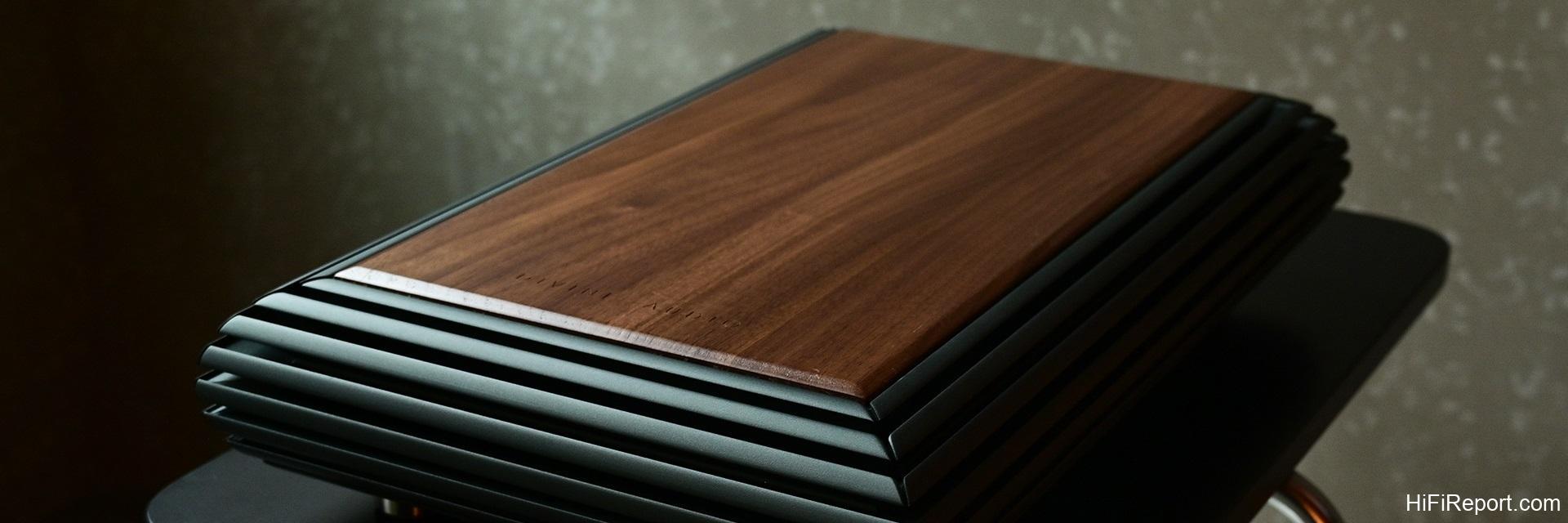
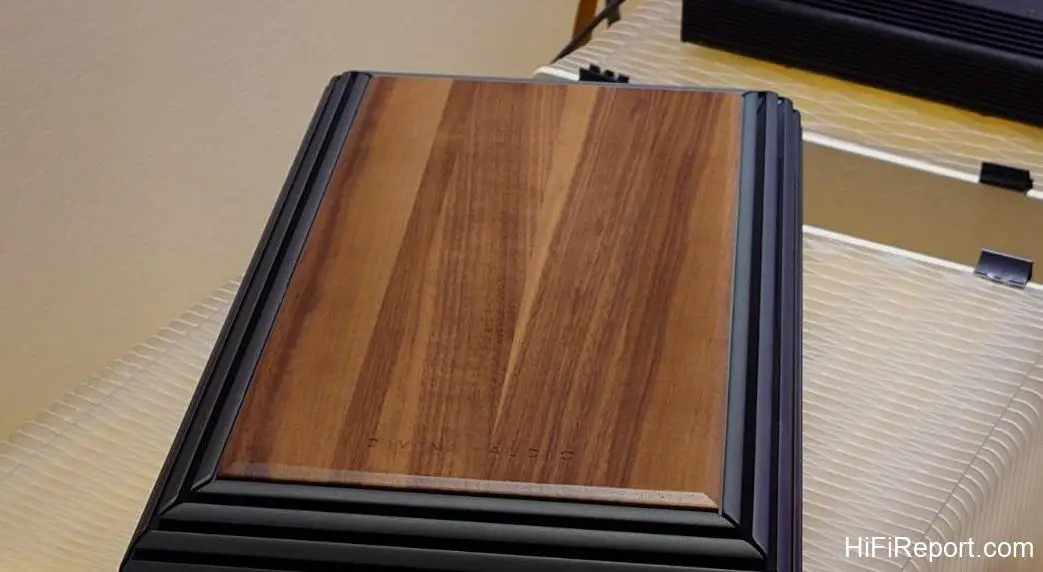
Compared to the often- utilitarian chassis of most linear power supplies, the LPS-380 boasts an exceptionally refined appearance. The top plate is crafted from warm, textured walnut wood, while the rest of the chassis is a single piece of sculpted aluminum alloy. Finished in a dark grey coating with an anodized surface, it exudes a sense of calm sophistication and premium quality.
The LPS-380 also features elegant, flowing heatsink fins along its sides, designed to keep the unit operating at a stable temperature, thereby maximizing efficiency and performance.
Flexible Connectivity
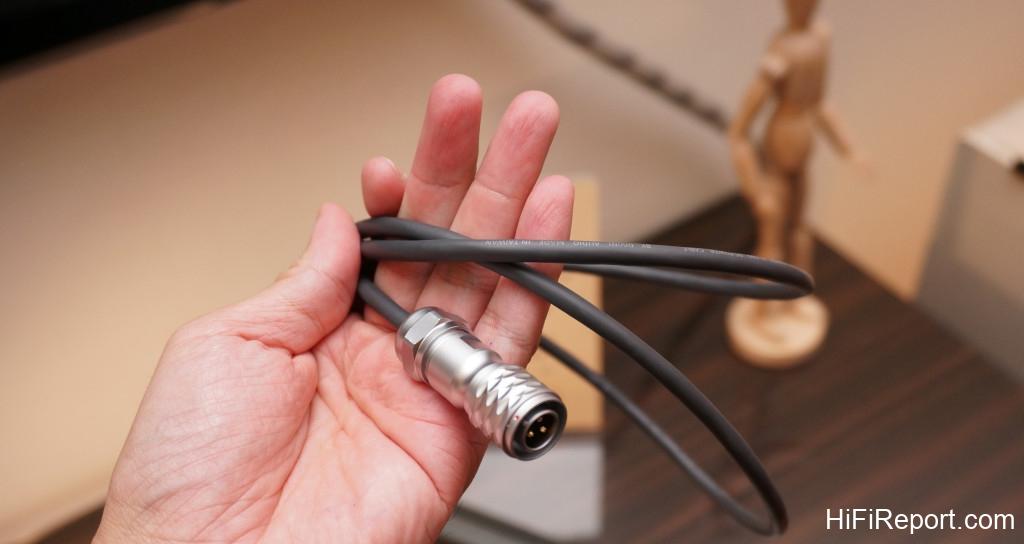
Examining the rear panel of the LPS-380, you’ll notice it offers two distinct DC power outputs. The included DC cables are also custom-specified. These DC-8 power cables are designed in-house by Divini Audio and constructed using 7N OCC single-crystal copper conductors. They terminate in Weipu SF12 series 3-pin connectors made from brass.
These connectors feature a push-pull locking mechanism, ensuring a secure connection once plugged in, completely eliminating any risk of accidental detachment and keeping your equipment reliably powered.
At the equipment end, the DC plugs are available in either 2.5mm or 2.1mm sizes, so users must confirm the required specification for their gear before purchase. Divini Audio also thoughtfully includes one of their own 1.5-meter long-crystal oxygen-free copper AC power cords.
Adjustable Voltage
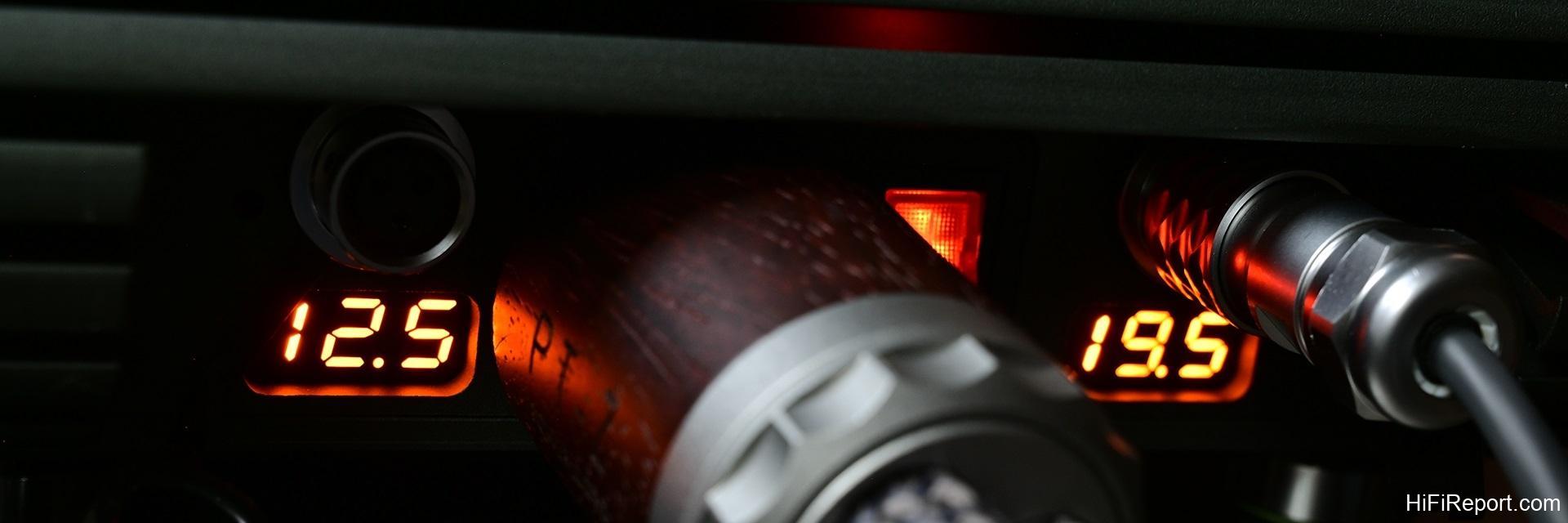
Furthermore, positioned next to each power output on the LPS-380, there’s a small display screen showing the output voltage. This is one of the LPS-380’s most practical features. Most linear power supplies are fixed-voltage designs, which significantly limits their application. The LPS-380, however, not only provides two outputs but also offers adjustable voltage.
According to the manufacturer, the right output can supply 5V-14V (180W), while the left output can supply 8V-24V (200W). This translates to a continuous current output of up to 10 Amps, with a stunning peak output of up to 40 Amps! This makes it capable of powering a wide variety of DC-dependent audio equipment currently on the market.
Ample Current Capacity
Users might wonder why the LPS-380 provides such a high current capacity when most DC-powered audio equipment typically only requires around 2 Amps. While linear power supplies excel at low noise, they often have drawbacks compared to switching power supplies, such as lower efficiency and noticeable current ripple. Especially with low-current devices, voltage drop can occur during power delivery, leading to a lower damping factor and consequently a less controlled or “soft” sound.
Divini Audio’s approach addresses this by significantly increasing the capacitance, ensuring much more stable voltage delivery.
Inner Workings
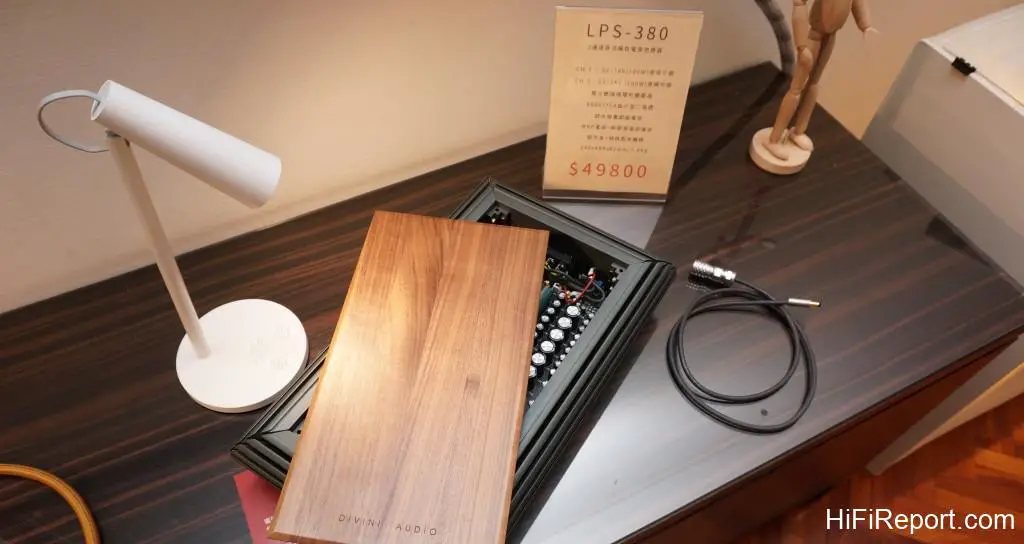
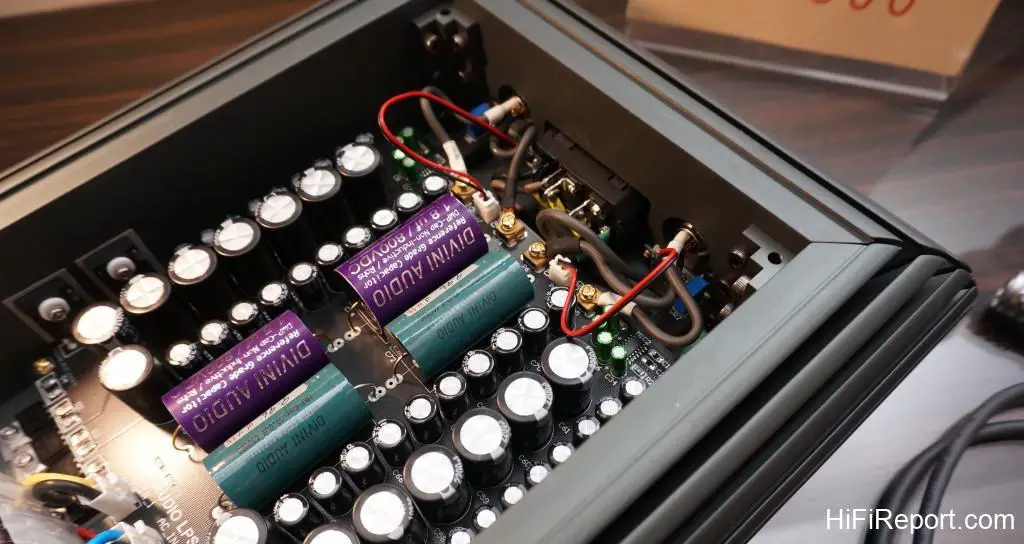
Opening the chassis of the LPS-380 reveals a large toroidal transformer and 600V/15A chip-type diodes responsible for rectification. The transformer features independent dual windings to supply the two separate power outputs. Following this are arrays of capacitors, large and small, neatly arranged – the result of extensive tuning and listening tests by Divini Audio to finalize the design.
Prominently featured are high-capacity “supercapacitors” totaling 160,000-170,000µF. The manufacturer explained that although these capacitors charge and discharge slower, they offer immense energy storage capability. Following these are eight 3300µF electrolytic capacitors in parallel, trailed by 47µF non-polar capacitors and MKP filtering capacitors. These possess the advantage of rapid charge and discharge, allowing them to instantly respond to musical dynamics.
The LPS-380 utilizes this multi-layered capacitor array with different types to mitigate the traditional weaknesses of linear power supplies. This is a high-cost approach rarely seen in typical linear power supplies, enabling the DC output to benefit from the low noise of a linear design, the abundant power delivery, and the quick response characteristics often associated with switching power supplies.
Voltage Adjustment and Fine-Tuning
After studying the LPS-380’s design, I moved on to the listening phase. Surprisingly, I immediately encountered a minor puzzle. The unit’s sleek, minimalist design lacks any external buttons or adjustment interfaces. So, how do you adjust the voltage? A quick inquiry with the manufacturer revealed a small hole next to the voltage display.
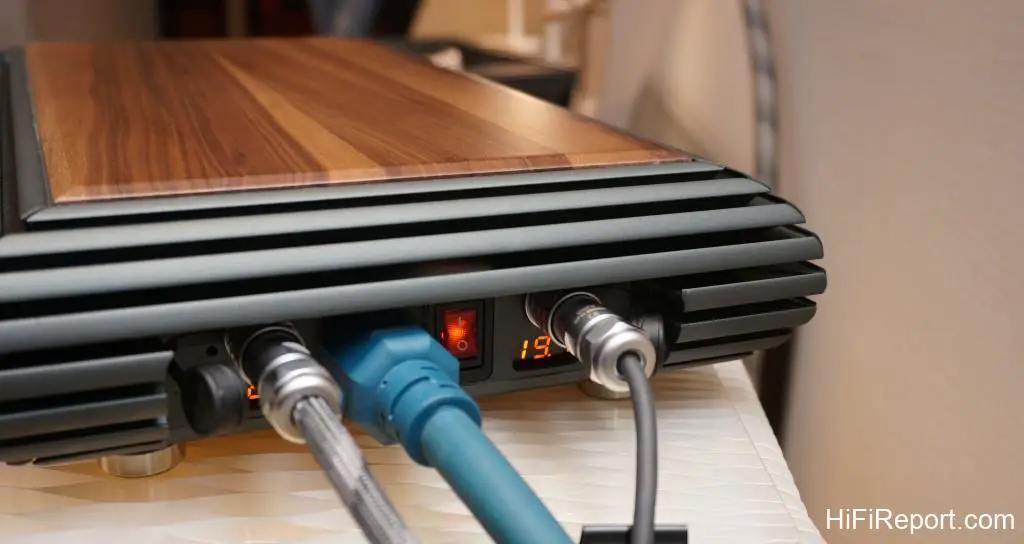
By inserting the included small screwdriver and turning, you can adjust the voltage with precise 0.1-volt increments, suitable for equipment requiring anywhere from 5V to 24V.
Users can even slightly raise or lower the voltage within the equipment’s tolerance range, which is expected to yield different sonic characteristics. This allows users to experiment and fine-tune the sound while listening, effectively treating it as another method of audio optimization.
Listening Test Setup
For my initial listening test, I chose the I-O Data Soundgenic music server as the source, paired with the COS H1 headphone amplifier and Focal Stellia headphones. I compared the sound quality using the original power adapter versus the LPS-380. Given the LPS-380’s substantial size and internal capacitor banks, I initially anticipated a dramatic improvement in raw audio performance – skyrocketing dynamics and resolution.
However, the actual outcome was more nuanced and, in many ways, more impressive.

Powering the Soundgenic with the LPS-380 made the music sound more natural and closer to realism. For instance, playing “Desamor,” the first track from Portuguese singer Lina’s album “Fado Camões,” I immediately noticed a significant expansion in the sense of space. The musical background became noticeably quieter, and the previously flat, slightly crowded feeling vanished entirely.
Headphone Performance
The opening piano notes gained focus and transparency; the higher keys were no longer merely mechanical “tinks,” but revealed richer harmonics and a pleasing sweetness. Even the room’s reverberation seemed to linger longer. Lina’s voice seemed to step forward from the background, creating a clear separation from the accompanying instruments. Her vocal image was full and solid, conveying the vocalist’s powerful delivery.
Her throat added a nuanced sweetness, and sibilant sounds were rounder and softer, devoid of any harshness. The low piano notes in the piece struck with greater impact, creating a more expansive and grand scale, their resonance lingering in the mind long after the note finished. Compared to the original power supply, the LPS-380 reduced the sense of digital rigidity, lending the music a more analog-like quality.
Another significant advantage of the LPS-380 is its ability to reveal an abundance of musical detail, yet presenting it in a completely natural way, without being intrusive. Taking “Ice Cream,” the first track from Wynton Marsalis & Eric Clapton’s live album “Play The Blues” as an example – this piece features complex layers of brass instruments which can often sound chaotic or messy.
With the LPS-380, the opening brass ensemble sounded dense and smooth, their full body built from countless subtle harmonic details. The metallic sheen was soft and rounded, utterly devoid of any sharpness, and the layering of instruments within the ensemble was distinct. Eric Clapton’s soulful blues guitar tone was no longer fuzzy; instead, I could clearly discern the texture of individual notes and the dynamics of his picking.
The jazz drums during the instrumental break were sharp and impactful; consecutive hits conveyed incisive dynamics and a strong sense of drumhead feedback! Even within the confines of closed-back headphones, it created a vivid image of a live band performance.
Speaker System Test
Next, I set up a two-channel system, connecting the LPS-380 to a Silent Angel N8 network switch. This was paired with an Auralic Vega S1 streaming DAC and an Eleven Audio A390 integrated amplifier, driving Amphion Argon1 bookshelf speakers. I found that the LPS-380 provided an equally significant upgrade when powering the network switch.
Impact on Network Switch
Playing French cellist Edgar Moreau’s album “A Family Affair,” the music’s signal-to-noise ratio improved dramatically. The sense of digital haze vanished completely, and the background became noticeably blacker, highlighting the distinct outlines of the instruments. Beyond sharper imaging, the soundstage also gained depth, separating the previously flatter instrument arrangement and creating a three-dimensional, (three-dimensional) placement effect.
I could clearly pinpoint the position and distance of each performer, and the interplay between piano and strings was rich with layering.
Dynamics and Control
Moving on to “Hand In Hand With The Blues” from blues guitar masters Robben Ford & Larry Carlton’s live album “Unplugged,” the portrayal of the concert hall space became more realistic. The sounds of audience applause and chatter rose and fell naturally, and the air, including reverberation and hall ambiance, was much richer. Robben Ford’s voice seemed anchored firmly in the center, his image condensed and full.
The potentially overwhelming energy of the accompanying electric bass was tightly controlled, its notes becoming firm and elastic, like a series of powerful punches to the chest. The guitar tone was no longer hard-edged; its texture was fuller, and I could hear more of its inherent “wetness” or richness.
Orchestral Clarity
Finally, I played Liszt’s “Hungarian Rhapsody” conducted by Leopold Stokowski. The initial string unison immediately showed a significant increase in dynamic range, with energy controlled effortlessly – the room no longer suffered from uncontrolled standing waves. Furthermore, within the highly transparent soundstage, the complex orchestral texture was unveiled as if a thin veil had been lifted.
Previously subtle inner voices were now clearly audible, the abundance of information suggesting a jump in resolution quality by a significant margin! It was unexpected that simply changing the power supply for the network switch could give me the feeling of upgrading to a high-end DAC, making the reproduction of detail both rich and refined.
Final Verdict
The Divini Audio LPS-380 is the most satisfying linear power supply I’ve experienced recently. Beyond enhancing musical dynamics and energy, it brings out the inherent beauty of the music in the most natural way, imparting a more analog flavor to the sound quality. Its wide adjustable voltage range and abundant current supply make it suitable for a broad range of equipment, from Roon Nucleus servers and audiophile-grade NAS drives to network switches.
Adding to its appeal is its exquisite design, which seamlessly integrates with high-end audio components. If you’re looking for a linear power supply that combines aesthetics, sound quality, and practicality at the highest level, the LPS-380 is more than sufficient.
Specifications
* Product Type: Dual Output DC Power Supply
* Enclosure: Aluminum alloy, Walnut wood top plate
* DC Output Voltage: Output 1: 5V-14V (180W) Continuously adjustable; Output 2: 8V-24V (200W) Continuously adjustable (0.1V increments)
* Maximum Continuous Output: 10A
* Peak Output: 40A
* Dimensions: 240x480x82mm
* Weight: 7.8kg