
Dynaudio BM6A Review
If you’re new to high-fidelity audio, or perhaps lack experience pairing amplifiers, and want to experience Dynaudio’s full sound quality, “active speakers” present a more cost-effective solution. Theoretically, Dynaudio understands the characteristics of its drivers best and can achieve the most perfect amplifier matching. Moreover, active speakers often feature independent amplification for each driver, allowing for a more complete realization of sound quality.
The BM6A active monitor speakers reviewed here are an excellent example. Although intended for studio use, they possess the signature smooth musicality of Dynaudio, making them suitable for both professional applications and pure music enjoyment.
Legacy and Positioning
Dynaudio’s professional product line has always been diverse and featured complex model names. Only after researching the BM6A did I realize its significant lineage. It belongs to the Dynaudio Classic BM series, first introduced in the 1990s. Despite multiple revisions of the BM series over the years, the original design has been retained.
Even with the introduction of more advanced active speaker series like LYD and Core in recent years, the BM6A remains in production and is highly sought after by many recording studios, truly earning its status as an enduring classic in professional monitoring.

Physical Design and Drivers
The Dynaudio Classic BM series currently includes three bookshelf models: BM15A, BM6A, and BM5 Mklll. The largest, the BM15A, is suitable for midfield monitoring, while the BM6A and BM5 Mklll are designed for near-field use. This makes them ideal for smaller desktop systems and they can also be paired with Dynaudio’s active subwoofers to form 2.1 or 5.1 channel systems. The BM6A is a 2-way, 2-driver design featuring a traditional rectangular cabinet structure.
The baffle is constructed from high-rigidity black matte plastic with smoothly rounded edges to minimize diffraction interference. The rest of the cabinet is made from MDF board with a subtle wood grain veneer. While lacking the modern aesthetic of the BM5 Mklll, the BM6A exudes a more understated and stable studio style.
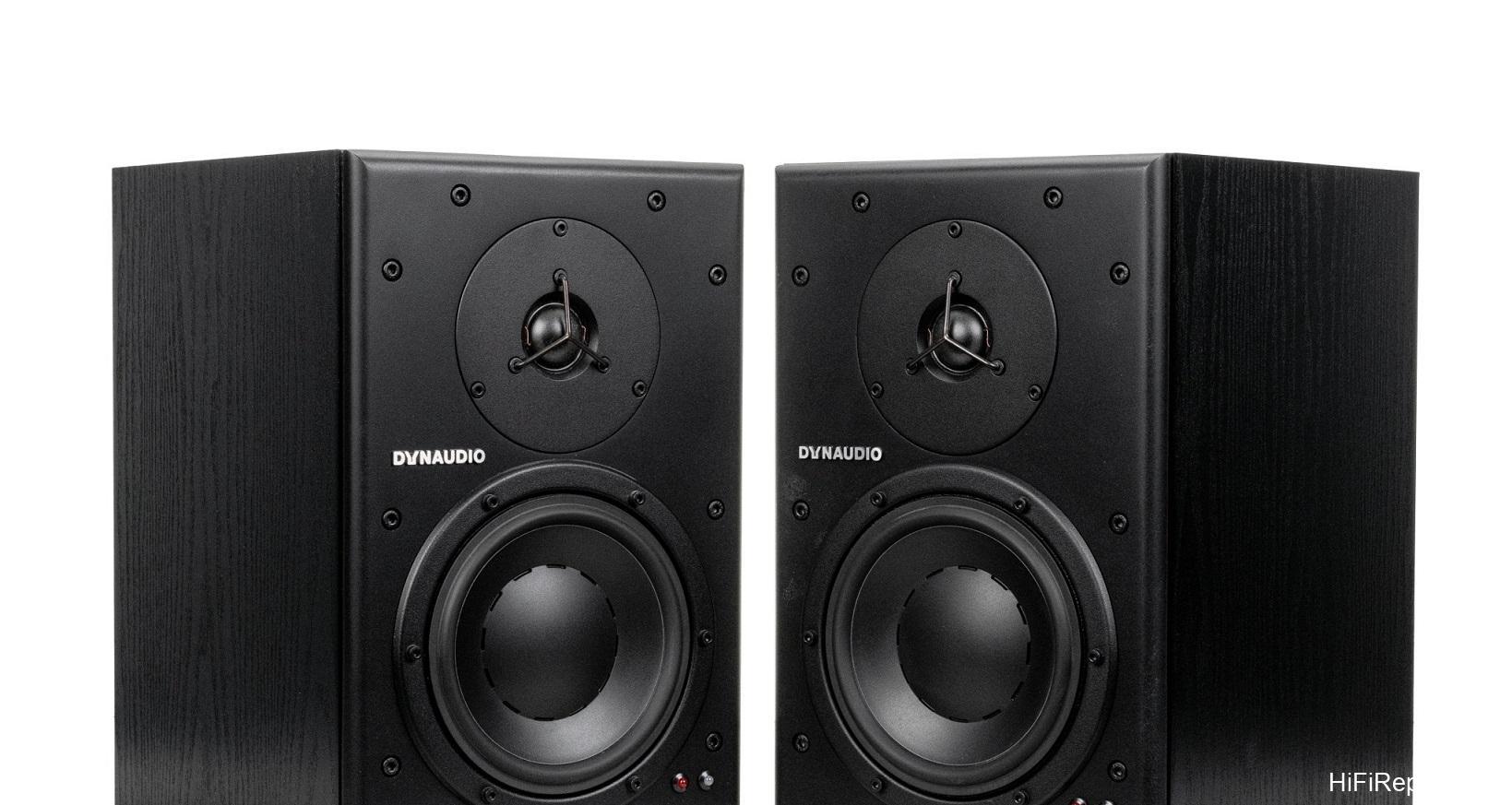
For drivers, the BM6A is equipped with Dynaudio’s classic 28mm Esotec soft dome tweeter. The tweeter is protected by a guard to prevent physical damage. The mid-woofer is a 6.5-inch MSP driver featuring a large aluminum voice coil and a powerful magnet motor. This combination offers not only low mass and high damping but also sufficient diaphragm rigidity to ensure minimal distortion even when driven hard by the amplifier.
It also enhances the upper frequency extension of the mid-woofer, providing a seamless transition with the tweeter and resulting in a smooth frequency response. The crossover point between the tweeter and mid-woofer is set at 2.2kHz, utilizing an electronic 4th-order phase-aligned crossover to reduce phase distortion typically introduced by passive components.
Connectivity and Power
Turning to the rear panel, the BM6A offers only a single XLR balanced analog input. If your preamp only has RCA single-ended outputs, you will need an additional adapter. A flat bass reflex port is located at the top of the rear panel, meaning the speakers require some distance from the wall to achieve optimal low-frequency performance. Below the port, you’ll find the classic large heat sinks characteristic of early BM series models.
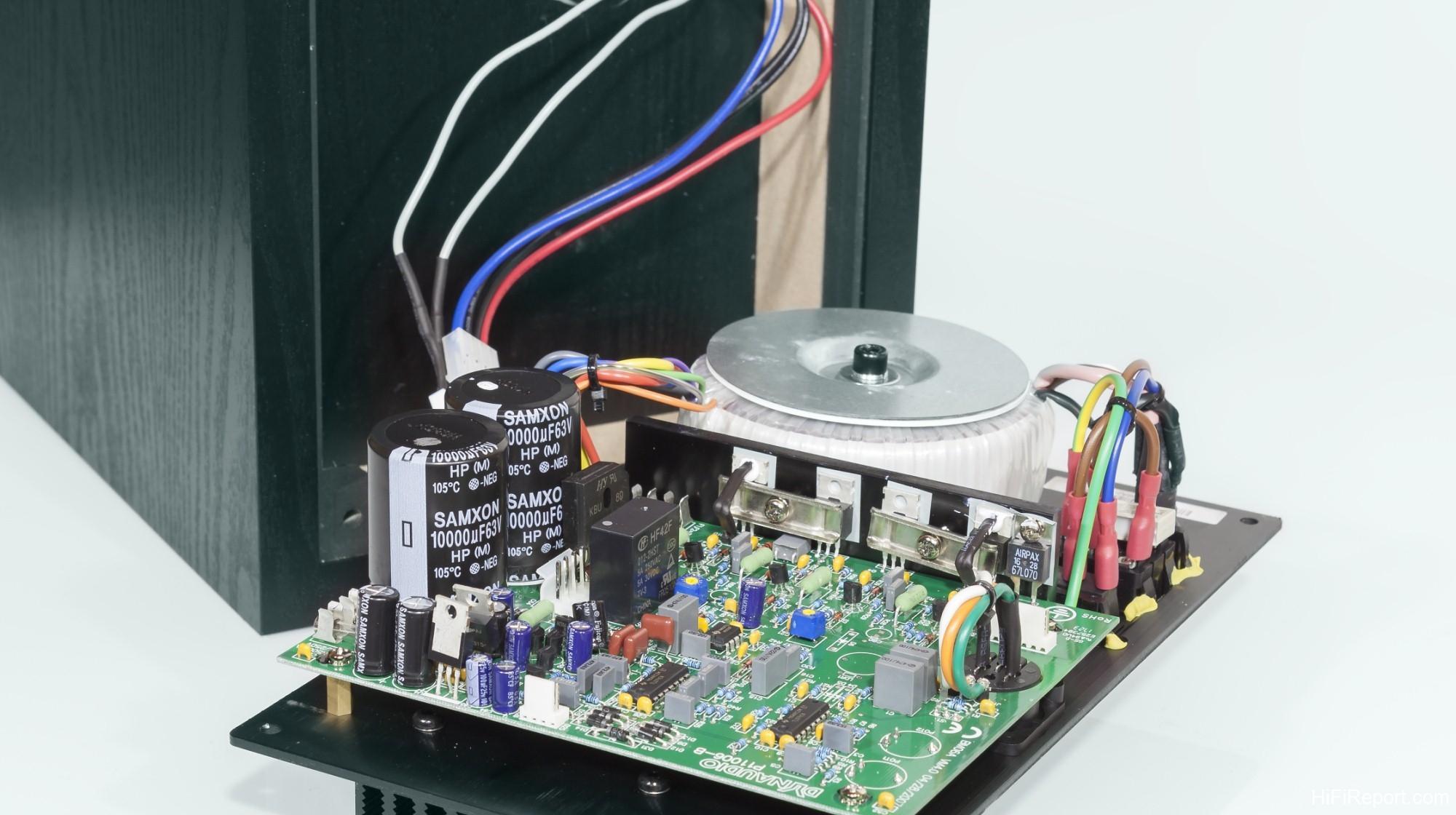
This is because the BM6A houses two 100-watt Class AB amplifiers utilizing MOSFETs, one for each driver. Power is supplied by a substantial toroidal transformer paired with a pair of Samxon 10,000µF filter capacitors, capable of delivering instantaneous high current to the amplifiers, allowing them to fully drive the drivers.
While Class AB amplifiers may not match the speed and efficiency of the Class D amplifiers used in newer BM active models, the BM6A distinctly possesses Dynaudio’s warm sonic character, making it particularly well-suited for pure music listening.
User Controls and Features
To accommodate different user needs, the BM6A’s rear panel also features two EQ controls: HF Trim and LF Trim. These adjust the frequency response curve above 3kHz and below 100Hz respectively, offering gain adjustments from 0 to -4dB. Additionally, a Level switch allows toggling between +4 and -10 sensitivity settings, which can be adjusted based on the size of your listening space – another advantage of active speakers. The BM6A also includes overload protection.
The front panel has two indicator lights, red and green. The right light indicates power. The red light illuminates when the amplifier overheats, signaling the need for a brief shutdown before restarting. The left light is an overload warning; it turns red when the sound pressure level is too high, prompting you to reduce the volume to prevent potential long-term damage to the drivers.
Testing and First Impressions
For testing, I used our primary listening room. The reference system consisted of a Luxman NT-07 as the streaming source, paired with a COS D10 V2 acting as a digital preamp directly feeding the BM6A active speakers. I positioned the speakers relatively close to the wall and employed a near-field setup using the equilateral triangle method, with a significant toe-in angle to simulate a typical near-field monitoring scenario. The moment the BM6A started playing, I was genuinely surprised!
It differed from my previous experiences with newer generation Dynaudio monitors like the Core and LYD. While it lacked some of their precision and sharpness, it felt much closer to the mid-range smoothness characteristic of Dynaudio’s passive speakers. I could also sense that the energy in each frequency band was full-bodied, and the transitions between them were effortlessly smooth, like water flowing.
I believe this highlights the advantage of active design – the ability to fully unleash the drivers’ potential, much like a meticulously matched audio system.
Listening Experience
First, I played German violinist Isabelle Faust’s rendition of Matteis’ “Fantasia in A Minor” for solo violin. I could immediately perceive the BM6A’s rich harmonic details, which helped create an open and ethereal soundstage. The violin’s lines were full-bodied and liquid, with a lingering decay between phrases. I could also sense abundant hall ambiance details radiating through the space.
While the high frequencies had a more restrained sheen, they sounded moving and delicate, completely devoid of any aggression. Similarly, when playing The String Quartets’ “Mendelssohn String Quartet No. 2,” the four violins were distinctly positioned, seemingly rooted in place. Their solid instrumental outlines felt sharply etched into the air.
It felt like being seated in the front row of the audience, allowing me to experience the clear performance details in the most direct way, with even the slightest movements on stage easily discernible. The BM6A’s rendering of string textures is firm and full. I could sense the musicians’ strong bowing force. The dynamic contrast was stark, moving from quiet passages to the full force of all four violins playing together, making the music incredibly engaging.
Unlike many professional monitors that can sound overly analytical or present a flat soundstage, the BM6A delivered true musicality.
During the testing, I also noticed that the BM6A’s deep soundstage and accurate positioning were particularly adept at recreating the atmosphere of a live performance. When I played Diana Krall’s live performance of “Devil May Care” from Paris, the vocal image was very distinct and forward, creating a palpable sense of presence. Diana Krall’s previously sharp sibilance sounded soft and sweet through the BM6A, with rounded, non-fatiguing highs.
The piano touch was soft and elastic, and while the note articulation wasn’t of the crystal-clear variety, it was full of sweetness, faithfully capturing the beautiful tone of the piano. Even the impact of the lower keys conveyed a considerable sense of the piano’s body resonating in the air, lingering for a significant time. When the track reached its exciting jazz drum solo, the BM6A’s transient response truly exploded.
The rapid-fire drum rolls sounded direct and unfiltered, as if the drumheads were being struck right before me. The energy delivery was controlled and dynamic; no matter how unrestrained the playing became, I could hear every distinct stroke, without any sense of looseness or lack of control.
Conclusion
As my listening session with the BM6A drew to a close, I found myself completely immersed in its comfortable, flowing musicality. I almost entirely forgot that I was reviewing a pair of professional monitor speakers; it felt like listening to a perfectly matched hi-fi system.
If you have a limited budget or prefer not to invest significant time and resources into assembling a separate audio system, the BM6A active speakers offer an excellent shortcut to experiencing the beauty of Dynaudio’s sound quality.
Specifications
Specifications:
* Type: Active Monitor Speaker
* Drivers: 1x 1.1-inch Esotec soft dome tweeter, 1x 6.5-inch MSP mid-woofer
* Enclosure Type: Bass Reflex
* Amplifier: 2x 100W Class AB amplifiers
* Frequency Response: 42Hz-21kHz (±2.5dB)
* Analog Input: 1x XLR
* Maximum SPL: 118dB @ 1m
* Crossover Frequency: 2.2kHz
* Dimensions (W. H. D): 217x338x321mm
* Weight: 11kg

- Compact Active Bi-amped Nearfield Monit with 6.7″ Woofer 1″ Silk Dome Tweeter – (Single)