
Dynaudio Confidence 30 Review
Confidence Series Evolution
In 2019, Dynaudio unveiled a significantly revamped Confidence series, expanding from three to four models: Confidence 60, 50, 30, and 20. Previously, I had the opportunity to audition the Confidence 60 and Confidence 20 at HiFiReport Audio. This time, we’re focusing on the middle ground, starting with the Confidence 30 floorstanding speaker. It seems the editorial team intends for me to comprehensively review the entire series, prioritizing Confidence models for my evaluations. However, this time, instead of visiting HiFiReport, the audition is taking place at HiFiReport Audio.
Complete Redesign
The Confidence series initially launched around 2002 and underwent two iterations, Signature and Platinum, with subtle cosmetic tweaks. Distinguishing between generations required a keen eye for detail. However, the 2019 Confidence series represents a monumental overhaul, marking the most significant redesign in its history. Beyond complete driver and crossover revisions, even the speaker cabinet aesthetics have been transformed, making it instantly recognizable as a new generation. The Confidence 30 being auditioned at HiFiReport Audio feels like an entirely new creation, primarily due to its unique driver configuration. Historically, the Confidence series has adhered to a point-source design, with floorstanding models employing drivers in symmetrical pairs. Yet, the Confidence 30 breaks this mold, featuring paired woofers but singular tweeter and midrange drivers, a configuration unprecedented in the Confidence lineage.
The new generation Confidence embodies a complete technological revolution, and the Confidence 30 is no exception. Dynaudio, the esteemed Danish audio manufacturer that began as a driver specialist, naturally warrants an examination starting with its drivers.
For the high-frequency domain, Dynaudio’s flagship Esotar silk soft-dome tweeter, previously in its second generation (Esotar2) for the prior Confidence series, has now evolved to the Esotar3. The new Esotar3 retains the silk soft-dome architecture but incorporates the Hexis structure internally. This ingenious design disperses back-wave reflections and optimizes internal airflow, both aimed at minimizing distortion and enhancing high-frequency detail retrieval.
Esotar3 Tweeter Innovations
Did the previous Esotar2 lack back-wave distortion mitigation? Not at all. It employed a felt ring inside the tweeter to act as a damping material, absorbing back waves. However, Dynaudio discovered that while effective, soft damping materials could also absorb some high-frequency detail. This realization spurred the development of the rigid Hexis structure. Nestled behind the soft-dome diaphragm, Hexis effectively scatters back waves without compromising the intrinsic high-frequency nuances.
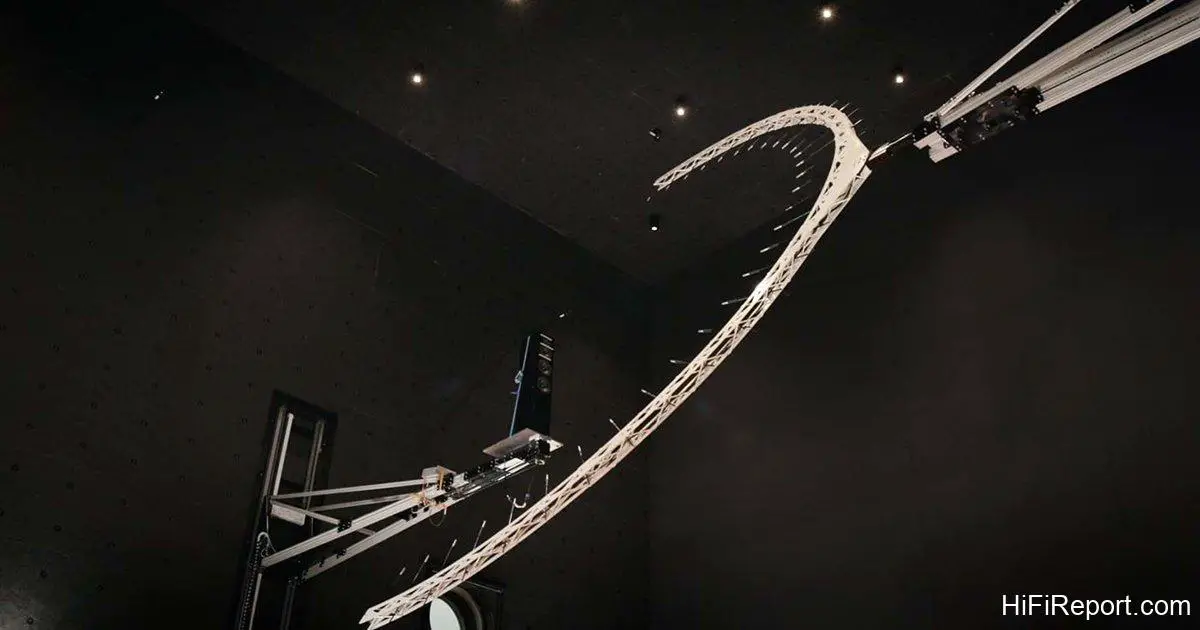
While the Esotar2 reigned supreme for many years, Dynaudio’s substantial investment in the Jupiter acoustic laboratory a few years ago marked a turning point. Jupiter is a colossal cubic space, measuring 13 meters in all dimensions. It houses a semi-circular microphone array that rotates 360 degrees around the speaker under test. Thirty-one professional-grade measurement microphones capture sound, not in a traditional anechoic chamber, but in a reverberant environment. This large space stretches reverberation times, enabling clear differentiation between direct and reflected sound. This capability empowers audio engineers to gain deeper insights into driver and speaker characteristics. Previously, such comprehensive 360-degree testing could consume days. However, Jupiter completes these analyses in mere hours, significantly accelerating Dynaudio’s R&D capabilities and contributing to their faster product cycles and broader application domains in recent years.
DDC Lens for Dispersion Control
The enhanced R&D prowess afforded by the Jupiter laboratory is also evident in the new DDC Lens design. In 1999, when Dynaudio launched the flagship Evidence, they pioneered DDC (Directivity Control) technology. This employed dual tweeters to manage vertical high-frequency dispersion, minimizing interference from floor and ceiling reflections. However, the DDC crossover design was complex, impacting speaker efficiency. The Confidence 30 utilizes DDC Lens, abandoning the dual-tweeter configuration for a single tweeter. Yet, a uniquely contoured front baffle guides and controls the vertical dispersion of high-frequency sound waves. This simplification significantly streamlines the crossover design and improves speaker efficiency.
The intricate shape and curvature of the DDC Lens necessitate precision manufacturing. Traditional MDF lacks the rigidity for such precise machining. Therefore, the Confidence 30 adopts a new Complex composite material. Lighter than MDF, it boasts superior hardness, rigidity, and high damping characteristics to absorb driver vibrations.
Horizon Surround Midrange
Moving on to the Confidence 30’s 15cm midrange driver, a close inspection at HiFiReport Audio is highly recommended. Its surround is flat, dubbed Horizon Surround by Dynaudio. This marks Dynaudio’s first foray into flat-surround midrange drivers, aimed at reducing resonance and achieving a smoother transition between the midrange and the high and low frequencies. Furthermore, the new midrange driver features a completely redesigned lightweight organic material for the rear frame, enhancing airflow efficiency. It’s a thoroughly revamped midrange unit.
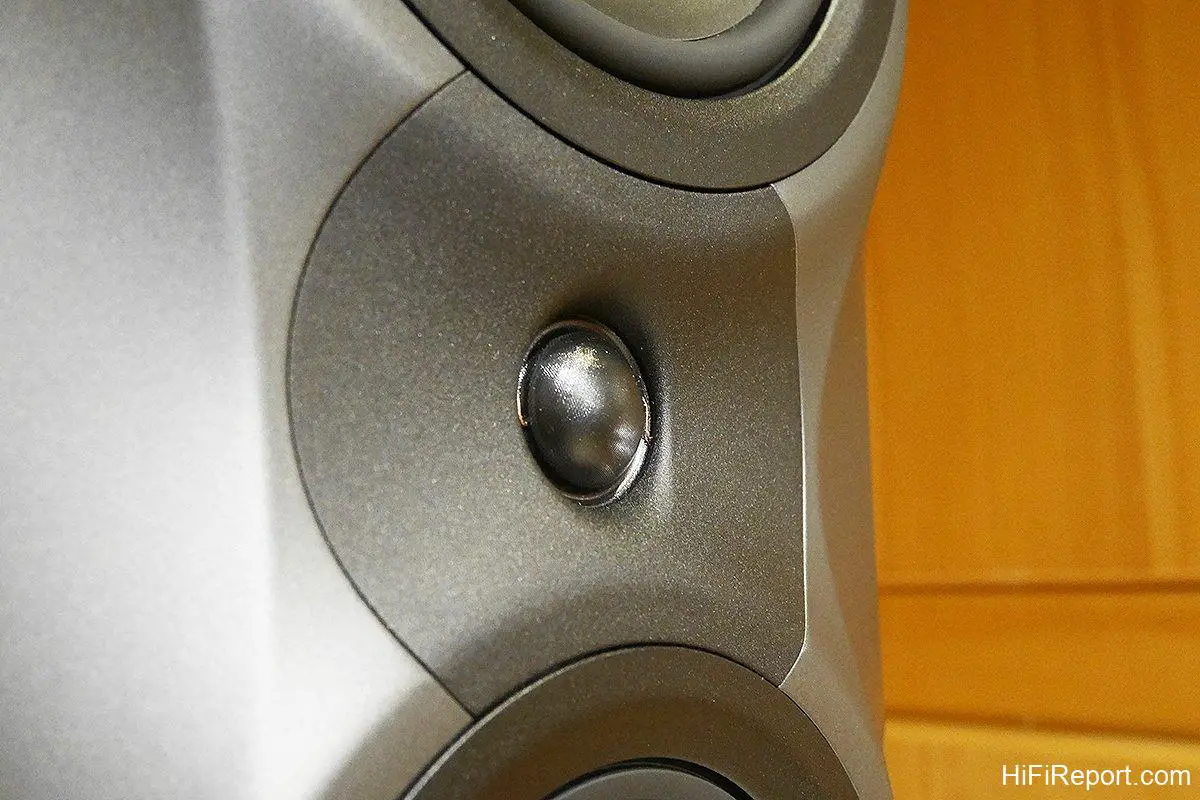
Similarly, the Confidence 30’s woofers are also of a new design, christened NeoTec woofers. The diaphragm material remains Dynaudio’s proprietary MSP, but the voice coil former is now a three-layer fiberglass composite, enhancing rigidity. An air-flow optimized design improves heat dissipation. This thermal management is crucial for the Confidence 30’s woofers, as the new generation now employs powerful neodymium magnets. While smaller in size, neodymium magnets are significantly stronger, but also heat-sensitive; excessive temperature can diminish their magnetic force. Hence, enhanced heat dissipation in the new woofer design is paramount.
Moreover, the new woofer voice coils use copper wire instead of Dynaudio’s customary aluminum. Dynaudio explains this as an optimization for different cabinet designs. In the Confidence series, for instance, the bookshelf Confidence 20 retains aluminum voice coil windings for its mid-bass driver, while the floorstanding Confidence 30, 50, and 60 models employ copper. Even the diaphragm thickness varies slightly between bookshelf and floorstanding models.
Teardrop Cabinet Geometry
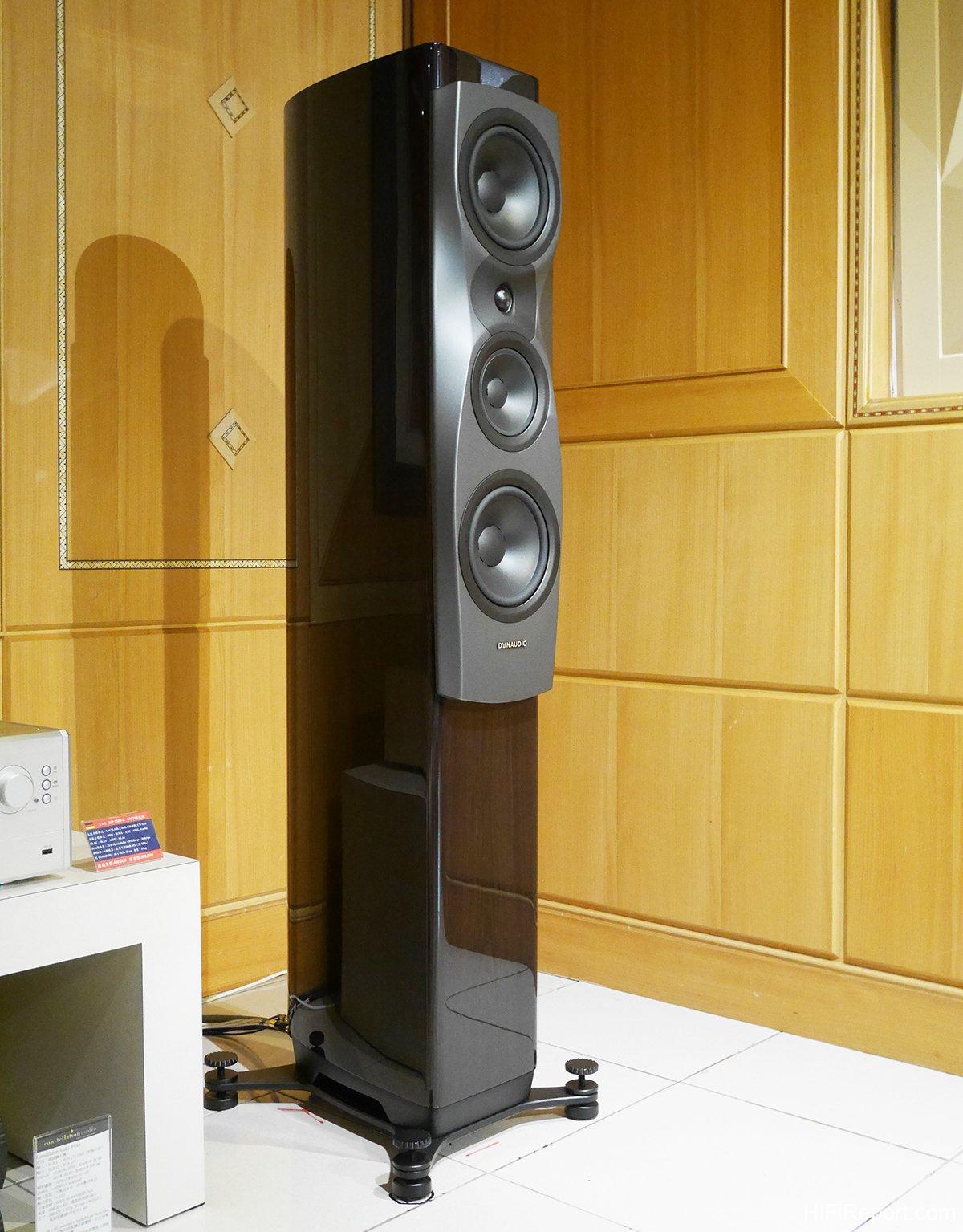
Visually, the most striking transformation in the Confidence 30 is the cabinet shape. Departing from the previous boxy form, it adopts a teardrop profile, wider at the front and tapering towards the rear. This streamlined design eliminates any parallel surfaces within the cabinet, effectively mitigating internal standing waves and promoting purer, more transparent sound reproduction.
The entire series features down-firing bass reflex ports. Consequently, the Confidence 30’s plinth elevates the speaker to a specific height, ensuring uniform dispersion of low frequencies as air vents downwards. Down-firing ports also enhance placement flexibility, minimizing low-frequency standing wave buildup when positioned closer to walls.
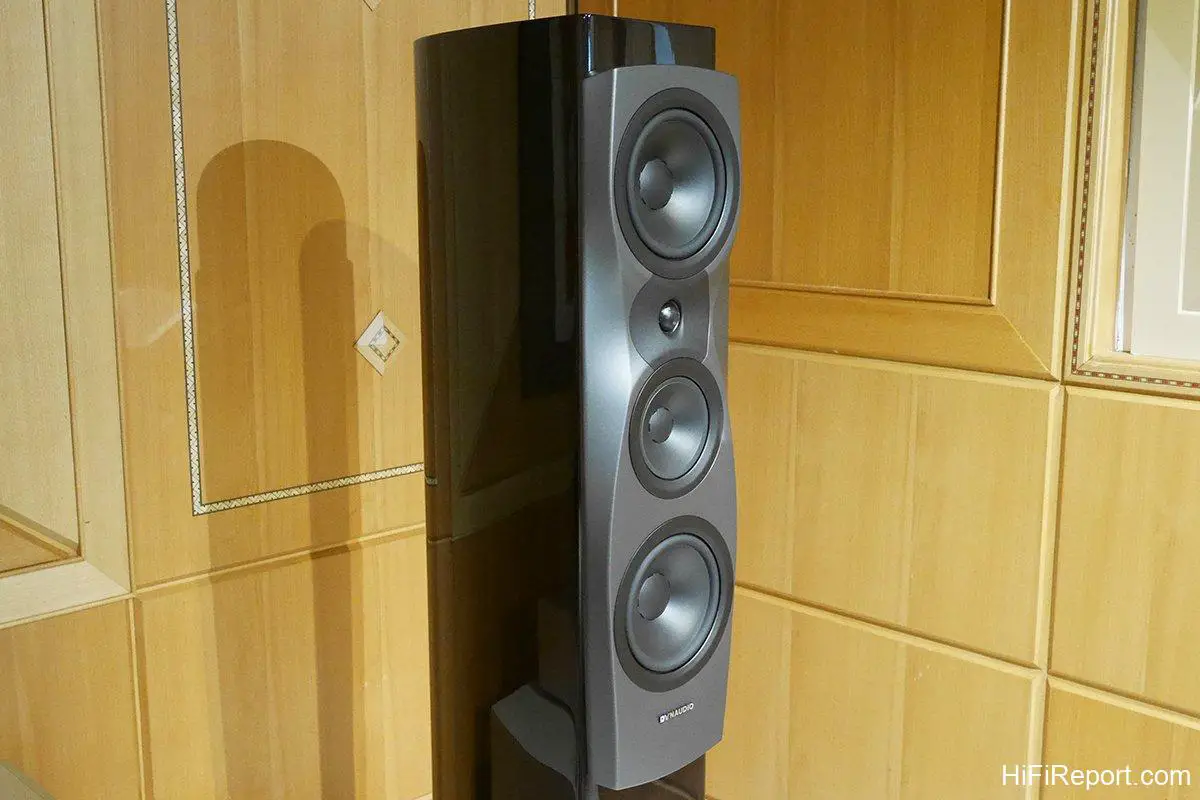
Having detailed the design features of the Confidence 30, let’s return to HiFiReport Audio. Typically, my auditions at HiFiReport Audio take place in the larger second-floor space. However, for the Confidence 30, we’re in the adjacent first-floor room. This space, housing two dedicated listening rooms, is familiar from past equipment reviews, though it’s been a while since my last visit here. These independent listening rooms, slightly smaller than HiFiReport’s second floor, more closely resemble typical home settings. Constructed with golden-ratio proportions and acoustically treated side walls and ceilings, they exemplify HiFiReport Audio’s commitment to professional audio presentation. They create spaces that are both aesthetically pleasing and acoustically optimized for comfortable music enjoyment.
Speaker Placement Strategy
HiFiReport’s listening room boasts excellent proportions and depth. Yet, the speaker placement is relatively close to the wall. During my Confidence 20 and 60 auditions at HiFiReport, the speakers were positioned further from the back wall. However, HiFiReport opted for a near-wall placement for the Confidence 30, almost flush against it. Upon entering the listening room, the system was playing “Libiamo ne’ lieti calici” from La Traviata, a lively and celebratory aria. The volume was considerable, yet there was no boomy low-frequency standing wave interference. This indicated HiFiReport Audio’s meticulous pre-setup and system optimization.
Speaker placement is a perennial topic of audiophile discussion. Moving speakers away from the back wall naturally tends to clean up low frequencies. However, such placement can encroach significantly on living space. HiFiReport Audio’s near-wall placement of the Confidence 30 mirrors a more domestically practical approach, minimizing the system’s intrusion into living areas. Achieving excellent sound quality with near-wall placement, however, is a testament to expertise.
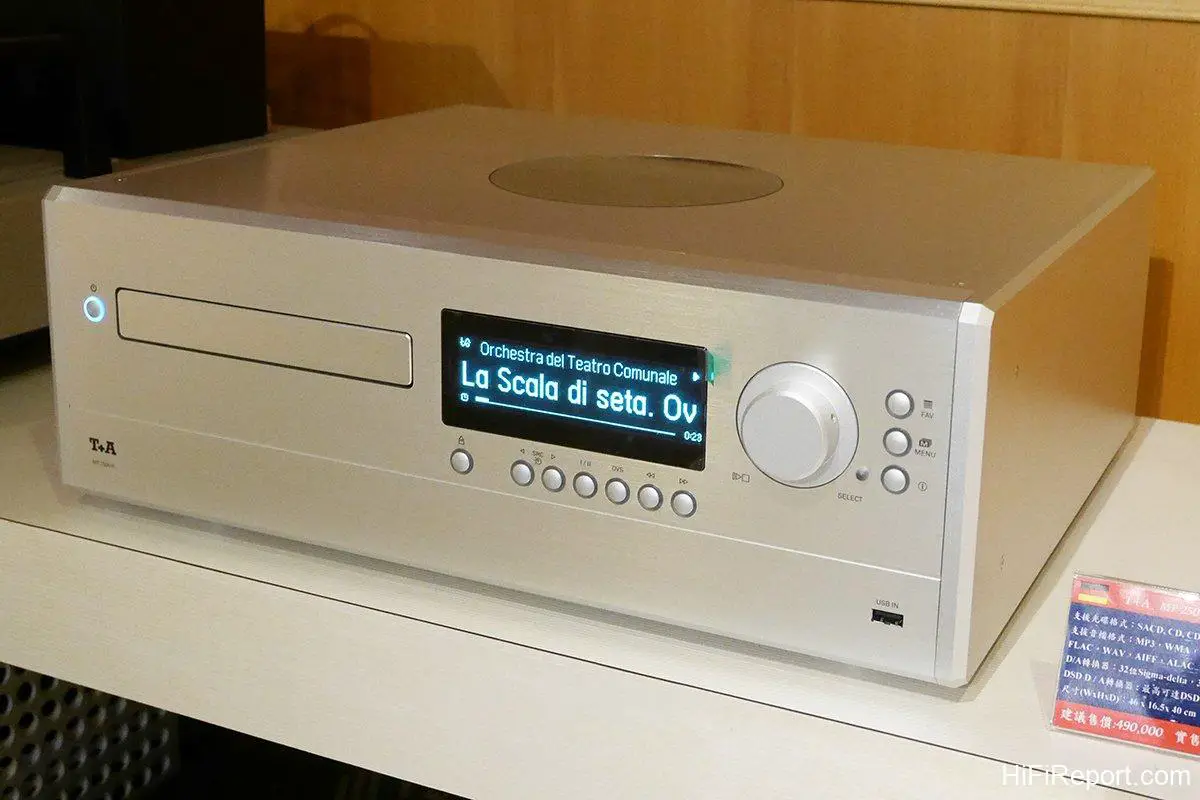
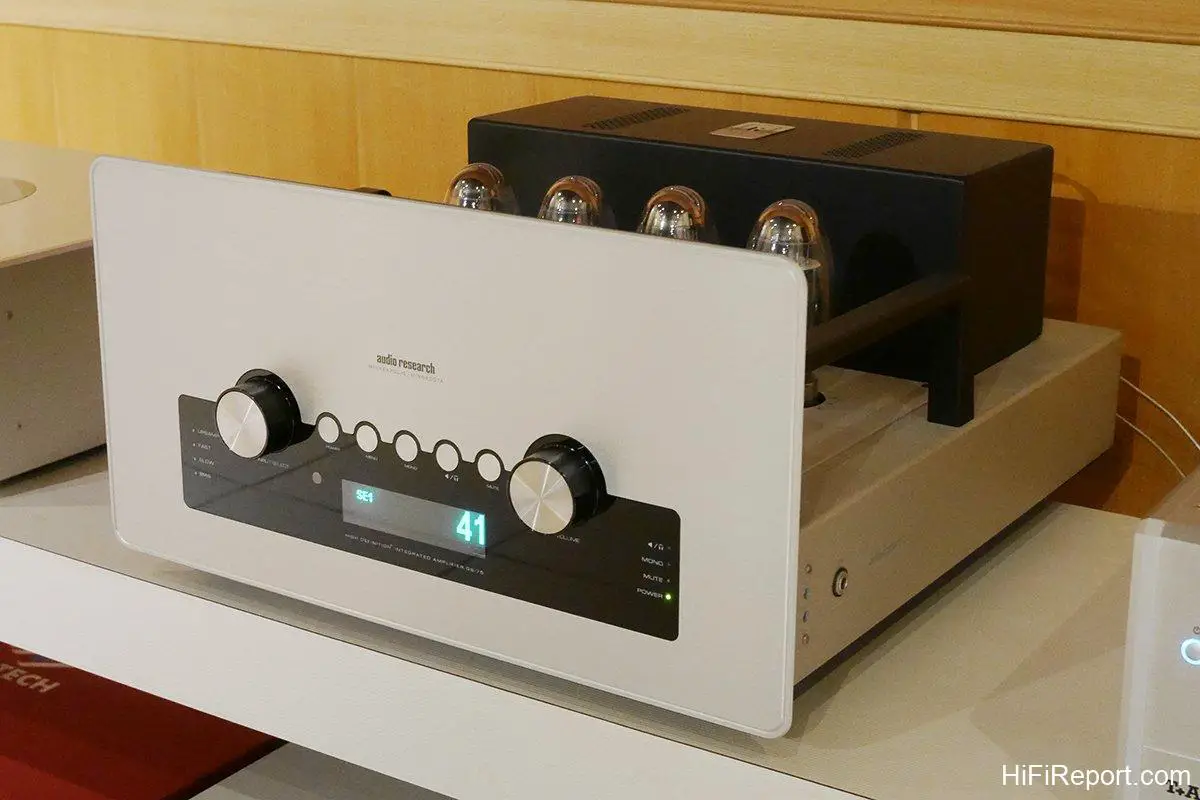
For the Confidence 30 audition, HiFiReport Audio paired it with a T+A MP2500 SACD player and network streamer as the source, driven by an Audio Research GSi75 integrated amplifier. Modern Dynaudio speakers are more amplifier-friendly than their predecessors. The Confidence 30’s 88dB efficiency is considered mid-to-high. During “Libiamo,” as the performance reached its exuberant climax with the tenor’s full vocal power and the orchestra’s resounding cheers, the mid-bass energy was substantial. The GSi75 demonstrably drove the Confidence 30 with verve. When I inquired about the absence of an all-Audio Research system, HiFiReport explained that the T+A’s inclusion was due to its network streaming capabilities, simplifying NAS and network integration.
Ethereal Musicality
Settling in, I started with familiar material, beginning with Carol Kidd and Nigel Clark’s collaboration on “Tell Me Once Again.” This studio recording, featuring only vocals and guitar, possesses remarkable spatial depth, almost creating the illusion of a live performance. Through the Confidence 30, Carol Kidd’s vocals were rendered with focus and coherence. Nigel Clark’s nylon-string guitar notes were rich, clear, and transparent, creating an ethereal sonic tapestry that intertwined beautifully with Kidd’s voice. The Confidence 30’s high-frequency extension was smooth and comfortable, with clear sibilance yet no harshness. The high-frequency detail retrieval was impressive. The subtle nuances of fingers sliding across guitar strings were vividly reproduced, creating a listening experience that was both authentic and natural.
Does near-wall speaker placement preclude a spacious soundstage? Certainly not. Speaker placement is an art with countless approaches, and skillful execution is key. Observing tape markings on the floor around the Confidence 30’s placement, it’s clear HiFiReport Audio had experimented extensively to optimize soundstage performance while minimizing spatial intrusion. Would moving the Confidence 30 further forward yield an even wider soundstage? Possibly. But HiFiReport Audio’s setup likely represents the most practical home placement scenario. This, I believe, is the message HiFiReport Audio aims to convey to consumers: speaker placement shouldn’t necessitate sacrificing living space.
Live Performance Immersion
Switching to live concert recordings, I selected Antonio Forcione’s “Live!”. The concert opens with an announcer’s introduction, followed by enthusiastic applause. Then, Forcione’s enchanting guitar tone emerges. The opening is captivating; chords are not plucked but struck with the palm, yet the percussive impact is absent. The initial percussive strike on the strings is muted using a volume pedal, allowing the guitar sound to bloom almost magically. The sound appears to materialize from silence, adding to the dreamlike quality. Throughout the chord progressions, volume swells and ebbs, punctuated by percussive sounds – not from drums, but from Forcione’s guitar-body percussion.
The Confidence 30 rendered Forcione’s magical and opulent guitar tone with clarity and spaciousness. The percussive effects were delivered with crisp definition. As the music subsided, the enthusiastic audience applause filled the room. The Confidence 30’s reproduction of live concert recordings was remarkably immersive.
High-Volume Prowess
For a sterner test, I moved to Marcus Miller’s “Tutu Revisited” live recording. As a bassist-led ensemble, the low-frequency and percussive elements are prominent. But this CD also challenges systems with its bright, soaring brass, engaging in a sonic duel with the electric bass. This dramatic high-low contrast and demanding dynamic range at high volumes truly tests an audio system’s mettle.
I increased the volume, pushing the GSi75 from its previous 35-40 setting to 50, to assess the Confidence 30’s composure and the GSi75’s grip on the woofers. Listening to track 3, “Splatsh,” on Disc 1, amidst audience applause, electric bass and drums initiate the piece. Synth textures shimmer in the background as the brass section bursts forth. The Confidence 30 created a wide dynamic contrast between the bright brass and the deep bass rhythms. The brass was powerful and bright, yet devoid of harshness, revealing the incisive timbre of muted trumpets. Subsequent solos by synth, electric guitar, brass, electric bass, and drums followed in rapid succession. During the electric guitar solo, the searing guitar tone and virtuoso technique, replete with bends, hammer-ons, pull-offs, and whammy bar theatrics, were vividly rendered by the Confidence 30. The underlying drums and fast-paced bass lines were also presented with excellent layering. The GSi75 clearly maintained control over the Confidence 30, with a firm grip on the woofers.
Piano Recital Detail
Having explored jazz and pop, I turned to classical music, selecting Nobuyuki Tsujii’s “Carnegie Hall Debut Live.” This recording captures the young Japanese pianist’s inaugural Carnegie Hall performance. The program opened with Beethoven’s “Tempest” Sonata. Tsujii, a blind pianist, is known for his physical movements during performance, orienting himself in relation to the piano. The live recording captured remarkable detail. From the opening arpeggio, Tsujii’s pre-performance breaths, the subtle creaks of the piano bench behind the quiet opening notes, and even audience coughs, the Confidence 30 missed none of these nuances.
Tsujii’s heavy breathing, intensifying with the arrival of the “Tempest” theme, became increasingly urgent. Listening with eyes closed, the musical imagery conjured a vision of Tsujii swaying in Carnegie Hall, his breath and piano expressions mirroring the “Tempest” theme’s ebb and flow, conveying the pianist’s passionate musicality. I often feel that audio equipment is inanimate, while music is alive. Equipment that can breathe life into music is truly exceptional. The Confidence 30 is demonstrably a speaker that brings music to life.
Elegant and Romantic Tone
For concertos, I chose Brahms’ “Double Concerto,” the version conducted by Abbado with the Berlin Philharmonic, featuring Gil Shaham and Wang Jian as soloists. My favorite is the Adagio second movement, showcasing exceptional cello work. The music opens with rich brass from the Confidence 30, dense yet with a clear brilliance. Cello and violin enter in unison, weaving a chorale-like theme, its melodic lines solemn and harmonious. The Confidence 30 conveyed the lyrical, flowing tone of the strings, the subtle vibrato in the left-hand ornamentation, and the delicate breaths subtly captured in the recording, highlighting its vitality. Subsequent movements featured violin and cello in a call-and-response dialogue, deviating from and returning to the main theme. In the ensemble sections, cello and violin were underpinned by pizzicato strings, creating a swaying rhythm. The Confidence 30, with its elegant and refined demeanor, captured Brahms’ Germanic Romanticism beautifully.
Finally, I returned to Brahms, listening to his “Academic Festival Overture,” Bernstein’s Vienna Philharmonic recording. Despite being the smallest floorstander in the Confidence series, the Confidence 30’s low-frequency solidity was impressive. The orchestra possessed a substantial foundation, with ample low-frequency presence and clear definition. The “Academic Festival Overture” opens with a brisk tempo, but the anticipated melody is “Gaudeamus igitur.” Soft, continuous timpani rolls lead into the brass section’s bright rendition of the familiar tune. The Confidence 30’s warm yet appropriately brilliant brass imbued the music with a gradual brightening, moving from quietude to intensity. Bernstein ignited the Vienna Philharmonic’s passion, launching into a powerful musical passage before transitioning to another joyful thematic section. The finale, “Let us rejoice!”, reached a glorious climax. The orchestra at full throttle, punctuated by the triangle’s shimmer, was met by the Confidence 30’s dazzling brilliance – Bravo!
From Recording to Musical Feast
The “Academic Festival Overture” is a 1982 recording from the Vienna Musikverein’s Golden Hall. Though not a live concert recording, but a studio recording made in the concert hall, listening through the Confidence 30 at HiFiReport was like being present at the recording session. Both this and the “Double Concerto” are DG recordings, yet the “Double Concerto” is more transparent, while the “Academic Festival Overture” is weightier. This demonstrates the Confidence 30’s excellent recording discernment.
After listening to the “Academic Festival Overture,” a heartfelt “Bravo!” was in order. The Confidence 30 is not only easier to drive and more transparent, but more importantly, its ability to convey musical emotion is significantly enhanced. Furthermore, the new Esotar3 tweeter delivers even finer high-frequency detail and refinement, with a denser texture. This wealth of musical detail enables the speaker to bring music to life. Many consider recordings to be mere canned music, inferior to live performance. But experiencing the Confidence 30 at HiFiReport Audio will demonstrate how a “canned” recording can be transformed into a fresh and sumptuous musical feast.
Specifications
* **Type:** 3-way 4-driver bass reflex floorstanding speaker
* **Drivers:** 28 mm Esotar 3 silk soft-dome tweeter × 1, 15 cm MSP midrange, 18 cm MSP woofer × 2
* **Crossover Frequencies:** 290 Hz / 3700 Hz
* **Frequency Response:** 38 Hz – 22 kHz (+/- 3dB)
* **Sensitivity:** 88 dB
* **Impedance:** 4 Ohms
* **Dimensions (H×W×D):** 1382 × 364 × 424 mm
* **Weight:** 44.2 kg