
Dynaudio Contour S 3.4 LE & Ayre AX-5 Twenty Review
The Dynaudio Contour series occupies the tier below the flagship Evidence and Confidence Platinum ranges, embodying Dynaudio’s sophisticated audio technologies and meticulous craftsmanship, yet at a price point more accessible than their ultimate offerings.
Visually, the Contour series distinguishes itself from the more recent Focus and Excite lines, notably featuring a more elaborate front baffle construction, characterized by a substantial metal faceplate – an immediate identifier of the Contour lineage.
Dynaudio’s Contour series for stereo applications includes the Contour S 5.4, Contour S 3.4, and Contour S 1.4, with the Contour S 3.4 and Contour S 1.4 each boasting a Limited Edition variant, of which we are reviewing the Contour S 3.4 LE here. The Contour series also encompasses the Contour S CX and Contour S C center channel speakers, along with the Contour S R on-wall speaker.
This comprehensive lineup allows for the creation of a full High-End home theater system built upon the Contour foundation.
Purpose-Built Cabinetry and Vibration Management
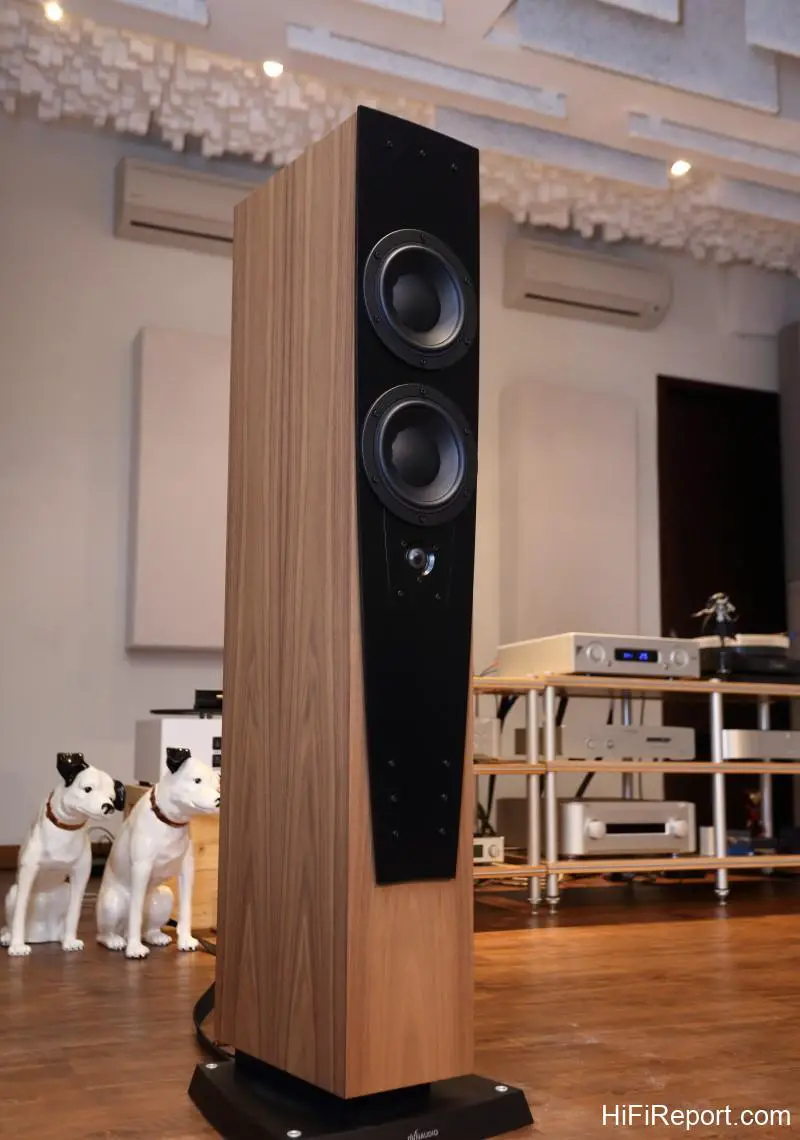
The Contour S 3.4 LE adopts a slender, elongated cabinet profile with considerable depth, a design cue shared with the Evidence and Confidence Platinum series, reflecting a common lineage in internal volume and layout design. Measuring 357 x 1226 x 366mm (including the plinth, with the cabinet itself approximately 190mm wide), the Contour S 3.4 LE’s cabinet benefits from a robust, cross-braced internal structure.
The MDF panels within are densely composed to absorb even minute vibrations, effectively coupled with the rigid metal front baffle. The most striking feature is the 5mm thick metal front panel, contributing to a tri-layered front fascia. The innermost layer is the handcrafted wooden cabinet itself, meticulously finished with selected natural wood veneers.
The second layer consists of damping material, while the outermost layer is the substantial metal front baffle, providing exceptional rigidity to minimize resonance.
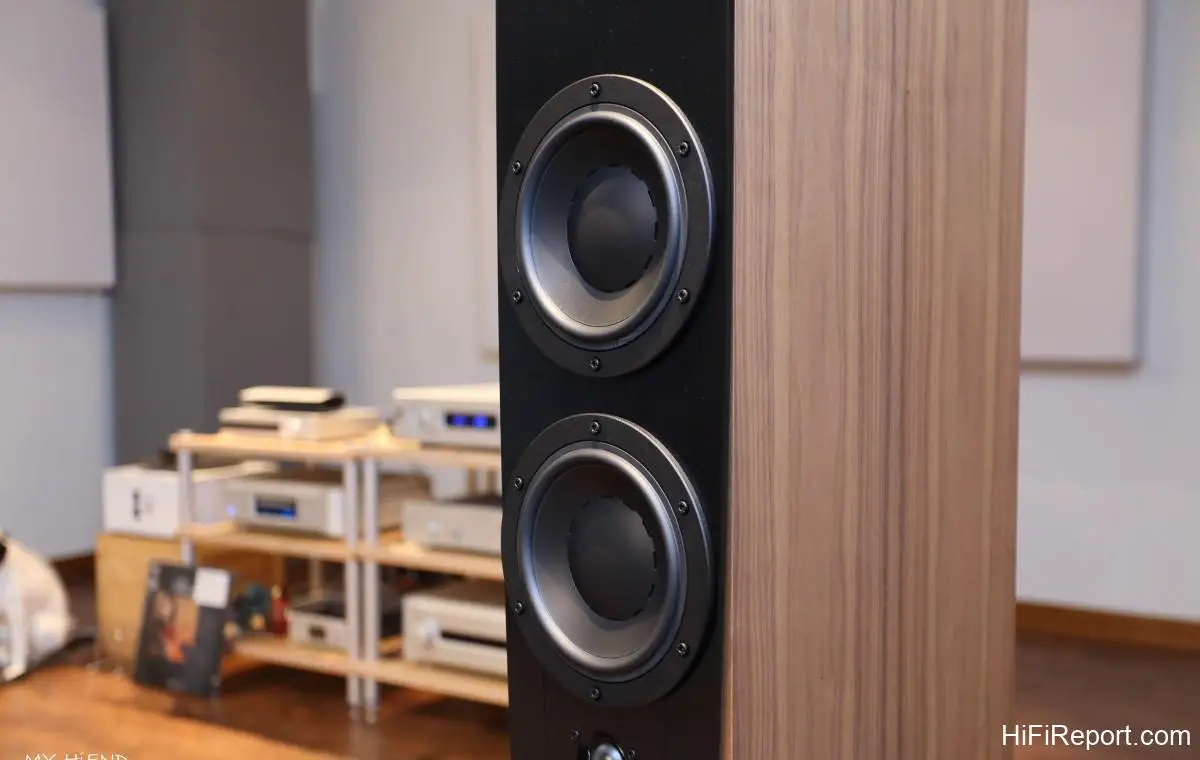
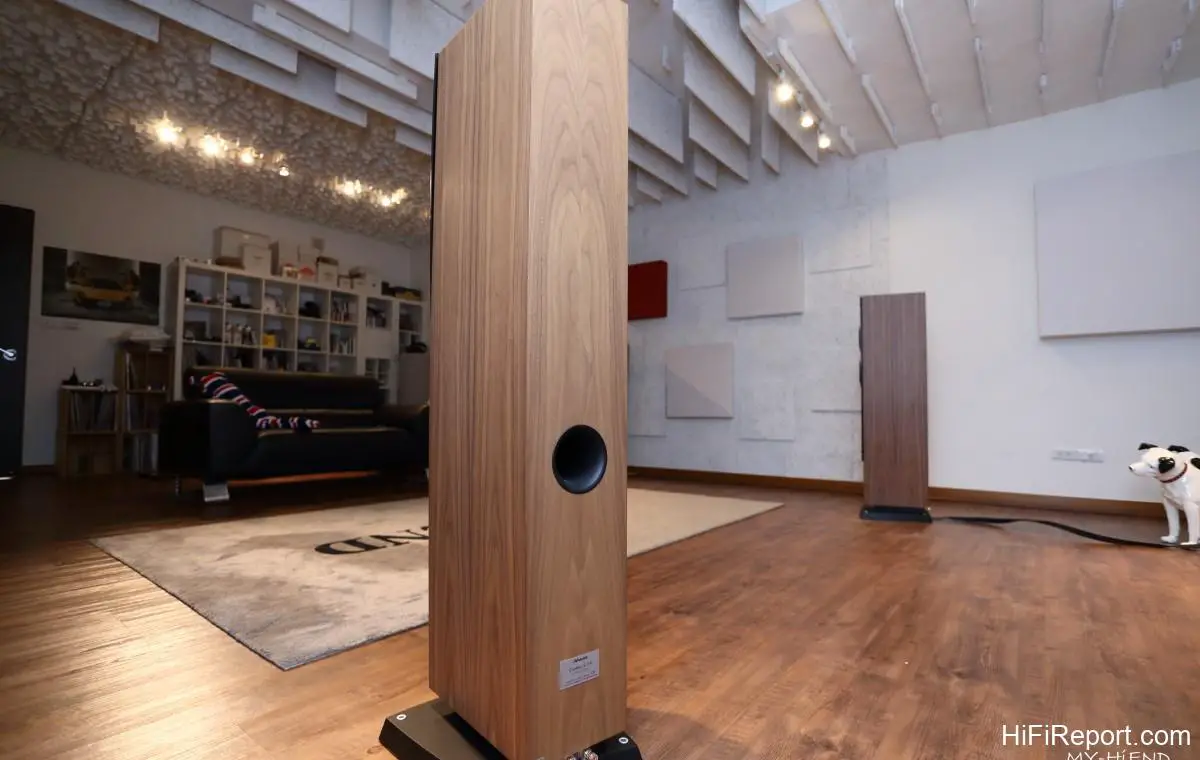
The Contour S 3.4 LE employs a 2-way, 3-driver configuration. The single, lower-positioned tweeter is Dynaudio’s renowned Esotec soft dome unit, placed at a height optimized for seated listening. Two MSP mid-bass drivers are positioned higher, with a crossover point set at 2,000Hz. A bass reflex port is located on the rear of the cabinet.
Esotec Soft Dome Tweeter and MSP Mid-Bass Drivers
The Contour S 3.4 LE utilizes Dynaudio’s in-house Esotec 28mm soft dome tweeter, distinguished by a dual magnet system. This design ensures high power handling and precise diaphragm movement. As evident in close-up images, the dome surface exhibits a subtle sheen, a testament to meticulous fine-tuning. A specialized coating, precisely applied to the soft dome, ensures smooth, fluid, and pure high-frequency reproduction, extending beyond 40kHz.
The tweeter’s rear chamber features a tapered design, gently dissipating back waves generated by diaphragm movement, preventing energy reflection or build-up that could compromise tweeter performance through distortion or resonance. The tweeter’s mounting frame is constructed from aluminum and incorporates a powerful magnet system and an aluminum voice coil.
Aluminum voice coils, lighter than their copper counterparts, allow for a larger diameter coil for the same weight, enabling more windings, resulting in a more linear operational range and enhanced reliability.
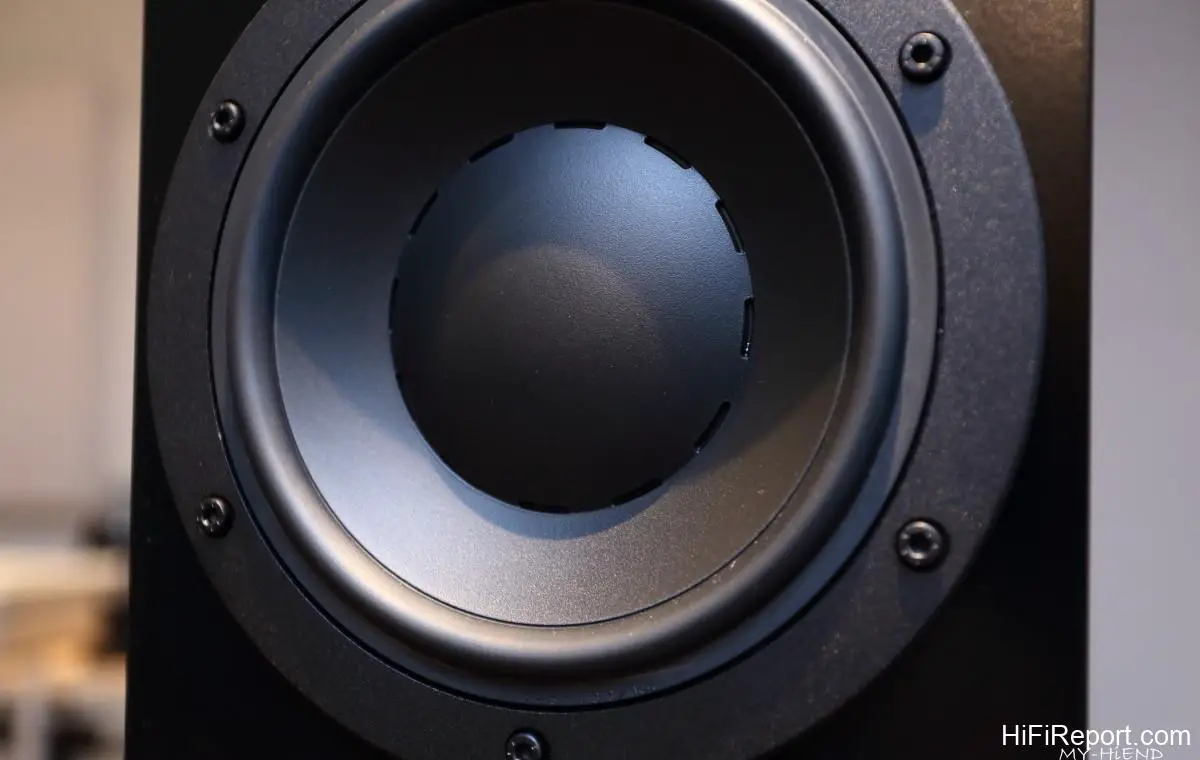
From 2,000Hz down to 35Hz, the frequency spectrum is handled by two potent 17cm low-frequency drivers, each equipped with MSP (Magnesium Silicate Polymer) cone diaphragms. These mid-bass drivers also feature aluminum voice coils, and their frames are constructed from Kapton®, effectively suppressing resonance. The larger diameter voice coils contribute to superior control, increased instantaneous power handling, and enhanced reliability under high power conditions.
The MSP cone diaphragm with surrounding perforations.
The rear panel bass reflex port.
Precision-Engineered Crossover Network
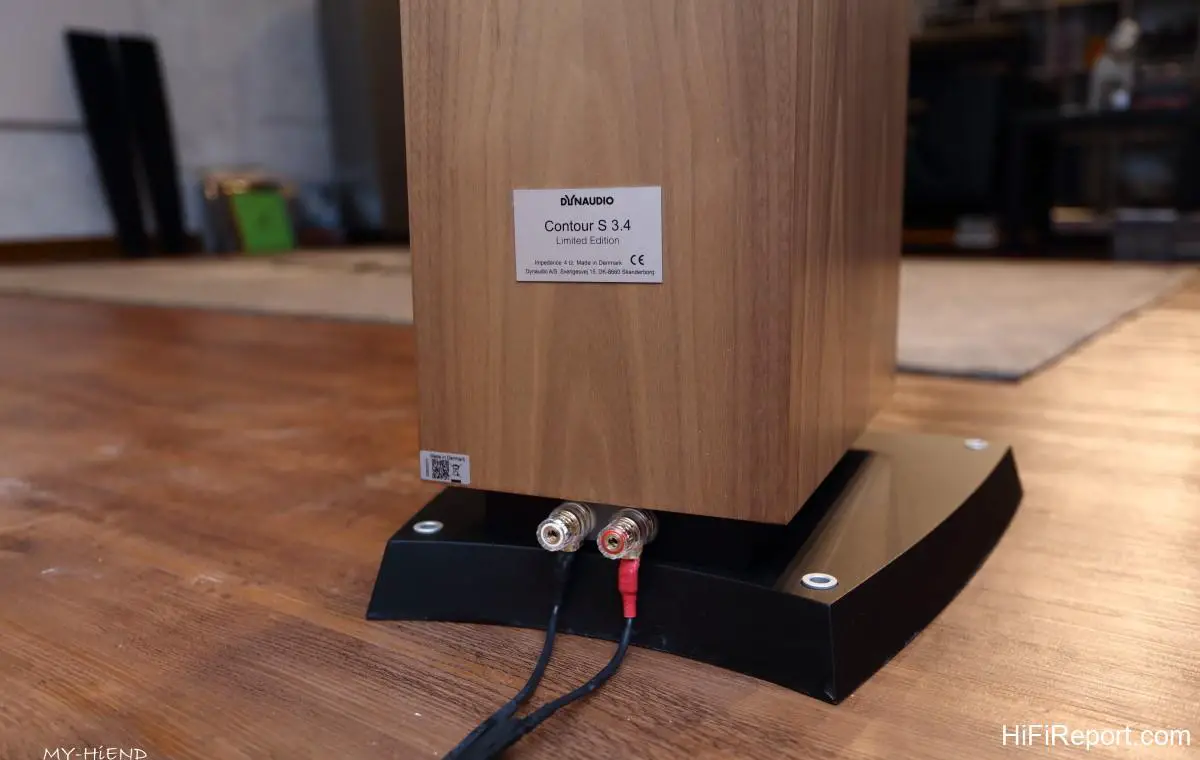
The speaker terminals are situated near the base, utilizing high-quality WBT binding posts from Germany. The crossover network is strategically positioned between the plinth and the cabinet, mounted on a high-mass board. This location minimizes vibration influence and mitigates undesirable cabinet resonance effects. The crossover employs long-crystal structure pure copper wiring, crafted with meticulous precision and a unique design to ensure virtually lossless signal transmission.
While a smooth frequency response is a prerequisite for any quality loudspeaker, Dynaudio’s crossover design goes beyond mere component selection. Their approach involves sophisticated computer modeling, complemented by extensive listening tests, ensuring a harmonious balance between all components and drivers.
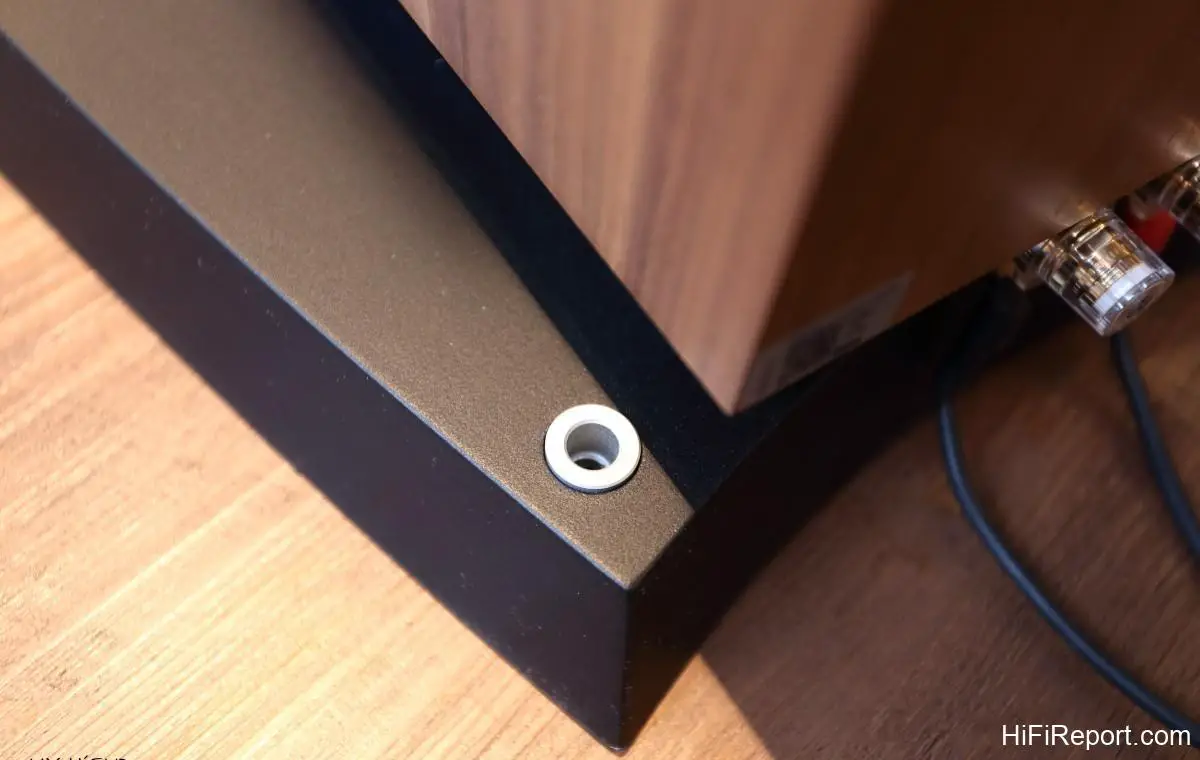
The Dynaudio Contour S 3.4 LE’s plinth allows for direct adjustment of the integrated spikes at each of the four corners. Using a tool inserted from above the plinth, the spikes can be easily extended or retracted from the base, offering a flexible range for leveling the speakers on uneven floors.
HiFiReport received the Dynaudio Contour S 3.4 LE loudspeakers along with the Ayre AX-5 Twenty integrated amplifier.
The Ayre AX-5 Twenty integrated amplifier, launched in January 2015, marked Ayre’s 20th anniversary. It features a Double Diamond output stage, Ayre’s proprietary EquiLock circuitry, and a Shallco solid-silver contact switch for volume control. The Ayre AX-5 Twenty is a fully discrete, fully balanced, zero-feedback integrated amplifier.
A core element of the AX-5 Twenty is its Variable Gain Technology (VGT) in the preamplifier section, a feature that garnered awards and market acclaim for the Ayre KX-R preamplifier. The AX-5 Twenty utilizes ultra-transparent FET input switching, successfully integrating pre and power amplifier stages within a single chassis.
Internal packaging is exceptionally secure, with dense polystyrene inserts for protection.
Included accessories: remote control, power cord, and user manual.
Advanced Technology and Versatile Connectivity
The Ayre AX-5 Twenty delivers 125W of power per channel into 8 ohms, doubling to 250W into 4 ohms. Key technologies include the Double Diamond output stage, Ayre’s EquiLock circuit, AyreLock linear analog power supply, high-speed circuit board materials, custom audio-grade resistors, and Ayre Conditioner linear power RFI filtering.
Powering up the unit reveals a front panel display indicating input source and volume level. The left knob selects the input, while the right knob controls volume. Volume adjustment is in 1.5dB increments, with 46 steps for a total volume range of 69dB.
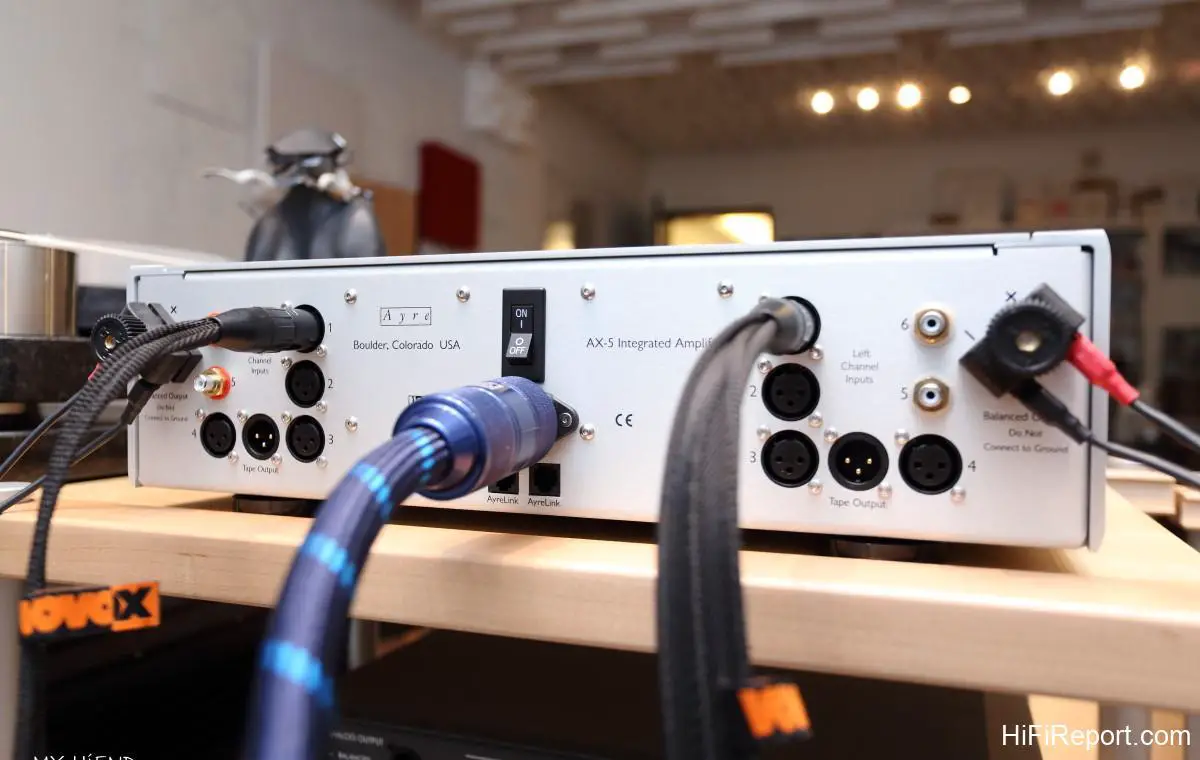
The AX-5 Twenty boasts comprehensive input connectivity. It offers four XLR balanced inputs, two RCA single-ended inputs, and a Tape Output for recording purposes. Speaker binding posts are located on either side of the rear panel. The main power switch is situated above the blue A.R.T. power cord inlet.
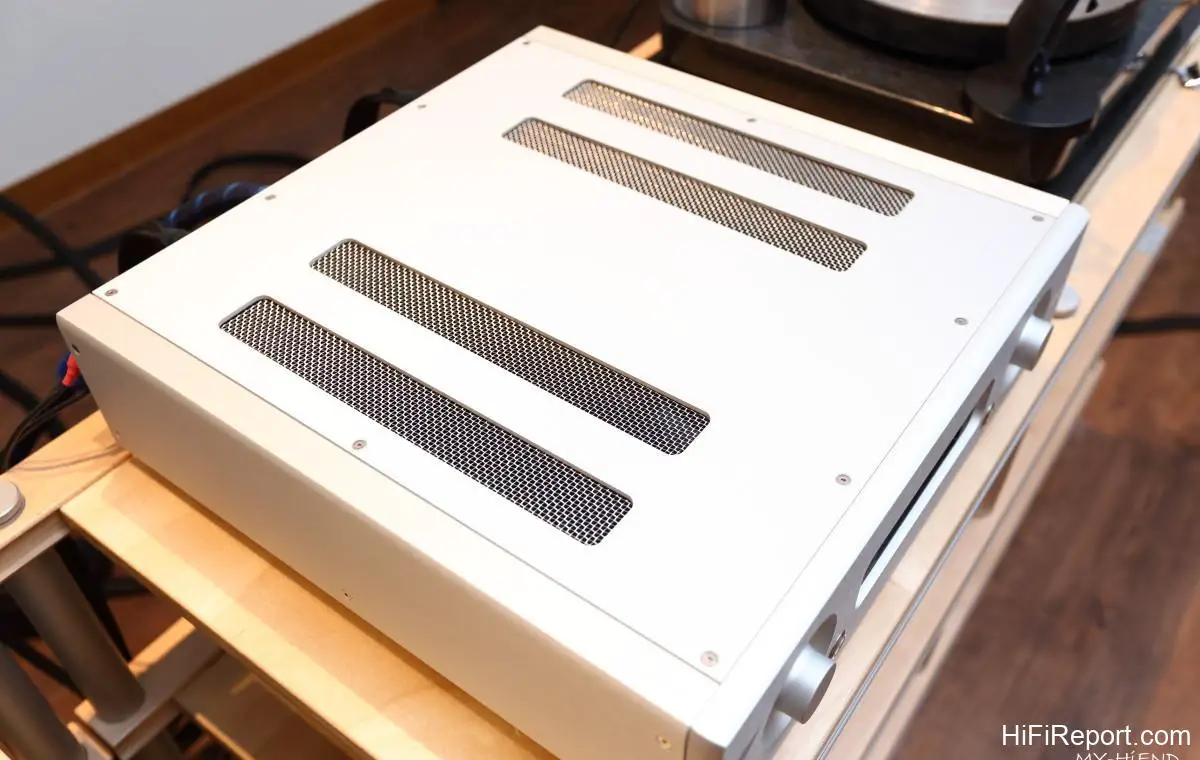
Efficient heat dissipation is crucial for integrated amplifiers, and the AX-5 Twenty features four heatsink vents on its top panel.
Appropriately Sized Imaging, Clean and High-Quality Sound
Listening to the 2015 Hong Kong Hi-Fi Show commemorative album, track 4, , the violin’s tone is beautifully rendered, conveying the warmth of the wood and the instrument’s rich timbre. The nuanced bow work and intricate fingering are vividly portrayed, capturing the ebb and flow of the performance – at times smooth, at times agile, at times passionate.
The system excels in detail retrieval, clearly revealing rhythmic variations and the subtle dynamics of bow pressure across the strings. Track 5, Lam’s <> (Who is My Favorite? ), opens with the palpable resonance of guitar plucking. Lam’s vocals are warm, and the system faithfully reproduces the shifting vocal textures and resonance as he navigates different registers.
The vocal image size is appropriately scaled, seamlessly integrated with the accompaniment, evoking a distinct Hong Kong musical atmosphere.
Track 12, by the Tsuyoshi Yamamoto Trio, is notable for featuring cello as the lead instrument in the first half, with drums and piano joining later. The first half emphasizes mood and tranquility, while the latter half expresses the joy and wonder of the world. The system renders the cello with a substantial and grounded presence, capturing the delicate details of fingers sliding across strings and the friction of the bow.
The piano sound is clean and the treble is remarkably transparent. Dynamic contrasts are clearly delineated, and the trio’s interplay is natural and cohesive.
Faithfully Conveying Musical Atmosphere
is an exceptional piano album, recorded and released by Steinway & Sons as a tribute to the 50th anniversary of the passing of French legends Edith Piaf and Francis Poulenc. Pianist Antonio Pompa-Baldi and composer Roberto Piana have reimagined the works of these two French icons, creating an album steeped in French romanticism and chanson tradition.
The album features solo piano performances on a Steinway Model D. The system under review faithfully reveals the Model D’s grounded character; the piano tone is not overly bright, but possesses significant weight and emotional impact. The piano’s harmonics and reverberation are captivating. The album’s atmosphere, rhythm, and emotional depth are compelling, with the piano seemingly narrating stories in French, making it impossible to pause or skip tracks until the album concludes.
Solid Mid-Bass, Harmonious Ensemble
Playing The Bass Gang’s , track 1, , immediately showcases the cello’s low-frequency energy and the system’s dynamic and transient capabilities. This opening track sets the stage for the album’s style and character, demonstrating the ensemble’s virtuosic bass prowess. Track 5, , is a playfully arranged piece where each note seems to carry a smile.
The plucked notes are remarkably elastic, and the bowed sections, transitioning from slow to fast and soft to loud, are richly detailed. The cello’s body resonance is warm and substantial. Combined with the whimsical arrangement, it’s thoroughly enjoyable. Track 6, , perfectly highlights the cello’s lyrical side. In ensemble passages, each cello’s position is clearly defined, with solid imaging. The ensemble sound is captivatingly harmonious and integrated.
Delicate Detail, Sustained Quality at High SPLs
is the debut album of violinist Elissa Lee Koljonen, recorded in 1999, featuring a 1787 Lorenzo Storioni violin and accompanied by pianist Robert Koenig Dorian. The album is exceptionally well-recorded, and this listening session utilized a recently remastered and re-released version by German audiophile label Stockfisch, further enhancing the sound quality.
Through this system, the violin’s tone is exquisitely delicate and beautiful, conveying profound emotion with remarkable detail and clarity. Even at high sound pressure levels, the sound quality remains uncompromised.
The accompanying piano is recorded with a larger, more spacious presence, spanning the entire soundstage, while the violin is focused and refined at center stage, exhibiting clear detail and textural nuance, vividly conveying technical artistry and the nuances of shifting positions. While the violin is the album’s focus, the piano performance is equally impressive in both playing and recording quality.
Fast and Elastic Low-Frequency Response
The soundtrack to the movie features many powerful tracks with an electronic, film score aesthetic, making it ideal for assessing audio system performance. Track 3, , blends a dreamy atmosphere in both music and vocals. Singer Lana Del Rey’s vocals are ethereal and captivating. The substantial electronic bass provides a continuous, solid impact without overshadowing the dreamy quality. The system faithfully reproduces this balance and style.
Tracks 6, , and 7, , feature rhythmic and impactful electronic drumbeats in the mid-bass and low-frequency ranges. Careful listening reveals no pitch deviations or tempo changes even during extended play. The Dynaudio Contour S 3.4 LE and Ayre AX-5 Twenty combination delivers ample, elastic, and fast low-frequency energy, maintaining consistency even under sustained dynamic demands.
Experience-Driven Pursuit of Clean and Precise Reproduction
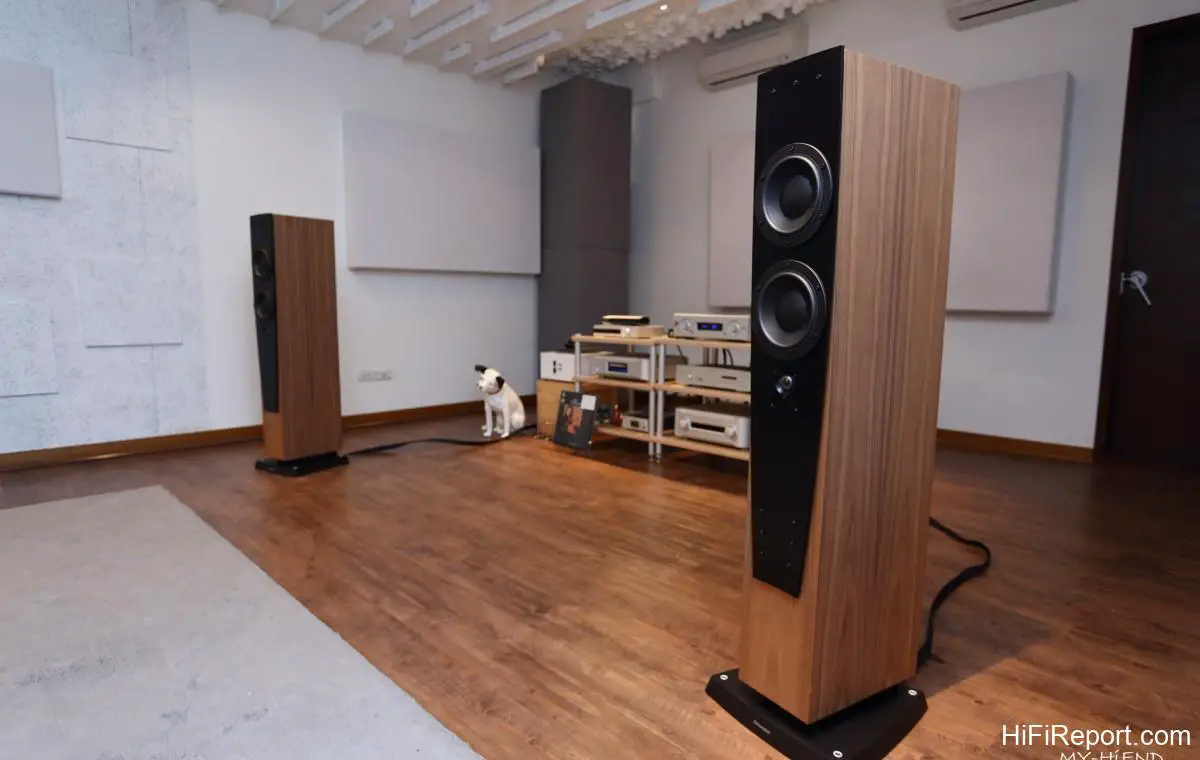
The Contour S 3.4 LE is ideally sized for the HiFiReport listening room. While physically smaller than some loudspeakers previously auditioned, its energy output remains substantial. Paired with the Ayre AX-5 Twenty, the system presents a neutral and pristine sound, with excellent resolution and sonic texture. The Contour S 3.4 LE incorporates technologies and material choices derived from Dynaudio’s higher-tier models, making it particularly appealing to discerning audiophiles.
It is well-suited for those who have spent time in High-End audio and are seeking clean, precise sonic reproduction.
Dynaudio Contour S 3.4 LE Floorstanding Speaker Specifications
* Sensitivity: 88dB (2.83 V/1 m)
* IEC Long Term Power Handling: 270 W
* Impedance, Nominal: 4 Ohms
* Frequency Response: 35 Hz-25 kHz (± 3 dB)
* Bass Principle: Bass Reflex Rear Ported
* Crossover: 2 way
* Crossover Frequency: 2000Hz
* Crossover Slope: 6 dB/Octave
* Tweeters: 28 mm soft dome
* Mid/Woofers: 2 x 17 cm MSP
* Weight: 33.3 kg / 73 lbs
* Dimensions (W x H x D): 357 x 1226 x 366 mm
Ayre AX-5 Twenty Integrated Amplifier Specifications
* Power Output: 125 watts per channel continuous into 8 ohms, 250 watts per channel continuous into 4 ohms
* Maximum Input Level: 8 V rms – unbalanced inputs, 16 V rms – balanced inputs
* Input Impedance: 1 MΩ – unbalanced inputs, 2 MΩ – balanced inputs (1 MΩ per phase)
* XLR Input Polarity: Pin 1 = Ground, Pin 2 = Non-inverting (Positive), Pin 3 = Inverting (Negative)
* Gain: 32 dB (maximum, at volume level of “46”)
* Frequency Response: DC – 250 kHz
* Power Consumption: 48 watts in low-current consumption mode, 230 watts in operating mode, no signal
* Dimensions: 17-¼” W x 18-¾” D x 4-¾” H, 44 cm x 48 cm x 12 cm
* Weight: 46 pounds, 21 kg