
EAhibrid Review
Unlike traditional audio sources, the internet is an open environment, and streaming services share servers among countless users. The resulting interference is significant and is ultimately transmitted through cables into the audio equipment, creating high-frequency noise that diminishes the music’s sense of presence and vitality.
EAhibrid’s Research and Development
To tackle network streaming noise, EAhibrid experimented with various solutions available on the market, including audiophile-grade switches and routers. However, none managed to render streaming music with the pure “analog” texture akin to vinyl records. This spurred EAhibrid to embark on their own research and development. They focused on two key approaches: “isolation” and “filtration” of network signals.
They designed different circuit structures specifically for both RJ45 and USB cable types, refining them through countless iterations. By pairing these designs with their custom cables, they finally developed the “Integrated Cyber Filter.”
Product Design and Aesthetics
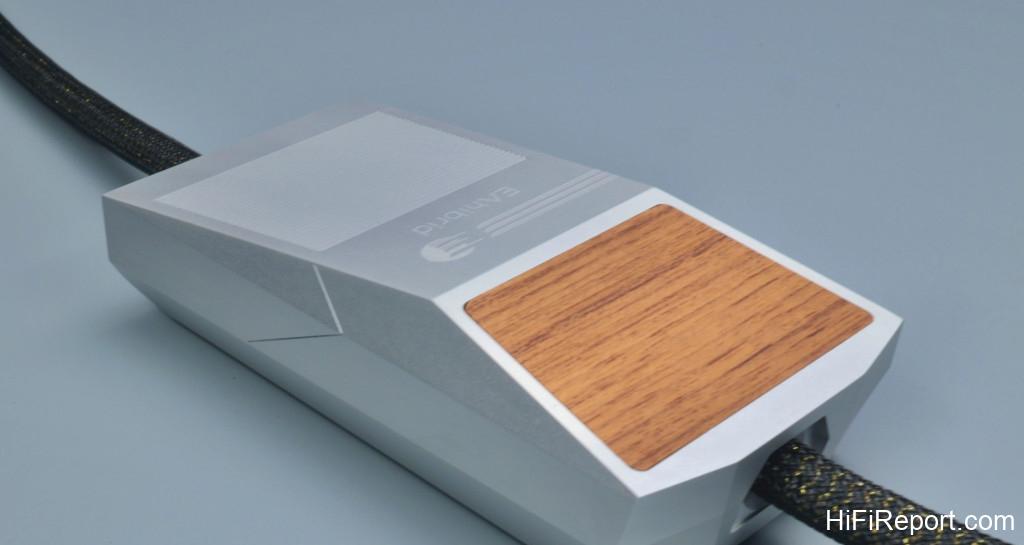
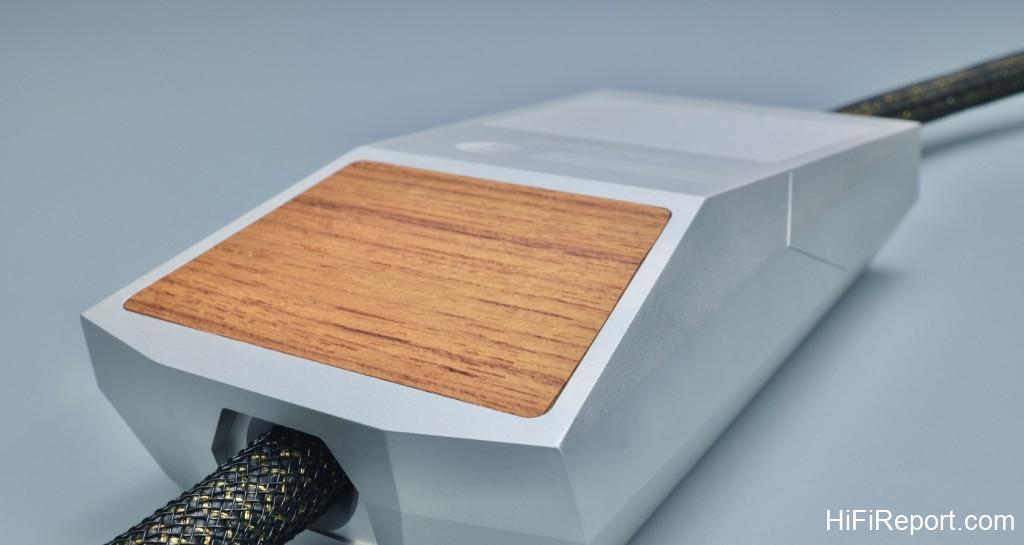
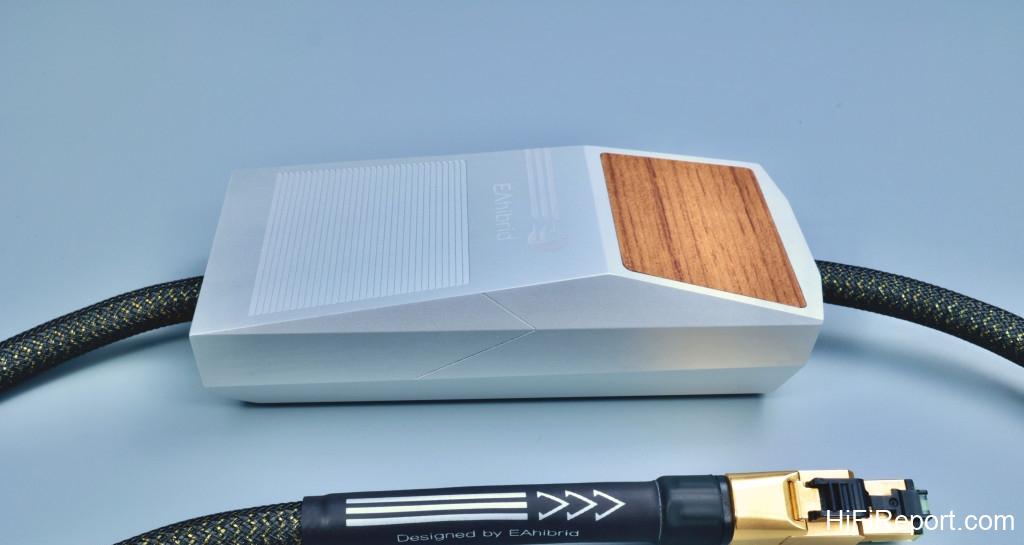
This review focuses on the RJ45 version of the Integrated Cyber Filter. Its main body is an aluminum alloy box, with custom audiophile-grade network cable sections attached to both ends. Visually, the aluminum chassis boasts exceptional quality, crafted using a 5-axis CNC machine and finished with anodizing, which helps block external electromagnetic interference.
Beyond the refined metalwork, it carries on EAhibrid’s tradition by incorporating a solid wood panel insert, adding a warm aesthetic touch. Car enthusiasts might find the product’s appearance familiar; the manufacturer states that the “Cyber” in Integrated Cyber Filter is inspired by Tesla’s Cybertruck electric vehicle, and the product’s shape indeed bears a strong resemblance.
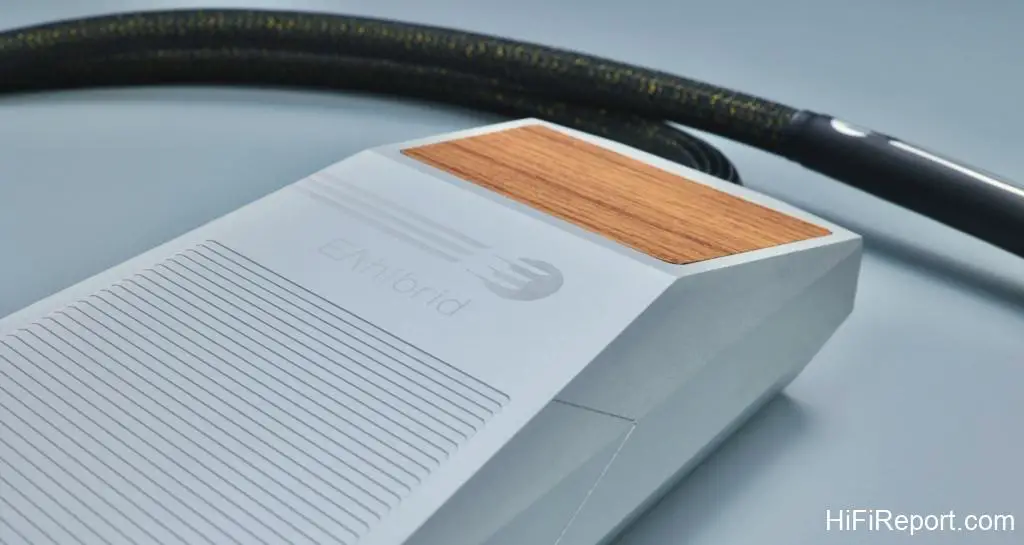
EAhibrid also emphasizes the device’s directionality: the transmission flows from the metal end towards the wood panel, symbolizing the transformation of a cold digital signal into something warmer and more analog after passing through the isolation and filtration stages.
Inside the Integrated Cyber Filter
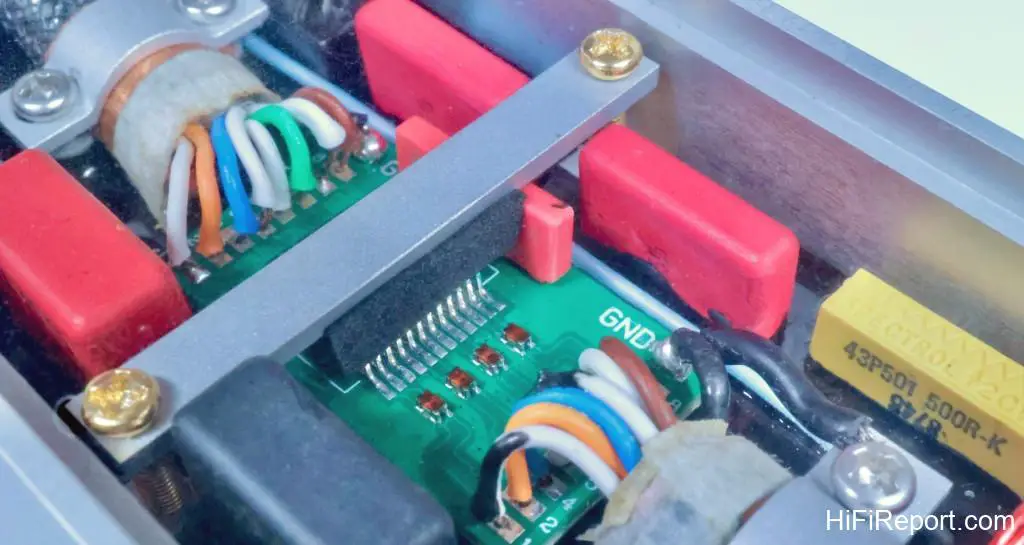
Although EAhibrid seals the internal circuits with glue before shipment to prevent unauthorized copying, the manufacturer provided a structural diagram, offering us a rare glimpse into its impressive circuit design. The core of the design is based on AWR (Advanced Waveform Restoration) technology, typically found in industrial servers to reduce digital distortion. The network cable’s 8 conductors are first separated and fed into four sets of miniature isolation transformers.
These transformers are small and precise, historically used in MC phono preamplifiers, featuring coils hand-wound with single-crystal copper wire. Leveraging the filtering properties of the transformers, they effectively filter out high-frequency noise from the digital signal.
Following this, the signal passes through 4 sets of common mode filters, complemented by multiple audiophile-grade filter inductors and capacitors for further filtration and sound tuning. Finally, the signal is output through the RJ45’s 8 channels, achieving a complete “isolation” of noise throughout the process.
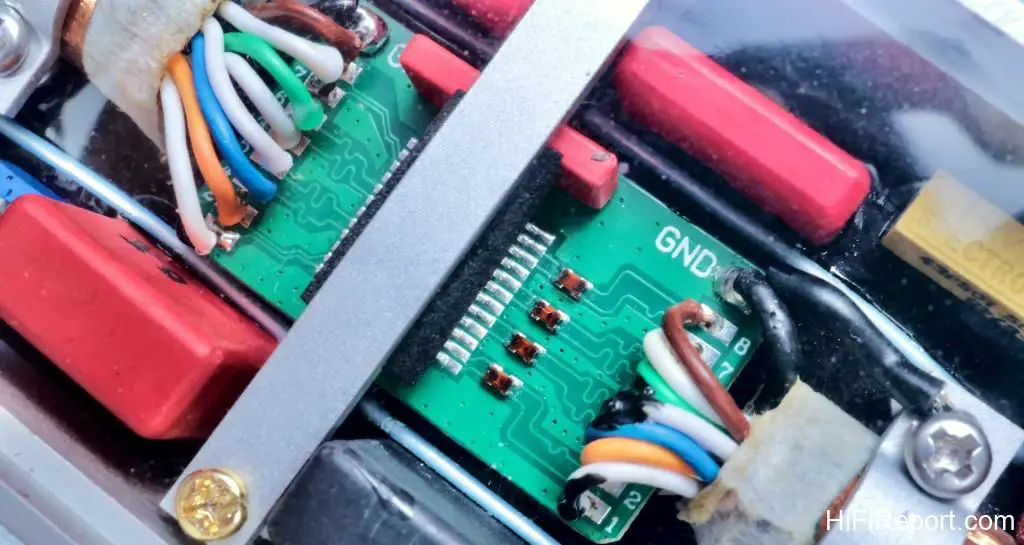
Component selection involved extensive listening and refinement, ultimately aiming for the sonic characteristics of analog tape and vinyl records, according to the manufacturer’s vision.
Custom Cable Design
Furthermore, according to EAhibrid’s head, Mr. Wen-Peng Huang, when they initially designed the Integrated Cyber Filter, it was simply a filtering box without integrated cables. However, after testing numerous network cables on the market, they felt most cables didn’t achieve the desired sonic perfection, leading them to develop their own custom cables. While this statement might be slightly exaggerated, I believe the key lies in cable synergy.
Since every electronic component within this isolation filter was meticulously selected, it’s logical that the “last mile” cable connection couldn’t be arbitrary.
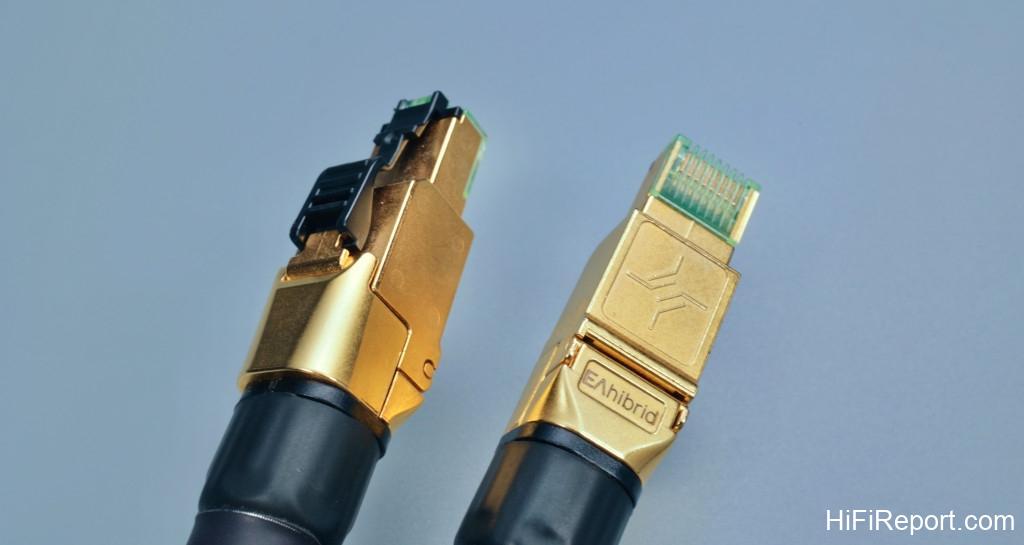
Consequently, EAhibrid precisely configured custom network cables based on their sonic properties, utilizing two conductor types: single-crystal copper and silver-plated single-crystal copper. The former boasts a wire gauge of 22.5 AWG per strand, while the latter is 22 AWG. Internally, multiple layers of aluminum foil shielding and vibration damping structures are employed to isolate external noise interference. For connectors, they selected top-tier German Telegärtner MFP8 RJ45 terminals.
For the higher-end silver-plated single-crystal copper version, EAhibrid even enlisted a professional company to apply thick gold plating to the terminals. Even the connection between the cable and the circuit board uses audiophile-grade silver solder. This attention to detail likely contributes to the isolation filter’s enhanced performance, allowing the network cables to achieve Cat7 transmission speeds.
Listening Impressions: Copper Version
For my evaluation, I used my personal reference system. I connected the EAhibrid Integrated Cyber Filter between my SOtM sNH-10G network switch and my Aurender N150 streaming player, comparing its sound quality against my reference network cable. My reference cable is no slouch – a flagship pure silver cable from a major cable manufacturer, priced comparably to the higher-end EAhibrid filter. Yet, to my surprise, the EAhibrid mercilessly outperformed it!
Starting with the single-crystal copper version, streaming from Qobuz, the first thing I noticed was a significant improvement in the signal-to-noise ratio. The musical background became truly black. Playing Yuja Wang’s “The Vienna Recital,” the piano solidified in the air, its texture built from countless harmonics, sounding focused and full-bodied. This completely erased the hollow, stiff impression often associated with streaming music.
Against this silent backdrop, Wang’s exquisite technique became exceptionally vivid, revealing everything from the lightest touch on the keys to the most intense passages. During heavy strikes on the bass keys, the piano’s body resonance created a vast sense of envelopment around me, with a texture that was clear and natural, completely free from blurriness or sluggishness.
The decay of the resonance slowly dissipated in the air, making it feel as though Yuja Wang’s performance was happening right before me, offering a truly immersive sense of musical presence.
When listening to Canadian singer Dominique Fils-Aimé’s “Bird” from her album “Nameless,” the bass energy, which often felt loose and unruly, now seemed tightly controlled. I not only heard more impactful dynamics but also much clearer pulsations from the string vibrations. The vocals sounded huge and full, the previous fuzzy edges gone, the outline etched sharply into the air, incredibly distinct.
The vocals in this track are quite forward, sometimes sounding overly direct and oppressive on my system. But with the EAhibrid, I heard a gentle intimacy. The lip and teeth details were rich and fluid, free from any aggression, making the musical image feel much more lively and natural.
Listening Impressions: Silver-Plated Version
Next, I switched to the silver-plated single-crystal copper version. With this version, the soundstage expanded slightly in both width and depth. The musical background was even blacker, giving subtle details that were easily overlooked in the music more presence. Reinterpreting Yuja Wang’s “The Vienna Recital” album, the silver-plated version seemed to place the performance slightly further back, as if moving from the front row of the audience to the center section.
The piano notes sounded less direct, with more airy decays, and the weight of the keystrokes felt a little lighter. The high notes shimmered with rich luster and sweetness, and the reverberation lingering in the air felt effortless and graceful, exuding pure refinement!
In Dominique Fils-Aimé’s “Nameless” album, I noticed that the silver-plated version had a faster pace than the copper version. The bass texture in the opening felt cleaner and more agile, and the bass quantity was slightly leaner. Overall, both versions significantly improved the music’s signal-to-noise ratio, enhancing resolution. However, they had distinctly different voicing styles: the copper version was smooth and relaxed, while the silver-plated version was refined and transparent.
The choice between them would depend on the user’s system and preferences.
Overall Conclusion
Even after testing at home, I wasn’t fully satisfied. I took both EAhibrid Integrated Cyber Filters to my company’s system and listened repeatedly. Finally, I concluded that, as of now, they are the most worthwhile streaming audio accessory to acquire, bar none! This is because the EAhibrid devices consistently deliver an all-encompassing improvement to streaming sound quality, never failing to impress. The sense of upgrade they provide surpasses that of most network cables and switches.
If you believe your current streaming audio system has reached a certain level of quality, I highly recommend trying the EAhibrid Integrated Cyber Filter. You might be surprised to discover just how much room for improvement there still is in your sound quality!
Specifications
* Product Type: Integrated Isolation Filter (Network Cable Version)
* Network Transmission Standard: CAT7
* Conductor Material: 6N OCC single-crystal copper (Ethernet EAL 1000), 6N OCC silver-plated single-crystal copper (Ethernet EAL 2000)
* Connector: Telegärtner MFP8 RJ45