
Edifier Stax Spirit S5 Wireless Planar Magnetic Headphones Review
Is this Edifier? Or is it Stax? What exactly is Stax Spirit? The answer is simple: it’s Edifier, not Stax. However, the name “Stax” wasn’t simply attached without reason.
Edifier began by manufacturing computer speakers. Later, they brought in Phil Jones, the former designer for Acoustic Energy, significantly advancing their speaker research and development capabilities and leading to the creation of their high-end brand, Airpulse. Concurrently, they also started launching headphones, including both in-ear and over-ear models.
In 2011, Edifier fully acquired the renowned Japanese electrostatic headphone manufacturer, Stax. Then, in 2016, they invested in the American planar magnetic headphone brand, Audeze. These strategic moves brought about significant technical breakthroughs for Edifier in headphone design and manufacturing.
In 2022, they unveiled their first product combining the fruits of these two major investments: the Stax Spirit S3, a planar magnetic Bluetooth headphone. Its overall design drew inspiration from Audeze while refining the details further. Paired with the Edifier Connect App, it even offered EQ settings to emulate the sound signature of Stax headphones. After two years of further development, they have now released a new planar magnetic Bluetooth headphone, the Stax Spirit S5, continuing to challenge the resolve of headphone enthusiasts.
Design Refinement, Chic Style
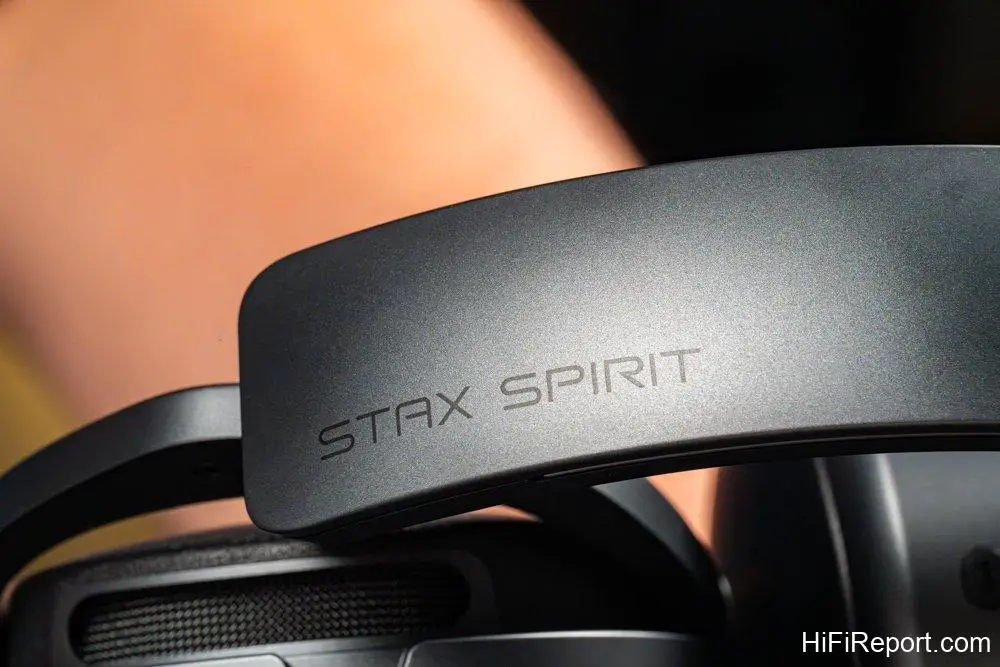
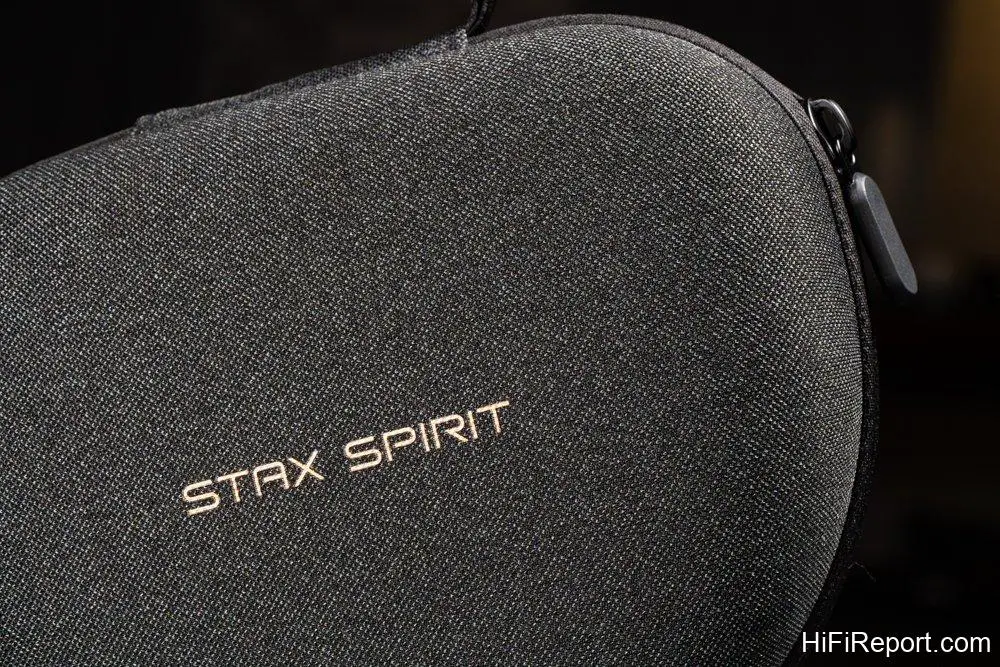
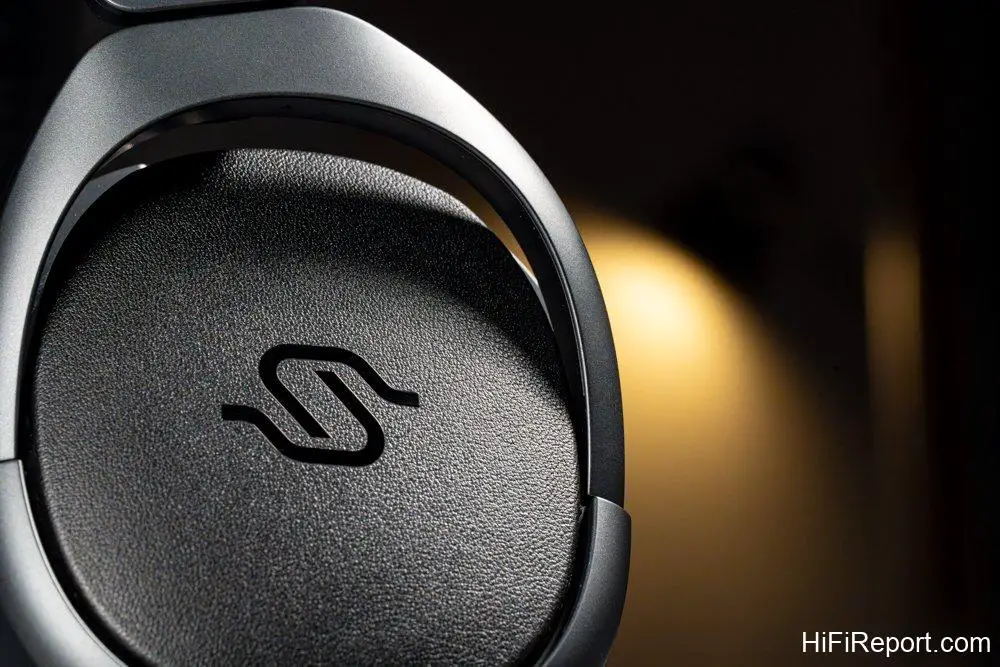
Compared to the Stax Spirit S3, I much prefer the aesthetics of the Stax Spirit S5. The latter is distinctly more refined in every aspect than the former. The Stax Spirit S3’s gold logo and carbon fiber weave outer shells gave the headphones a lively, dynamic vibe. In contrast, the Stax Spirit S5 features a logo in a subtle dark gray tone, and the earcup exteriors are finished with cowhide. The lines of the earcups themselves are also softer and more rounded.
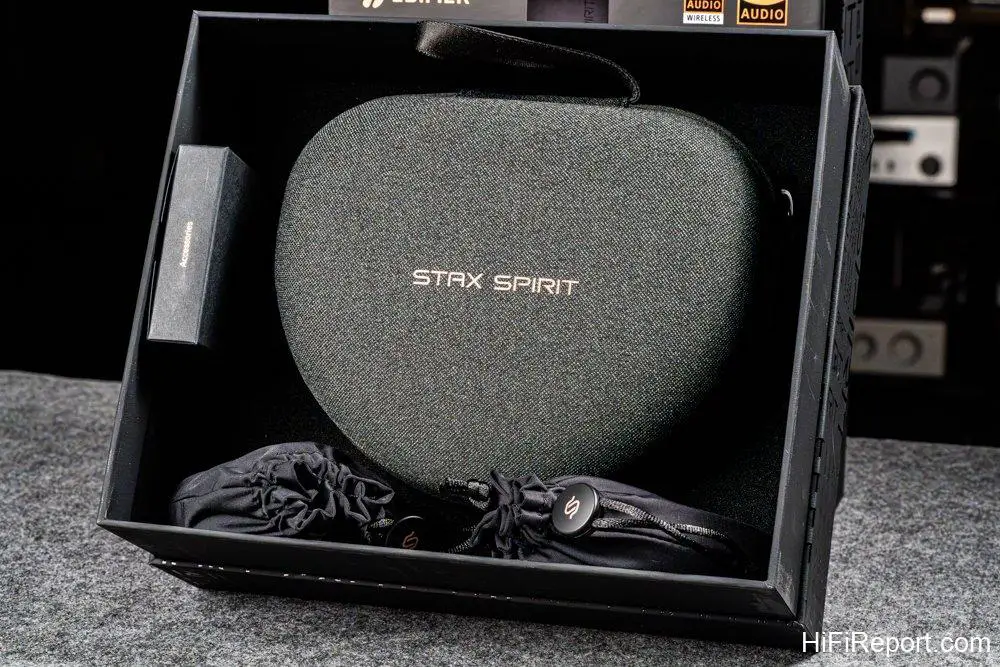
The overall style feels more restrained yet more premium, more refined and more urban chic. The detailed changes on the Stax Spirit S5 suggest that Edifier is moving towards maturity in its design language.
The overall fit of the Edifier Stax Spirit S5 is excellent. The clamping force of the headband is just right, avoiding any feeling of being squeezed. The underside of the headband is fitted with a cushioning pad covered in soft, fine leather, contributing significantly to comfort whether providing pressure relief or making contact with the top of the head.
Genuine Lambskin Earpads, Plus Cool-Touch Set
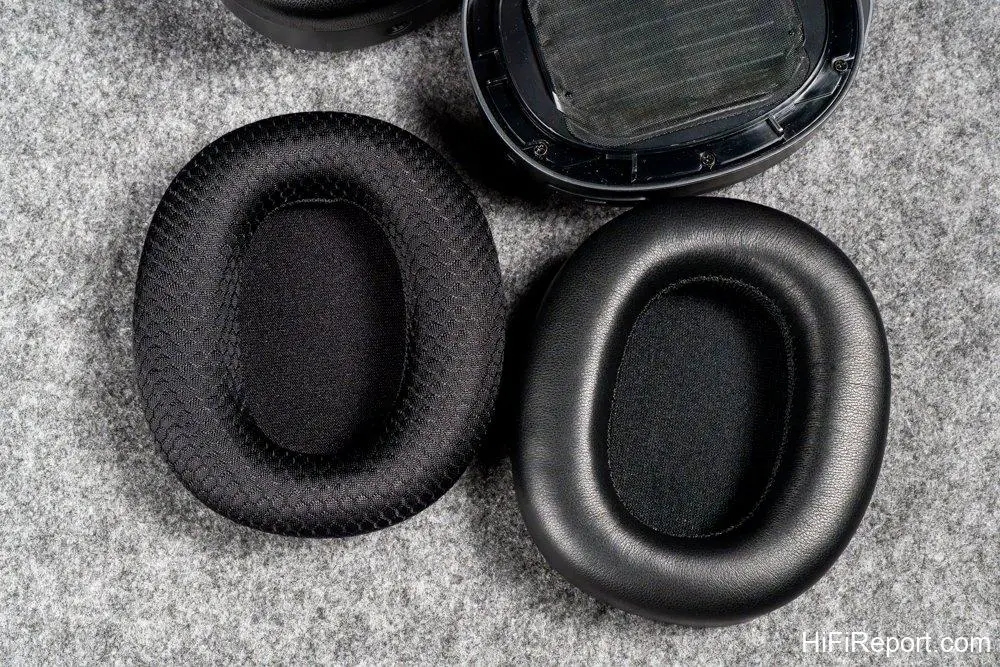
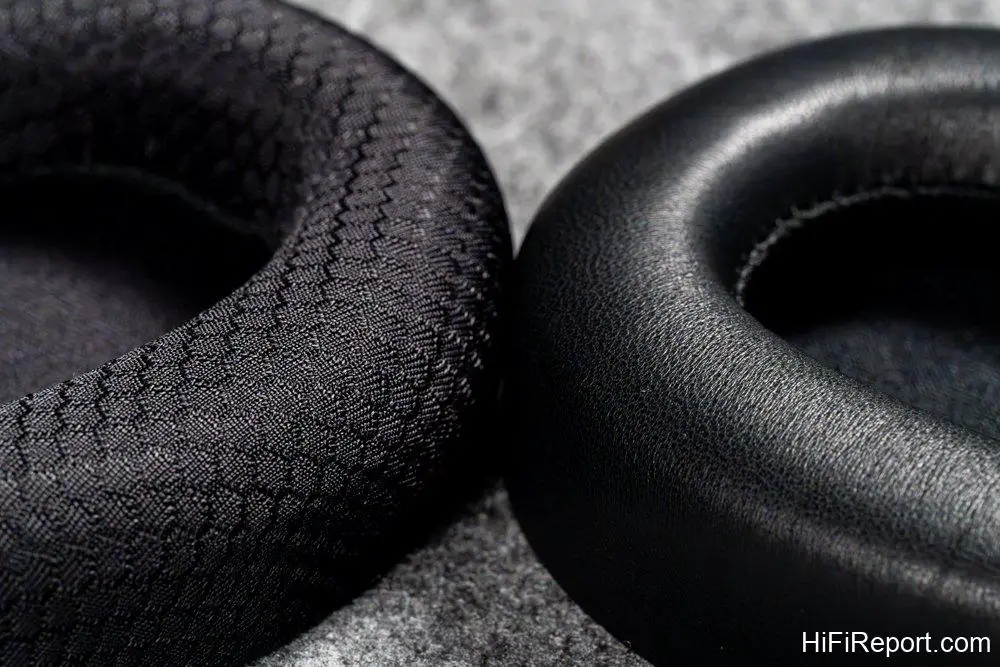
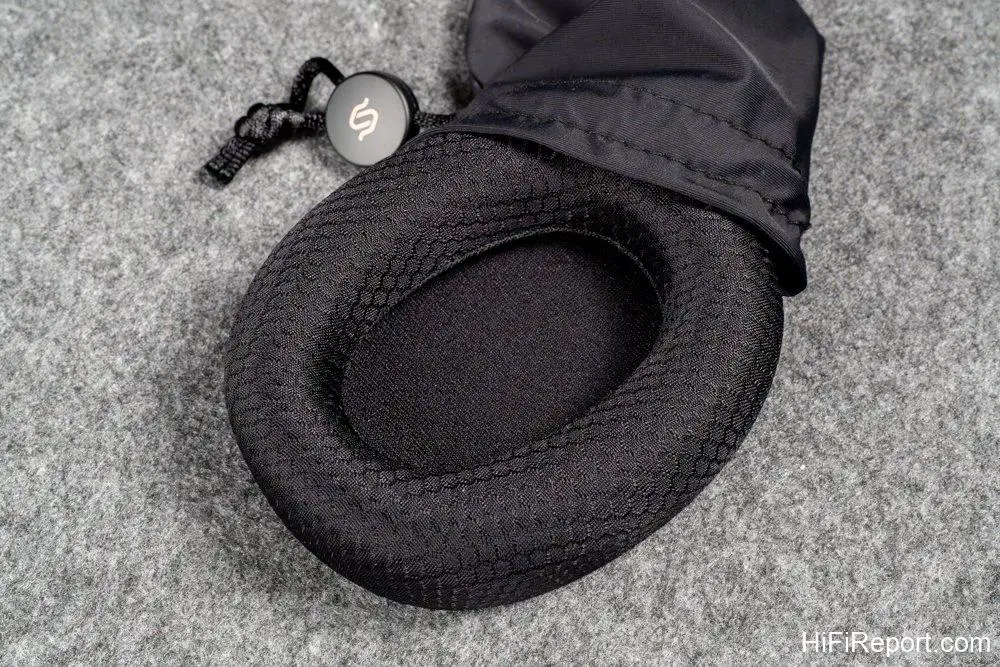
Edifier continues the practice from the Stax Spirit S3 by including two sets of ear pads: one made of genuine lambskin and one covered with a cool, breathable mesh fabric. The texture of both sets of pads is superb.
The genuine leather earpads have a subtle leather scent, and their warm sheen and natural texture lend a sense of luxury to the product. The cool, breathable fabric pads are indeed comfortable to wear, feeling more refreshing than the leather ones. The biggest drawback of over-ear headphones is the feeling of heat buildup, and these cool-touch earpads solve a major problem for users.

Many other headphones in this price range don’t even come with genuine leather earpads, and it’s even rarer to find one that provides two different sets for replacement, let alone considering the need for coolness during wear. Edifier’s attention to detail here is truly commendable.

Folding Design, Sturdy Joints
Structurally, Edifier has clearly put considerable effort into the Stax Spirit high-end series. To make the Bluetooth headphones easily portable, both the Stax Spirit S3 and S5 are designed to be foldable. A pair of headphones has two joints at the point where the headband connects to the earcups. These two joints need to rotate in different directions, in addition to the headband needing to be adjustable in length.
These joints must be both flexible and stable to prevent unwanted noise. The structural design quality of the Stax Spirit S5 is excellent in this regard.
Ultra-Low Distortion Planar Magnetic Driver with EqualMass Technology
The biggest difference between the Edifier Stax Spirit S5 and most other headphones lies in its use of planar magnetic drivers instead of dynamic drivers. Having started as a speaker company, Edifier is quite familiar with drivers. They don’t just use dynamic drivers in their speakers; they also employ ribbon tweeters. However, planar magnetic drivers haven’t yet appeared in their speakers, but they have in their headphones.
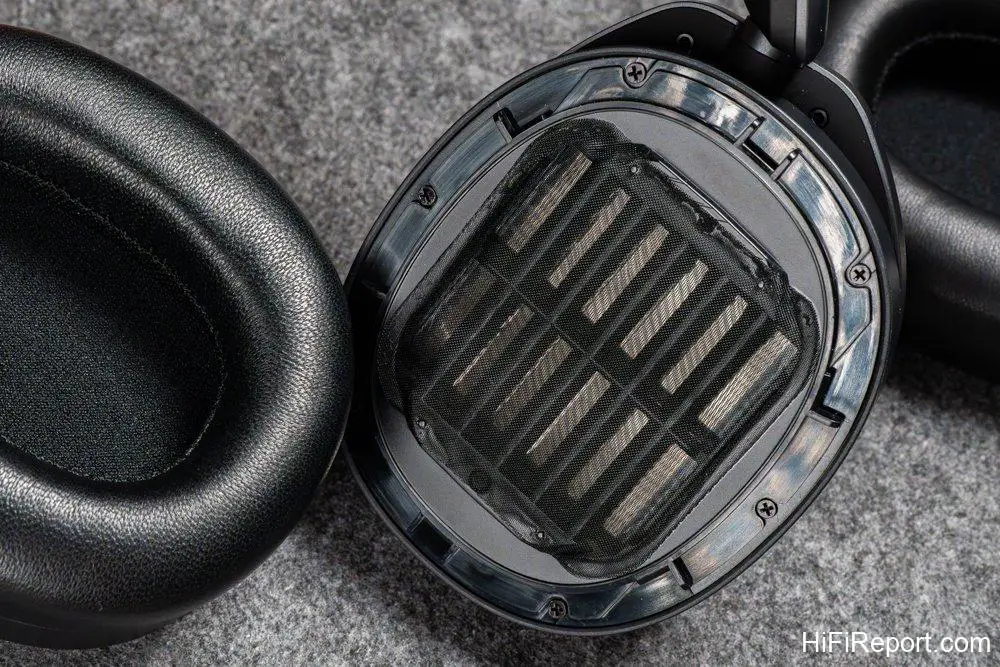
Following the Edifier Stax Spirit S3, the Stax Spirit S5 again utilizes planar magnetic drivers. Planar diaphragms are significantly lighter than dynamic drivers and have a larger radiating surface area, resulting in faster transient response compared to traditional dynamic drivers, offering a significant advantage. Metal wires, equivalent to a voice coil, are printed onto the surface of the diaphragm to sense magnetic force. Magnets positioned behind the diaphragm do not directly touch it but drive it via magnetic force to produce sound.
Edifier emphasizes that their magnetic conductor uses patented EqualMass technology, where strands of different quantities but uniform width are distributed in parallel. This not only ensures even weight distribution across the diaphragm but also provides a more uniform driving force distribution, resulting in lower distortion.
Dual Device Pairing, Low Latency
In terms of Bluetooth specifications, the Stax Spirit S5 is equipped with the Qualcomm QCC5181 Bluetooth chip, using Bluetooth version 5.4. It supports Snapdragon Sound, aptX, aptX HD, aptX Adaptive, aptX Lossless, LHDC, and LDAC audio decoding, supporting high-resolution audio up to 24-bit/96kHz. Of course, to benefit from codecs beyond AAC and SBC, you need a device that also supports these codecs for the best results. (If you are an Apple user, these features won’t be utilized.)

Additionally, it offers an 89ms low-latency mode. While not critical for listening to music, this is important for gaming and watching videos, where audio-visual synchronization enhances the experience. Bluetooth 5.4 also provides stable transmission and allows simultaneous connection to two Bluetooth devices, enabling the Stax Spirit S5 to be paired with both a phone and a laptop, allowing seamless switching between work, entertainment, and calls.

If you frequently need to make phone calls or participate in online meetings, the Stax Spirit S5 utilizes Qualcomm aptX Voice wideband voice codec, providing 32kHz voice call quality within Bluetooth range. It also features built-in dual microphones that pick up voice while simultaneously capturing ambient noise. Through noise cancellation, background noise is precisely filtered out, ensuring clear call quality.
Exceptional 80-Hour Battery Life
The Edifier Stax Spirit S5 is equipped with a built-in 1,500mAh rechargeable battery, offering an impressive 80 hours of continuous playback on a full charge, practically unrivaled in the market. Typical over-ear Bluetooth headphones have battery lives of around 20-30 hours, and 40 hours is often advertised as a major feature. With 80 hours of battery life, the Stax Spirit S5’s endurance is certainly noteworthy.
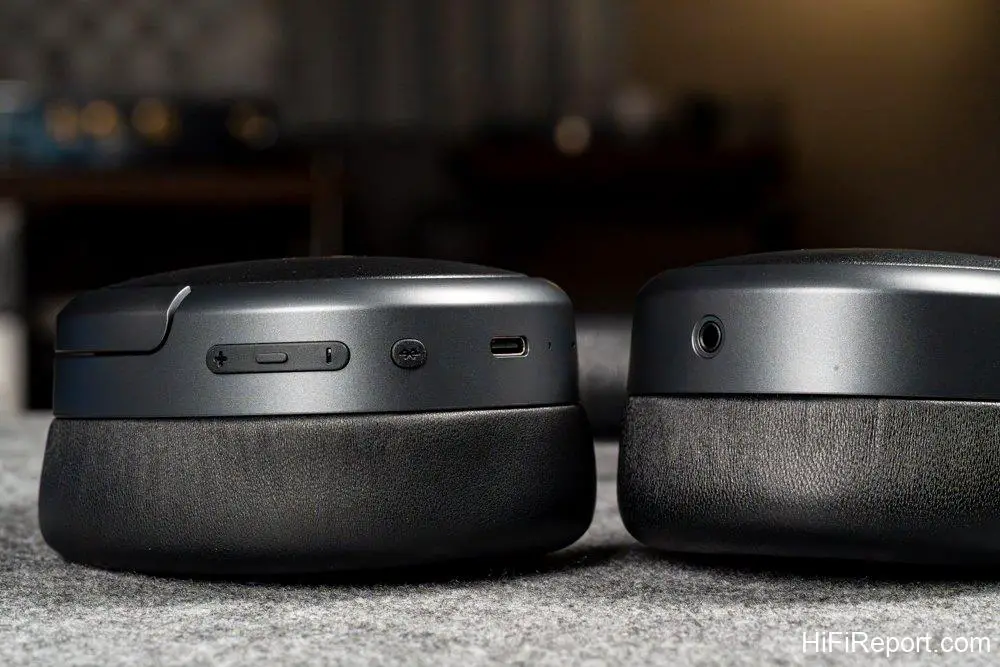
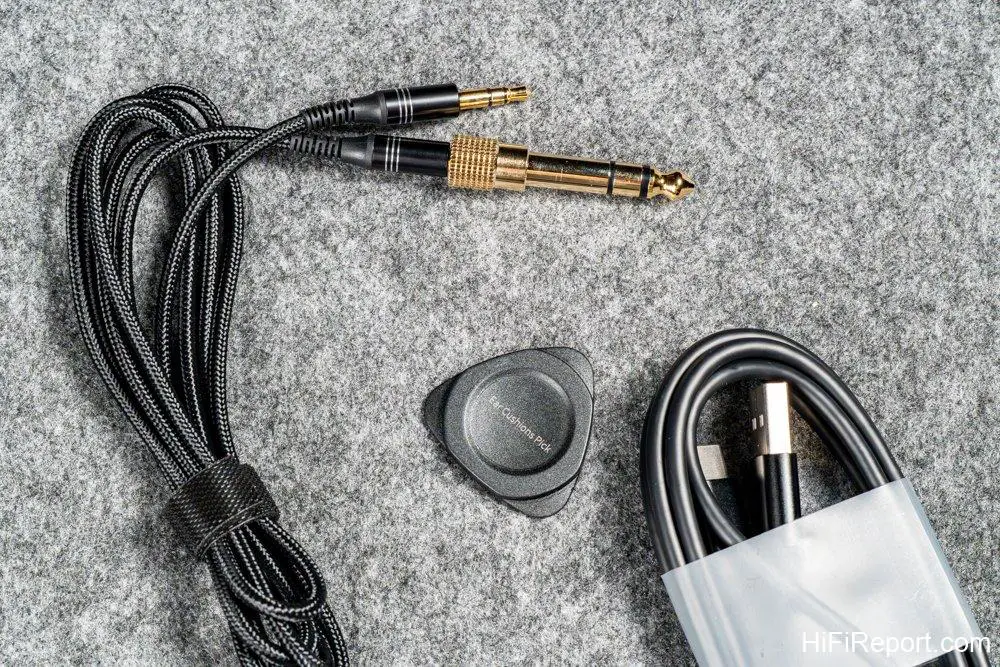
What if you forget to charge the headphones due to their exceptionally long battery life and they run out of power? Edifier has included a 3.5mm analog headphone jack. If charging is inconvenient, you can still listen to music using a standard audio cable.

Edifier ConneX App for EQ
The Edifier Stax Spirit S5 is compatible with the new Edifier App. By downloading Edifier ConneX on your phone, you can set various functions, including EQ modes. The new Edifier ConneX interface is different from the previous Edifier Connect app; the Stax Spirit S5 is only compatible with the new Edifier ConneX.

Within the App, the main page allows settings for “Earcup Setup,” “Sound Effects” (EQ), and “Game Mode.” If you switch to the “Ice Feeling Earpads,” the manufacturer provides some EQ compensation tailored to the material characteristics of those pads. Game Mode is simply an option to enable or disable low latency. If you are listening to music, you don’t need low latency and can turn this feature off, which might slightly improve sound quality.
Regarding EQ sound effects, there are three preset options: “Classic,” “Dynamic,” and “Monitor.” The “Classic” mode is the factory default, emphasizing balanced frequencies across the board, catering to most people’s preferences, and suitable for the widest range of music genres. This was my preferred mode during my testing of the Stax Spirit S5.
“Dynamic” mode slightly enhances the low and high frequencies, making the bass fuller and the details more prominent. Some manufacturers refer to this tuning as a “V-shape” based on the EQ curve shape, which can be more appealing for listening to pop and rock music.
“Monitor” mode has a relatively neutral sound, slightly reducing the bass quantity to highlight the mid and high frequencies. I also really liked this mode, especially when wearing the Stax Spirit S5 to prepare music for a new speech. The clean sound foundation of the Monitor mode allowed me to clearly grasp the structure of the music.
Finally, there is a customizable “Audiophile” mode where users can adjust the gain for four frequency bands and also adjust the Q-factor, allowing users to dial in their own preferred sound signature. Furthermore, this “Audiophile” mode can save presets, allowing users to recall different settings at any time.
This brings up my question. When Edifier released their first planar magnetic over-ear headphone, the Stax Spirit S3, it carried the Stax name but didn’t use electrostatic drivers, opting instead for planar magnetic technology derived from Audeze. However, the App’s EQ settings included a “Stax” preset, allowing users to experience a sound similar to Stax’s transparent quality. Curiously, the EQ presets available for the Stax Spirit S5 do not include this option. Will the manufacturer consider adding a “Stax” EQ preset in the future?
Clarity and Resolution, Warm Tone
Although the Edifier Stax Spirit S5 itself does not use Stax’s electrostatic technology and currently doesn’t support a “Stax mode” EQ, its transparency and resolution are still impressive. Its overall character is slightly soft, meaning that even with outstanding resolution, there isn’t excessive “sibilance” or harshness that could cause listening discomfort.
Taking Diana Krall’s “The Girl in the Other Room” as an example, I particularly enjoyed how it rendered the guitar melodies and arpeggios. While not the natural sound of an acoustic guitar, processed through a pickup and amplifier, it has a different kind of sweet, refined tone with a slight vibrato. As for Diana Krall’s vocals, her diction is clear and her voice sounds prominent and three-dimensional. Vocal details are numerous and clear, but the resilient and warm sound quality of Edifier’s planar magnetic driver makes it all sound completely non-aggressive, leaving only comfortable listening.
EQ Customization, Personalized Listening
Similarly, listening to Jose James singing “Ain’t No Sunshine,” his warm and clean baritone voice comes through clearly on the Stax Spirit S5, with distinct vocal lines and details. The tone gains an extra touch of warmth, offering a different kind of sexy charm compared to male singers with gravelly or hoarse voices. The bass notes here are full-bodied, making this track a good example to demonstrate the effect of the EQ modes.
Listening in “Classic” mode, the sound is closest to how I typically hear this track through headphones or speakers. Switching to “Monitor” mode, the slightly reduced bass makes the bass less prominent, bringing the vocals and the later percussion parts into clearer focus. In “Dynamic” mode, the bass is full and robust, with ample impact and a strong rhythmic drive, presenting yet another flavor. If I were to choose, I would prefer the “Monitor” mode for this track; the bass notes sound a bit tighter, making the entire song feel rhythmically faster.
Excelling with Vocals and Guitars
Whenever I encounter electrostatic headphones or planar magnetic headphones, I always find myself listening to more guitar music or songs with guitar accompaniment (perhaps I consciously do it, or perhaps it’s subconscious?). The Edifier Stax Spirit S5 handles vocals exceptionally well because it reveals plenty of detail while retaining a warm and smooth texture. It also has a unique ability when playing guitar music. Planar magnetic drivers are generally known for their light mass and fast response speed, lending them a touch more subtlety and clarity compared to dynamic drivers. This characteristic is perfectly suited for reproducing guitar music.
Apparent Closed-Back, Open Feel
Listening to the Antonio Forcione Quartet’s album “AFQ in Concert,” the way it renders Antonio Forcione’s guitar playing is truly exhilarating and impressive. The crisp, clean guitar notes carry a beautiful decay. The accompanying cello produces a somewhat nasal sound, singing gently like a human voice. The bass and drums provide the rhythm while also laying the foundation for the music’s dynamic energy.
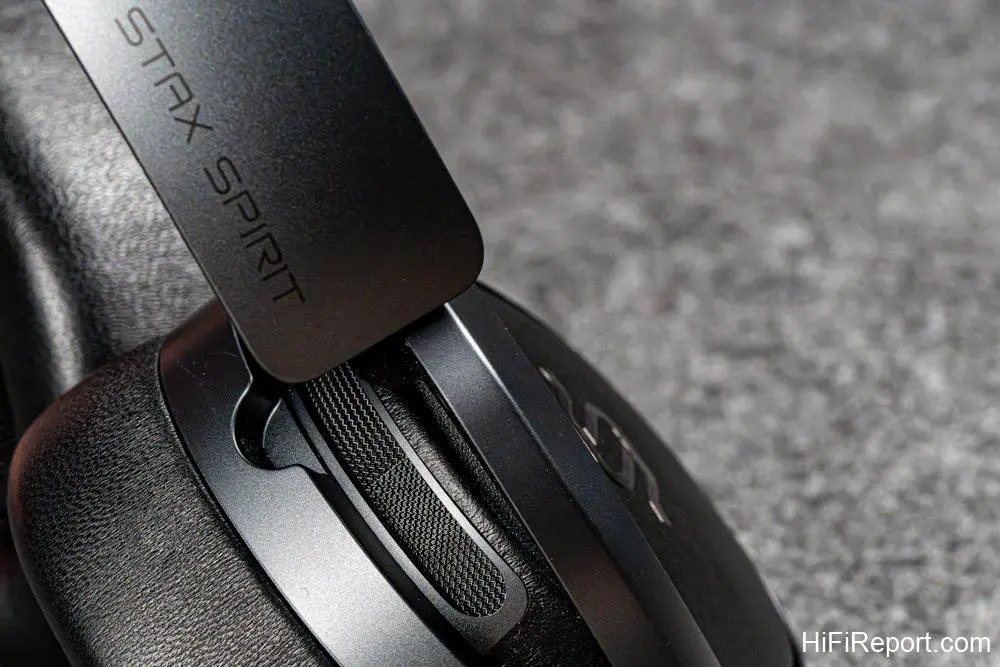
Here, I must also mention that Edifier has left an opening covered with a metal mesh on the top of the Stax Spirit S5’s earcups. Perhaps due to this design, these headphones, while appearing to be closed-back, possess an “open-back” soul. The sound feels effortless, without any sense of being cramped, crowded, or overly centralized. Furthermore, the soundstage is excellent, with instruments always having room to breathe and maintaining a clear sense of layering and order.
Clear Soundstage, Percussion Detail
Because the soundstage is spacious and the sound is relaxed, coupled with the delicate tonal quality and excellent transparency, these benefits are also apparent when playing large-scale orchestral music. Taking Joe Hisaishi conducting the New Japan Philharmonic World Dream Orchestra (W.D.O.)’s best-of collection “W.D.O. Best” as an example, the stage presented by the Stax Spirit S5 clearly delineates the layers of the orchestra. In the track “World Dream,” whether it’s the gentle main melody led by the strings, the soaring and colorful passages created by the addition of brass and woodwinds, or the impact provided by the drums and the sense of triumphant hope brought by the bells, all these features are evident.
The crispness and precision of the percussion are particularly noteworthy. Planar magnetic headphones have a unique flavor when it comes to reproducing percussion that dynamic drivers often lack. Whether in “World Dream,” “American in Paris,” or “Un homme et une femme,” you can feel that special character of planar magnetic drivers when rendering percussion.
More Than Just Another Headphone
After True Wireless Stereo (TWS) earphones gained significant traction, some thought over-ear headphones would fade away. Yet, in the past two years, they’ve made a comeback; walking on the street or riding the subway, you frequently see people wearing over-ear Bluetooth headphones. After all, over-ear headphones don’t create the feeling of a foreign object inserted into the ear canal, the sound is fuller and more spacious, and they can also be seen as a fashion statement worn on the head. While their bulk makes them less convenient for portability and storage than TWS earphones, they still possess undeniable advantages.
In the resurgent market for over-ear headphones, the Edifier Stax Spirit S5 is definitely not “just another pair of headphones.” It’s different from your other collections and other goals. It has everything others have – App settings, EQ adjustment, dual device pairing, HiRes audio certification. But what it has, others don’t necessarily have – an exceptional 80-hour battery life, replaceable cool-touch ear pads, low-latency game mode, genuine leather ear pads, and finish. And most importantly, it’s a rare planar magnetic headphone in its category. The Edifier Stax Spirit S5 is absolutely not “just another one”; it is what it is, a truly unique existence.
Specifications
* **Type:** Planar Magnetic Wireless Over-Ear Headphones
* **Bluetooth:** 5.4
* **Bluetooth Range:** 10 meters
* **Audio Codecs:** aptX, aptX HD, aptX Adaptive, aptX Lossless, LHDC, LDAC, SBC, AAC
* **Sound Pressure Level:** 94+/-3dB (A)
* **Frequency Response:** 10Hz~40kHz
* **Battery Life:** Approximately 80 hours