
STAX Electrostatic SR-L500, SR-L700, SRM-353X Review
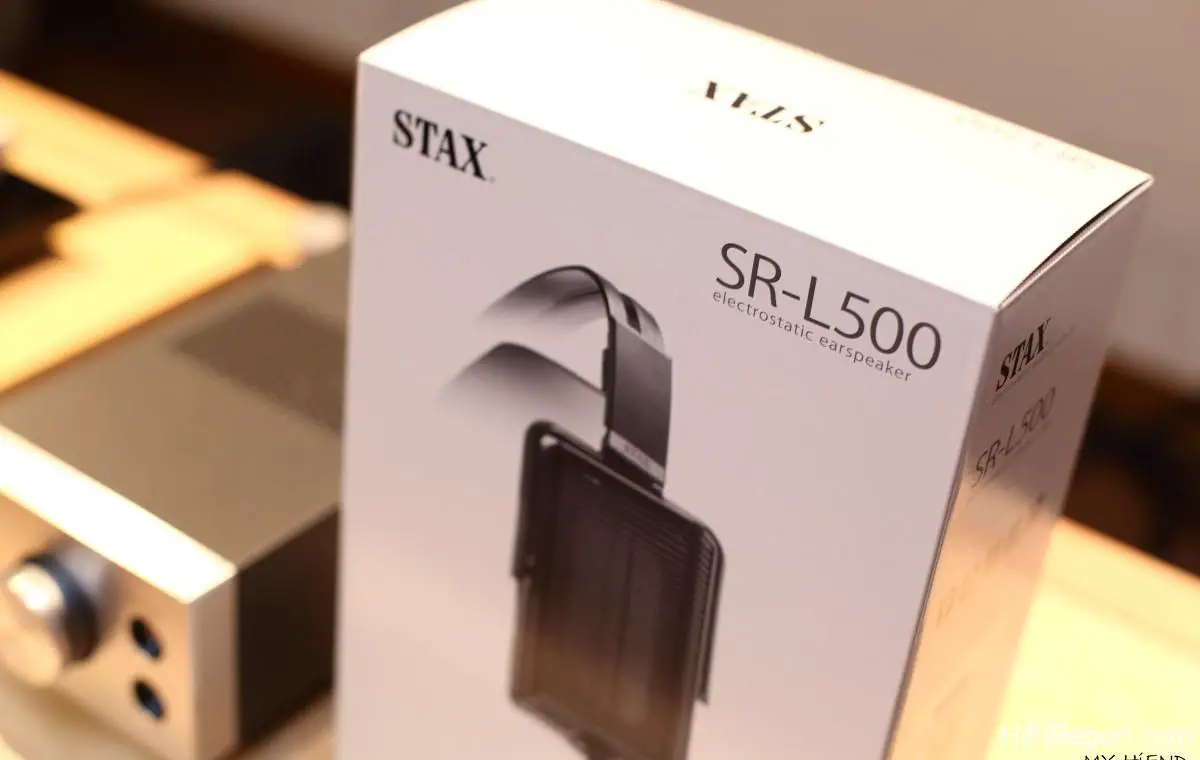
STAX, the venerable Japanese electrostatic headphone manufacturer with a rich history, has released new products, including the SRS-5100 electrostatic headphone system. This system comprises the SR-L500 electrostatic headphones and the SRM-353X dedicated electrostatic headphone amplifier, both of which are newly launched products. The US dollar price is set slightly lower than the previous SRS-4170 electrostatic headphone system.
The new headphone lineup includes not only the SR-L500 but also the higher-end SR-L700, positioned just below STAX’s top-tier SR-009 and SR-007MK2 models. Previously, headphone model numbers were simply “SR-” followed by numbers, but now, the addition of the letter “L” signifies the newly evolved SR-Lambda series.
Legacy of Electrostatic Headphones
Founded in 1952, STAX initially focused on designing microphones and phono cartridges. It wasn’t until 1960 that STAX produced the world’s first electrostatic headphone, the SR-1, marking the beginning of STAX’s journey in electrostatic headphones. Over time, many audio manufacturers ventured into designing and producing electrostatic headphones.
However, due to the higher costs associated with electrostatic technology, most companies withdrew, opting for the more cost-effective dynamic headphones. Currently, there are likely no more than three manufacturers of electrostatic headphones worldwide. STAX is not only the first company to produce electrostatic headphones but has also consistently dedicated itself to this technology. Therefore, for headphone enthusiasts, the mention of electrostatic headphones immediately brings STAX to mind.
In Taiwan, STAX is distributed by the reputable HiFiReport, an electronics distributor. Electrostatic headphone design is more sensitive to humidity than other types of headphones and requires careful maintenance. Having reliable after-sales support provides greater peace of mind for buyers.
New High-End Headphone Products
The newly launched STAX SRS-5100 electrostatic headphone system includes the SRM-353X dedicated electrostatic headphone amplifier. A dedicated amplifier is essential for enjoying electrostatic headphones because their operating principle differs from conventional dynamic headphones. Dynamic headphones utilize signal current passing through a coil and permanent magnets to generate sound.
The coil, influenced by magnetism, moves the diaphragm to push air and create sound, converting electrical energy into magnetic energy and then into mechanical energy. In contrast, electrostatic headphones directly convert electrical energy into mechanical energy, without using permanent magnets. Their design involves very high voltage with minimal current.
For instance, STAX electrostatic headphone amplifiers typically provide a 580V bias voltage, necessitating a voltage booster within the amplifier, a feature absent in general headphone amplifiers.
The SRM-353X uses meticulously paired and selected components and circuit boards. Repeated inspections ensure product quality and longevity, promising extended operational life. The SRM-353X is also the most affordable model in STAX’s lineup to feature XLR balanced inputs. The input stage employs low-noise dual FET transistors, adopting a direct-coupled DC Class-A amplifier configuration, eliminating any coupling capacitors.

The output stage utilizes a significantly upgraded emitter follower, reproducing a broad sound spectrum with extended dynamic range and exceptional sound quality in the high frequencies.
The SRS-5100 is a combination of the SR-L500 electrostatic headphones and the SRM-353X electrostatic amplifier. Manufacturer-recommended pairings are generally reliable, but STAX offers a comprehensive product line, allowing for customized combinations with other models.
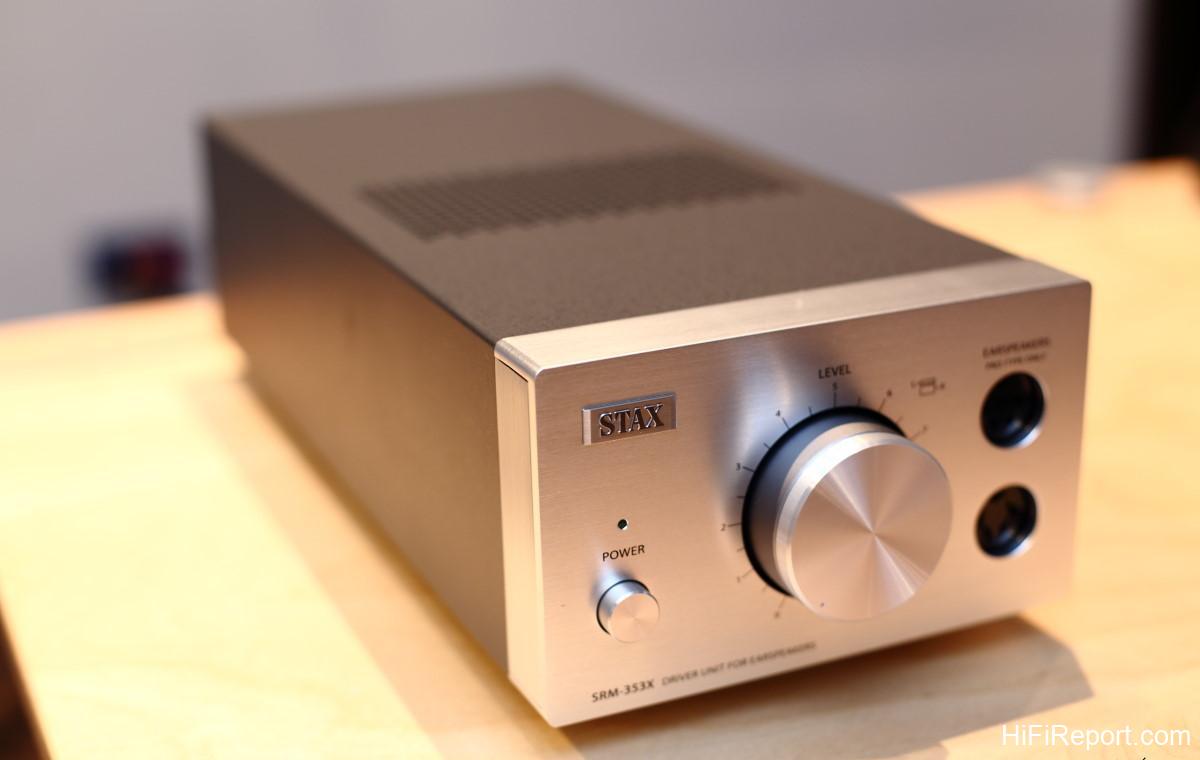
The SRM-353X electrostatic headphone amplifier features a non-magnetic aluminum alloy chassis front panel, with a simple layout including a power switch, volume control, and two headphone jacks on the right.
Unique Volume Control Design
Notably, the volume control is divided into inner and outer rings. This is due to the internal volume design employing a four-gang independent adjustment for the positive and negative poles of both left and right channels. This design enhances channel separation and minimizes interference, allowing for independent adjustment of the left and right channel volumes. Many users are unaware of this design, leading to confusion when encountering unequal volume levels between channels.
The issue often lies in this independent adjustment feature.
XLR Balanced Input for High-End Sources
The rear panel is typical of headphone amplifiers. The SRM-353X provides one set of XLR balanced inputs and one set of RCA single-ended inputs, with a toggle switch on the lower left to select the active input. Additionally, a PARALLEL OUT is included. When input signals are present, this output can be used to feed the audio signal to a pre-amplifier for connection to a two-channel system.
This eliminates the need to constantly switch signal cables when audiophiles share a source for both headphone and two-channel systems.
It’s important to note that STAX, for safety reasons, advises users “not” to connect both input types simultaneously. When using XLR input, please “physically disconnect” the RCA input cables, and vice versa.

Electrostatic Design for Superior Sound
The design principle of electrostatic headphones is similar to that of electrostatic loudspeakers. Those familiar with electrostatic speakers will appreciate their distinctive thinness and transparency, resulting from their extremely thin diaphragms, some even translucent. Electrostatic headphones share this characteristic. Headphone diaphragms are measured in micrometers (μm, where 1μm = 0.001 mm), and a diaphragm thickness of 1μm is common in STAX headphones.
Despite their thinness, electrostatic headphone diaphragms have a large surface area, contributing to the typically larger size and slightly heavier weight of electrostatic headphones. However, the diaphragm itself is very light. On both sides of the conductive diaphragm are equally sized perforated electrode plates. The diaphragm is suspended in the center, forming a sandwich structure.
Electrostatic force, generated by applying voltage to the electrode plates, interacts with the conductive diaphragm, causing it to move and push air to produce sound.
The diaphragm’s thinness, large area, and uniform size with the electrode plates ensure that the electrostatic force acts evenly across the diaphragm. This contrasts with dynamic headphones, where the mechanical force originates from the center of the diaphragm and propagates outwards. Consequently, electrostatic headphone diaphragms are less prone to breakup modes, resulting in significantly lower distortion compared to dynamic headphones.
Furthermore, the short excursion and high vibration speed of electrostatic diaphragms contribute to excellent transient response, although the perceived sound impact might be less forceful than dynamic headphones. The large diaphragm area enables electrostatic headphones to deliver exceptional extension and clarity in the mid and high frequencies, a hallmark of their sonic signature.
Below is a schematic of electrostatic headphone operation, with the left and right sides representing the respective channels. Taking the left channel as an example, the diaphragm is in the center, and the electrode plates on both sides are charged with positive and negative polarities. These alternating charges drive the diaphragm movement in a push-pull manner in response to music signals.
SR-L500: Mid-to-High-End Positioning
The SR-L500 features a meticulously selected thin-film diaphragm and rigid, rust-free fixed electrodes, resulting in a harmonious presentation of delicate highs and smooth mids. While the bass impact may not match that of dynamic headphones, it does not compromise deep bass response. The SR-L500’s headband offers ten adjustment settings, ensuring comfortable long listening sessions when properly fitted. It comes with a newly developed low-capacitance HiFC wide-gauge cable.
This high-performance HiFC material is used as the core conductor, and the entire cable adopts a traditional wide parallel structure to reduce capacitance between strands. The SR-L500 utilizes high-quality artificial leather earpads. The SR-L500’s frequency response is 7Hz-41,000Hz, demonstrating remarkable high-frequency extension capabilities. Including the stock cable, it weighs approximately 600 grams.
* Type: Push-pull electrostatic, oval sound element
* Enclosure: Open-air type
* Frequency Response: 7 – 41,000Hz
* Electrostatic Capacitance: 110pF (including cable)
* Impedance: 145kΩ (including cable, at 10kHz)
* Sound Pressure Sensitivity: 101dB / 100Vr.m.s / 1kHz
* Maximum Input Level:
* Bias Voltage: DC580V
* Earpad: High-quality artificial leather
* Cable: HiFC wide low-capacity parallel cable, 2.5m
* Weight: 460g (without cable), 600g (with cable)