
STAX SRM-400S & SR-L700 Mk2 Review
The explosion in the headphone market has seen brands previously uninvolved jump in, creating a massive influx of new products. However, this surge has largely been limited to dynamic and planar magnetic headphones, with electrostatic headphones seemingly unaffected. This is partly because electrostatic headphones require a dedicated amplifier, meaning consumers can’t just buy the headphones alone.
Furthermore, the technical barrier to entry for electrostatic technology is high; it’s not something easily outsourced to an OEM for white-label production. Since launching the world’s first electrostatic headphone, the SR-1, in the 1960s, STAX has been producing electrostatic headphones for 60 years, practically making the name synonymous with the technology.
The Status of Electrostatic Headphones
In the headphone market, electrostatic headphones are almost universally considered the pinnacle of high-end audio. Beyond the high manufacturing costs that preclude them from being inexpensive, the electrostatic diaphragm is arguably the most ideal driver type. The most common dynamic drivers use a diaphragm attached to a voice coil. No matter how light the diaphragm, its reaction speed is ultimately hindered by the metal voice coil.
Moreover, the electromagnetic induction used for sound production in dynamic drivers introduces significant distortion, as perfect cooperation between the voice coil and magnet is difficult to achieve. This doesn’t even account for issues like cone breakup distortion common in dynamic drivers.
The reason dynamic drivers became mainstream isn’t because they offer the best sound quality or lowest distortion, but rather because the technology is mature, production costs can be kept low, and they are adaptable for various applications.
Electrostatic Diaphragm Technology Explained
The structure of an electrostatic diaphragm isn’t overly complex. It consists of a plastic film diaphragm, thinner than paper and carrying a positive charge, sandwiched between two perforated electrode plates. These two plates rapidly change their positive and negative voltage, causing the diaphragm to vibrate back and forth and produce sound. The only component truly in motion is the incredibly light plastic film, like a cicada’s wing.
There’s no heavy voice coil, no cone breakup distortion, and no need for electromagnetic induction, resulting in the most direct and agile response possible.

Coupled with the diaphragm’s close proximity to the ear, which minimizes various reflection distortions, these conditions make electrostatic headphones theoretically capable of revealing the most musical information.
The Need for a Dedicated Amp
However, the most unique aspect of electrostatic headphones is the requirement for the diaphragm to be powered, necessitating a specialized headphone amplifier for. This also forms a unique barrier to entry for electrostatic systems. Consequently, STAX offers a range of headphone amplifiers designed to pair with their electrostatic headphones. The SRM-400S featured in this review is a newly released amplifier, representing the most entry-level model among their pure analog amplifiers.
Currently, STAX’s lineup of amplifiers includes the flagship SRM-T8000, followed by the similarly priced SRM-700T and SRM-700S, then the SRM-500T, and finally the SRM-400S reviewed here. In addition to these pure analog models, there are also more entry-level options like the D50 and D10, both featuring built-in DACs. The “T” and “S” in the model numbers indicate tube and solid-state designs, respectively, making it clear from the designation that the SRM-400S is a transistor-based unit.
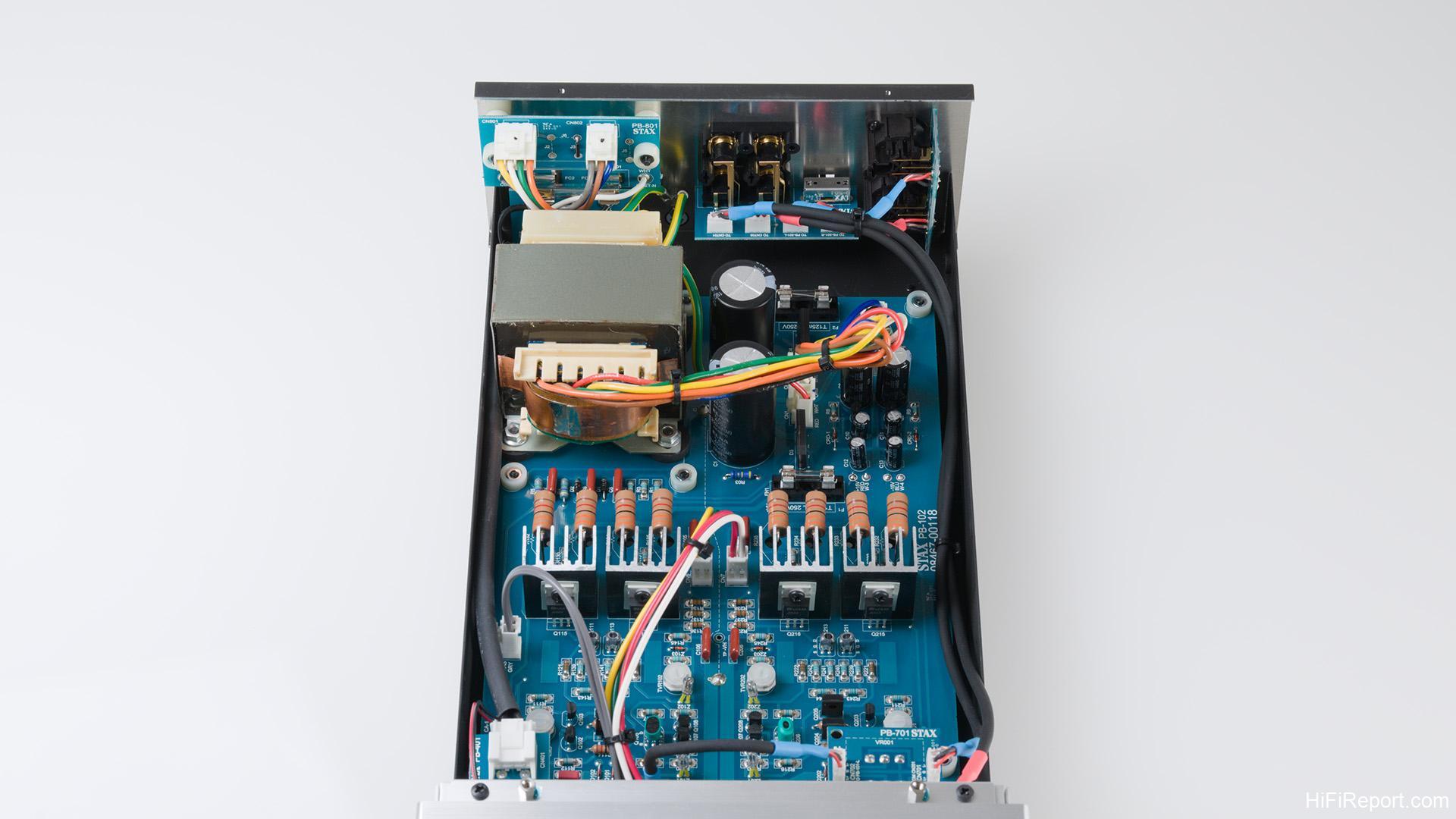
SRM-400S Internal Design
Upon examining the internal architecture of the SRM-400S, it’s apparent that the layout closely resembles that of the SRM-500T. Given that the SRM-700 series offers both tube and solid-state versions, it’s clear that STAX doesn’t favor one technology over the other, but rather provides choices for users. Thus, it’s a reasonable assumption that the SRM-400S shares a similar design philosophy and perhaps performance level as the SRM-500T.
The different model numbers likely reflect differing price points; using the same number might seem confusing.
The SRM-400S is an updated version of the SRM-353X. STAX has incorporated design elements previously exclusive to the SRM-700S, utilizing custom low-noise DUAL FETs in the first gain stage and FETs in the final stage. Like the SRM-700S, these components are measured and matched. The power supply section is of the same caliber as the SRM-500T, featuring a new transformer and winding for improved power efficiency, which not only enhances sound quality but also reduces power consumption.

Connectivity and Features
In terms of connectivity, as a pure analog amplifier, the SRM-400S only accepts analog inputs, offering one set each of XLR and RCA. For outputs, most STAX amplifiers, except for the most entry-level models, provide two headphone jacks. Additionally, there’s a set of RCA outputs on the rear panel.
However, it’s important to note that this is not a standard preamplifier output; it’s a fixed-level output at maximum volume, meaning any subsequent components in the signal chain must have their own volume control.
The SRM-400S also includes a feature less common on headphone amplifiers: left and right channel balance control. Observing the volume knob reveals it’s divided into front and back sections, with the back controlling the right channel and the front controlling the left. Is left/right balance needed for headphones? Human hearing in each ear is naturally not perfectly identical. For those seeking perfect “center stage” alignment, this function allows for fine-tuning.
Introducing the SR-L700 Mk2
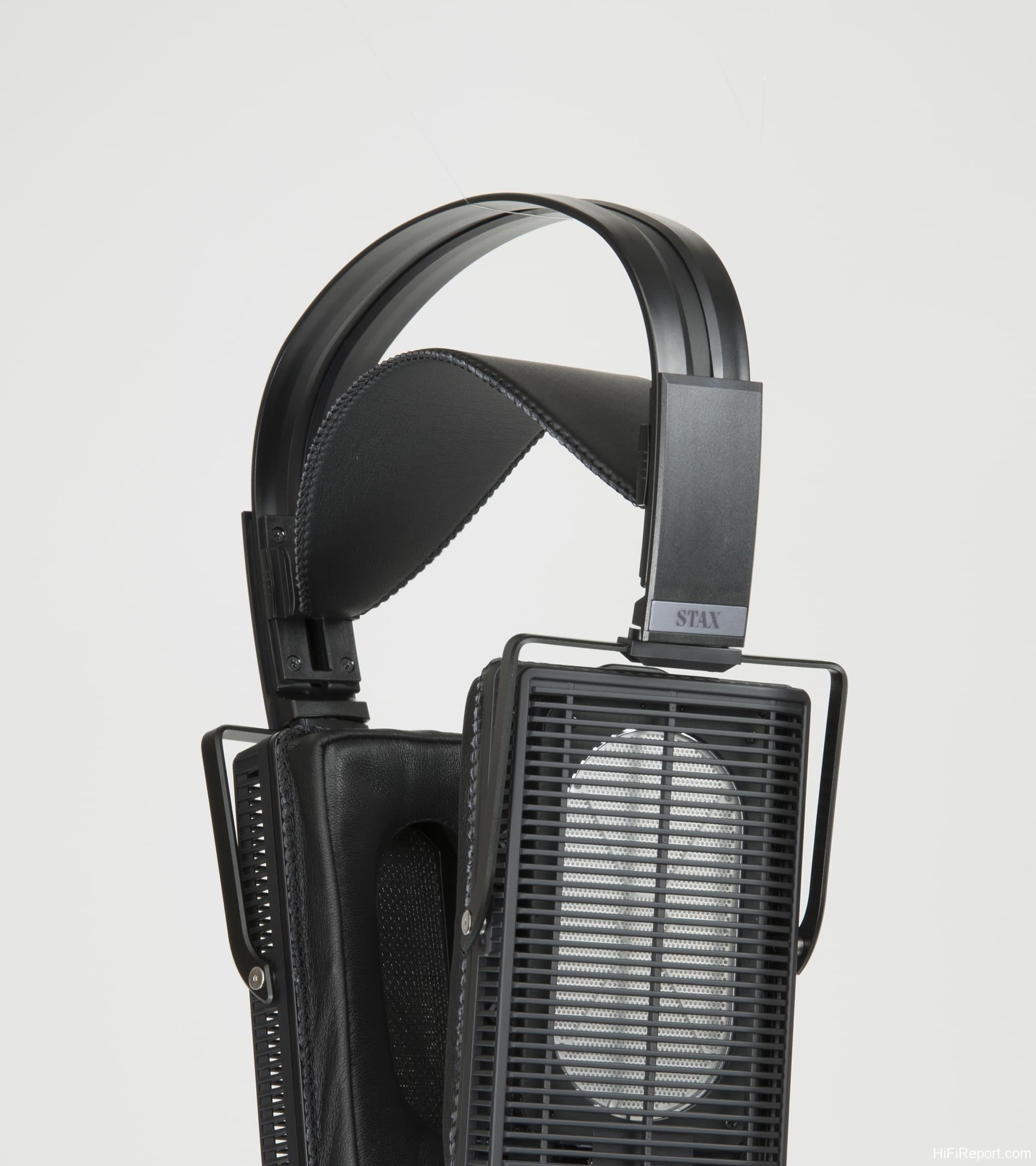
The headphone paired for this review is the second-generation SR-L700. For those familiar with STAX, their headphones can be roughly divided into two tiers with distinct appearances. Models with square earcups and an “L” preceding the number are generally more affordable, while those with round earcups and no preceding letter are higher-end. However, the new flagship SR-X9000 reverts to a letter before the number, with STAX stating it inherits the design philosophy of the 1970 SR-X.
In essence, the L700 is the flagship of the square-earcup series. STAX has even generously applied technology previously reserved for higher-end models to the L700, giving it the core foundation of higher-priced models despite its more accessible exterior.
Focus on the SR-L700 Driver
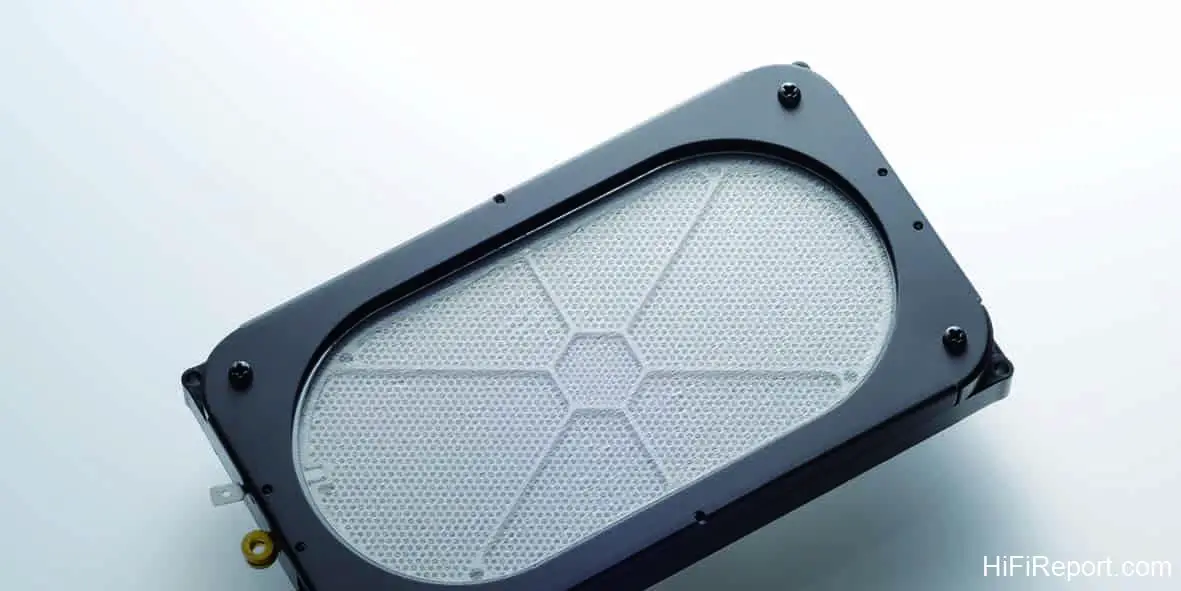
The most critical component of a headphone is the driver. For electrostatic headphones, this is the sound-producing element comprised of the diaphragm and electrode plates. While many instinctively consider the diaphragm most important, STAX understands that the electrode plate design is the biggest challenge in creating a top-tier electrostatic driver.
Consider the sandwich structure with a diaphragm between two plates: the plates must be perforated, ideally with maximum openness, to avoid obstructing the sound produced by the diaphragm.
Simultaneously, the electrode plates must have excellent conductivity, just as a dynamic driver’s magnet needs maximum strength, to effectively control the diaphragm’s movement. Concurrently, the plates must be incredibly rigid, resisting any resonance or deformation, to approach the theoretical ideal of complete stillness during operation.
MLER Electrode Technology
Simply put, these two electrode plates must be porous enough not to impede sound waves, yet rigid enough not to deform or resonate during sound production, all while offering optimal conductivity. These fundamentally conflicting requirements have led STAX to invest significant effort in electrode plate design. The electrode plates used in the L700 are called MLER (Multi-Layer ElectRodes), essentially the same type used in the former SR-009 (not the current 009S).
This type of electrode plate is constructed from three layers of stainless steel bonded under high pressure and temperature without using any adhesive, and precisely perforated using an etching process. Another advantage of using stainless steel is the ability to achieve an extremely flat surface; a flatter electrode surface allows for more even force application on the diaphragm.
It’s no wonder electrostatic headphones can’t be as inexpensive as dynamic ones; the required precision in manufacturing alone is a significant technical hurdle. The MLER technology fundamentally differentiates the L700 from other L-series square headphones. It’s not an exaggeration to say it houses the driver from a former flagship model within a more affordable frame.
SR-L700 Mk2 Physical Enhancements
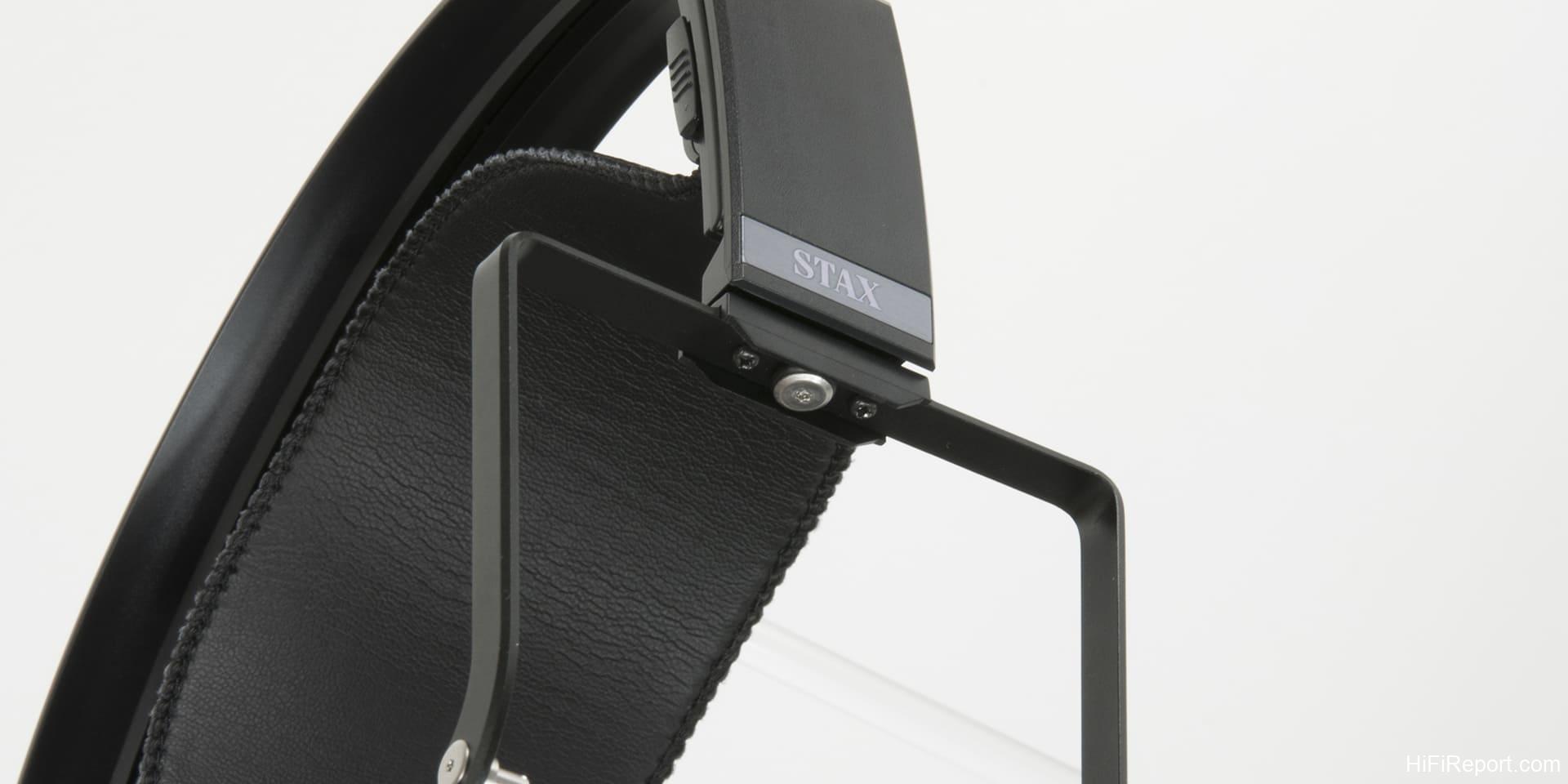
The primary change in the second-generation L700 is the switch from a fixed cable to a detachable one, following the current trend in the headphone market for cable swapping. Besides the potential to use better cables for improved overall performance, the cable connection point is also the most vulnerable to damage from external forces.
Making it detachable simplifies replacement in case of such accidents, and you might only need to buy a new cable, avoiding a prolonged separation from your headphones.
While the option to use higher-end cables exists, the L700 already comes with a 6N silver-plated copper cable, the same type used in the SR-009S, which is a top-tier cable itself. A more likely scenario for swapping is if the included 2.5-meter cable is too long and a shorter one is desired.
Beyond the cable connection, the yoke material has been upgraded from plastic to aluminum alloy, enhancing durability. Unlike the previous straight design, the second-generation aluminum yoke features a slight curve where it connects to the earcups. STAX found that modifying the yoke shape improves the earcup seal against the head, subsequently enhancing bass response.
STAX also prioritizes wearing comfort; the part of the earpads that touches the skin is made from highly breathable sheepskin, while the non-contact areas use artificial leather, ensuring comfort for long listening sessions.
Listening Experience
For listening tests, I paired the setup with two DACs: the Lumin D2 and the Norma HS-DA1. Ultimately, I felt the Lumin’s relatively delicate and refined character complemented the STAX system better, although the more energetic Norma was also quite enjoyable for pop and rock music. In short, the STAX system is highly sensitive to the source; the overall sound signature changes noticeably with different front-end components.
To be honest, STAX headphones are excellent in most respects, but there are two areas that require some adjustment if you’re accustomed to dynamic headphones. The first is warm-up time. Experienced audiophiles know that headphones and speakers sound best after a period of warming up. However, electrostatic headphones demand a more rigorous warm-up period, and the sonic changes are more significant than with dynamic drivers.
Based on my listening experience, the L700 truly came into its own only after playing for at least an hour. This might be related to the need for the amplifier to supply power to charge the driver. What does the sound feel like before it’s properly warmed up? To my ears, it lacks clarity and transparency, with a certain muddiness in the lower mids and bass, akin to resonance.
The second point is how bass is presented. The L700 can effortlessly reproduce the accompanying bass lines of a jazz trio’s double bass and can easily deliver expansive bass effects meant to fill a space. In terms of bass extension and looseness, the L700 stands among the best, even when compared to various flagship dynamic headphones. However, the sense of impact or “punch” that provides satisfying physical feeling, especially in rock or metal drum hits, is different.
It doesn’t have that “punchy” feel. This is likely a characteristic inherent to the different transducer principles.
SRM-400S Sonic Character
Setting aside the L700 for a moment, let’s focus solely on the new SRM-400S amplifier. In issue 377, when listening to the SRM-700S and SRM-700T simultaneously, I noted that STAX employs different sonic philosophies for their tube and solid-state amplifiers, making the two 700 models sound like they came from different brands. Listening to the SRM-400S this time reminded me of the SRM-700S, indicating that the SRM-400S is indeed positioned as a smaller, lower-tier version of the SRM-700S.
I would describe this school of thought as neutral and refined, possessing a distinct Hi-End audiophile quality.
However, I must honestly admit that my listening experience with the 400S + L700 combination was often more about simply enjoying the beauty of the music provided by the electrostatic headphones. I usually pay close attention to the specific tone and personality of each piece of equipment, as these reflect the designer’s taste and significantly influence whether a listener will connect with the gear.
Yet, during this listening session, I didn’t even think about trying to analyze the tonal characteristics; my brain automatically registered the sound as the true timbre of the music.
Performance Across Frequencies
Although I mentioned earlier that the bass presentation is different, bass performance is actually one of its strengths. Take, for instance, the opening score for “The Dark Knight” from “The World of Hans Zimmer.” Reproducing that all-encompassing, space-filling bass can challenge some speaker systems to the point of failure. Even with dynamic headphones, only the very best amplifiers and headphones can convey the expansive and grand spatial feeling created by that bass.
Yet, the 400S + L700 achieved it with surprising ease. Who says electrostatic headphones can’t do bass?
The mid and high frequencies are where electrostatic headphones truly excel. While I must be fair and state that the L700’s ability to resolve musical information is still a step below the SR-009S, many details that are difficult to discern on two-channel systems become utterly apparent with the 400S + L700. Bob Dylan’s harmonica, when heard conventionally, might seem like a simple interlude or melodic embellishment that doesn’t particularly grab attention.
But through the 400S + L700, the harmonica sounded like crystal-clear silver bells, as enchanting as if performed by a master harmonica player. With true virtuosos like Hiromi Uehara playing piano solo, the strings seemed to bounce with vitality. The decay and harmonics were incredibly rich and extensive, creating an instantaneous feeling as if your ears were the microphones placed right inside the piano lid during the recording.
The STAX Path and Conclusion
Every time I listen to STAX electrostatic headphones, I’m reminded why they are theoretically the reproduction devices capable of revealing the most detail. Dynamic headphones may surpass in terms of impact, spatial depth, or immersion, but the lifelike realism of electrostatic headphones is an area dynamic drivers struggle to reach. And the L700 is only the fourth model down in STAX’s lineup, while the 400S is merely a mid-tier amplifier.
Frankly, anyone who prioritizes the realistic fidelity of headphone reproduction above all else is ultimately destined to walk the STAX path; the only variable is individual budget. The SR-L700 Mk2 in this combination utilizes STAX’s exclusive MLER electrode technology, making it the most accessible model to feature it, paired with the most entry-level pure analog amplifier, the SRM-400S. This pairing represents an excellent balance between performance capabilities and budget.
Specifications
**SRM-400S:**
* Solid-state electrostatic headphone amplifier
* Input Terminals: RCA × 1, XLR × 1
* Output Terminals: RCA × 1, 5-Pin Electrostatic Headphone × 2
* Gain: 60dB
* Bias Voltage: DC580V
* Distortion: Less than 0.01% (1kHz/100Vrms)
* Weight: 3.4 kg
* Dimensions (WHD): 195 × 102 × 376 mm
* Reference Price: $1,120 USD
**SR-L700 Mk2:**
* Open-back electrostatic headphones
* Frequency Response: 7Hz to 41kHz
* Sensitivity: 101dB (100Vr.m.s/1kHz)
* Maximum Sound Pressure Level: 118dB (400Hz)
* Cable: 6N Silver-Plated Copper
* Weight: 508 grams (with cable), 371 grams (without cable)