
Ediscreation Fiber Box II Optical Network Isolator Review
Metal, with its excellent conductivity and high efficiency in transmitting power or signals, is a prime material for crafting cables. However, metal conductors inevitably transmit unwanted noise alongside the intended electrical signals.
This noise generally falls into three categories: firstly, internally generated noise from equipment, transmitted through metal conductors; secondly, airborne noise (such as EMI/RFI) absorbed by metal conductors; and thirdly, noise induced by the magnetic fields created during current transmission, leading to mutual interference.
These noises can sometimes cause significant issues. Consequently, cable designers are constantly striving to minimize noise. In the realm of audio cables, lower noise transmission equates to superior sound quality.
Light offers a straightforward way to circumvent these three types of noise. This has led to the concept of using light to transmit digital audio signals, exemplified by the subject of this review: the Ediscreation Fiber Box II Optical Network Isolator.
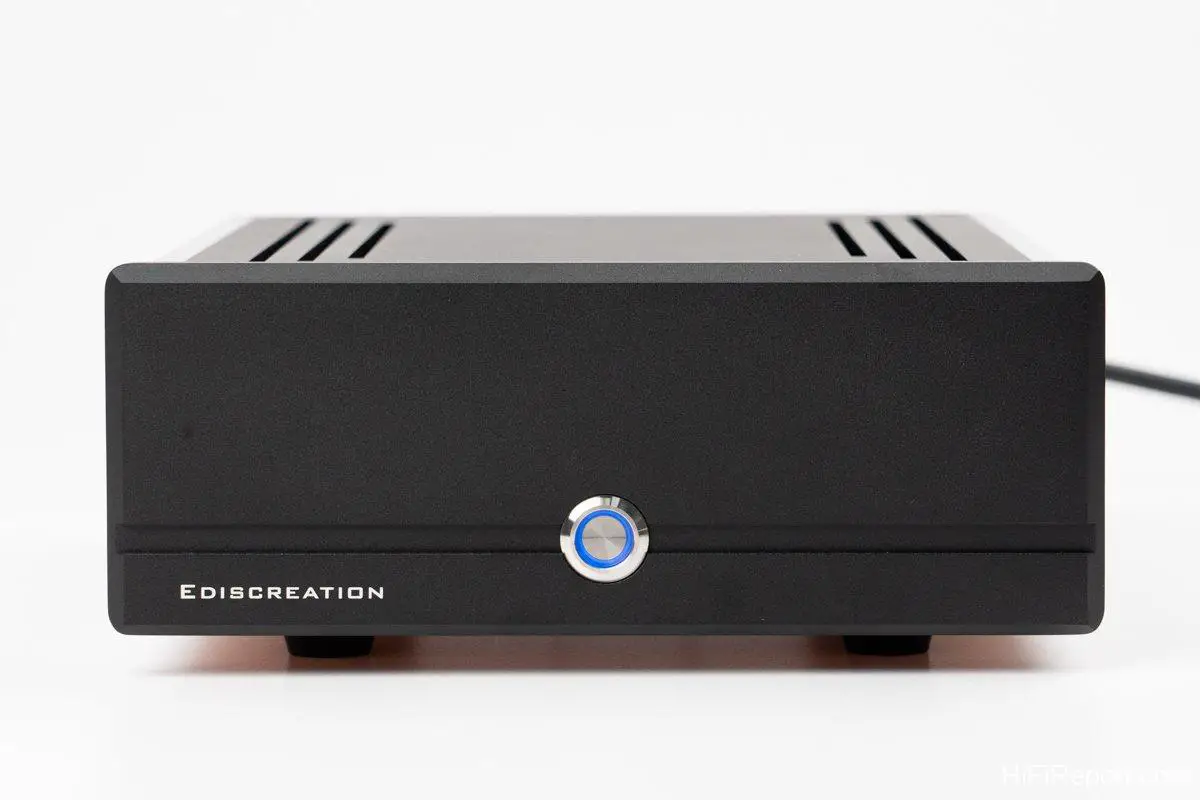
Hong Kong Design and Manufacturing
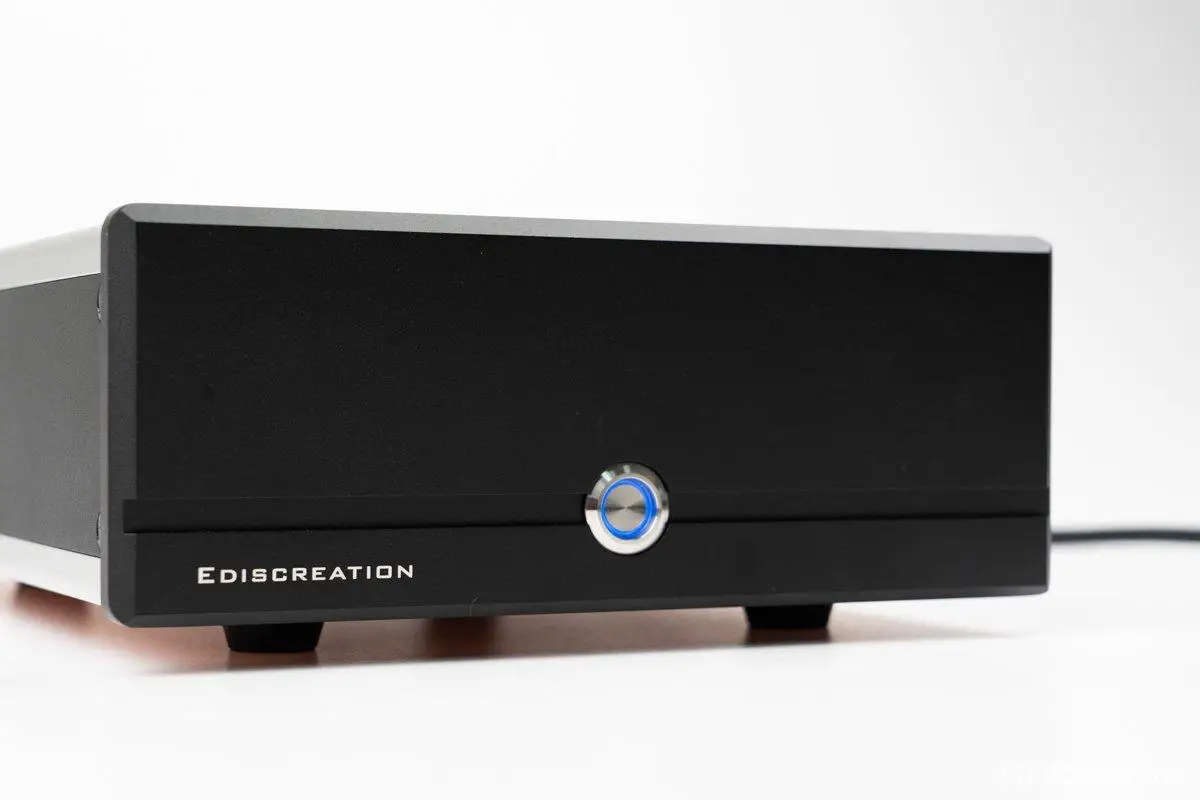
Ediscreation hails from Hong Kong and was established in 2014 by Edison.
Edison, an electronics engineering graduate, previously worked as a product engineer in several multinational and Hong Kong companies. He specializes in electronic circuit and mechanical structure design. As an avid audiophile, Edison merged his passion with his profession, creating his own brand to produce and sell audio equipment he loves.
Currently, Ediscreation’s product line primarily focuses on network streaming. Besides the Fiber Box II Optical Network Isolator, their offerings include network switches, music servers, CD rippers, related cables, and the increasingly popular linear power supplies. The company emphasizes that all products are designed in-house and manufactured in Hong Kong, embodying “100% Hong Kong spirit!”.
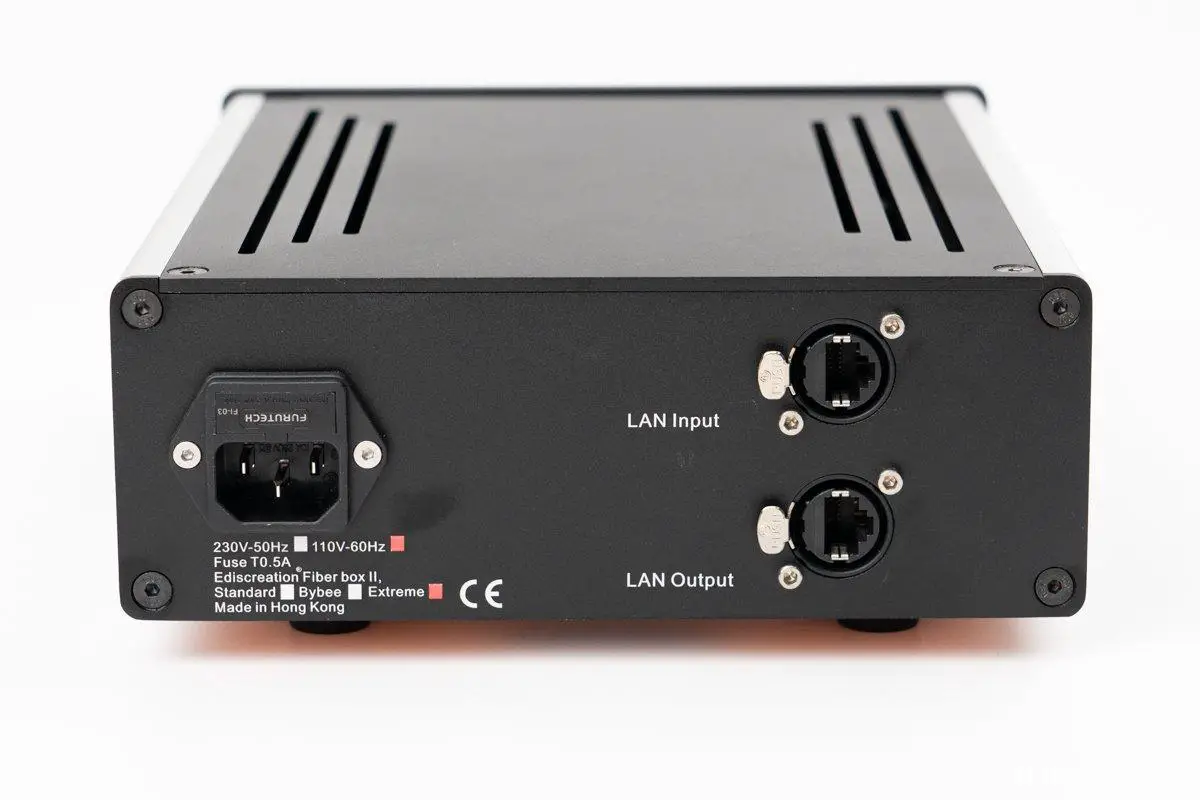
Synchronized Clocks for Dual Fiber Modules
The Fiber Box II is remarkably easy to use. Both its input and output are RJ45 network ports. Simply insert it between your home wireless router and your audio system’s network switch using an additional network cable, and the setup is complete. No specialized cables are required.
Internally, the Fiber Box II incorporates two optical-electrical conversion modules. One module converts RJ45 to SC fiber, and the other converts SC fiber back to RJ45. These modules are interconnected with an SC fiber optic cable. This optical conversion effectively blocks high-frequency noise from the wireless router, allowing only packet signals to pass through to the network switch, achieving isolation.
To ensure minimal jitter in the network signal after the dual conversion, the Fiber Box II is equipped with a 25MHz OCXO crystal oscillator. This provides a perfectly synchronized clock signal to both fiber modules, ensuring that signal transmission and reception are precisely aligned. This synchronization is crucial for reducing jitter.
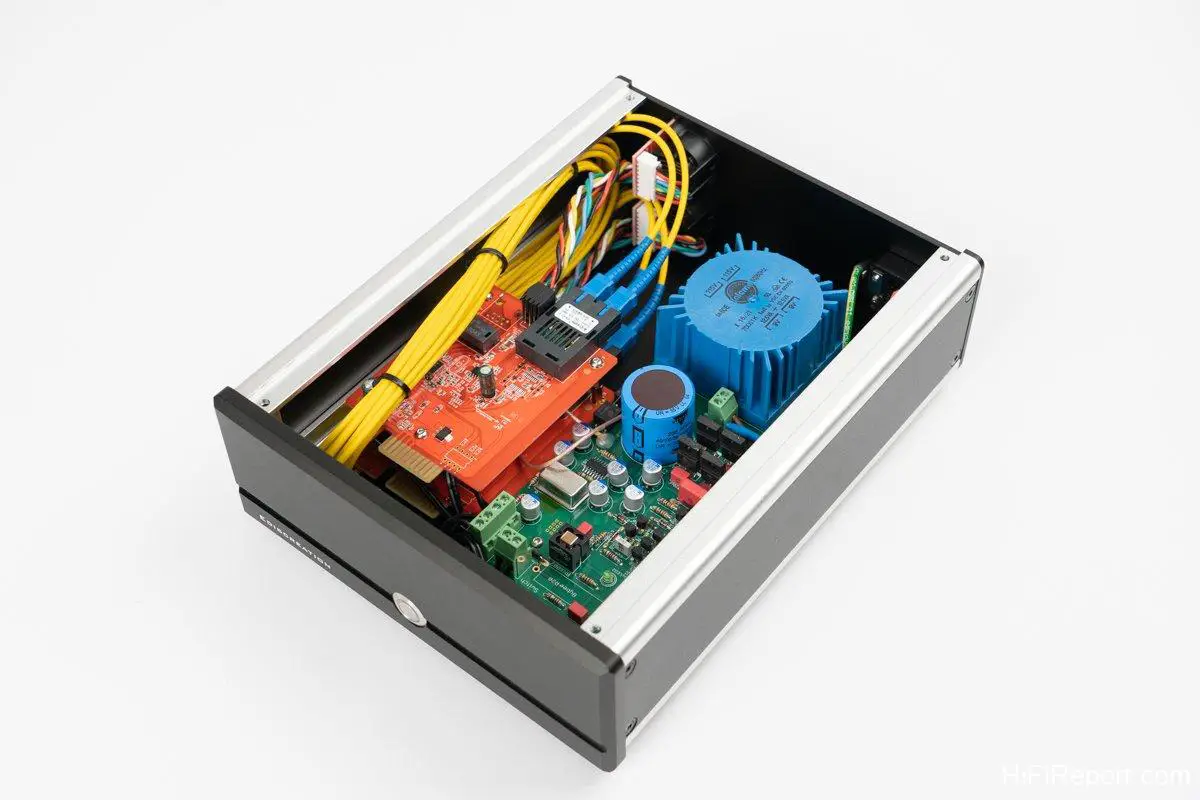
The Fiber Box II utilizes a low-noise linear power supply internally. The power supplies for the clock system and fiber modules are completely isolated, minimizing phase noise and contributing to an overall reduction in noise, resulting in a purer sound.
Advanced Model with Bybee Quantum Purifier
The Fiber Box II comes in three versions, all visually identical and functionally the same in terms of usage, differing only in their grade.
Ranked from highest to lowest, they are the Fiber Box II Extreme, Fiber Box II Bybee, and Fiber Box II Standard. What distinguishes them? All three Fiber Box II models share the same chassis, mainboard, and fiber module board, meaning they are built upon the same foundation.
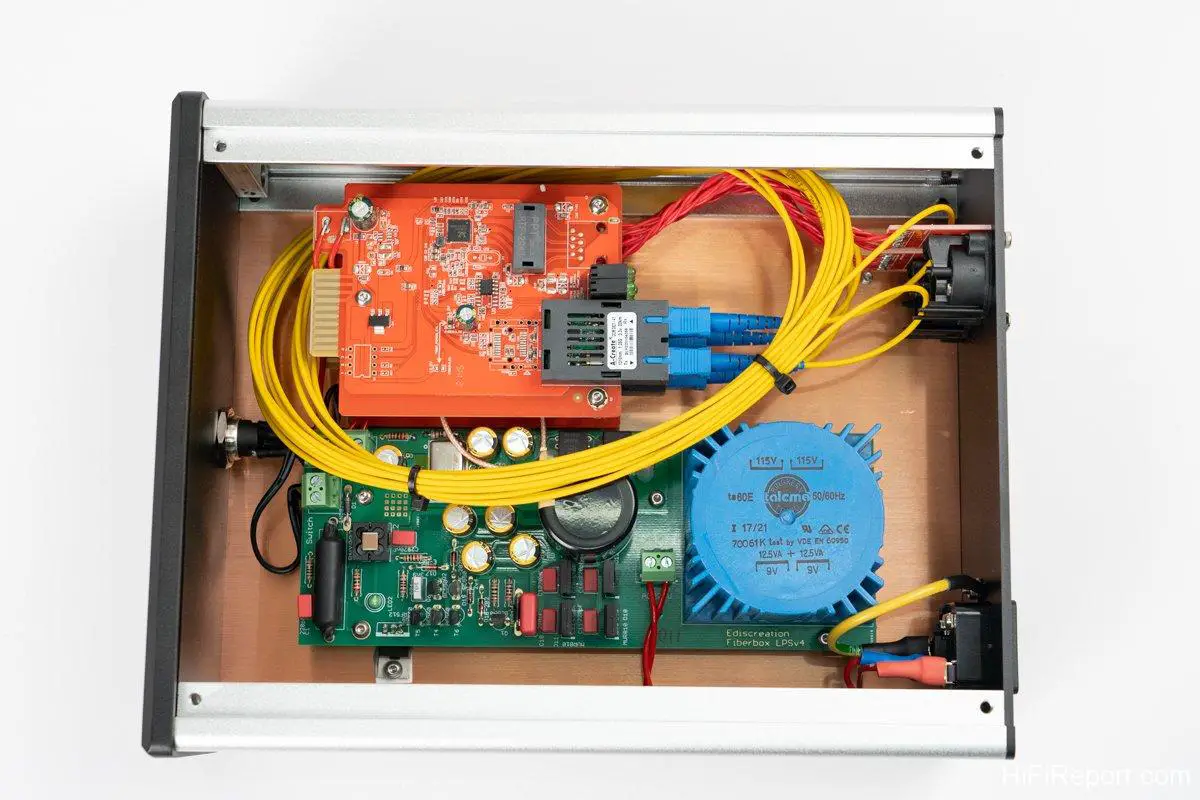
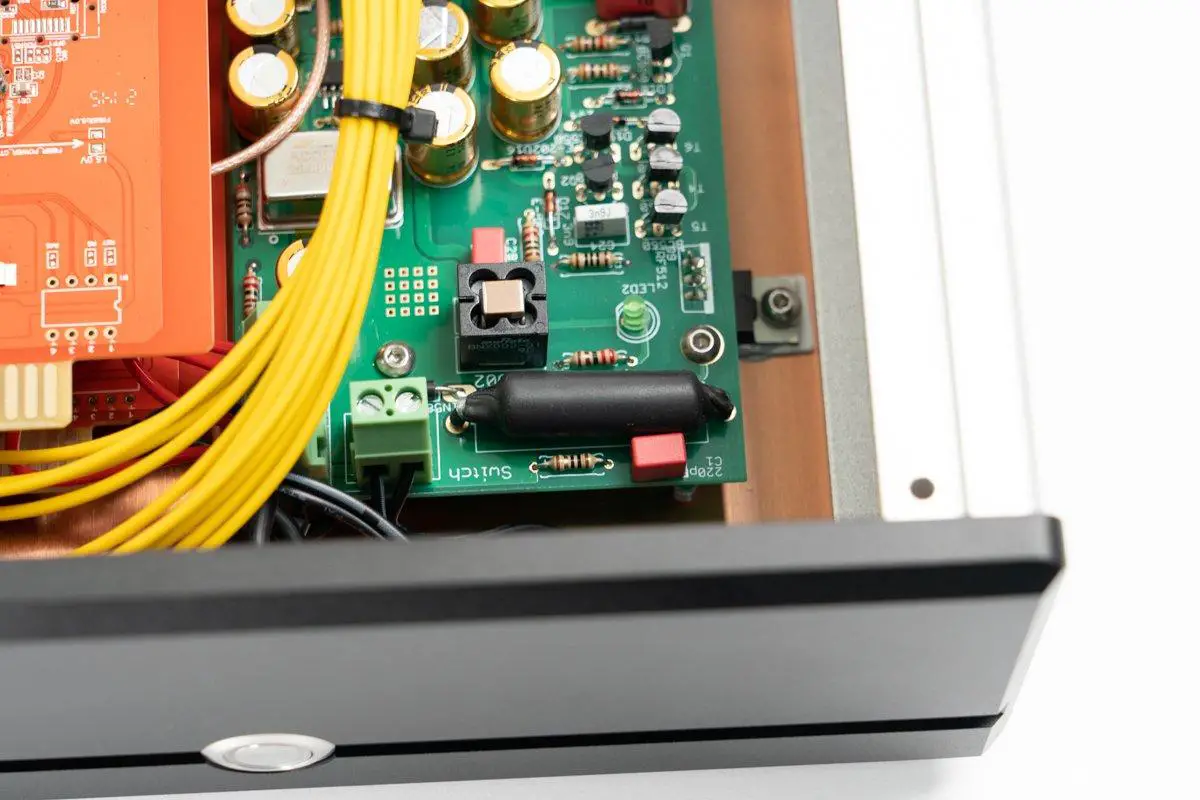
The Bybee version is fundamentally the same as the Standard version, but it incorporates Ediscreation’s unique feature – the “Bybee Quantum Purifier.” This component appears to be a small, elongated, non-polar capacitor, positioned on the mainboard and encased in black heat shrink tubing, concealing its exact nature. In essence, it’s designed to eliminate impurities, purify power, and reduce noise.
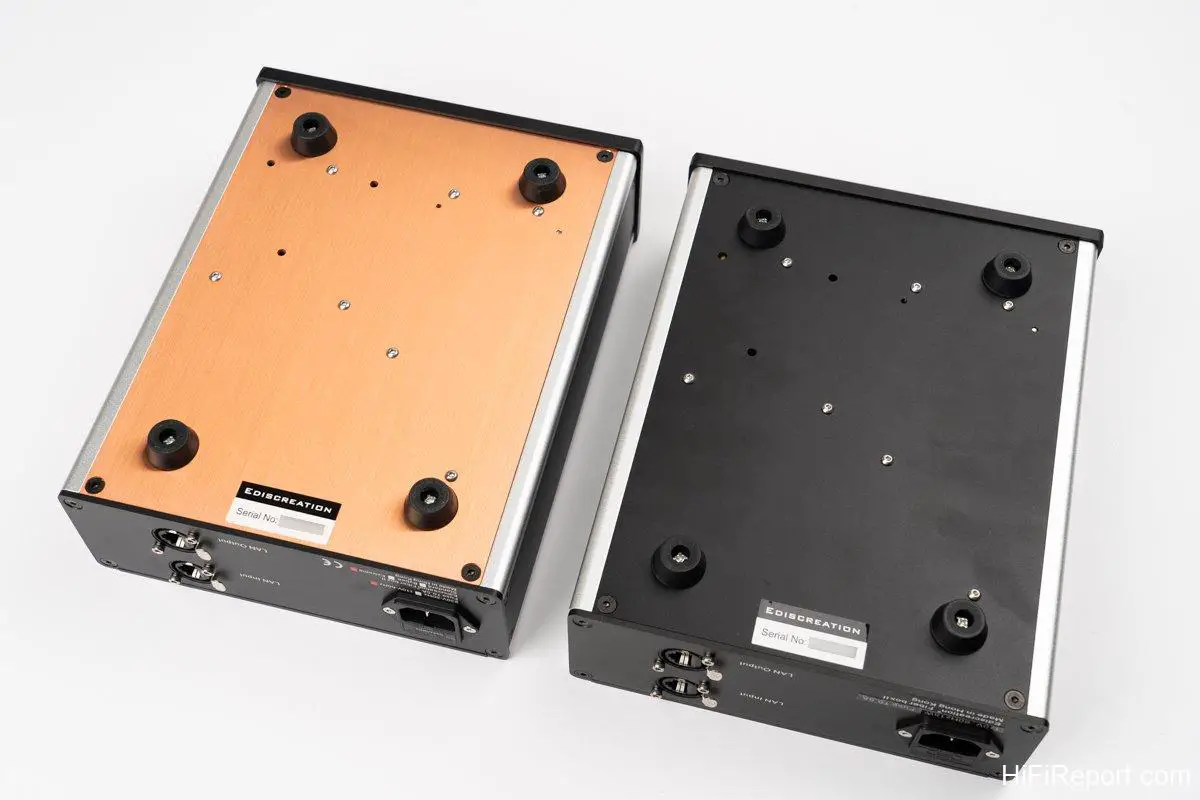
The top-tier Extreme version naturally includes the Bybee Quantum Purifier, along with upgraded audiophile-grade components. For example, key capacitors are upgraded to Mundorf and Nichicon models. Internal wiring is upgraded from standard stranded wire to higher-grade solid-core wire. The fiber optic cable is replaced with a finer (and presumably higher quality) one, and the aluminum base plate is swapped for a solid copper plate.
These material upgrades contribute to the Extreme version’s increased weight.
Do these changes translate to superior sound? Both the Standard and Extreme versions were sent for review, providing an ideal opportunity for comparison.
Greater Impact on Streaming Music
The listening tests were conducted in the HiFiReport listening room, utilizing the following equipment: Telos EMP music server/player, North Star Design USB DAC32, Ray Audio tube preamplifier, EAR 509 tube monoblock power amplifiers, and Wilson Audio Alexia 2 loudspeakers. A Zyxel home-grade network switch was used, along with a NAS for music files. The Fiber Box II Extreme was placed between the wireless router and the switch, with both the EMP and NAS connected to the switch, setting the stage for the listening session.
I began by listening to music files from the NAS.
Although music files from the NAS are transmitted to the EMP for playback via the switch and do not directly pass through the Fiber Box II Extreme, the Fiber Box II Extreme isolates noise from the wireless router, reducing interference to the switch. I anticipated this would also benefit the playback quality of NAS music files.
Playing “In The Still Of The Night” from Diana Krall’s “Taking a Chance on Love” album, the layering of the string ensemble in the intro became clearer. Instrumental outlines were more pronounced and defined, with improved separation and localization. The vocal focus also subtly improved. Without the Fiber Box II Extreme, the sound was slightly more congested, with less distinct layering and localization.
In this test, adding the Fiber Box II Extreme did indeed enhance sound quality, albeit subtly, but noticeably.
Next, I switched to Tidal to play the same track. This meant the music signal originated directly from the wireless router, passed through the Fiber Box II Extreme, then to the switch, and finally to the EMP.
Comparing the sound with and without the Fiber Box II Extreme, the improvement was significantly more pronounced this time!
Improvements Across the Board!
Without the Fiber Box II Extreme, the string ensemble in the intro of “In The Still Of The Night” sounded blurred, with instruments merging together, poorer separation, and less distinct layering. The guitar tone was muddier, lacking clear articulation. The bass suffered similarly. The soundstage felt constricted, instruments crowding together, reducing the separation between the left-side guitar and the right-side piano. Overall transparency was diminished, and the tone felt somewhat heavy and less lively.
Upon inserting the Fiber Box II Extreme, the musical picture instantly became clearer and cleaner, with a more refreshing tone, lending lightness to the music. The difference was substantial! The soundstage not only expanded but also, due to improved clarity and focus, the vocals detached from the accompaniment, becoming more vivid and tangible. Each instrument’s form became clearer and more defined, with simultaneous improvements in separation and localization.
Moving to the more rhythmically driven track “Taking a Chance on Love,” without the Fiber Box II Extreme, the bass plucks lacked bounce, and dynamic variations in the vocals were less pronounced, making the song sound less vibrant. The vertical layering of the soundstage, from top to bottom, lacked definition. Because the frequency ranges were less separated, the soundstage tended to clump in the center, reducing musical clarity.
With the Fiber Box II Extreme in place, the soundstage immediately gained height. The vertical structure became clearer, and the extension at both the high and low ends felt more effortless and natural. High frequencies became airier, and low frequencies became deeper and more profound, lowering the perceived center of gravity. The Fiber Box II Extreme also significantly enhanced tonal transparency and texture. Diana Krall’s voice shimmered like silver bells, becoming even more captivating. During the song’s passionate crescendos, the improvements were even more pronounced, with the entire musical structure becoming clearer, separation improving across the board, and a greater sense of order emerging! I then swapped in the Standard version to compare its performance against the Extreme version.
Playing the same track, the Standard version also delivered a noticeable improvement. However, the tonal brightness wasn’t quite as pronounced as the Extreme version. The highs weren’t as airy, and the bass extension wasn’t as natural. Nevertheless, the Standard version improved musical clarity, image solidity, soundstage shape and structure, localization, separation, focus, and vertical extension, among other aspects. The Extreme version simply amplified these advantages, delivering even greater refinement and improved texture.
In essence, I found the performance of the Standard version highly compelling in its own right.
Enriching the Listening Experience
Finally, I listened to Bach’s Passacaglia and Fugue in C minor, BWV 582, for organ, using the Extreme version. The sustained low frequencies, enhanced by the Fiber Box II Extreme, sounded even more stable and authoritative. The bass range was deep and richly layered, while the constantly evolving high and mid-range frequencies remained distinct yet harmoniously integrated.
Without the Fiber Box II Extreme, the high and low frequencies felt compressed, and the sense of space within the church acoustic was muddy, with unclear reverberation. With it in place, the air seemed to flow, reverberation resonated, and the soundstage became deeper, wider, and more clearly defined. The quiet passages were more profound and subtle, while the powerful moments had greater impact. This contrast enhanced my appreciation for the piece’s solemn and majestic atmosphere.
The Fiber Box II operates on a simple principle and is easy to use, yet its benefits are significant. I initially worried that the dual signal conversion might introduce jitter-related variables, affecting sonic precision. However, my concerns were unfounded. The Fiber Box II brings forth more detail, clearer sound, and a richer listening experience.
I believe the Standard version is highly effective on its own. Those with additional resources can certainly ascend to the higher-tier models. Highly recommended!
Specifications
* Type: Optical-Electrical Conversion Network Isolator
* Network Speed: 1000M
* Dimensions: 200 × 253 × 95 mm