
Kharma Exquisite Midi Grand 3.0 Review
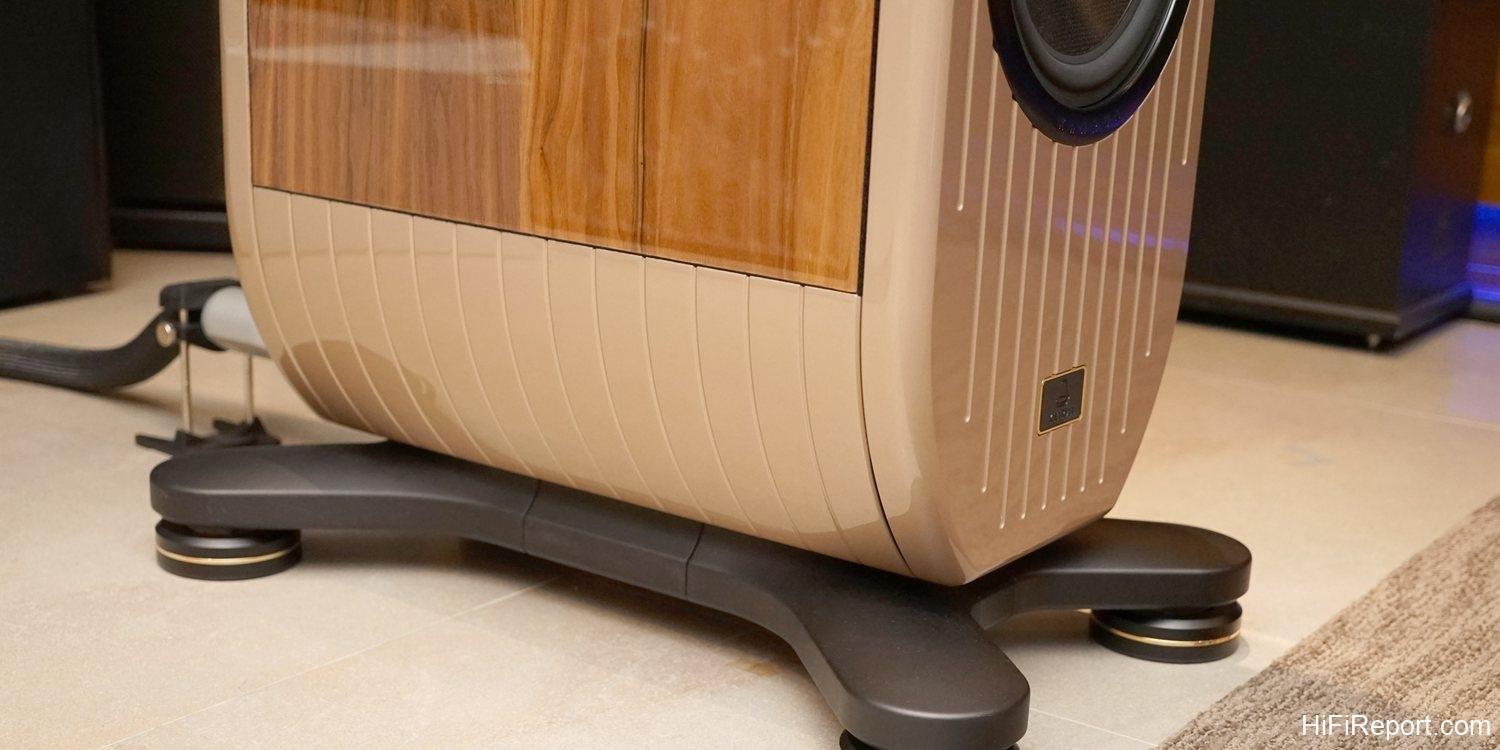
While the written description of the Exquisite Midi Grand 3.0 is certainly captivating, it pales in comparison to experiencing it up close. Every aspect, from the impeccable paintwork and craftsmanship to the intricate details and even the exquisitely designed base, exudes an air of high-end luxury and sophistication.
The Kharma Legacy
Kharma is a Dutch manufacturer of ultra-high-end audio equipment, founded by Charles van Oosterum. Charles is a truly unique individual – not only does he design loudspeakers with a keen sense of aesthetics, but he is also a martial arts expert, holding a black belt in Aikido, and practices hot yoga. His interests are broad, and anything he decides to pursue, he delves into deeply. His initial fascination with music and audio was sparked by Simon & Garfunkel’s “Mrs. Robinson.”
Charles van Oosterum’s Journey into Audio
One day, accompanying his mother on a visit to an uncle in another city, he encountered his uncle’s audio system. His uncle was an audiophile who not only owned a complete setup but also built his own loudspeakers, handling both the cabinets and veneers beautifully, earning young Charles’s admiration. Hearing that song played on his uncle’s system felt like listening to celestial music, and from then on, he was hooked. He was around 13 or 14 at the time.
Upon returning home, Charles began buying books on loudspeaker DIY. He also acquired a Philips 9701 eight-inch full-range driver, a popular choice among DIY enthusiasts back then, marking his first step into loudspeaker construction. Furthermore, he often frequented local garage sales, buying radios to dismantle. He wouldn’t just take speakers apart; he’d rebuild the cabinets to see how the sound would change. His first customers were his parents, who bought his homemade speakers.
By the age of 16, he had sold quite a few pairs, many to his parents’ friends. Even before graduating high school, Charles van Oosterum was certain that his future lay in manufacturing audio equipment. The Dutch truly live up to their reputation as a business-savvy nation.
Although Charles van Oosterum was building and selling speakers, they weren’t exactly “high-end” yet. One day, he visited a friend’s house and heard his friend’s father’s Wharfedale speakers paired with a Sony TA-1010 amplifier and a Philips tangential tracking turntable. That system sounded far better than anything he had built himself. Even his friend’s combination of a Sony amplifier and Sansui speakers sounded superior.
This experience was an eye-opener for Charles, prompting him to spend his money on the most expensive speakers he could afford at the time: the ESS AMT-1a. It was from this point that Charles began his journey into Hi-End audio.
From OLS to Kharma: Founding the Brand
In 1982, he founded Oosterum Luidspreker Systems (O.L.S.). At this time, he not only built finished loudspeakers himself (literally operating machines to cut panels) but also sold kits and designed complete audio systems for clients. By 1985, Charles simultaneously launched the Emotion Series, Lotus Series, and Ceramique Series. The appearance of these speakers was completely different from today’s Kharma models, featuring traditional rectangular cabinets.
However, he was already using ceramic drivers in the Ceramique series, making him one of the earliest loudspeaker designers to adopt ceramic drivers.
In 1992, Charles accepted a commission from a client who wanted the most expensive and best loudspeaker system in the world. Charles rose to the challenge, creating the Grand Enigma Reference System. This system used folded bass horns and a total of 12 fifteen-inch woofers, each driven by a 1,500-watt (RMS) power amplifier, covering the 10-100Hz range. For the mid-range, it employed 24 seven-inch mid-drivers, each driven by a 500-watt (RMS) amplifier.
And the tweeters? There were 16 planar magnetic tweeters, each driven by a 100-watt amplifier, with each amplifier weighing a hefty 24 kilograms. In total, this two-channel behemoth weighed approximately 12,600 kg, stood 350 cm high, 380 cm wide, and was 100 cm deep. What was the price for this complete system, including speakers and amplifiers? It cost $1 million USD back then.
A $1 million audio system was undoubtedly legendary at the time, but today, a single pair of speakers can easily exceed $1 million USD. This illustrates the significant devaluation of currency over the past 30 years!
Initially, O.L.S. ‘s business focused solely on the Dutch market. In 1993, Charles founded the Kharma brand, setting his sights on the global market. The name “Kharma” is derived from “Karma,” signifying that all the energy and effort you invest will eventually return to you – a concept akin to reincarnation or cause and effect. In simpler terms, it might mean that the more you invest (in money), the better the sound performance you will receive.
Charles changed “Karma” to “Kharma” partly for trademark registration purposes and partly because he felt adding an “h” after the “K” looked good. Thus, Kharma became a renowned name in the audio world.
Kharma’s Technological and Product Evolution
Following the establishment of Kharma, Charles delved deeper into research on speaker cabinet shapes, drivers, materials, and finishes. The exquisite Kharma loudspeakers we see today began to take shape. In 1997, the first pair of Kharma speakers, named Divine, was launched. These had a unique appearance, but the true foundation for Kharma’s success was laid by the subsequent Ceramique and Exquisite series, both of which remain in production today.
In 2000, Kharma’s Exquisite Reference 1B graced the cover of TAS (The Absolute Sound), further boosting Kharma’s reputation.
In 2001, Kharma first incorporated diamond tweeters into the Exquisite series, a practice they have continued ever since. In 2003, Kharma expanded into the cable market. In 2005, Kharma began manufacturing amplifiers. 2006 saw the launch of the Grand Exquisite, known affectionately as the “dumbbell” shape, a design that persists to this day. In 2007, O.L.S. celebrated its 25th anniversary and introduced the Exquisite Extreme Grand Limited Edition.
In 2009, Kharma entered the automotive audio field, designing sound systems for the Aileron series of Spyker cars (handcrafted Dutch automobiles). In 2010, Kharma opened its first flagship store and simultaneously launched the Elegance series.
In 2013, Kharma introduced the Elliptica home theater series, a complete package including main speakers, center channel, surrounds, and a subwoofer. The Taiwanese distributor, Wen Hong, dedicated a special room to this system, which took three and a half years and cost over 30 million NTD (approximately $923,000 USD) to complete in 2014, possibly the largest investment by any Taiwanese distributor in a listening space.
In 2015, the Enigma Veyron series was launched, representing Kharma’s top-tier line. It features in-house developed drivers, cabinets made from bulletproof wood, and a completely new exterior design. The mid-range and bass drivers were also updated to the newer Omega F drivers. In 2017, a completely new series of cables was introduced, including Elegance, Exquisite, and Enigma Veyron.
The Kharma Lineup Today
Currently, Kharma’s speaker lineup is divided into the Elegance, Exquisite, and Enigma Veyron series, with the latter being the most expensive. Cables are also categorized into these three series. Amplifiers are available in the Exquisite and Enigma Veyron series. Across the three speaker series, there are five models each, including a subwoofer, highlighting Kharma’s focus on home theater.
The most expensive model in the Exquisite series is the Grand 3.0, featuring three diamond tweeters. Next is the Midi Grand 3.0, which uses two diamond tweeters. Below that is the Classique, and the smallest is the Midi 3.0. This review focuses on the Exquisite Midi Grand 3.0, specifically the one showcased statically in the Wen Hong audio room during the Kaohsiung Audio Show in April 2021. Its color is quite special, being a custom order for Wen Hong audio.
Design Philosophy
It’s easy to get confused between the Grand 3.0 and Midi Grand 3.0 due to their similar names. However, the key distinction lies in the diamond tweeters: the Grand 3.0 has three, while the Midi Grand 3.0 has two. The Grand 3.0 cabinet stands 1800mm tall, 745mm deep, and 455mm wide, serving as the flagship of the Exquisite series.
The Midi Grand 3.0 uses two diamond tweeters and shares the same height and depth as the Grand 3.0, but its width is 465mm, making it 1 cm wider than the Grand 3.0 – a difference invisible to the naked eye. This slight cabinet discrepancy piqued my curiosity. Contacting the factory through Wen Hong revealed that the dimensions on the official website were incorrect; the cabinets for both models are actually the same size.
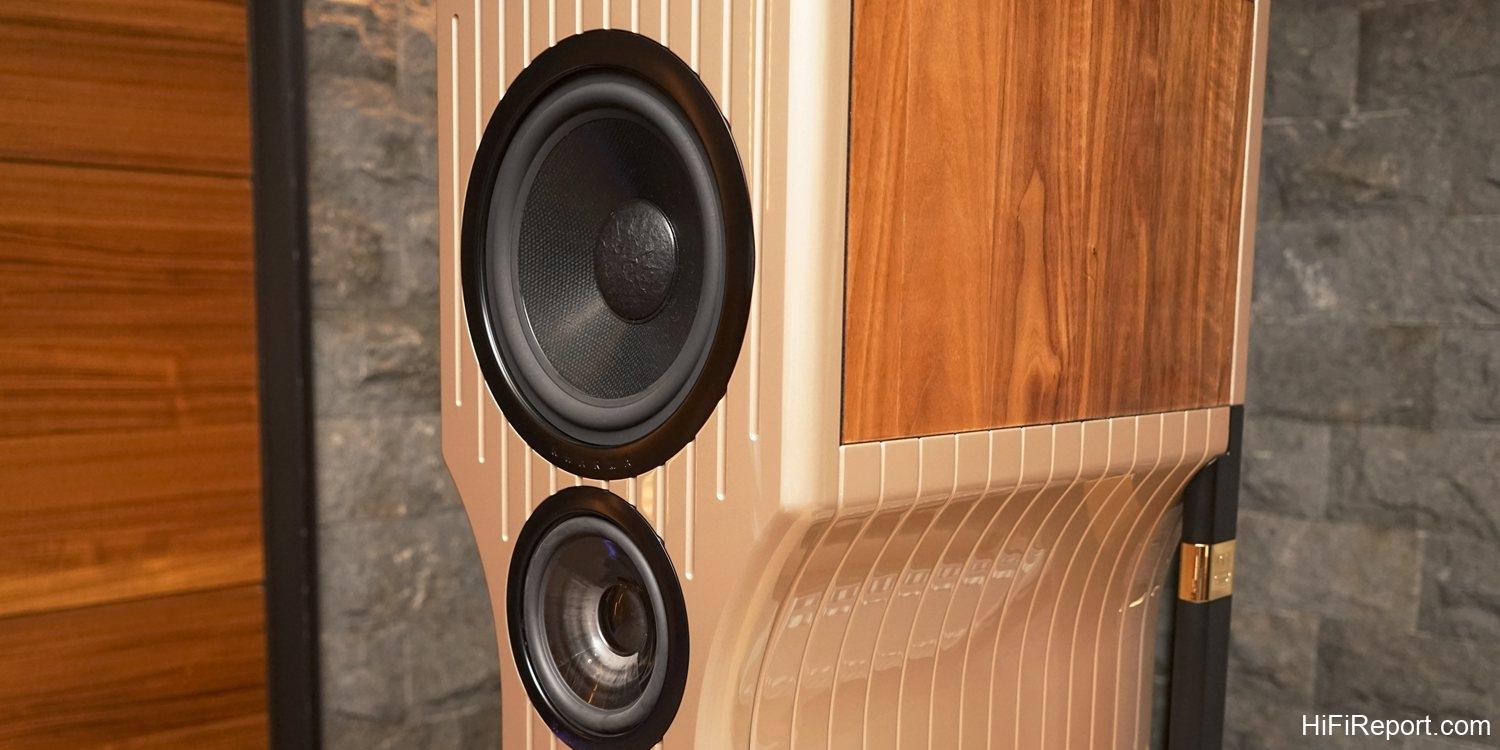
Furthermore, both pairs utilize 7-inch Omega 7 mid-range drivers, but the bass driver sizes differ: the Midi Grand 3.0 employs 11-inch Eton woofers, while the Grand 3.0 uses 12-inch Eton woofers.
Let’s turn our attention back to the Exquisite Midi Grand 3.0. The moment you see it, its shape is captivating. It features a design where the top and bottom sections are the same size, with a tapered waist in the middle. This design serves a practical function: it minimizes the baffle area surrounding the high, mid, and low-frequency drivers, making the baffle only slightly larger than the drivers themselves. This has been a popular cabinet design trend over the past two decades.
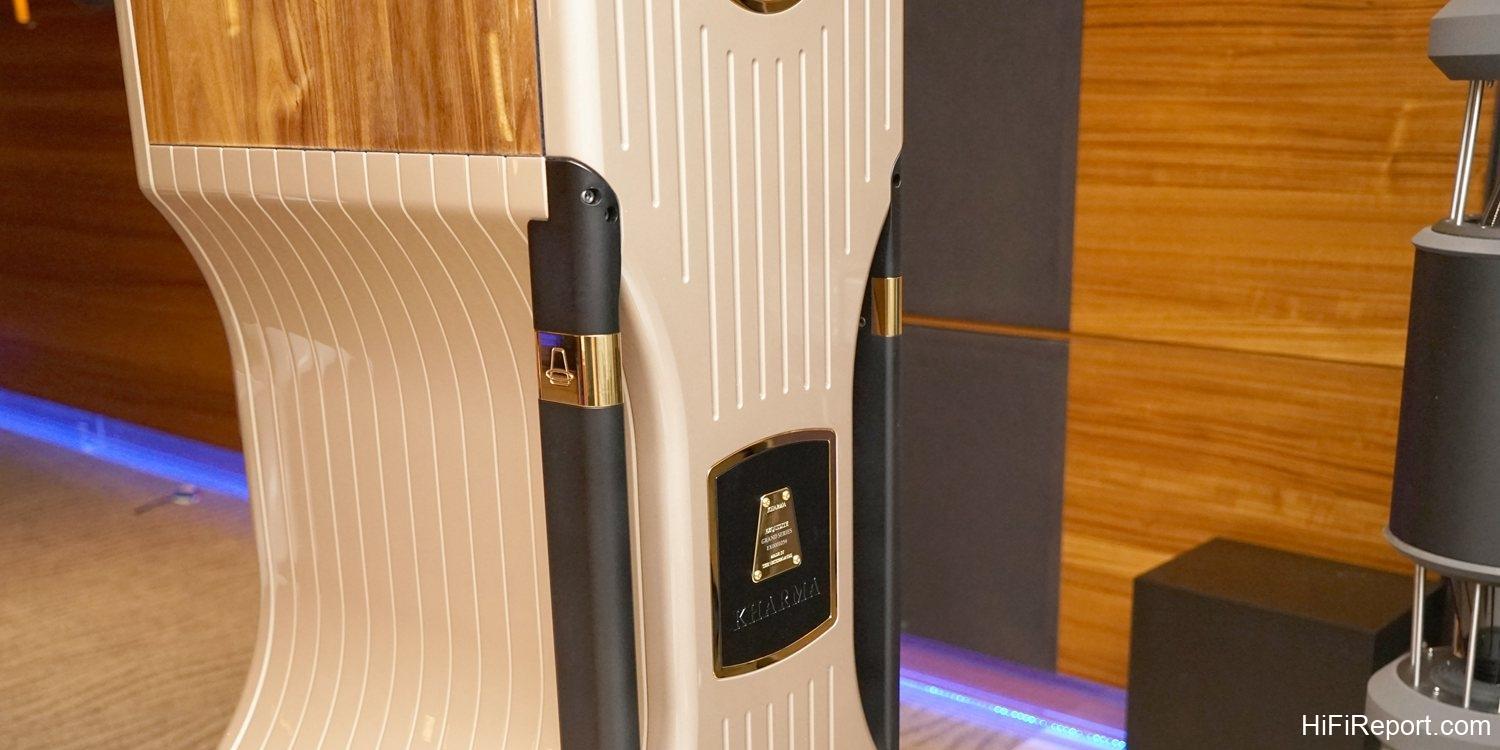
To reinforce the tapered waist section, there are two reinforcing pillars at the rear of the cabinet. The Exquisite Midi Grand 3.0 cabinet is constructed from HPL (High-Pressure Laminate), a material that is both sturdy and capable of appropriately absorbing vibrations transmitted into the cabinet by driver movement, further reducing overall cabinet resonance.
Next, the Exquisite Midi Grand 3.0’s driver arrangement utilizes a top-and-bottom symmetrical D’Appolito design. This point-source-like configuration limits the vertical dispersion angle of sound waves, reducing interference from ceiling and floor reflections. Each speaker houses two 1-inch diamond tweeters, two 7-inch Omega 7 carbon fiber cone mid-range drivers, and two 11-inch Eton Kevlar cone woofers.
The diaphragm of the Exquisite Midi Grand 3.0’s diamond tweeter is manufactured using Chemical Vapor Deposition (CVD), with a thickness of only 50 μm, thinner than the diameter of a human hair. The advantage of a diamond diaphragm is its extreme stiffness, making it resistant to deformation, and its excellent thermal conductivity, which helps to reduce heat generated by the voice coil movement. Currently, the two most expensive diaphragm materials on the market are diamond and beryllium.

Frankly, both excel in different areas, but diamond tweeters are even more costly than beryllium tweeters. With two diamond tweeters per cabinet, the Exquisite Midi Grand 3.0’s premium status is undeniable.
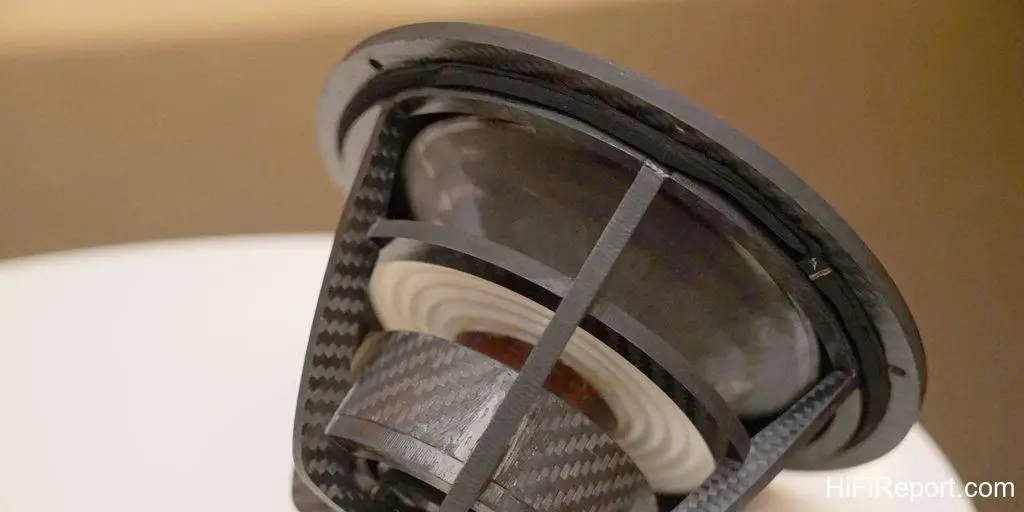
The mid-range driver in the Exquisite Midi Grand 3.0 is Kharma’s proprietary Omega 7 driver, with ‘7’ indicating its 7-inch size. This 7-inch driver is quite special. The diaphragm itself is crafted from Ultra High Modulus Carbon Fiber, considered the best carbon fiber currently available worldwide. Even more astonishing is that the entire frame is cast from carbon fiber, resembling the body of an F1 race car.
Additionally, the diaphragm appears to be composed of six segments and has a transparent coating on its surface. The cone angle was designed using Finite Element Analysis computer simulation, which the factory states helps push the cone breakup point outside the frequency range covered by the mid-range driver.
The cone breakup point refers to the diaphragm’s resonance point, where abnormally strong sound pressure is generated at the resonance frequency, leading not only to distortion but also causing an aggressive sound perceived by the ear. This Omega 7 mid-range driver is not seen in other speaker brands, indicating it is a special custom order for Kharma.
The Exquisite Midi Grand 3.0 utilizes two 11-inch Eton Nomex-Kevlar honeycomb sandwich woofers. This type of woofer is also considered one of the most powerful bass drivers available today. I believe Charles van Oosterum must have researched various bass drivers from around the world before settling on this one, consistent with his personality of prioritizing the best quality, regardless of cost.

Moving to the rear of the Exquisite Midi Grand 3.0, you can see a large bass reflex port at both the top and bottom. The tapered waist section features a beautiful logo. This metal plate actually opens to reveal the crossover network inside. The bi-wire speaker terminals at the bottom are also custom-made by Kharma, and the conductors connecting them are not copper wires but silver plates.
Every detail, from the logo and speaker terminals to the bass reflex ports, is exquisitely crafted – a true testament to Dutch skill.
Listening Environment
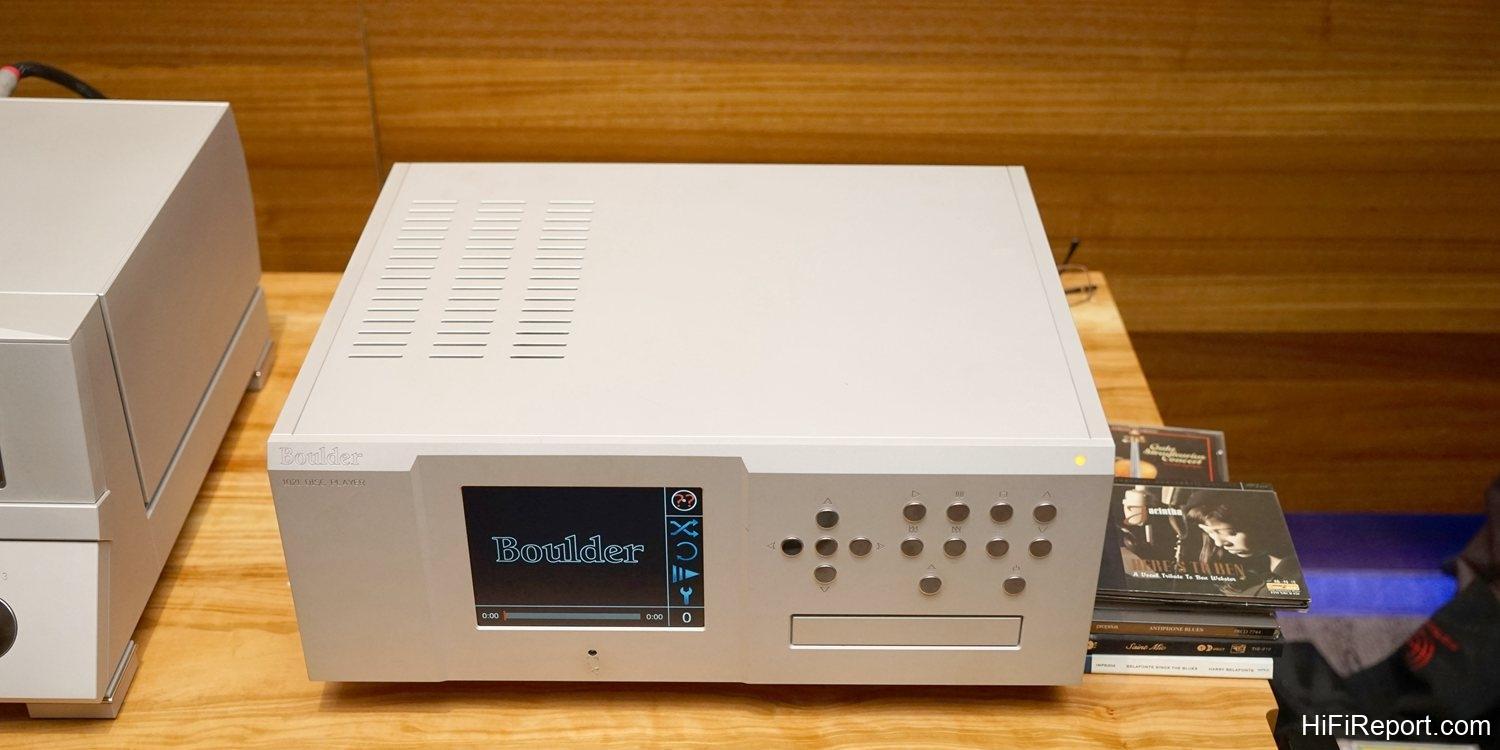
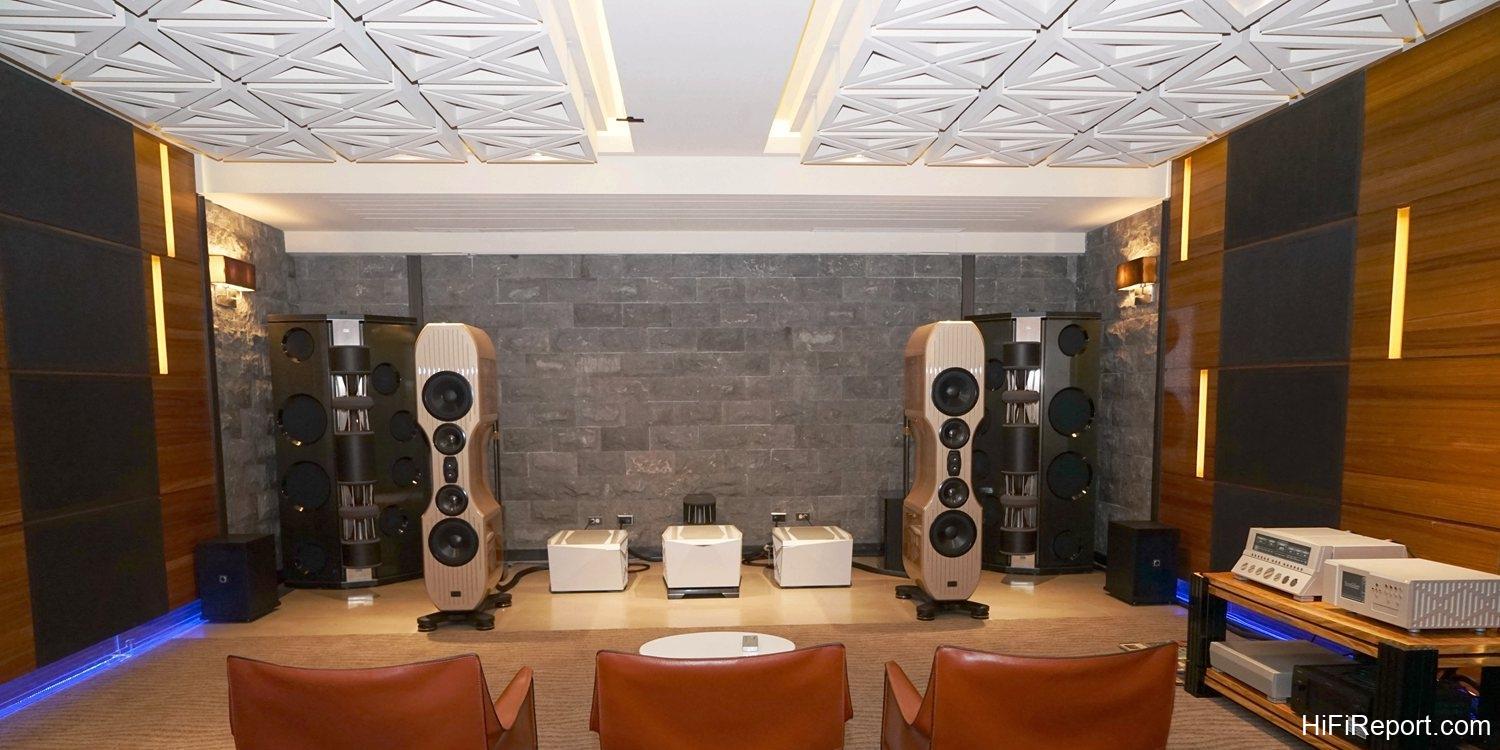
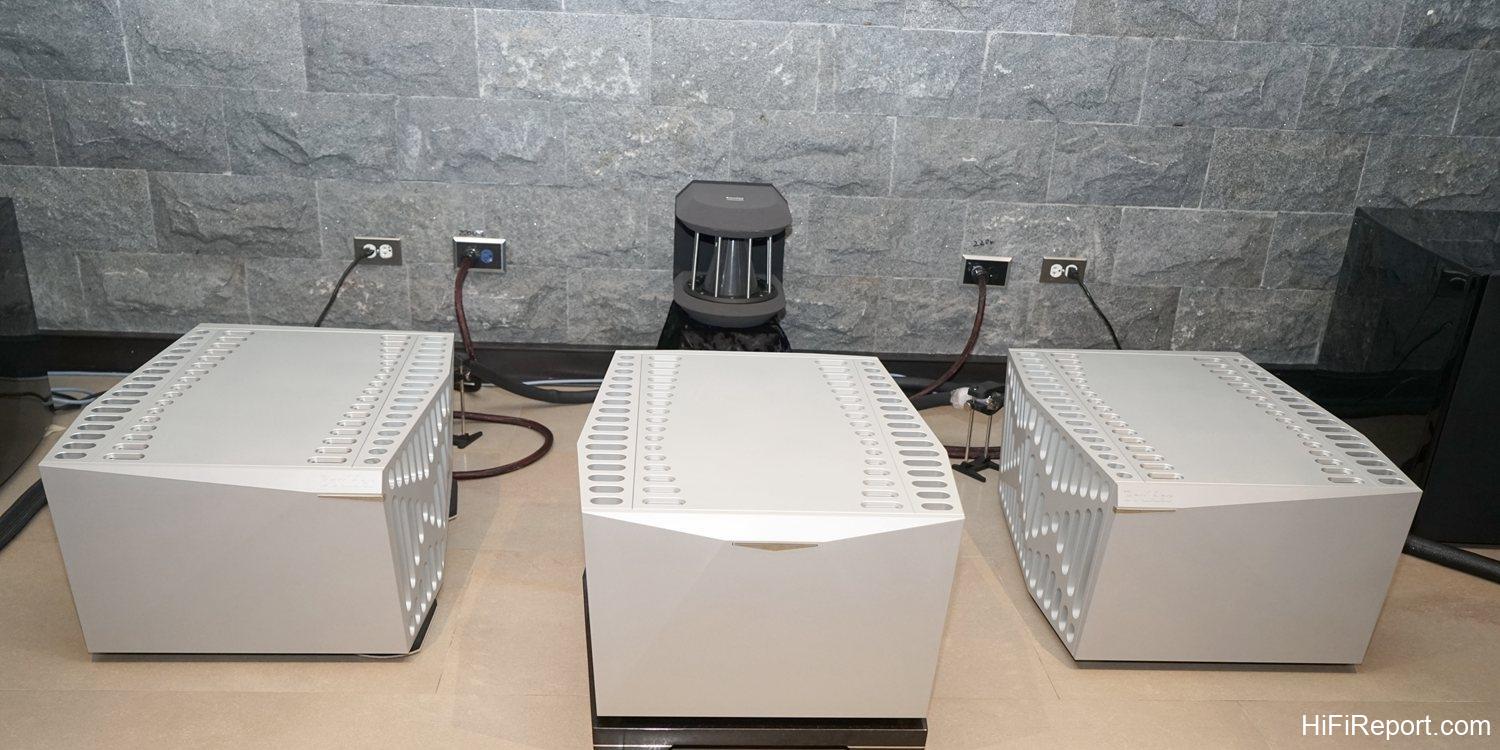
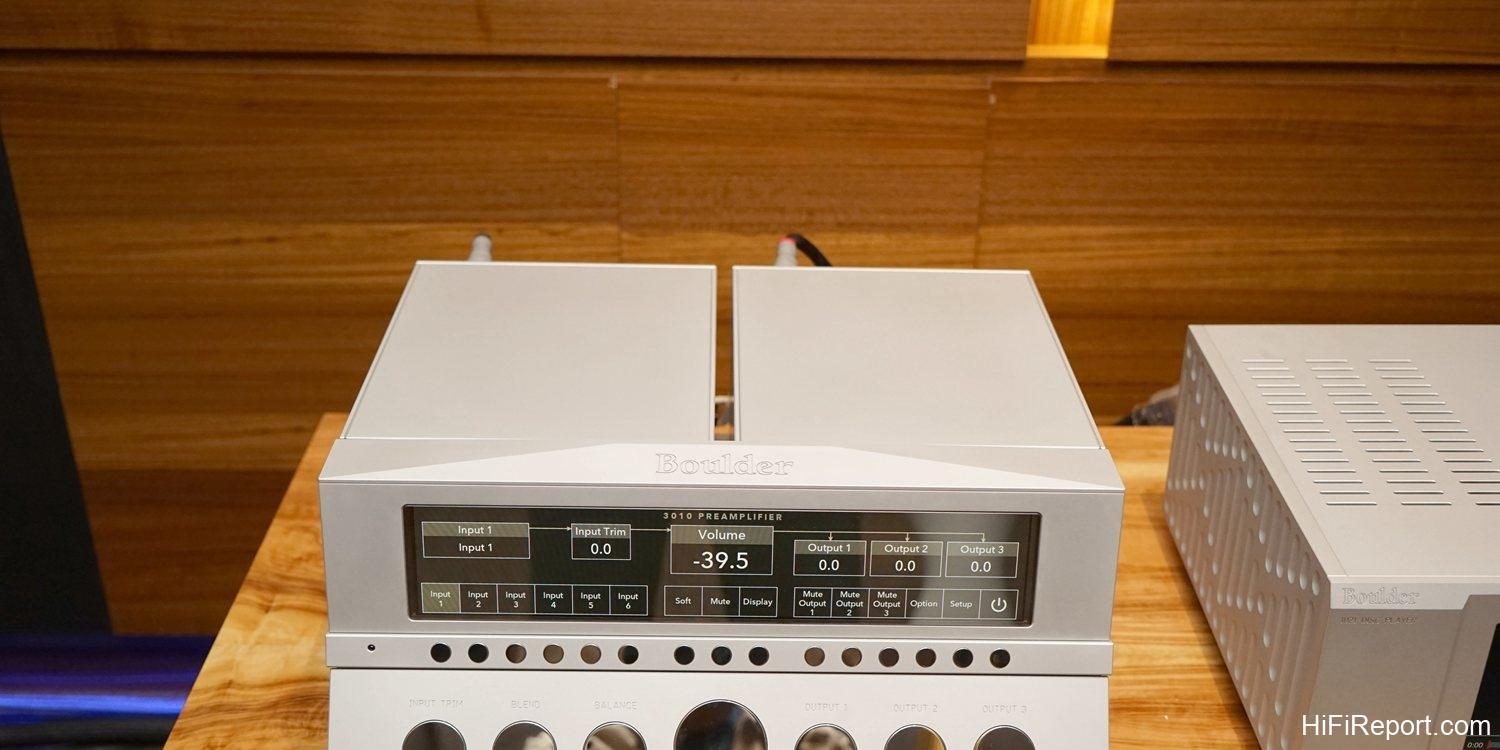
The listening took place in the medium-sized audio room at Wen Hong audio (they have large, medium, and small rooms). Described as “medium-sized,” it measures about 16 ping (approximately 53 square meters), which is already a dream large space for most people. The system included a Boulder 3010 preamplifier, a Boulder 3050 power amplifier, and a Boulder 1021 CD player.
This listening room has undergone acoustic design treatment, with carpeting on the floor and diffusion/absorption treatment on the ceiling and side walls. Based on my listening habits, the reflections from the left and right side walls were slightly excessive, but otherwise, the room acoustics were quite good. Before listening, I did a quick spectrum scan, which showed a significant dip around 31Hz.
I suspect this was caused by phase cancellation due to the distance of the speakers from the rear wall. Otherwise, with a total of four 11-inch woofers in this pair of speakers, the extreme low frequencies should have been very ample. Fortunately, instruments rarely produce notes at 31Hz, unless you particularly enjoy listening to the extreme low frequencies of organ music. In fact, during my listening, I did not feel there was any deficiency in the bass.
Sonic Impressions
The sound energy of the Exquisite Midi Grand 3.0 is immense. Upon first listen, you immediately feel that the scale of the music is larger than with typical loudspeakers, and the images of instruments and voices are big and full-bodied. Whether it’s singing, instrumental solos, chamber music, or large orchestral works, everything is presented with a grand, expansive, and effortless quality.
For instance, listening to the “Russian Legends” album (Audite) performed by the Cheng sisters and brother, both the cello and piano images were very large and relaxed. Listening to another cello and piano recording, “Complices” (Harmonia Mundi), the forms of the cello and piano were similarly large and relaxed, especially when the piano played in the lower registers.
The rich resonance and decay of the piano strings at these frequencies are simply incomparable to what most floorstanding speakers can achieve. Frankly, the purpose of buying large speakers is to enjoy a relaxed sound. If they sound tight and constrained, you might as well buy smaller speakers, as you can still hear all the music!
The Exquisite Midi Grand 3.0 has a strong ability to differentiate timbres, allowing the voices of numerous female singers to be clearly distinguished. When listening to David Foster’s “An Intimate Evening,” I specifically selected a few tracks to see if the Exquisite Midi Grand 3.0 could clearly differentiate the voices of four different female singers. It’s worth noting that some female singers have quite similar voices, sometimes making it difficult to tell who is singing.
The clearer the voices can be distinguished, the more neutral the speakers are and the less coloration they exhibit. The Exquisite Midi Grand 3.0 is a loudspeaker with very low coloration, capable of clearly differentiating the vocal characteristics of different singers. I believe the Exquisite Midi Grand 3.0 would easily pass the test with James Ehnes’ “Homage” album as well. On this CD, the performer plays the same musical passage on nine different violins and three different violas.
Any speaker with low coloration can clearly distinguish the differences in timbre and tone quality among these twelve famous instruments.
While listening to “An Intimate Evening,” I also found that the Exquisite Midi Grand 3.0’s presentation of space was excellent. This CD is a live concert recording, and although it has been mixed by the engineer, the concert atmosphere still sounds very realistic, with subtle background noises clearly audible. Furthermore, from the eighth track onwards, the sound from the Exquisite Midi Grand 3.0 feels very stable and the foundation is solid, like a pyramid.
The resolution of the Exquisite Midi Grand 3.0 is truly remarkable; listening to the “John Williams in Vienna” CD left me utterly impressed. Leaving aside the more majestic pieces, just listening to the second track, “Excerpts from Close Encounters of the Third Kind,” was enough to leave me satiated and captivated. Many people listening to this piece might wonder if the Vienna Philharmonic is dabbling in electronic music, as many parts sound as if they are performed by a synthesizer.
In reality, these are all performed by the Vienna Philharmonic using acoustic instruments. If the speakers are not good enough and the resolution of the performance is insufficient, failing to reveal the original sound of the instruments, one might mistakenly think it was produced by electronic synthesizers.
The Exquisite Midi Grand 3.0, however, not only clearly presents the texture, timbre, and tone quality of various instruments but also keeps the instruments from blending together – truly impressive. Of course, mentioning the wide soundstage and majestic scale is almost redundant here.
Next, I listened to Vivaldi’s “Four Seasons” led by Alexandre Conunova (Aparte Music). The strings were lively and bouncy, with detailed resolution and a beautiful, lustrous sheen. The low-string section, despite having fewer players, was clearly audible, further highlighting the Exquisite Midi Grand 3.0’s powerful resolution.
The Exquisite Midi Grand 3.0 exhibits excellent bass control, is capable of handling strong impact, and still presents the required elasticity. When I listened to the DMP album “Tricycle,” the Exquisite Midi Grand 3.0 delivered a deeply satisfying experience. This recording features a drum kit, electric guitar, and synthesizer, with the most captivating element being the “thump” of the kick drum.
I’ll admit the “thump” here is exaggerated, but it’s incredibly enjoyable to listen to and serves as a touchstone for assessing the solidity of a speaker’s mid-bass and bass, especially on the first track. If you expect the Exquisite Midi Grand 3.0 to deliver an overwhelming amount of bass on this track, you’d be mistaken. The Midi Grand 3.0 renders the “thump” with solidity, focus, great elasticity, and impressive cleanliness.
I gradually increased the volume, and the Exquisite Midi Grand 3.0 handled it steadfastly, without blurring or losing composure. This clearly demonstrates the Midi Grand 3.0’s strong capacity for handling bass energy. Naturally, the Boulder 3050 power amplifier used in the setup is also very powerful; the combination of these two formidable components resulted in such a thrilling performance.
I’ll use the album “Eivor” by Faroese singer Eivor Palsdottir to further illustrate the Exquisite Midi Grand 3.0’s bass control capabilities. The first track on this album is “Min Modir” (My Mother) (featured as the third track on the DALI CD4 test disc). I’ve heard this track played at audio shows a few times, and unfortunately, the bass was mostly a muddy mess. I suspected the person playing it might have thought it was supposed to sound that way. They were wrong.
If you’ve heard it on an audio system with well-tuned bass, you’ll discover how clean, highly resolving, and sufficiently voluminous the bass truly is, rather than being a muddled blob. The Exquisite Midi Grand 3.0 rendered this song with immense scale and weight, like a giant taking deliberate steps, making the floor slightly vibrate. Yet, even under such massive sound pressure, the bass remained remarkably clean and distinct.
To further praise the Exquisite Midi Grand 3.0’s ability to reproduce soft and elastic bass, I used Chen Jieli’s album “Drunken Flower Shadow.” The title track of this album is incredibly gentle, very soft, yet extremely clear, with the bass being particularly appealing. However, enjoying the bass performance here requires a major prerequisite: excellent bass control. Otherwise, the bass will simply bloom excessively.
When playing this song, the Exquisite Midi Grand 3.0 exhibited superb bass control, preventing any blurring. Furthermore, this control did not make the bass sound harder; it maintained its soft and elastic character. Additionally, Chen Jieli’s voice is exceptionally beautiful, and the simple violin accompaniment is also rendered beautifully.
This kind of sonic beauty is, of course, a necessity for speakers costing millions, requiring no further praise; it would be strange if the sound quality were not beautiful.
I listened to other CDs that day, using only a few examples here to illustrate the sonic impact the Exquisite Midi Grand 3.0 had on me. As mentioned before, the beauty of the Exquisite Midi Grand 3.0’s sound quality is beyond debate, particularly the exquisite sheen brought out by those two diamond tweeters, which is undeniably different from regular speakers.
I have heard several different types of diamond tweeters, and each offers subtle differences in sheen and tonal expression, whether the diamond diaphragm is transparent or opaque.
Beyond the beautiful sound quality, I believe the greatest value of the Exquisite Midi Grand 3.0 lies in its relaxed and grand presentation combined with excellent resolution and control. This is partly due to each speaker having six drivers, capable of moving a significant amount of air. On the other hand, it’s also because the quality of each driver is superb, allowing for effortless movement and low distortion whether at low or high volumes.
Naturally, if you are seeking a sophisticated, luxurious appearance, the Exquisite Midi Grand 3.0 will undoubtedly transport you into an atmosphere of European elegance.
Beyond Sound
Finally, I must say that the Kharma Exquisite Midi Grand 3.0 delivers more than just the music itself; it possesses an ineffable quality or temperament. If you have ever stepped into their exhibition room at the Munich High End show, you will have felt a unique atmosphere – have you ever seen an exhibition room where the walls and floors are upholstered in leather? Paired with warm wooden acoustic panels, it creates an atmosphere that is both luxurious and understated.
Truly, describing the Kharma Exquisite Midi Grand 3.0 loudspeakers as the noble and refined voice of European royalty is no exaggeration.
American composer and music producer David Foster’s albums are consistently excellent, and “An Intimate Evening” is no exception. Though not long, every singer performs wonderfully, especially the theme song from “The Greatest Showman,” “Never Enough,” featuring the original singer live – not to be missed.
Key Features
* Impeccable craftsmanship, exuding luxury.
* Features two diamond tweeters, two custom Omega 7 mid-range drivers, and two Eton 11-inch woofers.
* Drivers arranged in a D’Appolito configuration to control vertical dispersion angle.
* Sound is relaxed, grand, natural, with exceptionally beautiful timbre.
Recommendations
* Naturally, pair it with top-tier amplification for optimal synergy.
Specifications
* Type: 3.5-way, six-driver, bass-reflex floorstanding loudspeaker
* Year Launched: 2021
* Drivers: Two 1-inch diamond tweeters, two 7-inch Omega 7 mid-range drivers, two 11-inch woofers
* Frequency Response: 24Hz – 90kHz
* Nominal Impedance: 4 Ohms
* Sensitivity: 91dB
* Maximum SPL: 118dB
* Dimensions (WHD): 465 × 1,805 × 745mm